作者: admin

  • Israel ’emptying’ Al-Aqsa facilities to undermine Waqf, watchdog warns

    Israel ’emptying’ Al-Aqsa facilities to undermine Waqf, watchdog warns

    A Jerusalem-focused Palestinian monitoring organization has sounded the alarm over Israel’s forced takeover of four key facilities within the Al-Aqsa Mosque compound, framing the move as part of a widening campaign to undermine the Jordanian-backed Islamic Waqf that administers the holy site. In a public statement released Tuesday, the Al-Quds International Institution detailed that Israeli authorities have targeted the sites under what the group calls fabricated security justifications. Over the past several months, Israeli forces have raided each location, broken off original door locks, and blocked attempts by Waqf staff to install new locks, leaving the premises unsecured. Any individual attempting to access the facilities has been forcibly removed, with Israeli officials claiming the spaces were previously used for activities that pose a risk to public security. The four seized facilities are strategically positioned at each of the four corners of the sprawling 144,000-square-meter Al-Aqsa compound, a detail the Al-Quds International Institution says confirms the action was premeditated rather than accidental. The sites are: the Dome of Imam al-Ghazali, situated above the Bab al-Rahma prayer hall along the complex’s eastern wall; Dar al-Hadith al-Sharif, located in the compound’s northeastern quadrant; Qubbat Sulayman, an open-air domed shrine opposite King Faisal Gate; and Qubbat Musa, which stands near Bab al-Silsila, also known as the Chain Gate. The monitoring group warns that clearing the Waqf out of these sites could open the door for Israeli law enforcement to expand their control over all landmarks and facilities across Al-Aqsa, ultimately allowing Israel to establish itself as the de facto governing body at the site in place of the Waqf. Al-Aqsa Mosque, which ranks among the holiest sites in global Islam, is located in the Old City of occupied East Jerusalem. Its walled compound hosts dozens of religious sites, including shrines, prayer halls, religious schools, and open courtyards. For decades, an internationally recognized status quo agreement has held that the Al-Aqsa complex is to be exclusively administered and maintained by Muslim religious institutions. Since Israel occupied East Jerusalem in 1967, this administrative responsibility has been held by the Jerusalem Islamic Waqf, a body appointed by the Jordanian government. In recent years, however, the Waqf has faced growing pressure from Israeli measures designed to limit its authority and expand Israeli control over the site. Waqf officials have repeatedly reported to regional outlet Middle East Eye that Israeli restrictions have made it far more difficult for staff to enter the compound and complete routine maintenance and repair work. The Al-Quds International Institution emphasized that the latest seizure of the four facilities must be understood as part of a longer pattern of Israeli actions at Al-Aqsa, warning the move is a gradual step toward taking over the sites entirely and shutting down Waqf operations within the compound. “The consequences of these measures extend far beyond their already dangerous immediate effects,” the organization said in its statement. The group has called on Jordan to develop a comprehensive, serious strategy to defend Al-Aqsa and halt the erosion of its long-standing custodial role, noting that formal statements of condemnation alone are not enough to reverse the current trend. It also urged all Arab and Muslim-majority nations to acknowledge what it describes as an existential threat to Al-Aqsa Mosque and take on greater collective responsibility for protecting the site. The announcement comes just one month after Middle East Eye (MEE) published an exclusive report revealing that the United States and Israel have been quietly working to strip Jordan of its historic custodianship over Al-Aqsa. Multiple unnamed sources told MEE that the two countries are pushing for a new management arrangement that would align control of the revered Muslim site more closely with Israeli policy goals, effectively sidelining the Waqf from its core administrative duties. The United States has publicly denied the existence of such a plan.

  • Netherlands keeper Bart Verbruggen day-to-day with hip injury ahead of World Cup game against Japan

    Netherlands keeper Bart Verbruggen day-to-day with hip injury ahead of World Cup game against Japan

    RIVERSIDE, Mo. — The Netherlands men’s national soccer team is facing a last-minute injury crisis just days ahead of their opening 2024 FIFA World Cup group stage match against Japan, after starting goalkeeper Bart Verbruggen was sidelined from team training Wednesday due to a hip injury sustained in a pre-tournament friendly against Uzbekistan. The 23-year-old Brighton & Hove Albion shot-stopper, who is head coach Ronald Koeman’s undisputed first-choice between the posts, was forced out of Monday’s tune-up match in New York, where he was substituted by Mark Flekken in the side’s 2-1 victory. The Dutch squad also has third goalkeeper Robin Roefs included in their 26-man World Cup roster as a backup option.

    Verbruggen’s availability for Sunday’s Dallas kickoff against Japan remains uncertain as the team monitors his recovery day by day. Speaking to reporters after Wednesday’s light 90-minute session, held at the training facility of NWSL side Kansas City Current, Koeman offered a cautiously optimistic update: “We have to wait. We think (Verbruggen) can reach the match on Sunday, but day-by-day we have to wait for that. The rest of the boys are physically OK.”

    This latest injury scare adds to a string of selection blows for the Dutch side, which has reached three World Cup finals in its history but has never lifted the coveted trophy. Earlier this month, the team confirmed star defender Jurrien Timber would miss the entire tournament after suffering a groin injury. The 24-year-old Arsenal center-back had played 55 minutes in the 2024 Champions League final against Paris Saint-Germain just over a week before his withdrawal, and was replaced in the roster by Lutsharel Geertruida of Sunderland. Timber’s injury followed an earlier blow: top playmaker Xavi Simons was ruled out after tearing the ACL in his right knee during a Premier League fixture with Tottenham Hotspur, requiring urgent surgery last month.

    After wrapping up their friendly against Uzbekistan in New York, the Netherlands traveled to their pre-tournament base camp in Riverside, Missouri, where extreme summer heat has added an extra challenge for the squad. Koeman called off Tuesday’s scheduled full training session as heat indexes neared 100 degrees Fahrenheit, and Wednesday’s open training was largely limited to low-intensity 3-on-3 footvolley, a hybrid game that allows players to only use their feet and heads to touch the ball. Even with the adjusted schedule, midday temperatures remained brutally hot for the squad.

    Dutch captain Virgil van Dijk noted that while the hot, humid conditions are demanding, the challenge is equal for all teams competing in the tournament. The Liverpool center-back drew on his experience of preseason tours across Asia and the United States with his club, where similar high temperatures are common. “Different places in Asia, it was similar type of temperatures. It was very humid,” van Dijk said. “But it’s going to be the same for every team. You have to adapt quickly, and you also have to adapt in games as well. … We’ll be ready.”

    The Netherlands’ 2024 World Cup campaign kicks off Sunday against Japan in Dallas, with subsequent group stage matches against Sweden on June 20 and Tunisia on June 25 as they chase their first ever World Cup title.

  • Ceasefires and construction: How Israel is cementing its presence in Lebanon and Syria

    Ceasefires and construction: How Israel is cementing its presence in Lebanon and Syria

    Last week, Israel released footage of its troops capturing Lebanon’s iconic Beaufort Castle, a 1,000-year-old Crusader-era fortress overlooking sweeping vistas of southern Lebanon. The imagery, which shows Israeli flags flying over the ancient battlements, was crafted to project military dominance, but it also hints at a far broader, long-term territorial ambition playing out across southern Lebanon and neighboring Syria. When Israeli soldiers scanned the fortress’s ancient basalt walls, they would have encountered another, more modern feature: concrete bunkers, leftover from a decades-long occupation that ended 25 years ago. Between 1982 and 2000, the Israeli military maintained a permanent garrison at Beaufort Castle, which became a repeated target of Hezbollah guerrilla attacks that ultimately forced Israel’s full withdrawal. A quarter of a century later, Israel is once again building fortified military outposts on occupied high ground across newly seized territory, this time stretching from the Mediterranean coast of Lebanon across the Golan Heights to Syria’s Yarmouk Basin on the Jordanian border.

    Analysis of months of satellite imagery, alongside on-the-ground testimony from Lebanese, Syrian and Hezbollah sources, confirms that Israel has engaged in a systematic, large-scale construction of military infrastructure across occupied areas of both countries since late 2024, a development that strongly indicates a plan for permanent occupation. Multiple regional military and political sources tell Middle East Eye that despite repeated Israeli pledges of withdrawal, there is no expectation that Israel will abandon these new positions. As one senior Lebanese military source put it: “If you are planning to withdraw, you do not carry out this much work.”

    Israel first launched its full-scale invasion of Lebanon in October 2024, escalating a year of cross-border clashes that Hezbollah initiated in protest of Israel’s military campaign in Gaza. By the time Israel signed a ceasefire agreement on 27 November 2024 that committed it to full withdrawal, Lebanon had already suffered catastrophic damage: most of Hezbollah’s senior leadership had been killed, more than 4,000 Lebanese civilians and combatants had died in Israeli strikes, and over one million people had been displaced from southern Lebanon and parts of Beirut. The terms of the agreement required Israel to complete its withdrawal within 60 days, in exchange for Hezbollah moving its forces north of the Litani River. But even after an extended deadline passed, Israel refused to withdraw from five key hilltop positions it seized in the first days of the invasion. All five outposts are strategically located on high ground that offers unobstructed surveillance over large swathes of southern Lebanon, running along nearly all of Lebanon’s 79-kilometer border with Israel. The outposts overlook multiple depopulated Lebanese towns and villages, many of which have already been completely leveled by Israeli strikes.

    Satellite imagery tracking construction at these sites shows that work began as early as October 2024, starting with the demolition of nearby civilian structures. Israel used air strikes, controlled detonations and bulldozers to raze entire neighborhoods and border communities. Over the following months, the imagery records the widening of access roads, large-scale land clearing, and the construction of earthen defensive fortifications. By the start of 2025, prefabricated accommodation units and military vehicles began appearing at the sites. Most notably, large-scale construction accelerated after the ceasefire took effect, when Israel had formally agreed to withdraw. Between January and September 2025, Israel rapidly expanded the outposts: fortifications were widened, heightened and extended along key access roads, base perimeters were expanded, roads were further broadened, and concrete watchtowers were erected. By November 2025, satellite imagery shows a sharp increase in both accommodation capacity and military vehicle presence at all five sites. “For 15 months, we watched the Israelis bring in reinforcements, conduct drilling works, and open roads around these sites – steps that suggest an intention to remain permanently,” the Lebanese military source explained.

    Israel is also making use of, and expanding, patrol tracks originally built by the United Nations Interim Force in Lebanon (UNIFIL), the UN peacekeeping mission that has operated in the region for 20 years and is scheduled to end operations in 2027. Israel’s westernmost outpost at Labbouneh sits just 150 meters from an existing UNIFIL base and just two kilometers from UNIFIL’s coastal main headquarters, while its outpost at Tal Dowary near Houla is just 1.5 kilometers from a UNIFIL peacekeeping position.

    A source close to Hezbollah describes the outposts as dual-purpose operational hubs: “They are designed defensively, making it impossible to approach them, while also allowing offensive operations to be launched from them.” The source, who has direct knowledge of developments in southern Lebanon, says Israel intends the bases to support a five-kilometer deep occupied buffer zone inside Lebanese territory. Hostilities resumed in early March 2025 after Israel killed Ali Khamenei, Iran’s supreme leader and a key spiritual figure for Lebanese Shia communities, prompting Hezbollah to resume attacks amid fears of a new full-scale Israeli invasion. Weeks later, Israeli Prime Minister Benjamin Netanyahu approved the construction of additional new outposts inside Lebanese territory. Serving Israeli soldiers told Israeli newspaper Haaretz that these newer positions are clearly not temporary. “These are permanent outposts that will be manned for a long time,” one soldier said. “Nobody really knows where this is going.”

    Despite Israel’s fortified presence, the effectiveness of its southern Lebanon outposts remains open to question. While Hezbollah suffered heavy losses during the invasion and subsequent ceasefire, the group has already reorganised its forces in southern Lebanon within view of Israeli positions. Since hostilities resumed, Hezbollah has carried out repeated attacks across border areas, and Israeli troops have failed to secure full control over villages located near their bases, including the town of Khiam. Israel’s hold on newer outposts has been even more fragile: Hezbollah fighters even managed to film themselves removing an Israeli flag from an outpost near the western Lebanese town of al-Bayyada.

    A new U.S.-backed ceasefire proposal was presented to both parties last Thursday, but the text makes no mention of requiring an Israeli withdrawal from the occupied areas, which now make up roughly one-fifth of Lebanon’s total territory. Israel announced its acceptance of the plan but has continued to carry out strikes in Lebanon and seize additional territory. Hezbollah secretary-general Naim Qassem has said the group rejects any ceasefire that does not include a commitment to full Israeli withdrawal from all Lebanese territory. A Hezbollah source warns that Israel is pursuing a strategy to permanently separate southern Lebanon from the rest of the country, noting that the previous ceasefire allowed Israel to solidify its permanent foothold. “According to current assessments, Israel is now trying to entrench itself in every position it has reached and turn those positions into fixed centres,” the source said. “Yet so far, beyond the positions it already established, fortified and turned into centres during the previous war, everything newly created remains unfortified and vulnerable at any moment to attacks by the resistance.”

    Israel’s permanent occupation push is not limited to Lebanon. The end of the 2024 Lebanon invasion coincided with the collapse of Bashar al-Assad’s government in Syria, opening a path for Israel to seize new territory in the country’s southwest. On 27 November 2024, the same day the Lebanese ceasefire took effect, Syrian opposition forces launched an offensive from their Idlib stronghold that reached Damascus and toppled Assad within two weeks. As opposition leader Ahmed al-Sharaa’s forces consolidated control of the capital, Israel launched widespread strikes on Syrian military sites and moved its own troops into and beyond the UN-monitored neutral buffer zone along the Golan Heights. One of the first strategic sites Israel seized was the summit of Mount Hermon, the Levant’s second-highest peak at 2,814 meters. Netanyahu made a high-profile visit to Mount Hermon that December, publicly stating that Israeli forces would not withdraw from the summit for at least a year. As of mid-2026, Israeli troops remain in control of the peak.

    Israel has now built a 70-kilometer chain of outposts stretching from the summit of Mount Hermon to the Yarmouk River on the Syrian-Jordanian border. Middle East Eye has identified at least 10 new Israeli bases and observation posts in newly occupied Syrian territory since the fall of Assad, eight of which are located inside the original neutral buffer zone. The buffer zone was established along the Purple Line – the armistice boundary of the Israeli-occupied Golan Heights – after the 1973 Middle East war, and is monitored by the UN Disengagement Observer Force (UNDOF). Satellite imagery also shows Israel has built extensive lines of earthen fortifications along the Purple Line, including raised earthen mounds that allow military vehicles to access high vantage points for surveillance.

    Carmit Valensi, head of the Syrian program at Israel’s Institute for National Security Studies (INSS), a leading Israeli security think tank, says Israel’s push into Syria is driven by deep distrust of the new Syrian government led by al-Sharaa. Valensi says the 7 October 2023 Hamas attacks on southern Israel “shattered” the long-standing Israeli assumption that deterrence – “the main pillar of Israeli strategy” – would prevent enemy attacks. “From that point on, Israel decided to adopt what we might call the buffer zone strategy, which obviously we can see clearly in Syria and Lebanon and Gaza,” she told Middle East Eye.

    Israeli bases are now distributed across three Syrian provinces: Quneitra, Daraa, and the Damascus Countryside. Mirroring the pattern in Lebanon, earthen berms with embedded watchtowers surround fortified troop accommodation and vehicle staging areas. All bases are located on strategic high ground, key road junctions, and terrain that overlooks corridors connecting the Golan Heights to Damascus. At the Tulul al-Humr outpost, Israeli troops are positioned just 40 kilometers from the Syrian capital. “In western Daraa, positions were selected specifically because they provide commanding oversight over valley entrances and surrounding villages,” a military source from the new Syrian government explained. Many of these bases are also located close to UNDOF peacekeeping positions: one outpost north of the village of Hader, in the foothills of Mount Hermon, sits just 500 meters from an existing UNDOF base. Notably, as Israel expanded its own base over the course of several months, the adjacent UNDOF position also expanded.

    There are key differences between Israel’s construction in Syria and its activity in Lebanon. Almost all of Israel’s new Syrian outposts are built on land previously controlled by Assad’s Syrian Arab Army. “Initially, Israel’s ground operations in southwestern Syria focused on the destruction of former Syrian Arab Army positions, followed by the construction of new military infrastructure,” the Syrian military source said. “This process included mine-laying operations, the demolition of civilian homes, forced displacement, and the destruction of agricultural land and forested areas – methods that strongly resemble practices observed in both Gaza and the West Bank.” For example, satellite imagery shows Israel has expanded an old Syrian position on a hilltop near Hader, converting it into a large, fully functional base with new buildings and support facilities. In southern Syria, Israel has seized the al-Jazira military barracks, a hilltop position that overlooks both the Yarmouk and Ruqqad rivers. Near Quneitra, the provincial capital that Israel reduced to a ghost town decades ago, two new Israeli bases have been built on the ruins of old Syrian military compounds.

    Unlike in southern Lebanon, where Israel repurposed pre-existing dirt roads and tracks for its outposts, Israel has carved entirely new roads into Syrian terrain to connect its bases, with links extending back into the Golan Heights and the main Golan town of Majdal Shams. Most of these new roads have been paved to allow rapid movement of troops and equipment. The largest new Israeli base in occupied Syria is located at Jubata al-Khashab, a staging post built in a forested area near the Purple Line, connected by paved roads to more advanced forward outposts. Satellite imagery confirms the base hosts large numbers of military vehicles and weapons storage facilities. “In terms of the characteristics of these positions and bases, we can assume that there is a long-term intention,” Valensi said.

    Across both Lebanon and Syria, a clear pattern has emerged: Israel systematically expands and fortifies its military infrastructure during periods of supposed ceasefire and diplomatic negotiation. While there is no formal active conflict between Israel and the new Syrian government, the Syrian leadership has approached the United States to negotiate an agreement that would end Israeli occupation and strikes on Syrian territory. “Ceasefires have increasingly functioned as diplomatic delays that provide Israel with opportunities to entrench itself militarily, exploit operational gaps, and consolidate territorial control. In practice, there is little evidence of a genuine diplomatic process,” a senior Syrian military source said. The source added that Israel rapidly expanded its presence in Syria after the U.S. established a “joint fusion mechanism” for coordination and de-escalation between the three countries in January 2026. Since that agreement was signed, Israeli checkpoints have appeared on multiple key roads in western Daraa between Tal Ahmar al-Gharbi and the al-Jazira barracks. “Data collected between February and May indicates that Israel is not genuinely pursuing negotiations or diplomacy. Rather, it is using diplomatic processes as windows of opportunity for long-term entrenchment,” the source said.

    Valensi warns that Israel’s permanent occupation of large areas of Syria is ultimately unsustainable, noting that the Israeli military has already been drained by two and a half years of constant regional conflict. She also argues that the long-term costs of a permanent aggressive Israeli presence in Syria far outweigh any tactical benefits. “In my opinion, it causes much more damage than advantages,” she said. According to Syrian military sources, Israel has carried out an average of 17.5 raids on Syrian villages each month over the past year, alongside mass arrests, periodic shelling of farmland, and forced evictions of local communities. Valensi notes that this sustained pressure has already shifted Syrian public discourse toward Israel. “We clearly see the change and the shift in the Syrian discourse towards Israel from rather more moderate, restrained stances into much more radical ones,” she said.

  • Israel is ethnically cleansing Palestinian Bedouins, major new report finds

    Israel is ethnically cleansing Palestinian Bedouins, major new report finds

    A landmark new investigation from Amnesty International has concluded that a systematic campaign of ethnic cleansing targeting Palestinian Bedouin communities in the occupied West Bank is not being carried out by rogue extremist actors, but directed and implemented by the Israeli state itself.

    Released on Wednesday, the 150-page comprehensive report documents that Israeli state authorities are perpetrating the crime against humanity of forcible transfer through a coordinated, state-driven campaign that specifically targets Palestinian Bedouin and nomadic herding communities located in Area C of the occupied West Bank.

    Area C accounts for approximately 60 percent of the entire West Bank’s total land area, and falls under full Israeli military and civilian control — a status that directly violates established international law. The report details multiple interconnected policies advanced by the Israeli government to displace local Palestinian communities: authorities have expanded access to gun licenses for civilian settlers, growing the number of armed civilians operating in the area; increased public and private funding for illegal Israeli settlements; accelerated the construction of new settlement infrastructure; and pushed forward the formal legalization of unauthorised outposts.

    Under Israeli domestic law, outposts are classified as unauthorized settlements built in contravention of local regulations, yet Israeli authorities have increasingly moved to retroactively legalize these encroachments in recent years. Critically, all Israeli settlements across the entire West Bank are already deemed illegal under binding international law, a position confirmed by decades of United Nations resolutions and global legal consensus.

    The investigation also uncovered that administrative control of large swathes of Area C is being progressively transferred to pro-settlement Israeli civilian bodies, while state-led initiatives to seize additional Palestinian-owned land in the region are being expanded at an unprecedented pace.

    Agnes Callamard, Secretary General of Amnesty International, emphasized the scale and intentionality of the campaign: “Over the past three and a half years Israeli authorities have accelerated a state-sponsored campaign of ethnic cleansing in the West Bank, uprooting, dispossessing and forcibly transferring Palestinian communities. This is not the work of rogue actors or what the international community has repeatedly labelled as extremist settlers, organisations or one or two ministers. What we are witnessing is deliberate, state-led annexation, in complete violation of international law unfolding before the eyes of the entire world.”

    The findings come just days after a group of six Western nations — the United Kingdom, Australia, Canada, France, New Zealand and Norway — imposed sanctions on six organisations and one individual linked to illegal Israeli annexation efforts in the West Bank. In a joint statement, the countries noted that “for too long, violent settlers have been able to act with near impunity, and settlement expansion and creation of outposts continue with the support and facilitation of the Government of Israel.” The group stopped short of imposing measures against the Israeli state itself, saying it would only take that step if the Israeli government failed to “take urgent steps to address the situation on the ground.”

    Callamard condemned the international community’s response to date, arguing that global powers have been either complicit in or passively tolerant of Israel’s ongoing violation of international law, as well as resolutions passed by both the UN General Assembly and UN Security Council. She called for immediate collective action: “States, particularly those with influence over Israel, including the USA, the UK, Germany, as well as Italy and other EU and Arab states, must immediately ban all trade, investment and any form of cooperation or financial assistance that contribute to Israel’s unlawful occupation, system of apartheid and ethnic cleansing of Palestinians.”

    This report adds to growing international scrutiny of Israeli policies in the occupied West Bank, amid rising displacement of Palestinian communities and escalating violence by settlers against local residents.

  • Bill Gates says Epstein wanted personal relationship, but he ‘never reciprocated’

    Bill Gates says Epstein wanted personal relationship, but he ‘never reciprocated’

    On Wednesday, billionaire philanthropist and Microsoft co-founder Bill Gates appeared voluntarily behind closed doors before the U.S. House Oversight Committee, which is conducting a bipartisan investigation into the network of deceased convicted sex offender Jeffrey Epstein. During his testimony, Gates addressed long-swirling rumors about his relationship with Epstein, issuing a flat denial of any personal connection to the disgraced financier and pushing back against unsubstantiated claims of involvement in Epstein’s criminal activity.

    Gates told the panel that his only interactions with Epstein began in 2011, three years after Epstein had pleaded guilty to state-level prostitution charges in Florida, and centered entirely on Epstein’s promises to arrange major fundraising for Gates’s global health philanthropic initiatives. Gates emphasized that from the start of their interactions, he explicitly barred Epstein from any role in the Bill & Melinda Gates Foundation and made clear the financier would never receive compensation for any donations he helped secure. By 2014, Gates said, he realized Epstein’s fundraising pledges were empty: after Epstein assembled a group of purported potential donors, none expressed interest in moving forward with contributions. At that point, Gates cut off all contact with Epstein, saying he never met or communicated with him again.

    In his opening statement, Gates repeatedly denied any knowledge of or involvement in Epstein’s well-documented criminal conduct. “I never went to his island, his ranch, or his Florida home. I have never victimized anyone,” Gates told the committee. “While he may have sought to foster a personal relationship, I was never interested in that and never reciprocated.” He added that he never witnessed any illegal activity and had no indication of the exploitation Epstein was carrying out. Gates also addressed the unverified claims included in recently released court documents, including allegations that Epstein facilitated illicit affairs for Gates and that Gates sought to hide a sexually transmitted infection from his then-wife Melinda. Gates denied all of the false claims, but publicly admitted to having extramarital affairs years ago — a fact he said Epstein exploited to attempt to blackmail and pressure him. “Epstein was working to use information about my infidelities – in addition to many lies that he layered on top – to pressure me to re-engage with him,” Gates explained. He closed his opening remarks by expressing his hope that all survivors of Epstein’s crimes would ultimately receive the justice they deserve, echoing a previous public statement that every minute he spent with Epstein was a mistake he deeply regrets, and that he exercised poor judgment in ever agreeing to meet with him.

    During the hearing, Gates reportedly provided committee members with the names of powerful individuals that Epstein approached for fundraising during his interactions with Gates, though the panel has not released those names publicly. Committee members from both parties echoed a consistent assessment of Epstein’s modus operandi: the financier actively collected relationships with high-profile, influential figures to bolster his own power and public standing. “It’s pretty clear to me that Epstein was a friend collector. He just liked to have people around him that were big deal and get his picture made with them and hang out with them, and I think that’s how he reeled them,” Republican committee member Tim Burchett told reporters after the hearing. Democratic ranking member Robert Garcia noted that Gates acknowledged he knew Epstein had been convicted of a serious crime, but still continued interactions to pursue philanthropic funding. Democrat Emily Randall added that Gates’s testimony reinforced a pattern: many prominent men who interacted with Epstein only saw what they wanted to see during their encounters, ignoring obvious red flags. Lawmakers also pressed Gates on how the tech billionaire, a leading figure in the global information industry, failed to look into Epstein’s publicly available criminal record beyond a vague awareness that Epstein had faced some form of legal restriction. Burchett added that Gates appeared notably reserved during the hours of intense questioning, describing him as “down-trodden for a guy worth several billions.”

    Gates is the latest in a string of high-profile figures to be questioned by the committee’s investigation, joining former President Bill Clinton, former Secretary of State Hillary Clinton, and current U.S. Commerce Secretary Howard Lutnick, among others. Epstein died by suicide in a New York jail cell in 2019 while awaiting federal trial on sex trafficking charges. His long-time associate Ghislaine Maxwell was convicted of multiple felonies related to Epstein’s crimes and is currently serving a 20-year prison sentence; she appeared virtually before the committee in February but invoked her Fifth Amendment right against self-incrimination to refuse to answer questions. The testimony comes months after the U.S. Department of Justice released millions of pages of documents from the Epstein investigation earlier this year, in which Gates’s name appeared thousands of times, including in multiple photographs of Gates alongside Epstein. Gates has repeatedly denied any wrongdoing or knowledge of Epstein’s illegal activity since the documents were published.

  • Republicans gained edge over Democrats in redistricting battle, internal party assessment finds

    Republicans gained edge over Democrats in redistricting battle, internal party assessment finds

    A little-known internal assessment conducted by House Republicans’ top campaign organization has found that the bitter, nationwide battle over redrawing congressional electoral maps has delivered a significant partisan advantage to the GOP ahead of the 2026 midterm elections, according to reporting from the BBC.

    The analysis, prepared by the National Republican Congressional Committee (NRCC) and not previously made public, was finalized last month after the last holdout states completed their redistricting processes. Its findings show that the reshuffled maps have created 10 new House districts that lean toward the Republican Party. Most notably, the number of Democratic-held House seats that went to President Donald Trump in his 2024 re-election victory has jumped to 23, up from just 13 at the opening of the 2026 midterm cycle. On the flip side, Republicans now hold just eight districts that 2024 Democratic nominee Kamala Harris won, an increase from three at the start of the cycle. When all shifts are tallied, the assessment concludes Republicans net a potential advantage of five favorable seats compared to the previous map layout.

    The new electoral landscape comes at a critical moment for House Republicans, who currently hold a fragile 217-212 majority with five congressional seats sitting vacant. While public polling shows widespread voter anxiety over economic conditions, sky-high living costs and the ongoing conflict in Iran, the revised maps offer the party a critical buffer that could help them hold their narrow control of the chamber.

    Historically, midterm election cycles tend to favor the opposition party, the out-of-power bloc in Congress. This year, that dynamic would normally work in Democrats’ favor, particularly with Trump’s approval rating hovering near the lowest point of his second term. But both major parties have waged an unprecedented partisan fight to redraw district lines outside the standard once-a-decade census-based redistricting process, a battle that has reshaped the playing field. A 2020s Supreme Court ruling that struck down a core provision of the Voting Rights Act cleared the way for many states to revise their congressional maps, supercharging this off-cycle redistricting fight. While Democrats successfully pushed through revised maps in California and Virginia, the Virginia changes were later invalidated by state courts, leaving the GOP-aligned original map in place.

    If the current finalized maps remain unchanged through the November election, the NRCC’s analysis confirms Republicans have secured a clear edge in the bitter redistricting war. While a net five-seat advantage may sound modest, political observers note it could prove decisive if Republicans overperform historical trends and the election results end up much closer than pre-election polling predicts.

    Top Democratic strategists have already acknowledged that the new maps give House Republicans a wider margin of error heading into November. Even so, many Democratic operatives argue the advantage is smaller than many within the party originally feared, pointing to independent polling that still shows Democrats are well-positioned to flip the chamber and take majority control.

    Republicans, for their part, argue redistricting is not the only factor behind their stronger-than-expected position this primary season. NRCC spokesman Mike Marinella told the BBC that robust candidate recruitment and a substantial fundraising lead over Democratic groups have also boosted the party’s odds. “Democrats are climbing an uphill battle, and their outlook for the House gets darker by the day. The math doesn’t work. The map doesn’t work. The money doesn’t work. The candidates don’t work. That’s why House Republicans are on offence,” Marinella said in his statement.

    The NRCC’s internal assessment, which drew on public voter demographic data, aligns closely with analysis from nonpartisan election watchdogs. The Cook Political Report currently rates 18 House seats as competitive toss-ups, and 17 of those competitive districts were carried by Trump during his 2024 presidential win, which saw him flip all key swing states to secure a comfortable victory over Harris.

    The NRCC analysis also highlighted another positive trend for the GOP: At the start of the 2018 midterm cycle, the last midterm election when Trump held the presidency, House Republicans controlled 42 districts where Trump had won less than 50% of the vote in the prior presidential election. Today, that number has dropped to just 14 Republican-held districts where Trump failed to win a majority in 2024, meaning Republicans are far less exposed to headwinds in swing districts than they were eight years ago.

    Despite the shifted map, Democratic leaders remain confident they can flip the House in November. CJ Warnke, communications director for House Majority PAC, House Democrats’ lead super PAC, noted that many of the 23 Trump-won Democratic-held districts remain highly competitive this cycle, including battleground seats in South Texas and Ohio where Republican candidates still face steep obstacles. “No amount of trying to change the maps on redistricting is going to prevent House Republicans from losing this fall,” Warnke said. He went on to tie Republican incumbents to ongoing economic pain, arguing “Inflation continues to rise, gas prices are skyrocketing, and after promising no new wars Trump and Republicans went off and started a war with Iran that’s now hurting the American economy.”

    Democrats are also counting on long-standing historical trends to hold in their favor. Data from the American Presidency Project at the University of California, Santa Barbara shows that since 1934, the party that controls the White House has gained House seats in just three midterm elections, and gained Senate seats in only six cycles. This pattern held in recent cycles: Democrats flipped 40 Republican-held House seats in 2018, while Republicans flipped nine Democratic seats in the 2022 midterms.

  • David Briscoe, AP journalist who chronicled Philippines’ democratic revolution, dies at 82

    David Briscoe, AP journalist who chronicled Philippines’ democratic revolution, dies at 82

    Veteran Associated Press journalist David Briscoe, whose decades-long career was defined by his vivid on-the-ground coverage of the collapse of authoritarian rule and the birth of democracy in the Philippines during one of the nation’s most turbulent modern eras, has died at the age of 82. His wife, Leonor Briscoe, confirmed he passed away Sunday at an assisted living community in Kapolei, Hawaii, following an April diagnosis of amyloidosis, a progressive condition marked by dangerous protein buildup that damages vital organs.

    Over a career that stretched across five decades and multiple continents, Briscoe brought his signature relentless curiosity to assignments across his home state of Utah, the nation’s capital in Washington D.C., and Hawaii. But it was his posting as Manila bureau chief that placed him at the center of the most consequential story of his professional life.

    When Briscoe took the reins of the AP’s Manila bureau in 1980, he spent the next six years documenting the final declining years of Ferdinand Marcos’ brutal authoritarian regime, and the national chaos that erupted following the assassination of opposition leader Benigno Aquino Jr. Briscoe and his reporting team crisscrossed the archipelago, traveling via chartered aircraft, rented jeeps, and on one notable occasion, a horse-drawn cart, to keep up with the fast-moving story. They covered a relentless string of corruption investigations, legislative hearings, and the unlikely 1986 presidential campaign that saw Aquino’s grieving widow, Corazon Aquino, pushed into the national spotlight to lead a grassroots democratic movement.

    The iconic finale of that movement, which saw Corazon Aquino sworn in as president and Marcos forced into sudden exile, remained etched in Briscoe’s memory for the rest of his life. He often recalled searing, unforgettable images from that period: “of nuns kneeling in front of military tanks” and “soldiers and civilians crying in each other’s arms.” Writing for AP World, the outlet’s in-house publication shortly after the revolution in 1986, Briscoe noted, “I expect to witness or cover no greater event in my life.”

    Born David Chesley Briscoe on July 30, 1943, in Salt Lake City, Utah, Briscoe grew up in a working-class household, where his father worked as a union steward and his mother as a homemaker, raising Briscoe and his brother in the Church of Jesus Christ of Latter-day Saints. He first discovered his passion for journalism while studying at the University of Utah, writing for the campus student newspaper before landing his first professional role at the Deseret News, where he cut his teeth writing obituaries and profiles of high-achieving local students.

    After two years at the Utah paper, Briscoe joined the Peace Corps and was assigned first to Paracale, then to Naga City in the Philippines, where he taught English. For a young man who had barely left his home state of Utah in his early life, every corner of the Philippines was a revelation: from water buffalo cooling off in muddy waterholes to children running along sunbaked dirt roads.

    Briscoe quickly fell in love with his adopted country, and bristled at the thought of leaving when his Peace Corps service came to an end. He took a job at a local Philippine newspaper, and while covering an event featuring a speech by Ferdinand Marcos, he met Leonor Aureus, an editor at a competing local outlet. The pair bonded over their shared love of journalism, and soon married, decorating their wedding aisle with copies of their respective papers, The Naga Times and the Bicol Mail.

    In 1970, Briscoe was hired by the AP’s Manila bureau, where he covered major breaking stories including a deadly earthquake that shook the capital, an assassination attempt on Pope Paul VI during a pastoral visit, and a commercial plane hijacking. By 1971, however, AP leadership ordered Briscoe to return to the United States to take up a domestic posting. He moved back to Salt Lake City, holding out hope that fate would one day bring him back to the Philippines he had come to love.

    During his time back in Utah, Briscoe found himself increasingly at odds with the Latter-day Saint Church that had shaped his upbringing. His wife recalled he faced church discipline after speaking out against the Church’s longstanding ban barring Black men from the priesthood during a discussion class he taught; Briscoe openly opposed the exclusion, which the Church eventually lifted years later. He also ran afoul of Church leadership after co-writing a three-part investigative series with colleague Bill Beecham that examined the Church’s extensive network of business holdings, estimating that annual revenue from member tithing alone exceeded $1 billion. No major Utah newspaper dared to publish the reporting, the pair later said.

    After nine years back in Salt Lake City, AP leadership offered Briscoe the chance to return to Manila as bureau chief. He immediately called his wife with the news, asking her, “Noree, are you sitting down?”

    After completing his six-year term leading the AP Manila bureau, Briscoe relocated to Washington D.C. in 1986, where he covered international affairs. He went on to serve as AP’s Honolulu bureau chief from 2001 until his retirement in 2009. In Hawaii, dressed in casual aloha shirts and soaking up the tropical sunshine, Briscoe often said he felt “halfway back” to the Philippines he cherished.

    Until his final days, Briscoe held his time covering the Philippines close to his heart. As his health declined in his final weeks, his family gathered at his side to pray. He squeezed his wife’s hand, told her he loved her, and asked her to let him pass peacefully.

    Per his family’s plans, a boat will carry Briscoe’s ashes out into the Pacific Ocean, where they will be scattered, with the hope that ocean currents will carry his remains back to the Philippines that became his adopted home. “The land that David learned to love,” his wife said, “and where he met the love of his life.”

  • Rubio to visit Bahrain and reassure Gulf ally amid Iran war, sources say

    Rubio to visit Bahrain and reassure Gulf ally amid Iran war, sources say

    In the wake of escalating conflict between the United States, Israel and Iran that has roiled the Gulf region, US Secretary of State Marco Rubio is preparing for a high-stakes visit to Bahrain in the coming weeks, multiple senior Arab, Western and US officials with direct knowledge of the plan confirmed to Middle East Eye. All sources spoke on condition of anonymity, as they were not cleared to discuss the trip publicly ahead of an official announcement.

    This upcoming trip will carry profound symbolic and strategic weight: it marks the first visit by a top-tier US official to the Gulf Cooperation Council region since the joint US-Israel military strike on Iran on February 28, a confrontation that upended global energy markets and triggered unprecedented security risks across the Gulf. According to Arab and US officials familiar with the planning, the visit is explicitly crafted to serve as a public vote of confidence in Bahrain’s ruling Al Khalifa monarchy, and a clear signal that Washington remains committed to its long-standing security and diplomatic partnerships in the Gulf amid rising regional instability.

    “Rubio’s trip will be a tangible demonstration of Washington’s recognition of Bahrain’s importance as a core US ally against Iran,” one senior US official explained to MEE.

    The timing of the visit is particularly significant, coming after months of Iranian retaliatory strikes that have hit Bahrain disproportionately hard. Bahrain, which hosts the headquarters of the US Fifth Fleet in its capital Manama, saw the critical military facility targeted in the early waves of Iranian attacks following the February 28 strike. The spillover from the conflict has extended far beyond military infrastructure, causing severe damage to the kingdom’s already fragile economy.

    The confrontation between Washington and Tehran has triggered the largest disruption to global oil supplies in modern history. Iran responded to the US-Israel strike by restricting shipping traffic through the Strait of Hormuz — the vital chokepoint through which roughly one-fifth of the world’s daily oil supplies pass — and launching targeted strikes on energy and industrial facilities across the Gulf. Global oil prices have already surged 40 percent as a result of the disruption.

    In Bahrain, key industrial and energy operations have been forced to halt production or suspend output contracts. The Financial Times confirmed that Amazon’s regional cloud computing infrastructure based in the kingdom was hit in an attack. Aluminium Bahrain, one of the world’s largest single-site aluminum smelters and a cornerstone of the kingdom’s export economy, was forced to declare force majeure after sustaining physical damage to its facilities. Bahrain’s national energy firm Bapco also followed suit, declaring force majeure at its main refinery after strikes disrupted operations.

    While a fragile US-Iran ceasefire agreed in April has largely reduced the intensity of conflict across the region, Bahrain faced fresh Iranian targeting just last week, after the US launched new strikes on Iranian ports and military installations along the Strait of Hormuz.

    Bahrain’s economic vulnerability long predates the current conflict. Compared to its wealthier Gulf Cooperation Council neighbors such as Saudi Arabia and the United Arab Emirates, Bahrain’s economy has struggled for years with high levels of sovereign debt, which currently stands at roughly 140 percent of gross domestic product. The kingdom has relied heavily on emergency financial support from larger regional allies for decades: in 2018, Saudi Arabia led a $10 billion international economic rescue package to stabilize Bahrain’s finances. The kingdom’s only land border and connection to global overland trade runs through the King Fahd Causeway linking it to Saudi Arabia, while ongoing shipping disruptions through the Strait of Hormuz have compounded the damage to its import and export sectors.

    Western and US intelligence officials have assessed that Iran has deliberately focused its retaliatory strikes on Bahrain in an attempt to exacerbate long-standing domestic sectarian divides between the Sunni-led Al Khalifa monarchy and the kingdom’s majority Shia population. Early in the conflict, Bahrain saw large-scale public demonstrations that echoed the anti-government protests of the 2011 Arab Spring, which were violently suppressed by ruling security forces. The recent demonstrations were also put down quickly by authorities.

    Diplomats told MEE that this combination of security threats and domestic pressure has led Bahrain’s ruling family to become one of the most vocal advocates inside the Gulf for a broad, expanded US-led military offensive against Iran.

    The conflict has also shifted Bahrain’s long-standing regional alignment. While the kingdom has traditionally maintained close ties to Saudi Arabia, diplomats and regional analysts note that Bahrain has moved closer to the United Arab Emirates’ policy camp since the outbreak of the war. Bahrain became one of the first Arab states to normalize diplomatic relations with Israel under the US-brokered Abraham Accords in 2020, and in March of this year, joined the UAE in supporting a draft UN Security Council resolution that would have authorized international military intervention against Iran to reopen the Strait of Hormuz. The draft resolution never advanced to a vote.

    Despite the United States maintaining a continuous military presence in Bahrain since the 1940s, the Iranian strikes on US and Bahraini infrastructure have sparked internal debate among US officials and military leaders about the future of American force posture in the Gulf. Former CIA director and top US Middle East military commander David Petraeus acknowledged this shifting perspective in comments to Bloomberg in May, noting that “The truth is that we are not as inclined to occupy these bases now that we have seen what the Iranians can throw at them.”

    To contextualize the long-running territorial dynamic between Iran and Bahrain: the territory that makes up modern Bahrain was part of the Persian Safavid Empire until the 18th century. The Al Khalifa family, which has ruled Bahrain for more than 200 years, invited British colonial protection in the 19th century, and Bahrain became a British Trucial state before gaining full independence in 1971. That same year, Iran under the Western-backed Shah formally renounced all territorial claims to Bahrain.

  • Belfast race riots see non-white families targeted and houses torched

    Belfast race riots see non-white families targeted and houses torched

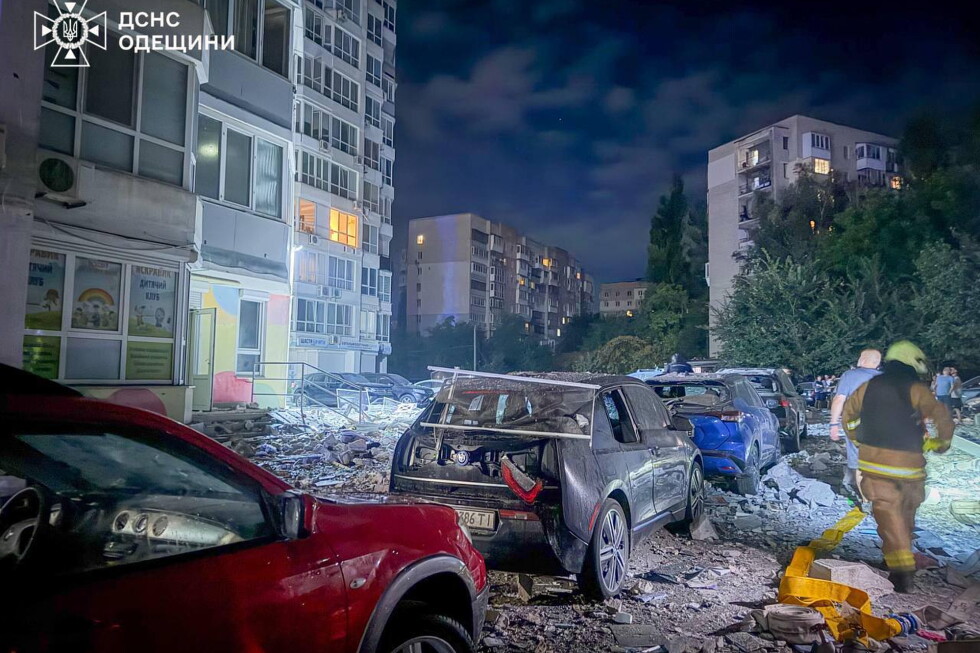
    Overnight on Tuesday, large-scale race-fueled rioting erupted in Belfast, the capital of Northern Ireland, leaving a trail of destruction as hundreds of masked rioters targeted properties belonging to non-white residents, migrant families, and asylum seekers. The unrest was triggered by the arrest of a 30-year-old Sudanese asylum seeker, Hadi Alodid, who holds indefinite leave to remain in the UK, hours before the violence broke out. Alodid has been charged with attempted murder in connection with a filmed knife attack on a man in a residential neighborhood, an incident many commentators have characterized as an attempted beheading.

    Local law enforcement has stated that the attack itself does not appear to be terror-related, but the incident quickly became a flashpoint for anti-migrant sentiment stoked by high-profile figures far beyond Northern Ireland. On Tuesday afternoon, far-right activist Tommy Robinson — whose legal name is Stephen Yaxley-Lennon — and Elon Musk, the South African-born American billionaire who owns the social platform X, openly called for nationwide protests over the attack on the platform. Musk went as far as to urge repeated, large-scale public demonstrations in a post, writing: “Only by protesting REPEATEDLY and LOUDLY will there be any change!!” Both Robinson and Musk shared planned protest locations across the UK on X, the platform formerly known as Twitter.

    By Tuesday evening, the calls to action translated to extreme violence on the streets of Belfast. Rioters constructed makeshift roadblocks from street furniture to set up unauthorized checkpoints, stopping and searching passing vehicles to identify non-white people and foreign nationals. Targeted attacks focused on public council housing occupied by migrants, asylum seekers, and refugee families, with rioters setting ablaze multiple homes, private vehicles, and a local bus. A Middle Eastern-owned supermarket was also set on fire amid the chaos.

    Footage from the scene captured children being evacuated from adjacent properties as fires spread across neighborhoods. Local pastor Jack McGee told the BBC that many residents were forced to flee their homes simply “because they’re black”. Jamie Corry, a resident on east Belfast’s Lendrick Road, described the rapid escalation of violence: “the cars started to explode, the doors started smoking, the windows started melting, and the next thing the house was going to go up on fire”. Rioters were filmed kicking in residential doors, smashing windows, and shouting that they were “getting foreigners out” of the area. On west Belfast’s Shankhill Road, rioters breached the door of a home where an ethnic minority woman had been spotted at a window, throwing bricks through the property’s windows. Elsewhere, rioters were seen riding motor scooters while carrying hammers and petrol-filled milk cartons.

    Emergency responders including police and firefighters were forced to carry out dangerous rescue operations, pulling trapped families out of burning buildings through thick smoke and flames. Across Belfast, major streets were blocked by rioters, leaving entire neighborhoods under the control of violent crowds for hours.

    The unrest was not isolated to Belfast. Anti-migrant demonstrations and related violence erupted across the United Kingdom on Tuesday night, including in London, Glasgow, and Southampton — the site of anti-migrant rioting just one week prior following the killing of a local young man. In Glasgow, approximately 300 masked men marched through city streets, with footage showing multiple clashes with passers-by and a violent attack on a delivery driver.

    Political leaders across the UK have widely condemned the violence and those who incited it. On Wednesday morning, Labour Party Chair Anna Turley issued sharp criticism of Musk, calling his role in encouraging protests “appalling”. British Prime Minister Keir Starmer denounced the disorder in a statement, saying: “There is no justification for the violence and disorder that we saw threatening our communities, nor for those who encouraged it, online or elsewhere. It is clear that people were targeted last night because of their background and I will not tolerate it.” Michelle O’Neill, First Minister of Northern Ireland, called the actions of the rioters indefensible, noting: “Groups of masked men burning families out of their homes is nothing less than disgusting cowardice. This has nothing to do with community. This is outright thuggery.”

    The coordinated wave of violence has sparked widespread public concern over the potential for further unrest across the UK this summer. It follows a similar period of national rioting in August 2024, when disorder spread across the country for more than a week after the killing of three young girls in Stockport.

  • World Cup what to know: Canada earns a hard-fought draw in opener, U.S. is up next vs. Paraguay

    World Cup what to know: Canada earns a hard-fought draw in opener, U.S. is up next vs. Paraguay

    The 2026 FIFA World Cup hosted across North America is now underway, with live match updates available to global audiences in both English and Spanish. The tournament’s first full match day on Friday delivered a historic result for Canada, which secured a 1-1 draw against Bosnia-Herzegovina at a packed, energized Toronto stadium. This outcome marks a significant milestone for the Canadian men’s national team, which had lost all six of its previous World Cup matches in tournament history. The result also felt like a positive breakthrough after a tough start for Canada, which fell behind early in the fixture.

    Bosnia’s Jovo Lukic broke the deadlock in the 21st minute, connecting with a skillful header off a corner kick to silence the raucous home crowd. Canada spent the majority of the match chasing an equalizer, and it finally came in the 78th minute from recent substitute Cyle Larin, who slotted home to level the score and earn Canada its first ever World Cup point. The day’s action will close with a primetime match between the United States and Paraguay in Inglewood, California, and the tournament will shift to its full schedule starting Saturday, with a minimum of four matches scheduled per day through June 27.

    The tournament kicked off one day earlier at Mexico City’s iconic Azteca Stadium, where host nation Mexico opened with an impressive 2-0 victory over South Africa in front of a capacity, boisterous crowd.

    ### What to Watch on June 13: Broadcast Information and Full Match Previews
    Fox holds exclusive English-language broadcast rights for the entire tournament in the United States, with all 104 matches airing on either the main Fox broadcast network or cable channel FS1. All fixtures are also available to stream via the Fox One app. For Spanish-language audiences, Telemundo and Universo will carry every match, with streaming access available through Peacock and the official Telemundo app.

    Four matches are scheduled for Saturday, June 13, across four North American host cities:
    1. Qatar vs. Switzerland, 3 p.m. EDT at Levi’s Stadium in Santa Clara, California (FOX/Telemundo/Peacock)
    2. Brazil vs. Morocco, 6 p.m. EDT at MetLife Stadium in East Rutherford, New Jersey (FOX/Telemundo/Peacock)
    3. Haiti vs. Scotland, 9 p.m. EDT at Gillette Stadium in Foxborough, Massachusetts (FOX/Telemundo/Peacock)
    4. Australia vs. Turkey, midnight EDT at BC Place in Vancouver, British Columbia (FS1/Telemundo/Peacock)

    #### Qatar vs. Switzerland
    While Qatar qualified automatically for the 2022 World Cup as tournament host, the nation earned its spot in the 2026 field through competitive qualification, marking a new milestone for the program. The side is led by all-time career scoring leader Almoez Ali, who has notched 60 goals across 126 international appearances for Qatar.

    Switzerland is appearing in its sixth consecutive World Cup, entering the tournament ranked 19th in the official FIFA men’s rankings. Despite advancing past the group stage on three separate occasions in tournament history, the Swiss men’s national team has never won a knockout round fixture. Veteran midfielder Granit Xhaka, who earned 145 international caps, leads the side as it chases a historic deep run.

    #### Brazil vs. Morocco: Top-10 Group Stage Clash
    Brazil enters this tournament as one of the most historically successful men’s World Cup programs, claiming five tournament titles in 1958, 1962, 1970, 1994 and 2002. However, the side has struggled to replicate its historic success in recent decades, falling at the quarterfinal stage in four of the last five tournaments. Even so, Brazil remains a formidable contender, ranked 6th in the world entering Saturday’s fixture, and head coach faces intense pressure to deliver the nation’s sixth World Cup title.

    Morocco, ranked 7th globally, is one of Africa’s top men’s programs and made history at the 2022 World Cup by becoming the first African nation to reach the tournament semifinals, where it fell to eventual champion France. The match marks a high-stakes early group stage showdown between two of the top-ranked sides in the tournament.

    #### Haiti and Scotland: Long-Absent Underdogs Make Their Return
    Both Haiti and Scotland are making their return to the World Cup after decades-long absences, earning their spots against pre-tournament expectations. Haiti is appearing in the World Cup for just the second time in history, with its last appearance coming all the way back in 1974. Ranked 83rd in the world—one of the lowest-ranked sides in the 2026 field—Haiti secured its place in the tournament by outperforming more established Central American powers including Costa Rica and Honduras.

    Scotland is also back on the world’s biggest football stage for the first time since 1998. Premier League midfielder Scott McTominay leads the Scottish side, having scored 14 goals in his last 33 international appearances.

    #### Australia vs. Turkey: Two Sides Marking Return Trips
    Australia is making its sixth consecutive World Cup appearance, and seventh overall, entering the tournament ranked 27th. The side reached the round of 16 at the 2022 tournament, falling to eventual champion Argentina, and has embraced a diverse squad built around immigrant talent ahead of 2026, with a public message that “soccer is for everyone.”

    Turkey is competing in its first World Cup since 2002, when the nation pulled off a surprise third-place finish. The Turkish program has climbed steadily up the rankings in recent years, entering the 2026 tournament ranked 22nd globally.

    ### U.S. Men’s National Team Chases Historic Breakthrough In Home Opener
    The host United States men’s national team enters the tournament ranked 17th in the FIFA rankings, with high hopes that home-field advantage can help the side make its first deep run in decades. The U.S. has advanced to the knockout round in four of the last six World Cups it has competed in, but has not advanced past the quarterfinal stage in any modern tournament.

    Former top European club manager Mauricio Pochettino was hired as head coach in 2024, tasked with unlocking the team’s potential. Star forward Christian Pulisic enters the tournament in the peak of his career, carrying high expectations from American fans.

    Paraguay, the U.S.’s opening opponent, is ranked 47th in the world—lowest in Group D—and is competing in its first World Cup in 16 years. Star attackers Ramon Sosa and Julio Enciso lead the underdog side.

    ### Breaking: Palestinian Football Head Denied U.S. Visa For Tournament
    In off-the-field breaking news, Jibril Rajoub, president of the Palestinian Football Association, remains stranded in Mexico City after being denied a U.S. visa to attend the 2026 World Cup. Rajoub was able to attend the tournament’s opening match between Mexico and South Africa on Thursday, but is one of multiple accredited attendees who have been either denied entry or are still waiting for visa approval from U.S. authorities.

    While the Palestinian national team did not qualify for the 2026 tournament, FIFA routinely invites football association presidents from every member nation to attend the quadrennial event as part of its mission to celebrate global unity through the sport.

    Other recent tournament news includes the viral rise of a Bosnian song about disillusionment with the American Dream becoming an unexpected World Cup fan anthem, Arsenal star Thomas Partey being sidelined for Ghana’s opening match against Panama in Toronto after he was also denied a U.S. visa, and Mexico manager Javier Aguirre earning opening match praise for a youth-focused tactical gamble that delivered the opening win against South Africa.