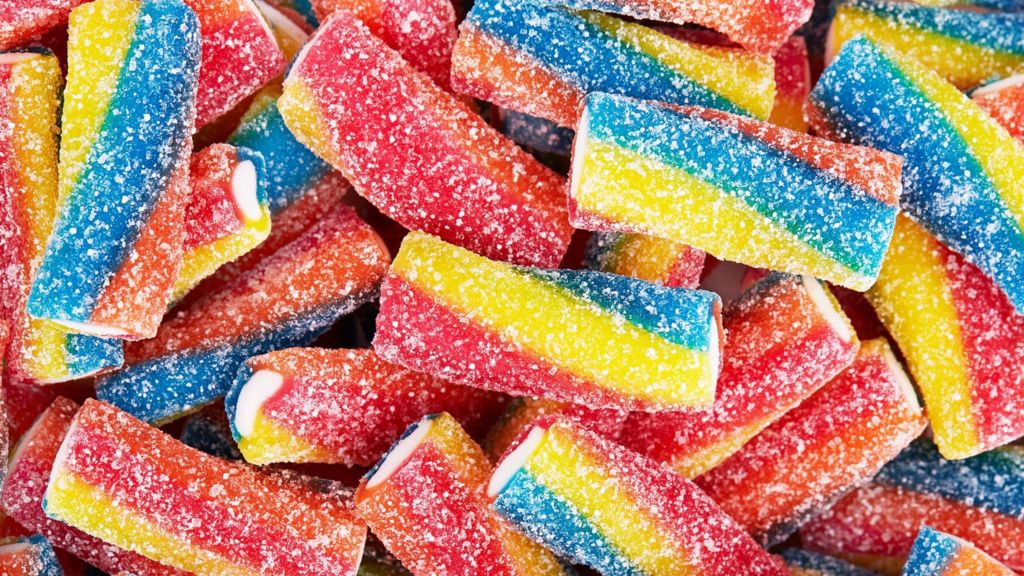
Across the United States, plummeting consumer confidence has created a challenging operating environment for the nation’s retail industry, with many small and large businesses struggling to maintain stable revenue. However, in New York City and its surrounding suburbs, one unexpected niche segment is experiencing unexpected growth: independent candy stores.
For third-generation business owner Mitchell Cohen, this expansion is no surprise. As the head of Economy Candy, Manhattan’s oldest continuously operating sweet shop located on the Lower East Side, Cohen has long observed a pattern: when economic times turn tough, consumers still carve out room in their budgets for affordable candy. His family’s business itself is a product of economic crisis – it first opened its doors in 1937, at the tail end of the Great Depression, originally as a hat and shoe repair shop. To earn extra income, Cohen’s grandfather added a small candy cart outside the storefront. When cash-strapped New Yorkers stopped spending on repair services, the business pivoted entirely to selling the low-cost treats that still had steady demand. Eighty-nine years later, Economy Candy remains a beloved neighborhood staple, still going strong despite decades of economic ups and downs.
Recent economic data underscores the challenging broader retail landscape. While official April retail sales figures show a 4.9% year-over-year increase, a closely tracked consumer sentiment survey hit an all-time historic low in May, reflecting widespread anxiety over inflation and economic uncertainty. Candy store entrepreneurs echo Cohen’s analysis, pointing to candy’s low price point as a key advantage during economic downturns: unlike big-ticket purchases that consumers are increasingly likely to postpone, a small sweet is an accessible luxury almost anyone can afford.
This dynamic aligns with the well-documented “lipstick effect,” an economic theory popularized in the early 2000s that holds that when consumers can’t afford large, expensive purchases, they will treat themselves to smaller, more affordable luxury items instead. For Kate Bolger, a former film producer opening a new candy store called The Village Confectionery in Sleepy Hollow, New York, this logic holds true. “Even when people are feeling the economic pinch, everyone can still partake in a little piece of candy,” she explained.
Existing candy retailers are also expanding their footprints across the region. BonBon, an upscale confectionery brand founded in 2018 by three Swedish expats, now operates five locations across Manhattan and Brooklyn, plus a store in the Hamptons that opened last summer. The brand specializes in importing Swedish candy, which has grown rapidly in global popularity in recent years, driven by social media buzz and its commitment to strict all-natural ingredient standards. To keep overhead costs low, BonBon intentionally avoids high-rent main shopping avenues, instead opting for smaller storefronts on side streets that allow for lower rent and a cozier customer experience. With a focus on small, unique brand details – like staff uniforms inspired by a popular Stockholm restaurant – the chain is set to open a new location in Greenwich, Connecticut this summer. It is not alone in its U.S. expansion: major Swedish candy chain Candy King opened its first American outlet in Manhattan last December.
Newer small independent operators are also finding success by adapting to local market needs. In Brooklyn’s Fort Greene neighborhood, Cat Cirino launched Candor Candy’s in March. To boost revenue, she offers a curated selection of pantry staples from local independent producers alongside her core candy inventory, including granola, rice, soft drinks and beef jerky. Cirino notes that candy also offers practical operational advantages for small retailers: it has a long shelf life, requires no temperature control, and the popular pick-and-mix model lets customers handle much of the self-serve process, cutting down on labor costs.
That said, the sector is not immune to the economic pressures facing all U.S. retailers. Cohen points to rising wholesale costs driven by two key factors: longstanding U.S. import tariffs imposed during the Trump administration, and spiking global shipping costs tied to rising fuel prices stemming from geopolitical tensions. Even iconic American chocolate brand Hershey’s has been impacted: while the company is based in the U.S., it sources all cocoa beans from overseas, and a Hershey bar that cost Economy Candy 62 cents before the COVID-19 pandemic now costs over $1. Cohen adds that one of his longtime United Kingdom-based suppliers stopped shipping to the U.S. entirely after sustained losses from customs and currency fluctuations.
Despite these headwinds, most candy store owners report growing sales, with many absorbing cost increases rather than passing the full burden on to consumers. For Cohen, the formula for success is simple: in uncertain economic times, a small, affordable sweet goes a long way toward lifting consumer moods – and keeping small businesses afloat.