
For rescue professionals working in the aftermath of disasters and missing person cases, the line between compassion for desperate families and strict professional detachment often blurs. This struggle is laid bare by Bibek Khadka, a helicopter pilot with years of experience in rescue operations across Nepal’s rugged and often hazardous terrain. In an exclusive interview with the BBC, Khadka shared the constant emotional weight he carries as families of missing loved ones flood his communications with urgent pleas for help.
作者: admin
-
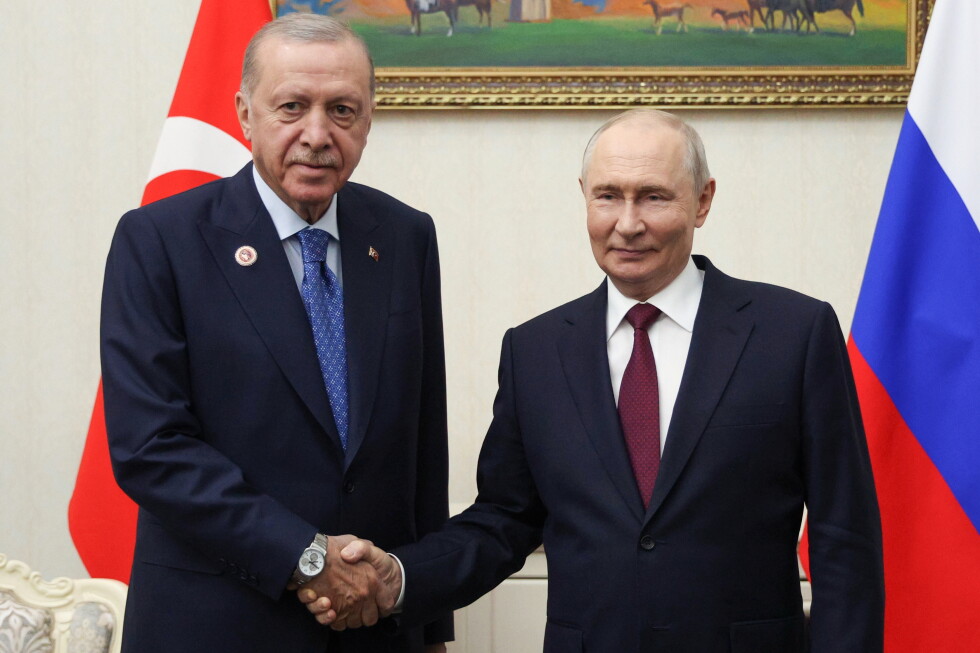
Turkey’s relations with Russia, China don’t mean turning its back on the West, Erdogan says
Fresh off attending the Shanghai Cooperation Organization (SCO) summit hosted in Kyrgyzstan, Turkish President Recep Tayyip Erdogan issued a clear diplomatic reassurance Wednesday: Turkey’s push to strengthen economic and political ties with Eastern powers will not come at the cost of its relationship with the Western bloc. In on-the-record remarks to reporters traveling aboard his presidential aircraft en route back to Istanbul, Erdogan pushed back against speculation that Turkey’s ambition to gain full membership in the growing Eurasian security and economic bloc signals a strategic turn away from the West.
“Turkey’s membership perspective in the organization does not mean a break from a bloc or turning our backs on the West,” the president emphasized, directly addressing widespread geopolitical analysis that frames Turkey’s deepening engagement with the SCO as a shift in its longstanding foreign policy alignment.
The three-day summit in Kyrgyzstan’s Cholpon-Ata provided a high-profile stage for Erdogan to hold a closed-door bilateral meeting with Russian President Vladimir Putin, where the pair advanced talks on expanded nuclear energy collaboration between the two nations. Beyond energy cooperation, the two leaders aligned on their shared top priority for the ongoing war in Ukraine: an urgent end to hostilities through peaceful negotiation. Since the full-scale Russian invasion began in February 2022, Turkey has carved out a unique diplomatic niche, maintaining open, constructive ties with both Moscow and Kyiv while positioning itself as a key neutral mediator for global and regional security.
A core focal point of Erdogan and Putin’s discussion was maritime security in the Black Sea, a strategic waterway where civilian commercial shipping has faced a sharp rise in attacks since Russia exited the landmark Black Sea Grain Initiative last year. Erdogan stressed that the ongoing instability threatens to reignite a global food security crisis, echoing warnings from global food security bodies that new disruptions to grain shipments from major exporter Ukraine would hit vulnerable populations in low-income regions hardest.
“There is a need for a mechanism that will permanently ensure the safety of commercial maritime transport in the Black Sea,” Erdogan said. The president added that a durable security framework would be “beneficial” to prevent a “resurgence of the grain crisis” that pushed millions of food-insecure people deeper into hunger in 2022 and 2023.
It was Turkey that led the 2022 brokering of the original grain deal, alongside the United Nations, which unlocked Ukrainian Black Sea ports to allow export of millions of tons of grain and sunflower oil, while also removing barriers to Russian exports of food and fertilizer. The agreement, which proved critical to stabilizing global food prices and preventing widespread hunger across Africa, the Middle East and South Asia, collapsed in July 2023 when Russia withdrew from the pact over unmet demands related to its own agricultural exports.
Founded in 2001 as a Eurasian security and cooperation bloc, the SCO currently counts 10 full member states: Russia, China, India, Iran, Kazakhstan, Kyrgyzstan, Tajikistan, Uzbekistan, Pakistan and Belarus. The expanding bloc has increasingly been framed by geopolitical analysts as a counterweight to U.S.-led global institutional frameworks, though its core policy priorities and collective action mechanisms remain relatively undefined to date. Erdogan reaffirmed Wednesday that Ankara remains fully committed to its long-held goal of attaining full SCO membership, as Turkey continues to pursue a multi-directional foreign policy that balances longstanding ties to NATO and the European Union with growing economic and security partnerships across Eurasia.
-

Tensions tied to Ceuta migrant crisis overshadow a date usually reserved for celebration
Tucked along the northern coast of Africa, Spain’s tiny autonomous exclave of Ceuta has long marked its annual official holiday on September 2 as a quiet, local affair, largely overlooked by the Spanish mainland hundreds of kilometers away. But 2026 is different. Just over a month after the territory became the flashpoint of the most severe border crisis Spain has faced in modern history, what would typically be a day of celebration has been replaced by anger, political tension, and a nationwide wave of protest, as a lingering humanitarian crisis continues to strain the small territory and divide Spanish politics.
The crisis unfolded in late July, when an unprecedented 72,000 people crossed the border from neighboring Morocco into Ceuta, a territory that is home to just 84,000 permanent residents. At least 90 people died during the dangerous crossing attempt, according to official estimates. While the vast majority of migrants either returned voluntarily or were escorted back to Moroccan territory within days, the Spanish national government confirms that roughly 5,000 people — including 1,200 unaccompanied minors — remain stranded in Ceuta weeks later. The mass arrival overwhelmed the exclave’s limited housing, medical, and social services, sparking widespread frustration among local residents, who have criticized the central government in Madrid for ignoring repeated advance warnings that a large-scale crossing was being organized.
For Ceuta’s regional leader Juan Jesús Vivas, a member of Spain’s main conservative opposition Popular Party (PP), the event was far more than a migration crisis. “What happened to us was not a migratory crisis,” Vivas stated during an institutional commemoration for the holiday on Wednesday. “What happened was the violation of Spain’s territorial integrity.”
The crisis has quickly become a central political battleground ahead of Spain’s national election scheduled for next year. The PP and far-right opposition party Vox have seized on the incident to ramp up pressure on the left-wing government of Prime Minister Pedro Sánchez, aiming to turn public anger over the crisis into support to oust the current administration.
The main event marking this year’s holiday is a protest scheduled for Wednesday evening in Ceuta, with coordinated demonstrations planned in more than 200 cities and towns across the country. The officially nonpartisan Spanish Federation of Municipalities and Provinces is listed as the organizer, but the events have been heavily promoted by the PP and Vox, which has taken a hardline stance against irregular migration. Spain’s Territorial Policy Minister Ángel Víctor Torres dismissed the protests as a transparent political power play, telling national radio: “This is not to show support for the city of Ceuta or its residents; it is to attack the government of Spain.”
In a bid to counter criticism that it has abandoned the exclave, the Sánchez administration this week announced a 309 million euro ($357 million) aid package to boost Ceuta’s social services, fund migrant housing support, shore up local security, and revitalize the territory’s economy damaged by the crisis. In a pre-recorded video address released Wednesday, Sánchez reiterated that his administration is deploying every available resource to help Ceuta return to normalcy and restore peace of mind for local residents.
One of the most divisive points of the crisis is the question of what triggered the unprecedented mass crossing. Many Spanish political observers and opposition figures have questioned whether the Moroccan government could have done more to prevent the border breach, but Sánchez has repeatedly defended Moroccan authorities, noting they acted quickly to assist with the repatriation of most migrants. “There is no information from any of our intelligence services that points to the participation of Moroccan authorities,” Sánchez told Cadena Ser radio earlier this week.
The prime Minister has instead blamed a misinterpretation of a recent Spanish Supreme Court ruling and coordinated disinformation campaigns on social media for encouraging the border rush. He went further to accuse social media accounts linked to Russia, Israel, and domestic right-wing groups of amplifying disinformation to exacerbate the crisis for political gain. The Sánchez administration has not released any public evidence to back up these claims, citing internal classified reports from the Spanish Foreign Ministry and the European Union’s diplomatic service. Both the Russian and Israeli governments have strongly rejected the accusations. Russian Foreign Ministry spokesperson Maria Zakharova told reporters: “Without facts, without materials backed up by numbers, dates, names there is simply nothing to talk about.”
Weeks after the initial border rush, daily life in Ceuta remains far from normal. Thousands of migrants still remain without formal housing, sleeping in makeshift camps along the city’s El Trampolín beach and in public spaces, despite ongoing efforts by authorities to register, shelter, and repatriate those eligible to return to Morocco. “We’re suffering and we want to get to Europe or find a solution right now. Here, we’re all sleeping on the beach and having a really hard time,” Nebil Tazi, a 24-year-old Moroccan migrant stranded in Ceuta, told the Associated Press. “We’ve been waiting for a month, waiting for a solution here, but there isn’t one.”
Vivas, Ceuta’s regional president, has called on the central government to prioritize returning the exclave to stability and commit to permanently strengthening the border with Morocco, rather than relying on bilateral cooperation with Rabat to prevent future crises. “If we don’t do this, there will always be someone tempted to use migration as a tool for political ends,” Vivas warned.
Ceuta’s September 2 holiday commemorates the 1415 arrival of the first Portuguese governor, just weeks after Portuguese forces seized the territory from local rulers. The territory was transferred to Spanish control in 1580, and has remained an overseas possession of Spain ever even as Morocco has continued to claim sovereignty over the area.
-
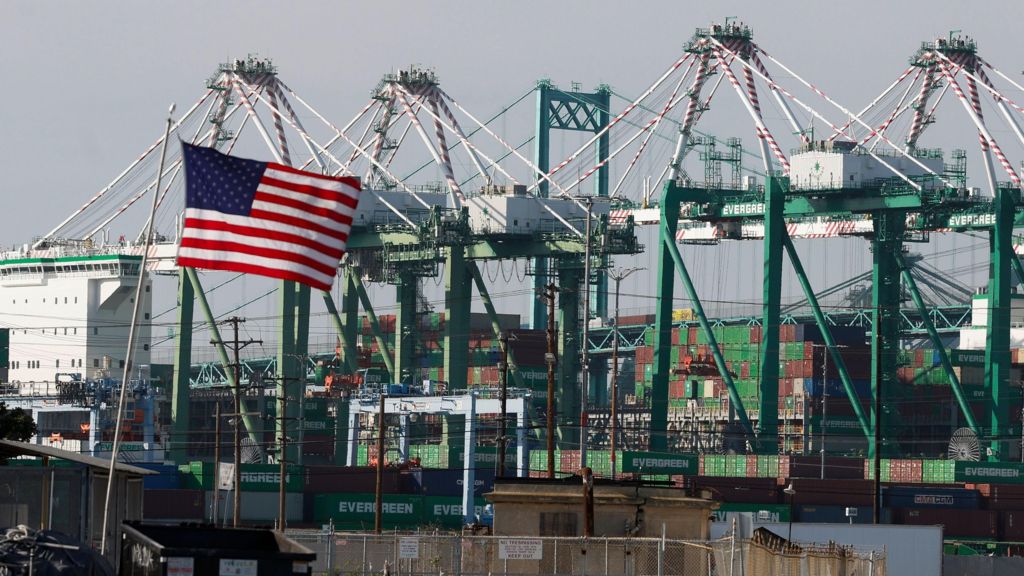
Faisal Islam: Why bond market wildfire is keeping world leaders up at night
Global bond markets are experiencing unprecedented turbulence, with sovereign borrowing costs climbing to levels not seen in decades, driven by a confluence of geopolitical, corporate, and policy-driven factors that are reshaping the fundamental dynamics of government lending markets. This summer has delivered an unambiguous message to nations worldwide: access to capital will come at a steeper price than many had anticipated.
The immediate catalyst for the current market unrest can be traced to ongoing disruptions in the Strait of Hormuz and a resurgence of armed conflict between the United States and Iran. These geopolitical frictions have sent energy prices soaring, stoked persistent global inflation, and forced markets to price in extended periods of elevated interest rates across the world’s largest advanced economies. Earlier in the year, many market participants held optimistic assumptions that Middle East tensions would de-escalate ahead of November U.S. midterm elections, with expectations that U.S. President Donald Trump would prioritize resolving the conflict before voters went to the polls. That optimistic outlook has proven unfounded, leaving markets adjusting to a new normal of sustained high energy prices, a long-running unresolved crisis in the Persian Gulf, and prolonged inflationary pressure that locks in higher interest rates for the foreseeable future.
But geopolitical friction is only one piece of the broader story transforming bond markets. A far more structural shift stems from surging global demand for borrowed capital that extends far beyond government borrowing. Large technology sector giants have increasingly turned to global bond markets to raise hundreds of billions of dollars to fund massive investments in artificial intelligence infrastructure, particularly data centers designed to support next-generation AI models. This year alone, U.S. tech hyperscalers including Google, Amazon, and Meta have issued more than $219 billion (£162 billion) in new debt, with nearly one-third of that borrowing denominated in non-U.S. currencies including British sterling. For context, the total debt issued by these firms in all of 2025 was just $93 billion, and annual borrowing averaged less than $40 billion per year in the years prior to the AI investment boom. Some industry analysts forecast that total tech sector bond issuance could reach $400 to $500 billion by the end of 2026. This flood of corporate borrowing has intensified competition for capital in global bond markets, directly driving up borrowing costs for sovereign governments.
Across East Asia, another major economy is contributing to the shifting landscape of global capital flows: Japan. Japan carries the highest sovereign debt-to-GDP ratio of any major advanced economy, while also holding the position of the largest single foreign lender to the U.S. federal government. Until recently, the Bank of Japan maintained its benchmark interest rate at near-zero levels, but gradual rate hikes to combat domestic inflation have pushed Japanese government bond yields to 30-year highs. The steady depreciation of the Japanese yen has further complicated market dynamics, but the underlying takeaway is clear: long-standing patterns of global capital movement are undergoing a permanent shift.
Beyond supply and demand shifts and geopolitical shocks, the single most impactful factor pushing up sovereign borrowing costs is market assessment of the credibility of major nations’ borrowing and fiscal plans. Contrary to some popular narratives, the increase in yields is not driven by widespread fears of sovereign default among major economies. Instead, it reflects a straightforward market pricing rule: if a nation seeks to increase its borrowing without outlining a credible long-term fiscal plan, particularly when questions linger about the stability of its governing institutions, investors will demand a higher premium to hold its debt.
Prominent leading economists differ on which factor is most driving the current bond market rout. Prominent market analyst Mohamed el-Erian identifies the surge in AI-related corporate borrowing as the most impactful new factor reshaping competitive dynamics in bond markets. Meanwhile, Lord Jim O’Neill, a former UK Treasury minister and leading economic commentator, argues that recent volatility is primarily rooted in uncertainty around U.S. fiscal policy, particularly the U.S. government’s uncoordinated efforts to calm surging Treasury yields.
These global market shifts have particularly acute implications for the United Kingdom. Decades of persistent political instability, including repeated turnover in prime minister and chancellor roles, frequent policy U-turns, and the repeated failure to deliver on promised major structural economic reforms, have already led investors to price in a significant stability premium on UK gilts (British government bonds). Ahead of the latest general election, opposition Labour leader Sir Keir Starmer centered his economic strategy on delivering steady, incremental reform and policy stability to convince markets to lower UK borrowing costs. Many market participants were caught off guard when the Labour government, despite holding a landslide parliamentary majority, failed to push through proposed cuts to the UK’s welfare spending, adding further volatility to the UK gilt market.
There are nascent positive signals in the UK’s underlying economic performance: UK economic growth has outpaced peer advanced economies through the first three quarters of 2026, even in the face of sustained elevated energy prices, and consumer confidence metrics have bounced back from earlier downturns. Prime Minister Burnham has sought to build on these tentative green shoots to drive broader economic recovery. However, the ongoing global bond market rout has raised serious new questions about the coherence and granularity of Burnham’s wider economic policy agenda. His campaign pledges of “more public control” of key economic sectors and expanded support for households struggling with the cost of living are widely interpreted as signaling increased government spending, a policy direction that has already alienated potential private investors looking at UK assets.
Lord O’Neill, who previously served as an economic adviser to Prime Minister Burnham, recently stated that the prime minister’s upcoming 10-year economic plan, scheduled for release in November, must include clear commitments to address excessive public spending. Lord O’Neill argues that demonstrating decisive action to reform the state pension system and welfare spending will give the government fiscal space to pursue its prioritized infrastructure investment agenda. As global interest rates continue to climb, the difficult trade-offs facing the UK prime minister have only grown more challenging. -
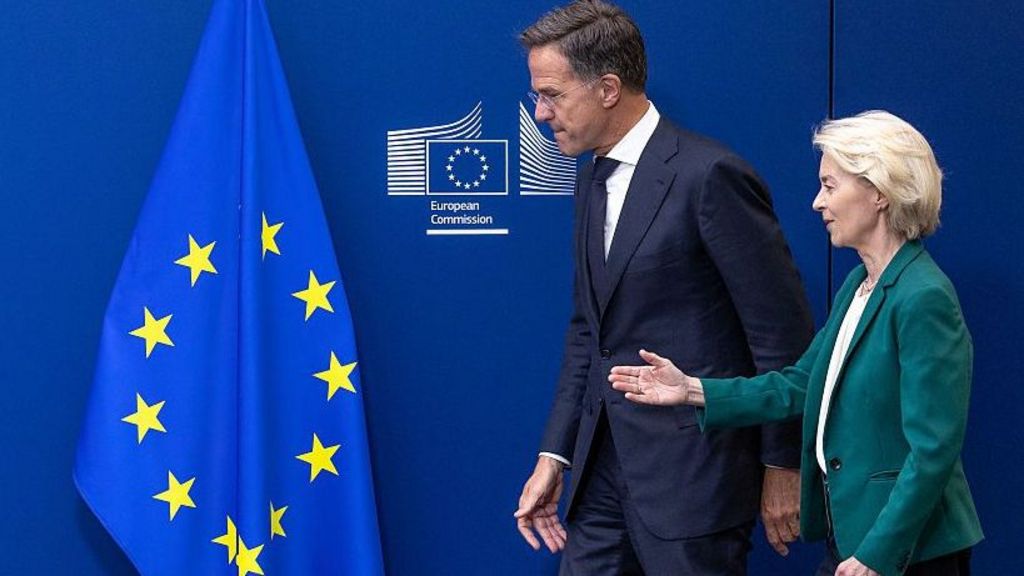
EU and Nato vow to step up pressure on Russia after ‘new escalation’ in Germany
In a sharp rebuke of escalating Russian hostile activity on European territory, European Commission President Ursula von der Leyen and NATO Secretary General Mark Rutte have formally accused Moscow of growing increasingly reckless, vowing a unified, robust response to what leaders frame as a dangerous new phase of hybrid aggression.
The confrontation was triggered by last month’s attempted drone attack at Leipzig/Halle Airport, a critical NATO logistics hub that regularly hosts Ukrainian military transport aircraft. On Tuesday, the German government confirmed that weeks of police investigations and intelligence assessments conclusively tied the incident to Russia. Three drones were recovered in and around the airport: one was safely defused by a bomb disposal robot, a second collided with a cargo plane, and a third was discovered 10 days after the 4 August incident. German Interior Ministry officials note that the drones’ design, components, explosives, and triggering mechanisms match the signature of other proven Russian hybrid operations across Europe. Authorities have also identified two suspects linked to the plot: a Belarusian national holding a Russian passport who entered Germany on a tourist visa, and a dual Latvian-Russian citizen who flew into Berlin before departing two days ahead of the attempted attack. Moscow has forcefully denied all accusations, claiming Berlin has presented no concrete evidence to support its claims.
In its first formal response to the proven attack, Germany has announced it will shutter the Russian consulate in Bonn and close the Russian House, a prominent cultural institution in Berlin that German security agencies have long suspected of operating as an unregistered Kremlin propaganda hub. The Kremlin has hit back sharply: Russian Foreign Ministry officials have pledged a “mirror-image” retaliatory measure, while President Vladimir Putin condemned Berlin’s actions as a “serious mistake” that directly contradicts the interests of the German people. When asked whether Moscow could cut full diplomatic ties with Berlin, Russian Deputy Foreign Minister Alexander Grushko acknowledged the possibility remained on the table, but said Moscow would give diplomatic channels a chance to de-escalate first. Some German political critics have argued Berlin’s current response is overly restrained, but German officials note they are prioritizing building a coordinated multilateral response alongside European and transatlantic allies, which could include expanded EU-wide sanctions and tighter entry restrictions for Russian travelers across the 27-nation bloc.
Speaking alongside Rutte in Brussels, von der Leyen emphasized the unprecedented nature of the incident: “Leipzig marks a new escalation on European Union soil directly attributed to Russia. We have to step up and that means being ready to respond to Russia’s recklessness faster and better.” She added that the Leipzig attack is not an isolated event, but part of a growing pattern of increasingly dangerous Russian hostile actions targeting European critical infrastructure, including repeated drone incursions and sabotage attempts. Rutte echoed the condemnation, affirming that the entire 32-member NATO alliance – including the United States – stands in full solidarity with Germany. He noted that alliance members have seen a steady rise in direct malign activity on NATO territory, ranging from arson attacks on factories manufacturing defense equipment for Ukraine to the confirmed hybrid plot in Leipzig.
As EU and NATO leaders met in Brussels, EU foreign ministers gathered in Wicklow, Ireland, to discuss further collective measures. French Foreign Minister Jean-Noël Barrot announced that European-level action could be targeting Russia’s shadow fleet of oil and cargo vessels that operates to evade existing EU sanctions. Barrot, alongside his counterparts from Belgium and the Netherlands, has already summoned the Russian ambassador in their respective capitals to formally protest the Leipzig attack. Lithuania’s Foreign Minister Kestutis Budrys pointed out a worrying trend: Moscow has calculated that it faces no meaningful political cost for its repeated hybrid operations against European allies, encouraging further escalation.
In a separate development that adds to heightened security tensions, Germany reported multiple suspected sabotage incidents across the country in just 24 hours, including two separate attacks on electrical substations – one in eastern Germany and a second near Cologne in western Germany. While authorities have not yet attributed these attacks to any actor, Herbert Reul, Interior Minister for the state of North Rhine-Westphalia, confirmed the attack on power lines in Bergheim was deliberate, stating that the perpetrators “attacked the entire country.” Reul added that investigators are probing two leading hypotheses: foreign state-directed sabotage and attack by domestic left-wing extremist groups.
Von der Leyen outlined the next steps for the bloc, noting that existing sanctions have already constrained Russia’s war capacity, but EU foreign ministers are currently negotiating new measures to “cut deeper into Russia’s war chest.” The EU has already approved a €90 billion loan package to support Ukraine’s government and military operations, and von der Leyen confirmed that Kyiv has requested additional billions in funding to acquire PAC-3 air defense missiles to protect civilian infrastructure from Russian missile and drone attacks. She also revealed that work is already underway on a joint European-Ukrainian anti-ballistic missile defense initiative, codenamed Project Freyja. Closing her statement, von der Leyen reaffirmed the unwavering commitment of the EU and NATO to supporting Ukraine: “Europe and NATO will not just maintain pressure on Moscow, we will increase it, and we will not stop – not until Russia stops bombing and killing innocent people in Ukraine.”
-

Lizzo ‘grateful’ after judge dismisses lawsuit against production company
A federal district judge has dismissed the last remaining legal claims against Grammy-winning pop star Lizzo’s touring production company, bringing a years-long employment lawsuit brought by a former wardrobe assistant one step closer to a close. The artist has publicly expressed relief at the ruling while reaffirming her commitment to challenging all allegations against her and her business ventures.
Asha Daniels, the former styling team member, brought her suit against Big Grrrl Big Touring — Lizzo’s touring and production firm — in 2023, when she alleged multiple workplace violations including degrading treatment, forced excessive physical labor, denial of access to medical care, sexual harassment, and racial harassment during her short tenure on the star’s tour. The case has wound through the California federal court system for nearly three years, with key rulings narrowing the scope of the suit over time.
In 2024, District Judge Fernando L. Aenlle-Rocha issued the first major ruling in the case, dismissing all claims against Lizzo (born Melissa Viviane Jefferson) as an individual defendant, leaving only the production company named in the suit. This week, the judge issued a final ruling tossing out all remaining claims against the company, according to official court filings.
In his written decision, Judge Aenlle-Rocha noted that Daniels failed to present evidence of conduct that would prove systemic gender bias or disparate treatment of male and female employees within the company. He acknowledged that some of the alleged behavior described in the suit could be considered inappropriate and out of line with professional workplace standards, but wrote that the alleged incidents fell within the bounds of what the U.S. Supreme Court has categorized as “ordinary tribulations of the workplace,” which are not eligible for legal protection under relevant employment statutes.
The judge also addressed one of the most specific physical claims brought by Daniels: an incident where she alleged a heavy rolling clothing rack ran over her foot, causing lasting injury. While the ruling explicitly stated the court did not intend to downplay or ignore the pain Daniels experienced from the accident, the judge concluded that the resulting injuries did not meet the legal definition of a disability under the Americans with Disabilities Act, eliminating that claim from the suit.
Shortly after the ruling was made public, Lizzo shared a statement on her Instagram account addressing the outcome. The “About Damn Time” singer said she felt “relieved” at the court’s decision, and thanked her legal team for their work on the case. She emphasized that her commitment to transparency and truth has guided her through the legal process, noting “The truth matters to me more than anything, and I told y’all I will not settle and will continue to fight every vicious claim that has been made against me and my businesses.” She closed her statement by reaffirming her commitment to using her public platform to spread positivity, and sent well wishes to her fanbase that has stood by her throughout the litigation.
Daniels’ 2023 suit was not the first legal action brought against Lizzo by former tour staff. It came on the heels of a separate 2023 lawsuit filed by three of Lizzo’s former backup dancers, who also brought claims including sexual harassment and a hostile work environment. Lizzo and her legal team have repeatedly denied all of these allegations. A key portion of that suit, including fat-shaming claims brought by the dancers, was dismissed by a judge in 2025.
BBC Newsbeat has reached out to legal representatives for both Lizzo and Daniels to request additional comment on the latest ruling, and had not received a response as of publication.
-

What to know about the AP/FRONTLINE investigation into scam victims
Scam activity across the United States has exploded to unprecedented levels in recent years, with nearly every American now facing regular targeting by fraudulent actors, according to a new joint investigation from The Associated Press and FRONTLINE. Federal data shows reported total losses from scams reached a new high of $15.9 billion last year, marking a 25% jump from 2024. But officials warn this official figure is a massive undercount: the U.S. Federal Trade Commission (FTC) estimates actual total losses for 2024 are closer to $200 billion — equal to roughly $550 million stolen from consumers every single day.
The collaborative investigation, which included in-depth interviews with 58 scam victims across the country, reveals that even after decades of legislative and administrative efforts to curb fraud under multiple presidential administrations, most people who fall victim to scams face almost no path to recover their stolen funds, and many end up suffering additional financial and personal harm. New polling from the AP-NORC Center for Public Affairs Research underscores the pervasiveness of the threat: 98% of U.S. adults report they have been targeted by scam communications, with many receiving fraudulent attempts daily. Three in 10 respondents confirmed they have already lost money or sensitive personal information to scams.
The 58 victims interviewed for the investigation span every demographic, ranging in age from 32 to 90 years old, and including white-collar professionals such as IT specialists and academics, as well as working-class people living paycheck to paycheck. Individual losses ranged from several thousand dollars to as much as $4 million per person. Only one interviewee managed to recover their stolen funds, via a refund from their bank. The psychological toll on victims was severe: multiple respondents reported they had considered suicide after their losses, and two said they had attempted to take their own lives.
Beyond the initial loss of funds, many victims face unexpected secondary penalties that leave them even worse off financially. Under a permanent provision of the Trump administration’s 2017 Tax Cuts and Jobs Act, personal losses from most common scams are no longer eligible for tax deductions — a change that eliminated a key break that previously let victims offset their stolen income. For retirees who withdraw money from tax-deferred retirement accounts only to have it stolen by scammers, the Internal Revenue Service still requires them to pay income tax on the withdrawn funds, meaning they owe taxes on money that no longer exists in their possession.
Many financial institutions also compound victims’ struggles, with some blaming customers for the fraud or even accusing them of being complicit in the scam. Victims reported having their bank accounts abruptly frozen or closed without warning, being forced to pay unexpected legal fees, and being held liable for repayment of fraudulent loans taken out in their names. Industry representatives note that banks already allocate significant resources to stopping unauthorized fraud, but current U.S. law places almost no liability on financial institutions for transactions that customers authorize themselves — even if that authorization was obtained through deception.
The investigation also found that the United States lags far behind many other developed nations in putting consumer protections in place for scam victims. Since late 2024, United Kingdom financial institutions have been required to reimburse customers who are tricked into transferring funds to scammers, and trained social workers are often deployed to support affected people. The European Union has implemented new rules that hold financial firms liable for stolen funds if they fail to put adequate anti-fraud safeguards in place, while its Digital Services Act mandates that online platforms remove reported scam content quickly. In Australia, banks, telecom providers, and digital platforms can face heavy fines or be forced to compensate victims if they do not take sufficient action to prevent scams. Singapore goes even further: the country requires banks and telecom companies to refund victims of certain phishing scams if they fail to meet mandatory security standards, and operates a centralized national anti-scam center where police work alongside bank and platform staff in person to freeze fraudulent transfers before funds are lost.
The rapid growth of cryptocurrency has amplified the scam crisis significantly, experts note. As a decentralized, hard-to-trace form of digital cash, crypto allows scammers to steal funds and move them across borders quickly without leaving a clear paper trail that authorities can follow. While major economies like China have banned unregulated crypto activity entirely and the EU has implemented strict licensing, consumer protection, and disclosure requirements for crypto firms, U.S. regulatory frameworks remain full of gaps. The GENIUS Act, a crypto regulation bill signed into law by President Donald Trump last year, did not include any requirement for crypto companies to return stolen funds to scam victims — a gap that has drawn widespread criticism from consumer advocates, prosecutors, and even some lawmakers. Unlike traditional bank deposits, crypto assets are not backed by federal deposit insurance, and many major crypto exchanges operate through offshore entities outside the reach of U.S. law enforcement and regulation.
In recent months, the U.S. federal government has begun to acknowledge the scale of the crisis and has taken initial steps to address it. Congress is currently considering more than a dozen separate anti-scam bills, ranging from legislation that would create a centralized national scam complaint portal to requirements for transparency around AI-generated deepfake content that is often used to defraud consumers. In November, the U.S. Department of Justice launched a dedicated strike force targeting transnational scam operations based in Southeast Asia, which are responsible for a large share of global fraud activity, and the Treasury Department has levied sanctions against these criminal networks. In March, Trump signed an executive order directing the U.S. Attorney General to prioritize scammer prosecutions and develop a new federal program to help victims recover stolen funds.
Even with these new efforts underway, however, current initiatives are failing to keep pace with the rapid growth of scam activity, and anti-fraud governance remains fragmented across the federal government. A recent report from the U.S. Government Accountability Office found that at least 13 separate federal agencies oversee different aspects of fraud prevention and victim support, with no unified coordination structure. The FBI’s Operation Level Up, one of the most active federal intervention programs, has prevented roughly 8,500 people from falling for scams over the past two years via proactive intervention calls. But that number represents only a tiny fraction of affected Americans: the FBI receives an average of nearly 3,000 internet crime complaints every day through its IC3.gov reporting portal.
This investigation is part of an ongoing collaborative project between The Associated Press and FRONTLINE (PBS), and will be accompanied by the documentary “Scammed,” set to premiere September 29 on PBS and its digital platforms. The Associated Press receives funding from multiple private foundations for investigative work, and maintains full editorial control over all content.
-

Scams in the US are at a record high. Yet most victims get no help and some end up losing even more
Grief opened the door for fraud in Simon’s life, after 43 years of marriage to his wife ended with her death. Overwhelmed by loneliness, he turned to online platforms searching for connection, just like thousands of other grieving widows and widowers across the United States. It took only a short time for him to connect with a woman calling herself Emily — a relationship that ended not with the companionship he craved, but with $800,000 stolen from his savings. What followed made the initial loss even worse.
Simon was left on the hook for $185,000 in loans he had taken out to send the scammer, plus tens of thousands in unexpected taxes on retirement funds he had withdrawn and lost. When he reached out to local police and the FBI to report the crime, his report went nowhere. He was then targeted by a second scammer, who demanded even more money in exchange for arranging help from the Secret Service to recover his lost funds.
Simon’s story is far from an anomaly. A joint investigation by The Associated Press and FRONTLINE has uncovered the full scale of a national crisis: scam targeting U.S. consumers has surged to all-time highs, inflicting hundreds of billions of dollars in annual losses, while systemic gaps in regulation, law enforcement response and government support leave victims with little to no recourse, and often facing further financial and emotional harm after the initial theft.
New exclusive polling from the AP-NORC Center for Public Affairs Research confirms that nearly all Americans — 98% — have been targeted by scammers in some form, with many facing daily attempts. Three in 10 survey respondents have already lost money or sensitive personal information to fraudulent schemes. In interviews with 58 scam victims across the U.S., ranging in age from 32 to 90 and spanning every income bracket and racial group, the investigation found that victimization rarely ends when the scammer cuts off contact.
Many victims told reporters that they faced stigma and mockery from friends and family, aggressive collection pressure from banks and lenders, unexpected tax bills, dismissive treatment from law enforcement, and inaction from a federal government that most Americans count on to protect them. “What happens after the scam might even be worse than the scam itself,” explained Erin West, a former prosecutor and founder of Operation Shamrock, a nonprofit that supports online scam victims. “It’s a travesty.”
The investigation even managed to trace the stolen funds from Simon’s case, using leaked documents and public cryptocurrency wallet data. The trail led directly to a large, notorious scam compound in Myanmar, a hub for transnational criminal networks that steal billions from global victims every year. Simon was shocked to see the fake profile “Emily” used, alongside hundreds of pages of his private conversations that he had assumed were encrypted. “What a fool I was,” he told reporters, requesting to keep his full name private out of overwhelming shame. Much of the Myanmar compound has since been destroyed by local authorities, but criminal operations simply relocated to new secret sites, and Simon has not recovered a cent of his stolen money.
“(The police) told me right away that, you know, ‘You have to kiss that money goodbye,’” he said, fighting back tears. “Already I experienced something very bad and now I have to pay for the consequences on top of it, and see my money evaporate all over again. You lose two ways.”
## Scams Have Become an Industrial-Scale Global Industry
Official data underscores the staggering growth of scam activity in the U.S. Last year, the Federal Trade Commission recorded a record $15.9 billion in reported losses from scams, a 25% jump from the year before. Regulators and investigators widely agree that this official number is a massive undercount, since most victims are too embarrassed to come forward and report their losses. The FTC estimates that real total losses for 2024 are closer to $200 billion — equal to $550 million stolen from U.S. consumers every single day.
Two technological shifts have supercharged this growth: breakthrough advances in artificial intelligence, and the rising popularity of cryptocurrency. AI has allowed scammers to operate at a scale and level of sophistication that was unthinkable a decade ago, enabling them to create convincing fake profiles, generate personalized phishing content, and even mimic the voices of loved ones to trick victims out of money. Cryptocurrency, the most common payment method for many modern scams, is a digital asset that is extremely difficult to trace, allowing criminals to move stolen funds across borders without leaving a clear paper trail.
No demographic is immune: the 58 victims interviewed by AP and FRONTLINE included doctors, IT specialists, academics with advanced degrees, and working-class people struggling to cover monthly bills. Individual losses ranged from a few thousand dollars to $4 million. All respondents reported feeling isolated and disoriented after the scam, and most said they felt abandoned by authorities when they tried to report the crime. Multiple victims said they had considered suicide, and two disclosed that they had attempted to take their own lives.
Only one of the 58 victims interviewed managed to recover any of her lost funds, through a rare legal settlement with her bank, not through law enforcement action against the scammers.
A particularly harmful secondary burden for many victims is unexpected tax debt. Under the 2017 Tax Cuts and Jobs Act, made permanent in 2025, personal financial losses from most common scams are no longer eligible for tax deductions. For many victims who drained tax-deferred retirement accounts to send money to scammers, that means the Internal Revenue Service still demands they pay income tax on money that was stolen from them.
Retired nurse Susan Bivins was tricked into draining her entire retirement savings to send more than $200,000 to a scammer pretending to be a federal law enforcement agent. After local police and the FBI declined to act on her case, she received a tax bill for $80,000. “I wanted to drive off a cliff,” she said. “I didn’t know how I was going to live.” Bivins was forced to sell her home and move into a small one-bedroom apartment, and she continues to pay off her tax debt by selling handmade quilts she sews.
Financial institutions often compound the harm, as well. Many banks blame scam victims for authorizing the transfers, rather than recognizing them as crime victims, and will freeze or close accounts, demand immediate repayment of loans, and charge steep legal fees. Debra Fox, a Colorado resident who lost $58,000 to a romance scam, said a representative at her local bank told her she would be held fully liable for any fraudulent activity linked to her accounts and forced to cover all associated legal costs. For 48 hours after the meeting, she was in shock, terrified that the small amount of savings she had left would be seized. “I thought, I have no control over this process,” she said. “The crime was horrific enough… but it’s what happened next that was really unbelievable to me.”
Under current U.S. law, financial institutions are rarely held liable for transactions that customers themselves authorize, even if the authorization was obtained through fraud. One rare exception is California’s elder financial abuse laws, which allowed 83-year-old Alice Lin to recover a portion of her stolen savings after a lawsuit against her bank, JPMorgan Chase. After her husband died, Lin was targeted by a scammer posing as a fellow widower, who convinced her to withdraw $720,000 in life savings to invest in fraudulent cryptocurrency platforms. Lin sued the bank for failing to flag the large, unusual transfers and protect an elderly customer, and the bank agreed to an out-of-court settlement for an undisclosed sum.
Ari Redford, global head of policy at blockchain analytics firm TRM Labs, explained that modern scams have become fully industrialized, with large criminal networks running dozens of different schemes simultaneously. Lin’s scammers, for example, took in at least $800 million from victims between January 2022 and September 2024, TRM data shows. “We have not built out systems in the U.S. in many respects to not only alert victims but to really do restitution in a meaningful way,” Redford said.
## Global Models Offer Clear Paths Forward That the U.S. Has Not Adopted
While the U.S. government has only recently begun to address the scam crisis, many other developed nations have already implemented far-reaching regulations to hold companies accountable and compensate victims. The AP-FRONTLINE investigation found that the U.S. lags behind peer nations in three key areas: requiring financial institutions and social media platforms to take responsibility for preventing fraud, holding bad actors accountable for unregulated cryptocurrency activity, and providing support for victims after a scam occurs.
Eight in 10 Americans across the political spectrum agree that the federal government is not doing enough to protect consumers from scams, a recent Gallup survey found. A majority of respondents to the AP-NORC poll also said that financial institutions, technology and social media companies, and the federal government all share responsibility for preventing scam activity.
Since late 2024, U.K. financial services firms have been required to reimburse customers who are tricked into sending money to scammers, creating a strong financial incentive for banks to invest in robust fraud prevention. The European Union has also implemented new rules that hold financial institutions liable for stolen funds if they fail to put adequate fraud protections in place, and the EU’s 2022 Digital Services Act requires social media platforms to quickly remove reported scam content and implement systemic changes to reduce online fraud. In the U.K., trained social workers are often sent to the homes of scam victims to provide support for the emotional trauma of fraud, a practice that eliminates the common stigma of blaming victims.
“You wouldn’t ever say to a victim, ‘Why did you fall for a mugging? Why did you fall for a burglary?’” explained Louise Baxter, a member of the U.K. Home Office Joint Fraud Task Force. “It’s secondary victimization, from a law enforcement perspective and a societal perspective.”
Australia and Singapore have gone even further. Australia’s new regulations require financial institutions, telecom companies, and digital platforms to prevent scams, and allow regulators to fine companies or force them to compensate victims if they fail to act. Singapore has the strictest framework in the world: under its Shared Responsibility Framework, banks and telecom companies must reimburse victims of phishing scams if they failed to implement required security safeguards. A 2024 anti-scam law allows Singaporean police to temporarily freeze suspicious transfers from potential victims, and staff from banks and e-commerce platforms work side-by-side with police in the country’s national anti-scam center.
In the U.S., by contrast, regulatory action remains piecemeal, and broad legal protections shield social media companies from liability for scam content posted on their platforms. Victims are almost never reimbursed if they willingly authorized a transfer, even if they were tricked by a sophisticated criminal.
Regulation of cryptocurrency also remains far weaker in the U.S. than in most other developed nations. China has banned all unregulated crypto-related business activity, while the EU requires mandatory licensing, strict consumer protections, and public disclosures for crypto firms. While the Trump administration has supported some limited crypto regulation, it has also moved to roll back aggressive enforcement to promote innovation. The GENIUS Act, signed into law by President Trump last year to regulate certain crypto sectors, does not require crypto companies to return stolen funds to scam victims — a gap that consumer advocates, prosecutors, and many lawmakers have openly criticized.
Law enforcement officials note that tracing, freezing, and recovering stolen crypto is extremely difficult, because traditional institutional banking safeguards do not apply to digital assets. Unlike bank deposits, crypto is not backed by federal deposit insurance, and transfers can be done without verifying the identity of the people involved. Most major crypto exchanges are registered offshore, outside the reach of U.S. law.
After Brian Glick lost $575,000 to a crypto scam, he spent months collecting evidence and working with the FBI to attempt to freeze his stolen funds held by crypto firm Tether. According to email exchanges shared with AP and FRONTLINE, the FBI requested that Tether freeze the funds, but the company refused. Tether CEO Paolo Ardoino said the company was unaware of Glick’s specific case, and noted that the firm has cooperated with law enforcement in hundreds of other cases, saying “there is no company, even in the banking industry, in the traditional financial industry, that is so helpful as us.” After receiving details of Glick’s case, Tether declined further comment. FBI and Secret Service officials confirmed that Tether does work closely with law enforcement, and a joint initiative between Tether, TRM Labs, and blockchain network TRON has frozen more than $450 million in illicit funds worldwide since 2024. Still, Glick has not recovered any of his money. “There are so many victims of these cybercrimes,” Glick said. “And we can’t get our money back.”
## Fledgling U.S. Efforts Fail to Keep Pace With Growing Crisis
The U.S. government has begun to recognize the scope of the crisis, and has taken limited steps to address it. Congress is currently considering more than a dozen separate anti-scam bills: one proposal would create a centralized national website for scam complaints, ReportScams.gov, while another would require mandatory disclosures for deepfakes and other AI-generated content used in scams. In November, the Department of Justice launched a dedicated strike force to cut off transnational Southeast Asian scam networks from U.S. financial infrastructure, pursue criminal charges, and seize stolen funds. The Treasury has imposed sanctions on scam hubs in Southeast Asia, and local authorities in Myanmar and Cambodia have carried out high-profile raids on known scam compounds.
The Justice Department’s strike force has announced that it has restrained $832 million in stolen cryptocurrency linked to transnational Chinese criminal networks, but a spokesperson told AP and FRONTLINE that the department cannot share details about individual seizures, where funds are being held, or how much has been returned to victims. President Trump also signed an executive order in March directing the attorney general to prioritize prosecuting scammers and develop a program to return stolen funds to victims.
“President Trump is unleashing every available tool to stop criminal networks that exploit vulnerable Americans through cyber fraud and scams,” the White House said in a statement to AP and FRONTLINE.
But advocates and government watchdog groups say these efforts are underfunded and fragmented, and cannot keep up with the rapid growth of scam activity. A 2025 report from the Government Accountability Office found that at least 13 different federal agencies handle different aspects of scam regulation and enforcement, with no unified national strategy. “There is no government-wide estimate of the money lost to scams, no common definition of scams, and no national strategy for combating them,” said Seto Bagdoyan, director of the GAO’s Forensic Audits and Investigative Service. He added that the current fragmented approach has resulted in a sluggish response that “falls short” of what is needed.
Rebecca Keithley, assistant section chief of the FBI’s Financial Crimes Section who retired earlier this year, acknowledged that tens of billions of dollars flow out of the U.S. economy every year through scams. The FBI’s Operation Level Up, which proactively contacts potential victims to intervene before they send money, has stopped roughly 8,500 scams in nearly two years — a drop in the bucket compared to the total volume of incidents. The FBI receives an average of nearly 3,000 internet crime complaints every day through its IC3.gov portal, and most complaints never receive a follow-up.
Chris Scott, an Arizona casino dealer who lost $400,000 to a dating site scammer, told reporters that she visited her local FBI office four times in person to beg for help, but was told all she could do was file a complaint through the IC3 portal. She filed the complaint, but never received any response, not even a confirmation that it had been received. Desperate for help, she hired three different companies that claimed to have connections to the FBI and promised to recover her funds, only to lose an additional $23,000 to these recovery scammers. She was forced to sell her home to cover her debts, and still pays off a $20,000 tax bill from her drained retirement account.
“I’m just a small fish in a big pond,” Scott said. “All I wanted was to talk to someone and get help, but I’m nobody to them.”
This report is part of an ongoing collaborative investigation between The Associated Press and FRONTLINE (PBS), including a new documentary “Scammed” premiering September 29 on PBS and streaming online.
-

Lawmakers ask Army to explain why it told a military unit to stop specializing in drone warfare
A cross-party coalition of U.S. legislators is pushing the U.S. Army to justify its controversial order to disband a specialized drone warfare unit based in Europe, a decision that comes amid a global shift in modern combat toward widespread reliance on uncrewed aerial systems.
Established last November, the 600-strong 173rd Airborne Brigade’s specialized drone battalion was designed to develop custom uncrewed vehicles and refine tactics that have already reshaped 21st century warfare: the same drone-centric strategies Ukraine has deployed to devastating effect against invading Russian forces, and that Iran has used to inflict casualties on U.S. troops across the Middle East. Tasked with rapid deployment to any theater where drone capabilities were urgently needed, the unit aligned with broader U.S. military efforts to adapt to rapidly evolving battlefields.
In a public letter shared with The Associated Press on Tuesday, the bipartisan group of four lawmakers laid out stark concerns that eliminating the specialized drone unit will curtail the U.S. military’s ability to glean critical operational insights from frontline allies, most notably Ukraine’s battle-tested armed forces. They argue the move will also slow critical efforts to modernize U.S. drone warfare tactics at the pace required to maintain competitive advantage on modern battlefields.
The letter, addressed to outgoing Army Secretary Dan Driscoll and acting Army Chief of Staff Gen. Christopher LaNeve, requests an in-person briefing to fully unpack the reasoning behind the Army’s decision. Signatories include Democratic Senator Jeanne Shaheen of New Hampshire, Republican Senator Thom Tillis of North Carolina, independent Senator Angus King of Maine, and Republican Representative Mike Turner of Ohio, a rare display of cross-partisan agreement on military policy.
“This specialized unit was a prudent response in a moment when the character of warfare is changing faster than a conventional formation’s ability to adapt,” the legislators wrote in the document. They emphasized that the unit had been operational for less than a year, and they are eager to review the full data, internal analysis, and decision-making process that led to the order to shut it down. Lawmakers also want clarity on whether the decision originated from internal Army leadership or was driven by broader guidance from Pentagon brass.
The order to refocus the 173rd Airborne Brigade back on its core airborne infantry mission was issued recently by LaNeve, who stepped into the role of acting Army chief of staff after Defense Secretary Pete Hegseth abruptly removed former Army chief Gen. Randy George from his post in April without any public explanation.
Integrating drone technology into standard Army tactical doctrine was a central policy priority for George during his tenure. Alongside Driscoll, George launched the Army Transformation Initiative last year, a wide-ranging reform plan that centered on rolling out modernized unmanned aircraft systems into standard frontline formations. George, who was appointed to the top Army role by former President Joe Biden, repeatedly emphasized the urgent need to speed development of new drone systems and get these capabilities into the hands of regular infantry soldiers, rather than restricting them to small specialized units.
Driscoll, who announced his resignation earlier this week after 18 months in the top Army civilian role, was a close ally of George and openly supported his drone modernization agenda. Driscoll focused heavily on cutting bureaucratic red tape to allow defense contractors to accelerate drone development and deployment to frontline units. No public reason has been given for Driscoll’s departure, but multiple reports have documented ongoing tensions between Driscoll and Hegseth over policy and leadership priorities.
“We are supportive of the transformative initiatives the Army has taken under Secretary Driscoll’s leadership in this area and would like to see that momentum maintained even as uniformed leadership changes,” the lawmakers wrote in closing.
The original reporting for this story was contributed by Toropin from Nuremberg, Germany.
-
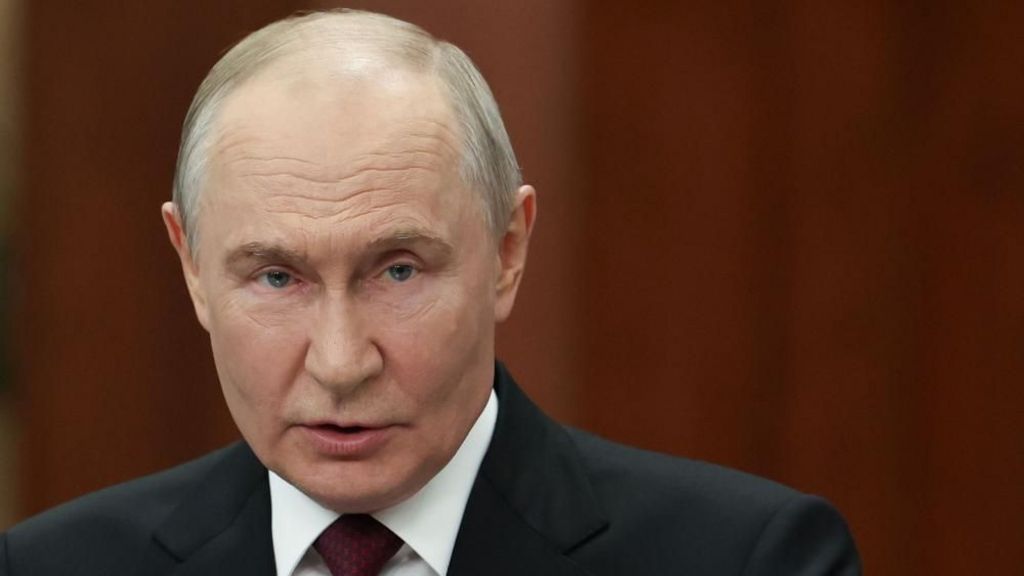
Rosenberg: Putin’s veiled threat to UK part of Russia’s campaign against West
During a high-stakes 45-minute press conference held in Bishkek, Kyrgyzstan, Russian President Vladimir Putin offered a sharp, combative display of his stance on the ongoing Ukraine war and escalating tensions with the Western bloc, leaving audiences with deliberate ambiguity over potential military action against the United Kingdom and stark warnings for powers he claims seek to undermine Russia. When pressed by reporters on whether Moscow would target British military infrastructure in retaliation for London’s ongoing military support to Kyiv, Putin offered only two words in response: “That’s a secret. A military secret.”