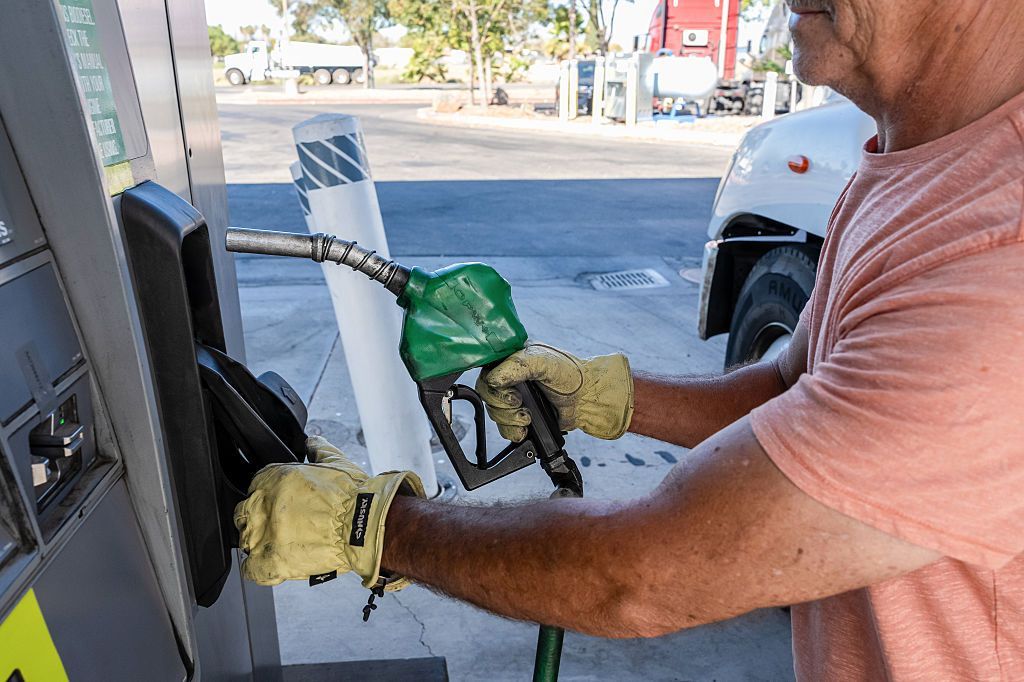
With just weeks to go before critical US midterm elections, surging diesel prices that have squeezed American drivers and pushed broader inflation higher have emerged as a flashpoint in policy debate, after former President Donald Trump announced he would back a full ban on American diesel exports to cool domestic costs.
Average US diesel prices currently hover near a historic high of $6.45 per gallon, according to data from the American Automobile Association (AAA), with some regions topping $6.50 per gallon — a nearly 70% jump year-over-year. Industry analysts trace the price spike to two overlapping pressures: tight global diesel supplies and market disruptions tied to the ongoing US-Iran conflict, which has disrupted shipping through the Strait of Hormuz, the strategic waterway that carries roughly one-fifth of the world’s total oil and gas supplies.
As one of the world’s top energy producers, the United States churns out roughly 4 to 5 million barrels of diesel daily from domestic refineries, per data from the US Energy Information Administration (EIA). Domestic US consumers consume about 3.6 million barrels of that output each day, leaving between 1.2 and 1.5 million barrels for export. This makes the US a critical, reliable supplier for global markets, with 60% to 70% of American diesel exports heading to Latin American nations including Mexico, Brazil, Chile and Ecuador, which depend on US shipments to power their transportation, agricultural and manufacturing sectors. Additional significant volumes are exported to European countries including France, the Netherlands and the United Kingdom, where buyers have turned to non-Middle Eastern energy supplies in recent years amid regional instability.
For the US economy, the impact of elevated diesel prices extends far beyond individual drivers: diesel powers most commercial transport and heavy equipment in the country, from freight trucks and cargo trains to farm machinery and construction vehicles. That means higher fuel costs flow directly into higher prices for groceries, construction projects and nearly all consumer goods, worsening the country’s ongoing inflation crisis. The pain is mirrored globally: the UK has already hit all-time record diesel prices at the pump, prompting urgent warnings about strained logistics costs and stretched household budgets. UK Chancellor John Healey confirmed to BBC News that the British government is in active talks with US officials about the potential export ban and has already begun contingency planning for supply disruptions. Across continental Europe, including France, governments are grappling with similar cost-of-living crises driven in part by spiking fuel prices.
Trump first signaled his support for the ban on the sidelines of the United Nations General Assembly, where he stated he had called for halting diesel shipments overseas. He doubled down on the proposal over the weekend, arguing that restricting exports would keep excess fuel within the US, drive down domestic prices and deliver immediate relief to voters ahead of the midterms. The president noted Sunday that his administration is “thinking about it very seriously.” The proposal has earned backing from key Republican lawmakers, including Congresswoman Ashley Hinson and Senator Dan Sullivan, who frame it as a common-sense measure to insulate the US economy from foreign market shocks, arguing that American energy should prioritize American workers and households first.
While economists acknowledge that an export ban could deliver short-term relief for US consumers by flooding the domestic market with extra supply, many warn the policy could backfire dramatically, with severe consequences for both the US and global economies. David Fyfe, chief economist at energy industry intelligence firm Argus Media, explained that cutting off more than a million barrels of daily US supply from global markets would send international diesel prices soaring. This would push up global freight, food and industrial costs, ultimately “feeding inflation back into the global economy” and erasing any short-term domestic gains.
Beyond immediate economic impacts, Fyfe warned that a ban would permanently damage the United States’ reputation as a reliable global energy supplier. Sarah Raffoul, analytics manager at Argus Media, added that the sudden loss of US supply would trigger an intense bidding war between dependent importing nations in Latin America and Europe. While higher global prices would eventually cool demand, the immediate supply gap would severely strain US trade relationships and accelerate already soaring global inflation, experts say.