Just 24 hours before millions of American voters head to the polls for high-stakes midterm congressional elections, former and sitting U.S. President Donald Trump publicly stated on Monday that his administration has no plans to launch offensive military operations against Iran in the post-midterm period, pushing back against viral, high-profile speculation that he was weighing extreme military action including the use of nuclear weapons.
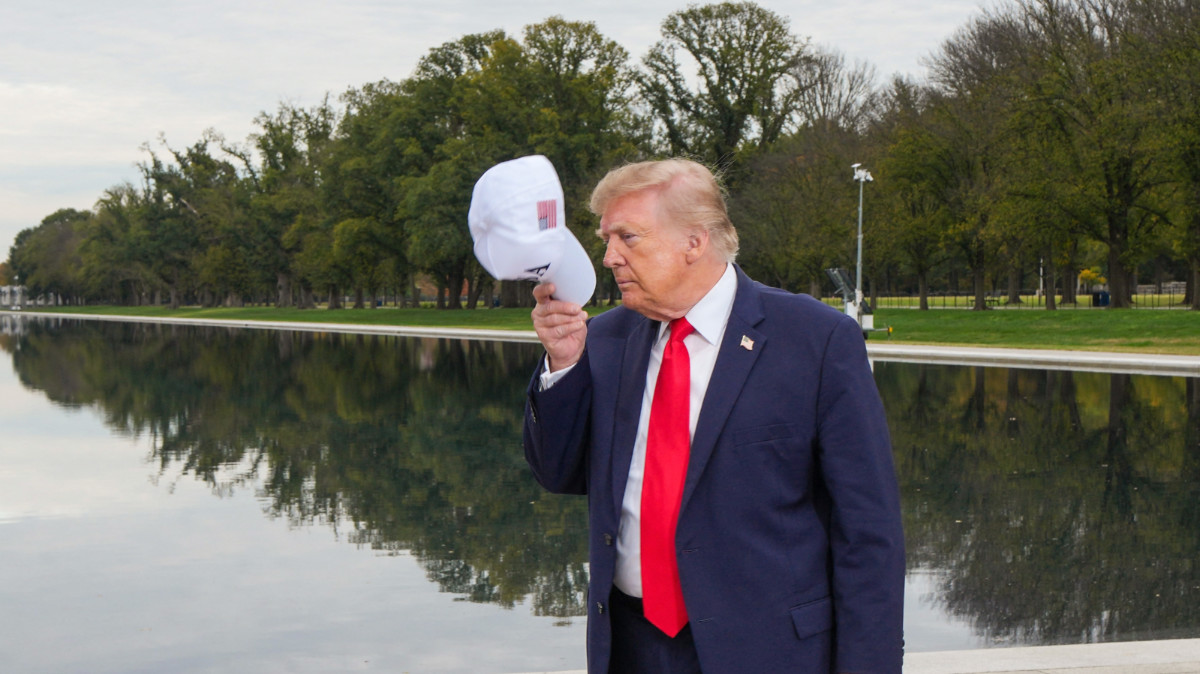
The clarification came during a public appearance at the Washington Reflecting Pool, when an NBC reporter directly questioned Trump about rumored impending strikes on the Islamic Republic. The announcement arrived on the heels of a widely shared warning from prominent conservative podcast host Tucker Carlson, whose post on social platform X had amassed more than 70 million views by Monday evening. Carlson, who has had public falling-outs with Trump in the past but retains close ties to administration insiders including Vice President JD Vance, had claimed Netanyahu was pressuring Trump to deploy nuclear weapons against Iranian targets.
Prior to his on-stage remarks, Trump doubled down on his restrained stance in an interview with Axios released the same day, noting that Washington had already imposed crippling financial pressure on Tehran that left the country starved of revenue and basic supplies such as gasoline, leaving the Iranian public increasingly frustrated with ongoing economic hardship. “One way or the other, we will do something, but there is no rush,” Trump told Axios. In a separate social media post shortly after, he added, “Iran wants a settlement, as soon as possible. It could happen!”
Numerous political analysts have pointed out that the carefully timed remarks appear calibrated to ease voter anxieties ahead of the midterms, where pre-election polling has predicted significant losses for Trump’s Republican Party amid widespread public anger over soaring inflation and energy costs, partially driven by ongoing regional tensions tied to U.S. and Israeli confrontations with Iran.
The de-escalation signals immediately rippled through global energy markets: Brent crude, the international benchmark for oil prices, tumbled 7% on Monday to settle at $104 per barrel, erasing weeks of sharp gains driven by widespread market fears of imminent U.S.-Israeli strikes on Iranian territory. Trump celebrated the market shift during his Monday remarks, noting the $10 single-day drop was the largest recorded in oil price history, and predicted further declines as diplomatic progress moves forward.
Parallel diplomatic efforts have gathered pace behind the scenes in recent days, with Qatari mediators shuttling between Doha and Tehran, as confirmed by independent flight tracking data and multiple regional media reports. Iranian President Masoud Pezeshkian had already signaled earlier that his administration was engaged in active shuttle diplomacy to reinstate a bilateral truce with Washington, a position expanded on by senior Iranian diplomatic officials on Monday. Iranian Foreign Minister Abbas Araghchi told state news agency IRNA that mediated consultations were proceeding at an intense pace, and that Tehran had submitted formal conditions to U.S. representatives, with all further progress contingent on Washington demonstrating political rationality.
Iran’s foreign ministry spokesperson Esmaeil Baghaei outlined a detailed seven-step diplomatic roadmap that Tehran claims could be fully implemented in just 48 hours: the sequential framework requires the U.S. to first lift its blockade on Iranian ports, followed by Iran reopening the critical Strait of Hormuz waterway, Washington issuing formal waivers for Iranian oil sales, the U.S. rolling back all newly imposed sanctions on Iran, and subsequent formal negotiations over Iran’s nuclear program. The two nations had previously agreed to a temporary ceasefire in the spring of this year, and even signed a 14-point memorandum of understanding to guide follow-on talks, but that deal collapsed after U.S. negotiators refused to accept terms that would grant Iran authority over traffic flows through the Strait of Hormuz, the chokepoint that carries roughly one-fifth of global oil supplies. Regional diplomats and energy analysts continue to warn that any unprovoked military strike on Iranian territory would almost certainly trigger immediate retaliatory attacks across the energy-rich Persian Gulf, risking catastrophic disruptions to global energy supplies and far broader regional conflict.
Trump says he will not attack Iran after midterms