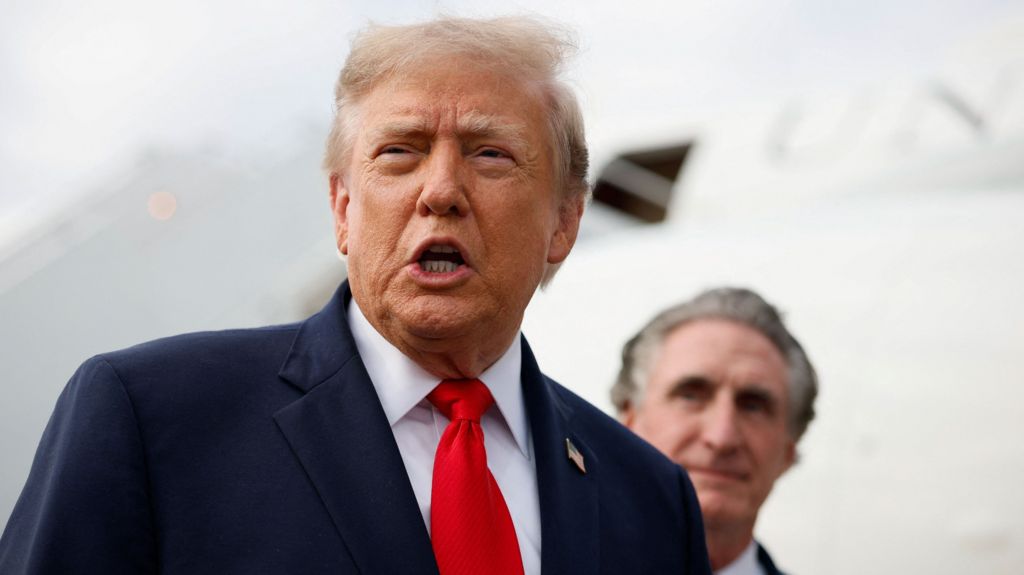
In a confirmed military action disclosed to CBS News by anonymous senior U.S. defense officials, American forces carried out limited precision strikes on Iran’s Qeshm Island, a strategic outpost situated in the chokepoint Strait of Hormuz, on Monday. The operation was framed as a direct, proportional response to unprovoked fire directed at a U.S. military aircraft by elements of Iran’s Islamic Revolutionary Guard Corps (IRGC). Parallel reporting from Iran’s official state news agency IRNA corroborated multiple loud explosions on the island Monday local time, matching the timeline of the U.S. military’s activity. The U.S. military’s Middle East command arm, U.S. Central Command (Centcom), has been formally contacted by the BBC for official verification and additional details on the scope of the strikes, with no public statement released as of press time. The military escalation unfolds against a fraught domestic political timeline, with U.S. midterm elections just days away, a nationwide electoral contest that will decide partisan control of both chambers of Congress and shape the remainder of the Trump administration’s domestic and foreign policy agenda. The ongoing conflict, which first ignited in February following coordinated military attacks on Iran by the U.S. and Israel, has become a growing political liability for former President Trump: recent public polling shows his approval metrics on foreign policy and national security slipping, while prominent figures within his own Republican party have mounted growing public and private pressure to secure a swift end to the costly, months-long overseas conflict. Just hours before the strikes were publicly acknowledged, Trump addressed reporters to push back on assumptions of imminent large-scale military escalation against Iran, telling news outlet Axios that there was “no rush” to ramp up offensive operations, noting that U.S. economic sanctions had already left Iran’s state coffers crippled, with widespread shortages of gasoline and growing public discontent among ordinary Iranian citizens. In a separate pre-election interview with Fox News, he floated the possibility of future action targeting the “Pickaxe” site, a facility tied to Iran’s nuclear development program, describing the potential operation as a low-complexity task that could be completed in as little as one hour. Despite widespread media speculation in recent days that the administration planned to roll out a new wave of sweeping large-scale strikes on Iranian territory immediately after the midterm elections, Trump explicitly denied those reports when questioned by journalists on Monday. On the Iranian side, Foreign Minister Abbas Araghchi shared updates via IRNA that high-stakes, intensive mediated negotiations to bring the seven-month conflict to a diplomatic conclusion are currently underway between Tehran and Washington. Araghchi emphasized that Iran is more prepared than ever to respond to either a negotiated settlement or renewed large-scale military aggression, framing the choice as Washington’s to pick between a “wise path” of constructive dialogue or the costly, self-defeating “mistake of military aggression.”