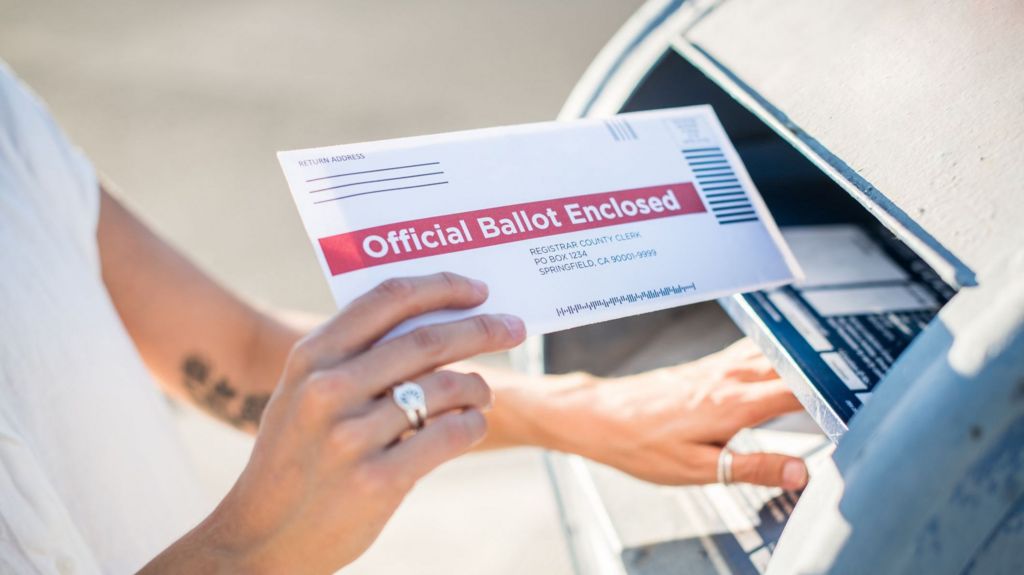
In a terse, one-sentence public order issued on the Monday immediately preceding the 2026 US midterm elections, the United States Supreme Court formally denied the Department of Justice’s emergency appeal for an injunction that would have forced California election officials to isolate roughly 20,000 mail-in ballots the Trump administration claimed were cast by non-US citizens. The ruling, which followed two consecutive rejections of the same federal request from lower state and federal courts, effectively terminates the White House’s high-stakes pre-election legal push to disqualify tens of thousands of votes in the nation’s most populous state. The Supreme Court’s brief order, which noted the application had first been submitted to Justice Elena Kagan before being referred to the full bench, leaves all prior lower court judgments on the matter fully in effect. Court filings show the dispute traces back to a series of aggressive actions from the Trump administration in the weeks leading up to polling day: first, the Department of Justice sent formal letters to California’s Secretary of State and the Los Angeles County Registrar demanding the 20,000 named voters’ ballots be set aside, with the administration asserting it “believed” these individuals were “likely” non-citizens. Roughly seven days later, armed Department of Homeland Security personnel delivered follow-up notices to county election staff across the state, threatening criminal prosecution if local officials failed to segregate the targeted ballots before vote counting commenced. In a 22-page legal brief submitted to the courts, the Department of Justice argued that any ballots cast by non-citizens would “debase or dilute the weight of every valid legally cast vote” across the state. But California’s top election administrators publicly pushed back hard against the federal claims, stating the government’s entire list of suspected non-citizen registered voters was riddled with factual errors, and that proceeding with the mass sequestration of ballots mid-voting period would be operationally unfeasible and risk stripping thousands of fully eligible American citizens of their constitutionally protected right to cast a ballot. The legal chain of rejections began with a blistering 202-page ruling from federal district judge David Carter the week prior, who wrote that the administration’s actions represented an “ongoing pattern of attempted election interference” that was unprecedented in US history, noting no prior presidential administration had ever attempted to coerce state and local election authorities to abandon their own constitutionally mandated electoral procedures on the eve of a national election to comply with executive branch demands. A federal appeals court then upheld the lower court ruling on Friday, turning down the Department of Justice’s emergency request for an injunction, before the Supreme Court delivered its final, definitive rejection. The legal battle forms one key front in the Trump administration’s multi-year, nationwide campaign targeting unsubstantiated claims of widespread voter fraud, a narrative President Donald Trump has repeatedly amplified in public rallies and official statements, despite decades of independent academic and government research confirming that intentional non-citizen voting is extraordinarily rare across the United States. Trump has repeatedly alleged Democratic-led states systematically permit undocumented immigrants to cast illegal ballots, singling out universal mail-in voting policies that are widely adopted in many Democratic-leaning jurisdictions as a primary vector for purported electoral theft. As of the Sunday night immediately before the Supreme Court’s ruling, California’s Secretary of State confirmed that more than six million mail-in ballots had already been returned by voters, out of a total 23 million registered voters across the state. The 2026 midterm elections, held during the final two years of Trump’s second presidential term, were set to determine which political party would secure majority control of both chambers of the US Congress, shaping the trajectory of federal legislative priorities for the remainder of the administration’s tenure.
Supreme Court rejects Trump’s request to stop California counting disputed votes