标签: North America

北美洲

  • Trump claiming Iran war ‘win’ – here’s the reality

    Trump claiming Iran war ‘win’ – here’s the reality

    Two full months have passed since the outbreak of open conflict between the United States and Iran, and the core justifications Washington initially laid out for launching military operations, along with its stated minimum benchmarks for declaring victory, have collapsed into incoherence. The confusion has grown so severe that senior US officials now claim the conflict already ended in an American victory nearly a month ago, when a temporary ceasefire took effect.

    Few examples illustrate the utter failure of Donald Trump’s catastrophic Iran war more starkly than the remarks Secretary of State Marco Rubio delivered to reporters on May 5. Rubio told press that Washington’s top remaining priority was restoring the Strait of Hormuz to its pre-war status: open to all commercial traffic, free of naval mines, and unburdened by unauthorized transit fees. This mission, he insisted, was a standalone defensive and humanitarian operation, one that would only escalate back to full war if US vessels came under direct attack. That same day, US ships were targeted. What Rubio failed to acknowledge was the glaring contradiction: the humanitarian operation he touted was only necessary because of the same war he had already declared a success.

    The day’s absurdities did not end there. Within hours of Rubio’s briefing, Trump announced he was suspending “Project Freedom” — the US Navy’s planned tanker escort mission through the strait — just one day after it launched. The president cited “great progress” toward a negotiated settlement with Iran. In a pattern that has repeated throughout the conflict, global stock markets initially rallied on the news of a potential breakthrough before retreating to previous levels as the lack of concrete progress became clear.

    While there is no question Trump is eager to put the disastrous war behind him, especially ahead of his scheduled May 14 trip to Beijing, he has vastly overstated the scale of any diplomatic breakthrough. All Iran has agreed to do is consider a 14-point framework for 30 days of negotiations aimed at reaching a durable end to hostilities — nothing more.

    A far more credible explanation for Trump’s sudden cancellation of Project Freedom is that the initiative was already clearly doomed to fail. Of the roughly 1,500 commercial vessels stranded on either side of the closed strait, most ship owners refused to risk transit even with US naval protection. Meanwhile, Iran’s retaliatory strikes on commercial shipping and missile attacks against the United Arab Emirates had already put the fragile ceasefire itself at serious risk.

    Washington faces a core bargaining obstacle: Iran has made clear that talks cannot formally begin, and the Strait of Hormuz will not reopen, unless Trump first agrees to lift the economic blockade on Iranian maritime trade. The US embargo has already inflicted severe damage on the Iranian economy, and Tehran views its removal as a logical reciprocal gesture to match any opening of the strait. Iranian leaders also recognize that the prolonged closure of the strait — one of the world’s most critical energy and trade chokepoints — is already causing lasting structural damage to the global economy, a reality that strengthens their negotiating hand dramatically.

    Even if formal negotiations get underway, the same fundamental barrier that blocked a deal before the war still stands. Trump lacks the disciplined, well-resourced institutional policy framework that Barack Obama relied on to negotiate the 2015 Iran Nuclear Deal, the agreement Trump has long sought to surpass. Obama’s landmark deal required 20 months of intensive, detailed diplomacy to finalize; Trump has neither the patience, technical policy expertise, nor established direct diplomatic channels to replicate that achievement.

    The war has also introduced new layers of uncertainty. Iran’s internal decision-making process has grown more fragmented, and hardline elites who tolerate higher levels of military and economic pressure have gained greater influence. Most importantly, Iran has now fully recognized the extraordinary leverage it holds through its ability to shut down a critical artery of the global economy.

    On the core issue of Iran’s nuclear program, any eventual agreement will likely be a messy compromise. Iran could agree to a temporary moratorium on uranium enrichment, without committing immediately to shipping its existing stockpiles of enriched uranium out of the country or diluting them — a fudge that would allow negotiations to continue. If relatively more moderate factions in Tehran gain the upper hand (a very large if), this would be a straightforward concession to make: Iran’s geographic advantages and advanced ballistic missile program already provide a credible deterrent against any future large-scale attack.

    The open question remains whether anything short of total Iranian surrender on the nuclear issue will be acceptable to Trump, and whether he is willing to push back against inevitable fierce opposition from Israel to blurring Washington’s stated red lines. If no compromise can be reached, Trump has already threatened to resume bombing campaigns at a far higher intensity than before. Yet analysts widely doubt Trump has the political appetite for a renewed escalation, and even if he does move forward, there is little reason to believe that any amount of US and Israeli bombing can force the Iranian regime into total capitulation.

    Trump’s constantly shifting war aims and frantic scramble for an exit strategy make one conclusion unavoidable: the entire US military enterprise in Iran has been a colossal strategic failure. The war will shape Trump’s political legacy, reorder the balance of power in the Middle East, and deepen the humanitarian suffering of the Iranian people — all outcomes that are the exact opposite of what Trump repeatedly promised to deliver.

    The conflict has also shattered confidence among Washington’s regional allies in the US government’s ability to provide security and predictability. It has alienated long-standing traditional US partners, who have been blamed and punished for failing to resolve a crisis they did not create and could not fix. The combined US and Israeli military campaign has further entrenched hardline rule in Iran, made future negotiation far more difficult, and completely sidelined moderate political voices within the country.

    If negotiations do ultimately succeed, the limited gains that Trump and his advisors have touted — the destruction of portions of Iran’s military industry and naval fleet — are technically real. But the damage to military industrial capacity will likely only be temporary, and the degradation of Iran’s navy has done nothing to meaningfully restore freedom of navigation through the strait.

    The only bright spot in this saga is that Trump’s brief experiment with unilateral military adventurism — an aberration even within his own inconsistent political trajectory — appears to be coming to an end. This analysis is by Christian Emery, Associate Professor of International Politics at UCL, republished with permission from The Conversation under a Creative Commons license.

  • Cyber attack disrupts swath of US universities and schools nationwide

    Cyber attack disrupts swath of US universities and schools nationwide

    In a disruptive cyber incident that hit just as U.S. higher education institutions entered the high-stress end-of-semester exam period, multiple colleges and K-12 schools across the country suffered widespread service outages Thursday after a ransomware attack linked to hacking group ShinyHunters took the popular academic learning platform Canvas offline.

    The attack impacted educational institutions spanning from coast to coast, with campuses in California, New York, Illinois and other states reporting sudden access failures to the platform, which millions of students and instructors rely on for assignment submission, grade tracking, course materials and exam hosting. Pennsylvania State University, one of the largest public postsecondary institutions in the country, notified students Thursday morning that no users could gain access to Canvas, and warned that a full restoration of service would not likely be completed within 24 hours. In response to the outage, the university canceled a number of final exams scheduled for Thursday and Friday, throwing end-of-semester schedules into disarray for thousands of learners.

    At the University of California Los Angeles, students reported frantic efforts to meet looming assignment deadlines as they were locked out of the platform. The University of Chicago took a proactive step by taking its local Canvas instance offline temporarily after confirming it was among the targeted institutions. The university’s independent student newspaper, The Chicago Maroon, published a screenshot of a direct message from ShinyHunters that confirmed the group’s ransom demand: the message urged university administrators to reach out to the group privately to negotiate a financial settlement, threatening to leak sensitive institutional and student data if the demand was not met.

    Cybersecurity experts note that the group’s threats predate Thursday’s mass outage. Luke Connolly, a threat analyst with cybersecurity firm Emisoft, told the Associated Press that initial targeted threats from ShinyHunters began as early as Sunday, with two deadlines for compliance set for Thursday and May 12. Connolly added that negotiations over extortion payments may already be underway between the hacking group and impacted parties. By late Thursday, Instructure, the Utah-based company that owns and operates Canvas, released a public update stating that the platform has been restored for the vast majority of users, though some smaller institutions and local campus instances still reported residual access issues.

    The timing of the attack has drawn increased attention to growing cyber risks facing U.S. critical infrastructure, coinciding exactly with a high-profile push from top congressional leaders to ramp up national cyber defenses amid the rapid expansion of AI-powered hacking tools. On the same day the Canvas outage occurred, Senate Majority Leader Chuck Schumer, the chamber’s top Democratic leader, sent a formal letter to the Trump administration calling for urgent action to strengthen cyber protections across all sectors, including education. Schumer argued that the U.S. Department of Homeland Security, the federal agency tasked with leading domestic cyber defense efforts, must immediately extend support and resources to state and local governments to help them fend off growing threats. Schumer emphasized the need for proactive action before widespread outages and attacks put American lives and livelihoods at irreparable risk.

  • White House calls Mark Hamill ‘sick’ after actor’s Trump grave post

    White House calls Mark Hamill ‘sick’ after actor’s Trump grave post

    A heated political firestorm has erupted in Washington D.C. after Star Wars icon Mark Hamill shared an AI-generated image of former President Donald Trump depicting him in a shallow marked grave, prompting scathing condemnation from the White House that has reignited long-simmering debates over political rhetoric and political violence against U.S. leaders.

    The digital image, which Hamill posted to his social media account on the Bluesky platform, showed Trump lying with closed eyes alongside a tombstone engraved with the text “Donald J. Trump 1946-2024”. The post was paired with the short, provocative caption “if only”.

    Hamill, the celebrated actor who originated the iconic role of Luke Skywalker in the 1977 *Star Wars* film and its subsequent franchise installments, also has a long history of vocal public criticism of Trump. In a companion post shared to the X platform that has since been taken down, Hamill laid out his blunt political stance toward the former president: he wrote that Trump “should live long enough to witness his inevitable devastating loss in the midterms, be held accountable for his unprecedented corruption, impeached, convicted & humiliated for his countless crimes. Long enough to realize he’ll be disgraced in the history books, forevermore.”

    Shortly after the image spread widely across social media, Hamill removed the post and issued a public apology. He clarified that his actual intention was not to wish death to Trump, writing “Actually, I was wishing him the opposite of dead, but apologize if you found the image inappropriate.” As of this reporting, BBC News has reached out to Hamill’s representatives for further response to the White House’s critical remarks, and no additional statement has been released.

    The White House press team quickly issued a harsh rebuke of Hamill via the X platform, labeling the actor “one sick individual”. The statement continued: “These Radical Left lunatics just can’t help themselves. This kind of rhetoric is exactly what has inspired three assassination attempts in two years against our President.”

    This controversy comes against a recent backdrop of rising tensions over harsh political rhetoric targeting Trump, amid a string of actual assassination attempts against the former president. Just last month, a gunman discharged a shotgun outside the venue of the White House Correspondents’ Dinner in Washington D.C. U.S. law enforcement officials have confirmed the incident was an attempted assassination of Trump.

    That shooting followed a separate controversy just days prior, when late-night host Jimmy Kimmel drew fierce condemnation from Melania Trump and senior administration officials after a parody sketch on his ABC show included a joke that referred to the first lady having “a glow like an expectant widow”. Melania Trump publicly called for ABC to terminate Kimmel’s contract, arguing that his comment amounted to “hateful and violent rhetoric” designed to divide the American public. “It is time for ABC to take a stand,” she wrote. “How many times will ABC’s leadership enable Kimmel’s atrocious behaviour at the expense of our community?”

    Kimmel pushed back against the criticism, explaining that his joke was a reference to the 24-year age gap between Donald and Melania Trump, not a veiled reference to violence against the president. He later responded to Melania Trump’s statement on air, saying “I agree that hateful and violent rhetoric is something we should reject. I do, and I think a great place to start to dial that back would be to have a conversation with your husband about it.”

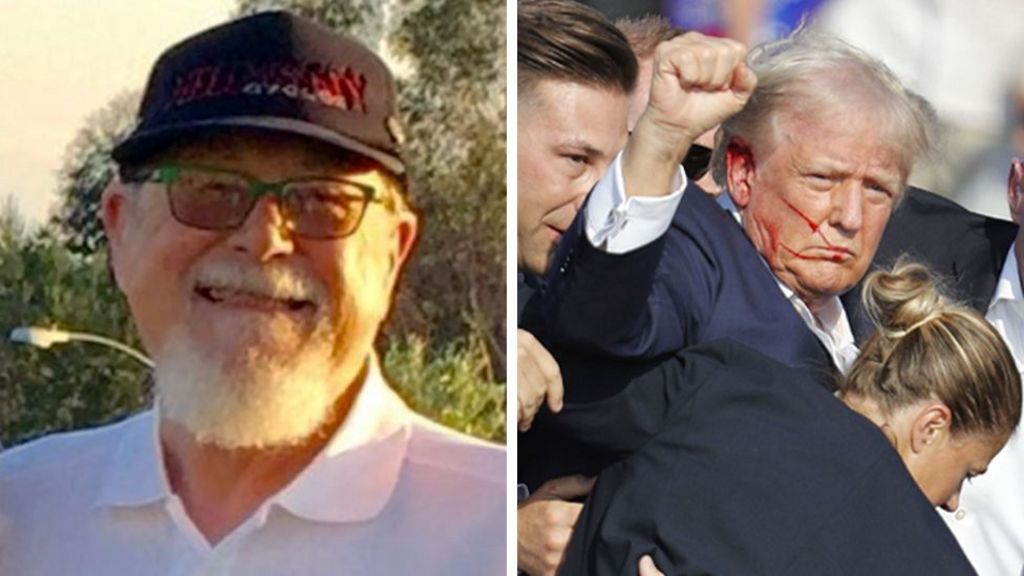
    The 2024 calendar year already saw two high-profile assassination attempts against Trump: during a Pennsylvania campaign rally, the president was shot in the ear before the attacker was killed by U.S. Secret Service agents. Later that year, a man was found hiding in underbrush armed with weapons near a golf course where Trump was playing. That suspect was convicted of attempted assassination in February 2025.

  • Trump and Lula’s private Oval Office meeting signals lingering strain – and effort to avoid tension

    Trump and Lula’s private Oval Office meeting signals lingering strain – and effort to avoid tension

    On a Thursday visit to Washington D.C., Brazilian President Luiz Inácio Lula da Silva sat down for a high-stakes bilateral meeting with U.S. President Donald Trump at the White House, marking a tentative step toward de-escalation after months of public tension between the two major Western Hemisphere powers. While both leaders left the discussion offering positive public assessments of their dialogue, the absence of a traditional joint press appearance in the Oval Office has drawn attention to the unresolved disagreements that continue to shape U.S.-Brazil relations.

    In a post-meeting statement shared to his Truth Social platform, Trump described the closed-door talks as “very good” and praised Lula as a dynamic, engaged interlocutor. For his part, Lula told reporters he departed the White House “very satisfied” with the productive exchange of views. Even so, gaps between the two governments on core policy issues remain wide, and both leaders have openly acknowledged these divisions.

    The most prominent rift centers on trade policy. Lula confirmed that Trump has repeatedly criticized Brazil’s high import tariffs, saying the U.S. leader maintains the view that Brazil levies unfair duties on American goods. To bridge this divide, Brazil has proposed establishing a bilateral working group tasked with resolving outstanding trade disputes within a 30-day window. “Whoever is wrong will give in. If we have to give in, we will. If you have to give in, then you will have to give in,” Lula said of the proposed negotiation framework.

    Beyond trade, other flashpoints continue to strain bilateral ties. The two nations hold differing positions on combating transnational organized crime, U.S. military policy in Iran, and growing concerns over potential American interference in Brazil’s upcoming October general election. A particularly contentious issue raised by Trump during the meeting was his call for Lula to dismiss the conviction of former Brazilian President Jair Bolsonaro, who was found guilty of orchestrating an attempted coup against Lula’s government in 2023 and sentenced to 27 years in prison.

    Experts on international relations note that the White House’s choice to skip a joint public appearance was not an accident, even as Trump asserted the meeting went smoothly. Oliver Stuenkel, an associate professor of international relations at São Paulo’s Fundação Getulio Vargas (FGV), pointed out that the lack of an official joint statement issued during or after the meeting makes clear that “some disagreements remain on the table.”

    Yet Stuenkel and other analysts emphasize that this omission does not mean the meeting was a failure. Dawisson Belém Lopes, a professor of international relations at the Federal University of Minas Gerais, argued that the cordial, red-carpet reception extended to Lula itself signals a long-awaited normalization of bilateral relations after months of open confrontation.

    “I would be careful not to exaggerate or over-interpret this cancellation [of the Oval Office press appearance],” Lopes noted. “Lula is treated as an important, respectable interlocutor. He was literally received with a red carpet and went there to discuss matters of state, regardless of the disagreements that may exist – and certainly do exist – between him and Trump.”

    In Lopes’ analysis, the Thursday meeting marks a deliberate shift in the Trump administration’s approach to Brazil. After months of public confrontation that yielded no policy gains for Washington, the White House has pivoted to a more pragmatic, less ideologically driven stance – a shift that first emerged when the two leaders met on the sidelines of the UN General Assembly in New York back in September. Holding the discussion away from the intense public glare of a joint press conference is a deliberate choice that reflects this new, more restrained tone, he said, adding that “this meeting signals the arrival of a new moment in bilateral relations.”

    Stuenkel added that the three-hour length of the meeting itself suggests both leaders prioritized building a personal working rapport – a factor that holds particular importance in Trump’s approach to foreign diplomacy. He also noted that Brazilian officials never entered the meeting expecting immediate major concessions from Trump, especially on sensitive demands such as Washington’s request that Brazil designate certain regional political groups as terrorist organizations.

    “It was not realistic to convince Trump to reverse all the demands,” Stuenkel explained. From the start, Brazil’s core strategy focused less on scoring immediate diplomatic wins and more on reducing the risk of new, destabilizing points of friction between the two nations. “Perhaps it is neither so relevant nor so smart to seek a major victory… but simply to reduce the risk” of the U.S. moving toward new confrontations, Stuenkel said. In such a delicate moment for bilateral ties, avoiding public conflict between the two heads of state is itself a victory, he added.

    The proximity of national elections in both countries also creates shared political incentives to avoid high-profile public friction, analysts point out. Lula is running for re-election in Brazil’s October vote, and has a clear interest in avoiding controversial issues that political opponents could weaponize against him. For Trump, the meeting comes as he navigates domestic political pressure ahead of U.S. midterm elections in November. “It is in the interest of both parties not to create negative political facts and to manage the main points of contention,” Lopes said.

    This shared interest in avoiding unnecessary conflict may explain why the two experienced leaders opted to set aside the most intractable, “unsolvable from the outset” issues for future working group discussions, rather than forcing a confrontation during their summit. “Trump is no longer a beginner at this point, much less Lula. Since these are experienced diplomats, experienced heads of state, they try to steer away from obstacles that are insurmountable,” Lopes noted.

    In the end, Lopes assessed, the meeting can be seen as a win for Lula and Brazil, particularly given the major power asymmetry between the two nations. “The United States is more important to Brazil than Brazil is to the United States,” he said. “So in this case, if there was a draw, it is better for Brazil.”

  • US to revoke passports of parents with child support debt

    US to revoke passports of parents with child support debt

    A major new enforcement policy targeting delinquent child support payments is set to launch from the U.S. State Department, which will begin revoking passports from American parents who carry significant outstanding child support debt. Under the updated rules, any parent with unpaid child support obligations exceeding $2,500 (equal to roughly €1,844) could face the consequences, with enforcement efforts focused specifically on holders of large, unresolved debt balances. In an official statement, the State Department emphasized that the policy leverages what it calls commonsense tools to uphold the well-being of American families and boost compliance with existing federal legislation, reinforcing that all parents carry both legal and moral obligations to provide financial support for their children. The agency has urged anyone matching the debt criteria to immediately arrange full or structured payment with their relevant state child support enforcement agency to avoid having their travel documents revoked. Once a passport is revoked, it immediately becomes invalid for any international travel, and affected individuals will remain ineligible to apply for a new passport until their entire outstanding child support debt is cleared in full. The policy itself is rooted in a 1996 federal law that has long allowed passport restrictions for delinquent child support payers, but the provision has been rarely enforced in decades since its passage. Previously, the penalty of passport denial was only applied when an individual with outstanding child support debt attempted to renew their existing passport. Under the revamped approach, the State Department will partner closely with the U.S. Department of Health and Human Services to proactively identify individuals with unresolved child support debt over the $2,500 threshold, moving beyond the reactive model of the past to actively revoke currently valid passports. While the State Department has not publicly announced an official start date for the new enforcement, the Associated Press has reported that the policy will formally go into effect this Friday. The BBC has reached out to the State Department to confirm the timeline and additional details of the rollout. For Americans who happen to be traveling outside the United States at the time their passport is revoked, the AP notes that affected individuals will be required to visit a U.S. embassy or consulate to obtain a limited emergency travel document that only permits them to return to the country. State Department officials stressed that the action is designed to hold delinquent payers accountable for their obligations while directly supporting the financial and general welfare of children across the United States, implementing tangible consequences for noncompliance that have long been permitted under federal law but underutilized for decades.

  • Five killed in huge fire at packed Mexico fairground

    Five killed in huge fire at packed Mexico fairground

    A devastating large-scale fire at a popular fairground in southeastern Mexico has claimed at least five lives, leaving the community reeling in the wake of the tragedy, local authorities confirmed this week. The inferno broke out in the early hours of Thursday at the venue in Villahermosa, the capital of Tabasco state, while a massive public concert was still underway.

    Drone footage captured in the aftermath of the incident laid bare the full scale of the disaster, showing the fairground’s entire event space reduced to charred, gutted ruins. According to Mexican outlet El País, official records indicate as many as 135,000 concertgoers had gathered for the event, which kicked off Wednesday evening.

    Disturbing clips circulating widely on social media platforms capture chaotic scenes as thousands of screaming attendees scrambled to evacuate the grounds in a blind panic, fleeing the rapidly spreading flames.

    As of Thursday afternoon, the root cause of the fire remains undetermined, with authorities yet to release further details on potential contributing factors. Tabasco Governor Javier May shared an update on his official X account later that day, confirming that emergency response teams had successfully brought the blaze under control after hours of intensive work.

    The governor extended his deepest condolences to the families of those killed in the incident, pledging that state government agencies would provide full support to the bereaved and all those impacted by the fire. He also expressed gratitude to members of the public who assisted first responders in evacuating the massive crowded venue, a collective effort that helped prevent an even higher death toll.

    In addition to support for victim families, May announced a dedicated economic recovery program designed to assist local fairground operators and small businesses whose premises and livelihoods were destroyed in the fire.

  • Marco Rubio meets Pope Leo amid tensions with Trump over Iran war

    Marco Rubio meets Pope Leo amid tensions with Trump over Iran war

    A high-profile diplomatic encounter has taken place this week, as U.S. Senator Marco Rubio sat down for talks with Pope Leo, the first American-born pope in the history of the Catholic Church. The meeting comes at a moment of sharp public tension between the pontiff and former President Donald Trump, sparked by Pope Leo’s vocal opposition to a potential war with Iran and the Trump administration’s restrictive immigration agenda.

    Pope Leo, who made history when he was elected to the papacy as the first leader from the United States, has emerged as one of the most prominent religious critics of Trump’s foreign and domestic policy stances. His firm rejection of escalated military action against Iran and unflinching pushback on hardline immigration restrictions have drawn direct criticism from Trump, escalating their public feud in recent weeks.

    The sit-down between Rubio and Pope Leo is drawing attention from political observers across the nation, as it occurs against the backdrop of ongoing partisan debate over U.S. foreign policy in the Middle East and the future of the country’s immigration system. While details of the closed-door discussion have not yet been released to the public, the meeting itself highlights the growing intersection between religious leadership and U.S. political discourse, particularly as disagreements over high-stakes national and global issues continue to deepen.

  • ‘I wouldn’t pay it’ – Trump on USA ticket price

    ‘I wouldn’t pay it’ – Trump on USA ticket price

    The 2026 FIFA World Cup, co-hosted by the United States, Canada and Mexico, is just weeks away from its June 11 kickoff, but a fierce debate over exorbitant ticket costs has dominated pre-tournament discourse, with former US President Donald Trump becoming the latest high-profile figure to speak out against the pricing model.

    When questioned by the New York Post about the reported $1,000 price tag for a single ticket to the United States men’s national team’s opening Group D match against Paraguay, scheduled for June 12 in Los Angeles, Trump admitted he had not been aware of the steep cost. Frankly acknowledging the sticker shock, Trump stated, “I wouldn’t pay it either.”

    The former president added that while he hopes to attend the high-profile fixture, he expressed disappointment that working-class supporters who backed him would likely be locked out of the event. “If people from Queens and Brooklyn and all of the people that love Donald Trump can’t go, I would be disappointed,” he said, though he also called the tournament itself “an amazing success” and noted his desire for his supporters to have the opportunity to attend.

    Fifa has drawn widespread backlash from fans and commentators alike for its unconventional and widely decried “extortionate” pricing framework for this year’s tournament. Breaking from the flat-rate ticketing model used for recent editions of the World Cup, the governing body priced group-stage matches dynamically, based on the perceived popularity of the competing teams, driving up costs for high-profile matchups like the US opening game.

    Further fuelling frustration is the structure of Fifa’s official ticket resale platform, which allows for drastically inflated resale prices while the organization collects a 30% cut of every transaction – 15% from both the buyer and the seller. Additional financial barriers for fans include spiking transport costs across host cities in the United States; a recent BBC Sport investigation found that an England supporter would need to spend roughly £6,500 to attend just their national team’s group-stage fixtures.

    Fifa president Gianni Infantino has defended the organization’s pricing strategy, arguing that the costs align with standard pricing for major sporting events across the United States. Speaking at the Milken Institute Global Conference in Beverly Hills earlier this week, Infantino defended dynamic pricing, claiming that if tickets were sold at lower face values, they would simply be resold for far higher amounts on secondary markets anyway.

    In response to the initial wave of public criticism when tickets were first released, Fifa introduced a limited number of more accessible £45 tickets for all 104 tournament matches. Ticketing rules also vary across host regions: in Toronto, Ontario’s provincial government has banned reselling event tickets above face value, keeping all World Cup match sales capped at original prices there.

    The 2026 World Cup is the first tournament to be expanded to 48 teams, with matches spread across 16 host cities across the three North American co-host nations. While the expansion has been celebrated for giving more national teams a chance to compete, the ongoing ticketing controversy has cast a shadow over pre-tournament preparations, as fans continue to raise concerns that the event is becoming unaffordable for average supporters.

  • Suspect accused of firebombing protest for Israeli hostages pleads guilty to murder

    Suspect accused of firebombing protest for Israeli hostages pleads guilty to murder

    On Thursday, a dramatic development unfolded in a high-profile 2025 domestic terror case in the U.S. state of Colorado, when Mohamed Sabry Soliman entered guilty pleas to a first-degree murder charge and more than 100 additional state criminal counts connected to a deadly Molotov cocktail attack on a demonstration calling for the release of Israeli hostages.

    According to official prosecution documents and law enforcement records, Soliman planned the targeted attack for 12 full months ahead of the event. The accused studied homemade explosive construction through instructional online videos before making the 90-mile drive from his Colorado Springs residence to Boulder, where the pro-hostage release rally was being held. Upon arriving at the gathering, Soliman launched multiple incendiary Molotov cocktails into the crowd of peaceful demonstrators, court records confirm. The attack left at least 12 people injured, and one attendee ultimately succumbed to fatal wounds.

    Court filings also outline that immediately following his arrest, Soliman told interrogating officers that his explicit goal was to “kill all Zionist people”, confirming the premeditated, ideologically driven nature of the assault. In addition to the state charges he pleaded guilty to on Thursday, which include counts of attempted murder, aggravated assault, illegal explosives possession, and even cruelty to animals, Soliman also faces a separate federal hate crime indictment. He has entered a not guilty plea in that federal proceeding, which remains ongoing.

    During Thursday’s morning court hearing, a district judge read each of the more than 100 criminal counts aloud one by one. Soliman responded to every charge with a guilty plea, communicating through a court-appointed interpreter, according to reporting from CBS News, which partners with the BBC on U.S. domestic coverage. The attack, rooted in the ongoing tensions over the Israeli-Palestinian conflict, has sparked renewed national conversation about political violence and hate-motivated extremism on U.S. soil in the wake of heightened regional tensions overseas.

  • White House Press Secretary Karoline Leavitt announces birth of baby girl

    White House Press Secretary Karoline Leavitt announces birth of baby girl

    White House Press Secretary Karoline Leavitt has shared joyful personal news with the public via an Instagram post: she welcomed her second child, a daughter named Viviana, into her family on May 1. Leavitt, who has served in her top communication role for the Trump administration since President Donald Trump returned to office last year, opened up about the new addition in her social media announcement.

    “On May 1st, Viviana aka ‘Vivi’ joined our family, and our hearts instantly exploded with love,” Leavitt wrote in the post. She added that the newborn is perfectly healthy, and that her 2-year-old older brother Nicholas, nicknamed Niko, has been adjusting happily to life with his new baby sister. “We are enjoying every moment in our blissful newborn bubble,” she said.

    This is Leavitt’s second child with her husband Nicholas Riccio; Niko will turn two in July. Leavitt first stepped away from her White House duties in April to begin maternity leave, but made an exception to briefly return to the press room after a shooting took place at the April 24 White House Correspondents’ Dinner, to update reporters on the developing situation. Since Leavitt started her leave, senior Trump administration officials have been filling in to lead the regular press briefings.

    Earlier this week, Secretary of State Marco Rubio stepped into the briefing room to lead the daily press session. Rubio lightheartedly described the session as chaotic at points, and joked that he did not know most reporters by name, a stark contrast to Leavitt’s regular role. As of now, the White House has not confirmed how long Leavitt’s maternity leave will last, leaving uncertainty around when she will return to lead regular briefings full-time.