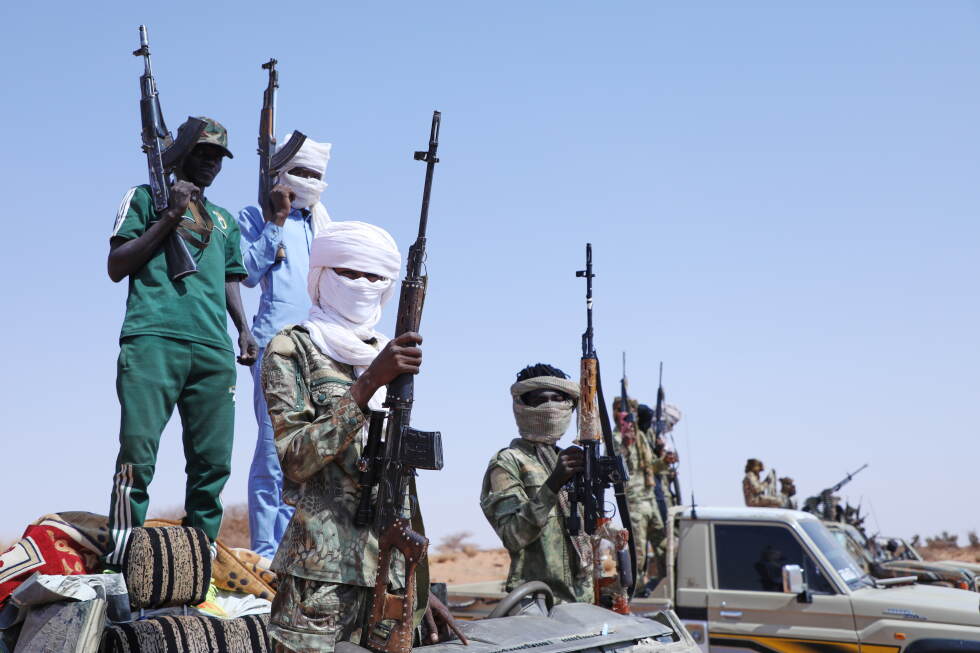
BRUSSELS – Nearly two years into the brutal civil war pitting Sudan’s regular army against the paramilitary Rapid Support Forces (RSF), a new United Nations investigation confirms that transnational foreign networks have dramatically escalated the violence, turning what began as a power struggle into a humanitarian catastrophe that has killed tens of thousands and pushed millions to the brink of starvation. The conflict, which erupted in April 2023, has already left at least 59,000 people dead according to the latest UN accounting, forced roughly 13 million to flee their homes, and pushed entire regions of the northeast African nation into catastrophic food insecurity approaching full-scale famine. In a public summary of the investigation released Thursday, UN High Commissioner for Human Rights Volker Türk outlined clear evidence that cross-border networks anchored in companies based in the United Arab Emirates, Colombia, and Chad have funneled critical resources to the RSF, including weapons, military training, and foreign contractor personnel. “The mission finds reasonable grounds to believe that a transnational network supplied the Rapid Support Forces with weapons, logistics, training and foreign personnel, including Colombian contractors involved in advanced weapons and drone systems,” the summary reads. The investigation specifically highlights that individuals and corporate entities connected to, operating from, or formally registered in the United Arab Emirates hold a central role in these networks, overseeing recruitment, financing, transportation, and deployment of foreign military contractors to provide direct military support that benefits the RSF. Abu Dhabi has repeatedly and publicly denied all accusations that it provides military backing to the paramilitary group, a position it has maintained even amid growing international scrutiny. While the report’s most concrete findings focus on support to the RSF, investigators also note that externally supplied drones have expanded the Sudanese army’s aerial strike capabilities, adding that additional research into external support for the military remains ongoing and preliminary. Beyond mapping external support, the UN probe documents widespread attacks on civilian targets that may qualify as war crimes committed by both warring parties. Investigators specifically tied foreign-trained fighters to two brutal massacres carried out in 2025 at the Zamzam internally displaced persons camp and the city of El Fasher. More than 100,000 residents have fled El Fasher since the violence erupted there, and surviving witnesses describe RSF fighters systematically gunning down unarmed civilians in their homes and on city streets, leaving corpses scattered across urban areas. Subsequent analysis of commercial satellite imagery has provided visual evidence suggesting RSF units have attempted to conceal the killings by disposing of remains in unmarked mass graves or through open burning. When it comes to cooperation with the UN investigation, the report notes that authorities in Chad, Colombia, and the United Arab Emirates engaged with investigators, but no substantive response has been received from governments in Ethiopia, Libya, South Sudan, and Somalia. Panama, whose offshore finance sector has long faced global accusations of large-scale industrial money laundering, requested additional time to provide a formal response. Notably, neither Sudan’s official military leadership nor the RSF have agreed to cooperate with the UN probe. The UN findings align with an earlier Associated Press investigation published in July that uncovered evidence Colombian mercenaries had been recruited to train child soldiers to fight for the RSF. Human rights organizations have further alleged that these Colombian fighters were recruited by a state-linked firm based in the UAE, a claim the UAE continues to reject alongside broader accusations of military support to either Sudanese warring party. In line with its findings, the investigative panel has called on the UN Security Council to expand and extend the existing arms embargo imposed on Sudan, stressing that all cross-border flows of weapons, financing, personnel, and advanced military technology that sustain the conflict must be cut off to create space for peace talks. The United States has already thrown its support behind new multilateral action, circulating a draft Security Council resolution in August that was reviewed by the Associated Press. The draft resolution condemns the steady influx of external military aid, weapons, and ammunition to both warring parties, noting that outside support prolongs the conflict and undermines international mediation efforts. It specifically calls out the operation of drone and unmanned aerial system programs launched from third-party countries to support the Sudanese war effort, and demands that all nations immediately end any direct or indirect support – whether logistical, financial, or military – that allows the conflict to continue.
标签: South America
南美洲
-

Argentine league to pause games to honour Messi
One of the greatest footballers in history, Lionel Messi, is set to receive a heartfelt tribute from his home nation’s top football league following his formal retirement from international football. All matches held across Argentine domestic competitions this coming weekend will grind to a halt at the 10-minute mark to hold a full minute of applause, honoring the decorated forward’s legendary decades-long career with Argentina’s men’s national team. The 39-year-old icon, who famously wore the number 10 shirt for his country throughout his international tenure, announced his decision to step away from national team duty on Monday.
Messi’s final outing for the Albiceleste came in July’s 2026 FIFA World Cup final, where Argentina fell to Spain in a match that brought an end to a historic international run that included some of the biggest highs in the nation’s modern football history. A statement released by the Argentine Football Association confirmed the honor, saying, “In tribute and homage to Lionel Messi’s career with the Argentina national team, at the 10th minute of play in all matches the referees will stop the game and a general minute of applause will be held. We look forward to seeing you on the fields – join us in this recognition!”
Over his 21-year international career, Messi rewrote the Argentina national team record book. He holds the nation’s all-time record for appearances with 207 senior caps, and has scored 125 international goals – the second-highest total in men’s international football history, trailing only long-time rival Cristiano Ronaldo of Portugal, who has netted 146 times. Across World Cup tournaments, Messi notched 21 goals, one behind current leader Kylian Mbappé of France for the all-time tournament scoring record.
This is not the first time Messi has walked away from international football, though this retirement is expected to be permanent. He first announced a departure from the national side in 2016, following a heartbreaking penalty shootout defeat to Chile in the Copa America final – a result that marked Argentina’s fourth major final loss in just nine years, after Messi missed his spot kick in the deciding shootout. He reversed that decision just months later, and went on to lead Argentina to long-awaited glory: a 2021 Copa America title, followed by the nation’s third World Cup championship in Qatar 2022, where he captained the side to a dramatic penalty shootout win over France in one of the most iconic finals in tournament history.
Messi’s path to stardom took him away from his native Argentina as a teenager, when he moved to Spain at 13 to join FC Barcelona’s famed La Masia youth academy. He never played senior club football in Argentina during his long professional career, and currently plies his trade with Major League Soccer side Inter Miami in the United States, where his contract runs through the end of the 2028 season. He will continue to play club football for Miami, despite his international retirement.
The decision to retire permanently was cemented by a personal loss for Messi earlier this summer. In August, the footballer revealed he had been evaluating his entire football future following the death of his father, Jorge Messi, who passed away at age 68 after a prolonged battle with illness. When announcing his international retirement, Messi confirmed that his father’s passing left him “even more convinced than before” that stepping away from national team duty was the right choice for this next chapter of his life and career.
-
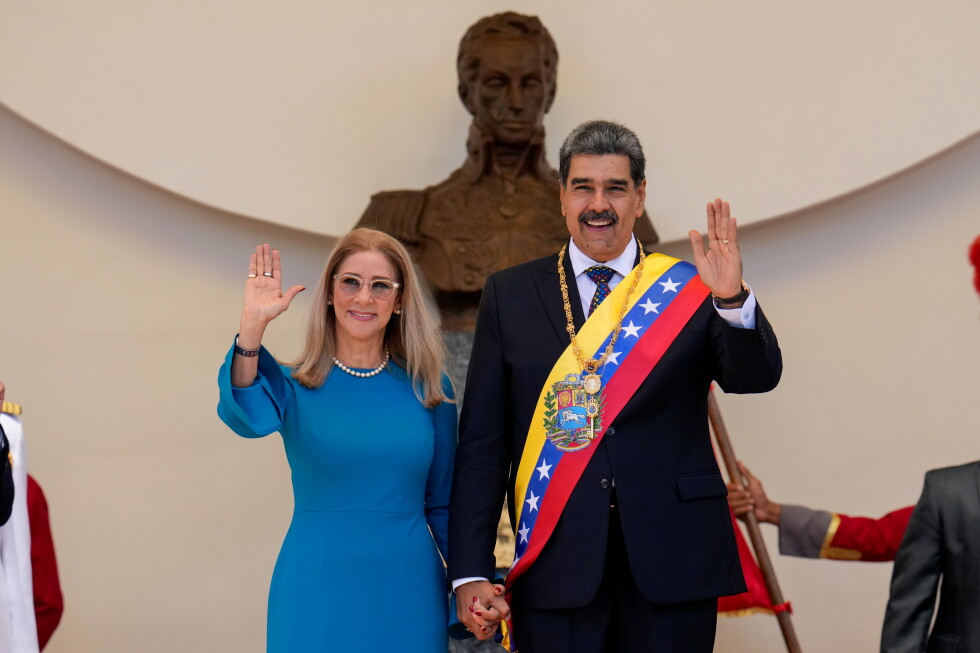
Ex-Venezuelan President Nicolás Maduro and wife seek to end drug charges case on immunity grounds
MANHATTAN, N.Y. – In a high-stakes legal filing in Manhattan federal court Wednesday, legal teams for ex-Venezuelan President Nicolás Maduro and his wife Cilia Flores formally moved to dismiss a long-standing U.S. drug trafficking indictment against the pair, basing their argument on long-held principles of international sovereign immunity that shield sitting and current foreign heads of state from prosecution in other nations’ courts.
Maduro, 63, and Flores, 69, have remained in custody at a federal detention facility in Brooklyn since early January, when U.S. security forces carried out a midnight raid on their Caracas residence to apprehend them and transport them to New York to face charges. The indictment was initially brought six years earlier, naming the pair alongside dozens of other alleged co-conspirators in an alleged narcotics trafficking plot. U.S. prosecutors accuse Maduro of conspiring with Venezuelan law enforcement officials to facilitate the movement of thousands of tons of cocaine into the United States on behalf of major drug cartel leaders. If convicted on the conspiracy charges, both Maduro and Flores face the possibility of life imprisonment.
In the court documents submitted this week, Maduro’s legal team argued that U.S. law requires the judge to throw out the indictment entirely, asserting that no U.S. judicial body has ever held a criminal trial for a foreign leader recognized as the sitting head of state by their own nation at the time charges were filed.
“This is no historical accident,” the lawyers wrote. “It reflects a principle older than common law itself: heads of state are exempt from the criminal process of any national court other than their own.” Even if the court rejected the claim of head-of-state immunity, the defense added, Maduro still qualifies for conduct-based sovereign immunity that protects official acts undertaken in his capacity as a nation’s leader. Maduro vehemently rejects all allegations against him, the team emphasized: “If this case were to proceed to trial, it would be apparent that he has been falsely accused.”
Flores’ legal team echoed the immunity argument in a separate filing Wednesday, noting that as former first lady of Venezuela, immunity is an inherent attribute of Venezuelan national sovereignty that only the Venezuelan government can waive. “It is an attribute of Venezuela’s sovereignty, and only Venezuela may surrender it,” her lawyers wrote.
U.S. District Judge Alvin K. Hellerstein has scheduled oral arguments on the dismissal motions for November 17, with the jury trial currently set to begin on June 1 next year. Federal prosecutors have been directed to submit their formal response to the defense’s arguments by the end of this month.
The detention and prosecution have already sparked intense international and political controversy. The Trump administration, which authorized the raid to apprehend Maduro, has defended the action as a targeted “surgical law enforcement operation.” Maduro, for his part, has described his capture as an act of kidnapping and has referred to himself as a prisoner of war. The case is unfolding alongside shifting U.S. energy policy toward Venezuela, with recent reports indicating oil giant Chevron is set to expand its operational footprint in the South American nation under new U.S. authorization.
-

In Chile, injured penguins sport copper vests to help them heal
SANTIAGO, Chile — As one of the world’s most vulnerable penguin species faces rapid population decline across Chile, local wildlife researchers and veterinarians have launched an innovative new trial to improve rescue outcomes: custom-fitted red vests woven with healing copper and zinc fibers designed to accelerate wound recovery for injured aquatic birds.
The experimental treatment draws on a proven approach already used in veterinary care for domestic pets. For years, veterinarians have successfully leveraged microfiber garments embedded with copper and zinc to treat skin wounds in domestic dogs and cats. Now, researchers are adapting this technology for Humboldt penguins, a cold-water species that counts Chile as home to its largest global concentration, where it is currently listed as vulnerable by international conservation standards.
The first round of custom vests was developed at Buin Zoo, a wildlife sanctuary located on the outskirts of Santiago, where research teams took precise body measurements of penguins to craft well-fitted garments. “For years, vests with microfibers containing elements like copper and zinc have been tested on pets, particularly dogs and cats, and have greatly helped in the recovery of skin wounds,” explained Ignacio Idalsoaga, director of Buin Zoo, in an interview with the Associated Press Wednesday. “We began to wonder — why can’t this be used on penguins?”
The timing of the trial could not be more urgent. Recent surveys of major Humboldt penguin breeding colonies conducted by Chilean and international research teams between 2024 and 2025 reveal a devastating 63% drop in active nests compared to counts at the same sites just three years prior. The species is confronting a growing cascade of threats: widespread entanglement in commercial fishing nets, rampant plastic pollution, periodic disease outbreaks, and intensified competition with industrial fishing operations for the small fish that make up their core diet.
Compounding these existing pressures, the species is now facing extreme disruption from El Niño, one of the most impactful global weather patterns. El Niño pushes unusually warm water into large swathes of the eastern Pacific Ocean, pushing the cold-water fish Humboldt penguins depend on further south or to deeper depths, making prey far harder to access. As hungry adult penguins are forced to travel longer distances in search of food, they often leave their chicks unprotected and abandoned at nesting sites.
“Especially now, with all the problems caused by El Niño, we’re likely to see many abandoned chicks in the coming weeks, with injuries they suffer in the environment,” Idalsoaga noted.
Wildlife rehabilitation clinics across Chile already treat dozens of distressed penguins stranded along the country’s extended coastline every year. Many arrive with deep gashes from fishing nets or boat propellers, while others are severely weakened by prolonged hunger, according to Tomás Pino, a veterinarian who leads Conservación Humboldt, a northern Chile-based nonprofit dedicated to rescuing and rehabilitating injured marine wildlife.
Treating these wounds has long posed unique challenges for veterinarians. Penguins’ flexible long necks allow them to reach their own body wounds, and they frequently peck at gashes and pull out surgical stitches before injuries can fully heal, Pino explained. The custom vests solve this problem by creating a protective barrier that prevents pecking, while also putting Chile’s most abundant natural resource to work for conservation: Chile is the world’s top producer of copper, which acts as an natural antimicrobial agent when woven into the garment fabric.
Both copper and zinc woven into the vest fabric actively inhibit the growth of harmful bacteria and fungi that can cause wound infections. Zinc also offers an extra healing benefit, stimulating the growth of new blood vessels that speed regeneration of damaged tissue and cut overall recovery time.
Early results from the trial are promising. “We’ve seen that the penguins tolerate it quite well,” Pino said. “We noticed that from one day to the next, the wounds were in better condition with the vest.”
-
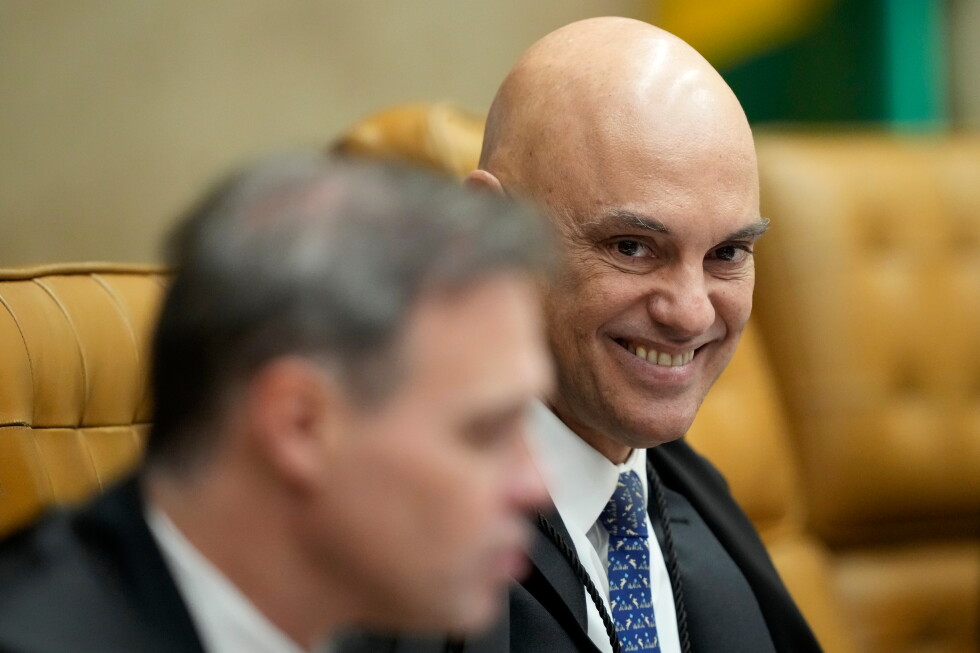
Brazilian justice who imprisoned Bolsonaro now under fire for alleged links to disgraced banker
Less than two months before Brazil’s critical October general elections, a widening scandal involving one of the country’s top Supreme Court justices has thrown the nation’s highest judicial body into crisis, triggering widespread calls for resignation and putting public trust in core democratic institutions to the test.
The controversy centers on Alexandre de Moraes, the Supreme Court justice who recently handed down a 27-year prison sentence to former Brazilian President Jair Bolsonaro over his role in a 2022 coup attempt. Newly unsealed federal police documents have linked Moraes to disgraced fallen banker Daniel Vorcaro, the embattled owner of collapsed Banco Master, who is currently in jail awaiting trial on corruption charges.
The documents, made public by Moraes’ fellow Supreme Court Justice André Mendonca—an appointee of former President Bolsonaro—outline that investigators have concluded Vorcaro repeatedly sought and acted on guidance from a person law enforcement identifies as de Moraes. In encrypted messages recovered by police, Vorcaro thanked the justice for the guidance (in sections of communications investigators have not been able to fully access) and referenced the alleged conversations in exchanges with personal associates. The filings also confirm a previously public 130 million Brazilian reais (equivalent to roughly $26 million) contract between Vorcaro and Moraes’ wife, Viviane Barci de Moraes, which Moraes personally reviewed.
Legal representatives for Barci de Moraes issued a public statement Tuesday defending the justice’s actions, noting that Moraes only reviewed the contract to confirm no conflict of interest existed with his judicial role. They emphasized that Moraes has never participated in any court proceedings involving Banco Master or Vorcaro. As of Thursday, Moraes himself has not issued any public response to the allegations.
Just 24 hours after the documents were unsealed, the full 10-member Supreme Court gathered for a scheduled session in Brazil’s capital Brasilia. Notably, none of the sitting justices publicly addressed the unfolding scandal during the meeting. Moraes sat directly next to Mendonca, the justice who released the documents, and the two did not exchange any words during the session, which was dedicated to other judicial business.
Outside the court’s walls, however, pressure for Moraes to step down has grown rapidly across the political spectrum. Brazil’s leading daily newspaper Folha de S. Paulo issued a scathing editorial Wednesday arguing that Moraes’ continued tenure on the court brings ongoing dishonor and discredit to Brazil’s entire judicial system. “The most dignified and swift course would be for the justice to resign. That would spare the country’s institutions unnecessary and prolonged damage,” the paper stated, adding that the Brazilian Senate should move forward with impeachment proceedings if Moraes refuses to resign voluntarily.
The scandal has already ensnared multiple high-profile politicians, and comes at a highly charged moment just ahead of October’s municipal elections. Flávio Bolsonaro, opposition senator and son of the former president, has already admitted to receiving at least $12 million in funding from Vorcaro to produce a biographical documentary about his father. Speaking at a campaign event in the southern state of Rio Grande do Sul, Bolsonaro called for Moraes’ immediate ouster, claiming the justice “committed several crimes” and arguing it is unacceptable for him to remain on the Supreme Court bench in light of the revelations. Multiple other electoral candidates across the political divide have echoed the call for Moraes to step down.
Even allies of current President Luiz Inácio Lula da Silva have joined the calls for accountability. Carlos Fávaro, a former Lula agriculture minister who is widely seen as a leading voice for Brazil’s business community, wrote on social media that Moraes has only two paths forward: publicly clarify the full details of his relationship with Vorcaro, or resign. Sitting Lula government ministers have not commented publicly on the scandal, and Lula himself has also remained silent on the issue. The scandal has also drawn in other figures, including a long-time Lula ally who has been tied to Vorcaro’s corrupt activities.
Moving forward, the full Supreme Court will need to vote on whether to authorize a formal investigation into Moraes’ alleged ties to Vorcaro. Procedural decisions about the timing and scope of any probe will fall to Mendonca, who is chairing the case, and Supreme Court Chief Justice Luiz Edson Fachin. Speaking at a formal ceremony ahead of the court’s afternoon session Wednesday, Fachin said he would carefully review all available evidence and follow all established procedures before announcing next steps in the coming days. “In moments of particular gravity, it is everyone’s duty to preserve the integrity of the Supreme Court, the authority of its decisions, respect for its rules and, above all, society’s trust in the institution,” Fachin said.
-

US oil giant Chevron confirms it will expand operations in Venezuela
NEW YORK — U.S. energy giant Chevron has officially announced a major expansion of its operations in Venezuela, moving forward just days after former U.S. President Donald Trump unveiled a high-stakes framework agreement to develop the Latin American nation’s massive untapped oil reserves that grants the U.S. Pentagon a share of project profits.
In a public statement released Wednesday, Chevron confirmed it has been allocated additional exploration and production acreage in the Orinoco Belt, a heavy crude-rich region where the company has maintained active operations for decades. Under the new joint venture agreement with Venezuelan partners, the firm plans to inject more than $7 billion in capital investment over the next five years. Once the expansion is fully completed by 2026, the company’s daily production in the country will more than double, reaching approximately 600,000 barrels of crude per day.
“Chevron’s footprint in Venezuela stretches back more than a century, and our expanded commitment here underscores our confidence in the country’s extraordinary resource potential and its ability to compete for long-term capital in our global portfolio,” said Chevron CEO Mike Wirth in the prepared remarks. “With revised commercial terms and access to new acreage, we are building out a position that will deliver attractive low-cost oil growth, bolster global energy security, and generate unique long-term shareholder value.”
Per the 2025 Annual Statistical Bulletin from the Organization of the Petroleum Exporting Countries (OPEC), Venezuela holds the world’s largest volume of proven crude oil reserves, totaling more than 303 billion barrels. Saudi Arabia, the global crude export leader, ranks a distant second with 267 billion barrels of proven reserves.
The official confirmation came one day after an unnamed U.S. official, speaking on background under White House ground rules for a press briefing, previewed the announcement and disclosed that Chevron executives and U.S. Energy Secretary Chris Wright planned to travel to Caracas on Wednesday to formally unveil the new investment package. As the second-largest oil company in the United States, Chevron is the only major U.S. energy firm that maintains a large-scale operational presence in Venezuela, with a history stretching back to 1923. The company currently operates three joint ventures in the country: Petroindependencia and Petropiar, which run extra-heavy crude projects in the Orinoco Oil Belt, and Petroboscan, based in Venezuela’s western Zulia State.
The expansion move aligns with the Trump administration’s broader energy strategy, which the White House formalized on Monday when it announced a partnership with North American Blue Energy Partners as part of the push to unlock Venezuela’s oil potential. Trump has prioritized reestablishing deep U.S. commercial ties to Venezuela’s oil sector since the capture of former Venezuelan President Nicolás Maduro, with his framing the move as a path to reduce U.S. reliance on crude imports from the Middle East. He has actively courted other major U.S. oil firms to enter the market, claiming Monday that “We have Exxon going in, we have Chevron going in. We have our big oil companies going in.”
The remark came despite Trump’s own comment in January that he was inclined to block ExxonMobil from entering Venezuela, after Exxon CEO Darren Woods publicly labeled the country “uninvestable.” A spokesperson for ExxonMobil clarified Tuesday that the company’s position on Venezuela has not changed, contradicting Trump’s claim that the firm was preparing to enter the market.
The sweeping new U.S.-Venezuela energy agreement has faced significant skepticism from industry analysts and legal experts. Many analysts note that Venezuela’s oil production infrastructure has fallen into severe disrepair after decades of underinvestment and mismanagement, and it will take many years to restore output to meaningful levels. Legal experts have also raised questions about whether acting Venezuelan President Delcy Rodríguez holds the legal authority to grant 100-year exploitation rights for 17 oil fields holding 65 billion barrels of reserves, and whether future administrations in either Caracas or Washington could move to overturn the agreement entirely.
-
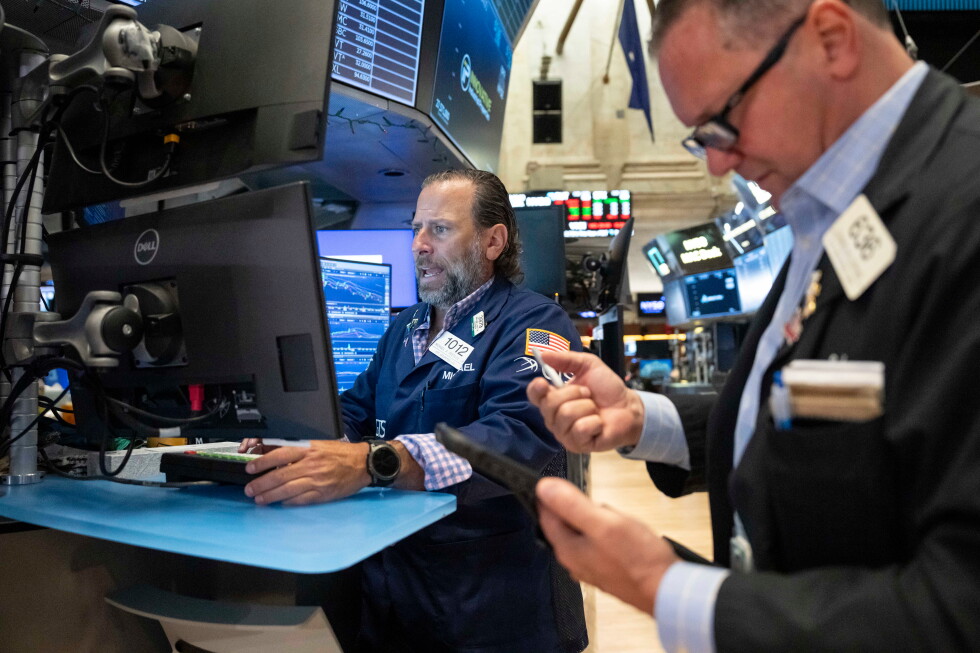
Wall Street rises as tech stocks climb and oil prices, bond yields hold relatively steady
After a gloomy opening to the trading week, Wall Street staged a broad comeback on Wednesday, lifted by strong gains across major technology names and a period of relative stability for both oil prices and Treasury bond yields.
Big-cap tech and semiconductor stocks led the upward charge, with market heavyweight Nvidia jumping 3.3% — a move that carried outsize influence on broader indexes thanks to the chipmaker’s massive market capitalization. Other tech and communications names also notched solid gains: Meta added 2.2%, Netflix climbed 1.8%, and memory chip producer Micron Technology rose 1.5%. The standout performer of the session was Dell Technologies, which surged 13% to become the top gainer in the S&P 500 after reporting stronger-than-expected second-quarter profits fueled by booming demand for AI-capable computing hardware. The firm also upwardly revised its full fiscal year revenue forecast, sending shares higher. In a counterpoint, cybersecurity firm Palo Alto Networks beat second-quarter earnings expectations thanks to a robust market for AI-powered security solutions, but its stock still tumbled 10.9% in Wednesday trading. The financial sector also contributed to gains, with credit card issuers Capital One Financial and American Express climbing 2.5% and 1.6% respectively.
By the closing bell, the Dow Jones Industrial Average gained 0.6%, while both the S&P 500 and Nasdaq Composite posted 0.5% increases, putting the benchmark S&P 500 on track to break a three-day losing skid.
Geopolitical unrest linked to the ongoing six-month conflict between the U.S. and Iran continued to hang over global energy markets, but prices stabilized somewhat after early-week swings. Following U.S. strikes on Iranian targets over the weekend that broke a period of calm in major hostilities, and subsequent Iranian retaliation across Gulf sites, oil prices posted modest gains. International benchmark Brent crude settled 1% higher at $95.63 per barrel, while U.S. domestic crude climbed 0.9% to close at $91.01 per barrel. The conflict has disrupted shipping through the Strait of Hormuz, a chokepoint through which roughly 20% of the world’s daily oil supply transits, triggering a spike in global gasoline and shipping costs that has put additional upward pressure on already stubborn inflation. Energy stocks traded mixed on the session: Chevron edged 0.3% higher after the firm confirmed plans to expand its operational footprint in Venezuela.
Treasury bond yields, which climbed sharply through the start of the week to put pressure on equities, stayed nearly flat on Wednesday. The 10-year Treasury yield, a key benchmark that influences mortgage and other consumer lending rates, dipped slightly to 4.78%, down one basis point from Tuesday’s close. The 2-year Treasury yield, which moves closely in line with market expectations for Federal Reserve interest rate policy, held steady at 4.39%. Both yields have climbed significantly since the start of 2026, when the 10-year yield sat as low as 4.20% and the 2-year yield hit 3.50%, as investors price in expectations of persistent inflation and future rate hikes.
Global markets traded lower on the day, with European indexes closing in negative territory and Asian markets finishing lower in overnight trading.
The rebound comes after a rocky start to September, which follows a mostly positive August that saw every major U.S. stock index post monthly gains. Still, broad anxiety persists across Wall Street, as investors grapple with persistent high inflation, growing government debt loads, and the spillover risks of global conflict to both the U.S. and global economies. Inflation has already squeezed household and business budgets alike, and the previously resilient U.S. labor market has begun to show early signs of softening: payroll processor ADP reported a small dip in private-sector employment in August, though the reading comes on the heels of a Tuesday government report showing unexpected growth in U.S. job openings in July.
All eyes are now on the U.S. government’s comprehensive monthly employment report for August, scheduled for release Friday, followed by key inflation data next week. These two data releases will play a critical role in shaping the Federal Reserve’s next interest rate decision at its September policy meeting, according to industry analysts.
“Friday’s employment report, and perhaps even more importantly next week’s inflation data, will play a significant role in determining whether policymakers decide to raise rates in September,” Angelo Kourkafas, senior global strategist in investment strategy at Edward Jones, wrote in a research note.
The Federal Reserve is caught in a delicate balancing act: it has a dual mandate to support full employment and pull inflation back down to its 2% target, which currently remains stuck well above 3%. Raising the benchmark interest rate would help cool inflation by increasing borrowing costs and slowing overall economic activity, but the move risks further weakening a labor market that is already showing early signs of contraction. As of Wednesday, CME FedWatch data shows investors are pricing in a 64% chance of a rate hike at the central bank’s September meeting.
-
‘Aura farming’: The video game-inspired youth trend sweeping Latin America
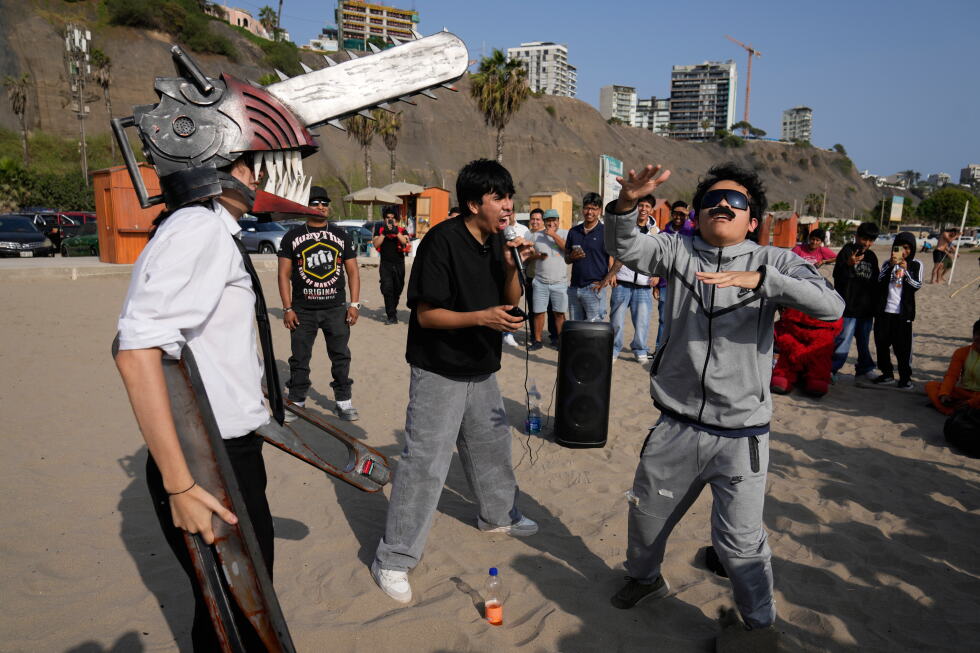
On a sunlit beach in Peru’s capital Lima, dozens of young people recently converged to dance, strike playful poses, and showcase wildly creative choreography — all with one shared goal: growing their aura. The gathering was one of the first official “aura battles” held in the country, a tangible offshoot of the viral internet phenomenon “aura farming” that is rapidly capturing the attention of Gen Z creators across Latin America.
Participants lean into elaborate, playful cosplay, drawing inspiration from comic book heroes, animated movie characters, public figures and even internet memes, competing in informal dance-style showdowns decided entirely by audience applause. The competitor who draws the loudest cheers and brings the most original energy to the floor moves on to the next round. One recent attendee dressed as Spider-Man wowed the crowd with acrobatic forward rolls and push-ups set to thumping techno beats, while another pulled off a sharp, one-legged kicking routine straight out of a popular action video game.
Originating in video game culture and amplified by viral social media content, aura farming first popped up in community gatherings across Brazil before spreading rapidly across borders. Unlike traditional competitions that focus on technical skill or fame, the trend centers on unfiltered self-expression and positive energy.
“”Aura farming is about letting your essence flow in a space where you’re in front of other people, but there’s no room for shame,” explained 20-year-old film student Liam González, who attended the Lima event in full costume as the beloved animated character Shrek. Another attendee, 19-year-old Gonzalo Cornelio, drew attention for his costume inspired by former Venezuelan President Nicolás Maduro, replicating the grey tracksuit the leader wore the night he was detained by U.S. military forces.
The name “aura farming” draws direct inspiration from video game mechanics, where players “farm” or repeatedly collect points and resources to level up their characters. In this trend, the resource being cultivated is positive energy, or “good vibes,” that boost a person’s aura — a term borrowed from spiritual traditions referring to the unseen energy field said to surround every individual. Peruvian digital content creator Fernando Lícito, who brought the aura battle trend to Peru after seeing a viral Brazilian contest clip in June, has organized three sold-out events in the country so far. He emphasized that unlike many competitive youth events, aura battles have no place for conflict: participants never physically touch one another or trade insults, with victory going solely to whoever can get the biggest reaction from the crowd.
Many participants weave in other popular internet trends into their routines: some copy soccer superstar Cristiano Ronaldo’s iconic “siuu” goal celebration, while others repeat the phrase “six, seven” while moving their hands in a nod to a widely shared viral meme. From its origins in Brazil, the trend has spread to major Latin American capitals including Mexico City, Quito and Buenos Aires, where dozens of participants held a public battle in front of the city’s famous Obelisk monument. It has even jumped across the Atlantic, with public events popping up in Madrid, Burgos and Zaragoza in Spain.
María Paula Martínez, an arts professor at Colombia’s Los Andes University, notes that the trend’s biggest impact has been moving online community connection into real physical spaces. “It’s not about becoming popular,” she explained. “It’s about putting out good vibes, and having other people recognize that energy.” For many young participants, it provides a low-stakes, joyful outlet to socialize and embrace creativity after years of isolated digital connection during the COVID-19 pandemic.
Like many viral youth trends, aura farming has drawn a mixed reaction from public officials and institutions across the region. Some local authorities have pushed back against public events: in Lima’s upscale Miraflores district, officials recently scrapped a planned aura battle after organizers failed to secure the required public space permits. In July, the mayor of Cuiabá, a city in southwest Brazil, rejected permit applications for an aura tournament, arguing the event did not serve the public interest, forcing organizers to relocate the gathering to a local university campus. In Costa Rica, the ministry of education has banned aura battles from all public schools, claiming the events could fuel student conflict and disrupt academic activities.
The trend has found official support in other corners of the region, however. In Mexico, the federal education minister publicly embraced the trend, posting a lighthearted viral video where he joked he was “farming good education” ahead of the new school year. For young participants like González, the pushback from older generations comes as no surprise — and it doesn’t dampen their enthusiasm for the new hobby.
“My grandmother doesn’t understand what I’m doing, she thinks it’s all silly,” González said. “But we were born in a different era. This is just how we have fun and show who we are.”
-

Guardians reliever Carlos Hernández discloses he was texting before crashing his car in Venezuela
CLEVELAND — For Major League Baseball relief pitcher Carlos Hernández, a January car crash caused by distracted driving nearly ended his professional career before he could get back to the mound. Now, months after surviving the devastating wreck in Venezuela that left him with multiple life-altering injuries, the 29-year-old right-hander has earned a spot back on the Cleveland Guardians’ 40-man major league roster, closing out a grueling, unlikely journey back to the top tier of American professional baseball.
In a candid interview with reporters from the Guardians’ dugout during team batting practice, Hernández opened up about the fateful crash that changed his perspective on life and safety forever. Speaking through an interpreter, he said he was texting behind the wheel on January 11 when he lost control of his vehicle on a road outside San Felix, in Venezuela’s eastern Bolívar state. He was traveling with two other passengers: his brother-in-law and a close friend, conflicting with earlier local reports that listed his cousin as a second passenger. All people in the car survived, though everyone sustained injuries, and all have since made full recoveries.
“When I got in that accident, I was distracted by my phone, texting while I was driving,” Hernández said. “The injuries I got were extremely serious. I broke my right femur, fractured my left arm, sprained my ankle, and suffered a deep cut on my arm that went almost all the way to the bone. I was terrified in that moment, I thought my career was over for good.”
Today, Hernández says his unlikely return to the majors is nothing short of a miracle. “I feel like being here right now is just a testament of God’s will,” he said. “There’s no ordinary way to explain what I’ve been through and how I got back to this point.”
After months of intensive physical therapy and rehab work at the Guardians’ Triple-A affiliate in Columbus, Hernández showed enough progress to earn his spot back on the 40-man roster, announced by the team Tuesday. He previously appeared in five games with Cleveland toward the end of the 2024 season, before the crash took place that off-season. Over the course of his professional career, Hernández has spent most of his time with the Kansas City Royals, pitching for the team between 2020 and 2024, with short stints with the Philadelphia Phillies and Detroit Tigers before joining Cleveland last year.
Guardians manager Stephen Vogt said the organization has supported Hernández through every step of his recovery, checking in on him and his family repeatedly in the months after the crash. “I spoke to him right after the accident happened, and then checked in a couple more times once he got to Arizona to start rehab,” Vogt said. “Our first priority was always making sure he and his loved ones were safe and healthy, because some things are so much bigger than baseball. It’s absolutely incredible that he’s back on the mound and returning to the big leagues. I know he and his family have every reason to be incredibly proud of this milestone.”
For Hernández, his story is more than just a comeback story — it’s a warning to drivers everywhere. “I want what happened to me to serve as a reminder for everyone: never text and drive,” he emphasized. “Thankfully, everyone in my car survived this. But that doesn’t mean this mistake can’t have permanent consequences for you and the people you love. I hope my experience stops other people from making the same dangerous choice I made that day.”
-
Venezuela’s main airport partially resumes commercial flights after deadly earthquakes
Nearly 10 weeks after two of the deadliest and strongest earthquakes to hit Venezuela in more than a century, the South American nation has taken a key step toward recovery by partially restarting commercial activity at its primary international gateway.
On Tuesday, Simón Bolívar International Airport, located 20 kilometers north of the capital Caracas in the Maiquetía district of coastal La Guaira state, welcomed its first commercial passengers since the twin 7.2 and 7.5 magnitude tremors struck on June 24. The powerful quakes, which hit just 39 seconds apart along Venezuela’s heavily populated coastal mountain range, left more than 6,500 people dead and displaced roughly 17,900 who lost their homes. Severe structural damage forced an immediate full closure of the airport, destroying sections of its runways, damaging the air traffic control tower, and rendering main passenger and cargo terminals unsafe for use.
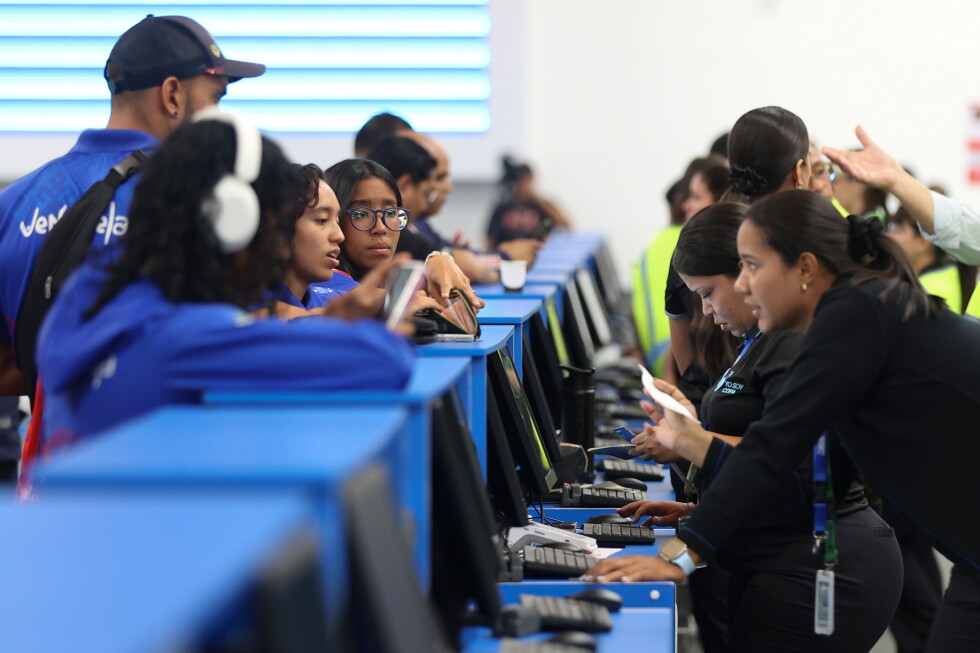
To enable the phased restart while permanent structural repairs move forward, authorities constructed a 10,000-square-meter temporary passenger processing hub out of modular metal structures in the airport’s existing parking lot. The temporary facility is equipped with full passenger amenities, including check-in counters, climate-controlled waiting lounges, complimentary Wi-Fi access, on-site medical services, and public restrooms. Due to the modified layout, passengers will be shuttled between the temporary terminal and departing aircraft via ground bus transportation.
According to official projections, the new temporary setup can accommodate up to 2,168 passengers per day in this initial operational phase. Transportation Minister Francisco Garcés told reporters on Tuesday that the government expects to restore 25% of the airport’s pre-earthquake flight volume in this first stage. Officials plan a gradual ramp-up of capacity over the coming months, targeting 40% of pre-disaster operations within a few months, and 60% by the end of 2024 or early 2025. Garcés confirmed that international safety oversight organizations completed required inspections and formally certified the airport’s readiness to resume commercial operations.
The restart began with 11 weekly round-trip flights: seven domestic routes and four international services operated by Panama’s Copa Airlines and Spain’s Air Europa. Additional carriers, including Spain’s flag carrier Iberia, are set to add their services to the airport in the coming weeks. Prior to the Tuesday restart, all international flights bound for Venezuela were diverted to smaller regional airports in Carabobo state, 168 kilometers southwest of Caracas, and Anzoátegui state, 314 kilometers east of the capital, forcing passengers to endure hours of additional overland travel to reach the capital.
The disaster hit La Guaira state, Venezuela’s second smallest by area, particularly hard. Most of the earthquake-related fatalities were recorded here, where 440,000 residents, most from low-income backgrounds, rely heavily on tourism, commercial activity, and jobs tied to the airport and the country’s second-largest port, both located within the state’s borders. The tremors also caused widespread damage across the capital Caracas and neighboring central-western states including Carabobo, Miranda, Aragua, and Yaracuy.