标签: South America

南美洲

  • No cartels involved – but Mexico’s pyramid attack prompts new concerns

    No cartels involved – but Mexico’s pyramid attack prompts new concerns

    On a seemingly ordinary Monday morning at Teotihuacán, Mexico’s most iconic pre-Hispanic archaeological site and top international tourist destination, a routine day of exploration collapsed into sudden, horrifying gun violence that authorities are still working to fully unpack.

    Disturbing eyewitness footage captured the attacker, 27-year-old Mexico City native Julio César Jasso Ramírez, opening fire on unsuspecting visitors from the upper terrace of the site’s famous Pyramid of the Moon. Panicked tourists scrambled for shelter behind ancient stone structures as shots rang out, beginning the attack around 11:00 a.m. local time.

    When the violence ended, a 32-year-old Canadian woman was dead, and the gunman had taken his own life via a self-inflicted gunshot wound. Multiple injured tourists from countries including Russia, Colombia, and Brazil were admitted to local hospitals for treatment of their wounds. Security forces, including the National Guard, were rapidly deployed to secure the historic site.

    Initial investigations have drawn a clear line between this attack and the cartel-linked violence that has plagued Mexico for decades. Just two months prior, the killing of Jalisco New Generation Cartel leader “El Mencho” sparked a wave of coordinated violence across the country that left widespread fear in its wake. But Mexican officials confirm Jasso Ramírez acted entirely alone, with no connections to organized criminal groups.

    Searching the attacker’s belongings, investigators recovered a handgun, a supply of ammunition, and a tactical knife. They also found written materials, images, and manuscripts referencing a notorious 1999 mass shooting in the United States: the Columbine High School attack that left 13 dead. One witness told Reuters the gunman explicitly referenced Columbine, which took place 27 years to the day before the Teotihuacán attack.

    Mexico State Attorney-General José Luis Cervantes Martínez confirmed that no evidence of co-conspirators has emerged, noting, “The aggressor planned and carried out the attack on his own and there is absolutely no indication at this point that he had any external help or that any other individuals were involved in this incident.” He described the attacker as fitting a psychopathic profile driven by copycat behavior, saying “the evidence collected so far pointed to a tendency to imitate situations that occurred in other places, at other times, and involving other individuals.”

    The attack marks the second high-profile lone mass shooting in Mexico in less than a month, following a school shooting in Michoacán where a teen killed two teachers with an assault rifle. Both incidents mark a disturbing shift for Mexico, where nearly all large-scale violence has historically been tied to cartel turf wars. Mexican family therapist Valeria Villa, who has worked in mental health for decades, called the trend “a moment of transition, a very unfortunate, lamentable and worrying one, towards imitation of the phenomenon of mass killings we see every day in the United States.”

    Experts note the trend does not stem solely from the importation of U.S. societal violence, however. Long-standing cartel violence in Mexico has desensitized segments of the population, particularly young people, to bloodshed. While Mexico does not have the same widespread legal access to guns as the United States, illegal firearms are easily obtainable on the black market, with most smuggled across the border from the U.S.

    The shooting comes at a politically and socially sensitive moment for the Mexican government, just three weeks before Mexico co-hosts the 2026 men’s FIFA World Cup, set to kick off in Mexico City on June 11. President Claudia Sheinbaum, who has recently touted her administration’s security progress, claiming the daily homicide rate in February 2026 was 44% lower than at the end of her predecessor’s term in September 2024, was quick to offer condolences and solidarity to the victims’ families.

    Sheinbaum’s critics argue that falling homicide rates mask ongoing security crises, most notably the tens of thousands of unresolved missing person cases that disproportionately affect young Mexicans. The administration has moved quickly to reassure visiting football fans that security will be guaranteed during the tournament, but viral footage of a gunman opening fire on foreign tourists at one of the country’s most famous landmarks has done little to ease pre-tournament anxiety.

  • Peru’s election chief resigns over logistical problems in hotly disputed presidential contest

    Peru’s election chief resigns over logistical problems in hotly disputed presidential contest

    LIMA, Peru — More than a week after Peruvians cast ballots in one of the nation’s most contentious presidential elections in recent memory, the top leader of the country’s national election agency has stepped down, taking responsibility for widespread logistical failures that have thrown the vote count into chaos and deepened public uncertainty over the outcome.

    Piero Corvetto, who led Peru’s national election institution, announced his resignation in an official letter delivered to Peruvian government authorities on Tuesday. While Corvetto explicitly denied any personal wrongdoing tied to the election mismanagement, he argued his departure was a necessary step to shore up public trust ahead of the June 7 presidential runoff, which is already scheduled to take place after no candidate secured an absolute majority in the first round.

    The April 12 first-round vote brought more than 30 presidential candidates into the race, alongside hundreds of contenders vying for seats in Peru’s national congress. But the process quickly unraveled when election officials failed to deliver critical voting materials to more than 12 polling centers across the capital city of Lima. The logistical breakdown blocked more than 52,000 eligible voters from casting their ballots on the originally scheduled election day, forcing authorities to extend voting for an extra 24 hours.

    As of this week, official vote counting remains ongoing, with election workers still processing tally sheets arriving from remote Andean regions and Peruvian consulates operating across the globe. Peruvian electoral law requires a runoff between the two top-finishing candidates if no contender wins more than 50% of valid votes, a threshold that no candidate came close to meeting in this crowded field.

    With 93.8% of all ballots now counted, preliminary results place conservative leader Keiko Fujimori firmly in the lead with 17.04% of the vote, a standing that all but guarantees her a spot on the June runoff ballot. In second place, holding 12.01% of counted votes, is nationalist congressman Roberto Sánchez, a former minister under imprisoned ex-President Pedro Castillo who has campaigned on a pledge to partially nationalize Peru’s vast natural resource sector. Sánchez holds only a razor-thin lead over ultraconservative former Lima mayor Rafael López Aliaga, who has captured 11.91% of the vote so far.

    López Aliaga has already pushed back against the partial preliminary results, leveling unsubstantiated claims of a “gigantic fraud” orchestrated by election officials. He has publicly called for a “complementary election” that would allow hundreds of thousands of Peruvians who were unable to vote on April 12 to cast their ballots after the fact.

    These fraud allegations have been rejected by independent international observers. An electoral observation mission deployed by the European Union noted last week that while the first round faced significant logistical disruptions, it found no credible evidence of systemic fraud in the vote counting process.

    On Monday, Peru’s top electoral tribunal set a firm May 15 deadline for officials to complete the full vote count and officially confirm which two candidates will advance to the June runoff. The winner of this election will make history as Peru’s ninth president in just 10 years, taking office amid a prolonged period of political instability that has already seen multiple interim leaders rise and fall. The current interim president, José María Balcázar, was appointed to the role in February, replacing another interim head of state who was removed from office over corruption allegations just four months after taking power.

  • Mass trial for 486 alleged gang members begins in El Salvador

    Mass trial for 486 alleged gang members begins in El Salvador

    El Salvador has launched one of the largest mass criminal trials in the country’s modern history, with proceedings against 486 people alleged to be members of transnational criminal gangs getting underway this week. The unprecedented legal proceeding has drawn global attention as the Central American nation continues its aggressive crackdown on organized gang violence that has plagued communities for decades.

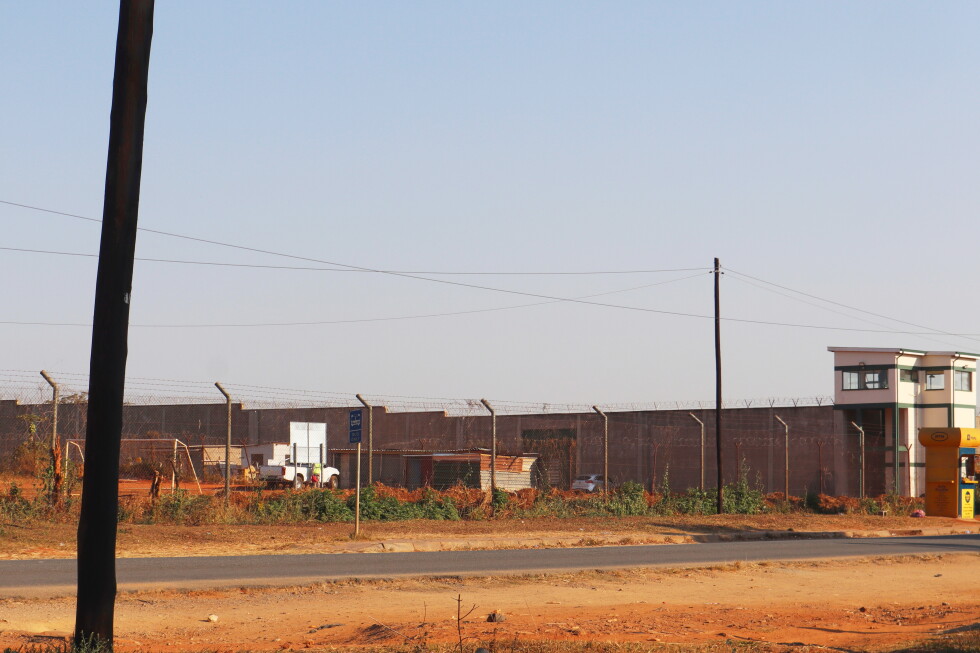
    Newly released surveillance footage from the country’s attorney general’s office offers a rare public look at the opening of the trial: hundreds of incarcerated men, grouped together in secured prison facilities, are participating in the court proceedings remotely via live video link. This remote format was chosen to address massive logistical challenges, as security officials warned that moving all 486 defendants to a single physical courtroom would create unacceptable public safety risks.

    Organized criminal gangs have long been a destabilizing force in El Salvador, driving high rates of homicide, extortion, and drug trafficking across the country. In recent years, the Salvadoran government has implemented sweeping anti-gang policies designed to dismantle these criminal networks, and this mass trial marks a major milestone in that ongoing campaign. Legal observers have noted that the scale of the proceeding is almost unmatched globally, and it will test the capacity of the country’s judicial system to process hundreds of cases while upholding due process standards.

    The defendants in the case face a wide range of criminal charges related to their alleged involvement in gang activities, including conspiracy to commit murder, extortion, drug trafficking, and organized criminal association. Authorities say the majority of the accused are linked to two of El Salvador’s most powerful and violent gangs, Mara Salvatrucha (MS-13) and Barrio 18. As the trial proceeds, national and international watchdogs will be monitoring to ensure that procedural rights are protected for all defendants, even as the government maintains its tough stance against gang-related crime.

  • Mass trial for 486 alleged MS-13 gang leaders begins in El Salvador

    Mass trial for 486 alleged MS-13 gang leaders begins in El Salvador

    A landmark mass trial that marks one of the largest gang prosecutions in modern history has commenced in El Salvador, targeting 486 top leaders and key associates of the notorious transnational criminal organization MS-13, the country’s attorney general’s office has confirmed. The sprawling case comes nearly three years after President Nayib Bukele launched a hardline, widely debated nationwide crackdown on gang activity that has reshaped the Central American nation’s security landscape.

    According to official prosecutors, the 486 defendants are collectively linked to more than 47,000 separate criminal offenses carried out between 2012 and 2022. The long list of charges includes murder, extortion, drug trafficking, arms smuggling, femicide, forced disappearances, and an unprecedented charge of rebellion. Prosecutors allege the group sought to consolidate territorial control across El Salvador to build a parallel state that could challenge the authority of the elected government. A number of the accused are also tied to a devastating 2022 outbreak of gang violence that left 87 people dead over a single weekend in March of that year—a bloodbath that directly prompted Bukele to declare a formal “war on gangs” and roll out sweeping emergency security measures.

    Prosecutors have stated they hold compelling evidence that will support the pursuit of maximum criminal penalties for all defendants convicted in the case. As of the trial’s opening, 413 of the accused are already in custody, while 73 remaining suspects are being tried in absentia, with active arrest warrants still in effect for the fugitives. El Salvador’s National Civil Police says its years of targeted intelligence gathering, research and covert monitoring operations made it possible to map out the gang’s hierarchical structure, locate suspects, and document the full scope of their criminal activity ahead of trial.

    MS-13, the transnational gang at the center of the case, traces its origins back to 1980s Los Angeles, where it was formed by Salvadoran refugees fleeing the country’s brutal civil war. In recent decades, the organization has expanded its footprint dramatically across Central America, where it now maintains a larger and more powerful presence than it does in the United States. Last year, the U.S. government formally designated MS-13 as a terrorist organization, acknowledging its cross-border reach and violent impact. In a statement ahead of trial, El Salvador’s attorney general’s office emphasized that the gang’s decades of systematic criminal activity have not only spread fear and immeasurable grief across Salvadoran households, but also held back the country’s broader economic and social progress.

    The trial is taking place against the backdrop of a controversial ongoing state of emergency that Bukele first implemented in March 2022, shortly after the deadly wave of violence. The emergency measure vastly expanded law enforcement’s power to detain individuals suspected of gang ties or collaboration, and temporarily suspended a number of constitutional rights protections. Since the policy was implemented, tens of thousands of suspected gang members and affiliates have been arrested across the country, but the approach has drawn sharp criticism from international human rights organizations, which have documented widespread allegations of arbitrary detentions of innocent civilians and other human rights abuses. Legal reforms enacted by the Bukele administration in recent years also explicitly paved the way for mass gang trials like the proceeding that opened this week.

  • Peruvian court sets May 15 deadline for counting votes in presidential race

    Peruvian court sets May 15 deadline for counting votes in presidential race

    LIMA, Peru — Peru’s national electoral tribunal has moved to formalize the timeline of the country’s tightly contested presidential election, issuing an official mandate on Monday requiring the nation’s electoral oversight body to wrap up all vote counting and name the two candidates advancing to the June runoff by mid-May.

    The order establishes a firm May 15 deadline for the Oficina Nacional de Procesos Electorales (ONPE), Peru’s national elections agency, to release the final, official vote tally and confirm which contenders will move forward to the second round of voting, scheduled for June 7. The runoff became a necessary step after the April 12 first round, which drew more than 30 presidential candidates, failed to produce any candidate who captured an outright majority of the popular vote. Peruvian electoral law requires a runoff between the top two finishers when no candidate secures more than 50% of ballots cast.

    What has turned this process into a nail-biting, delayed count is the razor-thin gap separating the candidates vying for the second spot in the runoff. The first round was also marred by widespread procedural irregularities that forced election officials to extend voting at dozens of polling stations across the capital city of Lima for an extra day to accommodate voters who faced long delays and broken voting equipment.

    As of the latest partial count, which includes 93.5% of all ballots cast, conservative leader Keiko Fujimori holds a clear lead with 17.05% of the vote, a position that makes her all but certain to advance to the June 7 runoff. The race for the second spot remains too close to call, however: nationalist congressman and former cabinet minister Roberto Sánchez — who served in the administration of imprisoned ex-President Pedro Castillo — currently holds second place with 12% of the vote, while ultraconservative former Lima mayor Rafael López Aliaiga trails him by less than 0.1 percentage points, sitting at 11.91% of the vote.

    Counting efforts are still ongoing because election officials are still processing hundreds of tally sheets arriving from remote, hard-to-reach rural regions across Peru, as well as ballots cast by Peruvian citizens living overseas at the nation’s consular missions. Hundreds of these tally sheets have also been formally challenged by independent electoral observers, triggering a mandatory review process that ONPE officials must complete before the final tally can be certified.

    The winner of this election will become Peru’s ninth president in just 10 years, capping a period of unprecedented political instability in the Andean nation. The incoming president will succeed interim President José María Balcázar, who was appointed to the role in February after his predecessor, another interim leader, was removed from office over sweeping corruption allegations just four months into his temporary term.

  • Canadian killed in shooting at Mexico’s ancient Teotihuacán pyramids

    Canadian killed in shooting at Mexico’s ancient Teotihuacán pyramids

    A deadly shooting at one of Mexico’s most famous tourist landmarks has left one Canadian woman dead and multiple visitors wounded, Mexican authorities have confirmed. The violent incident unfolded on Monday at the sprawling Teotihuacan archaeological zone, a pre-Hispanic ruin complex located roughly an hour’s drive north of Mexico City that draws millions of domestic and international visitors annually.

    Following the attack, the gunman died by suicide at the scene, according to official government statements. Responding law enforcement personnel secured the zone quickly after the violence broke out, and remained deployed across the site on Monday to process evidence. Investigators have recovered a firearm, a bladed weapon and unused live ammunition from the area where the shooting took place.

    Among the injured people receiving treatment for their wounds are two Colombian citizens, one Russian national and one additional Canadian, State Security Secretary Cristóbal Castañeda Camarillo confirmed to reporters during a Monday press briefing.

    Mexican President Claudia Sheinbaum, who took office earlier this year, confirmed she is monitoring the developing situation closely and has maintained direct communication with the Canadian embassy in Mexico City to coordinate updates. In a public statement posted to social media, Sheinbaum said she had directed her full national security cabinet to launch a thorough investigation into the attack, and ordered officials to extend all possible support to those affected by the violence.

    “What happened today in Teotihuacan deeply pains us. I express my most sincere solidarity with the affected individuals and their families,” Sheinbaum wrote in her Spanish-language statement.

    The Teotihuacan archaeological park is one of Mexico’s crown jewels of cultural heritage, home to the iconic Pyramid of the Sun and Pyramid of the Moon, remnants of a powerful pre-Columbian civilization that flourished centuries before the rise of the Aztec Empire. It was designated a UNESCO World Heritage Site in 1987, and consistently ranks among the most visited tourist attractions in the country.

    The BBC has reached out to officials at the Canadian government for additional comment and further details about the slain victim as the investigation continues. Authorities have not yet released a confirmed motive for the attack, and updates on the case are expected as more information becomes available.

  • Police gunfight with favela gang traps 200 tourists on hilltop

    Police gunfight with favela gang traps 200 tourists on hilltop

    A routine anti-criminal operation in one of Rio de Janeiro’s most well-known favelas turned into a frightening ordeal for roughly 200 sightseeing visitors early one morning, when an exchange of gunfire between police officers and suspected gang members left the group trapped at the peak of a iconic tourist viewpoint. Morro Dois Irmãos, the hilltop site where the incident unfolded, draws hundreds of hikers and casual visitors daily thanks to its sweeping, postcard-perfect views of Rio’s famous Ipanema Beach, with the main hiking trail to the summit starting just east of the Vidigal favela neighborhood.

    The operation was a joint effort led by investigators from the Public Prosecutor’s Office of Bahia and Rio de Janeiro’s Civil Police force, who launched the raid targeting alleged high-ranking members of the Comando Vermelho criminal gang, a notorious organized crime group that maintains a heavy presence in many of Rio’s informal communities, according to reporting from leading Brazilian broadcaster TV Globo. Law enforcement teams entered the neighborhood believing the targeted gang members were hiding within Vidigal, but a confrontation between officers and the suspects quickly escalated into active gunfire near the entrance to the Morro Dois Irmãos trail. The crossfire blocked the only main access route to the summit, trapping the crowd of tourists who had already climbed to the top to watch the popular sunrise over Ipanema.

    Footage of the incident shared widely across social media captures the tense scene: the large group of stranded visitors huddling on the ground at the hilltop as the sun rose over the Atlantic, while a police helicopter circled overhead and the distant echo of gunfire could be heard across the neighborhood. For many of the tourists, the experience was a sudden shock to a planned morning excursion. Matilda Oliveiro, a Portuguese traveler who had climbed the hill with her sister Rita to watch the sunrise, recalled that local trail guides quickly ordered the entire group to take cover once gunfire began. “We had waited for sunrise and, suddenly, the guides asked us to sit down and we started hearing gunshots,” she told TV Globo in an interview after the incident. She added that the guides responded quickly to the crisis, noting “It’s always scary, but it was controlled as much as possible. We passed the police on the way, and the situation was already under control.”

    According to local media reports, the entire group of stranded tourists was able to begin descending the hill roughly 30 minutes after the shootout broke out, once police secured the access route and brought the situation under control. Multiple visitors confirmed that local trail guides had received advance notice of the planned police operation, and had coordinated with law enforcement units on the ground to manage the crowd once the confrontation began. Danielly Nobre, a 25-year-old visitor who was part of the stranded group, told Brazilian daily newspaper O Dia that the group was already at the summit when the shooting started, and guides immediately began coordinating to keep everyone safe. “We were caught by surprise. We were already at the top when we started hearing gunshots, and the guides were already telling us what was happening,” Nobre said. She added that guides repeatedly reassured the crowd that the situation was under control, and a passing police helicopter also issued instructions for the group to stay calm and remain in cover. “In the end, everything worked out. Everyone went down in a single file, everyone helping, and we managed to finish the trail, see the sunrise, and experience that adrenaline rush,” Nobre added.

    The incident shines a light on the persistent presence of organized crime in Rio de Janeiro’s favelas, where groups like Comando Vermelho have evolved far beyond their origins as drug trafficking organizations. Today, these criminal groups enforce strict local rules and hold de facto monopolies over the provision of basic services including residential gas delivery, cable television, internet access and local public transport in the communities they control, making anti-gang operations a frequent but high-risk part of law enforcement work in the city.

  • Police fire rubber bullets as Paraguay derby abandoned

    Police fire rubber bullets as Paraguay derby abandoned

    On a Sunday matchday in Asuncion, Paraguay’s most anticipated domestic football fixture — the capital city Superclasico between league giants Olimpia and Cerro Porteno — collapsed into chaos, forcing officials to call off the game just 29 minutes after kickoff following widespread violent clashes between supporters and law enforcement. The match between the top two clubs in Paraguay’s Division de Honor carried high stakes: six points separated first-place Olimpia from defending 2025 Torneo Clausura champions Cerro Porteno, making the result critical to the season’s title race. When the violence broke out, hundreds of panicked spectators fled the stands and surged onto the playing pitch to escape the unrest, as police responded to the disorder by firing rubber bullets and tear gas into crowd sections.
    Witnesses on site confirmed the unrest began when unidentified individuals set off multiple firecrackers in the stands reserved exclusively for Cerro Porteno supporters. The disturbance quickly escalated into full-scale confrontation between fans and security forces: one local witness told reporters a supporter managed to seize a police riot shield and paraded it through the stands as a trophy, intensifying the chaotic atmosphere.
    By the time order was partially restored, local law enforcement had detained approximately 100 fans connected to the violence. While there has been no official confirmation of injuries among supporters, at least six police officers were hospitalized with a range of serious wounds. David Torales, a spokesperson for a local Asuncion hospital, confirmed the officers suffered multiple injuries including head trauma, lacerations, and suspected stab wounds, with one officer remaining in critical condition.
    In an official statement following the clashes, Paraguayan police emphasized that officers intervened rapidly to protect all spectators in attendance. “Our priority was to contain the violence as quickly as possible to prevent further harm to civilians and staff,” the statement read, adding that authorities are currently working to identify and prosecute the individuals who instigated the unrest, with plans to push for permanent bans from future sporting events for those found responsible.
    The match was tied 0-0 at the time of abandonment, and the outcome of the fixture will now be determined by the Paraguayan Football Association (APF) disciplinary tribunal, under existing league rules. APF regulations clearly state that if a match is forced to be suspended due to unrest caused by one team’s supporters, that team forfeits the match and the opposing side is awarded three points. However, the two club presidents have already taken opposing stances in the lead-up to the tribunal ruling.
    Olimpia president Rodrigo Nogues confirmed his club will formally file a request to be awarded the full three points from the abandoned fixture. In contrast, Cerro Porteno president Blas Reguera has pushed back against any potential forfeiture, arguing that as the host club for the match, Olimpia bore full legal and operational responsibility for stadium security, shifting blame for the unrest away from his side’s supporters.
    The incident has sparked renewed debate around fan violence and stadium security protocols in Paraguayan top-flight football, with authorities promising a full review of safety measures ahead of future high-profile derby matches.

  • Four candidates for UN secretary-general audition this week. That’s far fewer than in 2016

    Four candidates for UN secretary-general audition this week. That’s far fewer than in 2016

    UNITED NATIONS — Just four contenders will take part in this week’s public confirmation hearings for the next United Nations Secretary-General, a drastically smaller field than the 13 candidates that competed for the post during António Guterres’ 2016 selection. The race comes as the global body grapples with deep great power divisions that have crippled its core peace and security mandate, a stark shift from the more collaborative global landscape a decade ago.

    The first day of hearings, scheduled for Tuesday, will open with Michelle Bachelet, the former two-term President of Chile and former UN High Commissioner for Human Rights. Bachelet is one of just two women in the race, and one of three candidates hailing from Latin America — the region widely expected to claim the top post under the UN’s longstanding regional rotation tradition. Following Bachelet’s three-hour question-and-answer session with ambassadors from all 193 UN member states will be Rafael Mariano Grossi, an Argentine diplomat who has served as Director General of the International Atomic Energy Agency since 2019. On Wednesday, the lineup continues with Rebeca Grynspan, the Costa Rican former vice president who currently leads the UN Conference on Trade and Development, and closes with Macky Sall, the former President of Senegal.

    Political analysts and UN watchers point to two major factors that have shrunk the candidate pool: the unprecedentedly polarized 2026 geopolitical landscape, and the declining global influence of the United Nations itself. A decade ago, the UN was riding high off diplomatic wins including the landmark Paris Climate Agreement and the adoption of the 17 Sustainable Development Goals, agreements that cemented the organization’s role as the central forum for global cooperation. Today, deep rifts between major powers have left the UN Security Council — the body tasked with maintaining global peace and security — deadlocked on nearly every major ongoing conflict, from the war in Ukraine to the Gaza crisis to escalating tensions in Iran. The organization has been sidelined from efforts to resolve these crises, eroding faith in its ability to deliver meaningful change.

    Richard Gowan, UN program director at the International Crisis Group, explained that shifting calculations have also discouraged potential candidates from entering the race. In 2016, many long-shot candidates joined the race simply to raise their own international profiles, as losing carried little diplomatic cost for the contenders or their nominating governments. “There was no real cost associated with losing,” Gowan noted. Today, however, candidates and their backers are far more cautious: misstepping or offending one of the Security Council’s five permanent veto-wielding powers — the United States, Russia, China, Britain, and France — can carry tangible diplomatic consequences. “There is a feeling that if a candidate puts a foot wrong and offends Washington or Beijing, it could cause real diplomatic damage,” he said.

    The selection process follows the framework laid out in the UN Charter, which gives the 15-member Security Council the power to recommend a candidate, who is then approved by the full 193-member General Assembly. This structure gives the five permanent members outsize influence and veto power over the final selection. By longstanding informal tradition, the top post rotates between world regions. Guterres, a former Portuguese prime minister who is finishing his second five-year term on December 31, represents Europe; he succeeded South Korea’s Ban Ki-moon (Asia), who followed Ghana’s Kofi Annan (Africa). This rotation has left Latin America widely expected to get the turn this cycle, even as Eastern Europe — which has never held the post — continues to push for consideration.

    All four candidates taking part in this week’s hearings will face questions about their vision for the UN, their approach to ongoing global crises, and plans to reform the struggling institution. The road to nomination has already held unexpected twists for the contenders: Bachelet, 74, was initially nominated by her home country Chile, Brazil, and Mexico, but Chile’s new far-right President José Antonio Kast withdrew his government’s support shortly after taking office in March, leaving her backed by Brazil and Mexico. Grossi, 65, and Grynspan, 70, both secured nominations from their home countries, Argentina and Costa Rica respectively. Sall, 64, was nominated by Burundi, but has failed to secure an endorsement from his home country Senegal or the African Union, the 55-nation regional bloc which remains divided on his candidacy. A fifth candidate, former UN children and armed conflict representative Virginia Gamba of Argentina, was nominated by the Maldives, but the island nation withdrew her nomination in late March without providing a public explanation.

    Despite the small candidate pool, pressure to select the first woman to lead the United Nations remains strong. Guterres, who has made gender equality a core priority of his administration, has backed the push, as have Britain and France. Two global advocacy groups, 1 for 8 Billion and GWL Voices — a network of nearly 80 senior female global leaders — have also mounted a public campaign for a woman secretary-general. GWL Voices co-founder and president Susana Malcorra, a former Argentine foreign minister who ran for the post in 2016, has led the effort.

    However, Bachelet, the highest-profile female candidate, already faces organized opposition from the United States. In a late March letter to Secretary of State Marco Rubio, 28 Republican members of Congress called on the Biden administration to veto Bachelet’s candidacy, labeling her a “pro-abortion zealot intent on using political authority to override state sovereignty in favor of extreme agendas.” When U.S. Ambassador to the UN Mike Waltz was asked about Bachelet at a recent Senate Foreign Relations Committee hearing by Republican Sen. Pete Ricketts, one of the letter’s signatories, Waltz declined to confirm whether the U.S. would formally oppose her, but acknowledged he shared the lawmakers’ concerns.

    Gowan noted that expectations of a female candidate winning shifted dramatically following Donald Trump’s return to the White House. “Before that, there was a feeling that this time a woman had to win, but now a lot of diplomats assume that Washington will insist on a male secretary-general on principle,” he said. “I am not sure that is necessarily correct.” While more candidates could still join the race before the Security Council holds its traditional informal straw polls to narrow the field, analysts expect the current four candidates to remain the main contenders for the top post.

  • Why your recycled clothes could end up in this South American desert

    Why your recycled clothes could end up in this South American desert

    Every year, millions of discarded pre-owned garments collected from donation bins across Europe, North America and Asia make their final resting place in one of the harshest landscapes on Earth: Chile’s Atacama Desert. A stark environmental crisis has emerged from the global secondhand clothing trade, which has long benefited the northern Chilean economy but left the arid region choking on unsold textile waste – and now a new private sector initiative is stepping in to address the problem, spurred by landmark regulatory change.

    At the heart of the global secondhand clothing flow is Iquique’s Zona Franca del Iquique, known locally as Zofri. Established in 1975 to drive economic growth in northern Chile’s underdeveloped regions, this duty-free free trade zone allows businesses to import, store and re-export goods without paying customs duties or value-added tax. Over decades, used clothing became one of Zofri’s largest import sectors: official Chilean government data puts annual imports of pre-owned garments at roughly 123,000 tonnes, with shipments arriving in compressed bales via container from across the globe. Once imported, the clothing is sorted, sold locally at low-cost markets or re-exported to other Latin American markets.

    For the local community, the sector delivers tangible economic benefits. Felipe González, Zofri’s general manager, notes that roughly 10% of the region’s local workforce – most of whom are low-skilled women without formal advanced qualifications – find employment in the clothing trade, sorting garments by quality for resale. The lowest-quality unsold stock ends up at La Quebradilla, a sprawling open-air market just 30 minutes uphill from Iquique in Alto Hospicio, where stalls sell everything from t-shirts to dresses starting at just $0.54. Tourists and local residents flock to the market on weekends to hunt for bargains, cementing the trade’s role in the local economy.

    But the boom in secondhand clothing has come at a devastating environmental cost. Unsold garments cannot be deposited in local municipal landfills, which are only permitted to accept household waste rather than commercial import waste. Legitimate disposal options – including exporting the unsold stock, paying taxes to sell the garments outside the free trade zone, or contracting authorized waste management firms – all carry significant costs. For unethical traders, the far cheaper alternative is to illegally burn unsold clothing or dump it in the vast, unpatrolled expanses of the surrounding Atacama Desert. By the largest industry estimates, this illegal dumping totals 39,000 tonnes of textile waste every year.

    Local authorities have struggled to curb the practice. Miguel Painenahuel, who works in Alto Hospicio’s urban planning department, explains that the desert’s wide open terrain and countless accessible access points make it easy for trucks to sneak in and dump waste overnight. While the municipal government conducts patrols and operates surveillance cameras to issue fines to violators, limited resources mean enforcement efforts cannot keep pace with the steady flow of dumped clothing.

    Now, a public-private partnership spurred by new national regulation is working to turn the crisis into a circular economy opportunity. In Iquique, the non-profit CircularTec – the Centro Tecnológico de Economía Circular, which advances sustainable resource reuse – has partnered with veteran local textile importer Bekir Conkur to build Chile’s first large-scale textile recycling facility targeted at this unsold clothing waste.

    Conkur, a Turkish-born entrepreneur who has operated in Chile’s textile trade for more than 15 years and imports 50 containers of secondhand clothing monthly, has invested $7 million in the new facility, currently under construction 20 minutes outside Alto Hospicio. When fully operational in a few months, the water- and chemical-free plant will process unsold garments into raw fibers, which are then converted into felt for use in mattresses, furniture, automotive interior components and building insulation. Conkur projects the facility will have the capacity to process 20 tonnes of textile waste per day, handling a large share of the region’s annual unsold clothing stock.

    The initiative comes in response to a landmark update to Chile’s environmental regulation: last July, the national government added textiles to its existing Extended Producer Responsibility (EPR) Law. The regulation shifts the financial and operational responsibility for end-of-life product management from local governments and the public sector to the brands, retailers and importers that put the clothing on the market. While the specific regulatory details for the textile sector are still being drafted by the government, the rule change has created a clear incentive for private companies to invest in recycling infrastructure, turning waste management into a viable business opportunity.

    Luis Martínez, executive director of CircularTec, emphasized that the goal of the project is far more than just compliance: “We don’t want the Atacama Desert to be famous as a tourist attraction where visitors can see mountains of clothes.” Looking forward, Conkur believes his facility will not only handle waste from across Chile, but could eventually process textile waste from other countries around the world, turning a growing global environmental problem into a sustainable, profitable circular business.