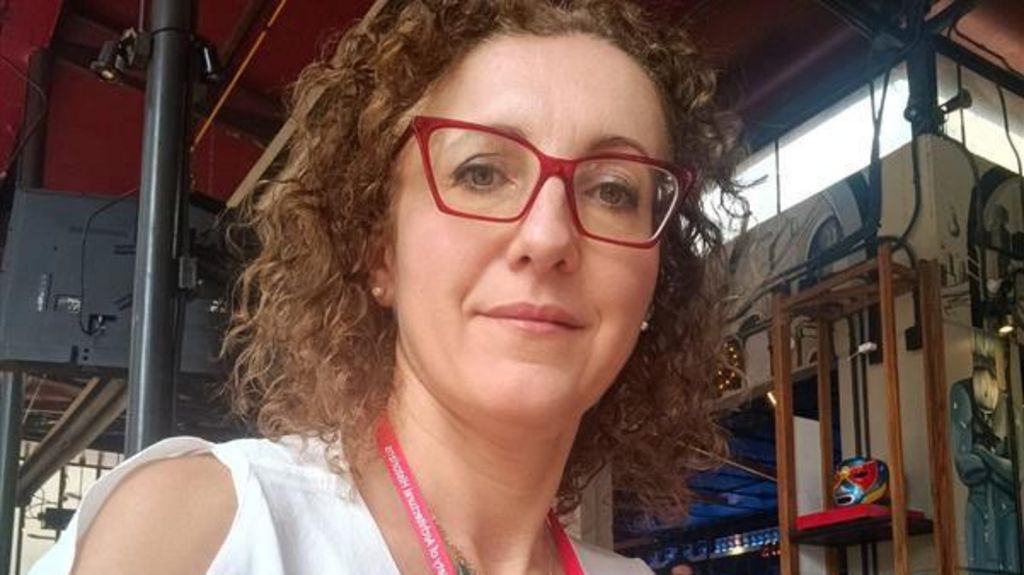
On a sightseeing excursion that was supposed to be the highlight of her academic conference trip to Mexico City, a Glasgow-based architecture historian survived a deadly mass shooting at one of the country’s most iconic cultural landmarks, and has now shared the harrowing details of her escape.
Dr. Giovanna Guidicini, 46, an Italy-born scholar who has lived and worked in Scotland for 20 years at the Glasgow School of Art, travelled to the UNESCO World Heritage Site of Teotihuacán with her colleague Dimitrij Zadorin on the final day of her trip. Just minutes after the pair reached the summit of the Pyramid of the Moon and snapped a celebratory selfie amid a crowd of other tourists, chaos erupted across the ancient terrace.
Guidicini told BBC News that the first loud popping sounds initially struck her as a planned performance or entertainment for visitors at the archaeological park. But a second round of noise, followed immediately by panicked screams, made clear the danger the group was in. “That is when I realised it was real,” she recalled. “The gunman was 20ft away from us and shooting towards the queue of people waiting to exit down the stairs. The screams brought the situation to life more than the gunshots.”
With the only formal exit stairway blocked by the gunman — identified by Mexican authorities as 27-year-old Julio César Jasso Ramírez — Guidicini and her colleague were trapped 70 feet above the ground, with no cover and no clear path to safety. “Quickly we lay flat on the ground. It was a really scary feeling – just total helplessness,” she said. “We could still hear the screams and shootings but we had stopped looking.”
It was not long before the trapped group spotted a risky alternative escape route: climbing straight down the steep, stepped stone faces of the pyramid, with each tier dropping roughly 15 feet from the ledge above. Joined by 6 to 8 other tourists, the pair scrambled down the uneven stone layers, with fellow visitors helping each other navigate the precarious descent to get out of the gunman’s line of fire. For Guidicini, the discovery of even this dangerous escape route brought a wave of relief.
Once the group reached the base of the pyramid, they made their way to the perimeter of the site, where a barbed wire fence blocked their path to the outside. Local residents spotted the fleeing group, drove a pickup truck to the fence to help them climb over, and caught visitors on the other side. The group then took shelter at a nearby restaurant, where staff provided them with food and water as first responders arrived on scene. By the time Guidicini and Zadorin reached the street, they could see heavily armed police and military units converging on the archaeological complex to secure the area.
The attack, which unfolded on Monday, left one 32-year-old Canadian tourist dead and 13 other visitors from countries including Russia, Colombia and Brazil injured. The gunman ultimately died from a self-inflicted gunshot wound after the shooting. Guidicini, who was scheduled to fly back to Glasgow that same evening, alerted her family and friends back home that she had survived unharmed as news of the attack spread internationally. She has since said that in the wake of the incident, she has seen footage and images online of other visitors who were trapped on the terrace as hostages, including a clip of the gunman making violent threats in Spanish, referencing human sacrifice and threatening that trapped visitors would never return to Europe.
Mexican officials have moved quickly to distinguish this attack from the country’s ongoing cartel-linked violence. The shooting comes less than two months after widespread unrest broke out across Mexico following the reported killing of Jalisco New Generation Cartel leader “El Mencho” by security forces, but authorities confirm that the Teotihuacán gunman acted alone and had no known connections to organised criminal groups. The attack has still created significant political and security challenges for the Mexican government, coming just weeks before the country is set to co-host the 2026 FIFA World Cup, which will draw millions of international tourists to Mexican sites.
Now back home in Glasgow, Guidicini said that as the initial shock of the experience fades, the lasting trauma of the shooting has begun to set in. She recalled a recent incident where sudden exposure to the sound of gunfire in a background television scene triggered a severe stress response. “When I heard gunshots I jumped, I felt really cold and uncomfortable,” she said. “I hope that this doesn’t last forever.”