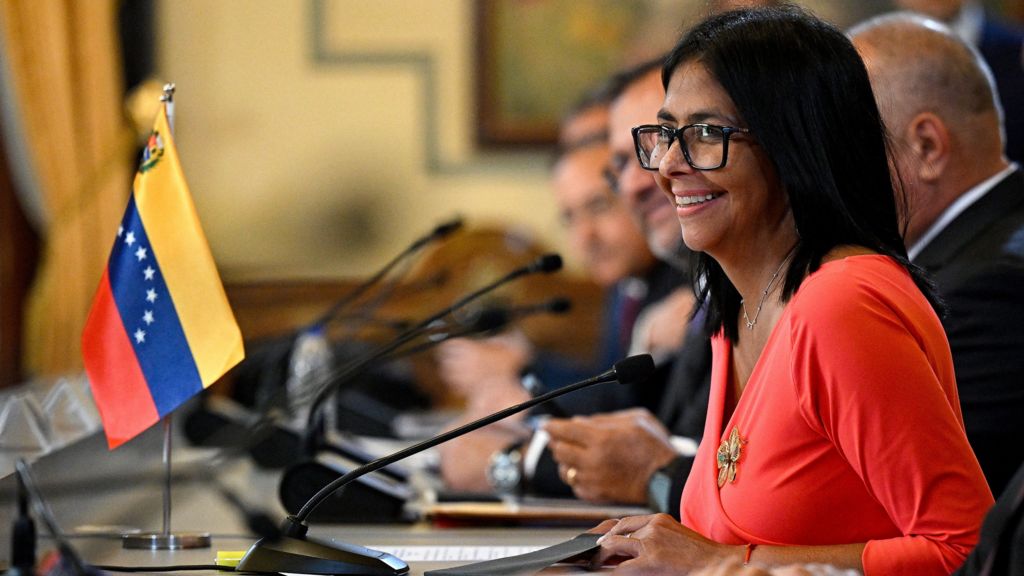
Just nine weeks after Venezuela’s amnesty program for political prisoners launched, interim President Delcy Rodríguez announced the scheme was reaching its conclusion – a decision that has sparked fierce condemnation from human rights and prisoner advocacy organizations across the country.\n\nThe amnesty law, first introduced by the National Assembly, was designed to grant release to thousands of people detained on political charges during the administration of former President Nicolás Maduro. According to prominent Venezuelan prisoner rights group Foro Penal, roughly 473 political prisoners have been freed so far, but the organization estimates more than 500 remain behind bars. The president of the National Assembly – Jorge Rodríguez, Delcy Rodríguez’s brother – previously stated that over 1,500 political prisoners had submitted amnesty applications, and the legislation was ultimately expected to cover as many as 11,000 qualifying individuals.\n\nDelcy Rodríguez pushed back against these figures during a Friday meeting of justice officials in Caracas, claiming that 8,616 people had already benefited from the program, which she described as “very successful in terms of its scope and the number of beneficiaries”. For unresolved cases not covered by the existing law, she added, alternative legal pathways would be available to address outstanding claims.\n\nHuman rights groups have universally rejected the interim president’s move, arguing she lacks legal authority to end a program approved by the National Assembly that carries no formal expiration date. Gonzalo Himiob, vice president of Foro Penal, noted that only a new legislative act or national referendum could legally revoke the amnesty law. He further criticized Venezuela’s existing justice institutions, saying “the bodies of the administration of justice, which are part of the same repressive system that made an amnesty necessary, never truly had either the willingness or the capacity to apply the amnesty law while respecting its purpose or principles.”\n\nLeading rights watchdog Provea echoed these concerns, labeling the decision to end releases “arbitrary and unconstitutional”. In a statement, the organization emphasized that ending the program early “does not contribute to the process of co-existence and peace that has been announced”, adding that “despite its limitations, the Amnesty Law is a first step toward dismantling the repressive framework that has gripped the rights of the Venezuelan population in recent years.” Another advocacy group, Justice, Encounter and Pardon, called the announcement “a grave assault on the rule of law”, noting that the development confirmed fears the law would amount to nothing more than empty political rhetoric rather than a tangible tool to free detained dissidents.\n\nThe current political context of Venezuela frames this controversy: Delcy Rodríguez, a former top ally of Maduro who served as his vice president, received the backing of former U.S. President Donald Trump after U.S. forces detained Maduro in January on drug trafficking charges, which Maduro faces trial for in New York. Trump’s decision to support Rodríguez over prominent opposition leader María Corina Machado surprised many political observers, who have characterized the move as a U.S. choice to prioritize short-term stability over rapid democratic transition. The release of political prisoners, including several of Machado’s allies, was a key concession the interim administration made to Washington to secure U.S. backing. Earlier this month, the U.S. lifted sanctions on Rodríguez, citing progress on “promote stability, support economic recovery and advance political reconciliation”.\n\nU.S. Secretary of State Marco Rubio has described Venezuela’s current status as a “transition phase” ahead of planned “free and fair” elections, and Machado has stated she will step forward to lead the country when the time is right. But critics of the interim administration have raised alarms that there has been little public progress or discussion of organizing democratic elections in the months since Maduro was removed from power. For advocates of political freedom in Venezuela, the early end to the amnesty program has deepened concerns that the new administration is not committed to breaking from the repressive policies of its predecessor.
Rights groups critical as Venezuela prisoner release scheme ‘coming to an end’