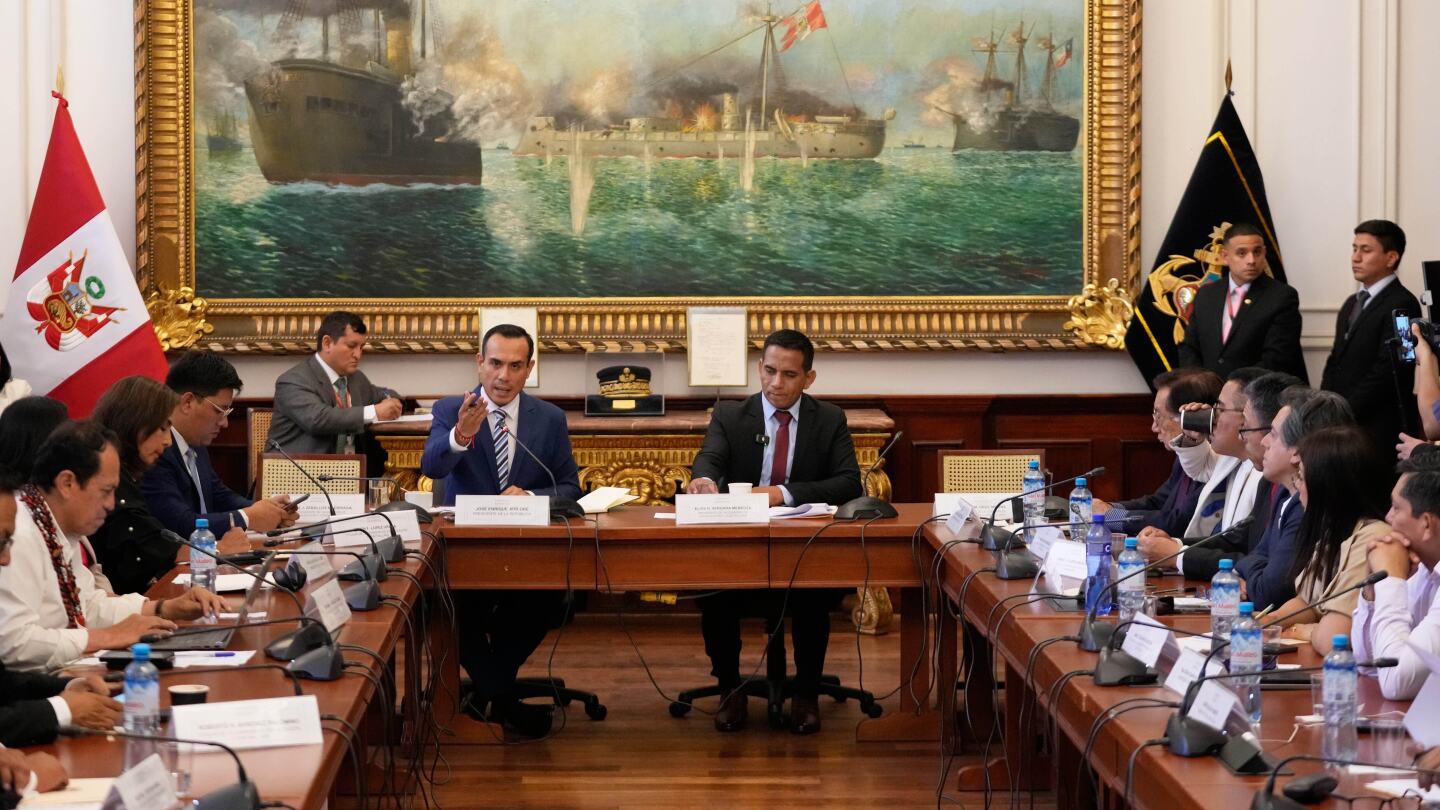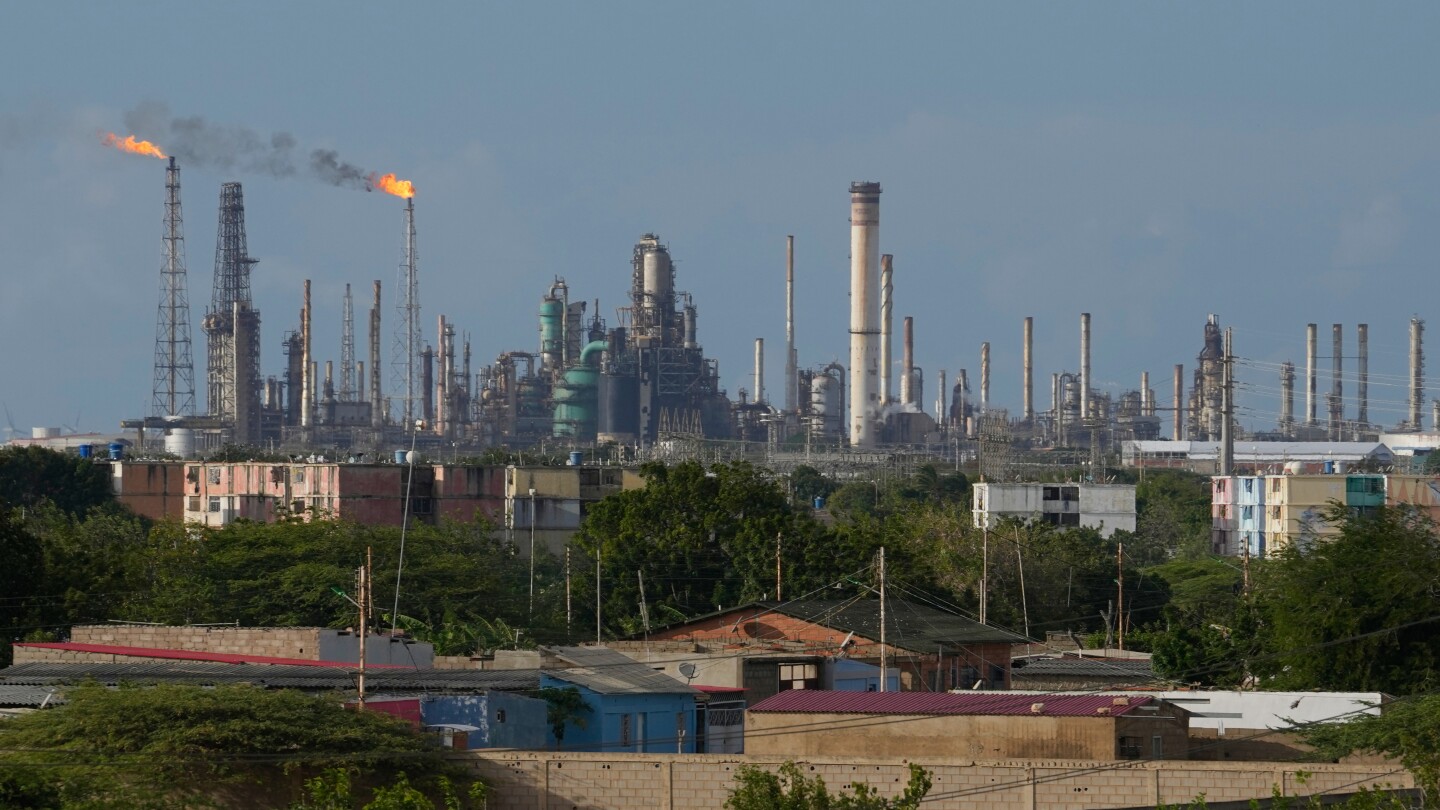
The typically bustling commercial corridors along the Venezuela-Colombia border have been transformed into zones of unusual quietude, following the issuance of an arrest order for President Nicolás Maduro. This dramatic shift in atmosphere underscores the profound anxiety gripping many Venezuelans, who are now adopting a cautious wait-and-see approach toward their nation’s volatile political future. The border region, historically a vibrant hub of cross-border trade and constant movement, now reflects a nation in suspended animation. Local merchants and residents report a significant decline in activity, as citizens prioritize monitoring the unfolding political crisis over daily commerce. This palpable tension highlights how high-stakes political developments in Caracas directly impact economic vitality and social dynamics in border communities. The current stillness is not merely an economic pause but a societal response to profound uncertainty, with many fearing potential repercussions that could alter the country’s trajectory.
标签: South America
南美洲
-

‘A long road ahead’: Venezuelans react to Maduro’s arrest with hope and worry
Venezuela has been thrust into a period of profound uncertainty following the dramatic capture of President Nicolás Maduro by United States military forces. The operation, authorized by President Donald Trump and executed in Caracas early Saturday, represents a dramatic escalation in the longstanding tensions between the two nations.
The immediate aftermath in the capital was a study in contrasts. While some citizens emerged to celebrate, expressing gratitude to the U.S. for removing a leader they view as illegitimate, staunch government loyalists mounted counter-protests. Caracas Mayor Carmen Meléndez decried the action as an outright ‘kidnapping,’ rallying supporters who demand Maduro’s immediate release.
The U.S. justification for the unprecedented military incursion centers on accusations that Maduro presides over a ‘narco-terrorist’ regime. These claims, which Maduro has consistently denied, form the basis for his extradition to New York City to face formal drug trafficking and weapons charges. In the power vacuum, President Trump has declared the U.S. will temporarily administer the nation and manage its vast oil reserves until a permanent government can be established.
Yet, beneath the surface of celebration for many, deep-seated fear and skepticism persist. Interviews with citizens reveal widespread apprehension about the future. Many, like a woman identified only as ‘Dina’ for her safety, express cautious hope for economic investment but profound distrust in U.S. political consistency. The threat of violence remains palpable; reports indicate armed pro-government paramilitary groups, known as colectivos, continue to patrol streets, intimidating citizens.
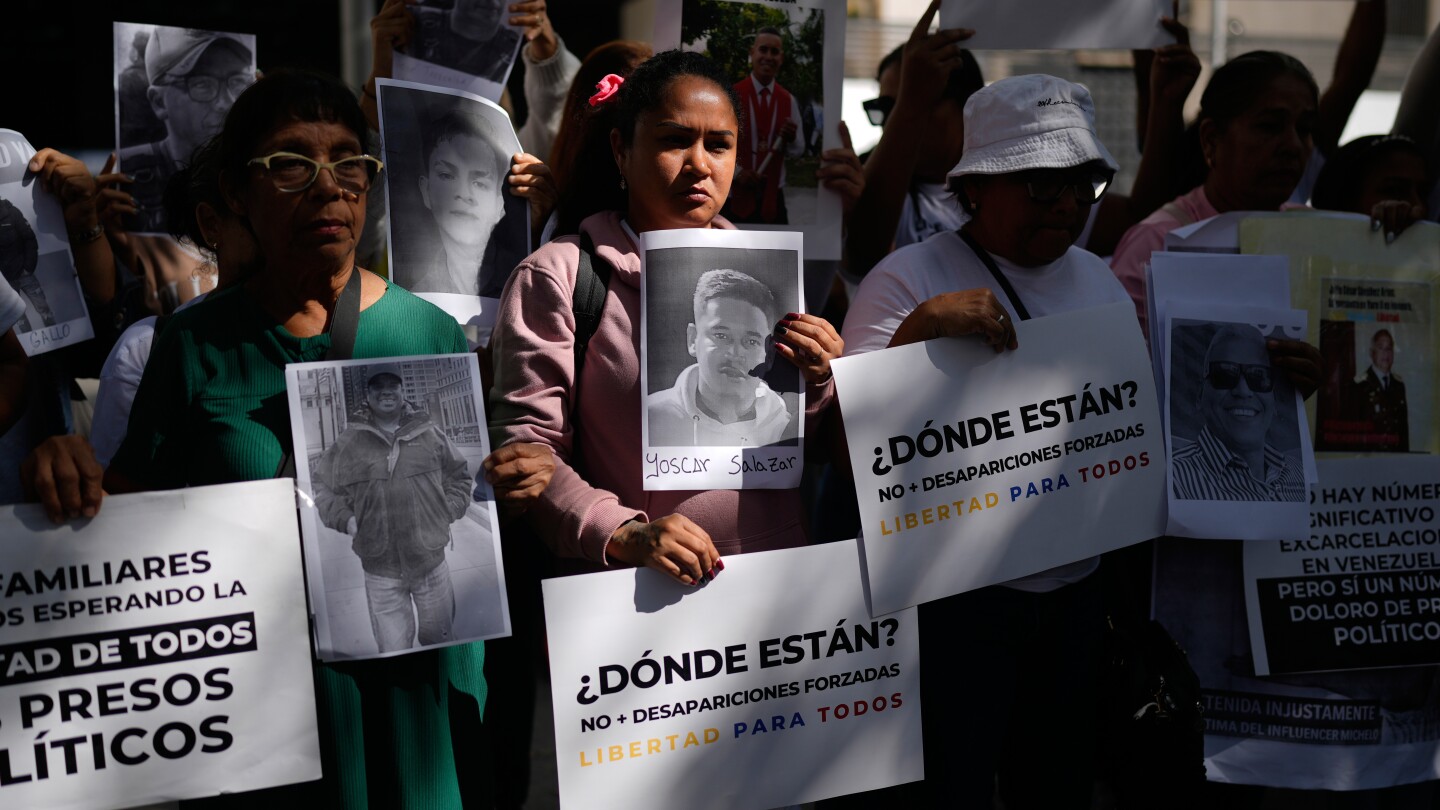
The situation is further complicated by the enduring influence of powerful Maduro allies within the government structure, creating fears of internal instability. For the nearly eight million Venezuelans living in exile, Maduro’s capture is a watershed moment, though they recognize that healing the nation’s profound wounds—including addressing those who are missing, imprisoned, or dead—will be a long and arduous process.
-

FACT FOCUS: Trump repeats false claims as he discusses US raid to extract Venezuela’s president
During an extended press briefing addressing the controversial U.S. military operation targeting Venezuelan leadership, President Donald Trump made several statistically questionable assertions regarding both the Venezuela raid and domestic National Guard deployments.
Regarding the Venezuela maritime intervention, Trump asserted that each drug vessel neutralized by U.S. forces “kills on average 25,000 people” and that eliminating these vessels saves equivalent American lives. However, official data from the CDC’s National Vital Statistics System reveals that annual drug overdose fatalities reached approximately 76,516 during the 12-month period ending April 2025—already representing a 24.5% decrease from previous figures. Given that U.S. forces have engaged 35 vessels since operations commenced in September, Trump’s calculation would suggest 875,000 lives saved—a figure dramatically exceeding actual overdose mortality rates.
Furthermore, operational analysis indicates these maritime strikes primarily target Caribbean routes, while the predominant opioid threat—fentanyl responsible for 65.1% of overdose deaths—typically enters via land routes from Mexico using Chinese and Indian precursor chemicals.
On domestic security, Trump incorrectly claimed Washington D.C. had experienced no homicides “in six, seven months” following National Guard deployment. Metropolitan Police Department statistics document 59 homicides during this period, including a November terrorist attack that killed one National Guard member and injured another. While homicides decreased from 2024’s 126 to 97 in 2025, 29 occurred after the August deployment.
Regarding Chicago and Los Angeles deployments, Trump asserted crime reduction successes despite legal constraints that prevented street deployment in Chicago. In Los Angeles, initial deployments of 4,000 Guard members and 700 Marines were gradually reduced to several hundred before court orders mandated returning control to California Governor Gavin Newsom, culminating in the Ninth Circuit’s Wednesday ruling demanding administration compliance.
-

What we know about Maduro’s capture and US plan to ‘run’ Venezuela
In an unprecedented military operation dubbed ‘Operation Absolute Resolve,’ U.S. special forces have captured Venezuelan President Nicolás Maduro and First Lady Cilia Flores. The dramatic extraction occurred during early morning hours in Caracas following coordinated strikes on multiple strategic locations across Venezuela’s capital region.
President Donald Trump confirmed the operation during a Saturday news conference, revealing that Delta Force operatives successfully infiltrated Maduro’s fortified compound at 02:01 local time (06:01 GMT). The mission, which involved over 150 aircraft and months of planning, resulted in the capture of the Venezuelan leader without U.S. casualties.
The operation triggered explosions at key military installations including Fuerte Tiuna military base, Generalissimo Francisco de Miranda Air Base, and critical infrastructure sites in Miranda state. Venezuelan authorities reported strikes on civilian areas and deployed armed forces under a national emergency declaration.
Maduro and Flores have been transported to Stewart Air National Guard Base in New York and face multiple federal charges in the Southern District of New York, including conspiracy to commit narco-terrorism and weapons offenses. U.S. Attorney General Pam Bondi stated the couple would ‘face the full wrath of American justice.’
International reactions have been sharply divided. Russia, China, Iran, and several Latin American nations condemned the operation as violation of sovereignty, while the UK expressed support for Maduro’s removal. UN Secretary-General Antonio Guterres expressed alarm at the potential precedent-setting nature of the military action.
Trump announced that the U.S. would temporarily ‘run’ Venezuela to facilitate a transition, with American oil companies expected to enter the country. The operation follows years of tensions between the nations, with the U.S. accusing Maduro of direct involvement in drug trafficking and designating Venezuelan groups as Foreign Terrorist Organizations.
-

Watch: ‘I’m so happy’ – Venezuelans in the US react to Maduro’s capture
In an outpouring of emotion, Venezuelan-Americans in South Florida erupted in celebration following news of a US operation targeting President Nicolás Maduro. The community in Doral, Florida—often referred to as ‘Doralzuela’ due to its high concentration of Venezuelan expatriates—gathered spontaneously, waving flags and chanting slogans against the Venezuelan leader.
BBC correspondent Bernd Debusmann, reporting from the scene, captured raw reactions from residents who expressed overwhelming joy and relief. ‘I’m so happy,’ one emotional resident told the BBC, echoing sentiments shared by many who fled economic collapse and political repression under Maduro’s administration. The celebratory atmosphere reflected years of pent-up frustration among exiles who have advocated for international intervention.
The development marks a significant escalation in US-Venezuela relations, with Washington taking direct action against a leader it has repeatedly sanctioned and labeled illegitimate. The events in Doral highlight how Venezuela’s political crisis has created deep diasporic communities abroad that remain intensely engaged with developments in their homeland. Many celebrators expressed hope that this operation might lead to democratic restoration in Venezuela, though the ultimate outcome remains uncertain amid complex geopolitical tensions.
-

Who is captured Venezuelan President Maduro?
Former U.S. President Donald Trump has asserted that American forces conducted military strikes in Venezuela and successfully captured the nation’s sitting president, Nicolás Maduro. The controversial statement, which lacks official confirmation from current U.S. authorities, represents a significant escalation in rhetoric regarding Washington’s approach to the Venezuelan government.
Venezuela has been embroiled in a prolonged political crisis since Maduro’s disputed re-election in 2018, which many nations including the United States deemed illegitimate. The Trump administration maintained a policy of maximum pressure against Maduro’s regime, recognizing opposition leader Juan Guaidó as the legitimate interim president and imposing severe economic sanctions.
This alleged claim of military intervention, if verified, would mark a dramatic turning point in hemispheric relations and international law. However, multiple international news agencies and government channels have not corroborated Trump’s assertion, leaving the validity of the statement in question. Regional security analysts suggest such an operation would require substantial military resources and would likely provoke strong responses from Venezuela’s international allies, including Russia and China.
-

Venezuelans wonder who’s in charge as Trump claims contact with Maduro’s deputy
BUENOS AIRES, Argentina (AP) — Venezuela has been plunged into a profound constitutional crisis following the dramatic capture of President Nicolás Maduro by U.S. military forces. The operation has triggered urgent questions about legitimate leadership and the nation’s political future, creating widespread uncertainty among citizens and officials alike.
In a stunning development, former U.S. President Donald Trump unexpectedly endorsed Maduro’s vice president, Delcy Rodríguez, as a potential successor despite her history of facing U.S. sanctions for undermining Venezuelan democracy. Trump revealed that Rodríguez had engaged in extensive discussions with Secretary of State Marco Rubio, during which she allegedly expressed willingness to cooperate with American objectives.
“She’s essentially willing to do what we think is necessary to make Venezuela great again,” Trump told reporters, simultaneously dismissing opposition leader Maria Corina Machado—the 2024 Nobel Peace Prize laureate—as lacking sufficient support to govern effectively.
Rodríguez responded to these developments with defiant rhetoric on state television, demanding Maduro’s immediate release and condemning the U.S. operation as a flagrant violation of international law. Flanked by senior civilian officials and military commanders, she emphatically declared: “There is only one president in this country, and his name is Nicolás Maduro.”
The situation remains highly fluid with no visible U.S. administration presence in Venezuela. Constitutional provisions requiring a new election within thirty days of presidential absence now face extraordinary complications due to the military intervention and questions about the government’s legitimacy.
Venezuelan military leaders projected unwavering defiance, with Defense Minister Gen. Vladimir Padrino López asserting “They have attacked us but will not break us.” Interior Minister Diosdado Cabello appeared in combat gear, urging citizens to defend national sovereignty against what he characterized as “rats” who would “regret what they did.”
Rodríguez’s complex profile includes strong connections to Wall Street and Republican oil interests, having previously engaged with figures including Blackwater founder Erik Prince and Trump special envoy Richard Grenell. Unlike many Maduro associates facing U.S. criminal indictments, Rodríguez and her brother Jorge—who leads the Maduro-controlled National Assembly—have avoided legal prosecution while maintaining leftist credentials rooted in their father’s tragic death in police custody during the 1970s.
The opposition movement, led by Machado, maintains that retired diplomat Edmundo González—widely believed to have won the disputed 2024 presidential election—should immediately assume constitutional authority. Machado pledged to restore order, free political prisoners, and reclaim democratic governance, asserting readiness to “assert our mandate and take power.”
With military forces traditionally serving as Venezuela’s ultimate political arbiter, Rodríguez faces significant challenges in consolidating authority. Experts emphasize that the resolution will depend heavily on the current state of military capabilities and which officials were detained during the operation.
Venezuelan citizens expressed widespread shock and confusion, with many speculating on social media about possible mistaken identity in Trump’s comments regarding the two prominent female political figures.
-

Watch: How the US attack on Venezuela unfolded
In a dramatic escalation of international tensions, the United States has initiated direct military action against Venezuela, culminating in the reported capture of the nation’s leader, Nicolas Maduro. President Donald Trump confirmed the operation, declaring that the U.S. would subsequently “run” the South American country. This intervention marks a significant turning point in the long-standing political and economic crisis that has plagued Venezuela, representing the most direct foreign involvement in the nation’s sovereignty to date. The strikes, which targeted key strategic locations, were justified by the U.S. administration as a necessary measure to restore democracy and alleviate a severe humanitarian crisis. The international community is now watching closely, with reactions ranging from strong support to vehement condemnation, as this action sets a profound precedent for international law and foreign policy. The unfolding situation raises critical questions about the future of Venezuelan governance, the regional balance of power in Latin America, and the broader implications for global diplomatic norms.
-

Capture of Maduro and US claim it will run Venezuela raise new legal questions
The Trump administration’s dramatic seizure of Venezuelan President Nicolás Maduro has ignited fierce debate among legal scholars and policymakers regarding the legality of aggressive U.S. actions in South America. Maduro was captured during a midnight operation involving U.S. forces in Caracas and transported via warship to face narcoterrorism conspiracy charges in New York—an extraordinary maneuver that legal experts characterize as historically unprecedented.
This development represents the culmination of months of escalating military engagement in the region, including 35 documented boat strikes against alleged drug trafficking vessels resulting in over 115 fatalities since September, alongside multiple seizures of Venezuelan oil tankers. According to former Navy attorney Mark Nevitt, now at Emory University School of Law, the operation lacks any recognizable legal foundation absent an existing extradition treaty.
The administration’s justification hinges on a controversial memorandum obtained by The Associated Press in October, which designates Venezuelan drug cartels as unlawful combatants and frames drug trafficking as an armed conflict requiring military response. This novel interpretation significantly expands presidential war powers without congressional authorization—a constitutional concern compounded by the fact that lawmakers from both parties have grown increasingly uneasy about military actions in Venezuela.
Historical parallels to the 1989 Panama invasion and capture of Manuel Noriega reveal critical distinctions: unlike Panama, where U.S. national security interests were directly threatened by control of the Panama Canal and safety of American citizens, no similar justification exists for Venezuela. While federal courts traditionally defer to executive authority on national security matters, Notre Dame Law School professor Jimmy Gurule emphasizes that “great deference does not mean absolute deference and unfettered authority to do anything.”
Congressional leaders were notified only after operations commenced, prompting bipartisan calls for greater oversight. The Senate prepares to vote on a war powers resolution that would restrict military action against Venezuela without legislative approval. Democratic lawmakers warn that bypassing international law sets dangerous precedents that authoritarian regimes could exploit, potentially undermining global stability and America’s moral authority.
As Secretary of State Marco Rubio acknowledged the impossibility of pre-operation consultations due to its sensitive nature, the administration faces mounting scrutiny over its legal rationale and long-term strategic implications for international relations and constitutional balance of powers.
-

Maduro’s capture disrupts Caribbean holiday travel, hundreds of flights canceled
A dramatic U.S. military operation that resulted in the capture and extraction of Venezuelan President Nicolás Maduro in the early hours of Saturday has triggered significant disruption to Caribbean aviation during one of the region’s peak travel periods. The aftermath has compelled major airlines to cancel hundreds of flights, with warnings of potential continued interruptions lasting several days.
The Federal Aviation Administration (FAA) implemented immediate airspace restrictions, leading to a complete halt of commercial airline traffic over Venezuelan airspace as tracked by FlightRadar24.com. The disruptions extended to key tourist destinations including Puerto Rico, the U.S. Virgin Islands, and Aruba. Luis Muñoz Marín International Airport in San Juan officially confirmed the restrictions, attributing them directly to the “security situation related to military activity” in Venezuela.
In response, U.S. carriers have universally suspended operations to and from affected airports. JetBlue announced the cancellation of approximately 215 flights specifically citing “airspace closures across the Caribbean related to military activity.” Similarly, United Airlines stated it is actively adjusting its schedule to accommodate the Venezuela region closures, while Southwest canceled all Saturday flights to Aruba and suspended Puerto Rico services until late afternoon.
To mitigate passenger inconvenience, airlines are implementing flexible rebooking policies. American Airlines, Delta Air Lines, JetBlue, and United are all waiving change fees for travel to a wide array of impacted islands, such as Saint Lucia, Curacao, Anguilla, and the British Virgin Islands. These travel advisories encourage all passengers to verify their flight status directly with their airline before departing for the airport. Notably, the FAA’s restrictions apply solely to U.S. commercial airlines and do not affect foreign carriers or military aircraft.