标签: South America

南美洲

  • Rubio downplays reports US could review UK’s claim to Falklands

    Rubio downplays reports US could review UK’s claim to Falklands

    A weeks-long swirl of speculation over a potential U.S. policy shift on the Falkland Islands sovereignty dispute has been directly quelled by Secretary of State Marco Rubio, who downplayed suggestions of change as an overblown reaction to an internal brainstorming document. The controversy began last week when news outlet Reuters published details from a leaked internal Pentagon email, which floated potential punitive measures against NATO allies that refused to back recent U.S. military action against Iran. Among the options cited was a possible review of the longstanding U.S. position on Falkland Islands sovereignty, a long-running point of tension between the United Kingdom and Argentina.

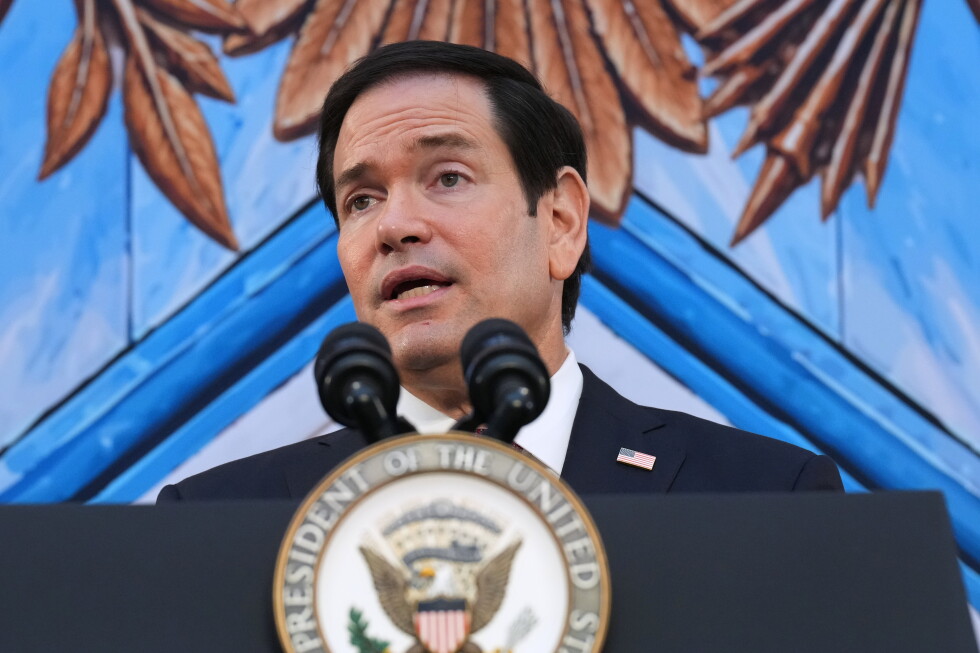
    Speaking to The Sun on Thursday, Rubio pushed back against widespread media and political reaction to the leak, framing the document as nothing more than a draft of unvetted ideas. “It was just an email with some ideas,” Rubio told the outlet, adding that public and political response to the leak had been “overexcited.” The secretary of state’s comments came one day after he held talks on the issue with UK Foreign Secretary Yvette Cooper during a meeting in Washington, D.C.

    Rubio reaffirmed that the United States’ longstanding neutral stance on the sovereignty dispute remains fully intact. “Our position on the islands remains one of neutrality. We acknowledge that there are conflicting claims of sovereignty between Argentina and the UK. We recognise the de facto United Kingdom administration of the islands but take no position regarding sovereignty claims of either party,” he said.

    Located 483 kilometers off the Argentine coast in the southwest Atlantic, the Falkland Islands (known as the Malvinas to Argentina) have been the center of a sovereignty clash for nearly 200 years. The UK has administered the islands as an overseas territory since 1833, but Argentina asserts it inherited legal claim to the archipelago from the Spanish crown following its independence, and points to the islands’ geographic proximity to the South American mainland as further justification for its claim.

    The dispute boiled over into open conflict in 1982, when Argentine military forces invaded the islands in an attempt to seize control by force. A 10-week undeclared war ended with the surrender of Argentine forces to a British military task force, leaving 649 Argentine soldiers, 255 British service members, and three Falkland Islanders dead. Today, the UK maintains a permanent military garrison of more than 1,000 personnel on the islands to deter any future aggression. A 2013 referendum of the archipelago’s 1,672 eligible voters saw 99.8 percent of participants back remaining a UK overseas territory, on a turnout of more than 90 percent.

    For decades, the U.S. has officially held a position of neutrality in the dispute, formally recognizing British de facto administration while offering quiet diplomatic and military backing to the UK. The leaked memo sparked immediate fears in London that a shift in U.S. policy would strengthen Argentina’s ongoing international campaign to press its sovereignty claim. Following the leak, a Downing Street spokesperson reaffirmed the UK’s unwavering position: “The Falkland Islands have previously voted overwhelmingly in favour of remaining a UK overseas territory, and we’ve always stood behind the islanders’ right to self-determination and the fact that sovereignty rests with the UK.”

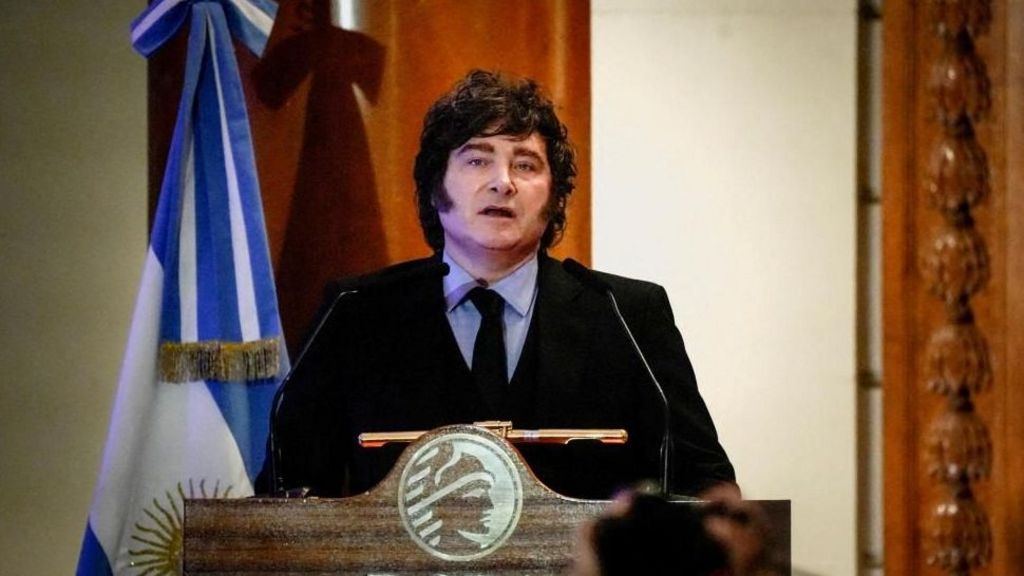
    The leaked Pentagon proposal emerged against a backdrop of transatlantic tension following recent U.S.-Israeli strikes against Iran. The UK declined to join the offensive strikes, a choice that angered U.S. President Donald Trump, though it has permitted the U.S. military to use British bases for defensive strikes against Iranian missile sites. In addition to the Falklands policy review, the leaked memo also reportedly suggested pushing for Spain’s suspension from NATO as another potential punishment for non-participation. Adding another layer of context to the speculation, President Trump has maintained close political ties to Argentine President Javier Milei, who has made renewed claims to the Falklands a core part of his foreign policy agenda.

  • Brazil’s Congress overrides Lula’s veto of a bill to reduce Bolsonaro’s sentence

    Brazil’s Congress overrides Lula’s veto of a bill to reduce Bolsonaro’s sentence

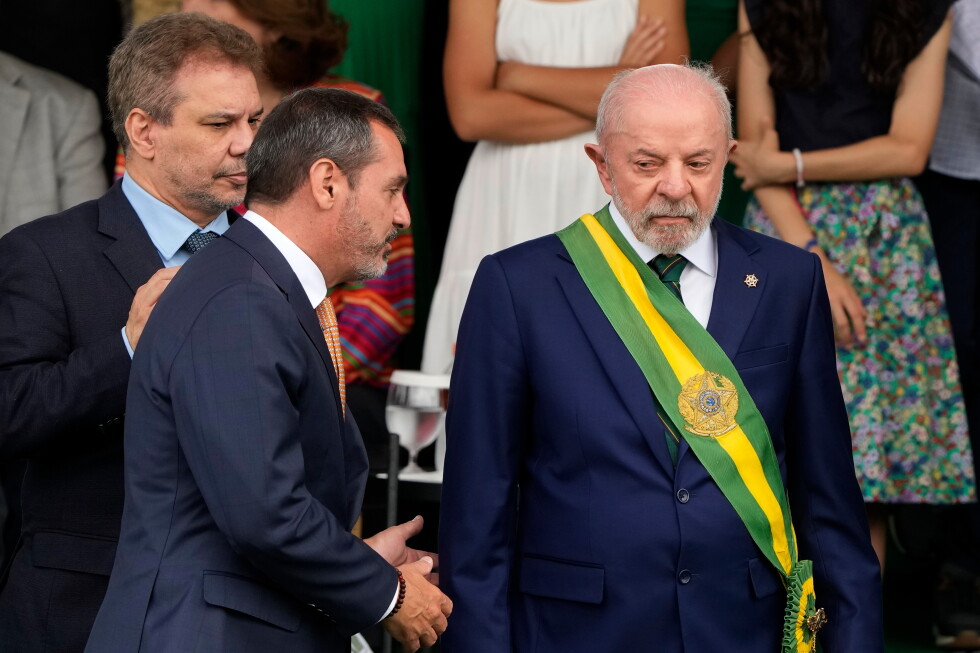
    SAO PAULO — In a high-stakes political upset that has reshaped Brazil’s political landscape months ahead of October’s presidential election, Brazil’s National Congress voted Thursday to override a presidential veto and enact a controversial sentencing reform bill that will slash former President Jair Bolsonaro’s 27-year prison term for his conviction on coup plotting charges. The legislative move marks a major political blow to incumbent leftist President Luiz Inácio Lula da Silva, Bolsonaro’s long-time rival, and signals a notable erosion of Lula’s governing power in Congress ahead of his reelection bid.

    The new legislation, which immediately faces planned legal challenges in Brazil’s Supreme Court, revises sentencing rules for defendants convicted of multiple political crimes. Under the new policy, when a defendant is found guilty of multiple offenses including crimes against democratic rule of law and leading a coup attempt, their final sentence will only reflect the single count carrying the maximum penalty, rather than an aggregate of all convictions. While the exact remaining sentence for Bolsonaro has not yet been finalized, political and legal analysts project the reform could cut as much as 20 years off the former right-wing leader’s original 27-year sentence. Bolsonaro, who was convicted and began his sentence in November 2024, is currently serving time under house arrest.

    Conservative opposition lawmakers successfully rallied centrist senators and federal deputies to secure a comfortable majority to override Lula’s veto of the bill, which was originally passed by Congress in 2024. Bolsonaro’s supporters had openly predicted the outcome before voting got underway, and many framed the move as a stepping stone to broader political pardons. “This is a first and much awaited step by those who are afflicted. The next stage is full amnesty,” said Sen. Espiridião Amin, a prominent Bolsonaro ally.

    Senate leaders claimed ahead of the vote that the reduced penalties would only apply to cases directly connected to the convictions of Bolsonaro, his allies, and supporters charged in connection with the 2023 coup attempt. But legal experts have already signaled they will challenge this narrow framing in court, noting the legislation’s wording applies broadly to eligible cases.

    Pedro Uczai, congressional whip for Lula’s Workers’ Party in the Chamber of Deputies, confirmed the party will file an appeal with the Supreme Court to have the legislation annulled, arguing the reform violates Brazil’s constitution. As of Thursday evening, the court had not yet received the formal complaint.

    Bolsonaro’s congressional allies have been open that the bill will benefit not just the former president, but also hundreds of his supporters convicted for their role in the January 8, 2023 riot that destroyed multiple government buildings in Brazil’s capital Brasilia. The attack, which sought to overturn Lula’s 2022 election victory, was widely compared to the 2021 assault on the U.S. Capitol.

    Alexandre Knopfholz, a lawyer and legal scholar, told the Associated Press the bill’s wording could also reduce penalties for offenses committed by large crowds, extending legal leniency to dozens of rioters already charged in connection with the Brasilia attack. Knopfholz emphasized that even if the Supreme Court upholds the new legislation, Bolsonaro will not be released from detention automatically, and additional legal proceedings will be required to adjust his sentence.

    Thursday’s vote marks the second high-profile congressional defeat for Lula in 24 hours, capping a rough week for the incumbent ahead of his campaign for a fourth non-consecutive term. On Wednesday evening, the Senate rejected Lula’s nominee for a Supreme Court seat — the first time a sitting president’s Supreme Court pick has been rejected in 132 years.

    “They want to release Bolsonaro, his jailed generals and stop federal police investigations that implicate them,” said Lindberg Farias, a lawmaker and Lula ally, calling Thursday’s vote “a day of infamy.”

    The legislative battle has already spilled over into the upcoming presidential campaign. Lula, who narrowly defeated Bolsonaro in 2022 to return to the presidency, will face Sen. Flávio Bolsonaro, the former president’s eldest son, as his main challenger in October. During Thursday’s vote, Flávio Bolsonaro laid out his campaign pitch to voters: “If it is God’s will, I will govern this country. I will hug you and take care of you, no matter what your political view is.”

    As of Friday morning, Lula had not issued any public comment on the back-to-back congressional defeats. Political analysts say the vote is a clear warning sign for Lula’s reelection prospects, though many note there is still five months until election day, and public attention could shift to other events including the upcoming men’s soccer World Cup.

    “This vote is another sign that Bolsonaro is not finished as a political actor, his son will be competitive against Lula,” said Carlos Melo, a political science professor at Insper University in Sao Paulo.

  • Argentine workers mark May Day with protests over Milei’s labor-law overhaul

    Argentine workers mark May Day with protests over Milei’s labor-law overhaul

    On Thursday, thousands of Argentine working people gathered in the streets of Buenos Aires for annual May Day demonstrations, turning the traditional celebration of labor rights into a mass show of opposition to President Javier Milei’s sweeping rollback of decades-old worker protections. The march was organized by the General Confederation of Labor (CGT), Argentina’s largest union federation, which framed the action as a fight to preserve “decent employment” in the face of Milei’s transformative changes to the country’s 50-year-old national labor code.

    Argentina’s labor regulations, first enshrined in 1974, have long provided Argentine workers with extensive legal protections and benefits. For decades, however, economists and business leaders have argued that these rigid rules created prohibitive operational costs for companies, driving away much-needed foreign direct investment and pushing nearly half of the country’s workforce into the informal, off-the-books sector where workers receive no legal protections or benefits. Successive administrations spanning multiple political ideologies attempted to liberalize the labor market to address these issues, but every reform effort collapsed in the face of fierce pushback from Argentina’s historically powerful labor unions, which have been a core political force in the country since the rise of Peronism in the 1940s.

    Despite widespread union opposition that included weeks of rolling protests and a full nationwide strike, Milei, who swept to power on a libertarian free-market agenda, successfully pushed his labor reform package through congress in February, securing one of the most significant legislative wins of his young presidency. The new legislation makes sweeping changes to the country’s labor rules: it expands the maximum legal workday from eight hours to 12, extends the probation period for new hires, simplifies the process for companies to dismiss workers, reduces legal protections for striking workers, and caps judicial discretion for severance pay awards. Proponents argue the changes will encourage formal sector hiring and make Argentina more competitive for global investment, but critics say they erode hard-won labor rights and leave working people vulnerable.

    Opponents of the reform have turned to the courts to block the new law, launching a constitutional appeal to challenge its legality. Last week, a court overturned an earlier injunction that had suspended the law’s implementation at the unions’ request, clearing the way for the reforms to take effect. Union leaders have announced they will file a new legal challenge, and the dispute is now on track to reach Argentina’s Supreme Court for a final ruling.

    The political clash over labor reform comes at a fragile moment for Milei’s presidency. His flagship policy promise to curb Argentina’s decades-long sky-high inflation has made little progress in recent months, while national unemployment has begun to climb. For Argentina’s labor movement, which was a foundational pillar of the Peronist movement that dominated Argentine politics for nearly 80 years, the labor overhaul represents an existential threat to both worker rights and the movement’s long-held political influence.

    Ahead of Thursday’s protest, CGT leader Jorge Sola told local radio that widespread social discontent has built up across the country, driven by more than just falling household consumption. “It is due to family debt, job losses and worse working conditions than what we had before,” Sola said, capturing the simmering anger that brought thousands of workers onto the capital’s streets for the May Day demonstration.

  • The first direct US-Venezuela commercial flight in 7 years is to land in Caracas

    The first direct US-Venezuela commercial flight in 7 years is to land in Caracas

    After a seven-year indefinite suspension ordered by U.S. authorities over unsubstantiated security concerns, the first direct commercial flight connecting the United States and Venezuela is set to touch down in Caracas, Venezuela’s capital, on Thursday, marking a historic turning point in bilateral relations between the two nations.

    This long-awaited resumption of direct air links comes on the heels of a series of rapid diplomatic breakthroughs. Just months ago, the U.S. announced the formal reopening of its embassy in Caracas, a move that followed the restoration of full diplomatic relations between Washington and the South American country after years of severed ties.

    The inaugural flight, numbered AA3599 and operated by Envoy Air, a regional subsidiary of American Airlines, was scheduled to depart Miami International Airport at 10:16 a.m. local Florida time, with a planned three-hour flight time before arriving in Caracas. The aircraft is scheduled to make the return trip to Miami later the same afternoon. Per earlier announcements from the airline, a second daily nonstop flight between Miami and Caracas will launch on May 21 to meet growing travel demand.

    Direct commercial air travel between the U.S. and Venezuela has been frozen since 2019, when American Airlines — the last remaining U.S. carrier serving the country — suspended its routes between Miami, Caracas, and Venezuela’s key oil hub Maracaibo. Larger U.S. carriers Delta Air Lines and United Airlines had already exited the Venezuelan market two years earlier in 2017, amid a deepening political and economic crisis that drove millions of Venezuelans to seek refuge abroad. Over the past seven years, travelers between the two nations have been forced to rely on indirect connecting routes through neighboring Latin American countries, adding significant time and cost to cross-border journeys.

    In a late January statement, U.S. President Donald Trump announced he had notified Venezuela’s acting President Delcy Rodríguez that the U.S. would fully open commercial air access to Venezuela, clearing the way for U.S. citizens to travel to the country. “American citizens will be very shortly able to go to Venezuela, and they’ll be safe there,” Trump told reporters at the time. When American Airlines first announced the flight resumption plan in January, the carrier emphasized that the restored routes would create new opportunities for separated family members to reunite, while also opening new doors for cross-border commercial and economic activity.

  • US charges Mexican governor and other leaders with aiding drug cartel

    US charges Mexican governor and other leaders with aiding drug cartel

    In an unprecedented move that has rattled U.S.-Mexico relations, federal prosecutors in New York unveiled a sweeping indictment Wednesday charging Rubén Rocha Moya, the sitting governor of Mexico’s Sinaloa state, with conspiring with the notorious Sinaloa Cartel to smuggle massive volumes of narcotics into the United States. Rocha Moya, a member of Mexican President Claudia Sheinbaum’s ruling political party, is one of 10 current and former Mexican government officials named in the case, which also includes a sitting senator, a high-ranking police commander, a mayor, and other former public servants.

    The indictment, issued by the U.S. Attorney’s Office for the Southern District of New York, alleges that the group abused their positions of public trust to protect Los Chapitos, one of the dominant warring factions of the Sinaloa Cartel, in exchange for millions in bribes and political backing for their careers. Sinaloa state, where Rocha Moya serves as governor, is the historic birthplace and base of operations for the Sinaloa Cartel, which the U.S. government has formally designated as a terrorist organization.

    “The Sinaloa Cartel is not just trafficking deadly drugs, it is a designated terrorist organization that relies on corruption and bribery to drive violence and profit,” DEA Administrator Terrance Cole said in a statement announcing the charges. “These public officials used positions of trust to protect cartel operations, enabling a pipeline of deadly drugs into our country.”

    U.S. Attorney Jay Clayton echoed that sentiment, emphasizing that transnational drug trafficking networks depend on institutional corruption to operate unimpeded. “As the indictment lays bare, the Sinaloa cartel, and other drug trafficking organisations like it, would not operate as freely or successfully without corrupt politicians and law enforcement officials on their payroll,” Clayton said.

    Rocha Moya has forcefully and categorically rejected all allegations against him, framing the indictment as a political attack not just on his person, but on the ruling party’s signature domestic policy project, known as the Fourth Transformation. “This attack isn’t only against me, it’s against the Fourth Transformation,” Rocha Moya wrote in a post on the social media platform X.

    The charges have already triggered a sharp pushback from the Mexican government. In an official statement released shortly after the indictment was made public, Mexico’s foreign ministry said the arrest and extradition requests submitted by the U.S. Embassy lack sufficient evidentiary basis, noting that the documents “do not include the elements of proof” required to proceed with the requests. Mexican authorities have launched an independent internal review to assess whether the U.S. allegations hold legal merit, a process that will be overseen by the country’s Attorney General’s office, which will make the final determination on extradition if formal requests move forward.

    Attorney general spokesperson Ulises Lara confirmed the domestic probe in a video posted to social media, stating that the review would determine “if the accusation made by U.S. authorities has legal grounds.”

    Legal and foreign policy experts note that the indictment of a sitting sitting governor from Mexico’s ruling party is an extremely rare development in bilateral relations, and it creates a major diplomatic challenge for President Sheinbaum, who took office recently. The charges also mark the latest escalation in an aggressive anti-cartel strategy launched by the Trump administration targeting both drug trafficking networks and the official corruption that enables their operations. Sinaloa Cartel has been locked in a violent internal power struggle between competing factions for years, a conflict that has sent shockwaves through northern Mexico and contributed to record drug overdose deaths in the U.S. tied to fentanyl trafficking.

  • Brazil prosecutors launch suit against meatpacking giant JBS over beef tied to slavery-like labor

    Brazil prosecutors launch suit against meatpacking giant JBS over beef tied to slavery-like labor

    SAO PAULO – In a landmark legal action that casts a fresh spotlight on labor abuses in global supply chains, Brazilian labor prosecutors have filed a civil suit against global meatpacking leader JBS, alleging the multinational knowingly purchased cattle from Amazon-region ranches where workers were trapped in slavery-like working conditions. The claim, filed before a labor court in Para — a northern Brazilian state that falls within the Amazon basin — seeks 119 million reais, equivalent to roughly $24 million in compensatory damages. Prosecutors note this figure matches the total value of all business dealings between JBS and the accused suppliers over the past decade.

    Court documents outline that between 2014 and 2025, authorities rescued 53 workers from properties controlled by seven JBS-supplied ranchers. All seven of these producers are already listed on Brazil’s official public registry of entities found to have forced workers into conditions analogous to chattel slavery, a designation reserved for cases of extreme exploitation, forced confinement and debt bondage.

    Prosecutors argue that JBS demonstrated a repeated, systematic pattern of negligence in its supply chain oversight, failing to conduct adequate due diligence to screen out suppliers with documented histories of labor abuse even though such records are publicly available. As of Thursday, JBS had not issued an immediate response to requests for comment from reporters on the allegations.

    This legal action comes against a backdrop of longstanding concerns about labor practices in Brazil’s massive beef sector. The country is currently the world’s top beef producer, contributing roughly 20% of total global output, after recently overtaking the United States which now holds a 19% global market share, per data from the U.S. Department of Agriculture. Brazilian labor officials confirm that cattle ranching consistently accounts for the highest number of rescued exploited workers across the country, and the industry is also a leading driver of deforestation in the Amazon rainforest, the world’s largest tropical ecosystem that plays a critical role in global climate regulation.

    Just months earlier, in March 2025, the Office of the United States Trade Representative added Brazil to a watchlist of 60 nations facing active investigation for ties to forced labor in exported goods. JBS, which boasts a global market capitalization of approximately $17 billion, already faced labor unrest this year at one of its U.S. facilities in Colorado, where workers conducted a three-week strike over pay and working conditions before reaching a negotiated settlement to raise wages.

    The Associated Press’ climate and environmental reporting for this story is supported by grants from multiple private foundations, with the AP retaining full editorial independence over all content produced.

  • Brazil’s Senate blocks Lula’s Supreme Court nominee, first rejection in 132 years

    Brazil’s Senate blocks Lula’s Supreme Court nominee, first rejection in 132 years

    SAO PAULO — In an unprecedented political development that has not occurred in more than a century, Brazil’s federal Senate delivered a sharp legislative setback to President Luiz Inácio Lula da Silva on Wednesday, voting down his pick for the nation’s Supreme Court.

    Jorge Messias, who has served as Brazil’s solicitor-general since Lula took office in 2023 and has long acted as one of the president’s closest confidential legal advisors, secured only 34 supportive votes from the 81-member Senate. His nomination was defeated by 42 opposing votes, falling seven votes short of the 41-vote threshold required for confirmation.

    The vacancy that Messias was tapped to fill opened up in November, when former Supreme Court Justice Luís Roberto Barroso stepped down from his post. Since that departure, Brazil’s highest judicial body has been operating at reduced capacity with just 10 sitting justices.

    Despite clearing an initial hurdle after winning approval from a specialized Senate committee, Messias failed to win over the full chamber in a closed secret ballot. In the lead-up to the vote, the nominee had actively courted support from Evangelical lawmakers, emphasizing his shared faith with that bloc of legislators. Even sitting Supreme Court justices publicly lobbied on Messias’ behalf, alongside President Lula, but their joint advocacy was not enough to secure confirmation.

    Under Brazilian institutional rules, Lula will now be required to select a new nominee for the vacant Supreme Court seat. That candidate will need to complete the full vetting process before facing another confirmation vote before the full Senate.

    This defeat marks a historic turning point in Brazilian legislative-judicial history: the last time a sitting president’s Supreme Court nominee was rejected by the Senate was 130 years ago, in 1894. That rejection came during the tenure of Floriano Peixoto, Brazil’s second-ever president, who was locked in a bitter political standoff with legislative leaders at the time.

    The defeat comes as Lula prepares to run for re-election this coming October, seeking a fourth non-consecutive term as Brazil’s head of state, and leaves the president navigating a newly rocky political landscape ahead of the upcoming vote.

  • Global forest loss slows but El Niño fires could threaten progress

    Global forest loss slows but El Niño fires could threaten progress

    Fresh satellite data compiled by the World Resources Institute (WRI) and the University of Maryland reveals a significant global slowdown in tropical old-growth forest loss in 2025, a shift driven largely by strengthened forest protection policies in Brazil and favorable cool weather conditions, even as scientists warn the planet’s most critical carbon-absorbing ecosystems remain far more threatened than they were a decade ago.

    Researchers estimate total global old-growth tropical forest loss hit nearly 43,000 square kilometers in 2025 — an area roughly matching the size of Denmark. While this marks a 36% drop from the all-time record deforestation peak recorded in 2024, scientists emphasize that current loss rates still far outpace those seen 10 years prior, putting global climate and biodiversity goals at severe risk.

    The 2025 decline stems from two key factors, the analysis finds. First, the cooler, wetter La Niña weather pattern replaced the heat-amplifying El Niño that drove record-breaking wildfires across tropical biomes in 2024, easing fire-driven forest loss. Second, reinforced environmental policy and enforcement in major forest nations including Brazil, Colombia, and Malaysia has cut clearing rates dramatically. In Brazil, which hosts the world’s largest single expanse of tropical rainforest, non-fire-related old-growth forest loss fell to just 5,700 square kilometers in 2025 — the lowest annual total recorded since data tracking began in 2002.

    “It’s incredibly encouraging to see the decline in 2025,” said Elizabeth Goldman, co-director of Global Forest Watch at WRI. “It highlights how when we have political will, and leaders in charge who want to do something for forests, we can see real results in the data.”

    Tropical rainforests are irreplaceable global assets: they support millions of unique plant and animal species, and absorb vast volumes of planet-warming carbon dioxide from the atmosphere, acting as one of Earth’s most effective natural climate regulators. For decades, however, expanding commercial agriculture, unregulated logging, and worsening climate change have steadily eroded forest cover, creating drier conditions that increase the risk of catastrophic, unmanageable wildfires.

    Global leaders formally pledged to “halt and reverse” global forest loss by 2030 at the 2021 COP26 climate summit in Glasgow, but progress toward that target has lagged badly. The 2024 record loss, driven by human-caused climate change and an intense El Niño event, underscored how far off track the world remains.

    Scientists stress that the 2025 improvement is fragile, with a new threat looming: climate change is projected to give way to a new El Niño phase by the end of 2026, raising the risk of more intense droughts and wildfires across tropical forest regions. “Climate change and land clearing have shortened the fuse on global forest fires,” said Professor Matthew Hansen of the University of Maryland. “Without urgent action to manage fire more effectively, we risk pushing the world’s most important forests past the point of no recovery.”

    Rod Taylor, WRI’s global director for forest and nature conservation, added that shifting climate conditions require a new approach to forest stewardship: “Forests are well equipped to cope with normal climate. With these new intense fires and droughts and so on, we really have to think about how to make forests more resilient and proof them against climate and fire.”

    In a complementary report released this week, the European Union’s Copernicus Climate Service detailed how human-caused climate change has already supercharged extreme weather across Europe, which is warming faster than any other continent on Earth. Nearly 95% of Europe recorded above-average annual temperatures in 2025, with even traditionally cool Arctic regions in the far north hitting 30°C in July, and Alpine glaciers continuing their rapid ice loss. European sea surface temperatures hit all-time record highs last year, with the Mediterranean suffering the most severe warming.

    The extreme heat created prime conditions for widespread wildfires across Europe, which burned more than 10,000 square kilometers of land in 2025 — an area larger than the entire island nation of Cyprus. Even with these worsening impacts, the Copernicus report noted incremental progress on decarbonization: nearly half of all electricity generated across Europe now comes from renewable sources including wind, solar, and hydropower.

  • Colombians are divided over the fate of hippos linked to Pablo Escobar

    Colombians are divided over the fate of hippos linked to Pablo Escobar

    Nestled along the banks of Colombia’s Magdalena River, the quiet riverside town of Puerto Triunfo holds an unexpected, dangerous legacy left by one of the world’s most infamous drug kingpins: a rapidly growing colony of invasive hippopotamuses that have divided local communities, spurred national debate, and put environmental policymakers in an impossible position.

    For local fishermen like Wilinton Sánchez, the semi-aquatic giants are a constant, deadly threat. Capable of charging 30 kilometers per hour across land and 8 kilometers per hour through water, hippos can surge from the river’s murky, tea-colored currents without warning. “We were out Saturday when one lunged … reared up and swung its jaws wide,” Sánchez recalled. “If it ever gets hold of you, it’ll tear you to pieces.”

    Álvaro Molina, another longtime fisherman who has lived along the river for decades, says dangerous run-ins have become routine. Around 11 years ago, the first two hippos settled on the nearby “Island of Silence,” a vegetated river island that offered ideal living conditions: no natural predators, a stable drought-free climate, and abundant vegetation far different from their native African range. Today, their population has surged, and Molina says encounters are so common he barely blinks anymore. A few years back, his boat drifted directly atop two resting hippos, which capsized the vessel in their surprise. Molina escaped unharmed, but he says the hippos have destroyed the local fishing industry, as fear has driven dozens of workers away from the water entirely. “Whether they are killed or taken away, it does us a favor,” he said.

    But for many other local residents, the hippos have become an unexpected economic lifeline. Several days a week, tour boats carrying domestic and international tourists crowd the river, visitors scanning the shoreline and murky water for a glimpse of the giants. Even the occasional sudden charge that sends boatloads of tourists screaming has done little to dampen the popularity of “hippo-watching” excursions.

    Diana Hincapié, a 48-year-old restaurant owner located on the banks of the Cocorná Sur River, a Magdalena tributary, says nearly 200 tourists visit her business each month, most traveling to the area specifically to see the hippos. She argues the animals have put down roots in Colombia after three decades of reproduction, saying, “They aren’t African anymore; they are Colombian, born and bred here for over 30 years.” If the government moves forward with its plan to cull the population, Hincapié says she is ready to join mass street protests, warning that losing the hippos would decimate Puerto Triunfo’s tourism economy.

    The hippo colony traces its origin back to the 1980s, when notorious drug lord Pablo Escobar imported four hippos to add to his private menagerie at Hacienda Nápoles, his sprawling, fortified valley estate. After Escobar’s death in 1993, the hippos escaped confinement and gradually spread across the Magdalena river basin. Today, the population numbers roughly 200, and Colombia’s Environment Ministry projects that without aggressive intervention, that number will surge past 500 by 2030, covering more than 43,000 square kilometers of river territory.

    To curb the unsustainable growth, the Colombian government recently approved a management plan that approves three main strategies: long-term confinement of local hippo populations, transfer of animals to international zoos or wildlife sanctuaries, and euthanasia, which is framed as a last resort for cases where non-lethal options are unworkable. The plan calls for euthanizing approximately 80 hippos starting in the second half of 2024.

    The announcement ignited immediate outrage across the country and beyond. Animal welfare activists have labeled the plan “mass murder” and “extermination.” Colombian Senator Andrea Padilla has called on the government to prioritize relocation over culling, arguing that responding to Escobar’s reckless illegal importation with mass killing is unacceptable. “This is a legacy left to us by a drug trafficker,” Padilla said. “How can we possibly close this chapter in the exact same way — by shooting the hippos?”

    Scientists who back the cull as a necessary environmental measure have even received death threats amid the public backlash. Daniel Cadena, dean of sciences at the University of the Andes, explains that hippos are large, impactful herbivores that fundamentally alter local ecosystem structure, posing long-term risks to native Colombian wildlife. He supports a mixed strategy that includes euthanasia as a necessary component to stop uncontrolled population growth.

    Euthanasia is also logistically challenging, under official government protocol: hippos must first be lured into corrals with food, immobilized, then given a lethal injection. Alternately, they may be shot with high-powered long-range rifles, as the species’ famously thick skin makes penetration difficult for lower-powered weapons.

    Efforts to pursue non-lethal relocation have so far hit a dead end. The Environment Ministry confirmed that while some countries initially expressed interest in accepting transferred hippos, no nation has formally committed to taking in the animals. High transportation and care costs, as well as legal restrictions on importing invasive species, have deterred potential hosts, leaving the controversial cull plan on the table as the government weighs its options to address a problem decades in the making.

  • More than fashion: A pin worn by Venezuela’s Rodríguez on state visits riles Guyana

    More than fashion: A pin worn by Venezuela’s Rodríguez on state visits riles Guyana

    GEORGETOWN, Guyana – A long-simmering centuries-old territorial dispute between Caribbean neighbor Guyana and Venezuela has reignited into a new diplomatic clash, after Guyana’s president issued a formal complaint to regional leaders over a provocative symbolic gesture by Venezuela’s acting president. The controversy centers on a lapel pin worn by Delcy Rodríguez, Venezuela’s interim head of state, during her recent official visits to Caribbean nations: the pin is shaped explicitly to match the borders of Guyana’s resource-rich Essequibo region, a territory that makes up two-thirds of Guyana’s total land area and has been claimed by Venezuela for more than a century. The gesture comes amid already heightened tensions following the U.S. capture of former Venezuelan president Nicolás Maduro in a surprise overnight raid on his Caracas residence in early January, after which Rodríguez stepped into the acting presidency. In the weeks since that political shift, the pin has become an increasingly common public symbol among senior Venezuelan government figures, ruling party lawmakers, state media anchors and other ruling bloc representatives. Guyana President Irfaan Ali delivered his formal complaint in an official note addressed to Terrance Drew, Prime Minister of St. Kitts and Nevis and current chairman of the Caribbean Community (Caricom), the regional trade and coordination bloc that hosts Rodríguez’s recent travels. Ali confirmed that Rodríguez wore the disputed pin during her official stop in Barbados on Monday, marking the second confirmed instance of her displaying the symbol on an overseas trip – the first came during an official visit to Grenada earlier in April, on her first international tour since assuming the acting presidency. In the note, Ali emphasized that the pin serves as an open, public assertion of Venezuela’s invalid territorial claim to sovereign Guyanese land. Beyond the symbolic provocation, Ali outlined a key concern: that when Rodríguez wears the pin during official visits hosted by other Caribbean nations, the gesture could be misread by third parties as quiet acceptance or even endorsement of Venezuela’s claim by the host government. Ali stressed that Caricom has long stood on clear principles in backing Guyana’s sovereignty over the Essequibo region, and that this commitment needs to be reflected not just in official statements, but also in how member states conduct official diplomatic engagements with Venezuelan representatives. The roots of the dispute stretch back to an 1899 international boundary commission, which set the current border between the two territories when Guyana was still a British colony. Venezuela has long argued that the commission’s ruling was obtained through improper means and stripped the country of the Essequibo territory. The competing claims are currently being adjudicated at the International Court of Justice (ICJ) based in The Hague, Netherlands. Ali reminded Caricom member states that the bloc has previously issued unequivocal public support for Guyana’s sovereign claim to the region at major summit meetings. He pushed for clear action, arguing that Venezuelan representatives should not be permitted to display territorial claim symbols such as the Essequibo-shaped pin or altered maps that include the region as Venezuelan territory, as such gestures threaten to undermine the ongoing legal process at the ICJ. Ali has previously publicly pushed back against other Venezuelan moves to assert the claim, including the inclusion of Essequibo on official Venezuelan government maps, which he has called a calculated, intentional provocation that Guyana rejects entirely. Tensions have escalated dramatically in recent years as major offshore oil reserves were discovered in the Essequibo region, which is licensed for exploration and production by Guyana to international energy firms including U.S. operators. On multiple occasions, Venezuela has deployed military gunboats to the offshore oil blocks, issuing demands that all production activity cease – demands that operating rigs have declined to obey to date. As of Tuesday, no response to Guyana’s complaint had been issued by Venezuelan government officials, who could not be immediately reached for comment by reporters.