标签: North America

北美洲

  • Trump claims other presidents flouted war powers law. It’s a mixed record

    Trump claims other presidents flouted war powers law. It’s a mixed record

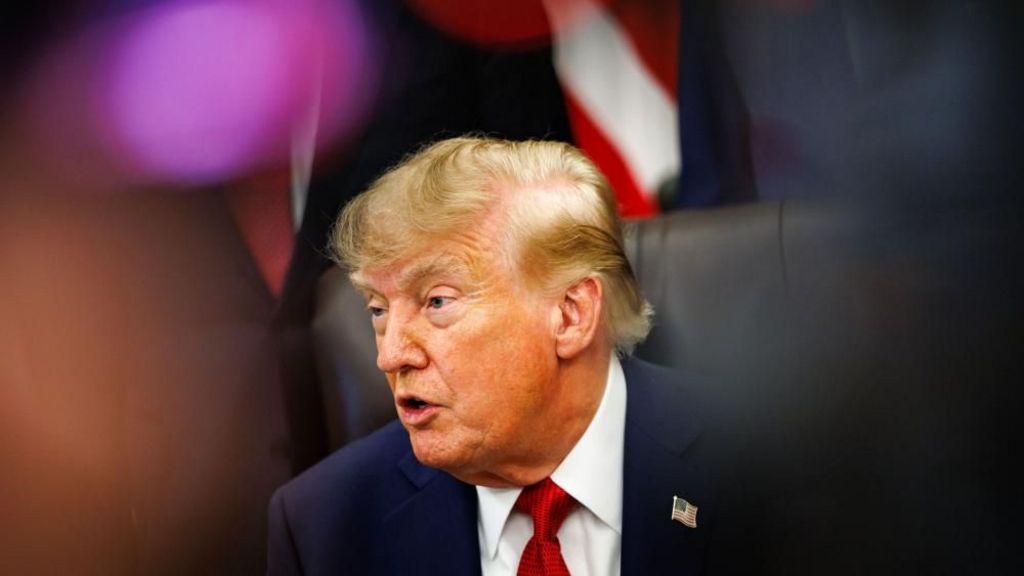
    A high-stakes constitutional and political debate has erupted in Washington over President Donald Trump’s refusal to seek congressional approval to continue U.S. military operations against Iran, as the 60-day deadline mandated by the 1973 War Powers Resolution expired this Friday.

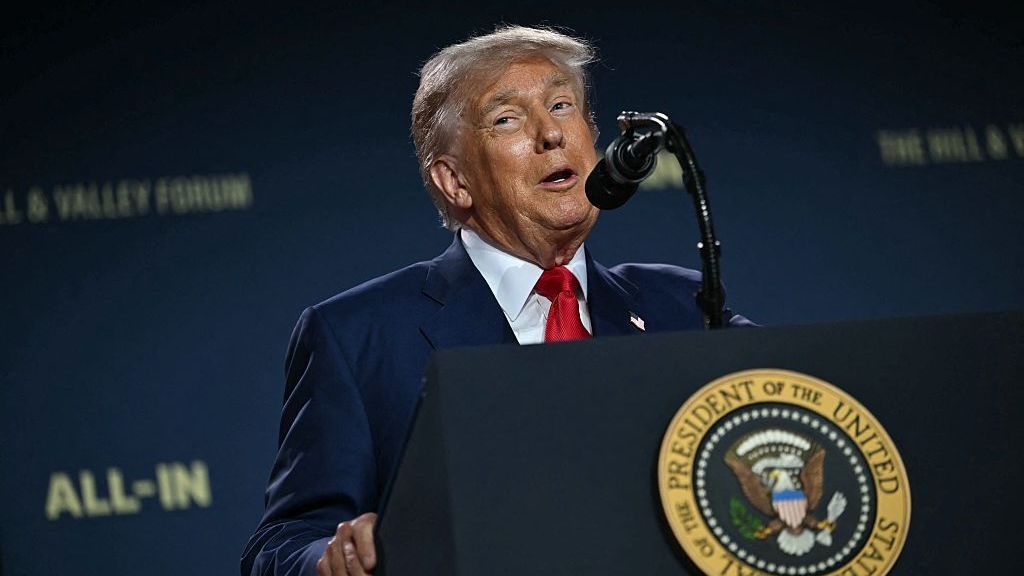
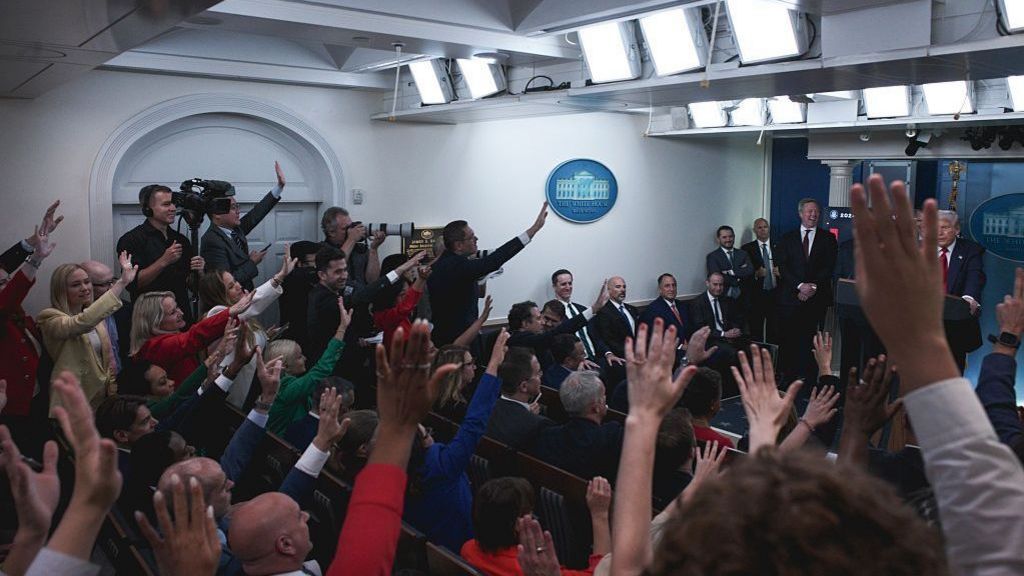
    Speaking to reporters ahead of the deadline, Trump insisted that he has no legal requirement to secure congressional authorization for the ongoing conflict, claiming that no prior U.S. president has ever sought such approval for military action. “It’s never been used. It’s never been adhered to. Nobody’s ever asked for it before,” Trump said, adding that past commanders-in-chief have long viewed Congress’s claimed authority to limit presidential war powers as “totally unconstitutional.”

    The reality of presidential compliance with the 1973 law, however, is far more nuanced than Trump’s framing. Enacted in the aftermath of the Vietnam War to curb unilateral executive war-making and restrict then-President Richard Nixon’s ability to escalate conflict without legislative backing, the War Powers Resolution requires the president to terminate any U.S. military engagement within 60 days of notifying Congress of its launch, unless lawmakers explicitly vote to extend the operation. This Friday marked exactly 60 days since the Trump administration notified Congress of the start of strikes against Tehran on February 28.

    Both Trump and Defense Secretary Pete Hegseth argue that the 60-day clock was paused when the current ceasefire between U.S. and Iranian forces went into effect, triggering ongoing disagreement over whether ceasefire periods count towards the congressionally mandated deadline. Legal experts, however, reject this interpretation. “Nothing in the War Powers Act suggests a pause of hostilities changes the requirements of the law,” said David Schultz, a professor of political science and legal studies at Hamline University in Minnesota. “Just because other presidents haven’t invoked the law doesn’t mean that what Trump is doing here is correct. Here, Trump has basically committed us to combat without any support from Congress. And if we go back to the founding of this country, one of the core fears the framers had was a strong executive committing the nation to war without the support of the elected legislative branch.”

    A look at modern U.S. history reveals that multiple of Trump’s predecessors did comply with the War Powers Resolution by securing congressional approval before launching large-scale military operations. In 1983, President Ronald Reagan obtained congressional approval to deploy U.S. Marines to Lebanon within the 60-day window, bringing his campaign into full compliance with the law. President George H.W. Bush sought and received congressional authorization for the 1991 Gulf War ahead of launching Operation Desert Storm, even as he maintained that he did not legally require the approval. His son, George W. Bush, won explicit congressional backing for the 2001 invasion of Afghanistan and the 2003 invasion of Iraq.

    That said, Trump is correct that several past administrations did find ways to circumvent the 1973 law. President Bill Clinton allowed the 1999 NATO bombing campaign in Kosovo to run 18 days past the 60-day deadline without seeking congressional authorization, with the entire operation lasting 78 days. President Barack Obama argued that the 2011 U.S. military intervention in Libya did not qualify as “hostilities” under the War Powers Resolution, allowing the campaign to continue for more than seven months without congressional approval.

    Trump has pushed back against criticism by noting that the current conflict with Iran has been far shorter in duration than many past U.S. wars, pointing to the 19-year Vietnam War, nearly nine-year Iraq War, six-year World War II, and three-year Korean War as points of comparison. Still, a clear path to ending the conflict remains elusive: Washington and Tehran remain deadlocked over two core issues, control of the strategic Strait of Hormuz and Iran’s nuclear program, leaving Trump’s exit strategy from the conflict unconfirmed. Echoing a line former President Barack Obama used in 2014 about the war in Afghanistan, ending the U.S. engagement in Iran appears far harder than starting it.

  • Brouhaha over Iran war costs to US taxpayers

    Brouhaha over Iran war costs to US taxpayers

    A fierce public debate has erupted over the full financial burden of former President Donald Trump’s Iran war, with multiple independent analysts, lawmakers, and even Iran’s top diplomat challenging the Pentagon’s official $25 billion cost estimate as a deliberate undercount that misleads U.S. taxpayers.

    The controversy ignited after Jules Hurst, the Pentagon’s acting comptroller, testified under oath before U.S. lawmakers that the Trump administration had accumulated $25 billion in expenditures on the conflict, a widely unpopular war of choice launched by the former administration. The New York Times noted that Hurst offered no additional details to contextualize the figure, which is dramatically lower than the $200 billion the Pentagon initially requested for the conflict. The low number also indicates a sharp slowdown in spending, despite early war data showing the conflict cost more than $11 billion in its first six days alone.

    Independent and institutional analysts have repeatedly pushed back against the official estimate, releasing their own assessments that place the direct cost of the conflict far higher. This month, the liberal-leaning Center for American Progress calculated that direct Pentagon spending exceeded $33 billion in just the first 39 days of fighting. A ceasefire-era assessment from the conservative American Enterprise Institute, released April 10, put the total direct cost between $25 billion and $35 billion. Independent policy analyst Stephen Semler went further, estimating the U.S. spent nearly $29 billion on the war in its opening two weeks – an average of $2.1 billion per day. Semler accused Defense Secretary Pete Hegseth of lying to Congress in a social media post Thursday, arguing that the total opening two-week cost alone already exceeded the Pentagon’s full $25 billion official estimate.

    The debate went cross-border Friday when Iranian Foreign Minister Abbas Araghchi joined the criticism, taking to social media to reject the Pentagon’s figure as a deliberate fourfold undercount. “The Pentagon is lying,” Araghchi wrote, claiming the conflict – which he framed as a gamble tied to Israeli Prime Minister Benjamin Netanyahu – has already cost U.S. taxpayers $100 billion in direct spending, four times the official claim. He added that indirect costs borne by American households are far higher, putting the current monthly burden at $500 per household and rising rapidly.

    Beyond direct military spending, experts and lawmakers have drawn attention to the massive indirect costs the conflict has imposed on U.S. consumers through soaring energy and food prices. Democratic U.S. Representative Ro Khanna of California told the House of Representatives Thursday that when accounting for these price hikes, the total cost of the war to Americans surges to more than $630 billion – an average of $5,000 per household. “We need to end this war now, and help the American people reduce costs,” Khanna said.

    Long-term projections paint an even starker picture of the conflict’s financial toll. Linda Bilmes, a public policy scholar at the Harvard Kennedy School, warned in early April that when factoring in long-term obligations like veterans’ health care and other sustained outlays, the total lifetime cost of the Iran war to U.S. taxpayers could top $1 trillion. Bilmes noted that pinning down an exact exact cumulative cost is challenging in the early stages of the conflict, but current data shows the conflict runs about $2 billion per day in short-term direct costs alone – a figure that represents just the tip of a much larger financial iceberg.

  • There was one way we’d agreed to do Devil Wears Prada 2, says Meryl Streep

    There was one way we’d agreed to do Devil Wears Prada 2, says Meryl Streep

    Twenty years after the original *The Devil Wears Prada* cemented its place as a cultural touchstone – spawning viral quotes, a hit West End musical, and a permanent spot in popular fashion discourse – a long-awaited sequel from Walt Disney Studios has finally landed in cinemas worldwide, with the entire original A-list ensemble reprising their iconic roles. At the top of the call sheet, three-time Academy Award winner Meryl Streep returns as Miranda Priestly, the sharp-edged, intimidating editor-in-chief of fictional Runway Magazine, a character widely believed to be modeled on Vogue’s legendary editor Anna Wintour. Streep, alongside co-stars Stanley Tucci, Anne Hathaway, and Emily Blunt, opened up about the project in interviews with BBC News, revealing that the entire cast attached one non-negotiable condition to signing on: the sequel would only move forward if its story felt relevant to the current cultural moment.

    Unlike the original 2006 film, which centered wide-eyed new assistant Andy Sachs’ fish-out-of-water experience in the high-stakes world of high fashion publishing, the sequel leans heavily into the seismic shifts that have upended the media industry over the past two decades. Plotlines mirror real-world industry upheaval: steep newsroom staffing cuts, plummeting print circulation, and the total domination of digital and social media platforms that have stripped traditional journalists of much of their editorial control. Even emerging technology like generative artificial intelligence has a place in the story’s narrative. Tucci, who returns as fan-favorite creative director Nigel Kipling, explained that the team refused to make a hollow cash-grab follow-up to the original. “Everything has to have its own necessity for being – even the frothiest sort of fun movie,” Streep emphasized, echoing that sentiment.

    Hathaway, who reprises her role as Andy Sachs – now returning to Runway as the publication’s new features editor after years away – notes that the sequel avoids retreading the original’s story to instead reflect how much the world has changed. One of the film’s core messages, she says, is that audiences hold the future of independent journalism in their hands. “I hope people realise the fate of journalism really rests on them and if you believe in it, you believe it’s important – I personally do,” she shared. Despite the timely, serious themes woven through the script, the cast is quick to stress that the sequel retains all the lighthearted, fashion-forward fun that made the original a hit. Streep jokes that while the story addresses industry struggles, it is far from a gritty investigative drama like *Spotlight*: it remains a glamorous, witty comedy packed with iconic designer looks. Tucci echoes that, framing the film as a much-needed escape amid global chaos, while Blunt, who returns as the sharp-tongued Emily Charlton, promises audiences a “joy bomb” of nostalgia and laughs perfect for seeing with friends.

    For Blunt, the *The Devil Wears Prada* franchise holds extra personal meaning: she introduced her sister to Tucci at the original film’s 2006 premiere, and the pair have now been married for 14 years, making Tucci permanent family. In the sequel, Emily has left her assistant role at Runway to take a senior executive position at a luxury retail brand, putting her in a whole new professional landscape alongside her former colleagues. Blunt points out that beyond the snappy one-liners and A-list celebrity cameos (which include fashion icons Marc Jacobs and Naomi Campbell, shot on location in iconic fashion hubs New York and Milan), the sequel also explores deeply human themes of self-realization, forgiveness, reconciliation, and reclaiming one’s path.

    Early critical reception for the film has been largely positive. *Variety* praised the project as “a sequel made with intelligence and respect for both its predecessor and the legions who still love it”, while *The Guardian* called it “good-natured, buoyant entertainment”. *Empire* noted that the sequel succeeds because it gives core characters an entirely fresh story rather than relying on nostalgia for the first film, though it added that the high-fashion narrative could have benefited from higher narrative stakes. *The Hollywood Reporter* offered a more muted take, describing the film as “pretty polished and as featherweight as a fawning magazine puff piece”.

    A core throughline that made the original film a cultural hit remains central to the sequel: its unapologetic focus on ambitious, career-driven women, a trope that remains rare in Hollywood even two decades later. Streep pointed out that the harmful stereotype of ambition as an “unattractive” quality for women has not disappeared as many hoped it would. “We would hope that feeling would be obsolete but it isn’t, it’s alive and kicking,” she said. Hathaway agrees, noting that stories centered on women who love their work and prioritize their careers are still far too uncommon in the film industry – a gap that explains why the original resonated so deeply 20 years ago, and why the sequel is connecting with audiences now.

    At the same time, the sequel explores the nuance of balancing high-pressure careers with personal fulfillment, rejecting a one-size-fits-all approach to success. Hathaway explains that the film emphasizes that definition of a full, satisfying, meaningful life is deeply personal: for some, that centers a career, for others it centers personal life, and neither path is inherently better. Streep adds that this is a message that resonates for men as well, noting that the universal goal for most people is to find a sustainable balance between professional and personal priorities.

    Penned by returning screenwriter Aline Brosh McKenna and directed by original director David Frankel, the sequel aims to give audiences both the nostalgic fun they loved from the original, and new, thought-provoking ideas to take away. For Hathaway, that balance of joy and inspiration is exactly what makes the project worth making: “Seeing a story that centres around a character you can connect to that inspires you [is] a huge reason why I’m sitting here right now.” *The Devil Wears Prada 2* is in theaters globally now.

  • Watch: May Day protests take place across major US cities

    Watch: May Day protests take place across major US cities

    On the annual international celebration of workers’ rights, thousands of demonstrators took to the streets of major urban centers across the United States to stage coordinated May Day protests. The gatherings, which brought together a diverse coalition of labor organizers, immigrant advocacy groups, and grassroots activists, centered on a unified call for greater dignity, systemic justice, and expanded fundamental freedom for both working-class Americans and immigrant communities residing in the country.

    Protesters marched through busy downtown corridors, carrying hand-painted signs and chanting slogans that highlighted ongoing struggles over fair wages, workplace safety protections, immigration reform, and pathways to citizenship for undocumented residents. The coordinated actions across multiple cities underscored growing grassroots momentum around issues that impact millions of people across the United States, from low-wage workers facing stagnant incomes to immigrant families at risk of detention and deportation.

    May Day has long served as a global platform for workers and marginalized groups to amplify their demands, and this year’s mobilizations across the U.S. continued that tradition by drawing together intersecting movements to push for policy change and greater public recognition of the contributions both workers and immigrants make to American society. While the demonstrations were largely peaceful, organizers emphasized that the widespread turnout was intended to send a clear message to policymakers that demands for equity will not be silenced.

  • US court limits mail-order access to abortion pill mifepristone

    US court limits mail-order access to abortion pill mifepristone

    On a Friday ruling that has upended the ongoing national battle over abortion access in the United States, the Fifth Circuit Court of Appeals has issued a temporary order that sharply curtails access to mifepristone, the core medication used in most US pregnancy terminations, by banning mail distribution and telemedicine pharmacy dispensing. The decision reverses a 2023 U.S. Food and Drug Administration (FDA) policy that permanently eliminated the longstanding requirement that patients pick up the drug in person from a clinical provider, a rule that grew out of pandemic-era access expansions first enacted in 2021.

    The legal challenge that led to this ruling was brought by the state of Louisiana, which argues that the FDA’s relaxed distribution rules directly invalidate the state’s total ban on abortion. In its official order, the appellate court wrote that every abortion enabled by the FDA’s policy overrides Louisiana’s abortion ban and contradicts the state’s official stance that “every unborn child is a human being from the moment of conception and is, therefore, a legal person.”

    Mifepristone is the first drug in the two-step medication abortion regimen endorsed by the FDA: it blocks progesterone, a hormone required to sustain a pregnancy, and is followed by misoprostol, which empties the uterus. The drug was first approved for use up to seven weeks of pregnancy in the U.S. in 2000, with approval extended to 10 weeks in 2016. It is also used off-label to treat incomplete miscarriages and Cushing syndrome, while misoprostol has long been prescribed for stomach ulcers and postpartum hemorrhage, a non-abortion use that has kept it out of most recent regulatory battles.

    Mainstream U.S. medical bodies including the FDA and the American College of Obstetricians and Gynecologists have repeatedly confirmed mifepristone’s safety after more than two decades of use. FDA data shows more than 3.7 million American women used the drug between 2000 and 2018, and clinical data puts the effectiveness of the full two-drug regimen at roughly 95%, with less than 1% of cases requiring additional invasive medical intervention.

    This latest ruling comes against a shifting legal backdrop for abortion access in the U.S. In 2022, the Supreme Court overturned the federal constitutional right to abortion established in Roe v. Wade, leaving regulation up to individual states. Two years later, in 2024, the Supreme Court unanimously rejected one high-profile effort to restrict mifepristone, but left open the possibility for future state-led challenges to the drug’s distribution rules. Friday’s ruling also overrides a recent lower court decision that paused the case to allow the FDA time to complete a regulatory review of the 2023 policy.

    Reaction to the ruling has split sharply along pro-choice and anti-abortion lines. American Civil Liberties Union (ACLU) attorney Julia Kaye condemned the decision in an official statement, arguing it ignores established medical science and existing legal precedent to advance an anti-abortion policy that a majority of Americans oppose. Kaye added that for vulnerable groups including rural patients, survivors of intimate partner violence, and people living with disabilities, eliminating telemedicine and mail access will cut off access to the vital medication entirely.

    Louisiana Attorney General Liz Murrill, who brought the challenge, celebrated the ruling, claiming the Biden-era FDA rule enabled the deaths of thousands of unborn children in Louisiana and millions across the country. “I look forward to continuing to defend women and babies as this case continues,” she said.

    Other state officials have moved to reassure patients that abortion access will remain unchanged in jurisdictions where it remains legal. New York Attorney General Letitia James confirmed Friday that abortion care, including medication abortion, will remain legal and accessible in New York regardless of the appellate ruling. “Mifepristone is safe, effective, and essential. Restrictions on abortion care are restrictions on life-saving health care. This decision puts lives at risk,” James said.

  • Thousands of ‘lost Canadians’ have applied for dual citizenship – is Canada ready?

    Thousands of ‘lost Canadians’ have applied for dual citizenship – is Canada ready?

    For more than a century, millions of people with French-Canadian roots across the United States have carried unrecognized ancestral ties to Canada, cut off from formal citizenship by outdated and discriminatory laws. That historic injustice began to be corrected in December 2024, when a landmark Canadian citizenship law came into force, opening the door for any descendant of a Canadian citizen to prove their ancestral connection and claim citizenship – a change that has sparked a surge of applications and reignited conversations about cultural identity across North America.

    The roots of this crisis stretch back to the 19th and early 20th centuries, when more than one million French-Canadians left Canada for New England in search of mill and farm work. In Maine, where many settled, state laws once banned French instruction in public schools, and social stigma labeled French speakers as second-class citizens. Compounding this displacement, outdated Canadian citizenship rules barred generations of descendants born in the U.S. from claiming citizenship, leaving millions of people now referred to as “lost Canadians” disconnected from their formal national identity.

    Joe Boucher, the youngest of five children growing up in a French-Canadian family in Maine, embodies this generational disconnect. While both his parents spoke French to one another and raised their children with pride in their heritage, Boucher never learned to speak the language; his older siblings defaulted to English when talking among themselves, shaped by the stigma and legal barriers that once marginalized French speakers in the state. Today, Boucher is among the thousands of applicants pursuing formal citizenship proof under the new law. For him, the process is not about seeking a new home – though he dreams of one day retiring in Quebec City, where his 17th-century ancestor Pierre Boucher once served as governor of the French colonial settlement – but about reclaiming a core part of his identity.

    “It’s nice to know that the connectivity to the home country, as it were, is there,” Boucher told the BBC. Growing up, his father instilled fierce pride in their Acadian and French-Canadian heritage, and now as a musician, Boucher celebrates that history, even adapting Henry Wadsworth Longfellow’s poem *Evangeline*, which chronicles the 18th-century expulsion of Acadians by British forces, into a original song. “My ancestors arrived in Canada 400 years ago and spent generations creating communities and cultivating the land in Quebec and Acadie. This is the family I know and this is in large part who I am,” he explained.

    For many applicants, the new law comes at a moment of particular uncertainty, coinciding with the start of the second term of U.S. President Donald Trump. Multiple applicants, including another Mainer of French-Canadian descent Tim Cyr, note that current political uncertainty has made securing a second citizenship an appealing safety net. “It’s not a great time to have an American passport,” Cyr said, though he added he has no plans to leave the U.S. permanently. Boucher emphasized that his own motivation goes beyond political contingency, centered on cultural identity rather than an “escape hatch” from the U.S., where his immediate family and life are rooted.

    In the first six weeks after the law took effect – between December 15, 2025, and January 31, 2026 – Canadian immigration officials received 12,430 applications, processed 6,280, and granted citizenship to 1,480 applicants. The surge in interest has upended industries that support the application process, most notably professional genealogy. Montreal-based genealogist Ryan Légère, who specializes in tracking French-Canadian ancestral records, says his former side business has quickly become a full-time occupation, so busy he is now considering hiring additional staff. “It’s completely taken over my life,” he said.

    But Légère also warns of growing challenges and unforeseen strains on the system. The law was passed after an Ontario court ruled that limiting citizenship eligibility to only first-generation descendants was unconstitutional, but Légère says Canadian institutions are understaffed, overwhelmed, and poorly prepared for the volume of applications they have received.

    Many applicants also face steep practical barriers to proving their ancestry. Quebec did not standardize civil birth certificates until the 1990s; before that, most births were recorded only in parish baptismal records, which are often handwritten in archaic, hard-to-read French script. Many families anglicized their surnames after moving to the U.S., erasing paper trails: Desjardins became Gardner, Bonenfant became Goodchild, and countless other names were altered to fit English language norms. The low nominal application fee of just C$75 (around $55 USD) can balloon to thousands of dollars when factoring in genealogist fees, record retrieval costs, and legal assistance, putting the process out of reach for some applicants.

    A spokesperson for Immigration, Refugees and Citizenship Canada confirmed to the BBC that all applications are reviewed on an individual basis to confirm eligibility, and warned that data from commercial online genealogy platforms cannot be used as the sole proof of ancestry. The law does include some parameters: applicants must trace their lineage to a direct parental ancestor who became a Canadian citizen on or after January 1, 1947, when Canada’s first Citizenship Act came into force. Going forward, any Canadian parent must have resided in Canada for at least 1,095 days to pass citizenship to their children born abroad. No limit is placed on how far back an eligible ancestor can be, however, meaning millions of U.S. residents could qualify for citizenship under the new rules.

    For people like Boucher, the law represents more than a change in immigration policy: it is a long-overdue recognition of a history of displacement and marginalization, and a chance to formalize the connection to the heritage his parents worked hard to preserve.

  • Oscars says AI actors, writing cannot win awards

    Oscars says AI actors, writing cannot win awards

    As artificial intelligence increasingly reshapes creative industries, the Academy of Motion Picture Arts and Sciences (AMPAS) has enacted a landmark update to Oscar eligibility rules, explicitly restricting the prestigious awards for acting and writing to work created exclusively by human creators. The announcement, made Friday, marks the first time the governing body of Hollywood’s most celebrated awards program has codified such a requirement, responding to growing industry debate over AI’s expanding role in film production.

    Under the revised eligibility criteria, any performance nominated for an acting Oscar must be “demonstrably performed by a human,” while all nominated writing work must be “human-authored.” AMPAS described the adjustment as a substantive change to long-standing Oscar rules, a shift prompted by a wave of high-profile AI integration in film projects over recent months.

    The new guidelines come amid several notable cases that have pushed the issue into the public spotlight. Following the 2025 passing of veteran actor Val Kilmer, an upcoming feature plans to use AI technology to recreate Kilmer’s likeness and performance as a lead character. Last year, London-based comedian Eline van der Velden made headlines when she revealed she had built an entirely AI-generated deepfake actor positioned to be marketed as a global entertainment star. Questions around AI’s impact on Hollywood creatives first erupted into mass industry action two years ago, when the Writers Guild of America centered AI’s unregulated use in script writing as a core demand during their historic strike.

    Legal tensions over AI in entertainment have also escalated: nearly all existing generative AI tools are built on large language models trained on decades of copyrighted human-created text, images, and video scraped without creator consent. In response, Hollywood studios, working actors, and published authors have already filed dozens of high-profile copyright infringement lawsuits against major AI developers.

    Notably, the new rules do not amount to a full ban on AI use in Oscar-eligible films. For production roles outside of performance and screenwriting, AMPAS confirmed that AI tools do not inherently help or hurt a project’s chances of earning a nomination. “The Academy and each branch will judge the achievement, taking into account the degree to which a human was at the heart of the creative authorship when choosing which movie to award,” the organization added. It also noted that it retains the right to request additional documentation about AI use and the extent of human creative input if eligibility questions arise.

    Industry observers point out that technology has long been integrated into filmmaking, with computer-generated imagery (CGI) a standard industry tool since the 1990s. The key distinction between traditional CGI and modern generative AI, AMPAS implicitly acknowledges, is that CGI is overwhelmingly a manually executed craft shaped and refined by human artists to build film elements, while generative AI is designed to fully automate creative output from simple user prompts. The updated rules strike a balance between embracing technological innovation and protecting the core recognition of human creative work that the Oscars have celebrated for nearly a century.

  • US to cut troop levels in Germany by 5,000 amid Trump spat with Merz

    US to cut troop levels in Germany by 5,000 amid Trump spat with Merz

    A sharp public diplomatic clash between U.S. President Donald Trump and German Chancellor Friedrich Merz over the ongoing Iran conflict has triggered a formal Pentagon plan to withdraw 5,000 American military personnel from Germany, with the drawdown scheduled to unfold over the next 6 to 12 months. The announcement of the troop withdrawal came just 24 hours after Merz delivered critical remarks that stung the White House: speaking to university students earlier this week, the German leader argued that the U.S. lacked a coherent strategy for the Iran war, claiming Iranian negotiators had effectively humiliated Washington by drawing out talks and leaving American officials empty-handed after high-profile meetings in Islamabad.

    Merz’s comments quickly drew a fiery retaliation from Trump on his social platform Truth Social. The U.S. president accused Merz of supporting Iran’s nuclear ambitions, dismissed his commentary as uninformed, and lambasted Germany’s overall economic performance. Beyond his attack on the German chancellor, Trump also broadened his criticism of NATO allies who have declined to join U.S. efforts to reopen the Strait of Hormuz amid the Iran conflict, a longstanding point of friction for the president, who has been an open critic of the alliance for decades. When asked Thursday if he would also consider pulling American troops from other NATO members Italy and Spain, Trump did not rule out the move, saying “I probably will” and accusing both countries of refusing to assist the U.S. in the Iran conflict, calling their inaction unacceptable.

    Pentagon spokesman Sean Parnell confirmed in an official statement that the order for the German drawdown originated with Secretary of Defence Pete Hegseth. Parnell framed the decision as the outcome of a comprehensive review of U.S. military force posture across Europe, saying the adjustment aligns with current theater requirements and on-the-ground conditions. As of last December, the U.S. maintains more than 36,000 active-duty troops deployed across bases in Germany, making it the largest American military footprint in Europe and the second-largest globally, only trailing the U.S. troop presence in Japan. Germany’s Ramstein Air Base, located outside Kaiserslautern in southwestern Germany, serves as a critical logistics and command hub for U.S. operations across the continent.

    This is not the first time Trump has pushed for U.S. troop reductions in Germany. During his first term in 2020, he proposed relocating 12,000 troops out of Germany to other NATO nations or back to the U.S., but the plan was ultimately blocked by Congress and later reversed entirely by his successor, President Joe Biden. At that time, Trump justified the proposed cuts by accusing Germany of failing to meet NATO’s military spending target of 2% of GDP, calling the country delinquent in its alliance obligations. That dynamic has shifted significantly under Merz’s government: Germany is on track to hit 3.1% of GDP in total defense spending by 2027, hitting 2027 levels of €105.8 billion (£91 billion), far exceeding the alliance’s requirement. Currently, the U.S. also stations roughly 12,000 troops in Italy and 10,000 more in the United Kingdom.

  • Who shot a Secret Service officer at the Trump press dinner?

    Who shot a Secret Service officer at the Trump press dinner?

    It has been nearly seven days since a suspect was accused of attempting to assassinate former President and current U.S. President Donald Trump at the White House Correspondents’ Association dinner, and critical information surrounding the shooting incident at the Washington Hilton remains unresolved amid an ongoing investigation. As authorities continue to piece together the events of that Saturday night, official statements from prosecutors have shifted dramatically around one central question: did the accused gunman actually shoot the U.S. Secret Service officer that multiple senior officials, including the president, say was hit during the attack.

    President Trump and other top administration officials have publicly stated that as the attacker charged the hotel’s security checkpoint, a Secret Service officer was struck by gunfire, and survived the incident only because he was wearing a bulletproof ballistic vest. Trump initially told reporters that the agent was shot “from very close distance with a very powerful gun.” But court documents submitted by federal government attorneys have not explicitly made the claim that the suspect fired the shot that hit the officer on the night of the high-profile gala.

    Authorities have confirmed that the responding Secret Service officer fired five shots at the suspect as he advanced through the checkpoint, but none of those rounds struck the suspect, identified by the Department of Justice as 31-year-old Cole Tomas Allen. The incident, which unfolded steps away from the event attended by dozens of top government officials and journalists, was captured by closed-circuit security cameras that recorded the moment of gunfire.

    Mark Lesko, a former U.S. Attorney for the Eastern District of New York, explained the tension facing investigators in this high-stakes case in an interview with the BBC. “There’s this insatiable public interest in the case, pressure to get information out to the public,” Lesko said. “But on the other hand, you want to conduct a thorough investigation, which could take weeks in a case like this.” He noted that conflicting public statements from law enforcement are understandable in the chaotic early hours of a high-profile investigation, but warned that early inaccuracies could give defense attorneys room to undermine the prosecution’s case down the line.

    The BBC reached out to the Department of Justice for additional comment on the shifting narratives, while the Secret Service and the U.S. Attorney’s Office for the District of Columbia declined to provide any further clarification.

    Within hours of the incident, the Department of Justice released an affidavit naming Allen as the suspect and bringing initial charges that included discharge of a firearm. Authorities confirmed Allen, who remains in federal custody, was armed with three weapons: a semi-automatic handgun, a pump-action shotgun, and three knives when he was detained at the scene.

    The day after the attack, Acting U.S. Attorney General Todd Blanche told CBS News that the suspect had shot the Secret Service agent, saying “That’s what we understand as of now.” But just 24 hours later, at a public press conference, Blanche walked back that claim. When pressed again by a reporter to confirm who shot the officer, Blanche said, “We wanna get that right, so we’re still looking at that.” He confirmed investigators have recorded that five total shots were fired during the incident, and that “the suspect fired out of a shotgun, and we know that happened.” He added that full ballistics testing is still ongoing and has not been finalized.

    The same day as Blanche’s revised press statement, the government released its full criminal complaint against Allen. The document states that the accused “approached and ran through the magnetometer holding a long gun.” It adds that “As he did so, US Secret Service personnel assigned to the checkpoint heard a loud gunshot. US Secret Service Officer V.G. was shot once in the chest; Officer V.G. was wearing a ballistic vest at the time.” Despite that accounting of the officer’s injury, prosecutors do not explicitly name Allen as the person who fired the shot that hit him.

    “That is interesting and noteworthy because what it shows is the government does not yet have conclusive proof that the suspect did shoot the agent,” Lesko explained of the omission. He also pointed out that prosecutors have not yet added a charge of assaulting a federal officer to Allen’s case, though Blanche has confirmed additional charges could be filed as the investigation progresses. Even a Wednesday detention hearing filing submitted by the government made no reference to the officer being shot, only stating that a Secret Service officer had “observed the defendant fire the shotgun in the direction of the stairs leading down to the ballroom” without confirming that any of Allen’s shots hit a person.

    This omission did not go unnoticed by Allen’s defense team. In a court filing arguing for Allen’s release from custody, defense attorneys wrote, “Moreover, the government, after essentially asserting that Mr. Allen shot a Secret Service Officer in the criminal complaint, has apparently retreated from the theory by not mentioning the alleged officer at all in its memorandum.” Allen’s legal team did not respond to the BBC’s request for additional comment.

    Four days after the attack, Jeanine Pirro, the former Fox News host who now serves as U.S. Attorney for the District of Columbia, released new security camera footage of the incident on the social platform X. The video shows the man identified by authorities as Allen running through the hotel’s security checkpoint, and at one point he appears to raise his shotgun, though it is impossible to confirm from the footage whether he fired. The clip also clearly shows the responding Secret Service officer raising his weapon, with multiple visible muzzle flashes confirming he fired his gun. Pirro wrote in her post that “There is no evidence the shooting was the result of friendly fire,” but stopped short of claiming the video proved Allen fired the shot that hit the officer.

    The same day that footage was released, Secret Service Director Sean Curran told Fox News that “All the evidence that I’ve seen, the suspect shot our officer point-blank range with a shotgun.”

    Forensic reviews of ballistics and other physical evidence often take weeks, and in some cases months, to complete, and authorities are expected to release additional details as the investigation moves forward. Legal experts note that regardless of who fired the shot that hit the officer, prosecutors already have enough charges to secure a lengthy prison sentence if Allen is convicted. “They have enough charges here to put Allen away for a very long time” if a jury finds him guilty, Lesko said.

  • Pentagon says US military to be an ‘AI-first’ fighting force

    Pentagon says US military to be an ‘AI-first’ fighting force

    The U.S. Department of Defense is advancing a sweeping push to embed artificial intelligence across military operations, announcing eight new expanded partnerships with leading American technology companies that aims to reposition the U.S. military as an “AI-first” fighting force. The agreements, finalized Friday, bring Google, OpenAI, Amazon Web Services, Microsoft, SpaceX, Oracle, Nvidia, and emerging startup Reflection into the Pentagon’s growing AI ecosystem, clearing the way for these firms’ AI tools to be used for any lawful military and operational purpose.

    In a public statement following the announcement, Pentagon officials emphasized that the multi-vendor strategy is designed to avoid overreliance on a single technology provider, a vulnerability commonly referred to as “vendor lock-in.” By tapping into a diverse range of AI capabilities built across the robust U.S. technology sector, defense leaders say warfighters will gain access to cutting-edge tools to respond faster to threats and protect national security. The department also highlighted early successes from its existing military AI platform, launched last year: more than one million defense personnel across the department have already adopted the platform, cutting processing time for many critical tasks from months to just days.

    The announcement comes amid a high-profile public and legal split with leading AI developer Anthropic, which is notably absent from the new set of contracts. The San Francisco-based firm, which was the first AI company to deploy its models for U.S. classified government work, still has its Claude chatbot tools in use across multiple defense and civilian agencies. However, the relationship collapsed earlier this year after Anthropic CEO Dario Amodei publicly raised ethical alarms over the potential misuse of powerful AI, warning that defense agencies could use the technology to carry out mass domestic surveillance and deploy fully autonomous lethal weapons. The company refused to agree to contract language allowing “any lawful use” of its AI tools for military purposes.

    In response, Defense Secretary Pete Hegseth labeled Anthropic a “supply chain risk,” barring the firm from new government work. Anthropic has filed a lawsuit against the federal government alleging unlawful retaliation for its ethical stance, with the case scheduled to go to court in September.

    The rift between Anthropic and the Pentagon has opened new opportunities for competing AI firms to deepen their ties to the U.S. military. OpenAI, maker of the ChatGPT large language model, was the first to capitalize on the shift, finalizing its own contract with the Pentagon in late February. A company spokesperson framed the deal as a commitment to equipping U.S. defense personnel with the world’s most advanced tools, noting Friday’s announcement was simply a formalization of the existing agreement.

    For Google, the partnership marks a milestone: while the company’s Gemini chatbot is already used across some civilian government agencies, this contract will clear Gemini to handle classified defense work for the first time. The expansion has already sparked internal pushback: earlier this week, hundreds of Google employees, including dozens of researchers from the company’s leading AI research arm DeepMind, sent an open letter to CEO Sundar Pichai urging the company to abandon the deeper military partnership. Google has not yet issued a public response to the request or the contract announcement.

    Other partners bring unique AI capabilities to the new framework. SpaceX, led by Elon Musk, is the parent company of xAI, the startup behind the controversial Grok AI chatbot. While xAI’s model is widely seen as less technically advanced than offerings from Anthropic, OpenAI, and Google, the addition of SpaceX extends the Pentagon’s access to Musk’s sprawling aerospace and technology ecosystem. Nvidia, a leading producer of AI computing hardware, will contribute its open-source Nemotron large language model, while startup Reflection will offer its open-source Reflection 70B model; neither firm will provide hardware as part of the current agreement. Longtime government cloud providers Amazon Web Services, Microsoft, and Oracle will continue to host the defense department’s online AI infrastructure, expanding their existing services to accommodate the growing volume of AI models and tools. None of the firms—SpaceX, Nvidia, Reflection, Amazon, Microsoft, or Oracle—have responded to requests for comment on the new contracts.

    Defense Secretary Hegseth has made accelerating AI adoption across the U.S. military a top priority, arguing that access to advanced AI has become a core determinant of military success in modern conflict. For years, the Pentagon has worked to build out its AI capabilities, and Friday’s announcement represents the most significant expansion of those efforts to date.