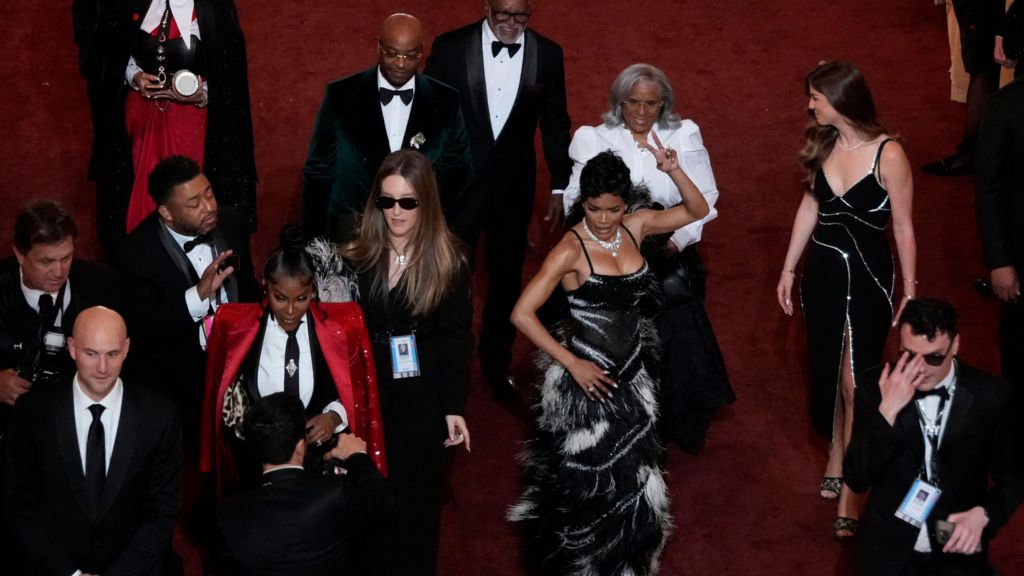
As artificial intelligence increasingly reshapes creative industries, the Academy of Motion Picture Arts and Sciences (AMPAS) has enacted a landmark update to Oscar eligibility rules, explicitly restricting the prestigious awards for acting and writing to work created exclusively by human creators. The announcement, made Friday, marks the first time the governing body of Hollywood’s most celebrated awards program has codified such a requirement, responding to growing industry debate over AI’s expanding role in film production.
Under the revised eligibility criteria, any performance nominated for an acting Oscar must be “demonstrably performed by a human,” while all nominated writing work must be “human-authored.” AMPAS described the adjustment as a substantive change to long-standing Oscar rules, a shift prompted by a wave of high-profile AI integration in film projects over recent months.
The new guidelines come amid several notable cases that have pushed the issue into the public spotlight. Following the 2025 passing of veteran actor Val Kilmer, an upcoming feature plans to use AI technology to recreate Kilmer’s likeness and performance as a lead character. Last year, London-based comedian Eline van der Velden made headlines when she revealed she had built an entirely AI-generated deepfake actor positioned to be marketed as a global entertainment star. Questions around AI’s impact on Hollywood creatives first erupted into mass industry action two years ago, when the Writers Guild of America centered AI’s unregulated use in script writing as a core demand during their historic strike.
Legal tensions over AI in entertainment have also escalated: nearly all existing generative AI tools are built on large language models trained on decades of copyrighted human-created text, images, and video scraped without creator consent. In response, Hollywood studios, working actors, and published authors have already filed dozens of high-profile copyright infringement lawsuits against major AI developers.
Notably, the new rules do not amount to a full ban on AI use in Oscar-eligible films. For production roles outside of performance and screenwriting, AMPAS confirmed that AI tools do not inherently help or hurt a project’s chances of earning a nomination. “The Academy and each branch will judge the achievement, taking into account the degree to which a human was at the heart of the creative authorship when choosing which movie to award,” the organization added. It also noted that it retains the right to request additional documentation about AI use and the extent of human creative input if eligibility questions arise.
Industry observers point out that technology has long been integrated into filmmaking, with computer-generated imagery (CGI) a standard industry tool since the 1990s. The key distinction between traditional CGI and modern generative AI, AMPAS implicitly acknowledges, is that CGI is overwhelmingly a manually executed craft shaped and refined by human artists to build film elements, while generative AI is designed to fully automate creative output from simple user prompts. The updated rules strike a balance between embracing technological innovation and protecting the core recognition of human creative work that the Oscars have celebrated for nearly a century.