标签: North America

北美洲

  • Trump tells Congress ceasefire means he does not need their approval for Iran war

    Trump tells Congress ceasefire means he does not need their approval for Iran war

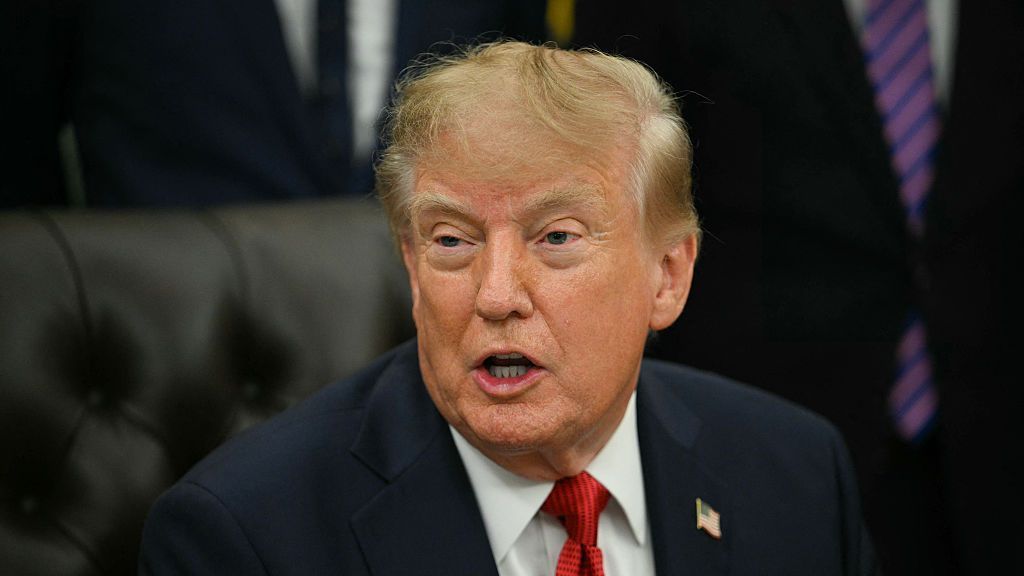
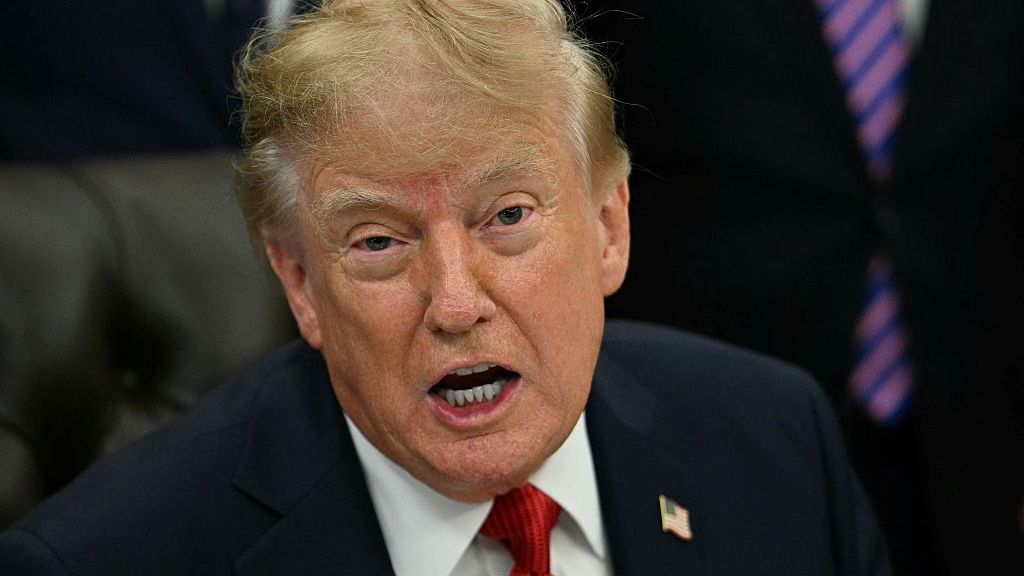
    A sharp constitutional and political standoff has erupted in Washington over US military action against Iran, after President Donald Trump informed congressional leaders that all active hostilities between American forces and Tehran have formally ended following a weeks-long ceasefire — while asserting he never required legislative authorization for the conflict in the first place.

    In a formal letter sent to top congressional leaders Friday, Trump confirmed that “There has been no exchange of fire between the United States Forces and Iran since April 7, 2026,” adding that “The hostilities that began on February 26, 2026 have terminated.”

    The notification lands precisely on the 60th day after Trump formally informed Congress of the launch of strikes against Iran, a timeline that carries critical legal weight under the decades-old War Powers Resolution of 1973. Enacted in the wake of the Vietnam War to curtail unilateral presidential war-making authority, the law requires a sitting president to end all military engagement within 60 days of formal notification unless Congress grants explicit approval to continue hostilities, or issues a formal declaration of war. The legislation only allows a 30-day extension to facilitate safe withdrawal of forces if authorization is not granted.

    Trump pushed back firmly against the law’s requirements in his letter, arguing that his constitutional authority as Commander-in-Chief and chief architect of US foreign policy grants him independent power to order military action regardless of congressional approval. “I have and will continue to direct United States Armed Forces consistent with my responsibilities and pursuant to my constitutional authority to conduct United States foreign relations as Commander in Chief and Chief Executive,” he wrote.

    The Trump administration’s top defense official doubled down on this legal interpretation one day earlier, during a congressional hearing. Defense Secretary Pete Hegseth told lawmakers that the 60-day legal clock mandated by the War Powers Resolution had been paused by the current ceasefire. “We are in a ceasefire right now, which our understanding means the 60-day clock pauses or stops in a ceasefire,” Hegseth said. Democratic Senator Tim Kaine, who questioned Hegseth on the issue, rejected this reading outright: “I do not believe the statute would support that.”

    For weeks, Capitol Hill has been roiled by growing pressure to hold a formal vote on whether to authorize the ongoing conflict with Iran. Democratic lawmakers, who hold slim majority control of both chambers, have repeatedly introduced measures to constrain Trump’s ability to continue military action against Iran, but all such attempts have failed so far due to united opposition from most Republican lawmakers. That opposition may be shifting, however: a small number of Republican legislators have signaled they may rethink their positions now that the 60-day legal deadline has passed. According to CBS News, the BBC’s US partner, Trump administration officials have already held behind-the-scenes discussions with congressional members about securing formal authorization for the conflict.

    While active fighting has halted under the ceasefire, the two sides have yet to reach a durable long-term peace agreement through negotiations. On Friday, Iranian state media reported that Tehran had sent a new negotiation proposal to intermediaries in Pakistan, but the details of the proposal have not been released, and it remains unclear whether the proposal has been shared with US negotiators.

    Speaking to reporters Friday afternoon, Trump acknowledged that ongoing diplomatic talks had not yet yielded a breakthrough, and expressed frustration with the pace of negotiations. “We just had a conversation with Iran. Let’s see what happens. But, I would say that I am not happy,” the president said. He blamed the slow progress on disarray within Iran’s leadership, arguing that the decimation of top Iranian military commanders in early strikes has left the country’s ruling circle “very confused” and unable to make key concessions.

    Trump also confirmed that he had received a full range of military and diplomatic options from US Central Command on Thursday, with proposals spanning from a full-scale resumption of offensive operations to “finish them forever” to continuing diplomatic efforts to reach a negotiated settlement.

  • Where’s my Oscar? Eight times Academy Awards trophies have gone missing

    Where’s my Oscar? Eight times Academy Awards trophies have gone missing

    For the iconic gold-plated Academy Award, the story does not always end once it is handed to a winning filmmaker, actor, or craftsperson. Over decades of Oscar history, dozens of these coveted trophies have gone missing, suffered catastrophic damage, or fallen into unexpected hands – the result of everything from airport security rules to wildfires, brazen theft, and simple moving-day misplacement. The latest strange chapter of this long-running trend unfolded just this week, when a documentary filmmaker was unexpectedly separated from his newly won statuette at a New York airport.

    Pavel Talankin, director of *Mr Nobody Against Putin*, was forced to surrender his Oscar after Transportation Security Administration officials flagged the solid, bronze-filled trophy as a potential weapon. Banned from carry-on luggage, the statuette was misplaced during processing, leaving Talankin without his prize. Last week, airline carrier Lufthansa announced that it had located the missing trophy, and the company confirmed it is working directly with Talankin to coordinate a safe return.

    Talankin’s misadventure is far from unique in Hollywood. Dozens of A-list winners have opened up about losing track of their Oscars over the years, including Angelina Jolie, Matt Damon, Jeff Bridges, and Jared Leto – all of whom have spoken publicly about their own statuette disappearances. To contextualize this latest incident, we’ve rounded up some of the most notable recent cases of missing, damaged, and stolen Academy Awards.

    Last year, as destructive wildfires swept across Los Angeles’ Pacific Palisades neighborhood, four-time Oscar-winning costume designer Colleen Atwood was forced to evacuate her home unexpectedly, leaving three of her Academy Awards alongside three BAFTA trophies and two Emmy Awards behind. One of her Oscars, awarded for *Chicago*, was already on public display at the Academy of Motion Picture Arts and Sciences Museum and escaped harm, but the other three were not so lucky. The statuettes for *Memoirs of a Geisha* and *Alice in Wonderland* melted completely in the extreme heat, while the Oscar for *Fantastic Beasts and Where to Find Them* became unrecognizable after its gold outer layer was charred away by the blaze that destroyed Atwood’s home. Per the *Los Angeles Times*, the Academy has a longstanding policy to replace or repair damaged statuettes for living winners who lose their awards in catastrophic events, and it offered to replace Atwood’s destroyed trophies after the fire.

    One of the most high-profile recent thefts occurred back in 2018, moments after Frances McDormand took home the Best Actress Oscar for her performance in *Three Billboards Outside Ebbing, Missouri*. After the ceremony, McDormand brought the statuette to the official post-awards Governors Ball, where it was stolen from her. A man with a valid ticket to the exclusive event was arrested on suspicion of theft just hours after the statuette was reported missing, and the trophy was quickly returned to McDormand. Surprisingly, prosecutors ultimately chose to drop all charges against the suspect in August 2019, leaving the case unresolved.

    The disgraced, imprisoned former Hollywood mogul Harvey Weinstein, who was expelled from the Academy in 2017 following widespread allegations of sexual assault and harassment, left behind two missing Oscars when his company collapsed. A 2018 *Vanity Fair* investigation into Weinstein’s downfall noted that two back-to-back Best Picture Oscars, won by *The King’s Speech* and *The Artist* under The Weinstein Company banner, vanished from the company’s New York headquarters shortly before the firm declared bankruptcy. To date, the whereabouts of these two statuettes remain unknown.

    Joker and Dallas Buyers Club star Jared Leto spent nearly six years separated from his Best Supporting Actor Oscar, which he won in 2014. Leto first revealed the statuette had gone missing during a cross-country house move in 2021, and fans were stunned when he shared a triumphant social media post in 2024 announcing the trophy had been unexpectedly located. He posed for photos with the recovered award after years of searching.

    Good Will Hunting co-writer and star Matt Damon has also been open about the mysterious disappearance of his first Oscar, which he shared with Ben Affleck when the pair won Best Original Screenplay in 1998. Damon told the *London Daily Express* in 2007 that the statuette vanished after a sprinkler system malfunction caused a flood in his New York apartment while he and his wife were out of town. To this day, he cannot confirm what happened to it: it may have been lost in flood cleanup, accidentally packed into unlabeled storage, or potentially stolen by contractors working on the damaged property.

    Iconic comedian and actress Whoopi Goldberg lost her 1990 Best Supporting Actress Oscar (awarded for her role in *Ghost*) in 2002, when she shipped it to Chicago-based trophy manufacturer RS Owens & Company for routine professional cleaning. When the package arrived four days later, the company opened it to find the box empty: someone had intercepted the shipment, removed the statuette, and resealed the box before it reached its destination. Weeks later, an airport security guard in Ontario, California, found the missing trophy abandoned. After the ordeal, Goldberg promised she would never let her Oscar leave her home again.

    Moonstruck Best Supporting Actress winner Olympia Dukakis faced a different challenge when her Oscar was stolen directly from her home. The thief contacted Dukakis to demand a ransom for the return of the trophy, but she refused to negotiate. Instead, she paid just $78 to the Academy to purchase a replacement statuette. Years later, her original stolen trophy was among 52 missing Oscars discovered by chance in 2000. A repairman working at a Los Angeles laundromat stumbled across the trophies in 10 unmarked crates dumped in a rubbish bin behind the business. The stash came from a heist of 55 new, unengraved Oscars stolen from a trucking loading dock in Bell, California, carried out by two trucking company employees who were later arrested and charged with grand theft. Three of the 55 stolen statuettes from that heist have never been recovered, leaving an unsolved cold case in Oscar history.

  • Texas camp where 25 girls died drops reopening plans after parents protest

    Texas camp where 25 girls died drops reopening plans after parents protest

    One year after catastrophic flash floods swept through central Texas during the Fourth of July holiday, killing 27 people including 25 children and two counselors at iconic all-girls Camp Mystic, the historic private Christian camp has announced it will not open for the 2026 summer season, abandoning its plans to relocate operations after withdrawing its state license application.

    Founded in 1926 on a 700-acre property along the Guadalupe River, Camp Mystic had initially drawn up plans to welcome 800 campers to an alternative, fatality-free site for the 2026 season after last year’s disaster. However, amid ongoing official investigations and fierce pressure from bereaved families, camp leadership announced Thursday that it was stepping back from its licensing effort.

    In a public statement, the camp noted that no administrative steps or summer programming should proceed while grieving families still process their loss, official investigations into the tragedy remain active, and communities across Texas continue to carry the trauma of last July’s disaster. “Rather than risk defending our rights under Texas law in a manner that may unintentionally inflict further harm, we choose rather to withdraw our application for the 2026 camp season,” the statement read.

    The decision comes after a months-long wave of public and political scrutiny, which intensified following two days of emotional testimony from flood investigators before Texas state lawmakers. The Texas Department of State Health Services had already confirmed in a review, first reported by *The New York Times*, that Camp Mystic’s emergency evacuation and response plans required sweeping overhauls before a license could be granted. Family members of the flood victims had repeatedly urged state regulators to reject any application to reopen the camp, as multiple parallel probes into the camp’s pre-flood emergency preparations continue.

    Last year’s July 4 holiday flood disaster left more than 130 people dead across central Texas, a tragedy that shocked the entire United States and exposed critical gaps and failures in the state’s emergency early warning systems. Camp Mystic’s disaster received outsized national attention in part because of its long history and well-documented location in a known flood-prone river corridor.

    Texas Governor Greg Abbott confirmed in a post-withdrawal statement that the camp will remain shuttered for 2026, adding that the Texas Department of State Health Services will continue its ongoing investigation into the 2025 tragedy.

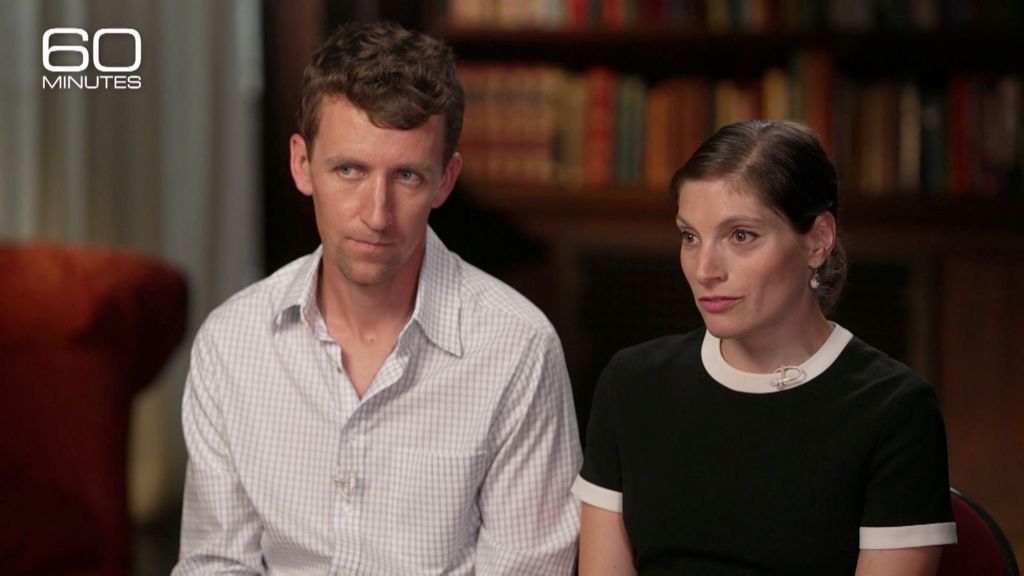
    Reactions from victim families and local communities have been deeply divided following the announcement. Cici and Will Steward, whose 8-year-old daughter Cila is the only victim still unaccounted for following the flood, said they are grateful that no child will be placed under the operating family Eastlands’ care this summer. They pushed back on framing the withdrawal as an act of compassion, saying, “Camp Mystic did not withdraw its application out of grace. It withdrew because the State of Texas was prepared to deny it.”

    Sam Taylor, an attorney representing six families of deceased campers in an ongoing wrongful death lawsuit against the camp, welcomed the decision but said advocacy would not end. “We are grateful that no other Texas family will hand their daughter over to Camp Mystic this summer,” Taylor said. “But until there is full accountability for what happened on July 4 and until there are real, enforceable safeguards for every child sent to a Texas summer camp, our work continues.”

    Not all families affected by the tragedy supported the permanent 2026 closure. Liberty Lindley, whose 10-year-old daughter survived the Camp Mystic flood, said she had planned to send her daughter back to the camp as part of her emotional healing process. Lindley told *The Washington Post* that confronting traumatic memories head-on can be a powerful step toward recovery: “Emotionally, that’s part of the work: facing the water again, the fears. It’s so important for them to take their power back.”

  • Jury convicts former Florida congressman in Venezuela lobbying case

    Jury convicts former Florida congressman in Venezuela lobbying case

    In a high-profile federal corruption trial that wrapped up Friday, a jury found ex-U.S. Representative David Rivera of Florida guilty on multiple felony counts, including conspiracy and failure to register as a foreign agent, for his role in a covert lobbying campaign on behalf of the Venezuelan government. The conviction marks a major conclusion to a six-week proceeding that drew testimony from high-profile political figures and laid bare a secret influence campaign worth tens of millions of dollars. Prosecutors laid out that the former lawmaker’s consulting firm secured a $50 million contract from PDVSA, Venezuela’s state-owned oil giant, to lobby sitting U.S. officials to soften Washington’s stance on Caracas during a period of extreme bilateral tension. The work was carried out in 2017 and 2018, when the Trump administration first imposed harsh economic sanctions on the Maduro regime, and was funneled through PDVSA’s U.S. subsidiary Citgo, according to court documents. Joining Rivera in conviction was his long-time associate Esther Nuhfer, a veteran political consultant who partnered with him on the scheme. Federal prosecutors from the Southern District of Florida argued that the pair intentionally hid the true source of their funding and the ultimate backer of their lobbying: Nicolás Maduro’s Venezuelan government. “As long as the money kept coming in, they didn’t care from where,” lead prosecutor Roger Cruz told jurors during closing arguments. The trial featured unexpected testimony from sitting U.S. Secretary of State Marco Rubio, a long-time friend and former housemate of Rivera’s, who was one of the targets of the lobbying effort. Rubio repeatedly stated he had no knowledge of Rivera’s work for the Venezuelan-linked firm, a claim confirmed by Texas Congressman Pete Sessions, who also testified during the proceedings. Neither Rubio nor Sessions have been accused of any wrongdoing in the case. Defense teams for both Rivera and Nuhfer mounted a two-pronged defense throughout the trial. First, they argued that the pair were under no legal obligation to register as foreign agents because their contract was directly with the U.S.-based Citgo, not the Venezuelan central government. Second, Rivera’s lead attorney Ed Shohat told jurors that his client was actually working to remove Maduro from power, not normalize relations between the two countries. “He was working every possible angle to get Nicolás Maduro out,” Shohat said, according to court transcripts from the Associated Press. “There was not a word in the chats about normalizing relations.” The case unfolded against a dramatic shifting backdrop for Venezuelan politics: earlier this year, in January, former President Donald Trump authorized a military strike in Venezuela that resulted in Maduro’s capture. The former Venezuelan leader is currently being held in New York City, awaiting trial on federal drug trafficking charges alongside his wife. Following the verdict reading, during which Rivera showed no visible emotion according to U.S. media reports, the judge ordered the former congressman into immediate detention. Prosecutors successfully argued that Rivera poses a significant flight risk given his ties and possible assets abroad. The conviction caps a decades-long political career for Rivera, who represented a South Florida congressional district for one term from 2011 to 2013, and closes a major chapter in a federal investigation into unregistered foreign lobbying in Washington. Rivera and Nuhfer now face sentencing at a later date, with potential penalties including decades of federal prison time.

  • Elon Musk’s latest Tesla pay valued at $158bn – but he can’t pocket it

    Elon Musk’s latest Tesla pay valued at $158bn – but he can’t pocket it

    In a regulatory filing published Thursday, Tesla has put a $158 billion (£117 billion) valuation on the 2025 compensation package for its chief executive Elon Musk, one of the world’s wealthiest people — but the document also confirmed that Musk will not take home any of that sum this year. The eye-popping valuation stems from a historic pay deal that Tesla shareholders approved back in November, which ties Musk’s earnings to a series of extremely ambitious performance and growth milestones. Until those targets are met, the massive package remains purely nominal, industry analysts emphasize. The approved agreement would grant Musk up to $1 trillion in Tesla stock only if he guides the electric vehicle maker to a series of aggressive long-term goals, chief among them boosting the company’s total market capitalization to $8.5 trillion. For 2025, none of those required milestones were met, so no payout is triggered, says Danni Hewson, head of financial analysis at UK investment platform AJ Bell. “Elon Musk isn’t actually going to pocket $158bn,” Hewson explained to the BBC. The $158 billion figure disclosed in the filing to the U.S. Securities and Exchange Commission (SEC) is not a guaranteed payout for 2025, she added: rather, it is an accounting estimate of what Musk would receive if he ultimately delivers on all the terms of the deal, counting his work toward the targets over the past year. The full list of milestones Musk must hit to unlock the full stock grant is sweeping, and spans multiple business lines at Tesla. He must grow the company’s annual vehicle delivery volume to 20 million units, while also rolling out 1 million humanoid robots. He needs to hit 10 million paid subscriptions for Tesla’s controversial Full Self-Driving driver assistance feature, and launch 1 million commercial autonomous Robotaxis for ride-hailing service. The plan also requires Tesla to hit cumulative core profit of up to $400 billion before the full payout can be issued. If all these targets are met, Musk would receive more than 400 million additional Tesla shares, which would be worth roughly $1 trillion at the $8.5 trillion market valuation the plan calls for. While the goals are intentionally very high, Hewson notes that the structure of the deal was designed to refocus Musk’s attention on Tesla, and the unprecedented package has generated massive global attention for both the CEO and the automaker. Musk already holds the title of the world’s richest person by a wide margin. As of this reporting, Bloomberg estimates his total net worth at $651 billion, while Forbes pegs the figure even higher at $788 billion. Both estimates place his personal wealth far above that of other major tech leaders, including Google co-founders Larry Page and Sergey Brin. Since Musk draws no base salary for his role as Tesla CEO, and already has vast wealth from his sprawling portfolio of other companies, he faces no immediate pressure to hit the targets quickly, Hewson added. One of Musk’s other high-growth ventures, aerospace firm SpaceX, is on track to become one of the most valuable publicly traded companies in the world after its upcoming initial public offering (IPO). The rocket manufacturer recently merged with xAI, Musk’s artificial intelligence startup and parent company of social platform X, ahead of the public listing. Beyond Tesla and SpaceX, Musk is currently embroiled in a high-profile legal battle with OpenAI, the artificial intelligence research lab he co-founded with current CEO Sam Altman in 2015. The legal proceedings have included heated exchanges between Musk and OpenAI’s legal team, as well as the presiding judge. Musk claims that Altman and co-founder Greg Brockman abandoned the organization’s original non-profit mission to pursue for-profit growth, effectively “stealing” the charity he helped build.

  • Watch: Supporters and critics react as Trump visits retirement ‘utopia’

    Watch: Supporters and critics react as Trump visits retirement ‘utopia’

    As former President Donald Trump traveled to central Florida this week, all eyes turned to The Villages — a sprawling, 20,000-acre master-planned community marketed as a retirement utopia for active seniors, and one of the most reliably Republican voting blocs in the critical swing state of Florida. For decades, this massive retirement hub, which boasts more than 150,000 permanent residents and a dense network of golf courses, recreation clubs, and social gathering spots, has delivered lopsided victories for GOP candidates in every major election. But ahead of Trump’s highly anticipated visit, new divides have emerged within the community that signal a potential political shift, a BBC on-the-ground investigation found.

    During the visit, Trump was met with raucous, enthusiastic crowds of loyal supporters, many of whom lined the streets hours in advance to catch a glimpse of the former president, waving campaign flags and voicing strong support for his 2024 presidential comeback bid. Longtime residents who align with the GOP told reporters that Trump’s policy agenda, particularly his stances on Social Security, healthcare costs, and cultural issues, align closely with the priorities of most retirees in The Villages. Many emphasized that they see Trump as the only candidate capable of pushing for the changes they want to see in Washington.

    But contrary to the community’s reputation as a uniformly conservative stronghold, a growing group of local residents — including some who have voted Republican for most of their lives — have emerged as vocal critics in the lead-up to the visit. These critics raised concerns about Trump’s past policy decisions that have impacted senior citizens, as well as his ongoing legal battles and polarizing political style that many say has divided the country. Some local residents even organized small, peaceful protests ahead of the visit to make their opposition visible, breaking with the longstanding unbroken support for GOP candidates that has defined The Villages for generations.

    Political analysts note that any shift in voting sentiment in The Villages could have major implications for the 2024 general election. Florida is widely expected to be one of the most competitive battleground states in the nation, and senior voters make up a disproportionately large share of the electorate in communities across the state. The growing divide within this traditionally solid GOP base suggests that even the most loyal Republican strongholds are not immune to shifting attitudes toward Trump, adding a new layer of uncertainty to the upcoming presidential race.

  • ‘Dreams come true’ for singer joining Lady Gaga on Devil Wears Prada soundtrack

    ‘Dreams come true’ for singer joining Lady Gaga on Devil Wears Prada soundtrack

    Two decades after the release of the iconic 2006 comedy-drama *The Devil Wears Prada*, the long-awaited sequel has finally hit cinema screens worldwide, bringing back every fan-favorite member of the original cast for a new chapter of high-fashion drama. While the return of Meryl Streep’s sharp-witted, iconic editor Miranda Priestly has dominated early conversation, another element of the new release has quickly captured public attention: its all-female curated soundtrack, which pairs established A-list superstars with breakout emerging talent.

    Among the rising artists featured on the album is 20-something American singer Izzy Escobar, who marks her first major movie soundtrack placement with original track *Evergreen Avenue*, created specifically for the sequel. For Escobar, the opportunity to contribute to the follow-up to one of her all-time favorite films still feels surreal.

    “I’m still trying to wrap my head around it. This is my first time ever having a song in a major film, and it’s for *Devil Wears Prada*? Dreams really do come true,” Escobar shared in an exclusive interview with BBC Newsbeat. She described seeing her name credited alongside global superstars like Lady Gaga, Dua Lipa and Olivia Dean as a “pinch me” moment that feels like validation for her years of hard work, adding: “It’s such a clear sign I should just keep persevering.”

    The collaboration came about after *Devil Wears Prada 2* director David Frankel discovered Escobar’s 2025 breakout single *Sunny in London*, and reached out directly to invite her to join the soundtrack project. “He really loved the sonic palette of that song and wanted me to write something that was in a similar vein,” Escobar explained. Though this marked her first foray into film composition, she says the creative process aligned closely with her usual writing style.

    As a self-described visual storyteller, Escobar builds her tracks around vivid mental narratives: “I close my eyes when I sit down at my keyboard and make up a movie in my own mind, anyway.” To craft *Evergreen Avenue*, she did a deep dive into the established world of the *Devil Wears Prada* franchise, brainstorming concepts that would honor the original story while weaving in her distinct artistic voice.

    Escobar stayed tight-lipped to avoid plot spoilers, only sharing that her track appears during an emotional sequence late in the runtime of the sequel. “I don’t want to give too much away, but I’m on the radio in Anne Hathaway’s character’s house, which is pretty cool,” she teased. The singer got her first chance to see the track paired with the finished film at the sequel’s New York world premiere earlier this year, an experience she calls unforgettable.

    “To finally see it visualised on-screen with some of my favourite artists in the room, it was the best feeling in the world,” she said.

    For Escobar, the *Devil Wears Prada* franchise holds deep personal meaning, dating back to her childhood. Growing up, she explored self-expression through both music and fashion, and the original 2006 film resonated deeply with her. “When I saw it, I just remember thinking, ‘oh my gosh, this is another way of expressing yourself, just like music’”, she recalled.

    She also highlighted the ongoing interconnected relationship between the music and fashion industries, pointing to recent high-profile examples like Lady Gaga and Doechii’s collaborative track *Runway*. “I love the video that they did, incorporating all different types of fashion to let people express themselves, while singing a song that highlights feeling confident and empowered,” she said.

    As for what audiences can expect from the full *Devil Wears Prada 2* soundtrack, Escobar promises a dynamic, uplifting listening experience: “It’s going to make you dance and leave you feeling very, very empowered, inspired and excited.”

    *The Devil Wears Prada 2* arrives in United Kingdom cinemas this Friday.

  • Hegseth says clock paused on deadline to seek approval for Iran war

    Hegseth says clock paused on deadline to seek approval for Iran war

    A high-stakes legal and political battle has erupted in Washington over the Trump administration’s interpretation of long-standing war powers law, after US Defence Secretary Pete Hegseth claimed the 60-day congressional approval deadline for US military involvement in the US-Israeli conflict with Iran has been paused amid an ongoing ceasefire.

    Hegseth made the argument Thursday during a Senate questioning session, just one day ahead of the 60-day mark, which falls Friday. The clock began ticking March 2, when President Donald Trump formally notified Congress of the strikes against Iran that launched the open conflict. Under the 1973 War Powers Resolution — a law passed to rein in executive war authority after the Vietnam War — any president must end US military involvement within 60 days of formal notification unless Congress explicitly approves an extension or formally declares war.

    Top Trump administration officials have pushed back against suggestions the deadline will be breached, asserting that active hostilities against Iran have already ended. A senior anonymous administration official confirmed that no exchanges of fire between US and Iranian forces have occurred since April 7, after a ceasefire took effect in early April that has since been extended. Per the administration’s position, the existing ceasefire means the 60-day clock mandated by the War Powers Resolution is either paused or stopped entirely. Hegseth doubled down on this reading during Thursday’s hearing, telling senators “We are in a ceasefire right now, which our understanding means the 60-day clock pauses or stops in a ceasefire.”

    That interpretation has been rejected out of hand by Democratic Senator Tim Kaine, who led the questioning on the issue. Kaine pushed back immediately, arguing “I do not believe the statute would support that. I think the 60 days runs maybe tomorrow, and it’s going to pose a really important legal question for the administration there.”

    The conflict itself began in late February, when US and Israeli forces launched wide-ranging strikes on Iran that killed the country’s supreme leader. Iran responded with coordinated attacks on Israel and US-aligned Gulf states, raising tensions across the entire Middle East. The US and Israel have justified their military action by claiming Iran is actively pursuing a nuclear weapons capability — a charge Tehran has repeatedly and forcefully denied. Even after more than a month of ceasefire, no permanent peace deal has been reached through ongoing talks, and the strategic Strait of Hormuz, one of the world’s most critical energy shipping chokepoints, remains effectively closed, sending ripples of economic disruption through global energy markets that have pushed up fuel prices for consumers around the world, including in the United States.

    CBS News, the US partner of the BBC, has reported that White House and Pentagon officials are already holding active discussions with congressional members from both parties to secure formal authorization for continued military involvement. To date, every Democratic-led attempt in both the House and Senate to constrain Trump’s military action against Iran has failed, thanks to unified Republican opposition in most cases. Democratic lawmakers have vowed to continue pushing for votes and procedural actions, saying their efforts force lawmakers to put their positions on the record for constituents. While most Republican lawmakers have stood with the administration so far, some have signaled they may reconsider their stances once the 60-day deadline passes.

    The debate over the War Powers Resolution deadline comes one day after Hegseth faced sharp questioning during a House hearing on the conflict, where a top Pentagon official disclosed that US military operations in Iran have already cost taxpayers $25 billion, equivalent to roughly £18.5 billion. During that House hearing, many Republican committee members reiterated their support for the administration’s campaign. Florida Congressman Carlos Gimenez argued that Iran poses an existential threat to the US, saying “When someone tells me for 47 years that they want to kill us, I think I am going to take them at their word. I support our efforts to make sure that Iran never has a nuclear weapon.”

    US media have so far published conflicting reports about what options the Trump administration is currently weighing if Congress refuses to grant an extension, leaving the ultimate path forward for US military involvement in the region uncertain.

  • Vonn still in ‘survival mode’ after Olympic crash

    Vonn still in ‘survival mode’ after Olympic crash

    One of the most decorated alpine skiers in history, American downhill legend Lindsey Vonn is not ready to call time on her competitive career just yet – but she also refuses to rule out permanent retirement, three weeks after a devastating crash at the 2026 Cortina Winter Olympics left her on the brink of leg amputation.

    The 41-year-old 2010 Olympic downhill champion has undergone eight invasive surgeries since the high-speed accident on February 8, where she crashed just 13 seconds into her downhill run after striking a gate, rupturing ligaments in her left knee and sustaining a complex tibia fracture. What makes this injury far more severe than any she has dealt with over her decades-long career, Vonn says, is that multiple medical procedures were required to save her leg from amputation.

    In an interview with the Associated Press, Vonn acknowledged she is still navigating the acute recovery phase, describing her current mindset as being in “survival mode” that leaves her emotionally unready to commit to a final decision about her career. “I just don’t want to jump to any conclusions or even speculate on what I might do,” she explained. “I may retire. I may never race again and that would be completely fine, but I’m not in a position emotionally to make that decision at this point.”

    Vonn’s recovery road stretches far into the future, with one more major procedure already scheduled: the upcoming surgery will remove existing metal hardware from her injury site and perform a replacement for her torn anterior cruciate ligament (ACL). After that operation, she faces another six months of structured rehabilitation, meaning she will need at least 18 months of progressive recovery before she could return to full fitness even for off-slope gym training, let alone competitive racing.

    This is not Vonn’s first run with career-threatening injury: the skier, who holds 82 World Cup race wins – the second-most all time among female alpine skiers, trailing only fellow American Mikaela Shiffrin – initially retired from professional competition in 2019 after a string of serious leg injuries. She stunned the skiing world with a comeback announcement in 2024, after recovering from a partial right knee replacement, and entered her fifth Olympic Games as a medal contender, even competing through an ACL injury she sustained in the final pre-Olympic World Cup race in Switzerland.

    That pre-Games injury, she says, pales in comparison to the damage sustained in Cortina. “It’s much different than any injury I’ve ever had, in terms of the severity of the injury and understanding that I could have lost my leg and how bad things were,” Vonn said. “I can deal with a lot of pain, but this was so extreme. It’s not even been in the universe of pain as what I’ve had before.”

    Vonn, who returned to her home in the United States in mid-February after initial treatment in Italy, has continued to post incremental progress updates after each round of surgery. For now, her priority is pushing through the grueling initial recovery phase, rather than locking in a career choice. “I’m still in survival mode. I just want to get through this phase and be able to assess where I am in my life,” she said. “I don’t want to make a decision now because I think that would be rash and probably too emotional and I don’t want to make a mistake.”

  • Pickleball and protests: How a Trump visit is roiling the world’s largest retirement community

    Pickleball and protests: How a Trump visit is roiling the world’s largest retirement community

    Nestled across 30,000 acres of sun-drenched central Florida, spanning three counties and four zip codes, the Villages is widely known as the world’s largest retirement community. Often nicknamed “Disney without the rollercoasters,” this meticulously landscaped, age-restricted haven for adults over 55 draws transplants from across the country with its endless recreational opportunities, vibrant social scene, and leisurely resort-style lifestyle.

    Residents themselves gush about the community’s one-of-a-kind appeal. “It’s like being at a resort on a full-time basis,” says 79-year-old Betty Brock, who relocated from North Carolina. “If you get bored here, it’s not the Villages’ fault—it’s yours.” Sixty-two-year-old Terri Emery puts it even more simply: “The bottom line is, it’s kind of like utopia.” On any given day, residents can be found dancing to live cover music at one of the community’s five public squares, cruising the sprawling network of paths in colorful, customized golf carts—the neighborhood’s preferred mode of transport—or gathering for meals at local restaurants. “You move here to be young; you don’t move here to die and become old,” Emery explains.

    But even this seemingly perfect retirement paradise is not immune to the deep political divides roiling the United States. Following Donald Trump’s return to the presidency last year, political tensions have simmered across the community, and the former president-turned-commander-in-chief’s upcoming rally speech this Friday, part of his midterm election push to promote his economic policies to voters, has thrown those rifts into sharp relief.

    While Trump’s supporters in the Villages have scrambled to secure tickets and celebrate the presidential visit, local Democrats and Trump critics have organized counter-protests. What unites both sides, however, is a widespread unwritten agreement: discussing politics across party lines is best avoided.

    “Everybody does still try to get along,” says 63-year-old Maddy Bacher, a Democrat who moved to the Villages from Connecticut. “You want to at least be able to say good morning and how are you and how’s the dog. But… I find you don’t socialize as much, and it’s kind of difficult, because everything you do move to talk about might have a political consequence.” Brock echoes that sentiment, noting that while politics occasionally comes up in casual conversation, “not as much as you think, because you don’t ever know where that line is.”

    Political friction during the COVID-19 pandemic pushed divisions to a breaking point for many residents, prompting Bacher to launch a Democratic-only pickleball team. Her husband followed suit, starting a separate golf group for liberal residents after many reported feeling uncomfortable with the right-leaning views common on the community’s public greens. The Villages is home to more than 3,000 niche hobby clubs catering to every interest from female fly fishing to parrot ownership, and Bacher recalls one member quitting a local clay arts club entirely over clashing views on COVID-19 booster shots.

    Long a reliable Republican stronghold that backed Trump in all three of his presidential campaigns, the Villages has seen a surge in Democratic organizing in recent years. Last month, nearly 7,000 local residents turned out for two simultaneous “No Kings” protests against Trump—a turnout that stunned even long-time liberal activists. “Nothing turns out Democrats like Trump,” says Bill Knudson, president of the Villages Democratic Club, who moved to the community with his wife four years ago. Knudson says he was “kinda stunned” at how many new members showed up to a club meeting held just weeks after Trump’s inauguration, with many going out of their way to seek out the group to get involved.

    As of this week, Knudson and other Democratic organizers have been busy crafting protest signs and finalizing plans for Friday’s demonstration. Traffic gridlock and safety concerns have kept some partisans on both sides at home: the community is so large that Knudson says it would take him an hour of driving 20 miles per hour in his golf cart just to reach the rally site.

    Even with the rising tensions, many cross-party friendships persist. Retired lawyer Dorothy Duncan, a Democrat who participated in the “No Kings” protest and is preparing to join this week’s demonstration, still meets regularly for coffee with staunch Trump supporter Tom Samson. The 81-year-old Pittsburgh native and retired pest control business owner says what draws him to Trump is his unfiltered style: “He doesn’t have a filter and says whatever’s on his mind, and he’s not a politician.”

    Duncan and Samson’s friendly, civil cross-aisle chat is far from the norm, residents agree. Bob Carberry, who moved to the Villages 14 years ago, recalls the community was once almost entirely apolitical—until Trump entered national politics. “The emotional level of politics is something that’s emerged probably more so in the last five years with Trump,” he says.

    For Trump’s backers, Friday’s rally is the most anticipated community event of the year. “He’s a man that does do what he says he’s going to do, and he may not be diplomatic, and he may not be charming, may not be politically correct, but he’s doing what every president before him has promised to do when they’re out there campaigning but have never done,” says Sharlene, a supporter who declined to share her last name. Though she will miss the speech due to work, local Republicans have organized watch parties and are discussing golf cart parades for shut-out supporters.

    Seventy-nine-year-old Phil Montalvo, a retired lawyer who launched a second Republican club in the Villages three years ago to cut down on commute times for conservatives on opposite ends of the sprawling community, says nearly all local GOP members are “jazzed” for Trump’s visit. Montalvo notes that Trump’s “America First” message has resonated deeply with the Villages’ conservative majority, with Trump serving as a unifying figure for local Republicans. Citing voter registration numbers from Sumter County—one of the three counties that host the Villages—Montalvo points out that out of all registered voters, there are just 23,000 Democrats compared to 77,000 Republicans. While he acknowledges that Democratic visibility has grown, he says conservatives are not intimidated: “It’s great that they express themselves. We think they have the wrong message, but that’s their prerogative.”

    Some Trump supporters are less welcoming of opposing views. Emery, who has secured a ticket to Friday’s rally, calls the anti-Trump protests “absolutely disgusting,” going so far as to label protesters communists. “The only king is the Lord. Trump is not a king. He’s our president, and if you like him or not, he’s still your president at the end of the day.” She recounts a recent story of a local Trump supporter who called police after a neighbor took down his pro-Trump flag—one of dozens of small, bitter conflicts that have become more common since 2016, when Trump was first elected.

    Democratic golfer Thomas Bacher says that even casual neighborhood traditions have fallen victim to polarization. “We’d have a block party and things like that, and then… some of the people started putting up Trump flags. And that just caused a big rift. We didn’t have block parties anymore. People wouldn’t talk to each other anymore.”

    Longtime resident Roy Irwin, who moved to the Villages in 2012, says the community has become a perfect microcosm of the entire country’s political divide. “I try to talk gently with everybody, no matter what their belief—respect their opinion,” he says. “It’s just like anywhere else—there’s people feeling very strongly on both sides.”

    Not all residents fit neatly into one political camp, though these ideologically flexible voters are rare. Seventy-seven-year-old lawyer Edward Hannan, who describes himself as “not fixated ideologically,” says he will skip Friday’s rally mostly to avoid hours of waiting and strict security screenings. Hannan says he disagrees with Trump on many issues but admires his organizational skill, a trait he says has been lacking in many previous U.S. presidents—though he criticizes Trump’s aggressive style. “You should not denigrate people who disagree with you; you should reason with them,” he says. Hannan laments that open political dialogue has all but disappeared in the Villages, with most residents either avoiding politics entirely or only discussing it with like-minded friends. “So that’s a negative, because getting diverse ideas in a small group is difficult.” When asked if his moderate views make him an anomaly in the community, he answers immediately: “Yes.”

    Home to more than 150,000 residents over the age of 55, the Villages’ growing political rifts offer a clear window into how national partisan divides are reshaping even the most insulated, leisure-focused American communities.