标签: North America

北美洲

  • Rudy Giuliani in critical condition in hospital

    Rudy Giuliani in critical condition in hospital

    Longtime Donald Trump ally and former New York City Mayor Rudy Giuliani has been admitted to hospital in stable but critical condition, his spokesperson has confirmed. In a social media statement released Sunday, Ted Goodman, Giuliani’s communications representative, announced the news, calling for public prayers for the one-time mayor who has long been a polarizing figure in American political life.

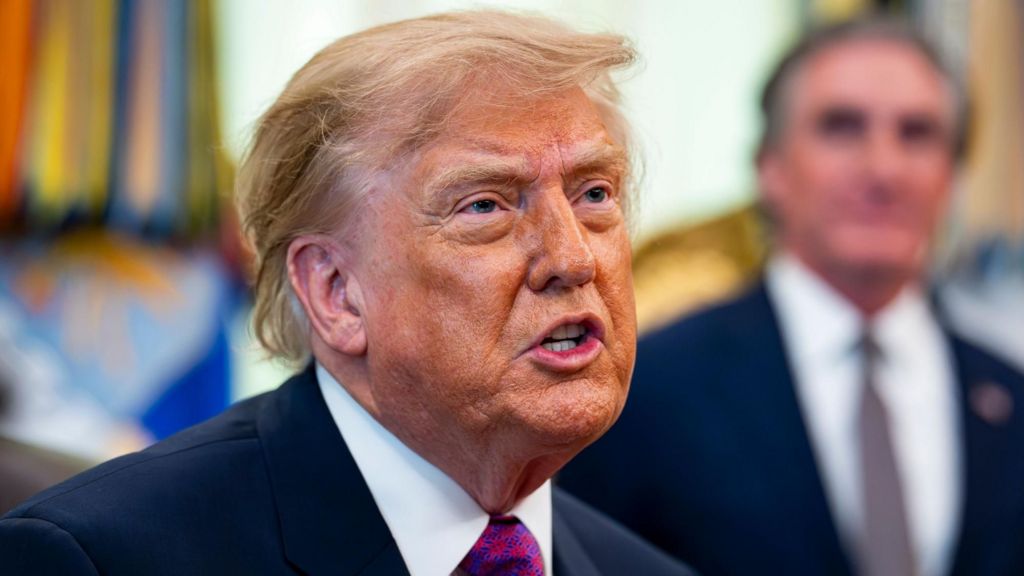
    Shortly after Goodman’s announcement went public, former President Donald Trump shared his own reaction on social media. Trump hailed Giuliani as a “true warrior” and described him as the greatest mayor in New York City’s history, echoing the praise that has long come from his closest political allies. Trump also echoed a familiar grievance, claiming that Giuliani had been unfairly targeted by what he called “Radical Left Lunatics” for his work challenging the results of the 2020 presidential election.

    Goodman did not disclose specific details about the cause of Giuliani’s current hospitalization. The 81-year-old, who will turn 82 later this month, has already dealt with serious health complications stemming from a car crash last September. The accident took place in New Hampshire, when a vehicle struck the Ford Bronco Giuliani was riding in from behind. At the time of the crash, his security team confirmed he suffered a fractured thoracic vertebra, multiple cuts and bruises, and additional injuries to his left arm and lower leg.

    Giuliani has remained one of Donald Trump’s most loyal and high-profile surrogates since the 2020 election, leading the former president’s failed legal efforts to overturn the election result that saw Joe Biden defeat Trump. Across dozens of public appearances and court filings, Giuliani spread baseless false claims that Biden and his allies engaged in widespread ballot fraud to steal the election. These unsubstantiated claims led to significant legal consequences for the former mayor: a civil jury ordered him to pay $148 million in defamation damages to two Georgia election workers who he falsely accused of participating in fraudulent voting activity.

    In his statement, Goodman emphasized Giuliani’s long reputation as a political fighter, noting that the former mayor has faced every personal and professional challenge in his life with unshakable resolve. “He’s fighting with that same level of strength as we speak,” Goodman said, before asking supporters to join the former mayor’s team in praying for his recovery.

  • Iran says US has responded to its latest peace proposal

    Iran says US has responded to its latest peace proposal

    Tensions between the United States and Iran remain at a fragile standstill this weekend, as President Donald Trump confirmed that renewed military action against Iranian targets remains on the table, even as Tehran has tabled a new 14-point peace proposal to de-escalate the ongoing conflict.

    According to Iranian state-linked media, Washington has delivered its formal response to Tehran’s overture through diplomatic channels in Pakistan, and Iranian officials are currently reviewing the document. The U.S. government has not yet officially confirmed that it issued a response to the Iranian proposal.

    Trump, speaking to reporters in Palm Beach, Florida on Saturday, noted that he had only received a broad overview of the plan and was waiting to review its full text. He added that he already expects the proposal to fall short of Washington’s requirements. In a subsequent post on his social media platform Truth Social, Trump doubled down on his long-standing criticism of the Iranian government, writing that Tehran “has not yet paid a big enough price for what they have done to Humanity, and the World, over the last 47 years.”

    Tehran’s 14-point framework puts forward three core demands for a lasting deal: the full withdrawal of U.S. military forces from regions bordering Iran, an end to the ongoing U.S. naval blockade of Iranian ports, and a complete ceasefire to all hostilities across the region, including Israel’s military campaign in Lebanon. The proposal also calls for a final bilateral agreement to be finalized within 30 days, and prioritizes ending the full conflict rather than just extending the temporary ceasefire that has been in place since early April.

    Iran’s latest proposal was drafted in response to an earlier nine-point U.S. plan that called for a two-month temporary ceasefire, according to Iranian state sources.

    When asked directly by a BBC reporter whether new U.S. military strikes inside Iran remained a possibility, Trump did not rule out the action, saying “it’s a possibility. If they misbehave. If they do something bad. But right now we’ll see.” The president also made clear he has no intention of a full U.S. withdrawal from the conflict in the near term, arguing that a sustained U.S. presence is needed to prevent the need for future military intervention years down the line. “We’re not leaving,” he said. “We’re going to do it, so nobody has to go back in two years or five years.”

    The ongoing standoff has already had tangible global economic impacts: in response to earlier U.S. and Israeli strikes on Iranian targets, Tehran has imposed sweeping new restrictions on commercial shipping through the Strait of Hormuz, one of the world’s most critical chokepoints for global oil supplies.

    The developments come as Trump faces growing cross-partisan pressure from Congress over his handling of the conflict, which entered its 60th day on Friday following the formal notification of U.S. military action on March 2. Under U.S. law, the president is required to secure congressional approval for ongoing military action within 60 days of notification, or end hostilities. In a letter to congressional leaders sent Friday, Trump argued that the April 8 ceasefire had “terminated” active conflict, pausing the legal clock on the approval requirement. He also dismissed concerns over the ongoing naval blockade, calling it “a very friendly blockade” that “nobody is even challenging.” The president repeated his long-standing red line on Iranian nuclear policy Friday, reaffirming that “Iran can never have a nuclear weapon” — a position Tehran has rejected, saying its nuclear program is entirely for peaceful civilian uses, despite international reports that Iran has enriched uranium to near-weapons grade levels.

    Growing numbers of congressional Republicans have joined Democrats in publicly expressing frustration with the conflict, criticizing it as costly, open-ended, and lacking clear strategic goals. Missouri Republican Senator Josh Hawley called on the administration to begin withdrawing U.S. forces and said any continuation of the war would require congressional authorization — a step he says he opposes. “I don’t really want to do that,” Hawley said. “I want to wind it down.”

    Alaska Republican Senator Lisa Murkowski, a frequent critic of Trump, struck a more nuanced tone, saying she doubts the success of ongoing negotiations and that an abrupt U.S. withdrawal would leave critical Iranian military capabilities intact. But she added that she also opposes granting the administration unlimited authority to continue the conflict. “While the administration may point to ongoing negotiations, events on the ground and the rhetoric coming out of Tehran tell a different story,” she said. “But if the U.S. steps back abruptly and prematurely, we almost certainly leave their critical capabilities intact. And those are not risks that I’m willing to take. But the answer is not a blank check for another endless war.”

  • Voters will judge Trump on the economy – how is it doing?

    Voters will judge Trump on the economy – how is it doing?

    Three months ago, the United States launched military operations in Iran, a conflict former President Donald Trump once claimed would conclude in no more than six weeks. Today, the war drags on with no end in sight, triggering a global energy shock that rivals the 1970s oil crises and sending prices soaring across everything from transportation fuel to household groceries. Yet, despite this sustained economic pressure on cash-strapped American households, newly released first-quarter 2026 gross domestic product (GDP) data reveals the US economy has outperformed expectations to maintain steady growth. As November’s critical midterm elections approach, the BBC has analyzed key US economic indicators to unpack what these conflicting signals mean for Trump and his Republican party.

    Official statistics confirm the US economy expanded at an annualized rate of 2% in the first three months of 2026, marking a notable acceleration from the slowdown recorded at the end of 2025. This solid growth comes even in the face of two major headwinds: sustained consumer cost pressure from existing US tariffs, which have lifted prices for domestic shoppers, and the sudden energy market disruption sparked by the Iran war. Economists note that the negative impact on consumers was far milder than initial projections predicted, with household consumption growing at a 1.6% annualized rate. Much of the overall growth momentum, however, has been driven by massive capital investment from large technology companies rolling out new artificial intelligence (AI) infrastructure.
    James Knightley, chief international economist at ING, explained that as consumer spending growth moderates, “investment linked to tech and AI has clearly become the main engine of growth in the US.”

    As the election season heats up, Trump is already leveraging Thursday’s positive GDP figures to frame his economic policy agenda as a success for American voters. But November’s midterm contests are expected to be extremely tight, and Republican political fortunes continue to hinge on the decades-old maxim: “It’s the economy, stupid.” While headline GDP growth is positive, political analysts broadly agree that voter sentiment will be shaped far more heavily by day-to-day cost of living, which has surged dramatically since the war began.

    US military action in Iran and the subsequent closure of the Strait of Hormuz, a critical global chokepoint for oil shipments, sent global crude prices skyrocketing. On Thursday, Brent crude, the global benchmark, hit a four-year high of $126 per barrel; while prices have since pulled back to $111, that remains nearly 52% higher than the pre-war level of around $73 per barrel recorded before hostilities began in late February. Data from the American Automobile Association shows that average US retail fuel prices climbed to $4.30 per gallon by the end of April, up from less than $3 per gallon just two months prior.
    This sharp rise in energy costs drove a corresponding jump in inflation, with the annual inflation rate reaching 3.3% in March, marking a near two-year high and a sharp increase from February’s 2.4% reading.

    The post-war inflation surge has dashed widespread expectations that the Federal Reserve would implement imminent interest rate cuts to support economic growth. On Wednesday, the central bank announced it would hold its benchmark interest rate steady at between 3.5% and 3.75%, a range that has stood since before the conflict began. Pre-war forecasts from most economists had projected multiple rate cuts would be rolled out through 2026. Data from Freddie Mac shows that since the start of US strikes on Iran, the average interest rate for a 30-year fixed mortgage has risen from 5.98% to 6.3%, pushing homeownership further out of reach for many prospective buyers. Samuel Tombs, chief US economist at Pantheon Macroeconomics, warned that sustained high oil prices and expectations of a long-term US blockade of Iranian ports could delay any rate cuts until 2027.

    Against this economic turmoil, US stock markets have defied geopolitical risk to post solid gains since the conflict began. All three major US indices – the S&P 500, the Dow Jones Industrial Average, and the Nasdaq Composite – have fully recovered the steep losses recorded in the first days of the war and resumed their pre-war upward trend. Since the start of hostilities, the tech-heavy Nasdaq has gained roughly 10%, the S&P 500 is up around 5%, and the Dow Jones has climbed just over 1%. Rising stock indices deliver tangible benefits beyond just active investors, supporting the retirement savings of millions of Americans with 401(k) plans and other pensions tied to equities markets.

    Heading into November, polling currently points to the Republicans losing control of the House of Representatives, with the Senate also at risk of flipping to Democratic control. Election outcomes will be overwhelmingly shaped by the state of the economy when voters cast their ballots. While strong headline GDP growth and rising stock markets offer some relief to Republican strategists, the persistent upward pressure on household costs remains a major liability for the party. How the election ultimately unfolds for Trump and his party will depend largely on how the Iran conflict progresses: whether the Strait of Hormuz reopens to global shipping, whether energy and grocery prices cool off for American voters, and whether the US economy can maintain its current momentum through the end of the year.

  • DeVaux makes history with Kentucky Derby victory

    DeVaux makes history with Kentucky Derby victory

    The 152nd running of the Kentucky Derby delivered one of the most iconic, history-making finishes in the storied race’s history, as longshot Golden Tempo charged from the back of the pack to claim a neck-length victory, landing trainer Cherie DeVaux a groundbreaking milestone as the first woman to ever win the prestigious Churchill Downs classic.

    Coming into the 1 1/4-mile race with 23-1 odds, Golden Tempo spent the first half of the contest mired at the rear of the 18-horse field. Race favorite Renegade, a 4-1 pick ridden by top jockey Irad Ortiz Jr., also started slow, sitting 15 lengths off the lead midway through the race as he attempted to pull off a historic win from the inside starting gate — a feat no horse had achieved in 40 years. As the two horses stormed down the final stretch, Renegade looked poised to cross the finish line first, only for Golden Tempo to edge past at the very last moment. The final time for the race was clocked at 2 minutes 2.27 seconds, and third place went to Ocelli.

    The winning jockey, Joe Ortiz — younger brother of Renegade’s jockey Irad Ortiz Jr. — notched the win on just his 11th attempt at winning the Kentucky Derby. The victory also came just one day after he won the Kentucky Oaks aboard Always A Runner, making Ortiz only the ninth jockey in history to claim both of Churchill Downs’ top prizes in the same year. Speaking to reporters after the race, Ortiz acknowledged the bittersweet nature of beating his own brother, saying: “I want Irad to win the Derby, of course — it’s his dream too — but this is how things turned out. His horse ran a fantastic race, and he should be proud of that. Today’s just my day, and Golden Tempo’s day.”

    For DeVaux, the win is a full-circle moment that caps a 22-year journey in horse racing that began right at Churchill Downs. She started her career at the iconic track as an eager young exercise rider, and never could have imagined she would one day stand in the winner’s circle of the Kentucky Derby. “I started my career here 22 years ago as a bright-eyed, bushy-tailed exercise rider, and I would not believe that I would be sitting up here today,” she said.

    With the victory, DeVaux becomes just the second female trainer ever to win a U.S. Triple Crown race, following Jena Antonucci, who trained 2023 Belmont Stakes winner Arcangelo. DeVaux, who has notched 298 wins from 1,802 career starts, spoke to NBC Sports directly after the race, saying she was overwhelmed with emotion: “I don’t have any words, I’m so, so happy. I’m glad I could be a representative of women everywhere, and I want to say thank you to the team at Phipps Stable and St Elias Stable, our owners.”

    She also credited her husband for pushing her to pursue her training career when she faced a personal crossroads in 2017. “In the summer of 2017 I was kind of at a crossroads in life, and my husband told me that I owed it to myself to at least try. He had the faith in me and he saw what I didn’t see, and believed in me,” DeVaux shared. The win earned Golden Tempo’s owners a $3.1 million top prize, cementing this year’s Kentucky Derby as one of the most memorable in modern racing history.

  • Germany troop cuts send wrong signal to Russia, say two top US Republicans

    Germany troop cuts send wrong signal to Russia, say two top US Republicans

    A controversial Pentagon plan to withdraw 5,000 United States military personnel from Germany has ignited fierce political debate on both sides of the Atlantic, triggering anxiety within the NATO alliance over the future of transatlantic security coordination. The proposal, which comes in the wake of a heated public dispute between U.S. President Donald Trump and German Chancellor Friedrich Merz, has drawn sharp condemnation from top congressional leaders, who warn it will weaken deterrence against Russian aggression and send a dangerous message to Moscow.

    Two of the most senior Republican lawmakers on Capitol Hill — Senate Armed Services Committee Chair Roger Wicker and House Armed Services Committee Chair Mike Rogers — have led the criticism of the troop drawdown. In a joint statement, the pair argued that instead of removing the 5,000 troops from Europe entirely, the forces should be repositioned further east to strengthen deterrence along NATO’s eastern flank. They emphasized their deep concern that withdrawing a full U.S. brigade comes at a moment when European allies are just beginning to ramp up their defense spending to meet NATO targets, calling an early drawdown premature and counterproductive to shared security goals. “Prematurely reducing America’s forward presence in Europe before those capabilities are fully realised risks undermining deterrence and sending the wrong signal to Vladimir Putin,” the statement read.

    The top Democrat on the House Armed Services Committee, Adam Smith, went even further, rejecting the Pentagon’s decision as completely unmoored from coherent U.S. national security strategy. Smith argued the move was not rooted in strategic analysis, but rather driven by personal political vengeance over the public disagreement between Trump and Merz. Not all congressional Republicans have opposed the plan, however: House Armed Services Committee member Clay Higgins voiced support for the administration’s move, taking a sarcastic shot at German leadership and the U.S. Senate in a post on X.

    Pentagon officials have defended the drawdown, with spokesperson Sean Parnell confirming last Friday that the decision followed a comprehensive strategic review that adjusted U.S. force posture to match current theater requirements and on-the-ground conditions. The withdrawal, ordered by Defense Secretary Pete Hegseth, is expected to be completed over a six to 12 month timeline, Parnell added.

    The decision follows a public row between Trump and Merz that erupted earlier this month, after the German chancellor told students that the U.S. had been “humiliated” by Iranian negotiators in the ongoing Iran conflict and lacked a clear strategy. Trump hit back hard on his Truth Social platform, accusing Merz of supporting Iranian nuclear ambitions and dismissing his comments as uninformed. Just days after the exchange, the troop withdrawal plan was announced.

    On Saturday, Trump further stoked tensions by confirming that additional troop cuts beyond the initial 5,000 are on the table, declining to share further details. The U.S. currently maintains more than 36,000 active-duty troops in Germany — by far its largest deployment in Europe, compared to roughly 12,000 in Italy and 10,000 in the United Kingdom. Trump has previously floated the idea of withdrawing troops from Italy and Spain as well, following a 2025 drawdown in Romania that aligned with his administration’s broader goal of shifting U.S. military focus away from Europe and toward the Indo-Pacific region.

    German Defense Minister Boris Pistorius responded to the announcement with measured composure, telling German news agency DPA that the decision had been “foreseeable.” He stressed that the ongoing U.S. military presence in Europe, and specifically in Germany, remains a mutual interest for both Berlin and Washington.

    Within NATO, which counts 32 member states, the announcement has sparked growing anxiety that the drawdown could weaken the alliance’s collective defense posture. Polish Prime Minister Donald Tusk issued a stark warning Saturday, saying that the greatest threat to the transatlantic community is not external adversaries, but the ongoing internal disintegration of the NATO alliance. “We must all do what it takes to reverse this disastrous trend,” Tusk said.

    Nato spokesperson Allison Hart confirmed Saturday that the alliance has reached out to Washington to get full clarity on the drawdown plans. In a post on X, Hart framed the decision as a reminder of why European allies must continue increasing defense investment and take on a greater share of responsibility for shared transatlantic security. Hart noted that progress was already underway after allies agreed to a target of 2% of GDP on defense at last year’s NATO summit in The Hague.

    Trump has long criticized Germany for failing to meet NATO’s 2% of GDP defense spending target, repeatedly labeling Berlin “delinquent” in its contributions. However, under successive governments led by former Chancellor Olaf Scholz and current Chancellor Friedrich Merz, Germany has dramatically increased its defense budget. Projections now show Germany will spend €105.8 billion ($114 billion) on defense by 2027, pushing total defense expenditure to 3.1% of GDP when all special defense funds, including military aid to Ukraine, are counted.

  • How we reported in -30C temperatures in Canada’s Arctic

    How we reported in -30C temperatures in Canada’s Arctic

    Covering a story in one of the harshest cold-weather environments on Earth requires more than just preparation—it demands endurance, adaptability, and a willingness to push past the limits of human comfort. For two BBC correspondents, Nadine Yousif and Eloise Alanna, that challenge became a reality when they embarked on a five-day journey across Canada’s frozen Arctic, embedded with the nation’s military rangers, facing sustained temperatures as low as -30 degrees Celsius and the constant threat of frostbite.

    Canada’s Arctic region is a remote, sparsely populated landscape that plays a critical role in the country’s national security and sovereignty, making the work of Canadian military rangers here vital. These reservists regularly patrol the vast icy expanse, conducting reconnaissance, supporting local communities, and maintaining a persistent presence in the strategically important northern territory. For the journalists, joining a patrol offered an unfiltered, first-hand look at the realities of operating in one of the coldest inhabited regions on the planet, far from the amenities of southern urban centers.

    Over the course of their five-day trek, Yousif and Alanna confronted a cascade of environmental threats that tested their resilience. Sub-zero temperatures bite through even the most advanced cold-weather gear, turning routine tasks like adjusting camera equipment or checking notes into dangerous ventures that increase the risk of tissue damage from frostbite. Every exposure to the open air carries risk, and the team had to remain constantly vigilant for early warning signs of frostbite and hypothermia, conditions that can escalate into life-threatening emergencies in minutes in these conditions.

    Working alongside the experienced military rangers, the journalists learned to navigate the frozen terrain, adapt to the unforgiving climate, and document the little-seen work of Canada’s northern patrols. The expedition offered audiences a rare, intimate glimpse into the challenges faced by both service members and the small Indigenous communities that call the Canadian Arctic home, highlighting the harsh realities of life and work in a region that is increasingly gaining strategic and climate attention globally.

  • Germany says US troop withdrawal ‘foreseeable’ as Nato seeks clarification

    Germany says US troop withdrawal ‘foreseeable’ as Nato seeks clarification

    A deepening rift between the United States and Germany has triggered a major shift in American military posture in Europe, with Washington set to withdraw 5,000 active-duty troops from Germany over the next year, a move that has sent shockwaves through the 32-member NATO alliance and raised urgent questions about the future of transatlantic security.

    The drawdown, the latest in a series of American troop reductions across Europe under the second Trump administration, cuts the US military presence in Germany from the current 36,000 troops — by far the largest American force deployment on the continent, far outstripping roughly 12,000 troops in Italy and 10,000 in the United Kingdom. The decision follows a heated public exchange between US President Donald Trump and German Chancellor Friedrich Merz, sparked by comments Merz made criticizing American diplomatic strategy amid the ongoing conflict with Iran.

    Speaking to Germany’s DPA news agency, German Defence Minister Boris Pistorius struck a measured tone, framing the withdrawal announcement as a development that had long been foreseeable. He reaffirmed that the persistent American military footprint in Europe, anchored in Germany, serves the strategic interests of both Berlin and Washington. Even so, Pistorius emphasized that the geopolitical shift demands that European nations step up to take greater ownership of their own collective security. He noted that Germany has already made substantial progress in this area, having ramped up military spending dramatically in recent years after years of falling short of NATO’s previous 2% of GDP defence spending target — a point of consistent criticism from Trump. Under the current Merz government, Germany is on track to hit a total defence expenditure of 3.1% of GDP by 2027, including a €105.8 billion (£91 billion) annual defence budget and ongoing military aid to Ukraine as it defends against Russian invasion.

    NATO, for its part, has moved quickly to seek full clarity from Washington on the details of the drawdown plan. Alliance spokeswoman Allison Hart noted that the US decision reinforces the need for continued European defence investment and greater burden-sharing for transatlantic security. She added that the alliance is already seeing positive progress after member states agreed to a new target of investing 5% of GDP in defence at last year’s NATO summit in The Hague.

    The diplomatic row that preceded the troop withdrawal announcement erupted earlier this month, when Merz told university students that the US had suffered a public humiliation at the hands of Iranian negotiators. Merz argued that Washington lacked a coherent strategy for the ongoing conflict, accusing Iranian negotiators of skillfully stalling talks that saw American officials travel to Islamabad only to return without any diplomatic breakthrough. Trump hit back fiercely on his Truth Social platform, dismissing Merz as misinformed and falsely claiming that the German chancellor supported Iran acquiring a nuclear weapon. Within days, the troop withdrawal order was issued.

    Pentagon spokesman Sean Parnell confirmed that the drawdown directive came from US Defence Secretary Pete Hegseth, and that the full withdrawal of the 5,000 troops will be completed within a six to 12 month timeline. This move is the latest in Trump’s broader strategy to reorient American military focus away from Europe and toward the Indo-Pacific region, a policy that already saw a troop reduction in Romania last year. Trump has also openly floated the possibility of additional drawdowns from other major American deployments in Europe, including Italy and Spain, and has long been a vocal critic of NATO, arguing that the alliance burdens the US with unfair security costs while European allies underinvest in their own defence.

    The announcement has sparked widespread alarm across NATO and even among senior members of Trump’s own Republican Party. Two top Republican congressional leaders — Senate Armed Services Committee Chair Roger Wicker and House Armed Services Committee Chair Mike Rogers — issued a joint statement saying they are deeply concerned by the decision to withdraw an entire US brigade from German soil. They argued that maintaining a strong deterrent presence in Europe is a core core national interest of the United States, and that full withdrawal of forces from the continent runs counter to that goal.

    Polish Prime Minister Donald Tusk issued one of the starkest warnings from within the alliance Saturday, saying that the greatest threat facing the transatlantic community today is not external adversaries, but the ongoing internal disintegration of the NATO alliance. He called on all member states to take urgent, decisive action to reverse what he described as a dangerous and disastrous trend. Even as anxiety mounts, German officials have signalled they will move forward with deeper defence integration with other European allies, insisting Germany is already on the right path to shoulder a larger share of regional security responsibilities.

  • California to begin ticketing driverless cars that violate traffic laws

    California to begin ticketing driverless cars that violate traffic laws

    As autonomous vehicle (AV) technology becomes an increasingly common sight on streets across California, a longstanding regulatory gap has finally been closed: starting this July, law enforcement will for the first time be able to hold driverless car manufacturers accountable when their vehicles break traffic laws.

  • Donroe Doctrine is becoming everything China feared

    Donroe Doctrine is becoming everything China feared

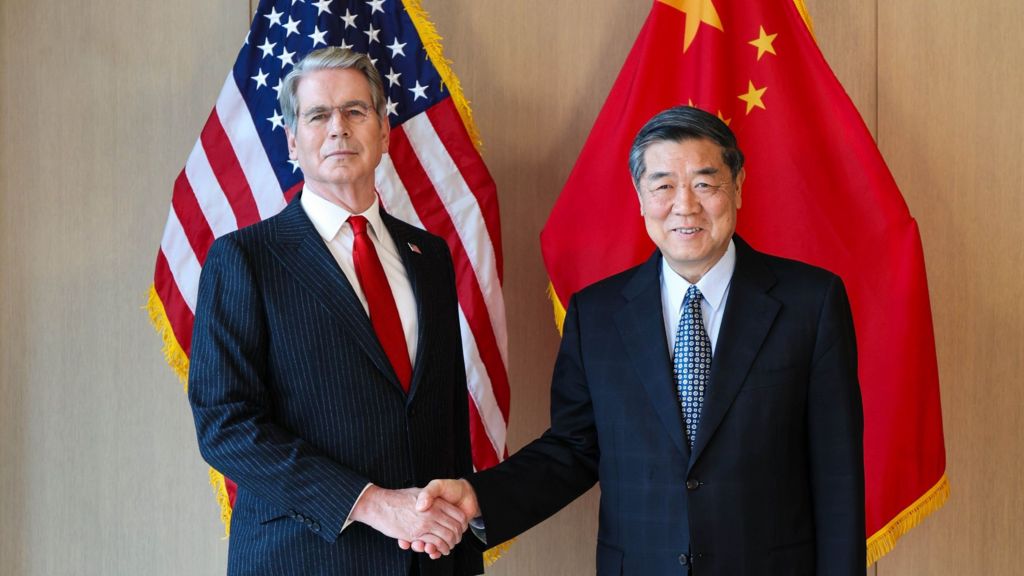
    On April 28, the U.S. State Department released a joint statement purporting to stand “in solidarity with Panama” after an alleged increase in detentions of Panama-flagged ships at Chinese ports. The statement frames these detentions as a “blatant attempt to politicize maritime trade” — a framing that collapses under scrutiny when examined against the backdrop of recent U.S. and Panamanian actions targeting Chinese-controlled logistics infrastructure across the region. This diplomatic move is just the latest step in a broader, coordinated U.S. geostrategic push that includes blockades of the Strait of Hormuz, new defense partnerships with Indonesia, and aggressive rhetoric targeting China-backed infrastructure projects like Peru’s Port of Chancay.

    Five Latin American and Caribbean nations joined the U.S. as co-signatories: Costa Rica, Bolivia, Paraguay, Guyana, and Trinidad and Tobago. A closer look at this group reveals a deliberate alignment with longstanding U.S. economic and security priorities in the Western Hemisphere, rather than a random collection of like-minded states.

    The irony of the U.S.’s sudden stance on Panama is difficult to overstate. Just a few months prior, Washington executed a coordinated two-pronged campaign to oust Chinese operators from key Panamanian ports: diplomatic coercion through high-stakes bilateral security dialogues, and a politicized legal campaign targeting Chinese concession agreements near the Panama Canal. This effort culminated in a widely expected Panamanian Supreme Court ruling that forced Hong Kong-based port operator CK Hutchinson to exit its operations at the Balboa and Cristobal terminals. The contract was subsequently awarded to a subsidiary of Danish logistics giant Maersk. This history of interference undermines the State Department’s claims of defending neutral maritime trade: even as far back as the Trump administration, U.S. negotiators openly threatened to retake the Panama Canal by force if Washington’s demands were not met, turning hollow the rhetoric about defending Panamanian sovereignty and opposing politicization of trade.

    Breaking down the co-signatories further exposes the strategic logic behind the joint statement. Guyana, one of the world’s fastest-growing producers of high-quality sweet light crude, has attracted major new downstream investment as a result of U.S. blockades of Persian Gulf oil exports. Trinidad and Tobago is a leading regional producer of critical petrochemicals including urea and ammonia. Costa Rica has long been a dependable U.S. ally and hosts the Caribbean’s most technologically advanced commercial port. Paraguay, meanwhile, remains the only South American nation that recognizes Taiwan, a longtime point of alignment with U.S. foreign policy goals.

    The most surprising co-signatory is Bolivia, a landlocked Andean nation that would seem to have no direct stake in Caribbean maritime security. This move makes strategic sense, however, when viewed through the lens of global green energy competition: Bolivia holds the world’s largest proven lithium reserves, a critical mineral for manufacturing electric vehicle batteries and large-scale grid energy storage. Extraction of Bolivian lithium, however, faces major barriers: the country’s brine deposits have an unusually high magnesium-to-lithium ratio, requiring costly, largely unproven extraction technology. There is also the massive logistical challenge of moving extracted lithium hundreds of kilometers over rugged terrain to Pacific ports in neighboring Chile, before shipments travel north through the Panama Canal to reach major consumer markets. These constraints push up the cost of every ton of exported Bolivian lithium dramatically.

    Bolivia’s new President Rodrigo Paz has signaled a clear shift away from the previous socialist government’s partnerships with China and Russia. His recent decision to replace the leadership of state-owned lithium producer Yacimientos de Litio Bolivianos indicates a willingness to scrap existing deals in favor of new agreements with Western capital, provided Western markets offer guaranteed access for Bolivian lithium exports. For Paz’s administration, signing onto the U.S.-led statement framing Panama as a “pillar of our maritime trading system” is a low-cost, transactional diplomatic gesture to curry favor with Washington.

    As a landlocked nation, Bolivia’s ability to become a major lithium export powerhouse depends entirely on access to ports through Chile, its longstanding historical rival that borders the Pacific. Chile already has a thriving, profitable lithium sector of its own, and was the source of Bolivia’s loss of coastline in the 19th century War of the Pacific. By aligning with the U.S. against China’s trade and infrastructure presence in the region, Bolivia is signaling to Chile, Panama, and other Latin American states that it will abide by Washington’s rules of the game in exchange for access to their critical maritime logistics networks.

    This coordinated U.S. diplomatic push in Panama and Bolivia cannot be separated from broader global geostrategic shifts. In the Persian Gulf, the U.S. military has enforced a blockade that blocks most crude oil exports from reaching key Asian markets. At the same time, the State Department has worked aggressively across the Caribbean and Latin America to oust Chinese-owned logistics assets through a mix of diplomatic pressure and politicized legal campaigns. This pattern of activity makes clear that the modern iteration of U.S. dominance in the Western Hemisphere, sometimes called the “Donroe Doctrine” (a updated take on the 19th century Monroe Doctrine), does not aim to benevolently integrate the U.S. and Latin American economies. Instead, its core goal is to redirect global commodity supply chains away from West Asia and back into the Western Hemisphere by establishing U.S.-controlled maritime trade routes.

    While it remains too early to tell whether Washington’s gambit will succeed, the pattern is deliberate: the State Department has actively built a new U.S.-aligned maritime consensus with Latin American countries that produce critical energy, agricultural, logistics, and green mineral inputs, many of which have already rejected recent Chinese investment offers. Any framing of the U.S. as a neutral guardian of free global maritime trade ignores clear, on-the-ground reality: the U.S. military is seizing commercial ships in West Asia to enforce its blockade, while the State Department simultaneously demands that China adhere to Washington’s rules for trade in Central and South America. When the Trump administration abandoned the longstanding Carter Doctrine commitment to secure free trade through the Persian Gulf, the myth of a neutral, free global maritime commons died.

    In the long term, this power play is likely to work to the advantage of China and other coastal emerging economies seeking a more multipolar global order. But in the short term, it has created unprecedented instability in the global maritime trading system — instability that the U.S. State Department is actively exploiting to advance American energy, agricultural, and mining interests across the Western Hemisphere.

  • Spirit Airlines shutting down after rescue talks collapse

    Spirit Airlines shutting down after rescue talks collapse

    Ultra-low-cost carrier Spirit Airlines has permanently ceased operations after negotiations for a $500 million emergency bailout from the Trump administration collapsed, ending months of frantic efforts to stave off bankruptcy. The carrier announced on its official website Saturday that it was initiating an immediate, orderly wind-down of all business activities, a decision it described as being made with “great disappointment.”

    The airline’s collapse comes after years of financial instability, marking its second trip through bankruptcy protection in less than a decade. Spirit had just begun restructuring under its most recent insolvency proceedings, cutting route capacity and shrinking its fleet, when the outbreak of U.S.-Israeli military strikes in Iran sent global jet fuel prices skyrocketing. Industry analysts note that fuel costs typically account for up to 40% of a commercial airline’s total operating expenses, and prices have doubled since strikes began in late February. This sudden, dramatic cost increase pushed the already teetering carrier over the edge.

    All future Spirit flights have been canceled immediately, and the airline confirmed it will not issue direct refunds to customers holding unused tickets. Passengers seeking compensation are advised to file claims through their credit card issuers instead. The carrier has also suspended all customer service operations effective Saturday.

    Savanthi Syth, senior airline analyst at investment bank Raymond James, called the Iran-driven fuel price surge the “final nail in the coffin” for Spirit. Speaking to the BBC, Syth explained that the airline failed to implement the deep, transformative restructuring it needed during its 2024 bankruptcy process. Even before the conflict escalated in the Middle East, Syth noted, Spirit’s long-term viability was already in doubt. She added, “If it wasn’t for the fuel scenario, they would have been okay through the summer, beyond the summer I would have said it was still precarious.”

    Spirit’s leadership expressed confidence as recently as late April that a government rescue deal would be finalized imminently. But the proposed plan, which would have given the U.S. government an effective 90% ownership stake in the airline, faced fierce pushback from multiple fronts: Wall Street investors, Congressional lawmakers, and even a member of Trump’s own cabinet. Transportation Secretary Sean Duffy told Reuters that a bailout would amount to throwing “good money after bad.”

    After negotiations fell apart, Trump told CBS, a BBC partner, on Friday that the airline had been extended a “final proposal” to remain operational. Spirit’s collapse comes amid a broader crisis rocking the global aviation industry, as carriers across the world scramble to adapt to spiking fuel costs. Many have responded by cutting route capacity or raising ticket fares to offset higher expenses. The crisis has also sparked broader supply chain fears: the head of the International Energy Agency (IEA) has warned that Europe could face a total jet fuel shortage in as little as six weeks if current conditions hold.