标签: North America

北美洲

  • Fed holds US interest rates steady as uncertainty over Trump’s Iran deal remains

    Fed holds US interest rates steady as uncertainty over Trump’s Iran deal remains

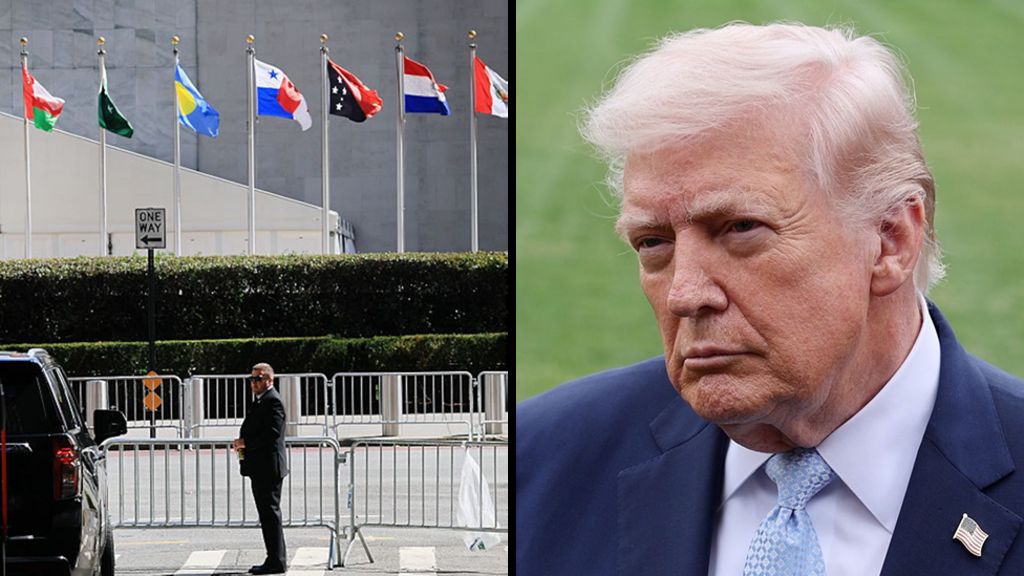
    In Kevin Warsh’s first meeting at the helm of the U.S. Federal Reserve, the central bank’s rate-setting committee has voted unanimously to hold benchmark interest rates steady in a range between 3.5% and 3.75%, a decision that breaks with pressure from the White House for immediate rate cuts while reflecting persistent above-target inflation driven by Middle East conflict-related energy price shocks.

    The decision comes as the Fed navigates tangled crosscurrents: growing uncertainty around the Trump administration’s still-unresolved framework to end hostilities linked to Iran, inflation that currently sits at 3.8% – well above the Fed’s long-term 2% target – and ongoing political pressure from President Donald Trump, who has openly pushed for rate cuts after successfully pushing former chair Jerome Powell for looser monetary policy. FOMC governors were initially divided heading into the meeting, with some factions arguing for an immediate hike to cool stubborn price growth, while others backed a cut to stimulate economic expansion as Trump demanded.

    In the end, the committee aligned around holding rates steady, citing resilient economic fundamentals even amid elevated geopolitical risk. In its new, condensed official statement – a core campaign promise from Warsh, who has long criticized the Fed’s overly verbose past communication practices – the FOMC noted that “Economic activity is expanding at a solid pace despite elevated uncertainty that owes, in part, to the conflict in the Middle East. Productivity growth and capital investment are strong. Job gains have kept pace with the workforce, and the unemployment rate has changed little.” The statement concluded with a simple, direct commitment: “The Committee will deliver price stability.”

    Clocking in at just 132 words, the new statement is less than half the length of the 350-word statement released after the committee’s April meeting, fulfilling Warsh’s pledge to cut redundant messaging and let policy action speak for itself. Beyond the shorter format, the Fed also removed prior language that hinted at a future bias toward rate cuts, a clear shift in monetary policy posture.

    The closely watched dot-plot summary of committee members’ rate projections underscored that hawkish shift: nine of the 18 participating central bankers now expect at least one rate hike before the end of 2026, while only one projects a cut, and eight see rates holding steady at current levels. Warsh, who has publicly opposed the dot-plot as an unhelpful forward guidance tool, declined to submit his own personal projection but said he supported colleagues continuing to publish the summary.

    Samuel Tombs, chief U.S. economist at Pantheon Macroeconomics, called the shifted dot-plot projections the “big news” emerging from Wednesday’s meeting, marking a notable turn from the Fed’s prior stance toward potential rate cuts.

    Speaking at a post-meeting press conference, Warsh framed the leadership transition as an opportunity to reset the central bank’s operations and reaffirm its core mandate. “This is a natural and timely opportunity to reaffirm its mission, to review current practices,” he said, adding that the Fed’s traditional forward-looking guidance has done more to confuse than clarify monetary policy debates. “My new, slimmed-down statement just gives you the facts as best we can judge it,” he added.

    Warsh also announced immediate plans to restructure the Fed’s policy-making process, launching five internal task forces to review core central bank operations: communication practices, the appropriate size of the Fed’s balance sheet, the use of economic data in policy decisions, the relationship between productivity growth and labor market outcomes, and the central bank’s inflation management framework.

    The current inflation surge traces back to President Trump’s decision to launch military strikes against Iran earlier this year, which prompted Iranian forces to close the Strait of Hormuz – one of the world’s busiest and most critical global shipping lanes for oil. The closure triggered a sharp spike in global energy prices, which the U.S. Bureau of Labor Statistics has identified as the single largest driver of the recent jump in year-over-year inflation, which hit 3.8% in May.

    In a surprising public comment at the White House earlier this June, Trump downplayed the inflation risk, telling reporters “I love the inflation. The numbers were great. You know what I really love? I love the inflation.” Economists widely note that high inflation erodes household purchasing power, particularly for low- and middle-income families, and that central banks typically raise interest rates to cool excess demand and bring price growth back to target. Rate cuts, which Trump has repeatedly called for, tend to lower borrowing costs for consumers and businesses and stimulate spending and growth, but can also further fuel inflation when price growth is already above target.

  • Mangione’s lawyers plan psychiatric defence in state murder trial

    Mangione’s lawyers plan psychiatric defence in state murder trial

    In a procedural update Wednesday in a New York courtroom, a judge confirmed that defense attorneys for Luigi Mangione — the man accused of fatally shooting UnitedHealthcare CEO Brian Thompson in late 2024 — will mount a psychiatric-based defense during his upcoming state murder trial.

    According to reporting from CBS News, the BBC’s official partner for U.S. news coverage, Mangione’s legal team has informed state judge Gregory Carro that they will seek to prove their client was experiencing severe, debilitating extreme emotional disturbance at the time of the fatal shooting. Mangione has entered not guilty pleas to all charges in both the state and federal legal cases stemming from the December 4 attack in midtown Manhattan.

    If the trial jury accepts the psychiatric defense argument, the legal outcome could see Mangione convicted of the lesser charge of manslaughter rather than first- or second-degree murder, a shift that would drastically reduce any potential sentence if found guilty. Judge Carro also confirmed Wednesday that he will order the unsealing of court documents tied to the defense’s strategic plan, per CBS’s reporting.

    Photographs from the proceeding show Mangione present in the Manhattan courtroom for Wednesday’s strategy discussion. His initial court appearance was scheduled for Tuesday, but the hearing was called off at the last minute following a reported procedural error on the part of the prosecution team. The state murder trial is currently on track to open with jury selection on September 8.

    Mangione, an Ivy League graduate from an affluent family based in Maryland, also faces unresolved federal stalking charges that carry a maximum potential penalty of life imprisonment if he is convicted. Earlier this year, federal prosecutors dropped more severe federal murder and firearms charges against him, clearing the way for the state prosecution to move forward first.

    The fatal shooting that sparked the case took place on December 4, 2024, when Thompson — a 50-year-old father of two — was shot from behind by a masked gunman as he arrived at a Manhattan hotel for UnitedHealthcare’s annual investor conference.

  • Olympic medallist Simpson collapses at mile event

    Olympic medallist Simpson collapses at mile event

    A celebrated retired American distance runner, who earned an Olympic bronze medal and multiple World Championships medals, is currently receiving hospital care after experiencing an unexpected medical emergency during a popular community running event in Raleigh, North Carolina.

    39-year-old Jenny Simpson, who represented the U.S. at the 2008 Beijing Olympics and 2012 London Games before retiring from elite competitive running at the end of the 2024 season, was serving as a pacemaker for a mile race division at a pop-up installment of the widely followed Sir Walter Miler event when she collapsed on Tuesday. Multiple on-site reports confirmed that cardiopulmonary resuscitation (CPR) was administered immediately after her collapse.

    Over the course of her decorated career, Simpson built one of the most impressive resumes in modern American middle-distance running. She climbed to the top of the global sport by taking home gold in the women’s 1500-meter race at the 2011 IAAF World Championships, followed by silver medals in the same event at both the 2013 and 2017 World Championships. Her career highlight at the Olympic stage came at the 2016 Rio de Janeiro Games, where she crossed the finish line third to claim the bronze medal in the 1500m.

    In an official statement posted to the social media platform X, the organizing team behind the Sir Walter Miler confirmed details of the incident and shared an update on Simpson’s condition.

    “Jenny is receiving excellent medical care, and our thoughts are with her and her family during this time,” the statement read. The organization went on to express deep gratitude to the quick-acting bystanders and first responders who stepped in to help immediately after Simpson collapsed, as well as the medical professionals who managed the emergency situation with a combination of urgency, care and strict professionalism.

    The team also thanked the global running community and sports fans for the outpouring of concern and support that has poured in since the incident, asking the public to continue holding Simpson and her family in their thoughts and prayers as everyone waits for positive updates on her recovery.

  • Trump seeks delay for spy chief nomination hearing

    Trump seeks delay for spy chief nomination hearing

    A brewing political standoff over U.S. intelligence surveillance policy has thrown a planned confirmation hearing for the nation’s next top intelligence leader into uncertainty, after former President Donald Trump announced his intention to delay the process over stalled legislation on Capitol Hill.

    Jay Clayton, the current U.S. Attorney for the Southern District of New York and Trump’s pick to serve as permanent Director of National Intelligence (DNI), was scheduled to face lawmakers on Capitol Hill Wednesday at 14:00 EST for his confirmation hearing. The role, which oversees the nation’s 18 federal intelligence agencies and serves as the primary intelligence advisor to the president, the National Security Council and the Homeland Security Council, is set to vacate at the end of June when current director Tulsi Gabbard steps down from her post.

    In an early morning post on his social platform Truth Social, Trump said he was pushing back the confirmation hearing over frustration that the 1978 Foreign Intelligence Surveillance Act (FISA) — the law that governs how U.S. intelligence agencies collect data from domestic telecommunications providers — has been allowed to expire. Trump added that he will not greenlight any renewal of FISA unless the legislation is paired with the controversial SAVE America Act, a proposal that would mandate all voters show official government identification and proof of citizenship to cast a ballot. The plan has drawn widespread condemnation from Democrats, who argue the measure would impose unnecessary barriers that disenfranchise millions of eligible voters.

    The current version of the FISA renewal bill already lacks enough bipartisan support to pass the Senate, and policy analysts widely agree that adding the voting requirements from the SAVE America Act would only further erode support and derail any chance of passage.

    Senate Intelligence Committee Chairman Tom Carter pushed back against Trump’s delay announcement on his own social platform X, noting that the hearing will move forward as originally scheduled “unless the president directs [Clayton] not to appear or withdraws his nomination.”

    If Clayton is confirmed, he will replace Gabbard, who announced last month that she would depart the DNI role by June 30. Until Clayton receives Senate confirmation and his replacement at the Southern District of New York is approved, business leader and Trump loyalist Bill Pulte will continue to serve as acting DNI. Trump’s initial selection of Pulte for the interim role drew bipartisan pushback from lawmakers, who raised sharp concerns over Pulte’s complete lack of professional national security or intelligence experience. When Trump announced Clayton as his pick for the permanent DNI post last week, Senate leaders moved quickly to schedule the confirmation hearing to fill the vacant role on schedule.

  • ‘You have done horrendous things’: Gilgo Beach killer to be sentenced in New York

    ‘You have done horrendous things’: Gilgo Beach killer to be sentenced in New York

    More than three decades after his first documented murder and three years after his arrest, Rex Heuermann, the Long Island architect behind one of New York’s most chilling serial killing cases, entered a Riverhead courtroom on Wednesday for sentencing, where grieving family members of his eight victims confronted him with raw, unflinching statements about their decades of pain.

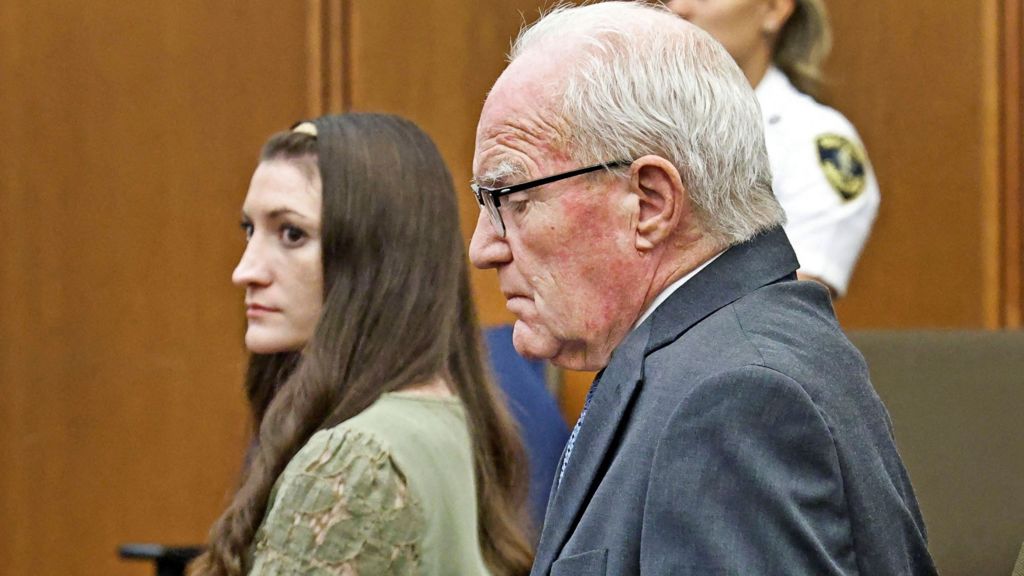
    Known infamously as the Gilgo Beach serial killer, the 62-year-old Heuermann appeared composed in a dark business suit, light blue shirt and muted grey tie, sitting with hands folded and his gaze fixed to the table before him as relatives of the women he killed recounted their decades-long wait for accountability.

    The case stretches back to a sprawling stretch of remote Atlantic coastline on Long Island, where Heuermann scattered the remains of all eight of his confirmed victims between 1993 and 2010. It was only in 2010 that a routine search for a missing person led investigators to stumble on four sets of remains clustered within a quarter-mile of each other along Gilgo Beach, unraveling one of the most high-profile cold cases in American history.

    After evading detection for 13 years, Heuermann — a married father of two living in the quiet Long Island suburb of Massapequa Park — was finally taken into custody in 2023. Suffolk County law enforcement officers swarmed his Midtown Manhattan office to arrest him, after investigators matched DNA recovered from a discarded pizza box Heuermann had thrown away to crime scene DNA collected from the victim sites. Initially charged with the murders of seven women, Heuermann entered a guilty plea to an eighth 1996 killing in a court hearing earlier this year, confirming he had used the same brutal method to strangle and bind each of his victims before disposing of their bodies along the shoreline.

    All eight victims worked as sex workers at the time of their deaths, with many contacted by Heuermann through online advertisements posted to Craigslist. For years, progress on the case stalled amid a series of scandals that plagued the early investigation: former Suffolk County Police Chief James Burke, who originally oversaw the case, was arrested in 2015 and convicted of obstruction of justice, and the corruption scandal also brought down longtime Suffolk District Attorney Thomas Spota, who had led the probe alongside Burke.

    It was not until 2022, when new county leadership launched a joint task force combining federal and local law enforcement resources, that the case broke open. Acting on a 12-year-old tip from the roommate of victim Amber Costello — who described Heuermann as a large, imposing client who drove a rare first-generation Chevrolet Avalanche — investigators identified Heuermann as a prime suspect and arrested him within six weeks.

    On Wednesday, relatives of the victims laid bare the trauma they have carried for decades, pushing back against claims that the slow progress of justice stemmed from law enforcement’s dismissive attitude toward the victims’ line of work. “Mr Heuermann, you have done horrendous things to Valerie’s earthly body, but you have not touched the real Valerie,” said the father of 24-year-old victim Valerie Mack. “I can only imagine when my day comes and I stand before Jesus, Valerie will be at his side.”

    The cousin of 20-year-old victim Jessica Taylor described the lifelong shock of learning her cousin’s partial remains had been found on the beach, telling the court she still cannot shake the horror of the words “headless and handless” that investigators used to describe what was recovered. Calling Heuermann “sick, twisted, heartless,” she added, “23 years we waited. For a while it felt like this day would never come.”

    Victims’ families and Long Island residents have long argued that the investigation was deliberately slowed because all of Heuermann’s targets were sex workers, a claim widely echoed by community members who have expressed horror at the 13-year gap between the discovery of the remains and the killer’s arrest. Wednesday’s hearing marks the final step in the long process of delivering justice to the victims’ families, closing a dark chapter in Long Island’s criminal history that captivated national attention for more than 15 years.

  • Bystanders rush to rescue aircraft passengers after fiery Texas crash

    Bystanders rush to rescue aircraft passengers after fiery Texas crash

    On Tuesday, a dramatic private jet crash unfolded on a major Texas highway just outside Laredo, prompting an immediate, courageous response from bystanders and emergency personnel who rushed to rescue trapped passengers. Cell phone video of the incident captured the group using a makeshift set of tools — a shovel and a sledgehammer — to break through sections of the downed aircraft, prying open an exit to pull five survivors to safety before first responders secured the scene.

    According to Gilberto Sanchez, director of Laredo International Airport, the aircraft was en route from Los Cabos, Mexico, to Austin, Texas, when its flight crew alerted air traffic control at Laredo that the jet was experiencing critical mechanical failures, initiating preparations for an emergency landing. The crash occurred just 150 miles, or 240 kilometers, southwest of San Antonio, in the immediate vicinity of the airport.

    Laredo Police Department investigators confirmed that one of the six people on board the private jet was killed in the crash. The identity of the deceased has not been released pending next-of-kin notification. All five survivors were transported to local medical facilities for treatment, and officials confirmed Wednesday that all remain in stable condition. Responding to the incident, five first responders were later treated for smoke inhalation after working to extinguish the fire that broke out on impact.

    Investigator Jose Baeza of the Laredo Police Department noted that a civilian vehicle traveling on the highway was hit by the aircraft during the crash, though officials have not yet confirmed which part of the jet made contact with the car. Social media posts from witnesses in the area showed heavy black smoke billowing from the wreckage, with large flames visible along the fuselage in the immediate aftermath of the crash.

    The crash forced an immediate full closure of Loop 20, a major arterial highway serving the Laredo area. Laredo police confirmed that the highway will remain closed to all traffic through Wednesday as investigators from multiple agencies, including the Federal Bureau of Investigation and the National Transportation Safety Board, conduct a full on-site investigation into the cause of the crash.

  • Why is newly renovated Reflecting Pool in Washington DC full of algae?

    Why is newly renovated Reflecting Pool in Washington DC full of algae?

    One of Washington D.C.’s most iconic historic landmarks, the Reflecting Pool, has encountered an unexpected and unflattering issue just days after wrapping up a major renovation project and being refilled with water. What was supposed to be a crisp, mirror-like surface that frames views of the Lincoln Memorial and Washington Monument has instead turned a murky, bright green, as a widespread algae bloom has taken over the entire basin.

    The renovation project, which was launched to fix long-standing issues of erosion, leaking, and outdated infrastructure, was intended to restore the Reflecting Pool to its original grandeur for millions of visitors who travel to the National Mall each year. But the rapid growth of algae has thrown a wrench into those plans, leaving park officials and visitors surprised by how quickly the problem developed after the pool was refilled.

    Algae blooms in standing bodies of water are often triggered by a combination of warm temperatures, excess nutrients in the water, and still conditions that allow the organisms to multiply unchecked. While the National Park Service has not yet released a formal explanation for what caused this early bloom, experts note that newly filled pools often have unbalanced water chemistry that can create ideal growing conditions for algae before natural filtration systems stabilize. Visitors to the National Mall have already begun sharing photos of the green-tinted pool on social media, sparking questions about how long it will take park crews to address the issue and restore the pool to its intended clear state.

    The mishap has drawn public attention to the challenges of maintaining large, outdoor public water features in urban areas, especially as shifting weather patterns and warmer seasonal temperatures create more favorable conditions for frequent algae outbreaks. For now, the landmark remains open to visitors, but park authorities are expected to roll out mitigation efforts in the coming days to clear the algae and bring back the Reflecting Pool’s famous reflective surface.

  • ‘It’s dirty’ – Americans react to algae in newly renovated Reflecting Pool

    ‘It’s dirty’ – Americans react to algae in newly renovated Reflecting Pool

    Just days after officials completed a major renovation project and refilled the iconic Reflecting Pool with fresh water, an unexpected algae bloom has turned the national landmark murky, drawing sharp criticism from visitors and triggering an urgent cleanup operation. The BBC traveled to the site to speak with both tourists who traveled from across the United States to see the landmark and local residents who frequent the National Mall area, capturing a range of unfiltered reactions to the unseemly problem.

    Many who came to photograph the newly renovated pool and enjoy the iconic view of the Washington Monument and Lincoln Memorial left disappointed. Multiple visitors described the water as visibly dirty, with a greenish film spreading across large sections of the pool’s surface just 72 hours after refilling work wrapped up. One tourist from Ohio told reporters that the condition of the pool was undercutting what was supposed to be a memorable visit to the nation’s capital, noting that they had planned their trip months in advance to see the completed renovation.

    Local residents expressed similar frustration, pointing out that public funds had been allocated to the renovation project to address longstanding issues with the pool’s water quality. Crews have already moved in to begin the process of removing the algal growth, though it remains unclear how long the cleanup will take or what caused the rapid bloom to develop so soon after the pool was refilled. As work continues, visitors are still accessing the surrounding areas of the National Mall, but many are choosing to avoid the poolside walkways until the issue is fully resolved.

  • Some ‘Lost Canadians’ told to surrender new citizenship certificates

    Some ‘Lost Canadians’ told to surrender new citizenship certificates

    Hundreds of people who successfully secured Canadian citizenship under a landmark law designed to resolve the decades-long ‘Lost Canadians’ issue are now facing sudden uncertainty, after immigration authorities ordered dozens of approved applicants to surrender their newly issued citizenship certificates pending a fresh case review.

    The policy controversy centers on the 2024 Canadian law passed to grant citizenship to descendants of Canadian citizens who were stripped of their nationality through generations of outdated legislation, a group long known as the Lost Canadians. The law allows people with a verifiable ancestral tie to Canada to claim citizenship, even if they did not qualify under previous rules. Since the law entered into force last December, immigration data shows more than 12,000 people submitted applications in just the first six weeks, with a majority of applications coming from the United States, followed by smaller groups from Mexico and the United Kingdom.

    But in recent weeks, dozens of applicants who already received formal approval and physical citizenship certificates have been sent formal letters from the Office of the Registrar of Canadian Citizenship, stating they “may not be entitled” to the citizenship they were already granted and ordering them to return the documents for re-evaluation. Immigration authorities have confirmed only that a “limited number of files” are under review, but have declined to release the exact number of people affected by the sudden review.

    For affected applicants, the order has upended long-held plans and created deep emotional distress. Shawn Davis Mooney, who permanently relocated from California to Victoria, British Columbia, with his husband earlier this year after securing citizenship approval, called the notice devastating. Mooney, who applied after the new law passed, submitted 114 pages of documentation proving his great-great-grandparent was born in New Brunswick, and received urgent approval and his citizenship certificate in February. When he received the surrender letter signed by Registrar Peggy Sun, which claimed he had failed to submit sufficient qualifying documentation, he said he was left disoriented. “I had to read it three times, I couldn’t understand it,” Mooney told reporters. “The worst part is it’s making us feel like frauds, or we’ve done something wrong. Now I have no clear idea what my legal status in this country actually is.”

    Another affected applicant, Rana Charron of Cleveland, Ohio, described the notice as one of the biggest disappointments of her life. Charron used available census records to prove her great-great-grandmother was a French-Canadian born in Quebec, since 19th century birth and baptismal records for her ancestor were no longer accessible. Her application was approved, and she received her physical citizenship certificate earlier this month, before being ordered to return it. “I was very excited to be formally Canadian,” Charron said. “Growing up, my family was very aware of our Canadian heritage… it mattered a lot to me. Now the experience has left me distrustful of the entire process. If they can just yank that back, what’s going to stop them from doing it two years from now, or 10 years from now, when people have really settled down and put roots?” Charron added that she still plans to fight to retain her citizenship, but the uncertainty has left her future plans in limbo.

    Immigration lawyers say the situation is unprecedented and damaging to Canada’s reputation as a welcoming country for new citizens. Lisa Middlemiss, a Montreal-based immigration lawyer who represents several affected applicants, noted that Canadian law only allows citizenship revocation in very rare, exceptional circumstances, such as cases of proven fraud. All the people now receiving surrender letters, she emphasized, completed every step of the application process as required by current immigration law, and had already passed official review to receive their certificates. “This sends such a bad message for Canada,” Middlemiss said.

    In a statement provided to the BBC, a spokesperson for Immigration, Refugees and Citizenship Canada defended the ongoing review, saying that the process is intended to guarantee all cases are evaluated consistently and in compliance with current law. The spokesperson confirmed that all applications were initially reviewed by trained immigration officers before certificates were issued, and that applicants who received surrender requests will have the opportunity to submit additional evidence to support their claim. If the review confirms an applicant is entitled to citizenship, the spokesperson noted, the certificate will be returned.

    Still, for affected applicants like Mooney and Charron, the damage of the uncertainty has already been done, leaving their plans for work, family, and permanent residency hanging in the balance while they wait for a final decision on their status.

  • Watch: Why is Trump furious with Netanyahu over strikes on Lebanon?

    Watch: Why is Trump furious with Netanyahu over strikes on Lebanon?

    A new public rift has emerged between former U.S. President Donald Trump and Israeli Prime Minister Benjamin Netanyahu, centering on a recent wave of airstrikes carried out by Israeli forces in Lebanon that has left Trump openly furious. In public comments, Trump has labeled the strikes as “vicious”, drawing sharp attention to the unexpected fracture in what has long been framed as a close political alliance between the two leaders. The BBC’s senior Middle East correspondent Tom Bateman has unpacked the context behind the U.S. politician’s sharp reaction, digging into the strategic and political calculations that may be driving Trump’s unusual public rebuke of the Israeli leadership. Regional observers note that the escalation of hostilities between Israel and Hezbollah along the Lebanese border has sparked growing international concern, with major global powers pushing for de-escalation to prevent a full-scale regional conflict. For Trump, who positioned his presidency around brokering historic Middle East deals and avoiding new foreign conflicts, the current escalation runs counter to the foreign policy legacy he has sought to build. This public criticism also comes amid shifting dynamics in U.S. domestic politics, where Trump is navigating competing viewpoints within his base on Middle East policy, making his reaction as much a domestic political calculation as a response to the military actions themselves. Bateman’s reporting breaks down the overlapping layers of geopolitics and domestic politics that have led to this rare public show of anger from Trump toward one of his most prominent international allies, highlighting how the ongoing instability in the Middle East continues to roil politics both in the region and beyond.