标签: North America

北美洲

  • Pickleball and protests: How a Trump visit is roiling the world’s largest retirement community

    Pickleball and protests: How a Trump visit is roiling the world’s largest retirement community

    Nestled across 30,000 acres of sun-drenched central Florida, spanning three counties and four zip codes, the Villages is widely known as the world’s largest retirement community. Often nicknamed “Disney without the rollercoasters,” this meticulously landscaped, age-restricted haven for adults over 55 draws transplants from across the country with its endless recreational opportunities, vibrant social scene, and leisurely resort-style lifestyle.

    Residents themselves gush about the community’s one-of-a-kind appeal. “It’s like being at a resort on a full-time basis,” says 79-year-old Betty Brock, who relocated from North Carolina. “If you get bored here, it’s not the Villages’ fault—it’s yours.” Sixty-two-year-old Terri Emery puts it even more simply: “The bottom line is, it’s kind of like utopia.” On any given day, residents can be found dancing to live cover music at one of the community’s five public squares, cruising the sprawling network of paths in colorful, customized golf carts—the neighborhood’s preferred mode of transport—or gathering for meals at local restaurants. “You move here to be young; you don’t move here to die and become old,” Emery explains.

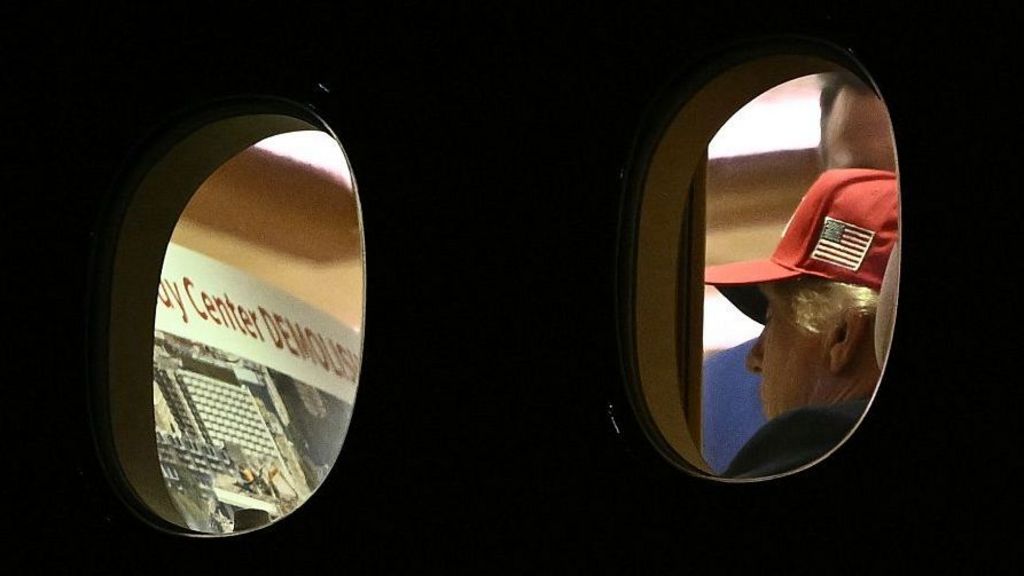
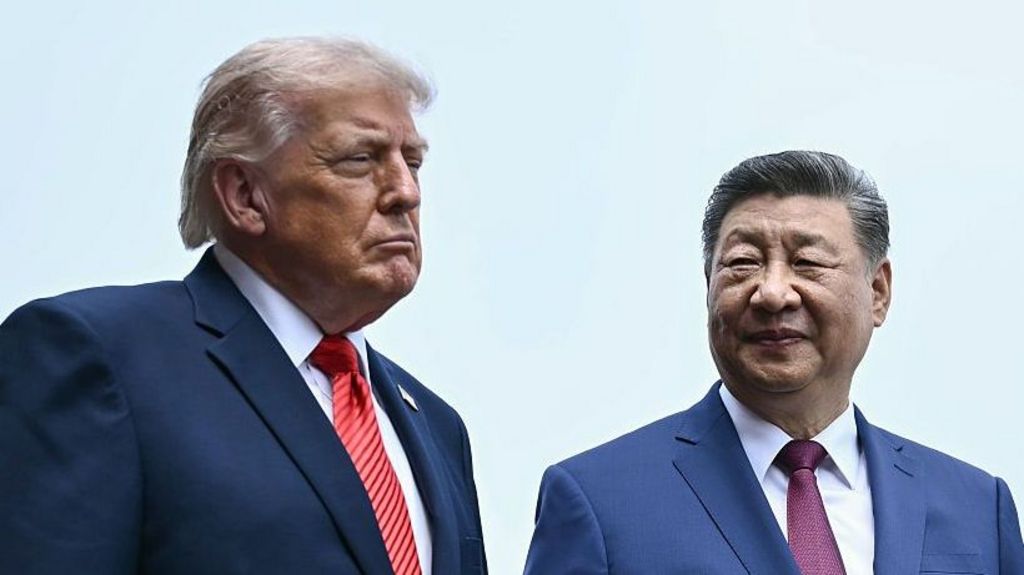
    But even this seemingly perfect retirement paradise is not immune to the deep political divides roiling the United States. Following Donald Trump’s return to the presidency last year, political tensions have simmered across the community, and the former president-turned-commander-in-chief’s upcoming rally speech this Friday, part of his midterm election push to promote his economic policies to voters, has thrown those rifts into sharp relief.

    While Trump’s supporters in the Villages have scrambled to secure tickets and celebrate the presidential visit, local Democrats and Trump critics have organized counter-protests. What unites both sides, however, is a widespread unwritten agreement: discussing politics across party lines is best avoided.

    “Everybody does still try to get along,” says 63-year-old Maddy Bacher, a Democrat who moved to the Villages from Connecticut. “You want to at least be able to say good morning and how are you and how’s the dog. But… I find you don’t socialize as much, and it’s kind of difficult, because everything you do move to talk about might have a political consequence.” Brock echoes that sentiment, noting that while politics occasionally comes up in casual conversation, “not as much as you think, because you don’t ever know where that line is.”

    Political friction during the COVID-19 pandemic pushed divisions to a breaking point for many residents, prompting Bacher to launch a Democratic-only pickleball team. Her husband followed suit, starting a separate golf group for liberal residents after many reported feeling uncomfortable with the right-leaning views common on the community’s public greens. The Villages is home to more than 3,000 niche hobby clubs catering to every interest from female fly fishing to parrot ownership, and Bacher recalls one member quitting a local clay arts club entirely over clashing views on COVID-19 booster shots.

    Long a reliable Republican stronghold that backed Trump in all three of his presidential campaigns, the Villages has seen a surge in Democratic organizing in recent years. Last month, nearly 7,000 local residents turned out for two simultaneous “No Kings” protests against Trump—a turnout that stunned even long-time liberal activists. “Nothing turns out Democrats like Trump,” says Bill Knudson, president of the Villages Democratic Club, who moved to the community with his wife four years ago. Knudson says he was “kinda stunned” at how many new members showed up to a club meeting held just weeks after Trump’s inauguration, with many going out of their way to seek out the group to get involved.

    As of this week, Knudson and other Democratic organizers have been busy crafting protest signs and finalizing plans for Friday’s demonstration. Traffic gridlock and safety concerns have kept some partisans on both sides at home: the community is so large that Knudson says it would take him an hour of driving 20 miles per hour in his golf cart just to reach the rally site.

    Even with the rising tensions, many cross-party friendships persist. Retired lawyer Dorothy Duncan, a Democrat who participated in the “No Kings” protest and is preparing to join this week’s demonstration, still meets regularly for coffee with staunch Trump supporter Tom Samson. The 81-year-old Pittsburgh native and retired pest control business owner says what draws him to Trump is his unfiltered style: “He doesn’t have a filter and says whatever’s on his mind, and he’s not a politician.”

    Duncan and Samson’s friendly, civil cross-aisle chat is far from the norm, residents agree. Bob Carberry, who moved to the Villages 14 years ago, recalls the community was once almost entirely apolitical—until Trump entered national politics. “The emotional level of politics is something that’s emerged probably more so in the last five years with Trump,” he says.

    For Trump’s backers, Friday’s rally is the most anticipated community event of the year. “He’s a man that does do what he says he’s going to do, and he may not be diplomatic, and he may not be charming, may not be politically correct, but he’s doing what every president before him has promised to do when they’re out there campaigning but have never done,” says Sharlene, a supporter who declined to share her last name. Though she will miss the speech due to work, local Republicans have organized watch parties and are discussing golf cart parades for shut-out supporters.

    Seventy-nine-year-old Phil Montalvo, a retired lawyer who launched a second Republican club in the Villages three years ago to cut down on commute times for conservatives on opposite ends of the sprawling community, says nearly all local GOP members are “jazzed” for Trump’s visit. Montalvo notes that Trump’s “America First” message has resonated deeply with the Villages’ conservative majority, with Trump serving as a unifying figure for local Republicans. Citing voter registration numbers from Sumter County—one of the three counties that host the Villages—Montalvo points out that out of all registered voters, there are just 23,000 Democrats compared to 77,000 Republicans. While he acknowledges that Democratic visibility has grown, he says conservatives are not intimidated: “It’s great that they express themselves. We think they have the wrong message, but that’s their prerogative.”

    Some Trump supporters are less welcoming of opposing views. Emery, who has secured a ticket to Friday’s rally, calls the anti-Trump protests “absolutely disgusting,” going so far as to label protesters communists. “The only king is the Lord. Trump is not a king. He’s our president, and if you like him or not, he’s still your president at the end of the day.” She recounts a recent story of a local Trump supporter who called police after a neighbor took down his pro-Trump flag—one of dozens of small, bitter conflicts that have become more common since 2016, when Trump was first elected.

    Democratic golfer Thomas Bacher says that even casual neighborhood traditions have fallen victim to polarization. “We’d have a block party and things like that, and then… some of the people started putting up Trump flags. And that just caused a big rift. We didn’t have block parties anymore. People wouldn’t talk to each other anymore.”

    Longtime resident Roy Irwin, who moved to the Villages in 2012, says the community has become a perfect microcosm of the entire country’s political divide. “I try to talk gently with everybody, no matter what their belief—respect their opinion,” he says. “It’s just like anywhere else—there’s people feeling very strongly on both sides.”

    Not all residents fit neatly into one political camp, though these ideologically flexible voters are rare. Seventy-seven-year-old lawyer Edward Hannan, who describes himself as “not fixated ideologically,” says he will skip Friday’s rally mostly to avoid hours of waiting and strict security screenings. Hannan says he disagrees with Trump on many issues but admires his organizational skill, a trait he says has been lacking in many previous U.S. presidents—though he criticizes Trump’s aggressive style. “You should not denigrate people who disagree with you; you should reason with them,” he says. Hannan laments that open political dialogue has all but disappeared in the Villages, with most residents either avoiding politics entirely or only discussing it with like-minded friends. “So that’s a negative, because getting diverse ideas in a small group is difficult.” When asked if his moderate views make him an anomaly in the community, he answers immediately: “Yes.”

    Home to more than 150,000 residents over the age of 55, the Villages’ growing political rifts offer a clear window into how national partisan divides are reshaping even the most insulated, leisure-focused American communities.

  • Trump to remove whisky tariffs after King’s visit

    Trump to remove whisky tariffs after King’s visit

    A surprise policy announcement has upended transatlantic spirits trade relations, as US President Donald Trump has confirmed he will eliminate all existing tariffs and trade restrictions on whisky imports into the United States, a decision timed explicitly to honor King Charles III and Queen Camilla’s recent four-day state visit to the US. The move clears the way for restored full collaboration between Scottish whisky producers and Kentucky’s bourbon industry, a cross-border partnership that has been constrained by trade barriers for years, and the policy change extends to all imported whiskies, including Irish whiskey, UK government officials have confirmed.

    King Charles and Queen Camilla wrapped up their state visit on Thursday, which included stops in Washington D.C., New York, and Virginia, and ended with a warm handshake between the British monarch and the US president ahead of the royal party’s departure. In comments to reporters following the visit, Trump framed the tariff elimination as an unexpected outcome of the royal trip, noting, “The Royal visit got me to do something that nobody else was able to do, without hardly even asking.”

    In a public post to his Truth Social platform, Trump expanded on the decision, writing that the action was taken “in honour of the King and Queen of the United Kingdom, who have just left the White House, soon headed back to their wonderful country.” He highlighted the deep historic and economic ties between the Scottish whisky and Kentucky bourbon sectors, particularly the longstanding trade of used bourbon barrels. Today, the Scottish whisky industry is the single largest buyer of Kentucky’s used bourbon barrels, importing approximately £200 million worth of the casks annually, a flow of goods that has been disrupted by existing trade restrictions.

    Buckingham Palace confirmed the King’s response to the announcement in a statement, saying the monarch extended his “sincere gratitude” to President Trump and added that he “will be raising a dram to the President’s thoughtfulness.”

    Political leaders across the United Kingdom have widely praised the decision. Scotland’s First Minister John Swinney called the development “tremendous news for Scotland,” crediting King Charles with playing a pivotal role in pushing the agreement across the finish line. Swinney noted that the tariffs had inflicted severe ongoing damage on Scotland’s economy, saying “Millions of pounds were being lost every month from the Scottish economy.”

    UK Business and Trade Secretary Peter Kyle echoed that enthusiasm, noting that Scotch whisky exports to the US are valued at nearly £1 billion annually and support tens of thousands of jobs across the United Kingdom. The 10% across-the-board tariff on whisky imports was first introduced by the Trump administration during an earlier trade dispute, and the levy hit the US market — which is the largest export market for Scotch whisky by value — particularly hard. Compounding that pressure, a suspended 25% tariff on premium single malt Scotch, which had been put on hold four years ago, was scheduled to go back into effect this spring. A last-minute deal with the Trump administration had been the only way to avoid the additional cost that would have crippled premium single malt sales in the key US market.

    Industry leaders say the elimination of all tariffs comes as a massive relief to a sector that has been operating under sustained financial pressure for years. Graeme Littlejohn, strategy director for the Scotch Whisky Association, told reporters that his organization was “delighted” by the announcement. “The industry’s been losing around £4m a week in lost exports to the United States – £150m over the course of the last year while tariffs have been in place,” Littlejohn explained. “This is a real boost for the industry and distillers will breathe a sigh of relief now that these tariffs are off.”

    Littlejohn credited years of high-level diplomatic negotiation for laying the groundwork for the deal, but acknowledged that the royal state visit provided the critical catalyst to finalize the agreement. “Perhaps the state visit has been the catalyst for getting this over the line and the King’s added that little bit of royal sparkle to make the deal work,” he said. Industry representatives across the UK and Ireland have noted that the elimination of tariffs will allow distillers of all sizes to operate with far more stability amid a period of ongoing global economic pressure on consumer goods sectors.

  • Six injured in Washington state school stabbing

    Six injured in Washington state school stabbing

    A midday stabbing incident tied to a pre-existing dispute left six people wounded at Foss High School in Tacoma, Washington, on Thursday, according to local law enforcement and emergency response officials. Five student victims and one adult security guard were rushed to area hospitals shortly after first responders arrived at the campus, with emergency medical crews confirming Friday morning that all injured parties are now in stable condition.

    The Tacoma Police Department confirmed that the suspect taken into custody is a current student at Foss High School, who also sustained minor injuries during the altercation. Shelbie Boyd, public information spokeswoman for the Tacoma Police, told reporters the suspect has been formally charged with five counts of first-degree assault. Multiple law enforcement agencies were already processing evidence at the scene by mid-afternoon, with Boyd noting that responding officers arrived within minutes of the initial 911 call placed at 13:35 local time.

    “Officers moved quickly to locate the suspect, secure the entire campus, and make sure no further harm came to students or staff,” Boyd said in a press briefing Thursday. Initial statements from the Tacoma Fire Department had reported four critical injuries shortly after the incident, but authorities updated that status just two and a half hours later, confirming all six patients had stabilized by 16:00 local time. Boyd added that the investigation will remain active through the night, and investigators are asking any members of the public who captured cell phone video of the incident to submit that footage to the Tacoma Police to help piece together a full timeline of events.

    In an official update posted to the school district’s website Thursday evening, district officials announced Foss High School will remain closed to all students and staff on Friday, with plans to reopen the campus on Monday, May 4. Licensed mental health counselors will be available on site beginning Monday to provide emotional support for students, faculty and staff affected by the violence. The incident marks the second high-profile violent attack on the Foss High School campus in nearly 20 years: in 2007, an 18-year-old student fatally shot 17-year-old Samnang Kok in a school hallway, before being convicted of second-degree murder and sentenced to 23 years imprisonment.

  • Trump prods GOP states to gerrymander after voting rights ruling

    Trump prods GOP states to gerrymander after voting rights ruling

    In the wake of a landmark U.S. Supreme Court ruling that weakened key protections of the federal Voting Rights Act, former President Donald Trump moved swiftly Thursday to leverage the decision for partisan gain, pushing Republican governors to redraw congressional district maps to boost his party’s electoral odds ahead of November’s midterm elections.

    The high court’s Wednesday decision, which struck down Louisiana’s existing congressional map as unconstitutional, opened a legal pathway for Republican-led states to split majority-Black electoral districts to cement partisan advantage. The ruling has already upended election scheduling and sparked a nationwide rush by both major parties to rewrite district boundaries ahead of the critical congressional contests.

    Louisiana’s top officials, Democratic Governor Jeff Landry and state Attorney General Liz Murrill, announced Thursday they would suspend the state’s upcoming congressional primary, originally scheduled for mid-May. The pause grants state lawmakers extra time to draft a new map designed to eliminate at least one, and potentially two, congressional seats held by Black Democrats. Trump praised the move in a post on his Truth Social platform, thanking Landry for acting quickly to “fix the Unconstitutionality” of the state’s prior map.

    In a separate social media post, Trump revealed he had held a conversation with Tennessee’s Republican Governor Bill Lee, who faces growing pressure from within his party to immediately redraw the state’s congressional maps. “I had a very good conversation with Governor Bill Lee, of Tennessee, this morning, wherein he stated that he would work hard to correct the unconstitutional flaw in the Congressional Maps of the Great State of Tennessee,” Trump wrote. A spokesperson for Lee has not yet issued a public response to requests for comment on the exchange.

    While conventional redistricting follows a decade-long cycle aligned with national census counts, eight states have already broken with this longstanding norm after Trump openly called on Republican officials to pursue aggressive partisan gerrymandering. Ahead of the Supreme Court ruling, five states — Texas, Missouri, North Carolina, Ohio, and Utah — had already adopted new maps tilted in Republicans’ favor, while Florida’s GOP-controlled legislature approved a new gerrymandered map just hours after the high court released its decision. Democrats have pursued parallel efforts in blue states: California and Virginia have already enacted new maps that favor Democratic candidates.

    Before Wednesday’s ruling, the national battle over redistricting had resulted in a near partisan draw. But the Supreme Court’s decision has shifted momentum firmly toward Republicans, who can now gain a structural advantage if state legislatures act quickly before candidate filing deadlines and primary elections. Multiple Republican-led states with upcoming primaries are currently weighing immediate map changes: Alabama, Georgia, Missouri, and Tennessee are all considered potential targets. While top GOP leaders in Alabama have ruled out or downplayed changes for 2026, some Tennessee Republicans have left the door open for action. In Georgia, Lieutenant Governor Burt Jones and other state GOP officials immediately called for new maps after the ruling, though candidate qualification already closed under the existing boundaries, and early voting has begun for the state’s May primaries, meaning any changes would not take effect until the 2028 election cycle at the earliest.

    U.S. House Speaker Mike Johnson, a Louisiana Republican, echoed Trump’s call in comments to CNN Thursday, urging all states with maps deemed unconstitutional to revise their boundaries before November’s midterms. “I think all states that have unconstitutional maps should look at that very carefully and I think they should do it before the midterms,” Johnson said.

    Democratic leaders have not rejected the push for partisan gerrymandering in response, instead signaling they will pursue their own map changes to counter Republican gains. New York Governor Kathy Hochul, a Democrat, announced post-ruling that she would work with the state legislature to revise New York’s current redistricting process, which currently relies on an independent commission that limits the scope for partisan map-drawing. Representative Terri Sewell, an Alabama Democrat, argued at a Congressional Black Caucus press conference Wednesday that the Supreme Court’s ruling prioritizes partisan gain over anti-discrimination protections, and effectively invites both sides to pursue aggressive gerrymandering. “It values partisan politics over discrimination. It’s really, really, really — I mean, it takes us back. So to the extent it’s urging, it’s inviting red states to totally take away all of the Democratic seats and be totally red, it also encourages blue states to do exactly the same,” Sewell said.

    With Republicans historically facing headwinds in midterm elections and Trump’s approval ratings remaining under water in public polling, Democrats have high hopes of retaking control of the U.S. House in November. The new push for redistricting represents a high-stakes effort by Republicans to rewrite the electoral map to lock in their majority before votes are cast.

  • Former Chick-fil-A employee charged in $80,000 mac-and-cheese scheme

    Former Chick-fil-A employee charged in $80,000 mac-and-cheese scheme

    A shocking fraud case has unfolded in Grapevine, Texas, where a former employee of the popular fast-food chain Chick-fil-A stands accused of orchestrating an $80,000 theft scheme centered on unauthorized refunds for bulk catering orders of the restaurant’s signature mac and cheese. Local law enforcement has detailed how the ex-worker, identified by U.S. media as 23-year-old Keyshun Jones, returned to the Chick-fil-A location one month after his termination to carry out the scheme. According to official statements from the Grapevine Police Department, Jones made his way behind the restaurant’s service counter and processed orders for 800 large, catering-sized trays of Chick-fil-A’s famous three-cheese baked mac and cheese. Instead of fulfilling the actual orders, he then issued full refunds totaling $80,000 to his own personal credit cards. At a market rate of roughly $100 per large tray of the menu item, the total stolen amount matches the value of 800 full-sized servings of the popular side dish. Surveillance footage released by the store appears to confirm the sequence of events, showing Jones — dressed in a brown puffer vest, blue jeans and a backwards white cap, not the chain’s signature employee uniform — accessing the point-of-sale system at the counter to complete the unauthorized transactions. After the alleged scheme was uncovered, law enforcement attempted to take Jones into custody multiple times before a successful arrest on April 17. The capture was carried out through a joint operation between the Texas Attorney General’s Fugitive Task Force and the Fort Worth Police Department. Jones faces three formal charges: property theft, money laundering, and evading arrest. Court records indicate he is currently being held at the Green Bay correctional facility in Fort Worth. The New York Times reports that Jones’s legal representation has declined to comment on the charges against him. It remains unclear what led to Jones’s initial termination from the Chick-fil-A location one month prior to the alleged incident, and details about the timeline of the fraud investigation have not been fully released by authorities. The BBC has confirmed it has reached out to Chick-fil-A’s corporate media office to request a statement on the case, with no official response released as of yet. For context, Chick-fil-A’s large catering trays of mac and cheese clock in at nearly 10,000 calories per serving, making the 800 trays implicated in the scam a staggering total of 8 million calories — a detail that has drawn viral attention to the unusual case on social media.

  • Oscar goes missing after Academy Award winner is blocked from taking it on flight

    Oscar goes missing after Academy Award winner is blocked from taking it on flight

    A bizarre and worrying incident has unfolded in international aviation and entertainment, after Oscar-winning Russian dissident filmmaker Pavel Talankin lost his coveted Academy Award shortly after New York security officials barred him from bringing the statuette onto his flight as carry-on luggage.

    Talankin, who took home the 2026 Oscar for Best Feature Documentary for his work *Mr Nobody Against Putin* — a hard-hitting exposé of growing war propaganda in Russian state schools following the 2022 full-scale invasion of Ukraine — often travels with his award to bring it to public screenings and outreach events. Just before his fateful flight, he brought the golden statuette to a New York university event, where he let students view the award up close during a post-screening question-and-answer session.

    The filmmaker, who currently lives in exile in Europe for his safety after Russia banned his documentary and labeled it extremist propaganda, was traveling through John F. Kennedy International Airport on Wednesday for a Lufthansa flight to Germany. He kept his Oscar stored in his carry-on bag, as he had done on multiple previous domestic and international trips with both his Oscar and his recently won BAFTA award without incident. This time, however, Transportation Security Administration (TSA) officers stopped him, arguing that the solid 8.5-pound, 13.5-inch statuette could be repurposed as a dangerous weapon.

    Because Talankin did not bring any checked luggage for his trip, Lufthansa staff stepped in to pack the award securely in a box, using bubble wrap and packing tape, to be loaded into the aircraft’s cargo hold as checked baggage. But when Talankin touched down in Germany, the box holding his Oscar was nowhere to be found.

    In an official statement released after the incident, Lufthansa confirmed that its team is prioritizing the search for the missing statuette. “We deeply regret this situation,” the airline said. “Our team is treating this matter with the utmost care and urgency, and we are conducting a comprehensive internal search to ensure the Oscar is found and returned as quickly as possible.”

    Robin Hessman, executive producer of the BBC-backed documentary, told reporters that she assisted Talankin during the airport standoff over a speakerphone, as the filmmaker does not speak fluent English. She also pushed back on the TSA’s decision to bar the statuette from the cabin, saying in a pointed critique: “This wouldn’t have happened to Leonardo DiCaprio.”

    As of Thursday, neither the Academy of Motion Picture Arts and Sciences nor the TSA has issued an official comment on the incident. While each Oscar statuette only costs between $400 and $1,000 to manufacture, the award carries irreplaceable personal and professional significance for Talankin, whose work has already been censored and banned in his home country for its criticism of the Russian government’s war efforts.

  • Royals bid farewell to US with visit to Arlington Cemetery and a block party

    Royals bid farewell to US with visit to Arlington Cemetery and a block party

    After days of high-level diplomatic engagements and landmark moments across the United States, King Charles III’s first state visit to the nation as British monarch has drawn to a close, with two distinct final events that blended solemn respect with warm public connection.

    This four-day visit marks the first time a reigning British monarch has traveled to the US on an official state visit in more than 16 years, since the late Queen Elizabeth II’s 2007 trip, creating a moment of renewed focus on the long-standing special relationship between the two nations.

    To kick off the final day of the visit, the royal party traveled to Arlington National Cemetery, one of America’s most sacred sites, where they laid a wreath at the Tomb of the Unknown Soldier to honor the countless service members who have sacrificed their lives in service of the United States. The quiet, respectful ceremony reflected the shared history of military cooperation and shared values that have defined transatlantic ties for generations.

    Following the solemn memorial service, the royal couple shifted to a more casual, community-focused gathering: a neighborhood block party, where they mingled with local residents, community leaders, and families. The event was designed to highlight people-to-people connections between the UK and the US, moving beyond formal diplomatic meetings to showcase the everyday bonds that link the two nations.

    Diplomatic observers note that this final schedule, pairing a respectful tribute to American fallen service members with an approachable public celebration, encapsulated the core goals of King Charles’ first state visit: to reinforce long-standing alliance ties, address shared global challenges from climate change to security, and reintroduce the British monarchy to the American public in a post-Queen Elizabeth II era.

  • New footage shows how Trump dinner gunman charged through security in four seconds

    New footage shows how Trump dinner gunman charged through security in four seconds

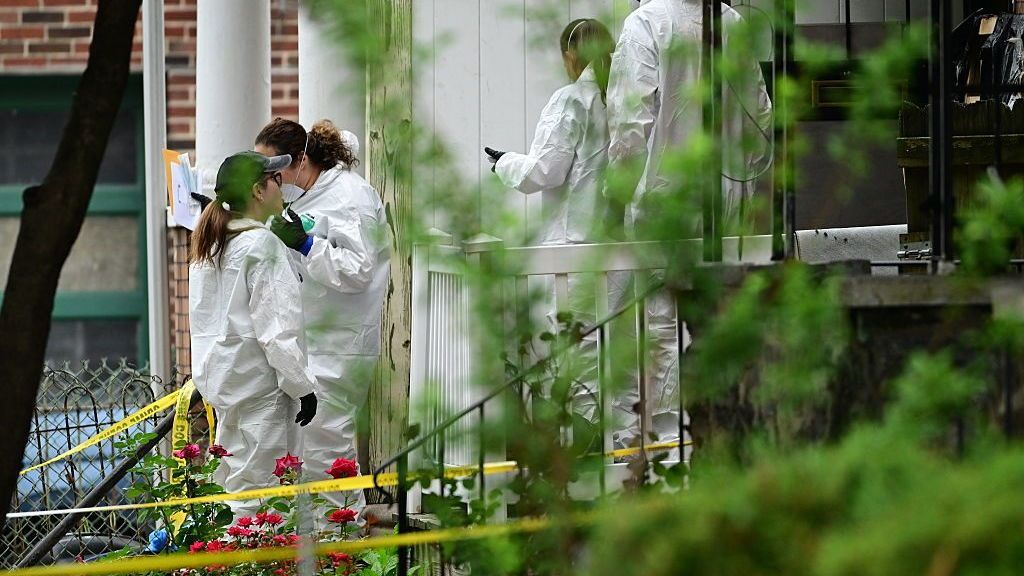
    Prosecutors have made public never-before-seen closed-circuit security footage that captures the chaotic four-second encounter of an alleged assassination attempt targeting former President Donald Trump during a high-profile Washington press gala. The incident unfolded Saturday at the Washington Hilton, where Trump was in attendance at the annual White House Correspondents’ Association dinner. The newly released video shows 31-year-old Cole Tomas Allen, the accused attacker, bursting out of a hotel doorway and charging straight through a secured checkpoint while carrying a long-barrelled weapon. The footage captures a responding security agent opening fire on the sprinting suspect as Allen raises his firearm. The short clip does not clarify whether Allen successfully discharged his weapon, nor does it include the sequence investigators previously described where the suspect was tackled and taken into custody. Prosecutors additionally confirmed that the CCTV footage also captured Allen conducting pre-attack surveillance of the venue one day before the dinner, which was hosted in the hotel’s basement ballroom. Court documents and official statements outline that Allen checked into the Washington Hilton as a paying guest 24 hours before he attempted to carry out the attack. Acting U.S. Attorney Todd Blanche explained that the suspect managed to run roughly 60 feet (18 meters) down the hotel corridor before law enforcement officers stopped and subdued him. Per official charging documents, one responding officer was struck by a single bullet fired from Allen’s weapon, though the round was stopped by the officer’s ballistic vest, preventing serious injury or death. Immediately after being hit, that same officer drew his service weapon and returned fire, shooting multiple rounds at Allen. Remarkably, none of the officer’s bullets struck Allen, Blanche confirmed. Allen has formally entered a plea of not guilty to the charge of attempted assassination of the former U.S. president. The release of the new footage comes as the legal process moves forward, offering new public context for the botched attack that unfolded near one of the nation’s most prominent sitting political leaders.

  • New CCTV footage appears to show Washington press dinner suspect shoot at agent

    New CCTV footage appears to show Washington press dinner suspect shoot at agent

    Freshly uncovered closed-circuit television footage has emerged that seemingly documents the moment a suspect opened fire on a United States Secret Service agent connected to a high-profile incident at a Washington press dinner. The release of this visual evidence comes directly on the heels of circulating claims that the agent’s injuries were not caused by the suspect, but rather by an accidental case of friendly fire from fellow law enforcement personnel.

    The incident, which unfolded at one of the capital’s prominent annual media gatherings, sparked immediate confusion over the sequence of events and who bore responsibility for the agent being wounded. Prior to the CCTV footage being made public, speculation had grown around the friendly fire narrative, with multiple sources suggesting that miscommunication between responding officers led to the agent being struck by a round from a fellow agent’s weapon. Now, this new video material offers what appears to be clearer evidence of the suspect’s actions, potentially upending the earlier claims that have dominated discussions of the incident.

    Law enforcement officials have not yet issued an official formal comment confirming the authenticity of the footage or addressing how it may alter the ongoing investigation into the shooting. The incident has already drawn significant public and political attention, given its location at a major Washington press event that typically draws high-level government officials and leading journalists from across the country.

  • Apple hails ‘extraordinary’ iPhone demand as boss Tim Cook heads out

    Apple hails ‘extraordinary’ iPhone demand as boss Tim Cook heads out

    On Thursday, three major U.S. tech firms unveiled their first-quarter financial results, revealing a mixed picture of performance across the consumer technology and social platform sectors, alongside key updates on leadership transitions and artificial intelligence strategy.

    Leading the pack was Apple, which delivered blowout growth driven by unprecedented demand for its flagship iPhone line. For the three months ending March 31, the Cupertino-based giant reported total revenue climbed 17% year-over-year to $111 billion (£81 billion), with Chinese market sales outpacing all other regions, surging 28% from the same period last year. Outgoing Chief Executive Tim Cook called recent consumer demand for the iPhone “extraordinary,” noting that the iPhone 17 launch marked the most popular new iPhone release in the company’s history.

    While iPhone momentum remained strong, sales of other Apple product lines, including Mac desktop and notebook computers and wearable devices such as the Apple Watch, held relatively flat over the quarter. Even so, Cook highlighted that the newly launched lower-priced MacBook Neo has seen “off the charts” consumer interest, helping the company hit an all-time record for first-time Mac buyers during the quarter.

    Looking ahead to the second half of 2025, Apple plans to roll out a major update to its Apple Intelligence AI system that will integrate the technology natively into its Siri voice assistant. Cook emphasized that Apple’s approach to AI differs sharply from many of its industry peers: instead of launching a standalone AI feature, the technology will be woven into the core functionality of all Apple devices, with a core focus on protecting user privacy that Cook says makes Apple platforms the best environment for AI experiences. Unlike competitors that have poured hundreds of billions of dollars into developing proprietary large language models from scratch, Apple has opted to partner with established AI leaders including OpenAI and Google to power select features. While critics have labeled Apple a late mover in the current generative AI boom, the partnership strategy also leaves Apple far less exposed to financial risk if industry AI expectations fail to materialize.

    The earnings call also marked one of Cook’s final public appearances as CEO, ahead of his planned transition to chairman of the board effective September 1. Cook used the occasion to praise incoming CEO John Ternus, a long-time Apple hardware executive who will take the top leadership role. “I know he will push us to go further than we think is possible in order to deliver products for our users,” Cook said. In his first public comments to analysts as incoming CEO, Ternus confirmed he would maintain Apple’s longstanding tradition of financial discipline and teased a robust pipeline of upcoming products, saying “We have an incredible roadmap ahead…suffice it to say this is the most exciting time in my career at Apple to be building products and services.”

    Also releasing quarterly results Thursday was social discussion platform Reddit, which reported explosive 69% year-over-year revenue growth to $663 million for the first quarter. CEO Ladd Huffman told analysts that weekly active users in the U.S. now hit 200 million—more than half of the country’s total population—and the company’s next major growth goal is to convert that weekly audience into daily active users, with a long-term target of 1 billion daily active users globally. “Daily active users is both our mission and also fuel for the business,” Huffman explained.

    A growing, high-margin revenue stream for Reddit is licensing its user-generated discussion data to AI developers that use the content to train large language models. Huffman noted that existing data licensing deals with OpenAI and Google have already proven valuable, and will become even more critical as the broader internet becomes increasingly “optimized for AI” rather than authentic human conversation. “At the end of the day, there is no artificial intelligence without actual intelligence,” he said.

    Not all big tech earnings were positive Thursday: after releasing its quarterly results, youth-focused gaming platform Roblox saw its share price drop 20% in after-hours trading. While the company reported growth in both total users and revenue over the quarter, CEO David Baszucki told investors that user growth came in well below internal projections, a slowdown he attributed to the recent rollout of stricter age verification checks on the platform. The new protocol restricted communication for users who had not completed age verification and altered the experience for verified users, leading to slower new user acquisition than expected. Investors also reacted negatively to the company’s revised full-year revenue forecast, which came in lower than earlier projections. Roblox, which has been publicly traded since 2021, has yet to report a single profitable quarter since its IPO.