标签: Europe

欧洲

  • Players will boycott a Slam ‘at some point’ – Sabalenka

    Players will boycott a Slam ‘at some point’ – Sabalenka

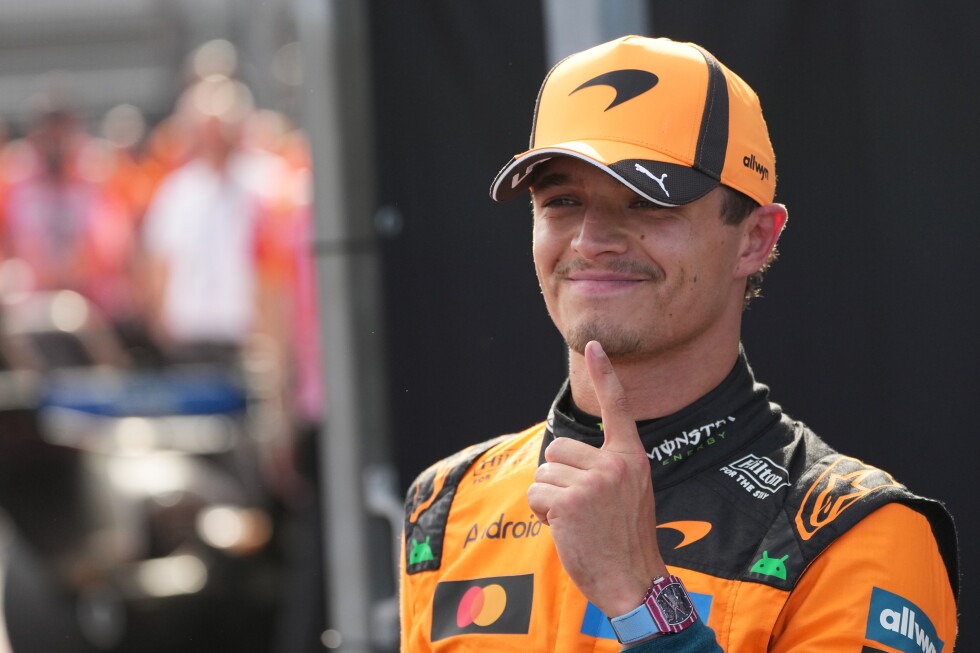
    As the world’s top female tennis players gather in Rome for the Italian Open, a simmering dispute over Grand Slam prize money and player representation has broken into the open, with world No. 1 Aryna Sabalenka becoming the first high-profile player to openly predict a player boycott of one of the sport’s most prestigious events in the near future.

    For weeks, top-10 ranked players from both the men’s and women’s tours have united behind a set of core demands: a larger share of the billions in revenue generated annually by the four Grand Slam tournaments, enhanced benefit contributions for lower-ranked players, and more input into key decisions like tournament scheduling. Until Sabalenka’s press conference in Rome, however, players had avoided publicly discussing strike action as a potential bargaining tool.

    “I think at some point we will boycott it. I feel like that’s going to be the only way to kind of fight for our rights,” the four-time Grand Slam singles champion, from Belarus, told reporters. “I feel like the show is on us. I feel like without us there wouldn’t be a tournament and there wouldn’t be that entertainment.”

    Her comments have exposed deep divisions within the women’s game over how far to push the sport’s governing bodies. World No. 4 Coco Gauff, the reigning French Open champion, quickly backed Sabalenka’s position, saying she could “100%” see herself joining a collective boycott if all players coordinate their action. Gauff added that progress on player demands has historically required collective organizing, noting that across other professional sports, meaningful change often only comes when players unionize to push for their shared interests.

    “If we all collectively agree, then yes. I wouldn’t want to be the only one, but we definitely can move more as a collective,” Gauff said. “From the things I’ve seen with other sports, usually to make massive progress and things like this, it takes a union. We have to become unionised in some way.”

    World No. 2 Elena Rybakina, champion of the 2022 Wimbledon, also signaled she would align with the majority of players if a boycott is called, saying she had no issue joining the action if most of the tour supported it. But other top players have pushed back on the idea of a tournament boycott, arguing that direct negotiation is a more effective and less extreme path forward.

    World No. 3 Iga Swiatek, a four-time Grand Slam winner, said she fully supports calls for increased prize money but views a boycott as an overstep that risks breaking down productive dialogue between players and tournament organizers. “I think the most important thing is to have proper communication and discussions with the governing bodies so we have some space to talk and maybe negotiate,” Swiatek said, adding she hopes productive talks can be held ahead of the upcoming French Open at Roland Garros. “But boycotting the tournament, it’s a bit extreme… So it’s really hard for me to say how it would work, if it’s even there on the picture. For now, I haven’t heard anything.”

    Former US Open champion Emma Raducanu went even further, saying she would refuse to participate in any boycott. Raducanu, who withdrew from the Italian Open 12 hours before Sabalenka’s comments due to lingering post-viral symptoms, said Grand Slams hold irreplaceable value for her that extends far beyond prize money. “It gives you something that money can’t and that is what is the most important to me, and what I value the most,” Raducanu told BBC Sport. “I wouldn’t be a part of [a boycott] but each to their own.”

    The current dispute was reignited earlier this month when organizers of the 2025 French Open announced a 9.5% increase in total prize money, a raise that players dismissed as far insufficient to meet their demands. Players are currently calling for 22% of Grand Slam tournament revenue to be allocated to player prize money, a significant increase from the current share. In recent months, other major have already announced higher prize pool increases: the 2025 Australian Open raised its total fund by nearly 16% year-over-year, while the 2024 US Open increased its pot by 20%. Wimbledon is set to announce its 2025 prize money allocations next month.

    Not all leading advocates of the prize money campaign back boycott threats. World No. 5 Jessica Pegula, one of the most vocal spokespeople for the players’ movement, told BBC Sport in March that she does not expect any player to actually strike against a Grand Slam, given how much players value competing at the sport’s biggest events. “We love playing the Slams – I don’t think anyone’s going to strike against the Slams,” Pegula said. “I just think it’s us asking for what we think we deserve, but I do think that if the men and the women can come together – which we have on that front – and keep pushing, there’s nothing wrong with us just asking for what we think is right.”

    Sabalenka, for her part, said she is optimistic the two sides can reach a resolution that works for all parties, but added that women players are ready to organize to push for fair treatment. “I just really hope that we at some point are going to get to the right decision, to the conclusion that everyone will be happy with,” the 28-year-old said. “I feel like nowadays, we girls can easily get together and go for this because some of the things I feel like it’s really unfair to the players.”

  • Romanian PM ousted in no-confidence vote

    Romanian PM ousted in no-confidence vote

    In a significant political shakeup for the Eastern European NATO and EU member state, Romanian parliament has removed Prime Minister Ilie Bolojan from office via a successful no-confidence vote, capping weeks of growing tensions within the ruling four-party coalition over planned austerity measures.

    The motion to remove Bolojan passed with a comfortable margin: 281 Members of Parliament voted in favor of ousting the liberal Prime Minister, far exceeding the 233-vote threshold required to pass the no-confidence measure. The outcome was set in motion last month, when Romania’s largest political bloc, the left-wing Social Democrats, abandoned Bolojan’s governing coalition and aligned with far-right opposition groups to initiate the vote.

    Public friction between the Social Democrats and Bolojan has simmered for months, centered on the Prime Minister’s austerity push designed to cut Romania’s budget deficit – currently the largest in the European Union. The austerity policies have disproportionately impacted the left-wing party’s core voter base, fueling resentment that eventually led to the coalition split. Even as the alliance fractured, Bolojan’s government had made incremental progress in shrinking the deficit before the political crisis erupted.

    Romanian President Nicusor Dan, who was elected to office in a tense 2025 vote after a far-right electoral win the prior year was annulled over proven allegations of campaign fraud and Russian interference, has moved quickly to reassure both domestic stakeholders and international allies that Romania will maintain its steadfast pro-Brussels policy course. As a border state sharing a frontier with war-torn Ukraine and a key member of both the EU and NATO, the country’s geopolitical alignment carries major regional significance.

    Dan confirmed Tuesday that political negotiations to form a new government will be challenging, but called it his constitutional duty and the responsibility of all Romanian parties to guide the nation along a stable path. He is now widely expected to begin the process of building a new pro-EU coalition under a new prime minister, with the Social Democrats already signaling they are open to rejoining such an alliance under alternative leadership. Current expectations point to Dan nominating either another member of Bolojan’s liberal party or a non-partisan technocrat to fill the prime minister role. Bolojan will remain in a caretaker capacity until the new government wins parliamentary approval.

    The 10-month-old Bolojan-led coalition originally took power with the explicit goal of checking the growing influence of the far-right Alliance for Uniting Romanians (AUR), which currently holds one-third of all parliamentary seats. While a snap general election was not called following the no-confidence vote – with the next scheduled national election not due until 2028 – the ongoing political turbulence has already sparked concern among global financial markets. Analysts and investors worry that the instability could derail Romania’s commitment to deficit reduction, a key requirement under EU fiscal rules. Even before Tuesday’s vote, the Romanian national currency, the leu, dropped to an all-time low against the euro, reflecting market anxiety over the political impasse.

  • German car-ramming suspect’s motive remains unclear. Officials say he had psychiatric treatment

    German car-ramming suspect’s motive remains unclear. Officials say he had psychiatric treatment

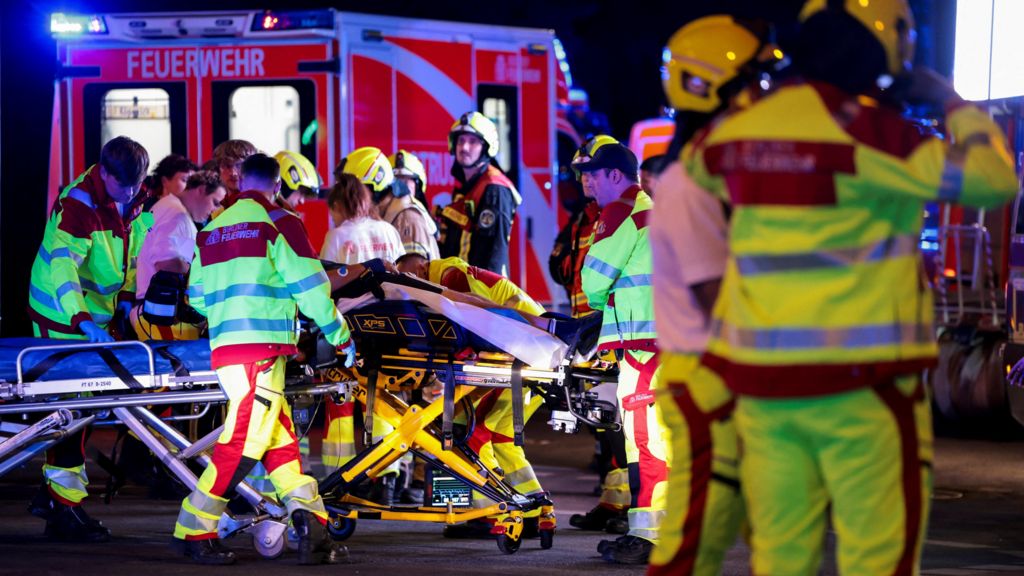
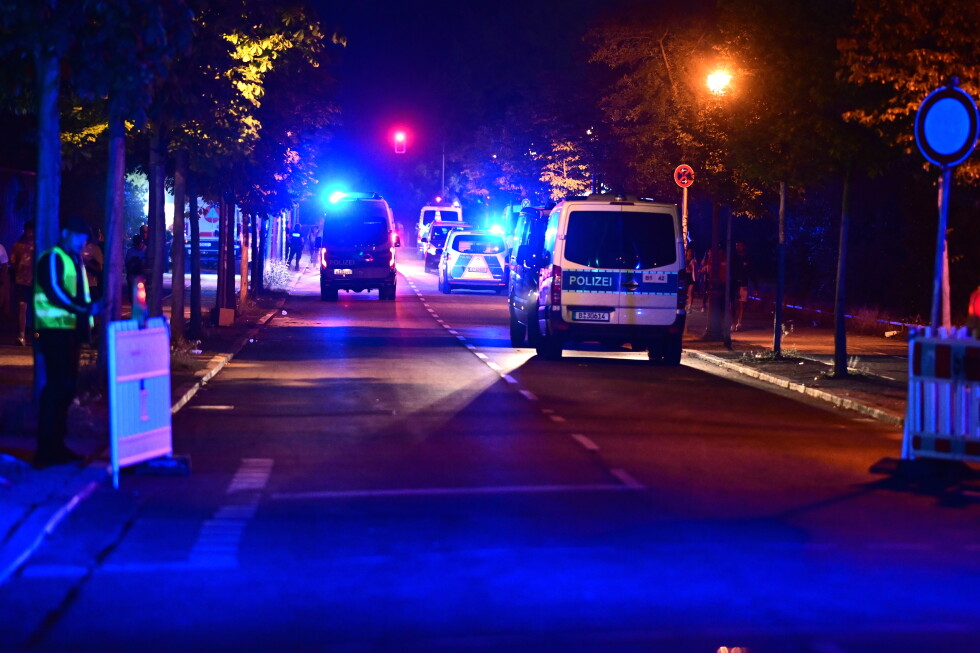
    BERLIN – Investigators working on the deadly car-ramming attack that shook Leipzig’s busy central shopping district last week have released key updates on Tuesday, confirming the incident left two civilians dead and does not appear tied to ideological, political or religious extremism. Authorities have instead highlighted that the 33-year-old German suspect, who was taken into custody on Monday afternoon, recently completed a voluntary inpatient stay at a psychiatric hospital.

    According to official accounts, the suspect drove his vehicle hundreds of meters through a crowded pedestrian shopping street before police intervened to stop him and place him under arrest. The confirmed fatalities are a 63-year-old German woman and a 77-year-old German man, while six additional pedestrians sustained injuries in the attack, two of which are categorized as serious.

    The suspect currently faces formal charges of murder and attempted murder, with law enforcement confirming they have concluded the ramming was a deliberate act of violence. As of Tuesday, the full motive behind the attack remained under active investigation.

    In a joint statement released by police and public prosecutors, officials confirmed there is no current evidence linking the attack to political or religious extremism. The suspect had already come to law enforcement’s attention earlier this year, however, following reports of threats and defamatory offenses committed against other individuals.

    On April 17, police responded to a phone call placed by the suspect himself. Following the response, the man agreed to voluntarily admit himself to a specialized psychiatric hospital for treatment focused on his acute psychological condition. He remained in inpatient care until last Wednesday, when he was discharged. Investigators have confirmed the suspect has no prior criminal convictions, and there were no other open legal cases against him leading up to the attack.

    German national news agency dpa quoted the Saxony State Ministry of Social Affairs confirming that during his inpatient treatment, the man did not display any behavior that indicated he posed a danger to himself or the general public. Medical officials also determined there was no clinical justification to extend his stay or block his discharge from the facility.

  • Zelensky condemns Russian ‘utter cynicism’ as it strikes ahead of truce

    Zelensky condemns Russian ‘utter cynicism’ as it strikes ahead of truce

    In a dramatic escalation of hostilities just days before competing unilateral ceasefires are set to take effect, overnight combined Russian missile and drone attacks across Ukraine have left five civilians dead and dozens more injured, drawing sharp condemnation from Ukrainian President Volodymyr Zelensky, who blasted Moscow’s actions as brazen political cynicism.

    The violence erupted as both sides moved to announce unilateral truce plans tied to Russia’s upcoming May 9 Victory Day celebrations, which mark the Soviet Union’s defeat of Nazi Germany in World War II. Russia first announced a 36-hour ceasefire to run May 8-9, threatening a devastating massive missile strike on central Kyiv if Ukraine violated the pause. Kyiv responded by announcing its own open-ended ceasefire set to begin at midnight May 6, stating it would match Moscow’s actions symmetrically and urging Russia to embrace genuine diplomatic negotiations to end the conflict.

    Zelensky condemned the timing of the latest deadly strikes, arguing that Russia’s request for a wartime lull to host its state propaganda celebrations is made hollow by daily attacks in the lead-up to the holiday. “It’s utter cynicism to ask for silence to hold propaganda celebrations and to launch such missile-drone attacks every day beforehand,” Zelensky said in remarks following the attacks. In a post on his Telegram channel, he added, “We believe that human life is of incomparably greater value than the ‘celebration’ of any anniversary,” and called on Russia to lay down its arms and enter good-faith peace talks.

    Analysts view Ukraine’s open-ended truce offer as a strategic move to frame Kyiv as willing to pursue an immediate, lasting end to hostilities, shifting all blame for any future truce violations to Russia. Unlike a mutually negotiated ceasefire, both plans announced this week are unilateral, with no agreement reached between the warring parties on terms, duration, or international monitoring of the pause.

    Even as the ceasefire plans were announced, Ukraine carried out its own wave of deep-strike aerial attacks on Russian territory ahead of its truce taking effect. The strikes targeted an industrial zone in Kirishi, located in Russia’s Leningrad region, and a military component manufacturing factory in Cheboksary, in the Chuvash Republic roughly 1,500 kilometers from the front lines of the war. Zelensky confirmed that Ukraine used domestically produced Flamingo cruise missiles for the Cheboksary strike, and an unverified nighttime video circulating online shows a fast-moving aerial object followed by a large explosion at the site.

    Russia’s defense ministry quickly issued a statement claiming it had downed six Ukrainian Flamingo missiles alongside 601 Ukrainian drones across Russian territory. On Tuesday morning, all three of Moscow’s major commercial airports were forced to temporarily suspend operations amid drone threats, and Moscow Mayor Sergei Sobyanin later confirmed that four Ukrainian drones had been intercepted and downed near the capital.

    The latest exchange of strikes comes amid clear signs of rising nervousness in the Kremlin ahead of this year’s Victory Day celebrations. Since Vladimir Putin rose to power in the early 2000s, the May 9 parades have grown increasingly large and elaborate, serving as a major showcase of Russian national pride and military power. This year, however, the Kremlin announced that the iconic Red Square central parade would be significantly scaled back, with all heavy military hardware pulled from display, citing what it calls a “terrorist threat” from Ukraine. Russian officials have also warned Moscow residents that mobile internet access will be limited or fully cut off across parts of the capital in the days leading up to May 9.

    Zelensky seized on the scaled-back celebrations to argue that Russia’s need for a Ukrainian ceasefire to hold its holiday event exposes the weakness of the Kremlin’s position. “The fact Russia felt it couldn’t hold a parade in Moscow without the goodwill of Ukraine [to observe a ceasefire] meant that it was time for Russian leaders to take steps to end their war,” he said.

    Ukraine has ramped up its long-range deep-strike drone campaign against Russian targets in recent weeks, with repeated successful attacks on Russian energy infrastructure and oil refineries that have disrupted portions of Russia’s key oil export trade. Modern Ukrainian drones are now capable of flying hundreds of kilometers deep into Russian territory, often bypassing Russian air defense systems: just on Monday, one Ukrainian drone struck a high-rise residential building in central Moscow, causing damage and raising alarm among Russian urban residents.

    For its part, Russia has continued its steady campaign of strikes against Ukrainian civilian infrastructure and population centers, which have killed and maimed thousands of Ukrainian civilians since the full-scale invasion began in February 2022, with civilian casualties reported across the country on an almost daily basis.

  • Counterterror police probe arson attack at a former London synagogue amid antisemitic attacks

    Counterterror police probe arson attack at a former London synagogue amid antisemitic attacks

    LONDON – Counterterrorism law enforcement agents launched an investigation Tuesday into a deliberate arson attack targeting a disused synagogue in East London, as Prime Minister Keir Starmer convened an emergency gathering of Jewish community leaders to address an unprecedented wave of antisemitic violence that has spread alarm across Britain’s Jewish population.

    The Metropolitan Police confirmed the attack, which took place at the shuttered Whitechapel neighborhood synagogue, caused only minor damage to the building’s front gates and entrance lock, with no injuries reported among any bystanders or local residents.

    This latest incident marks the fifth act of targeted violence against Jewish-linked sites in the United Kingdom since March, when four ambulances operated by a UK Jewish charity were destroyed in a deliberate fire attack. In the months that followed, an active synagogue was struck by a firebomb, multiple other Jewish community spaces have been targeted in attempted arson plots, and last week two Jewish men were stabbed in an attack police have formally classified as an act of terrorism.

    Addressing community leaders during the closed-door meeting, Starmer framed the rising violence as a national crisis affecting all Britons, not just the Jewish population. “It is part of a pattern of rising antisemitism that has left our Jewish communities feeling frightened, angry, and asking whether this country, their home, is safe for them,” Starmer said. “These disgusting attacks are being made against British Jews. But, make no mistake, this crisis — it is a crisis for all of us.”

    Data collected by the Community Security Trust, a leading British charity that monitors antisemitism and protects Jewish communities, shows reported antisemitic incidents have skyrocketed across the UK since the October 7, 2023, Hamas attack on southern Israel and the subsequent Israeli military campaign in Gaza. The organization recorded 3,700 antisemitic incidents nationwide in 2025, a more than 120% jump from the 1,662 incidents documented in 2022.

    Investigators are currently examining potential links to foreign interference, after the latest string of attacks began following the February 28 start of open conflict involving Iran. Law enforcement officials are exploring whether the attacks are being orchestrated by Iranian proxy groups. A pro-Iranian faction calling itself Harakat Ashab al-Yamin al-Islamia – the Islamic Movement of the Companions of the Right – has already claimed responsibility for multiple recent attacks in the UK. The group has also taken credit for similar attacks targeting Jewish and Israeli-linked sites including houses of worship, businesses, and financial institutions across multiple European countries in recent months.

    “One of the lines of inquiry is whether a foreign state has been behind some of these incidents,” Starmer confirmed, issuing a firm warning to any foreign power attempting to sow unrest in British society. “Our message to Iran, or to any other country that might seek to foment violence, hatred or division in society, is that it will not be tolerated.”

    The prime minister outlined a series of new policy measures to combat rising antisemitic hate crime, including mandatory public reporting of antisemitism incidents on university campuses, with requirements for higher education institutions to implement concrete intervention strategies to curb hate speech and violence. The government also announced it will pull public arts funding from any individual or organization that promotes antisemitic rhetoric.

    Following last week’s fatal stabbing of two Jewish men, the UK government elevated the country’s national terror threat level from “substantial” to “severe” — the second-highest ranking on the government’s five-tier threat scale. A raised severe rating indicates that intelligence agencies assess a terrorist attack to be highly likely within the next six months.

    Government officials clarified the threat level adjustment was not driven solely by the recent stabbings, but also reflected elevated risks from both Islamist and extreme right-wing terrorist actors operating as individuals and small unaffiliated cells based within the UK’s borders.

  • Romania’s prime minister fights for survival as no-confidence motion is debated in Parliament

    Romania’s prime minister fights for survival as no-confidence motion is debated in Parliament

    Romania’s pro-European center-right government, led by Prime Minister Ilie Bolojan of the National Liberal Party (PNL), faces a defining no-confidence motion on Tuesday that could oust the administration less than 12 months after it took office, bringing fresh political instability to the Eastern European EU member state.

    The motion, submitted to Romanian parliament last week, is a joint push by two unlikely allies: the leftist Social Democratic Party (PSD), a former coalition partner that exited the governing bloc in late April, and the hard-right opposition Alliance for the Unity of Romanians (AUR). To succeed, the vote requires a minimum of 233 votes in favor from sitting lawmakers, and both opposition parties have already claimed they have secured enough backing to pass the measure.

    Romania has been mired in persistent political uncertainty since the December 2024 annulment of its presidential election. Beyond the political turbulence, the country is also grappling with severe economic headwinds: it holds one of the largest budget deficits across the European Union, faces soaring inflation, and is currently stuck in a technical recession. When the ruling coalition was inaugurated last June, its top policy pledge was to cut the ballooning national deficit. But tensions over the austerity reforms implemented to hit that target ultimately split the coalition: the measures include tax increases, freezes on public sector wages and pensions, public spending cuts, and reductions to civil service roles, and PSD has repeatedly clashed with Bolojan over these policies.

    Addressing parliament on Tuesday ahead of the vote, Bolojan slammed the no-confidence motion as “cynical and artificial”, arguing it was drafted by actors unfamiliar with the daily work of governing. “It is cynical, because it does not take into account the context in which we find ourselves,” he said. “I assumed the position of prime minister, being aware that it comes with enormous pressure and that I would not receive applause from the citizens. But I chose to do what was urgent and necessary for our country.”

    Bolojan added that the tough but necessary fiscal policies his government implemented had already “regained the trust of the markets in the Romanian government”. For its part, PSD argues the prime minister has “failed to implement any genuine reform” over his 10 months in office, and claims the country needs a leader “capable of collaboration”.

    AUR leader George Simion struck a populist tone in his parliamentary address, arguing that voters “supported and wanted water, food, energy, but had received taxes, war and poverty.” “We assume the future of this country, a future government and restore the hope of the Romanians,” Simion said. “Romania must go back to the vote of the Romanians.”

    If the motion passes and Bolojan is removed from office, any new pro-European parliamentary majority will still require the participation of PSD. The party has repeatedly ruled out entering into a formal governing coalition with AUR, a stance backed by the presidency, which has confirmed it would never endorse an official PSD-AUR cabinet.

    Cristian Andrei, a political consultant based in Bucharest, projected the crisis will most likely end in a prolonged political stalemate. “No one has a majority, or a coalition, and it will take the president weeks to find such a majority and name a new prime minister, prolonging the indecision,” Andrei explained.

    He outlined two potential paths forward if Bolojan steps down, both of which carry significant hurdles: a reshuffled coalition made up of the same original partners but led by a new prime minister, or a minority cabinet led by PSD with informal support from populist groups including AUR and smaller parliamentary factions. A rotation of the prime ministerial post from PNL to PSD was already scheduled for 2027 as part of the original power-sharing agreement between the two former allies, with a general election set to take place in 2028.

    This report was contributed by Stephen McGrath from Leamington Spa, England.

  • Zelenskyy slams Russia’s ‘utter cynicism’ as strikes kill 5 in Ukraine before brief truce takes hold

    Zelenskyy slams Russia’s ‘utter cynicism’ as strikes kill 5 in Ukraine before brief truce takes hold

    Fresh waves of coordinated Russian missile and drone attacks targeting Ukraine’s critical energy infrastructure killed at least five civilians and left 39 others injured in overnight strikes between Monday and Tuesday, Ukrainian officials confirmed this week.

    The assault came only days after Russia announced a two-day unilateral ceasefire set to begin Friday, timed to align with Moscow’s annual May 9 celebrations marking the 1945 defeat of Nazi Germany in World War II. Ukrainian President Volodymyr Zelenskyy condemned the simultaneous attacks and upcoming truce announcement as a demonstration of Moscow’s “utter cynicism,” pointing out the brazen contradiction between launching deadly strikes days before a self-declared pause in fighting.

    “Russia could cease fire at any moment, and this would stop the war and our responses,” Zelenskyy wrote in a post on social platform X. “Peace is needed, and real steps are needed to achieve it. Ukraine will act in kind.”

    Shortly after Russia made its truce declaration, Zelenskyy announced that Ukraine would implement its own reciprocal ceasefire starting at 12 a.m. Wednesday, without specifying an end date for the Kyiv-proposed pause. This latest exchange of ceasefire proposals fits a long-established pattern throughout the more than two-year full-scale invasion: Russia has repeatedly announced short, unilateral holiday ceasefires — most recently for Orthodox Easter — that have failed to deliver any lasting de-escalation, amid pervasive, deep-rooted mistrust between the two governments.

    The Russian Defense Ministry’s truce statement included a warning that Russian forces would respond with immediate force if Ukrainian troops attempted to disrupt Victory Day events during the planned pause.

    According to Ukraine’s Air Force, Russian forces launched 11 Iskander-M ballistic missiles and 164 attack drones in the overnight strikes, including an upgraded jet-powered variant of the Iranian-made Shahed drone widely used by Russian forces. Air defense crews successfully intercepted 149 drones and one incoming missile, while two additional ballistic missiles malfunctioned and failed to hit their intended targets. Nonetheless, many projectiles penetrated Ukrainian defenses to strike critical infrastructure.

    For months, Russian forces have systematically targeted Ukraine’s energy network as part of a sustained campaign to disrupt civilian life and energy supplies ahead of seasonal peak demand. Tuesday’s strikes hit natural gas production facilities in Ukraine’s central Poltava region and northeastern Kharkiv region, according to Naftogaz Group, Ukraine’s state-owned national energy company. The company confirmed that its infrastructure has been targeted 107 times by Russian strikes since the start of 2024 alone.

    Zelenskyy called the strike on the Poltava facility “especially vile,” revealing that Russian forces launched a second missile at the same site while first responders were already on the ground conducting rescue operations after the initial attack. Ukrainian Prime Minister Yulia Svyrydenko noted that while energy facilities, oil and gas infrastructure, railways, and industrial sites were the primary intended targets of the overnight assault, the strikes also damaged civilian residential buildings, commercial businesses, and public transportation networks. “Russia’s ceasefire proposals remain only statements,” Svyrydenko added, dismissing Moscow’s announcement as empty rhetoric.

    Alongside defensive efforts to repel the Russian strikes, Ukraine has maintained its own campaign of long-range drone attacks targeting Russian rear-area infrastructure, with a growing focus on Russian oil and energy facilities. In overnight attacks on Russian territory, the Russian Defense Ministry reported that its air defense systems destroyed 289 Ukrainian drones across 18 different Russian regions. Drones were also intercepted over the Azov Sea and the Crimean Peninsula, which Russia illegally annexed from Ukraine in 2014.

    Regional officials confirmed that a Ukrainian drone attack wounded three people in Cheboksary, a city located more than 900 kilometers (560 miles) east of Moscow far from the front lines of the war. Another wave of drones targeted the Kirishi oil refinery in Russia’s Leningrad region, near St. Petersburg, igniting a large fire in the facility’s industrial zone. Regional Governor Alexander Drozdenko reported that 29 incoming drones were shot down during the attack, and no casualties were recorded at the refinery site.

    The escalation of cross-border strikes comes amid heightened global attention on the trajectory of the war, as both sides adjust their military strategies ahead of potential upcoming peace negotiations and seasonal battlefield shifts. The Associated Press continues to provide ongoing coverage of the Russia-Ukraine conflict at its dedicated hub.

  • ‘Don’t forget about Ukraine’, says charity

    ‘Don’t forget about Ukraine’, says charity

    For more than two years, a small UK-based humanitarian organization has maintained an unbroken lifeline of support for Ukrainian civilians and emergency responders caught in the crossfire of the ongoing Russian-Ukrainian war, even as shifting global attention and economic pressures have put its mission under growing strain.

    Hope and Aid Direct, a volunteer-run charity headquartered in Ingatestone, Essex, has delivered more than 100 trucks of critical supplies to Ukraine since the full-scale invasion began in 2022, averaging two aid convoys per week. To date, the organization has shipped a total of 620 tonnes of essential goods, ranging from hospital beds and pharmaceutical supplies to 50 power generators, 1,500 fire extinguishers, and over 5,000 pieces of high-visibility safety gear for first responders clearing rubble after Russian drone and missile strikes.

    Founded more than 25 years ago, Hope and Aid Direct has a long track record of delivering aid to vulnerable communities across conflict zones including the Balkans, Gaza, and the Calais refugee camp. Since the outbreak of war in Ukraine, however, the charity has redirected nearly all its operations to support Ukrainians facing humanitarian catastrophe.

    Despite this consistent commitment, the charity now faces a cascade of challenges that threaten its ability to keep aid moving. Founder Charles Storer MBE told the BBC that public donations have fallen sharply in recent years, driven in large part by the global cost-of-living crisis that has stretched household budgets across the UK. Compounding that financial strain, rising fuel costs spurred by the ongoing conflict in the Middle East have pushed up transportation costs for the organization’s aid convoys.

    While the charity has historically leveraged empty return trips of commercial trucks that deliver goods to the UK from Ukraine to keep shipping costs low, Storer noted that carriers now demand higher fees to offset fuel price increases. The organization also receives significant in-kind donations from UK businesses, such as gently used mattresses from hotel chain Premier Inn that are delivered to Ukrainians who have lost their homes in the conflict. Storer emphasized that almost every type of donation is useful: for Ukrainians who have lost everything to bombing and displacement, virtually any item meets an urgent unmet need.

    Adding to the charity’s current pressures, it will soon lose its free warehouse space near Chelmsford, Essex, when the farm that hosts the facility needs the land back for grain storage starting in June. For years, the charity has operated without rent costs, but a new permanent warehouse would cost between £15,000 and £20,000 annually — a sum Storer says is unjustifiable for a volunteer-run organization that relies entirely on public donations to fund its aid work. Storer added that securing a stable, long-term storage space would actually allow the charity to dramatically scale up its aid deliveries, making a new permanent facility a critical priority for the organization’s mission.

    Storer’s core message to the British public is urgent: the humanitarian crisis in Ukraine remains severe, and it must not be sidelined by growing media and public focus on new conflicts elsewhere. “The message is very simple — people out there are still desperately in need of help,” he said. While he remains confident the charity can continue its operations, rising costs mean more donations are urgently needed to sustain the program. The charity sent its 102nd aid truck to Ukraine on April 30, marking another milestone in its consistent support for the country.

  • Armenia hosts a historic EU summit as it charts a course away from Russia

    Armenia hosts a historic EU summit as it charts a course away from Russia

    On Tuesday, the Armenian capital of Yerevan played host to an unprecedented event: the first-ever bilateral summit between the South Caucasus nation and the European Union. This milestone comes on the heels of the eighth gathering of the European Political Community (EPC), which brought dozens of senior European leaders to Yerevan just one day earlier, where discussions centered on pressing European security challenges and escalating tensions linked to the Israel-Iran conflict.

    The back-to-back high-profile meetings put a public spotlight on Armenia’s deliberate diplomatic reorientation toward the West, a shift that has accelerated after bitter tensions with its long-standing strategic partner Russia. Relations between Moscow and Yerevan collapsed into open friction in 2023, when neighboring Azerbaijan reclaimed full control over the disputed Karabakh region, ending 30 years of separatist rule by ethnic Armenian forces.

    In the wake of Azerbaijan’s military operation, Armenian leaders publicly accused Russian peacekeepers—stationed in Karabakh for decades to enforce a ceasefire—of failing to intervene to stop the advance. With Moscow already bogged down in its full-scale invasion of Ukraine, Russian officials rejected the accusations, arguing their peacekeeping contingent never received a mandate to engage in active combat. For regional analysts, the Karabakh conflict laid bare Russia’s waning reliability as a security guarantor for Armenia.

    “This conflict was a belated demonstration that Russia is dangerously unreliable as a partner,” explained Richard Giragosian, director of the Yerevan-based Regional Studies Center, in an interview with the Associated Press.

    Since the 2023 Karabakh offensive, Prime Minister Nikol Pashinyan’s government has moved aggressively to deepen institutional and economic ties with the EU, a strategic shift that Brussels has enthusiastically embraced. Speaking at Monday’s EPC gathering, European Council President Antonio Costa praised Pashinyan for “the courageous political decisions he has taken to bring Armenia closer to the European Union,” adding that “the direction of travel is unmistakable.” Costa stressed that strengthening Armenian democracy and countering external interference and disinformation remained a top priority for the bloc.

    European Commission President Ursula von der Leyen also highlighted Armenia’s growing strategic importance to European trade and connectivity, noting that Yerevan plays a key role in European supply chains “specifically on the connectivity to the South Caucasus and Central Asia.”

    Over the past 18 months, Armenia has taken a series of concrete steps to align with Western institutions, moving far beyond rhetorical commitments. In 2023, Yerevan joined the International Criminal Court (ICC), a decision that drew sharp condemnation from Moscow, which labeled the move an “unfriendly step.” The ICC has an active arrest warrant outstanding for Russian President Vladimir Putin, accusing him of personal responsibility for the mass abduction of Ukrainian children during the ongoing war. In 2024, Armenia froze its participation in the Russia-led Collective Security Treaty Organization (CSTO), a Moscow-led military bloc designed for collective defense in the post-Soviet space. Earlier this year, the Armenian parliament passed a formal resolution enshrining the country’s official ambition to acquire full EU membership.

    Unlike the post-Soviet space, where the United States has often led Western engagement, Giragosian noted that it is the EU, not Washington, that has moved to fill the geopolitical vacuum left by Russia’s declining influence in Yerevan. “EU engagement is much more prudent and much more productive than the U.S. becoming involved, simply because European engagement is less provocative to Russia over the longer term,” he explained.

    Even as it pursues closer ties with Brussels, Armenia has been careful to avoid a complete break with Moscow, for the moment retaining its membership in the Russia-led Eurasian Economic Union (EEU), a single market bloc that also includes Belarus, Kazakhstan and Kyrgyzstan. Putin has publicly warned Yerevan that it cannot maintain membership in both blocs long-term, pointing out that Armenia currently receives heavily subsidized Russian natural gas priced far below European market rates. Pashinyan has acknowledged the eventual incompatibility of dual membership but has argued that Yerevan can continue to combine EEU membership with deepening cooperation with the EU for the foreseeable future.

    While Tuesday’s summit is not expected to immediately grant Armenia official EU candidate status, Giragosian framed the gathering as a deliberate step to deepen the already established EU-Armenia partnership, which has been governed by the Comprehensive and Enhanced Partnership Agreement that came fully into force in 2021. He added that the event’s greatest significance is symbolic: it sends a clear message to Moscow of Yerevan’s new geopolitical direction.

    Despite the symbolic weight of the summit, concrete deliverables are still expected, including new EU financing for domestic Armenian reforms and additional military assistance through the European Peace Facility, the bloc’s primary fund for supporting Ukraine’s defense. The EU has already operated a long-standing monitoring mission along Armenia’s border with Azerbaijan, and a new mission targeting hybrid threats was recently approved by Brussels.

    For Pashinyan, who has held office since 2018 and faces critical parliamentary elections in June, the high-profile international gathering also delivers clear domestic political benefits, boosting his profile as a reliable leader for pro-Western voters. Giragosian noted that Pashinyan’s government is widely expected to retain power, as the fragmented Armenian opposition has failed to put forward a credible alternative policy platform.

    Giragosian also pushed back against common framing of Armenia’s foreign policy as a simple “pivot” from Russia to the West, arguing that Yerevan is pursuing a far more nuanced strategy. “Armenia is also pivoting beyond the black and white zero-sum game paradigm,” he said, pointing to Yerevan’s expanding diplomatic and economic ties to major Asian powers including Japan, South Korea and China. “This is not about replacing Russia with the West. This is much more innovative, much more sophisticated.”

    The summit takes place against a backdrop of heightened tensions between Brussels and Baku, as Azerbaijan has pushed back against recent European criticism of its treatment of ethnic Armenians. Last week, Azerbaijan’s foreign ministry summoned the EU ambassador to Baku to protest a recent European Parliament resolution that demanded the release of all Armenian prisoners of war and criticized human rights conditions for remaining ethnic Armenians in Karabakh. In response, Azerbaijani lawmakers voted to suspend all formal cooperation with the European Parliament.

    Addressing the EPC via video link, Azerbaijani President Ilham Aliyev accused European parliamentary bodies of “double standards” after the Parliamentary Assembly of the Council of Europe (PACE) imposed sanctions on Azerbaijan’s official delegation to the body.

    In Yerevan, small-scale protests unfolded outside the EPC summit venue, which was surrounded by heavy security. Demonstrators carried photographs of Armenian prisoners still being held in Azerbaijan, criticizing European leaders for prioritizing diplomatic relations over pressing for the detainees’ release. Aram Sargsyan, leader of Armenia’s Democratic Party and a prominent opposition figure, told local media that European officials were using the summit to signal support for Pashinyan ahead of the June election while “forgetting about the Armenians in prison in Azerbaijan.”

  • ‘Elephant in the room’ Trump looms over European attempt at unity

    ‘Elephant in the room’ Trump looms over European attempt at unity

    The shadow of U.S. President Donald Trump hung heavily over this week’s European Political Community (EPC) summit in Yerevan, Armenia, even as leaders stopped short of naming him directly during closed and open discussions. For attendees at the gathering, which brought together dozens of heads of state and government from across the continent, growing American disengagement from European security was the unmissable issue driving urgent talks of European strategic self-reliance.

    Addressing delegates on the opening day of the summit, French President Emmanuel Macron framed Europe’s decades-long over-dependence on Washington’s security guarantees as the “elephant in the room” that leaders could no longer afford to ignore. The gathering, which is structured as a less formal alternative to rigid institutional EU summits, was convened to address three core priorities: strengthening energy security across the continent, defending democratic institutions, and sustaining military and economic support for Ukraine amid its third year of defending against Russia’s full-scale invasion.

    The summit also marked a milestone for host nation Armenia, which will hold its first ever formal direct negotiation session with the European Union on Tuesday, a step that underscores the country’s accelerating westward political alignment. The move has already drawn sharp criticism from neighboring Russia, which has long viewed the South Caucasus nation as part of its traditional sphere of influence.

    Recent policy moves from the Trump White House have amplified the urgency of European calls for greater defense autonomy. Trump’s recent announcement that he will withdraw 5,000 U.S. troops and long-range deterrent missiles from bases in Germany — missiles deployed by predecessor Joe Biden explicitly to counter potential Russian aggression — has deepened European concerns about Washington’s commitment to regional security. Tensions rose further after German Chancellor Friedrich Merz, who was unable to attend the Yerevan summit, publicly criticized Trump’s military campaign against Iran as strategically unmoored. Trump hit back, dismissing Merz as ineffective, and German officials have since scrambled to de-escalate the public rift.

    NATO Secretary General Mark Rutte, who has long pursued a strategy of diplomatic outreach to Trump, acknowledged that alliance leaders are well aware of the U.S. president’s longstanding frustration with European defense spending levels, which he has repeatedly criticized as insufficient. “We have heard his frustrations,” Rutte told reporters on the sidelines of the summit.

    Beyond frictions with Washington, European leaders also confront a cascade of overlapping global challenges that threaten regional stability. The ongoing military conflict between the U.S.-Israel bloc and Iran, and the subsequent disruption to global oil supplies through the Strait of Hormuz, has sent ongoing economic ripples across Europe that continue to strain energy markets and economic growth. Meanwhile, the war in Ukraine grinds on, with Ukrainian President Volodymyr Zelensky using his address to the summit to urge allies to maintain unwavering pressure on the Kremlin ahead of a key decision point this summer.

    “This summer will be a moment when Vladimir Putin decides what to do next,” Zelensky told delegates. “We must push him toward diplomacy. Russia can’t afford new military equipment, which makes clear they are not as strong as they once projected to be.”

    The summit also signaled a notable shift in post-Brexit relations between the United Kingdom and the European Union, under new UK Prime Minister Keir Starmer. Starmer, who acknowledged that European alliances “are not where we want them to be” in comments widely interpreted as a reference to shifting U.S. policy, again called on European nations to accelerate efforts to strengthen their own defense capabilities. He has also made little secret of his ambition to deepen cooperation and even policy alignment with the bloc, a sharp break from the hardline Eurosceptic approach of his recent predecessors.

    Currently, the UK is in active negotiations to join an EU-led €90 billion (£78 billion) loan framework designed to provide long-term economic and military support to Ukraine. The UK has been one of Ukraine’s most steadfast allies since Russia’s 2022 invasion, but the move marks a growing shift toward coordinating that support through European institutional frameworks. Starmer defended the negotiations, noting that the agreement would deliver tangible benefits to both Kyiv and British workers. “It’s of great benefit to Ukraine, but also the jobs it’ll create in the United Kingdom,” he said. He declined to comment on media reports that the EU is demanding the UK pay roughly £1 billion ($1.3 billion) annually as part of a broader reset in bilateral relations, a demand that aligns with longstanding expert arguments that the UK must pay for access to European single market benefits.

    Experts and leaders alike acknowledge that forging genuine European strategic autonomy — freeing the continent from dependence on U.S. military power and the potential political leverage that comes with it — will be a decades-long project. For now, the bloc’s core hope is that incremental progress on developing independent European military capabilities will ease Trump’s frustrations, and keep Washington at least partially aligned with European interests as the continent confronts a growing array of interconnected security and economic challenges.