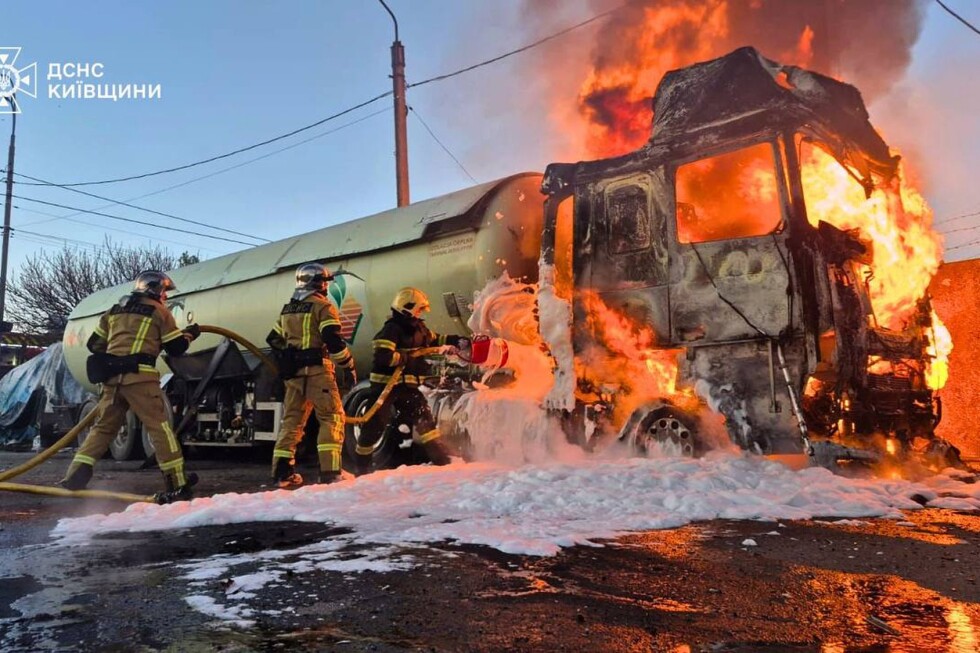
Fresh waves of coordinated Russian missile and drone attacks targeting Ukraine’s critical energy infrastructure killed at least five civilians and left 39 others injured in overnight strikes between Monday and Tuesday, Ukrainian officials confirmed this week.
The assault came only days after Russia announced a two-day unilateral ceasefire set to begin Friday, timed to align with Moscow’s annual May 9 celebrations marking the 1945 defeat of Nazi Germany in World War II. Ukrainian President Volodymyr Zelenskyy condemned the simultaneous attacks and upcoming truce announcement as a demonstration of Moscow’s “utter cynicism,” pointing out the brazen contradiction between launching deadly strikes days before a self-declared pause in fighting.
“Russia could cease fire at any moment, and this would stop the war and our responses,” Zelenskyy wrote in a post on social platform X. “Peace is needed, and real steps are needed to achieve it. Ukraine will act in kind.”
Shortly after Russia made its truce declaration, Zelenskyy announced that Ukraine would implement its own reciprocal ceasefire starting at 12 a.m. Wednesday, without specifying an end date for the Kyiv-proposed pause. This latest exchange of ceasefire proposals fits a long-established pattern throughout the more than two-year full-scale invasion: Russia has repeatedly announced short, unilateral holiday ceasefires — most recently for Orthodox Easter — that have failed to deliver any lasting de-escalation, amid pervasive, deep-rooted mistrust between the two governments.
The Russian Defense Ministry’s truce statement included a warning that Russian forces would respond with immediate force if Ukrainian troops attempted to disrupt Victory Day events during the planned pause.
According to Ukraine’s Air Force, Russian forces launched 11 Iskander-M ballistic missiles and 164 attack drones in the overnight strikes, including an upgraded jet-powered variant of the Iranian-made Shahed drone widely used by Russian forces. Air defense crews successfully intercepted 149 drones and one incoming missile, while two additional ballistic missiles malfunctioned and failed to hit their intended targets. Nonetheless, many projectiles penetrated Ukrainian defenses to strike critical infrastructure.
For months, Russian forces have systematically targeted Ukraine’s energy network as part of a sustained campaign to disrupt civilian life and energy supplies ahead of seasonal peak demand. Tuesday’s strikes hit natural gas production facilities in Ukraine’s central Poltava region and northeastern Kharkiv region, according to Naftogaz Group, Ukraine’s state-owned national energy company. The company confirmed that its infrastructure has been targeted 107 times by Russian strikes since the start of 2024 alone.
Zelenskyy called the strike on the Poltava facility “especially vile,” revealing that Russian forces launched a second missile at the same site while first responders were already on the ground conducting rescue operations after the initial attack. Ukrainian Prime Minister Yulia Svyrydenko noted that while energy facilities, oil and gas infrastructure, railways, and industrial sites were the primary intended targets of the overnight assault, the strikes also damaged civilian residential buildings, commercial businesses, and public transportation networks. “Russia’s ceasefire proposals remain only statements,” Svyrydenko added, dismissing Moscow’s announcement as empty rhetoric.
Alongside defensive efforts to repel the Russian strikes, Ukraine has maintained its own campaign of long-range drone attacks targeting Russian rear-area infrastructure, with a growing focus on Russian oil and energy facilities. In overnight attacks on Russian territory, the Russian Defense Ministry reported that its air defense systems destroyed 289 Ukrainian drones across 18 different Russian regions. Drones were also intercepted over the Azov Sea and the Crimean Peninsula, which Russia illegally annexed from Ukraine in 2014.
Regional officials confirmed that a Ukrainian drone attack wounded three people in Cheboksary, a city located more than 900 kilometers (560 miles) east of Moscow far from the front lines of the war. Another wave of drones targeted the Kirishi oil refinery in Russia’s Leningrad region, near St. Petersburg, igniting a large fire in the facility’s industrial zone. Regional Governor Alexander Drozdenko reported that 29 incoming drones were shot down during the attack, and no casualties were recorded at the refinery site.
The escalation of cross-border strikes comes amid heightened global attention on the trajectory of the war, as both sides adjust their military strategies ahead of potential upcoming peace negotiations and seasonal battlefield shifts. The Associated Press continues to provide ongoing coverage of the Russia-Ukraine conflict at its dedicated hub.