LONDON – Counterterrorism law enforcement agents launched an investigation Tuesday into a deliberate arson attack targeting a disused synagogue in East London, as Prime Minister Keir Starmer convened an emergency gathering of Jewish community leaders to address an unprecedented wave of antisemitic violence that has spread alarm across Britain’s Jewish population.
The Metropolitan Police confirmed the attack, which took place at the shuttered Whitechapel neighborhood synagogue, caused only minor damage to the building’s front gates and entrance lock, with no injuries reported among any bystanders or local residents.
This latest incident marks the fifth act of targeted violence against Jewish-linked sites in the United Kingdom since March, when four ambulances operated by a UK Jewish charity were destroyed in a deliberate fire attack. In the months that followed, an active synagogue was struck by a firebomb, multiple other Jewish community spaces have been targeted in attempted arson plots, and last week two Jewish men were stabbed in an attack police have formally classified as an act of terrorism.
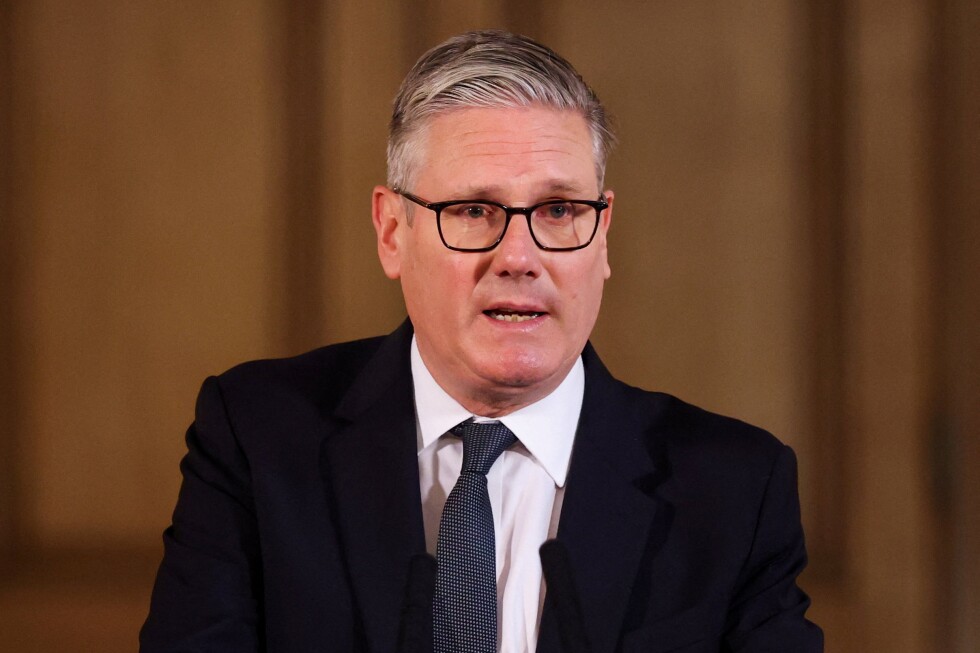
Addressing community leaders during the closed-door meeting, Starmer framed the rising violence as a national crisis affecting all Britons, not just the Jewish population. “It is part of a pattern of rising antisemitism that has left our Jewish communities feeling frightened, angry, and asking whether this country, their home, is safe for them,” Starmer said. “These disgusting attacks are being made against British Jews. But, make no mistake, this crisis — it is a crisis for all of us.”
Data collected by the Community Security Trust, a leading British charity that monitors antisemitism and protects Jewish communities, shows reported antisemitic incidents have skyrocketed across the UK since the October 7, 2023, Hamas attack on southern Israel and the subsequent Israeli military campaign in Gaza. The organization recorded 3,700 antisemitic incidents nationwide in 2025, a more than 120% jump from the 1,662 incidents documented in 2022.
Investigators are currently examining potential links to foreign interference, after the latest string of attacks began following the February 28 start of open conflict involving Iran. Law enforcement officials are exploring whether the attacks are being orchestrated by Iranian proxy groups. A pro-Iranian faction calling itself Harakat Ashab al-Yamin al-Islamia – the Islamic Movement of the Companions of the Right – has already claimed responsibility for multiple recent attacks in the UK. The group has also taken credit for similar attacks targeting Jewish and Israeli-linked sites including houses of worship, businesses, and financial institutions across multiple European countries in recent months.
“One of the lines of inquiry is whether a foreign state has been behind some of these incidents,” Starmer confirmed, issuing a firm warning to any foreign power attempting to sow unrest in British society. “Our message to Iran, or to any other country that might seek to foment violence, hatred or division in society, is that it will not be tolerated.”
The prime minister outlined a series of new policy measures to combat rising antisemitic hate crime, including mandatory public reporting of antisemitism incidents on university campuses, with requirements for higher education institutions to implement concrete intervention strategies to curb hate speech and violence. The government also announced it will pull public arts funding from any individual or organization that promotes antisemitic rhetoric.
Following last week’s fatal stabbing of two Jewish men, the UK government elevated the country’s national terror threat level from “substantial” to “severe” — the second-highest ranking on the government’s five-tier threat scale. A raised severe rating indicates that intelligence agencies assess a terrorist attack to be highly likely within the next six months.
Government officials clarified the threat level adjustment was not driven solely by the recent stabbings, but also reflected elevated risks from both Islamist and extreme right-wing terrorist actors operating as individuals and small unaffiliated cells based within the UK’s borders.