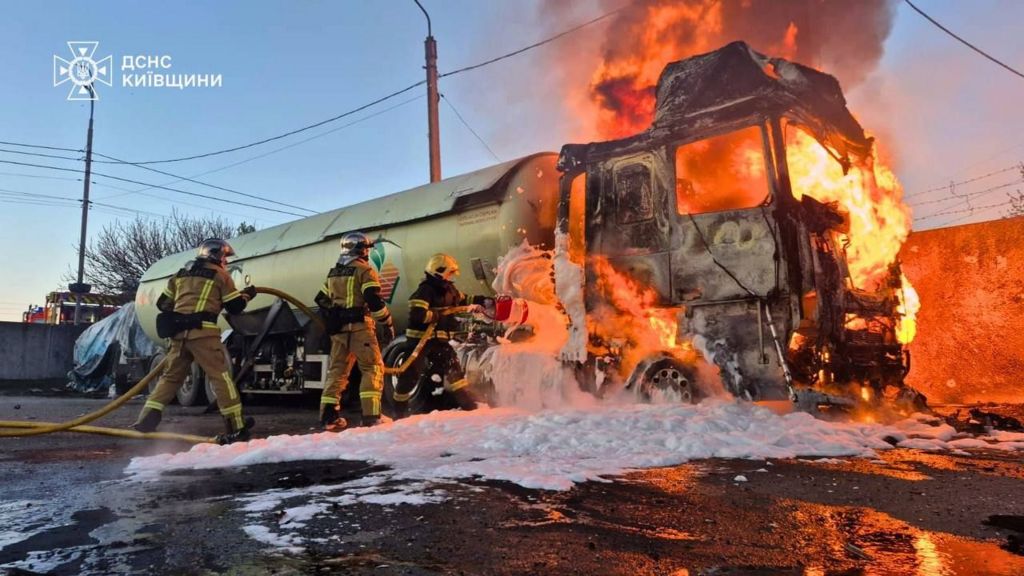
In a dramatic escalation of hostilities just days before competing unilateral ceasefires are set to take effect, overnight combined Russian missile and drone attacks across Ukraine have left five civilians dead and dozens more injured, drawing sharp condemnation from Ukrainian President Volodymyr Zelensky, who blasted Moscow’s actions as brazen political cynicism.
The violence erupted as both sides moved to announce unilateral truce plans tied to Russia’s upcoming May 9 Victory Day celebrations, which mark the Soviet Union’s defeat of Nazi Germany in World War II. Russia first announced a 36-hour ceasefire to run May 8-9, threatening a devastating massive missile strike on central Kyiv if Ukraine violated the pause. Kyiv responded by announcing its own open-ended ceasefire set to begin at midnight May 6, stating it would match Moscow’s actions symmetrically and urging Russia to embrace genuine diplomatic negotiations to end the conflict.
Zelensky condemned the timing of the latest deadly strikes, arguing that Russia’s request for a wartime lull to host its state propaganda celebrations is made hollow by daily attacks in the lead-up to the holiday. “It’s utter cynicism to ask for silence to hold propaganda celebrations and to launch such missile-drone attacks every day beforehand,” Zelensky said in remarks following the attacks. In a post on his Telegram channel, he added, “We believe that human life is of incomparably greater value than the ‘celebration’ of any anniversary,” and called on Russia to lay down its arms and enter good-faith peace talks.
Analysts view Ukraine’s open-ended truce offer as a strategic move to frame Kyiv as willing to pursue an immediate, lasting end to hostilities, shifting all blame for any future truce violations to Russia. Unlike a mutually negotiated ceasefire, both plans announced this week are unilateral, with no agreement reached between the warring parties on terms, duration, or international monitoring of the pause.
Even as the ceasefire plans were announced, Ukraine carried out its own wave of deep-strike aerial attacks on Russian territory ahead of its truce taking effect. The strikes targeted an industrial zone in Kirishi, located in Russia’s Leningrad region, and a military component manufacturing factory in Cheboksary, in the Chuvash Republic roughly 1,500 kilometers from the front lines of the war. Zelensky confirmed that Ukraine used domestically produced Flamingo cruise missiles for the Cheboksary strike, and an unverified nighttime video circulating online shows a fast-moving aerial object followed by a large explosion at the site.
Russia’s defense ministry quickly issued a statement claiming it had downed six Ukrainian Flamingo missiles alongside 601 Ukrainian drones across Russian territory. On Tuesday morning, all three of Moscow’s major commercial airports were forced to temporarily suspend operations amid drone threats, and Moscow Mayor Sergei Sobyanin later confirmed that four Ukrainian drones had been intercepted and downed near the capital.
The latest exchange of strikes comes amid clear signs of rising nervousness in the Kremlin ahead of this year’s Victory Day celebrations. Since Vladimir Putin rose to power in the early 2000s, the May 9 parades have grown increasingly large and elaborate, serving as a major showcase of Russian national pride and military power. This year, however, the Kremlin announced that the iconic Red Square central parade would be significantly scaled back, with all heavy military hardware pulled from display, citing what it calls a “terrorist threat” from Ukraine. Russian officials have also warned Moscow residents that mobile internet access will be limited or fully cut off across parts of the capital in the days leading up to May 9.
Zelensky seized on the scaled-back celebrations to argue that Russia’s need for a Ukrainian ceasefire to hold its holiday event exposes the weakness of the Kremlin’s position. “The fact Russia felt it couldn’t hold a parade in Moscow without the goodwill of Ukraine [to observe a ceasefire] meant that it was time for Russian leaders to take steps to end their war,” he said.
Ukraine has ramped up its long-range deep-strike drone campaign against Russian targets in recent weeks, with repeated successful attacks on Russian energy infrastructure and oil refineries that have disrupted portions of Russia’s key oil export trade. Modern Ukrainian drones are now capable of flying hundreds of kilometers deep into Russian territory, often bypassing Russian air defense systems: just on Monday, one Ukrainian drone struck a high-rise residential building in central Moscow, causing damage and raising alarm among Russian urban residents.
For its part, Russia has continued its steady campaign of strikes against Ukrainian civilian infrastructure and population centers, which have killed and maimed thousands of Ukrainian civilians since the full-scale invasion began in February 2022, with civilian casualties reported across the country on an almost daily basis.