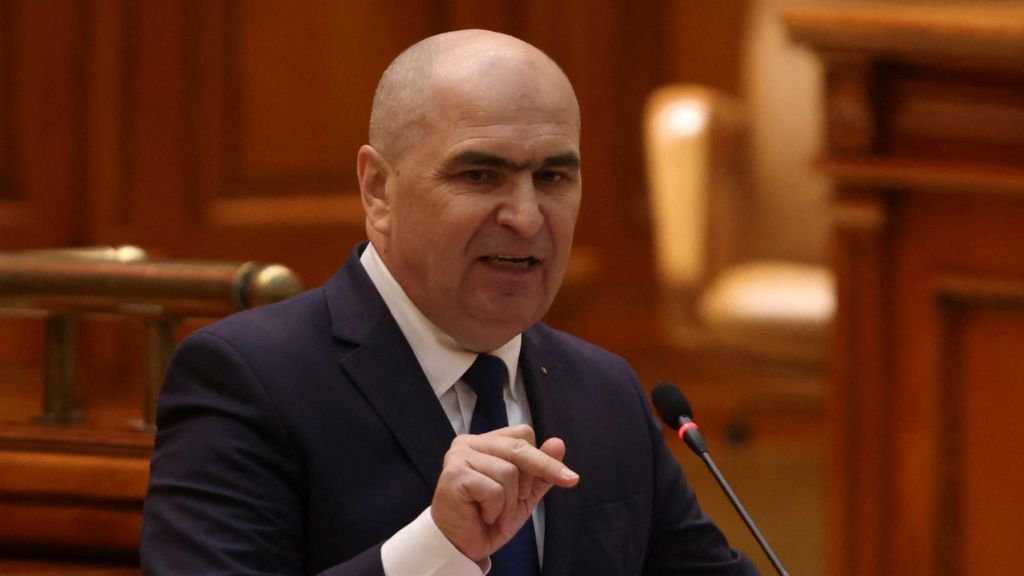
In a significant political shakeup for the Eastern European NATO and EU member state, Romanian parliament has removed Prime Minister Ilie Bolojan from office via a successful no-confidence vote, capping weeks of growing tensions within the ruling four-party coalition over planned austerity measures.
The motion to remove Bolojan passed with a comfortable margin: 281 Members of Parliament voted in favor of ousting the liberal Prime Minister, far exceeding the 233-vote threshold required to pass the no-confidence measure. The outcome was set in motion last month, when Romania’s largest political bloc, the left-wing Social Democrats, abandoned Bolojan’s governing coalition and aligned with far-right opposition groups to initiate the vote.
Public friction between the Social Democrats and Bolojan has simmered for months, centered on the Prime Minister’s austerity push designed to cut Romania’s budget deficit – currently the largest in the European Union. The austerity policies have disproportionately impacted the left-wing party’s core voter base, fueling resentment that eventually led to the coalition split. Even as the alliance fractured, Bolojan’s government had made incremental progress in shrinking the deficit before the political crisis erupted.
Romanian President Nicusor Dan, who was elected to office in a tense 2025 vote after a far-right electoral win the prior year was annulled over proven allegations of campaign fraud and Russian interference, has moved quickly to reassure both domestic stakeholders and international allies that Romania will maintain its steadfast pro-Brussels policy course. As a border state sharing a frontier with war-torn Ukraine and a key member of both the EU and NATO, the country’s geopolitical alignment carries major regional significance.
Dan confirmed Tuesday that political negotiations to form a new government will be challenging, but called it his constitutional duty and the responsibility of all Romanian parties to guide the nation along a stable path. He is now widely expected to begin the process of building a new pro-EU coalition under a new prime minister, with the Social Democrats already signaling they are open to rejoining such an alliance under alternative leadership. Current expectations point to Dan nominating either another member of Bolojan’s liberal party or a non-partisan technocrat to fill the prime minister role. Bolojan will remain in a caretaker capacity until the new government wins parliamentary approval.
The 10-month-old Bolojan-led coalition originally took power with the explicit goal of checking the growing influence of the far-right Alliance for Uniting Romanians (AUR), which currently holds one-third of all parliamentary seats. While a snap general election was not called following the no-confidence vote – with the next scheduled national election not due until 2028 – the ongoing political turbulence has already sparked concern among global financial markets. Analysts and investors worry that the instability could derail Romania’s commitment to deficit reduction, a key requirement under EU fiscal rules. Even before Tuesday’s vote, the Romanian national currency, the leu, dropped to an all-time low against the euro, reflecting market anxiety over the political impasse.