标签: Europe

欧洲

  • ADL reports a sharp drop in US antisemitic incidents in 2025, driven by a steep fall on campuses

    ADL reports a sharp drop in US antisemitic incidents in 2025, driven by a steep fall on campuses

    WASHINGTON — A new annual audit released Wednesday by the Anti-Defamation League (ADL) has found that the total number of antisemitic incidents across the United States fell sharply in 2025, marking the first decline in five years. The decrease was led by a dramatic 66% drop in incidents on U.S. college campuses, a shift that came after widespread pro-Palestinian protests in 2024 and subsequent administrative pressure from the White House under the Donald Trump administration.

    The organization’s 2025 audit counted 6,274 total incidents of antisemitic assault, harassment, and vandalism nationwide, a 33% pullback from 2024’s all-time record of 9,354 incidents. On college campuses alone, the numbers dropped even more steeply: after recording 1,694 antisemitic incidents in 2024, when pro-Palestinian and anti-Zionist protests spread across campuses amid the ongoing Israel-Hamas war in Gaza, that figure fell to just 583 in 2025. The decline followed coordinated action from hundreds of colleges and universities, which implemented new protest restrictions and policy changes under pressure from the Trump administration and advocacy from the ADL.

    When broken down by state, New York recorded the highest number of total antisemitic incidents in 2025 at 1,160, followed by California with 817 and New Jersey with 687.

    Even with the overall drop in incidents, the report confirms that 2025 was one of the most violent years on record for Jewish communities in the U.S. The audit counted 203 physical assaults, a new annual high, and three separate fatal attacks targeting Jewish people. These included a May shooting outside Washington D.C.’s Capital Jewish Museum that killed two people, and a June firebombing attack at a hostage awareness event in Boulder, Colorado that left an 82-year-old Jewish woman dead from her injuries.

    Speaking to the Associated Press, ADL CEO and National Director Jonathan Greenblatt emphasized that even the reduced 2025 numbers remain far above pre-war baseline levels. “Numbers that would have shocked us five years ago are now our floor,” Greenblatt said. “People are being murdered because of antisemitism on American soil, and thousands more are threatened.” He added that while any reduction in antisemitic harm is a welcome development, the current moment does not allow for complacency: even with the 66% drop, campus antisemitic incidents remain nearly four times higher than they were in 2021, before the outbreak of the Israel-Hamas war.

    The shifting share of Israel-linked antisemitic incidents reflects the changing landscape of hate speech and bias over the past two years. In 2024, 58% of all recorded antisemitic incidents were tied to criticism of Israel or Zionism, marking the first time since the annual audit launched in 1979 that Israel-related incidents made up a majority of total cases. That share fell to 45% in 2025, with the ADL recording an overall 67% drop in anti-Israel rallies that crossed into antisemitic rhetoric, and an 83% drop on campuses specifically.

    The ADL’s counting methodology has long remained at the center of a fierce, ongoing debate about where to draw the line between legitimate criticism of Israeli policy and antisemitic hate speech. The organization says it explicitly distinguishes between general criticism of Israeli government policy and antisemitic speech, but classifies vilification of Zionism — the ideological movement supporting a Jewish state in Israel — as a form of antisemitism. This framing has drawn criticism from a range of groups, including some Jewish and anti-Zionist activists, who argue the ADL’s criteria are overly broad and penalize protected political speech.

    Aryeh Tuchman, a former head of the ADL’s Center on Extremism who now directs the Nexus Center for Antisemitism, which promotes a more nuanced definition of antisemitism, noted that the ADL’s approach grows from legitimate concern for the safety of American Jewish communities, but that disagreement over the framework is valid. “There are a lot of people who would disagree with that. … It’s important that there be room for multiple approaches,” Tuchman said.

    In response to pressure from the ADL and the Trump administration on college campuses, the Council on American-Islamic Relations (CAIR) launched its Unhostile Campus Campaign, which advocates for protecting free speech and academic freedom for pro-Palestinian students, faculty, and staff. In CAIR’s recent reporting, the group named Columbia University, the City University of New York, and the University of Michigan as the schools it considers most hostile to pro-Palestinian viewpoints.

    The ADL’s new report comes amid a global surge in concern over rising antisemitism tied to the Israel-Hamas war. In the United Kingdom, Prime Minister Keir Starmer has called for stricter action against antisemitic chants at pro-Palestinian protests, after two Jewish men were stabbed in London in a recent attack. Senior British law enforcement officials have called the current moment the greatest ongoing threat to British Jewish communities in modern history, blaming social media platforms for normalizing antisemitic rhetoric. The UK has also seen a string of recent attacks targeting Jewish sites, including multiple arson attempts at London synagogues, and has raised its national terror threat level in response.

    In Australia, a national public inquiry into antisemitism is currently hearing testimony from Jewish communities after a December 2024 mass shooting at a Hanukkah celebration on Bondi Beach that killed 15 people. Witnesses have described growing fear and vulnerability amid a sharp nationwide rise in antisemitic incidents that dates back to the outbreak of the Israel-Hamas war in October 2023.

    A recent analysis from Tel Aviv University confirms that 2025 was the deadliest year for antisemitic attacks globally since 1994, when a bombing at a Jewish community center in Buenos Aires, Argentina killed 85 people. Combined, fatal attacks in the U.S., UK, and Australia claimed 20 lives in 2025, the highest annual death toll from antisemitic violence in more than three decades.

  • Russia ignores Ukraine’s unilateral ceasefire and attacks kindergarten

    Russia ignores Ukraine’s unilateral ceasefire and attacks kindergarten

    In a sharp escalation of hostilities just hours after Ukraine enacted its own unilateral ceasefire, Russian forces have launched a coordinated wave of drone and missile strikes across Ukrainian civilian and frontline areas, killing multiple civilians and drawing sharp condemnation from Ukrainian President Volodymyr Zelenskyy.

    Local officials in Ukraine’s northern Sumy region confirmed Wednesday morning that a direct strike on a local kindergarten claimed the life of one adult woman. No children were present on site at the time of the attack, limiting what could have been a far deadlier outcome.

    The breakdown in the temporary truce comes after both Russia and Ukraine announced competing unilateral ceasefires earlier this week, with no shared agreement on terms, duration or independent monitoring. Russia first declared a 36-hour truce spanning May 8 and 9 to coincide with its annual Victory Day commemorations marking the Soviet Union’s 1945 defeat of Nazi Germany, which will be capped Saturday by a traditional military parade on Moscow’s Red Square. Ukraine followed suit, announcing an open-ended ceasefire starting at midnight Tuesday, stating it would respond symmetrically to any Russian actions.

    Zelenskyy accused Russia of outright rejecting the opportunity to de-escalate and save civilian lives in a statement Wednesday morning. “Russia’s choice is an obvious spurning of a ceasefire and of saving lives,” the president said, adding that Ukraine would “decide on our further actions” after receiving updated evening briefings from military and intelligence commanders. Zelenskyy noted that Russian forces had launched “active hostilities and terrorist shelling” across the frontline, alongside dozens of drone and missile strikes targeting populated civilian areas.

    A wave of Russian attacks across Ukraine Tuesday left 27 civilians dead, including 12 people killed in strikes in the southern Zaporizhzhia region alone. Andriy Sybiha, Ukraine’s foreign minister, said the continued aggression laid bare the insincerity of Moscow’s ceasefire call. “Fake calls for a ceasefire on May 9th have nothing to do with diplomacy. Putin only cares about military parades, not human lives,” Sybiha said.

    This year’s Victory Day events in Russia, including the Red Square parade, have been scaled back dramatically, with officials citing a heightened “terrorist threat” from Ukraine. Residents of Moscow and St. Petersburg have also been notified that mobile internet service will be disrupted across parts of both cities during the commemorations for security purposes.

    Since launching its full-scale invasion of Ukraine in February 2022, the Kremlin has worked to shield the Russian public from direct impacts of the war. But in recent months, Ukraine has increasingly demonstrated its ability to strike deep into Russian territory with long-range drones. While these attacks typically cause limited physical damage, they have eroded public confidence and rattled Russian political leadership.

    On Tuesday, Ukraine carried out a strike on the city of Cheboksary, located more than 1,500 kilometers (930 miles) from the Ukrainian border, which killed two people.

    Moscow has not issued any formal response to Ukraine’s ceasefire proposal. Instead, the Kremlin has threatened to carry out a “massive missile strike” on central Kyiv if Ukraine violates Russia’s 8-9 May truce. The Russian Ministry of Defense announced Wednesday that it had downed 53 Ukrainian drones between 21:00 Tuesday and 07:00 Wednesday GMT, but did not clarify whether any of the intercepted drones were launched after Ukraine’s ceasefire went into effect.

  • Pope to inaugurate Barcelona’s Sagrada Familia tower and meet with migrants in June trip to Spain

    Pope to inaugurate Barcelona’s Sagrada Familia tower and meet with migrants in June trip to Spain

    Vatican officials announced Wednesday that Pope Leo XIV will undertake a seven-day pastoral visit to Spain next month, headlined by two major engagements: the inauguration of the iconic central tower of Barcelona’s world-famous Sagrada Familia basilica, and a outreach visit to migrant communities in the Canary Islands.

    The trip, scheduled to run from June 6 to 12, will kick off in Spain’s capital Madrid, where the pontiff is set to hold official meetings with top Spanish government leaders, members of parliament, and King Felipe VI and Queen Letizia. He will also lead an evening prayer vigil with young Catholics, an event that echoes the 2011 World Youth Day gathering hosted in Madrid by the late Pope Benedict XVI, the last pope to travel to Spain.

    From Madrid, the papal tour will move on to Barcelona, where the visit coincides with the 100th anniversary of the death of Antoni Gaudí, the legendary Catalan architect who devoted his life to designing the Sagrada Familia, the world’s tallest church structure. During his time in the city, Pope Leo will celebrate Mass inside the UNESCO-listed basilica and formally open the recently completed Tower of Jesus Christ, the soaring central spire that was secured into its final position in February. This new tower brings the basilica to its planned maximum height of 172.5 meters (566 feet) above the Barcelona skyline, though the Sagrada Familia’s decades-long construction project remains incomplete.

    Spanish bishops also confirmed Wednesday that while Gaudí is currently advancing through the canonization process toward sainthood, the ceremony will not take place during Pope Leo’s visit. This mirrors the 2010 visit of Pope Benedict XVI, who consecrated the still-unfinished basilica during his trip to the site.

    The final leg of Pope Leo’s trip will take him to the Canary Islands, a Spanish archipelago off the northwest coast of Africa that serves as the primary entry point for migrants traveling from Africa to Europe. The visit fulfills a long-held priority of Pope Francis, Pope Leo’s immediate predecessor, who made outreach to migrants and refugees a defining mission of his papacy. Pope Leo has continued this legacy, consistently calling for dignified treatment of migrants even amid restrictive new migration policies put in place by the Trump administration in his native United States.

    The trip to the Canaries also aligns with the migration agenda of Spain’s current socialist government led by Prime Minister Pedro Sánchez. At a time when many European governments have tightened border controls and expanded deportation programs, Sánchez’s administration has openly championed managed legal migration. The government is currently advancing a sweeping migrant amnesty that would grant legal status to an estimated 500,000 unauthorized migrants currently residing in Spain. The policy has drawn fierce pushback from conservative opposition groups, particularly the far-right Vox party, which has labeled the legalization push an “attack on Spanish national identity.”

    Despite the criticism, the amnesty plan holds broad support from a coalition of backers that includes the Catholic Church and leading Spanish business groups. Sánchez has repeatedly framed the reform as a demographic and economic necessity: Spain’s population is rapidly aging, and the nation requires additional working-age people to sustain its growing economy and fund public social security programs. Currently, roughly 10 million of Spain’s 50 million residents are foreign-born — around one in five people — with the largest share hailing from Latin America and Africa.

    During his time in the Canaries, Pope Leo will first meet with migrant support organizations in Las Palmas, before traveling the next day to meet with migrants at a reception center on the island of Tenerife, where he will also hold separate talks with local aid groups that work with newcomer populations.

    For decades, the Canary Islands, located just 105 kilometers (65 miles) from the African mainland, have been a key transit route for migrants seeking to reach the European Union from West Africa and Morocco. To avoid interception by security forces, many migrants undertake dangerous extended sea journeys that can last days or even weeks. Arrivals peaked in 2024, when nearly 47,000 migrants reached the islands, according to data from Spain’s interior ministry. After the EU struck cooperation deals with Morocco, Mauritania, Senegal and Gambia to curb irregular crossings, arrivals have dropped sharply: just over 2,000 migrants landed in the Canaries in the first four months of 2026.

    Following his Spain trip, Pope Leo — the first U.S.-born pope in history — will travel to another major European migrant entry point: the Italian island of Lampedusa, off the coast of Sicily. That visit is scheduled for July 4, the same date the United States celebrates the 250th anniversary of its Declaration of Independence.

    This report includes contributions from correspondents Naishadham in Madrid and Brito in Barcelona, and is produced by the Associated Press. AP’s religion coverage is supported through a collaboration with The Conversation US, with funding from Lilly Endowment Inc. The AP retains full editorial responsibility for all content.

  • German police raid neo-Nazi criminal youth groups

    German police raid neo-Nazi criminal youth groups

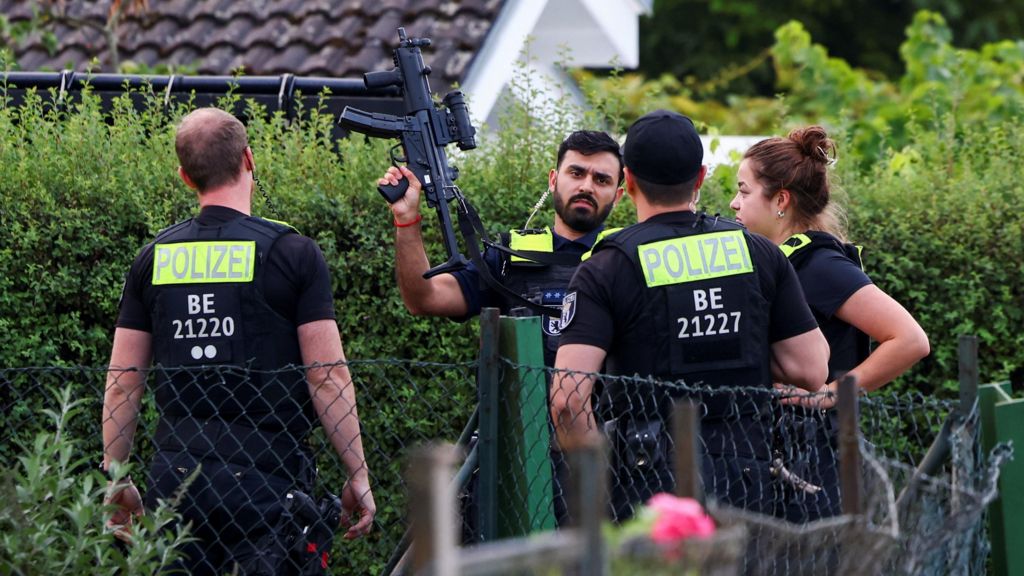
    Over the past two years, a worrying new wave of explicitly neo-Nazi youth organizations has sprung up across multiple regions of Germany, prompting a large-scale coordinated law enforcement operation targeting two of the most prominent violent groups. On Wednesday, more than 600 police officers carried out raids across approximately 50 residential and commercial locations spanning 12 German states, with operations concentrated in the country’s eastern and southern regions including Bavaria, Berlin, Brandenburg, and Saxony. Federal prosecuting authorities confirmed that the operation targeted individuals linked to two groups: Jung & Stark (JS, translating to Young and Strong) and Deutsche Jugend Voran (DJV, or Forwards German Youth). While no arrests were made during the search operation itself, investigators have laid out detailed allegations of organized criminal violence and extremist networking against the suspects. According to a formal statement from federal prosecutors, the targeted individuals are suspected of coordinating violent attacks through encrypted social media platforms and building interconnected extremist networks that span the entire country. Prosecutors detailed that multiple accused group members have carried out brutal assaults on people they categorized as political enemies, including left-wing activists, as well as individuals they falsely accused of being pedophiles. In each documented attack, victims were beaten by multiple attackers and left with severe, lasting injuries. Internal group meetings, authorities add, regularly include open calls for violent action against political opponents and the groups’ perceived enemies. This is not the first time members of these networks have faced legal consequences: last year, a leading figure in DJV was sentenced to over three years in prison following a series of violent assaults on political opponents in Berlin. Twenty-four-year-old Julian M. was convicted alongside a cell of attackers aged 16 to 23 for brutally beating multiple people who displayed visible symbols associated with left-wing political movements. Unlike older generations of German far-right extremist groups, these new youth networks operate with unprecedented openness, maintaining active, public profiles on major mainstream and encrypted social platforms including Telegram and Instagram. Experts on extremism warn that this intentional openness is a deliberate recruitment strategy targeting young, disillusioned men who feel alienated from mainstream society. Jakob Guhl, a researcher at the Institute for Strategic Dialogue, notes that the majority of people joining JS and DJV are extremely young, typically teenagers or in their early 20s. Guhl emphasizes that unlike more established, mainstream far-right political movements in Germany such as the Alternative for Germany (AfD) or the Identitarian movement, which aim to build broad public support and enter mainstream political discourse, JS and DJV center their activities on militant training, public protest participation, and direct physical violence against perceived enemies. Since 2024, hundreds of smaller, local offshoots of these groups have emerged across eastern Germany in particular, following JS’s model of open online organizing and militant activity. German security and political officials have repeatedly voiced deep, growing concern over the rising rates of young people being radicalized and drawn into far-right extremist activity, which has increasingly targeted not only left-wing political figures but also members of Germany’s LGBT community. Today’s coordinated raids mark one of the largest law enforcement actions against this new wave of openly militant far-right youth groups, underscoring the German state’s growing alarm over the spread of violent neo-Nazi organizing among young people.

  • Protest groups block access to Russian pavilion at Venice Biennale

    Protest groups block access to Russian pavilion at Venice Biennale

    VENICE, Italy — A high-stakes demonstration rocked the prestigious Venice Biennale on Wednesday, as two prominent activist collectives—Russian punk protest group Pussy Riot and Ukrainian feminist organization FEMEN—joined forces to block the opening of Russia’s national exhibition space at the world’s most influential contemporary art event. Chanting slogans including “Russia’s art is blood” and “Disobey” amid a cloud of colored smoke matching the blue and yellow of Ukraine’s national flag mixed with pink associated with the groups’ feminist messaging, the masked activists, who covered their faces with pink balaclavas, advanced toward the Russian pavilion in the Biennale’s central Giardini exhibition district. Italian law enforcement officers quickly formed a line at the venue’s entrance, and the demonstration successfully halted access to the space for roughly 30 minutes, delaying Russia’s return to the Biennale after its years-long absence.

    Speaking after the protest, Nadya Tolokonnikova, founder of Pussy Riot, emphasized that only art created by Russian dissidents imprisoned on what she called absurd politicized charges deserves to represent Russia on the global stage. “Those people make art, and I want that art to represent Russia, because they represent the real face of Russia,” Tolokonnikova told reporters. She added that repeated attempts to open a dialogue with Biennale organizers about the controversy went unanswered, and she was forced to register for entry to the Giardini under a false name to pass security screening and join the demonstration.

    This year’s Biennale marks Russia’s first participation in the event since Moscow launched its full-scale invasion of Ukraine in 2022. The controversial decision to allow the Russian pavilion has already triggered sweeping fallout: the European Union stripped 2 million euros ($2.5 million) in funding from the art fair over the inclusion, and last week the entire international jury tasked with awarding the Biennale’s coveted Golden Lion prizes resigned in protest. The jury stated it would not issue awards to any countries under investigation by the International Criminal Court for alleged human rights abuses, a position that targets both Russia and Israel, drawing broader controversy to the 2024 event.

    Organizers of the Venice Biennale have stood by their decision to include Russia, releasing a statement noting that any country maintaining formal diplomatic relations with Italy is eligible to participate in the national pavilion program. While the Italian national government in Rome has publicly opposed the inclusion of Russia, it has acknowledged that the Venice Biennale operates as an independent cultural institution and has not moved to block the pavilion’s opening. For 2024, the Russian pavilion is centered around a series of live musical performances held in a lower-level gallery space, and it is currently only scheduled to operate during the first week of previews leading up to the Biennale’s official opening to the public on May 9.

  • Poland warns Russia is moving from low-cost recruits to professional sabotage cells

    Poland warns Russia is moving from low-cost recruits to professional sabotage cells

    WARSAW, Poland — A new report from Poland’s leading internal intelligence service has drawn urgent attention to a shifting tactic in what Western officials describe as Russia’s ongoing hybrid conflict against Europe, revealing that Moscow is abandoning its reliance on disposable, ad-hoc recruits in favor of building structured, professional sabotage networks tied to organized crime.

    The assessment, published Wednesday by Poland’s Internal Security Agency (ABW), comes amid a historic surge in Russian espionage activity across Central Europe that has matched levels unseen since the end of the Cold War. ABW officials confirmed that the total number of espionage investigations launched in 2024 and 2025 equals the cumulative total of cases opened between Poland’s 1991 post-Soviet independence and the end of 2023, with 62 people arrested on spying charges over the past two years alone.

    For years, European security leaders and law enforcement agencies have warned that Russia is waging an undeclared hybrid campaign against European allies, encompassing everything from arson and infrastructure vandalism to disinformation influence operations. Data from the Associated Press has tracked more than 150 such incidents tied to Moscow that have been confirmed by Western officials since Russia launched its full-scale invasion of Ukraine in 2022.

    Previously, the majority of these operations relied on low-cost, one-time agents recruited spontaneously through online platforms. In many cases, recruited individuals had no idea they were actually working on behalf of Russian intelligence. This model became widespread after Western countries expelled hundreds of Russian intelligence officers in the wake of the 2022 invasion, forcing Moscow to adapt its operational structure. Now, the ABW report confirms a clear strategic shift toward institutionalized, professionalized sabotage activity.

    “Russian intelligence is increasingly using methods typical of special forces — reconnaissance and sabotage — as part of Russia’s undeclared war with the Western world,” the ABW report stated. The document goes on to note that Russia is now actively building complex sabotage cells that draw on closed organized crime networks, prioritizing recruits with existing specialized experience: former military personnel, ex-law enforcement officers, and veterans of the Wagner Group mercenary organization. Russian intelligence has also ramped up in-territory training for these agents, designed to prepare them for coordinated terrorist and sabotage acts, the report added.

    Polish security officials warn that the long-term strategic goal of the Russian Federation remains unchanged: to destabilize Euro-Atlantic institutions from within, split alliance unity, and sow socio-political and economic chaos in individual member states. While Poland is the primary target of these operations, the ABW noted that some activity is also coordinated by Belarusian secret services — which work in close lockstep with Moscow — and even Chinese intelligence.

    The ABW warned that mass surveillance operations being carried out across Poland are laying the groundwork for future diversionary attacks, which the agency calls the most serious threat to national security it currently faces. It added that escalating Russian operations in Poland now accept the very real risk of fatal casualties among civilians and infrastructure workers.

    The shifting threat comes on the heels of a high-profile incident last November that highlighted the danger of these attacks. At that time, explosions and technical malfunctions struck a key railway line used for military and humanitarian aid deliveries to Ukraine, disrupting service for two trains including a passenger service. Polish Prime Minister Donald Tusk described the event as an “unprecedented act of sabotage.” No casualties were reported in that incident.

  • Russia snubs Ukraine’s unilateral ceasefire, firing dozens of drones

    Russia snubs Ukraine’s unilateral ceasefire, firing dozens of drones

    As the full-scale Russian invasion of Ukraine entered its third year, hopes for a temporary halt to hostilities collapsed almost immediately this week after Russia launched a massive overnight drone assault that defied Ukraine’s unilateral ceasefire declaration, Ukrainian authorities confirmed Wednesday.

    Kyiv’s ceasefire, which came into force at midnight on Wednesday, was a reciprocal response to Russia’s own planned two-day truce scheduled for Friday and Saturday to mark the 81st anniversary of Nazi Germany’s defeat in World War II. Ukrainian President Volodymyr Zelenskyy had announced the unilateral pause, warning that any violation of the truce would draw a swift military retaliation from Kyiv’s forces. But the truce was breached before it could even take full hold.

    Ukrainian Foreign Minister Andrii Sybiha confirmed that Russian forces launched 108 drones and three guided missiles across Ukrainian territory, with attacks running continuously through the night and into Wednesday morning. In an official post on social platform X, Sybiha condemned Moscow’s choice to ignore a de-escalatory proposal that had garnered backing from multiple states and global governing bodies. “Moscow once again ignored a realistic and fair call to end hostilities, supported by other states and international organizations,” Sybiha wrote, adding that Russia’s overnight attacks exposed the insincerity of its own upcoming planned May 9 ceasefire. “Putin only cares about military parades, not human lives,” he said.

    In Moscow’s official response to the strikes, the Russian Defense Ministry claimed that it was Ukraine that had violated the truce. The ministry asserted that Russian air defense systems intercepted and shot down 53 Ukrainian drones across multiple Russian regions, the illegally annexed Crimean Peninsula, and Black Sea waters between Tuesday evening and early Wednesday dawn.

    Prior to the launch of Kyiv’s ceasefire, Moscow had given no public indication it would respect the pause in fighting. Analysts and diplomatic observers have held little optimism for any de-escalation of the conflict in the near term, as the war shows no sign of abating and a full year of U.S.-led diplomatic efforts to end the hostilities have produced no breakthroughs.

    The overnight assault comes just one day after a previous round of Russian strikes across Ukraine left at least 22 civilians dead and more than 80 others injured, according to Ukrainian emergency officials. This sequence of events follows a long-established pattern throughout the war: Russia has repeatedly announced short unilateral ceasefires timed for major national and religious holidays, including most recently Orthodox Easter, but these temporary pauses have never led to lasting de-escalation, undermined by deep mutual distrust between the two warring nations.

    In the wake of Russia’s violation of Kyiv’s ceasefire, Sybiha called for the international community to ramp up pressure on the Kremlin. His demands include the imposition of new economic sanctions, broader diplomatic isolation of Moscow, formal accountability measures for alleged war crimes committed by Russian forces, and increased military and humanitarian aid for Ukraine.

    The Associated Press continues ongoing coverage of the Russia-Ukraine conflict, with full reporting available at its dedicated war hub.

  • Cruise ship with hantavirus outbreak to sail to Canary Islands

    Cruise ship with hantavirus outbreak to sail to Canary Islands

    A deadly hantavirus outbreak onboard the Dutch-operated cruise vessel MV Hondius has triggered an international emergency response, with Spanish health authorities confirming the ship will reroute to the Canary Islands for coordinated medical care and passenger repatriation. The outbreak, which has already claimed three lives since the ship departed Argentina on a transatlantic voyage roughly one month ago, has prompted urgent evacuation plans for multiple people needing immediate treatment.

    On Tuesday, a medical evacuation aircraft was scheduled to transfer three people from the ship, which was originally docked in Cape Verde, to the Canary Islands. Among those being evacuated are two crew members: one of them is the ship’s British doctor, who requires urgent medical attention. The third evacuee is a close contact of the deceased German national who died earlier this month.

    As of the latest update from the World Health Organization (WHO), seven cases of hantavirus have been recorded onboard: two confirmed infections and five suspected cases. One confirmed case is a Dutch woman who is counted among the three fatalities, while the other is a 69-year-old British national who was already evacuated to South Africa for emergency care. The two additional deaths include the Dutch woman’s husband (who was never tested to confirm an infection) and the German national, who passed away on May 2. A Reuters report citing South African health officials confirms the two confirmed cases are linked to the Andes strain of hantavirus, a variant that is documented to spread from person to person among individuals in close contact.

    At the time of rerouting, 149 passengers and crew representing 23 nationalities remained onboard the MV Hondius, held under strict precautionary isolation measures, according to the ship’s operator, Oceanwide Expeditions. In addition to the affected British crew member, 22 other British citizens are still onboard the vessel.

    Spanish health authorities explained that Cape Verde lacked the specialized public health infrastructure to manage the large-scale outbreak response, leading to the decision to redirect the ship to the Canary Islands, the closest territory with sufficient medical capabilities. “Spain has a moral and legal obligation to assist these people, among whom are several Spanish citizens,” an official government statement noted. The vessel is expected to reach the archipelago within three to four days, with a final port of call yet to be confirmed; Oceanwide Expeditions says the leading options are Gran Canaria or Tenerife.

    Once the ship docks, all passengers and crew will undergo comprehensive health screenings, receive any required medical treatment, and then be cleared to travel back to their home countries. Spanish health authorities emphasized that all interactions with people from the MV Hondius will be limited to purpose-built isolation spaces and dedicated medical transports to prevent any potential spread to local communities. “These protocols are designed to avoid all contact with the local population and ensure the full safety of healthcare personnel,” the ministry added.

    Public health experts note that hantavirus is most commonly transmitted to humans through contact with infected rodents and their excretions. However, the WHO has confirmed that limited spread may have occurred between close contacts onboard the crowded cruise vessel, though the overall risk to the general public remains low, per the organization’s assessment.

  • Where do Bayern’s prolific trio rank in greatest front threes ever?

    Where do Bayern’s prolific trio rank in greatest front threes ever?

    When Harry Kane, Michael Olise and Luis Diaz surge toward the opponent’s goal, opposition defenses rarely come away unscathed. From top-flight German sides to Champions League giants like Real Madrid and Atalanta, every team that has faced this Bayern Munich trio has seen firsthand just how lethal this attacking unit can be.

    Since the three forwards first linked up at the Allianz Arena in August 2024, they have racked up more than 100 goals across all club competitions this season, making them only the fifth European front three to hit the century mark since the turn of the 21st century. This historic milestone is one of the core reasons the Bavarian giants are on the cusp of a historic treble, having already secured the Bundesliga title last month and now competing for the DFB Pokal and Champions League trophies. With the second leg of their Champions League semi-final against Paris Saint-Germain kicking off Wednesday — after a chaotic nine-goal first leg left Bayern trailing 5-4 — BBC Sport journalists Keifer MacDonald and Charlotte Coates break down how this dynamic trio stacks up against the greatest forward threes in modern football.

    Three-man forward lines have been a foundational tactical setup across football history, but the system has seen a major mainstream resurgence over the past 15 years. This revival can be traced directly to Pep Guardiola’s dominant Barcelona side between 2008 and 2012, where Guardiola built a trophy-winning dynasty around a fluid possession-based system centered on a mobile front three. Though Lionel Messi, a nine-time Ballon d’Or winner, was typically positioned as the nominal central attacker, he frequently dropped deep to pull opposing defenders out of shape, create gaps for his attacking teammates, or add a numerical advantage in midfield. This flexible, unstoppable style delivered 14 major trophies for Barcelona during Guardiola’s first tenure, cementing the three-front system as a go-to for elite clubs across the continent.

    In the years following Barcelona’s breakthrough, teams from Real Madrid to PSG began adopting similar tactical setups. In the Premier League, the closest parallel to Guardiola’s legendary front three came from Jurgen Klopp’s Liverpool, where Sadio Mane, Roberto Firmino and Mohamed Salah fired the club to both a Premier League title and a Champions League crown across five seasons together. Mirroring Messi’s role at Barcelona, Firmino served as the central forward, dropping between opposition lines to link play with midfield and open up attacking channels for Mane and Salah to exploit. The trio is widely considered one of the greatest attacking units in English football history, having claimed a full haul of major domestic and European honors.

    Today, that mantle has passed to Bayern Munich, who have carefully constructed this dominant attacking unit through three consecutive summer transfer windows starting in 2023. After all three forwards got on the scoresheet in last week’s thriller against PSG, the club made German football history: no Bayern front three had ever hit the 100-goal mark in a single season before, with the previous high of 99 goals set by Gerd Muller, Uli Hoeness and Willi Hoffman back in 1972-73.

    Century-goal front threes remain an extraordinary rarity in modern European football. Since the 2013-14 season, only five different attacking trios have broken the 100-goal barrier, and three of those came from the same legendary Barcelona unit: Messi, Luis Suarez and Neymar. Across three consecutive seasons from 2014-15 to 2016-17, the iconic Barcelona trio hit 122, 131 and 111 goals respectively, setting a benchmark that has yet to be matched. Real Madrid’s iconic trio of Gareth Bale, Cristiano Ronaldo and Karim Benzema also hit the 100-goal mark in the 2014-15 season, while Liverpool’s Salah-Firmino-Mane unit came close in 2017-18, finishing with a total of 91 strikes.

    Now, Bayern’s Kane-Olise-Diaz trio has joined that exclusive 100-goal club, leading to inevitable comparisons with the treble-chasing PSG side they face in this year’s Champions League semi-finals. PSG itself once boasted a star-studded front three of Messi, Neymar and Kylian Mbappe, and currently fields a dynamic attacking unit led by Ousmane Dembele, Desire Doue and Khvicha Kvaratskhelia. While Luis Enrique’s current PSG trio is not as prolific as Bayern’s century-mark unit, they overwhelm defenses with constant positional rotation and creative flair. Even so, the numbers don’t lie: this season, Dembele, Doue and Kvaratskhelia have combined for 48 goals, less than half of Bayern’s 101. Last campaign, PSG’s highest-scoring attacking trio (Dembele, Goncalo Ramos and Bradley Barcola) managed 72 goals in total, still far behind Bayern’s historic mark.

    Beyond the raw goal count, the two sides’ front threes differ sharply in tactical approach. Bayern operates with a fixed, predictable structure that delivers consistent output week in and week out: Diaz lines up on the left flank, Olise on the right, and Kane leads the line as the out-and-out central striker. PSG, by contrast, leans fully into the fluid approach that popularized the modern three-front system, with forwards constantly swapping positions and stepping up to deliver in high-stakes matches. As the two sides prepare for a decisive second leg to decide who advances to the 2025 Champions League final, football fans will get to see whether Bayern’s historic, record-breaking attacking unit can overturn PSG’s first-leg lead and secure their place in the final — and cement their spot among the all-time great front threes.

  • Local elections could hasten the exit of Britain’s embattled prime minister

    Local elections could hasten the exit of Britain’s embattled prime minister

    LONDON – British voters are heading to the polls on Thursday for a set of elections that carries profound implications for Prime Minister Keir Starmer’s embattled premiership and marks the latest step in the United Kingdom’s transition to an uncharted era of fragmented multiparty governance. The outcome of Thursday’s votes, which cover local government seats across England and legislative elections for the semiautonomous governments of Scotland and Wales, is widely projected to deliver a severe blow to Starmer’s center-left Labour Party.\n\nPlunged into negative approval ratings by persistent economic weakness and ongoing questions over his leadership judgment, Starmer has found Thursday’s midterm contests framed as a de facto public referendum on his two-year-old government by opposition parties. Hard-right Reform UK has even centered its campaign on the slogan “Vote Reform, Get Starmer Out,” capturing the intensity of attacks on the embattled prime minister. While the next scheduled UK national general election is not required until 2029, a catastrophic rout on Thursday could open the door to a party revolt against Starmer, less than two years after he won a landslide national victory. Luke Tryl, a senior analyst at polling firm More in Common, summed up the public mood, noting that Starmer has become a receptacle for widespread public disappointment and disillusionment across the country.\n\nStarmer’s political standing has collapsed amid a string of high-profile missteps that have piled up since he took office in July 2024. His administration has struggled to deliver on core campaign promises: boosting sluggish economic growth, repairing overstretched public services, and easing the crippling cost-of-living crisis. These challenges have been compounded by the outbreak of conflict between the U.S.-Israeli coalition and Iran, which has disrupted global oil shipments through the Strait of Hormuz, driving up energy prices and worsening economic headwinds. The prime minister’s credibility took a particularly damaging hit from his controversial decision to appoint Peter Mandelson, a figure long tied to disgraced financier Jeffrey Epstein, as Britain’s ambassador to Washington. Starmer already survived one leadership crisis in February, when a group of Labour lawmakers including the party’s Scottish leader publicly called for him to step down over the Mandelson appointment.\n\nPolitical forecasters project that Labour will lose more than half of the 2,500 local council seats it currently defends across England. The party is expected to bleed support to rivals on both its left and right flanks: the left-wing Green Party is set to gain ground in London, while Reform UK is targeting working-class former Labour strongholds in northern England. Tony Travers, a government professor at the London School of Economics, described the electoral moment as deeply perilous for Starmer. “After a series of policy U-turns and in an economy where there isn’t much money to spend on anything, his opponents are lining up,” Travers explained.\n\nA poor showing could trigger an immediate leadership challenge from high-profile Labour figures, including Health Secretary Wes Streeting, former Deputy Prime Minister Anglea Rayner, and popular Greater Manchester Mayor Andy Burnham. Under Labour Party rules, a challenger needs the backing of 80 House of Commons lawmakers – equal to one-fifth of the party’s parliamentary caucus – to trigger a formal leadership contest. For Burnham, any bid would first require him to win a seat in Parliament to be eligible for the top job. Alternately, Starmer could face growing party pressure to announce a clear timetable for an orderly departure rather than force an immediate open revolt.\n\nTim Bale, a politics professor at Queen Mary University of London, noted that Labour’s parliamentary party remains divided on the timing of any leadership change, opening the possibility of a temporary reprieve for Starmer. “His parliamentary party are unsure as to whether now is the right time to unseat him, so there might be a stay of execution,” Bale said. But he added that the broader shift within the party is clear: “it’s a case of when rather than if he goes.”\n\nBeyond the fate of Starmer’s premiership, Thursday’s election is widely seen as a defining milestone in the long-term fragmentation of Britain’s political landscape. For generations, major losses for Labour would have automatically translated into major gains for the main center-right rival, the Conservative Party. But the Conservatives remain deeply unpopular after 14 turbulent years in power that ended when Labour won the 2024 national election. Instead, the main beneficiaries of Labour’s declining support are projected to be Nigel Farage’s right-wing Reform UK, the left-leaning Green Party, and pro-nationalist devolved parties in Scotland and Wales.\n\nTravers noted that Britain’s long-standing “two-and-a-half party system” – which positioned the Liberal Democrats as the permanent third force – is rapidly evolving into a far more fragmented five-party system. This shift has created unprecedented opportunities for pro-devolution and pro-independence parties across the UK’s devolved nations.\n\nIn Wales, where Labour has dominated devolved politics for a century and held power since the Welsh Senedd was established in 1999, polls point to a historic seismic shift. Labour is projected to fall to third place, behind Plaid Cymru (the Party of Wales) and Reform UK, which are currently running neck-and-neck for the top spot. Plaid Cymru leader Rhun ap Iorwerth, who is on track to become Wales’ next first minister if current polling holds, declared that the old order of British politics is finished. “The old politics is gone,” he said. “Labour is not going to win this election.”\n\nA Plaid Cymru victory in Wales would leave three out of four of the UK’s constituent nations led by pro-independence parties. Northern Ireland has already been governed by Irish nationalist party Sinn Féin, which supports unification with the Republic of Ireland, in a power-sharing arrangement with the pro-British Democratic Unionist Party. In Scotland, the Scottish National Party (SNP), which has held power in the Scottish Parliament since 2007, has pledged to hold a second referendum on Scottish independence if it wins a majority in Thursday’s election. Scottish voters rejected independence in a 2014 referendum, but shifting public mood and long-running frustration with Westminster rule have reshaped the political landscape north of the border.\n\nWhile Plaid Cymru has said an independence referendum is not on the immediate agenda for the next term, with its short-term priorities focused on gaining greater tax-raising and spending autonomy from Westminster, the party shares the ultimate goal of breaking away from the UK. ap Iorwerth argued that the current constitutional arrangement of the UK is no longer fit for purpose, saying: “We need a fundamental redesign of Britain. This is an unequal union.”