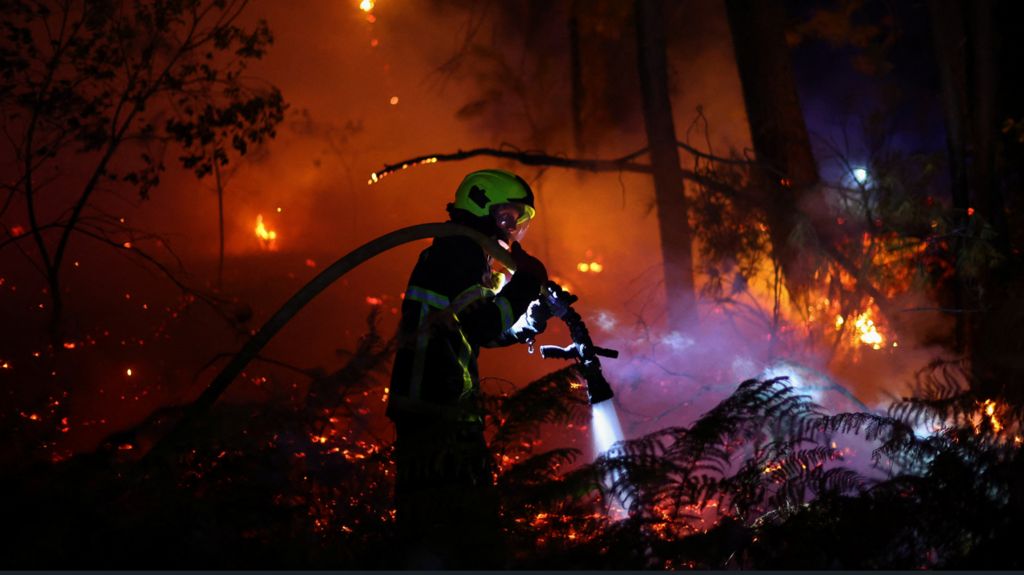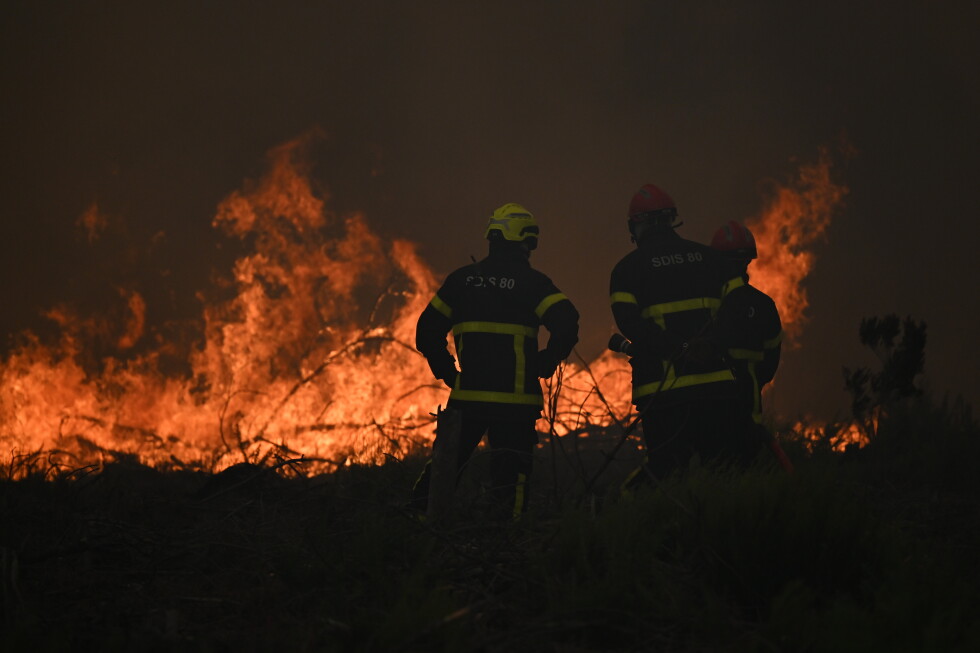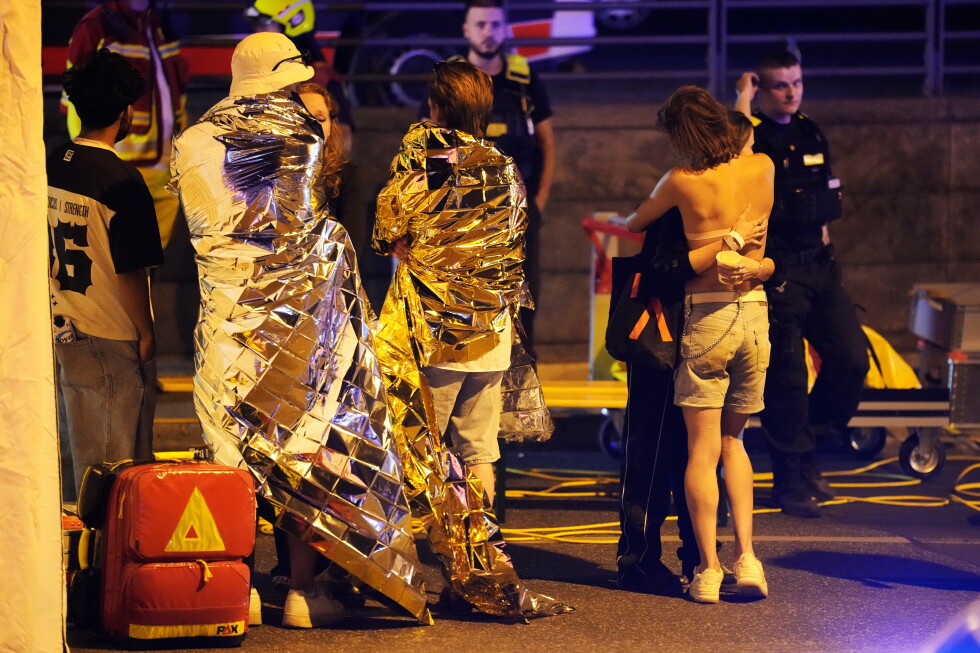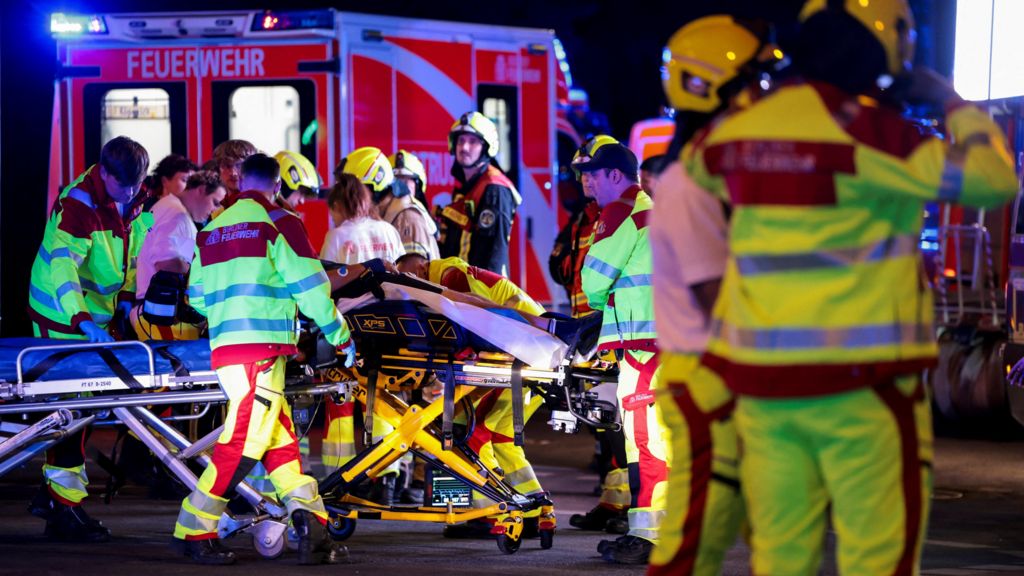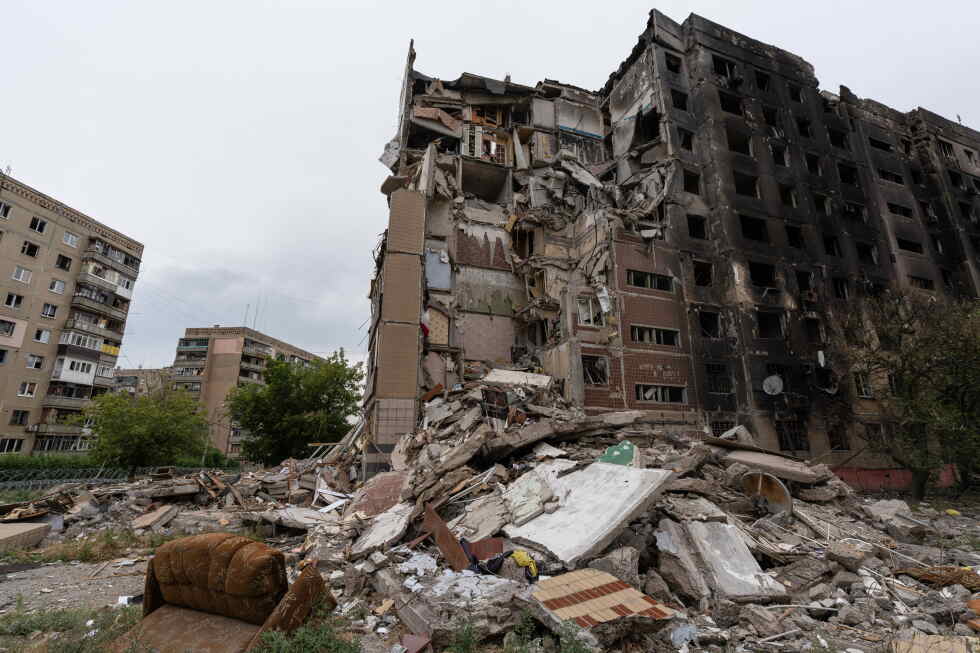
Nestled on the eastern left bank of the Dnipro River in southern Ukraine, the occupied frontline city of Oleshky has become a prison of war for its roughly 2,000 remaining residents. Cut off by destroyed bridges, heavily mined roads, and constant crossfire between Russian and Ukrainian forces, the city’s population faces a deepening humanitarian emergency that has left them dependent on scarce aid deliveries from volunteer groups.
标签: Europe
欧洲
-

Finding soldier Tom: Solving family mystery of WW2 Soviet prisoner of war
Eighty decades after the end of World War Two, a long-buried wartime mystery has finally been unraveled, connecting two families separated by thousands of miles across continents. The story centers on a Soviet prisoner of war who escaped Nazi captivity on the British Channel Island of Jersey, found refuge with a local farming family, and then vanished without a trace after the war – until a team of BBC journalists uncovered his roots in Central Asia.
Known only to his rescuers by the simple name “Tom”, or Bokejon in his native language, he was among an estimated 2,000 Soviet prisoners of war and forced laborers transported to Jersey by Nazi occupying forces to construct coastal fortifications. In 1943, after enduring brutal conditions in the labor camp, Tom made a daring escape. Weak from starvation, exhaustion and relentless abuse, he stumbled to the door of John and Phyllis Le Breton, a local farming couple. Fully aware that hiding an escaped prisoner carried the death penalty at the hands of the German occupiers, the couple still chose to take him in, sparing his life.
In a personal diary Tom wrote later, he described the unthinkable cruelty of the Nazi camp system. “We quarried stone from 6 a.m. to 6 p.m. every day, with only a small bowl of soup at midday and a meagre slice of bread with butter for tea – no breakfast at all,” he recorded. “For the smallest infraction, we were beaten brutally. If we were too sick to work, they would never believe us, they just starved us and beat us again.”
For more than two years, the Le Bretons hid Tom from German patrols, even growing to trust him enough to let him play with and read to their young children, including their daughter Dulcie, who is now 90 years old and still resides on Jersey. “Our dear Uncle Tom – we loved him so much,” Dulcie shared in an interview. “He is my clearest memory of the entire war, and his photograph has sat by my bedside my whole life. I never stopped wondering what became of him after he left.”
The danger the Le Bretons faced was not abstract. Just a short distance away, another Jersey resident named Louisa Gould was arrested after being reported by a neighbor for sheltering a different escaped Soviet POW. She was deported to the Ravensbrück concentration camp and ultimately murdered in a gas chamber, a stark reminder of what could have happened to the Le Breton family if their secret was exposed.
When Jersey was finally liberated from Nazi occupation in May 1945, Tom and all other surviving Soviet prisoners were repatriated to the Soviet Union. Three letters from Tom reached the Le Bretons as he traveled across Europe back to his homeland, then all communication stopped abruptly.
For returned Soviet prisoners of war, silence after repatriation was often the only option possible. Under Soviet policy at the time, all former captives were sent to NKVD filtration camps for extensive screening and interrogation. Soviet authorities viewed capture by the enemy as inherent evidence of potential disloyalty or collaboration. While some prisoners eventually rejoined civilian life, many were labeled politically unreliable, barred from good jobs and social advancement, and lived under constant suspicion for decades. Others were sentenced to multi-year terms in Soviet labor camps, and the stigma attached to former POWs persisted long after the death of Joseph Stalin in 1953.
The Le Bretons kept Tom’s photo and his few signed letters, but they only knew his name as the English transliteration “Bokijon Akram” – they had no way of knowing his full original name or his place of birth, and neither did local Jersey historians. Decades later, a team of BBC Russian journalists took up the cold case, facing a unique set of challenges. Because Tom had signed his name in Latin script for his Jersey hosts, researchers had no clear way to map it to the Cyrillic spelling that would have appeared on all official Soviet documents.
Over months of work, the team combed through dozens of archival records and tested hundreds of spelling variations, narrowing the search using biographical details Tom had jotted down in his diary. He wrote that he was around 30 years old when he was drafted into the Red Army in 1941, captured while fighting in what is now modern Ukraine, and likely had Central Asian heritage. This information led researchers to a promising match: Bokejon Akramov, born in 1910, drafted from the city of Namangan in what is today eastern Uzbekistan, thousands of miles from Jersey.
Further archival searches uncovered a record that Akramov had been awarded the Order of the Patriotic War late in life, and that entry included a registered home address in Namangan. BBC Uzbek journalists traveled to the address to investigate, bringing with them the well-preserved photograph the Le Breton family had held for 80 years. When they knocked on the door, a man named Shamsiddin Ahunbayev answered – and immediately recognized the man in the photo as his grandfather.
“How did you get my grandfather’s picture?” Ahunbayev asked the team, before breaking down in tears as he heard the full story of Akramov’s years hiding on Jersey. Akramov’s family told the BBC that he rarely spoke about his World War II experiences. They had long wondered why, despite being clearly intelligent and skilled, he was repeatedly turned down for professional or skilled jobs, and spent most of his working life as a gardener at a local Namangan factory. Researchers now say it is almost certain that the stigma of his wartime captivity followed him for the rest of his life, blocking his career. Akramov died in 1996, after what his family described as a peaceful, happy later life.
The BBC arranged a historic video call between Akramov’s Uzbek family and 90-year-old Dulcie Le Breton in Jersey. “Dear Dulcie, we thank your parents from the bottom of our hearts for their courage and kindness,” Ahunbayev told her. “Our grandfather survived the war, and we exist today only because of what your family did. We are so overjoyed to have found you, and we invite you to come to Uzbekistan – our home will always be open for you.”
Dulcie responded humbly, saying her parents had only done what they saw as the right thing. “They were far from the only people on Jersey who helped escaped Soviet soldiers,” she said. “There are dozens of these untold stories, and I hope more people will learn and remember them.”
After learning of the full story, the government of Uzbekistan has announced it will posthumously award John and Phyllis Le Breton the Order of Friendship, one of the country’s highest state honors, in recognition of their extraordinary courage and compassion. Dulcie Le Breton will accept the award on her parents’ behalf at a ceremony this Wednesday.
-

Trump again assails Pope Leo, potentially complicating Rubio’s visit to the Vatican this week
A fresh public dispute between former U.S. President Donald Trump and the first American-born pontiff, Pope Leo XIV, has created new diplomatic complications, just days before U.S. Secretary of State Marco Rubio is set to travel to the Vatican for a planned fence-mending meeting. The escalating tension has also spilled across borders, drawing pushback from top Italian government leaders and adding unexpected political friction ahead of upcoming U.S. midterm elections.
In an interview aired Monday with conservative media personality Hugh Hewitt, Trump doubled down on his previous attacks against Pope Leo. He claimed the pontiff was aiding Iran and undermining global security through two key positions: the pope’s public calls for respectful treatment of immigrants, and his stance on the ongoing Iran conflict. Trump went a step further, falsely asserting that Pope Leo supports Iran acquiring nuclear weapons, arguing the stance endangers Catholics and communities worldwide.
This claim directly contradicts the pope’s long-held public positions. Pope Leo has never backed Iran’s pursuit of a nuclear program; instead, he has repeatedly called for expanded diplomatic peace talks to resolve the Iran standoff, and publicly condemned both general military conflict with Iran and Trump’s past threats of mass civilian strikes against the country. The pontiff has repeatedly emphasized that his public statements are rooted in biblical and Catholic Church teaching, not political opposition to any U.S. administration.
Responding to Trump’s latest remarks to reporters Tuesday, Pope Leo pushed back forcefully against the misrepresentation of his views. “The Catholic Church for years has spoken out against all nuclear weapons, so there is no doubt there,” he stated. The pontiff also reaffirmed that his calls for peace and dialogue in the Middle East conflict stem directly from religious doctrine. “The mission of the church is to preach the Gospel, to preach peace. If someone wants to criticize me for announcing the Gospel, let him do it with the truth,” he added.
Speaking to reporters at the White House, Rubio sought to downplay the rift between Trump and the Vatican, framing Trump’s criticism as rooted in shared global opposition to Iran obtaining a nuclear arsenal. “Trump doesn’t understand why anybody — leave aside the pope, the president and I, for that matter — think most people cannot understand why anyone would think that it’s a good idea for Iran to ever have a nuclear weapon,” Rubio said. Still, political analysts widely note that Trump’s unprompted new attack makes Rubio’s diplomatic outreach far more challenging when he meets with Pope Leo this Thursday.
This is not an isolated conflict: Trump first lashed out at Pope Leo last month on social media, attacking the pontiff for criticizing his administration’s hardline immigration and deportation policies, as well as his handling of the Iran war. In response, Pope Leo stated that God does not hear the prayers of warmongers. The dispute escalated further when Trump shared a social media graphic that compared himself to Jesus Christ; he deleted the post after widespread public backlash, refused to issue an apology to the pope, and later attempted to deflect criticism by claiming he misinterpreted the image as depicting him as a medical professional.
The tension has now spilled into Italian domestic politics, where long-time Trump ally Prime Minister Giorgia Meloni has publicly rejected the U.S. former president’s comments about Pope Leo. Trump has hit back at Meloni as part of his growing frustration with NATO allies over what he calls insufficient support for U.S. policy on the Iran war. That friction has already led to U.S. plans to withdraw thousands of American troops from Germany in the coming months.
Italian Foreign Minister Antonio Tajani also issued a public rebuke of Trump’s comments via social media, writing that the remarks were “neither acceptable nor helpful to the cause of peace.” Tajani added, “I reaffirm my support for every action and word of Pope Leo; his words are a testament to dialogue, the value of human life, and freedom. This is a vision shared by our government, which is committed through diplomacy to ensuring stability and peace in all areas where conflicts exist.”
Alongside his meeting with Pope Leo in Vatican City, Rubio is scheduled to hold talks with Meloni and Tajani in Rome on Friday. A practicing Catholic, Rubio has now visited Italy or the Vatican at least three times in the past 12 months, and has been repeatedly tasked with softening or clarifying Trump’s sharp rhetoric on issues related to Europe, NATO, and the Middle East. Beyond diplomatic fallout, the public dispute between Trump and Pope Leo also carries tangible domestic political implications for the upcoming U.S. midterm congressional elections, as both parties seek to court Catholic voters across key swing districts.
-

Italy’s Meloni denounces deepfake photo as a political attack
ROME – In a striking reveal that has sparked new debate over the dangers of unregulated artificial intelligence misuse, Italian Prime Minister Giorgia Meloni went public this Tuesday to condemn the spread of a non-consensual deepfake image that depicted her in inappropriate lingerie on a bed. The AI-manipulated image, created to damage the premier’s reputation, has drawn attention to the growing threat of deepfake technology for political and personal attacks.
Meloni took an unflinching approach to the incident by sharing the manipulated image directly to her own official Facebook page, alongside a post sent to her by a user named Roberto, who had originally circulated the fake content with a message calling on Meloni to feel ashamed of the fabricated scene.
In her public address on the platform, Meloni emphasized that deepfake technology poses a broad societal risk, not just a personal one. She warned social media users against sharing unvetted visual content, noting that altered AI images have the power to mislead audiences, distort public opinion, and harm the reputation of innocent people.
“I can stand up for myself against this sort of attack,” Meloni wrote in her post. “But far too many people who find themselves targeted by deepfakes do not have the platform or reach to defend themselves the way I can.”
As of Tuesday evening, it remained unconfirmed whether Meloni would file an official complaint with law enforcement over the incident, a step many of her followers and political commentators urged her to take in comments on her post. In a surprising display of dry wit, Meloni acknowledged that the manipulated photo had actually edited her appearance to look more flattering than real life, but added that the lighthearted observation does not negate the seriousness of the incident.
“Even so, the core fact remains: anyone looking to attack an opponent and fabricate falsehoods can now turn to any tool, no matter how unethical or inappropriate, to achieve their goal,” she added.
This is not the first time that the Italian prime minister’s image has gone viral for manipulated or coincidental similarities. Back in February, a small public controversy erupted when a painted cherub in a historic Roman church was noted to bear an uncanny resemblance to Meloni, Italy’s first ever female head of government. On that occasion, Meloni brushed off the comparison with characteristic humor, posting a photo of the artwork to social media alongside the joke “No, I definitely don’t look like an angel” and a laughing-crying emoji.
-

Venice Biennale previews in chaos as war follows art into world’s oldest exhibition
The 61st edition of the Venice Biennale, the world’s longest-running major contemporary art exhibition, opened its previews to the public on Tuesday amid unprecedented turmoil that has thrown the event’s core structure into question. The chaos erupted just days earlier, when the entire jury stepped down in protest over the event’s decision to allow pavilions for Israel and Russia, a move that has split participating artists, curators and organizers along geopolitical lines.
Walking through the Biennale’s iconic Giardini gardens, the geographic and political divides are impossible to miss. Only a short distance from the Russian Pavilion, where a small group of attendees danced to house music spun by an Argentine DJ during opening events, Ukrainian artists gathered beside a large origami deer sculpture evacuated from the war-torn eastern Ukrainian city of Pokrovsk, just 5 kilometers from the active front line with Russia. Meanwhile, a group of Palestinian activists marched through the gardens, their shirts emblazoned with the names of fellow artists killed in the ongoing conflict in Gaza. Event organizers have braced for more protests throughout preview week.
The unprecedented upheaval has reignited long-simmering debates about the core structure of the 129-year-old exhibition, which centers on 100 independent national pavilions operating alongside a centrally curated main exhibition featuring 110 independent artists and collectives. Critics argue that the nation-based pavilion model has grown outdated in a globalized art world, where most creators work across international borders, and that the structure gives nation states an unmerited platform to push political propaganda.
Marie Helene Pereira, one of five curators stepping in to lead the main exhibition *In Minor Keys* after original curator Koyo Kouoh passed away last year while preparing the show, said the current unrest makes clear that the concept of centering nation states within the exhibition space is now openly contested.
“We can see how much that can bring tension, especially in the midst of the political chaos we find ourselves in,” Pereira told reporters. She added that the moment calls for a full rethinking of institutional structures to better center artists and the creative process, while noting that this does not mean art should be divorced from political context.
Prior to the full jury’s resignation, panel members had publicly stated they would refuse to award prizes to any country whose leaders are facing investigation by the International Court of Justice, a designation that explicitly includes both Russia and Israel. Some participating artists have welcomed the jury’s departure. Israeli artist Belu-Simion Fainaru, whose Kabbalah-inspired installation is on display, called the resignation a fair outcome.
“I should be treated as an equal artist, and I should not be discriminated against because of my race, that I am a Jew, and not because of my nationality or passport,” Fainaru said. “I have to be seen as I am: I am an artist that wants to show my art, and I have the right to be evaluated. The Biennale should be a place where you can feel safe to create and do whatever you believe in.”
For Ukrainian participants, who have seen their country grapple with a full-scale Russian invasion for more than two years, the decision to allow Russia to participate is unacceptable. Ukrainian co-curator Ksenia Malykh, whose team evacuated the *Origami Deer* sculpture from a Pokrovsk park to serve as the centerpiece of the 2024 Ukrainian Pavilion, condemned the Biennale’s claim of neutrality as a hollow falsehood.
“You can’t stay neutral in these times. You can’t be neutral when people are dying every day because of Russians,” Malykh said. “Nobody is talking about their art. They are only talking about the statement that they are here, and I am absolutely sure this was their goal.”
Organizers have placed unprecedented restrictions on the Russian Pavilion: it will only operate to invited guests during the preview week that ends Friday, and will remain closed to the general public for the entire 6.5-month public run that begins Saturday. Russian curators declined to comment for this report. The decision to allow Russian participation has already carried major financial consequences: the EU has cut 2 million euros ($2.3 million) in three-year funding for the Biennale over the move, and Biennale leadership’s position has also put it at odds with the Italian national government. Even the official event catalog acknowledges the uncertainty, leaving a placeholder entry where the Russian pavilion’s statement would normally appear and noting that participation was “under review” when the catalog went to press.
The jury’s resignation has also upended one of the Biennale’s most iconic traditions: the awarding of Golden Lion prizes, the event’s highest honor that has drawn comparisons to Olympic medals for the art world. With no professional jury in place, no jury-awarded Golden Lions will be handed out this year for best national pavilion and best main exhibition participant. Instead, visitors will vote for two winners, which will be announced on November 22, the final day of the exhibition. Malykh argues that the shift undermines the Biennale’s institutional credibility.
“It’s an important moment. If the prize is given by the public… It’s not a professional institution after that,” Malykh said.
-

France reckons with Nazi-looted art in new Paris museum gallery
PARIS – Nearly 83 years after it was seized by Nazi agents in occupied Paris for Adolf Hitler’s personal collection, an 1891 Alfred Stevens painting of two children staring out over the Normandy coast has found a new, permanent public home at Paris’ Musée d’Orsay. More than that, it anchors a groundbreaking new exhibition space unlike any other in France: the first permanent gallery dedicated entirely to “orphaned” works of art looted during the Nazi era, pieces whose rightful pre-war owners have never been identified. For France, the opening marks a major step forward in the nation’s slow, decades-long reckoning with its own role in the mass plunder of Jewish property during the Holocaust.
The Stevens canvas was one of hundreds of thousands of artworks swept up in the systematic Nazi seizure of property from Jewish families across occupied Europe. Acquired in Paris in 1942 specifically for Hitler, it was originally destined for the Führer’s planned grand cultural complex, the never-built Führermuseum in his hometown of Linz, Austria, before being reassigned to his private mountain retreat in Bavaria in 1943. After Germany’s defeat in World War II, the famous Monuments Men – the Allied recovery team later immortalized in George Clooney’s 2014 feature film – tracked the painting down and returned it to France. To this day, however, no heir has come forward to claim it, and no records confirm who owned it before its 1942 seizure.
The Stevens work is far from alone. Across France, 2,200 unclaimed looted artworks are held under the designation MNR, short for *Musées Nationaux Récupération* (National Museums Recovery). These works, recovered from Germany and Austria in the aftermath of the war, were entrusted to French national museums in the early 1950s. The French state does not claim ownership of the pieces; instead, it holds them in permanent trust for any rightful heirs who may eventually come forward. The Musée d’Orsay currently holds 225 of these orphaned works, 13 of which are on display in the new gallery.
What makes this exhibition space unique beyond its focus is its intentional design: every work is hung to allow visitors to examine the back of each canvas, where the original stamps, inventory marks, and transit labels trace the journey of each piece from stolen private property into Nazi hands. The museum has also launched a dedicated new research unit, staffed by six Franco-German provenance researchers led by the Orsay’s head of provenance research Ines Rotermund-Reynard, to systematically investigate each work’s history and track down potential heirs.
The opening of the gallery caps more than half a century of growing public acknowledgement of France’s role in Nazi-era plunder. For decades after the war, France largely stayed silent about the collaboration of its wartime Vichy government, which not only assisted in the deportation of 80,000 French Jews to death camps but also oversaw a thriving Paris art market that profited from the sale of property seized from murdered and displaced Jewish families. It was not until 1995 that then-President Jacques Chirac formally acknowledged the French state’s own responsibility for crimes of the Vichy era, standing at the site of the 1942 Vél d’Hiv mass roundup of Jewish Parisians. A national inquiry into Nazi art looting launched two years later accelerated efforts to return works to their rightful owners.
Of the roughly 100,000 cultural objects looted from France during the Nazi occupation, around 60,000 were recovered after the war, and 45,000 were returned to their owners. Roughly 15,000 works remained without a known owner, and the 2,200 MNR works were selected from that pool. For nearly 40 years, between 1954 and 1993, France returned only four MNR works to heirs. Since Chirac’s 1995 acknowledgement, the Orsay alone has returned 15 works, most recently two pieces by Alfred Sisley and Auguste Renoir that were handed over to the heirs of Jewish collector Grégoire Schusterman in 2024.
The 13 works on display in the new gallery each carry the unmistakeable imprint of the Holocaust. A Degas copy of a 1879 Berlin ballroom scene was purchased by Jewish collector Fernand Ochsé in 1919; Ochsé was deported to Auschwitz and murdered during the occupation. A Renoir portrait of the wife of writer Alphonse Daudet was sold to a German museum in Cologne in 1941, with no record surviving of who sold the looted work. A Paul Cézanne canvas dismissed as a fake by a Louvre curator in the 1950s has recently been re-evaluated and may well be an authentic work by the Post-Impressionist master.
Early visitors to the new gallery say the transparent display changes how they engage with the history of these works. Daniel Lévy, a software engineer from Strasbourg who visited on opening day, stopped to examine the Cézanne’s back marking. “You walk past these labels your whole life and you do not read them. Now I will read them,” he said. “My grandmother lost some of her family in the camps. Some of these paintings were probably hanging in homes like hers.” Another visitor, retired Lyon schoolteacher Marie Duboisse, noted she had seen the MNR designation on works at the Louvre for years without understanding what it meant, having previously assumed it marked a donor.
Historians and curators emphasize that the mass looting of Jewish art could not have happened on the scale it did without the active participation of the Paris art world. In the early 20th century, Paris was the richest art hub in Western Europe, and the city’s central auction house Hôtel Drouot reopened just months after the Nazi occupation began in 1940, running continuous sales of looted and forced-sale property through the entire war. French art dealers acted as middlemen for German buyers, with Hitler’s agents taking the most coveted works for Hitler’s personal collection and Nazi officials.
“Almost every museum in Nazi Germany sent buyers to Paris to expand its collections,” Rotermund-Reynard explained. “Hitler himself wanted to build the world’s largest museum, in Linz, the city in Austria where he grew up. Hermann Göring, Hitler’s deputy, traveled 21 times to Paris during the occupation to help himself to works taken from Jewish collectors. There was an enormous thirst both for the possessions of Jewish collectors, and for acquisitions to expand the German museums.” For Rotermund-Reynard, the looting cannot be separated from the broader genocide of Jewish people: “All of this is part of the history of the Shoah. When you try to understand this drive to take from Jewish families, it is part of the terrifying Nazi ideology to erase Jewish life.”
While the gallery was not created specifically as a response to rising antisemitism in France, curators say its opening carries new weight amid a recent surge in anti-Jewish acts. According to the French Interior Ministry, antisemitic incidents reached near-record levels of 1,320 in 2025, following a sharp increase after the October 7, 2023, Hamas attack on Israel. “There is no statute of limitations on these crimes,” said François Blanchetière, the Orsay’s chief sculpture curator and co-curator of the new gallery. The mission of the space, he explained, is to bring the hidden history of these works into the open, and continue the work of repairing the harm of the Holocaust, one canvas at a time.
-

Carney names Supreme Court Justice Louise Arbour as Canada’s next governor general
OTTAWA, Ontario – In a formal announcement made on Tuesday, Canadian Prime Minister Mark Carney has revealed that retired Supreme Court Justice Louise Arbour will take office as Canada’s next Governor General, the official representative of King Charles III in the North American Commonwealth nation.
As a constitutional monarchy rooted in its history as a former British colony, Canada retains the British monarch as its ceremonial head of state, and the Governor General fulfills this role on the Crown’s behalf. Carney confirmed that King Charles approved Arbour’s appointment following his formal recommendation, noting that he plans to hold extensive private discussions with the incoming appointee on key domestic and global issues impacting Canada.
While the position of Governor General carries formal constitutional responsibilities, it largely remains a ceremonial and symbolic role within Canada’s parliamentary system. In a notable break from recent appointments, Carney selected a Francophone for the post.
When pressed on whether she identifies as a monarchist, Arbour responded in French that she does not have a clear definition of the label, but made clear her full backing for Canada’s existing governance structure. “I will serve as the representative of the Crown in a constitutional arrangement that has served Canada extremely well throughout our history, even more so in recent decades,” Arbour stated. “I think this system will continue to provide continuity to our institutions and form of governance.”
Arbour, 79, will step into the role in July, when outgoing Governor General Mary Simon – Canada’s first Indigenous person to hold the position – completes her five-year term.
Carney praised the incoming Governor General as a globally respected legal scholar, judge, and leading advocate for human rights and international justice. Arbour has an extensive judicial resume, having served as a judge on the Supreme Court of Ontario, the Court of Appeal for Ontario, and ultimately the Supreme Court of Canada earlier in her career.
In 1996, the United Nations appointed Arbour as Chief Prosecutor of the International Criminal Tribunals for the former Yugoslavia and Rwanda. In that landmark role, she led prosecutorial efforts that secured the first conviction for genocide globally since the adoption of the 1948 Genocide Convention, and secured the first ever war crimes indictment for a sitting head of state. She later went on to serve as the United Nations Special Representative for International Migration from 2017 to 2018.
Canada’s constitutional relationship with Britain dates back to the 19th century. After the United States secured independence from British rule, Canada remained a British colony until 1867, when it gained confederation as a self-governing dominion. It has retained its constitutional monarchy structure and British-style parliamentary system ever since, as a core member of the modern Commonwealth of Nations.
-

Macron croons classic ballads at a state dinner in Armenia for the French leader
During a high-profile state visit to Yerevan, Armenia this week, French President Emmanuel Macron unexpectedly captured public attention with an unexpected musical interlude that overshadowed the formal diplomatic agenda of his trip. While attending a lavish state banquet held in his honor at the Armenian presidential residence on Monday night, Macron took the stage to perform two beloved French classic ballads for the assembled crowd of dignitaries and guests.
Among the songs he delivered was the iconic 1965 hit *La Bohème*, most famously recorded by legendary Armenian-French artist Charles Aznavour, alongside another timeless French ballad, *Les Feuilles Mortes*, originally popularized by famed French performer Yves Montand. The French leader was not alone on stage: he was joined by Armenia’s own Prime Minister Nikol Pashinyan, who accompanied him on drums, with celebrated local jazz virtuoso Vahagn Hayrapetyan handling piano accompaniment for the surprise performance.
Macron’s unplanned musical appearance came during a packed diplomatic schedule that saw him in Yerevan for a bilateral state visit overlapping with two major European political gatherings: a full meeting of the European Political Community and a landmark European Union summit. This was far from Pashinyan’s first public turn as a working musician, however. Since taking office in 2018, the Armenian prime minister has been open about his passion for music, and performs regularly with his own amateur musical ensemble, Varchaband. The group held its first public debut concert in central Yerevan just this past January, drawing significant local attention.
Beyond his group performances, Pashinyan has cultivated a public reputation as an avid music fan with wide-ranging tastes, frequently sharing clips of himself listening to tracks on his personal Instagram account. His public playlists have run the gamut from mainstream pop superstar Taylor Swift to top American hip-hop acts including Travis Scott and A$AP Rocky, highlighting his eclectic appreciation for modern global popular music.
-

French political row over calls for overhaul and €1bn cuts at public broadcaster
A years-long ideological battle over France’s state-funded public broadcasting system erupted into open conflict this week, after a parliamentary inquiry committee released a damning report calling for sweeping budget cuts, channel closures, and structural overhauls of the nation’s public media sector. The 1 billion euro ($1.09 billion) recommended cut to public broadcasters France Télévisions and Radio France comes alongside explosive accusations of systemic left-wing ideological bias and rampant mismanagement of public funds, sparking immediate pushback from political leaders, industry executives, and even the committee’s own chair.
The inquiry, which wrapped up six months of often fractious public hearings, was led by rapporteur Charles Alloncle, a 32-year-old lawmaker from the small Union of the Right for the Republic (UDR), a minor right-wing party aligned with Marine Le Pen’s populist National Rally (RN) — France’s largest single political party. For decades, Le Pen’s movement and its right-wing allies have claimed that state media systematically marginalizes conservative and far-right voices, a grievance Alloncle amplified in his final report.
In the report’s opening, Alloncle argues that France’s sprawling public audiovisual ecosystem is fundamentally ill-suited to 21st-century media challenges, calling for a full or partial restructuring of how the sector operates. Among his 69 formal recommendations are a one-third reduction to public television’s sports rights budget, major cuts to the number of prime-time game shows, and the full elimination of three youth-focused outlets: television channel France 4, digital channel Slash, and radio station Mouv’. Alloncle also proposes a series of mergers to eliminate overlapping services: merging main generalist channel France 2 with low-viewership France 5, combining international news channel France 24 with domestic 24-hour news outlet France Info, and consolidating duplicative regional television and radio networks.
On the editorial side, Alloncle pushes for greater ideological diversity among on-air commentators, who right-wing leaders have repeatedly accused of being uniformly drawn from a small circle of left-leaning, Paris-based elites. He supports these claims with multiple documented examples of perceived bias, including an intercepted 2025 conversation where two prominent public media commentators allegedly told Socialist Party officials they would work to block right-wing candidate Rachida Dati’s Paris mayoral campaign. He also highlights an off-camera incident where commentator Natalie Saint-Cricq compared UDR party leader Eric Ciotti to fascist dictator Benito Mussolini.
On the financial front, Alloncle details what he frames as years of unchecked waste of taxpayer funds, including the outsourcing of hundreds of millions of euros in production contracts to private firms, many of which are led by on-air public media personalities already receiving public salaries. He also calls out excessive expenses, including a total 3.2 million euro taxi bill for public media staff in 2024 and 110,000 euros in hotel costs for 2023 Cannes Film Festival coverage.
Critics however have rejected the report as a thinly veiled ideological push to weaken public broadcasting and clear the way for full privatization, a long-stated goal of the French far-right. The report drew cross-party condemnation within hours of its public release Tuesday. Centrist committee president Jérémie Patrier-Leitus accused Alloncle of turning a nonpartisan inquiry into a political project designed to undermine public media ahead of a potential sale. Prime Minister Sébastien Lecornu called the report a “missed opportunity” that failed to address the core challenges facing French public broadcasting. France Télévisions chief Delphine Ernotte dismissed the document as nothing less than a political show trial, designed to impose ideological preferences on a neutral public service.
Compounding the controversy, Alloncle is currently facing a formal judicial complaint over allegations that right-wing media conglomerate Lagardère — controlled by conservative billionaire Vincent Bolloré, a prominent supporter of privatization — provided Alloncle with pre-written questions to use during committee hearings. Alloncle for his part has doubled down on his claims, saying he is himself a victim of unfair bias from state media, echoing the longstanding grievance of his party and its RN ally. In a public petition organized by the RN calling for full privatization, the party argues that public broadcasting “is no longer a space of impartial information, but a tool of influence in the service of a particular camp.”
France currently spends nearly 4 billion euros annually on public broadcasting, a cost that since 2022 has been funded through general VAT revenue rather than the traditional television license fee. Unlike the UK’s BBC, French public broadcasters are allowed to sell advertising, and operate a sprawling portfolio of nearly 100 national, regional, international, and local television and radio stations, plus major assets including the European cultural channel ARTE and the National Audiovisual Institute’s extensive archive.
The heated standoff in France mirrors growing tensions across many Western democracies, where aging tax-funded public broadcasters face declining audience share and increasing political attacks from both right and left over perceived bias and funding questions. The outcome of this latest debate could reshape the future of public media in one of Europe’s largest democracies, setting a precedent for other nations grappling with the same questions.
-

Macron says US and EU are wasting time on tariff threats as Trump fumes over Germany
Amid rising transatlantic friction, French President Emmanuel Macron has pushed back against former U.S. President Donald Trump’s latest plan to hike tariffs on European-made passenger vehicles and trucks, arguing that the world’s two closest democratic allies have far more pressing priorities than escalating trade conflict.
Trump first announced the measure last Friday, confirming he would raise import duties on EU-origin vehicles to 25% as early as this week. The planned tariff increase arrives at an already fragile moment for the global economy, which is still grappling with widespread market disruption stemming from the ongoing war in the Middle East.
Speaking to reporters Tuesday on the sidelines of an EU-Armenia summit in Yerevan, Macron emphasized that the current tense geopolitical climate demands cooperation rather than confrontation between the U.S. and the European Union. “Especially in the geopolitical period we are experiencing, allies like the United States of America and the European Union have much better things to do than to stir up threats of destabilization,” Macron said. He added that for European businesses, households and general public, leaders should prioritize delivering a clear message of economic stability and market confidence, and expressed his hope that “reason will prevail soon.”
The tariff dispute stems from a landmark trade agreement reached by Trump and European Commission President Ursula von der Leyen back in July 2025, which established a 15% tariff ceiling for most traded goods between the two blocs. However, the legal foundation of that deal was undermined earlier this year when the U.S. Supreme Court ruled against the executive authority Trump had relied on to impose the agreed tariff levels. Trump has claimed the EU is failing to uphold the terms of the original agreement, though he has not offered further details to support his accusation.
Higher tariffs would hit Germany’s iconic automotive sector particularly hard, as the country is the EU’s largest vehicle exporter to the U.S. The new trade friction also follows heated rhetoric between Trump and new German Chancellor Friedrich Merz: Merz recently stated that the U.S. had suffered a diplomatic humiliation at the hands of Iran during negotiations to end the Middle East war, a comment that prompted Trump to threaten withdrawing thousands of U.S. military personnel stationed in Germany.
Senior trade officials from the EU and U.S. were scheduled to convene in Paris Tuesday to negotiate a path forward on the tariff dispute. Von der Leyen reaffirmed the EU’s commitment to upholding the existing 2025 trade deal during her remarks at the Yerevan summit, noting that “A deal is a deal, and we have a deal. And the essence of this deal is prosperity, common rules and reliability.”
As the EU’s executive body, the European Commission holds exclusive authority to negotiate trade agreements on behalf of the bloc’s 27 member states. Von der Leyen made clear the bloc has already prepared for all possible outcomes if talks break down, saying “we are prepared for every scenario” if the U.S. follows through on the tariff hike. Macron echoed that position, stressing that existing international trade agreements must be respected. He warned that reopening the terms of the 2025 deal would upend the entire framework of transatlantic trade relations, adding that “the European Union has instruments that would then need to be activated” in response to any unilateral U.S. action.
Reporting for this article included contributions from Masha Macpherson in Paris.