标签: Europe

欧洲

  • Russia declares a unilateral ceasefire in Ukraine to mark Victory Day

    Russia declares a unilateral ceasefire in Ukraine to mark Victory Day

    Russia’s Defense Ministry has announced a unilateral ceasefire that will be in effect across Ukraine on Friday and Saturday, timed to coincide with the 81st anniversary of Nazi Germany’s defeat in World War II, while issuing a stark warning that it will respond with force if Kyiv attempts to undermine Russia’s Victory Day commemorations.

    In an official statement released Monday, the ministry expressed hope that Ukrainian leadership would match the ceasefire announcement for Russia’s most meaningful national secular holiday. As of Tuesday morning, Ukrainian officials had not issued any public response to Russia’s proposal.

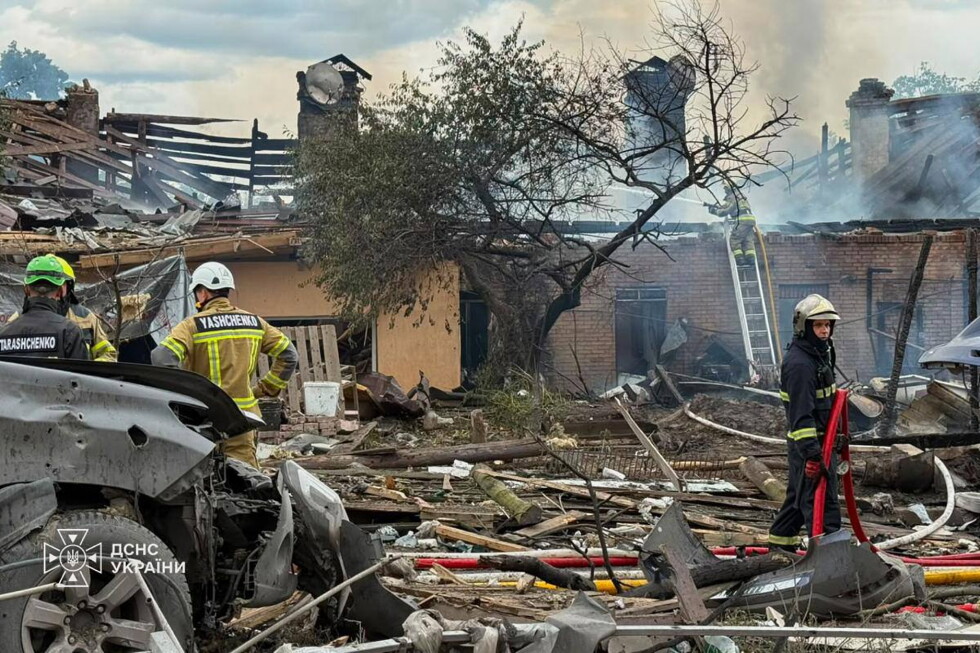
    The announcement comes one week after Russian authorities confirmed they would drastically scale back the traditional annual Victory Day military parade on Moscow’s iconic Red Square, a decision directly tied to growing security fears over potential cross-border attacks from Ukraine. Since Russia launched its full-scale invasion more than four years ago, Ukraine has carried out a growing number of deep-strike drone attacks targeting locations inside Russian territory as part of its counter-offensive operations.

    Russia’s Defense Ministry went on to issue an explicit threat: if Ukraine carries out any action to disrupt Saturday’s Victory Day celebrations, Russian forces will launch a massive missile strike against central Kyiv. The statement also included a formal warning to civilian residents of the Ukrainian capital and staff working at foreign diplomatic missions, urging them to evacuate the city immediately to avoid harm.

    The ceasefire discussion was first raised last week during a phone call between Russian President Vladimir Putin and former U.S. President Donald Trump, where Putin first floated the idea of a truce to mark the national holiday.

    For decades, the Kremlin has leaned on the elaborate, spectacle-driven Victory Day parade as a platform to display Russia’s military power and diplomatic standing on the global stage, and the holiday has long served as a unifying source of national patriotic pride for the Russian public. This year, however, the Moscow parade will proceed without the traditional display of tanks, ballistic missiles, and other heavy military equipment for the first time in almost 20 years. Many smaller regional parades held across Russia’s vast territory have also been cut back or canceled entirely due to persistent security concerns.

    World War II holds a unique, unifying role in modern Russian national memory. For the Soviet Union, the conflict—referred to domestically as the Great Patriotic War (1941–1945)—cost 27 million lives, a staggering national loss that remains etched into the collective Russian psyche decades later, standing as one of the few shared historical touchstones across Russia’s turbulent modern political history.

    Over his 25-plus years in power, Putin has elevated Victory Day into a core ideological pillar of his presidency, frequently framing the ongoing conflict in Ukraine through the lens of the World War II anti-Nazi struggle to justify the invasion. Last year’s 80th anniversary commemoration drew the largest gathering of global heads of state to Moscow in a decade, with high-profile international guests including Chinese President Xi Jinping, Brazilian President Luiz Inácio Lula da Silva, and Slovak Prime Minister Robert Fico in attendance. For that 2024 event, Putin declared a 72-hour unilateral ceasefire starting May 7, and authorities shut down cellular internet access across Moscow for multiple days to reduce the risk of Ukrainian drone attacks.

  • Spain seizes record amount of cocaine in Atlantic Ocean, authorities say

    Spain seizes record amount of cocaine in Atlantic Ocean, authorities say

    In a landmark operation that marks a massive blow to international drug trafficking networks, Spain’s Civil Guard has intercepted a cargo freighter in international waters off the Canary Islands and seized what officials confirm is the largest cocaine haul in the country’s modern history.

    According to announcements from the AUGC, the main union representing Civil Guard personnel, the intercepted shipment contained between 30,000 and 45,000 kilograms, or 33 to 50 metric tonnes, of cocaine. Around 20 crew members and suspected traffickers were taken into custody following the Friday interception, the union confirmed to AFP. The vessel had departed Sierra Leone and was en route to Libya when it was stopped.

    Spanish Interior Minister Fernando Grande-Marlaska emphasized the scale of the operation during a press briefing in Madrid, noting that the seizure ranks among the largest not just in Spain, but across the entire world. Law enforcement has not released further details on the ongoing investigation to preserve investigative integrity, as required by Spanish legal procedure.

    The Civil Guard shared visual evidence of the seizure on social platform X, showing large quantities of cocaine packed into the freighter’s cargo hold. In its post, the agency wrote, “Today history is being written in the Maritime Service of the Civil Guard. Intercepted in international waters the largest known seizure: between 30,000 and 45,000 kg of cocaine on board a freighter.”

    Though the ship’s stated final destination was Libya, industry observers and law enforcement patterns point to a planned diversion for European distribution. Per AFP reporting, it is standard for trafficking networks to use large bulk cargo vessels to move drug shipments across the Atlantic, before transferring cargo to smaller speedboats that offload the contraband into European ports across the Iberian Peninsula and beyond.

    Prior to this operation, Spain’s largest at-sea cocaine seizure stood at just under 10 tonnes, a haul intercepted back in January 2024. This new record is more than three times the size of that previous capture, underscoring both the scale of drug trafficking activity across the Atlantic and the expanding reach of Spanish law enforcement counter-narcotics operations.

  • Three Russian diplomats expelled from Austria over spying accusations

    Three Russian diplomats expelled from Austria over spying accusations

    In a sharp escalation of diplomatic tensions between Vienna and Moscow, Austria has ordered the expulsion of three Russian diplomats over allegations of unauthorized espionage activity carried out from official Russian diplomatic sites within the country. The expelled personnel have already departed Austrian territory, according to top government officials.

    Austrian Foreign Minister Beate Meinl-Reisinger confirmed that the intelligence gathering operation relied on an extensive network of surveillance antennas, described as a “forest of antennas,” installed across the rooftops of Russian diplomatic properties — including the main Russian embassy in central Vienna and a separate Russian diplomatic compound outside the capital. Initial reporting by Austria’s national public broadcaster ORF, which was later formally verified by the Austrian foreign ministry, first brought the existence of the antenna network to public attention.

    Long a source of friction for Austrian domestic intelligence agencies, the antennas have enabled Russian operatives to intercept satellite internet data from a wide range of organizations, including multiple international bodies based in Vienna, ORF reported. In an official statement shared with the BBC, Meinl-Reisinger framed the expulsion as a decisive break from past policy under Austria’s new governing coalition. “Espionage is a security issue for Austria,” she said. “We have brought about a change of course in this government and are taking decisive action against it. We have made this clear to the Russian side, particularly with regard to the forest of antennas at the Russian embassy.” The foreign minister added that the misuse of diplomatic immunity to conduct spying operations was completely unacceptable under international norms.

    The Russian embassy in Vienna has rejected the Austrian allegations in strong terms, denouncing the expulsion as an unjustified, politically motivated move that Moscow will not let go unanswered. “We regard this latest unfriendly move by the Austrian authorities as entirely unjustified, purely politically motivated and categorically unacceptable,” the embassy said in a formal statement. “Moscow will undoubtedly respond harshly to these completely ill-considered actions on the part of the Austrian side.”

    This latest incident comes amid a growing string of Russian espionage accusations across Central Europe, affecting both Austria and neighboring Germany. In January 2026, Vienna launched the highest-profile Austrian spy trial in decades, when former Austrian intelligence official Egisto Ott went on trial on charges that he passed classified information to Russian intelligence operatives and fugitive former Wirecard executive Jan Marsalek in exchange for payment. Ott’s legal team has vigorously denied all allegations, and the trial remains ongoing as of this reporting.

    Marsalek, an Austrian citizen who is wanted on fraud charges by German authorities and listed on an Interpol Red Notice, is widely accused of operating as an asset for Russia’s Federal Security Service (FSB). He fled Europe through Austria in 2020 after the collapse of Wirecard, and is currently believed to be residing in Moscow. Just weeks after Ott’s trial began, Germany also expelled a Russian individual accused of spying and summoned the Russian ambassador to Berlin to formally protest the activity. In a public social media statement, the German foreign ministry stressed that it would not tolerate espionage on German soil, especially when conducted under the protection of diplomatic status.

    Vienna’s status as a global hub for espionage stretches back decades, rooted in its Cold War history as a neutral European power located directly along the Iron Curtain, which made it an ideal listening post for both Western and Eastern bloc intelligence agencies. Today, the city hosts permanent headquarters for multiple major international bodies, including the United Nations and the Organization for Security and Co-operation in Europe (OSCE). Most nations maintain multiple diplomatic missions in Vienna to serve these international organizations alongside their official bilateral embassies, creating a large community of diplomats who enjoy universal diplomatic immunity — a status that is frequently abused to cover unauthorized intelligence activity.

    Austria’s most recent annual Report on the Protection of the Constitution identifies Vienna as “one of the last remaining locations for Russian signals intelligence in Europe.” The report notes that the extensive signals intelligence operation has directly led to the unusually large contingent of Russian diplomatic staff accredited in the capital, which currently stands at roughly 220 personnel even after multiple expulsion actions. The document also warns that ongoing Russian intelligence activity originating from Vienna has caused measurable damage to Austria’s international reputation. Since the full-scale Russian invasion of Ukraine in 2022, Austria has expelled a total of 14 Russian diplomatic staff in response to espionage-related incidents.

  • Two killed and many injured after car driven into crowd in German city of Leipzig

    Two killed and many injured after car driven into crowd in German city of Leipzig

    On Monday afternoon, a devastating vehicle attack on a crowd of pedestrians in central Leipzig, eastern Germany, has left two people dead and multiple others wounded, local law enforcement and emergency management officials confirmed.

    According to Leipzig Fire Chief Axel Schuh, a total of 22 people were injured in the incident, with two of those injuries categorized as critical. In response to the emergency, first responder agencies dispatched roughly 40 firefighters, 40 paramedics, and two medical helicopters to the scene on Grimmaische Straße, a busy central thoroughfare in the city.

    Leipzig Mayor Burkhard Jung told reporters that the suspected driver, who is alleged to have struck multiple pedestrians before fleeing the initial impact site, has been taken into police custody. As of the latest official updates, investigators have not yet determined a clear motive for the attack.

    Local police have since verified the sequence of events, confirming that the vehicle hit multiple people in the crowded downtown area before the driver fled. The suspect was ultimately apprehended, and law enforcement has stated that the perpetrator no longer poses any public safety threat.

    At approximately 17:35 local time (15:35 GMT), police notified local media outlet Radio Leipzig that the active danger period had passed, and the entire area surrounding the attack site was cordoned off for forensic investigation. Unverified user-posted footage and images circulating on social media platforms show a yellow emergency response helicopter operating near the scene alongside dozens of ambulances staged to transport wounded victims to area hospitals.

    Local news outlets have issued a call for witnesses who captured footage or observed the attack to come forward with information, provided that doing so does not put the witness at personal risk.

  • A driver plows into people in the German city of Leipzig, injuring several

    A driver plows into people in the German city of Leipzig, injuring several

    LEIPZIG, Germany – Authorities have confirmed that a driver drove a vehicle into a crowd of pedestrians in the heart of the eastern German city of Leipzig on Monday, leaving an unspecified number of people wounded in an incident that quickly drew a law enforcement response.

    In the immediate aftermath of the event, official details remained sparse. According to Germany’s national news agency DPA, law enforcement officials have not yet released an exact count of people harmed in the incident, but have confirmed that no lives have been lost to this point.

    A public notice published to the city of Leipzig’s official online portal confirmed that both the vehicle involved and its operator have been intercepted by authorities, and that the situation no longer presents any ongoing threat to public safety in the area.

    The ramming incident took place along Grimmaische Strasse, a busy thoroughfare that serves as a main access point to one of central Leipzig’s primary commercial and shopping districts, a location that typically sees heavy foot traffic from both locals and visitors throughout the week.

    For geographic context, Leipzig sits roughly 100 miles southwest of Germany’s capital city of Berlin. With a resident population exceeding 630,000 people, it ranks among the largest urban centers in the eastern portion of the country, drawing thousands of daily visitors to its downtown commercial, retail, and cultural spaces.

  • Rubio plans to visit the Vatican this week as tensions between Trump and the pope rise

    Rubio plans to visit the Vatican this week as tensions between Trump and the pope rise

    A high-stakes diplomatic mission is set to unfold this week, as U.S. Secretary of State Marco Rubio travels to Rome and Vatican City to defuse rapidly escalating friction between President Donald Trump and the first American-born pontiff, Pope Leo XIV, rooted in deep disagreements over the Trump administration’s Iran war policy. The State Department officially confirmed Rubio’s itinerary on Monday, noting that the trip, scheduled for Thursday and Friday, marks the Catholic secretary’s third official visit to Italy or the Holy See since he took office as the Republican administration’s top diplomat. Vatican officials have publicly confirmed that Rubio will hold a one-on-one meeting with Pope Leo on Thursday.

    According to a formal statement from the State Department, the core agenda for Rubio’s discussions with Holy See leadership will center on the volatile security situation across the Middle East, alongside overlapping policy priorities for the U.S. and the Vatican in the Western Hemisphere. Separate meetings with Italian government counterparts, the statement added, will focus on collaborative security objectives and continued strategic alignment between the two NATO allies.

    The diplomatic outreach comes at a moment of open public friction between the sitting U.S. president and the pope. Tensions first flared last month, when Trump issued a scathing social media rebuke of Pope Leo, accusing the pontiff of being soft on transnational crime and terrorism over Leo’s public criticism of the administration’s hardline immigration and deportation policies, as well as its ongoing military campaign in Iran. In response, the Pope delivered a widely interpreted rebuke, stating that God does not hear the prayers of leaders who choose to wage aggressive war. The exchange escalated dramatically when Trump shared a now-deleted social media graphic that depicted him in the likeness of Jesus Christ.

    To date, Trump has rejected repeated calls to apologize for the controversial post, offering a shifting explanation that he initially believed the image portrayed him as a medical professional rather than a Christ figure. The friction between the White House and the Vatican has already spilled beyond religious and diplomatic circles, seeping into Italian domestic politics: Prime Minister Giorgia Meloni, a longstanding ally of Trump, has publicly condemned the president’s comments about the pope. In turn, Trump has lashed out at Meloni, part of a broader growing frustration with NATO allies that he accuses of failing to provide sufficient support for the Iran war. That frustration has already translated into policy, with the Pentagon announcing plans to withdraw thousands of U.S. troops from Germany in the coming months.

    This is far from the first time Rubio has been tapped to clean up after Trump’s provocative rhetoric: the secretary has repeatedly been tasked with walking back or softening the president’s harsh public statements on European relations, NATO and Middle East policy. Beyond the international diplomatic ramifications, the high-profile dispute with the pope carries notable domestic political stakes for the Republican Party, as the U.S. approaches upcoming midterm congressional elections.

    Pope Leo has sought to frame his own comments as non-partisan, saying his public calls for peace and criticism of the Iran war and other global conflicts were not intended as a direct attack on Trump or any other political leader. Prior to this week’s trip, Rubio has made two official visits to Italy as Secretary of State. His first trip, in May 2025, included attendance at Pope Leo’s inaugural mass and a private audience with the pontiff alongside Vice President JD Vance. His second visit, in February, again paired with Vance, for the opening ceremony of the Milan Winter Olympics, where the pair met with U.S. Olympic athletes. This story has been corrected to confirm that this week’s trip will bring Rubio’s total number of official visits to Italy or the Vatican to at least three.

  • Families evacuated from Gaza enjoy a day to decompress at Rome’s ancient baths

    Families evacuated from Gaza enjoy a day to decompress at Rome’s ancient baths

    ROME, May 4 — For nearly 1,800 years, the grand, intricately decorated Baths of Caracalla, a sprawling ancient public bath complex steps from Rome’s iconic Colosseum, served as a space of leisure, healing, and quiet relaxation for Roman citizens. On a sunlit spring Sunday this year, this historic site took on a new, deeply meaningful purpose: a moment of escape from trauma and medical uncertainty for nearly 50 Palestinian children and their families, evacuated from war-ravaged Gaza to Italy through the country’s humanitarian corridor program for urgent medical care.

    Organized by Guides for Gaza, a volunteer network of Italian tour guides formed to support displaced Gazans, the day-long outing offered more than just a walk through ancient ruins. Beyond a guided tour of the site’s towering marble remnants and ancient engineering features, volunteers arranged light refreshments, games for children, and unstructured time for families to connect and process their experiences away from hospital appointments and the weight of war memories. “We brought these families here so they could experience the joy of visiting an ancient archaeological site,” Luisa delle Fratte, a tour guide with the group, told the Associated Press. Amid ordinary Italian locals spreading picnic blankets on the grass to enjoy the warm spring weather, the Palestinian families, all now temporary residents of Rome, moved seamlessly through the 27-hectare site. They snapped selfies against the backdrop of centuries-old stone columns, watched the new reflecting pool’s fountain jets arc into the air, and followed their guide and translator through the site’s historic halls.

    For 13-year-old Ahmed Skena, one of the evacuees, the outing marked a small break in a long road of medical recovery. Skena was injured in the conflict that has ravaged Gaza, leaving him with impaired speech and limited mobility in one hand and leg. He also lost his father and brother in the war, he shared haltingly with reporters. For Mariam Dawwas, a 25-year-old who traveled to the outing with her husband and four young children, one of whom requires ongoing medical treatment, the safety of Rome is already a profound change from life in Gaza. Dawwas and her family were displaced more than 10 times across the enclave before they were evacuated through the humanitarian program. “Thank God, I am still in a better situation than in Gaza, away from the bombing. At least I am safe, I have shelter, and there is light for my children,” she said.

    Delle Fratte noted that the outing also created a rare chance for reconnection: several of the families had known each other back in Gaza but had not seen one another since their separate evacuations. “It was very beautiful to see them there embracing again and meeting one another once more,” she said. The event also doubled as a fundraiser for ongoing support for Gazan civilians: while the Palestinian families toured the ruins for free, Guides for Gaza offered paid tours to regular visitors to the site, with all donations going to Gazelle, a nonprofit organization that runs child protection programs across the Gaza Strip.

    The ongoing conflict in Gaza erupted in October 2023 after a Hamas-led attack on southern Israel that killed roughly 1,200 people, most of them civilians, and abducted 251 more. Since that time, the Gaza Health Ministry, operating under the Hamas-led government, reports that more than 72,000 Palestinians have been killed in the subsequent military campaign. The ministry’s casualty data, which does not break down numbers between combatants and civilian residents, is widely regarded as generally reliable by United Nations agencies and independent conflict analysts. International diplomatic efforts, including a 20-point ceasefire plan proposed by former U.S. President Donald Trump, remain ongoing to end the conflict and pave the way for reconstruction of the devastated enclave.

  • A European lawmaker is sentenced in a fraud case involving Czech populist leader Andrej Babiš

    A European lawmaker is sentenced in a fraud case involving Czech populist leader Andrej Babiš

    PRAGUE — In a high-profile legal ruling that has roiled the Czech political landscape just months after Prime Minister Andrej Babiš formed his new government, a municipal court in Prague found former close aide Jana Nagyová guilty of fraud connected to a $2 million European Union subsidy scheme on Monday. The court handed Nagyová a three-year suspended prison sentence and ordered her to pay a fine of 500,000 Czech koruna, equal to approximately $24,000. The verdict is not binding, as Nagyová retains the right to file an appeal to challenge the conviction.

    The case, one of the most controversial political legal matters in modern Czech history, names both Nagyová and Babiš, a populist billionaire who began his third term as prime minister in December 2024, as co-defendants. The fraud allegation centers on the Stork’s Nest farm, a property that was deliberately restructured to qualify for EU agricultural subsidies earmarked exclusively for small and medium-sized enterprises.

    Originally owned by Agrofert, the large industrial conglomerate controlled by Babiš, the farm was transferred into the names of Babiš’s family members to meet the small-business eligibility criteria for the funding. After securing the $2 million in subsidies, full ownership of the property was transferred back to Agrofert — a company that would never have qualified for the targeted funding on its own. Agrofert has since returned the disputed subsidy to authorities.

    Unlike Nagyová, who currently serves as a member of the European Parliament and has already had her legal immunity lifted by EU legislative bodies, Babiš retains parliamentary immunity from criminal prosecution. In March, lawmakers in the lower chamber of the Czech Parliament voted down a motion to revoke Babiš’s immunity, a decision that means any trial against the sitting prime minister cannot proceed until his current term ends in 2029. Babiš has repeatedly denied any wrongdoing, framing the entire case as a politically motivated attack against his administration.

    Babiš’s return to the prime minister’s office came after his populist political movement ANO — which translates to YES in Czech — secured a decisive victory in October national elections. He went on to form a narrow governing coalition with two small right-wing and populist parties: the anti-immigrant Freedom and Direct Democracy party, and the right-wing Motorists party. The coalition’s stated policy agenda marks a notable shift from the previous Czech government, including plans to reduce Czech military and political support for Ukraine amid the ongoing Russian invasion, and to push back against a number of flagship European Union policy initiatives. The conviction of Babiš’s former closest associate is expected to amplify domestic tensions, with opposition leaders already calling for greater transparency and accountability for the new administration.

  • Austria expels 3 Russian Embassy staff over suspected antenna spying in Vienna

    Austria expels 3 Russian Embassy staff over suspected antenna spying in Vienna

    VIENNA – In a sharp escalation of diplomatic tensions between Moscow and a European Union member state, Austria’s Foreign Ministry announced Monday it has expelled three Russian Embassy personnel over credible allegations of systematic espionage targeting international organizations headquartered in the country. The move confirms an earlier report from Austrian public broadcaster ORF, which first broke the story Sunday, detailing accusations that the three diplomats used hidden antenna arrays installed on the roofs of two Russian diplomatic properties – the main Russian Embassy in central Vienna and a separate diplomatic compound in the capital’s Donaustadt district – to conduct covert intelligence gathering.

    According to ORF’s reporting, the custom-built antenna installations gave Russian intelligence operatives the capability to intercept satellite internet data transmitted by major international organizations based in Vienna. The Austrian capital hosts a dense network of key global bodies, including multiple United Nations agencies, the United Nations’ nuclear watchdog the International Atomic Energy Agency (IAEA), the Organization of the Petroleum Exporting Countries (OPEC), and the Organization for Security and Co-operation in Europe (OSCE).

    In an official statement announcing the expulsions, Austrian Foreign Minister Beate Meinl-Reisinger emphasized that the new government has shifted its approach to addressing foreign espionage on Austrian soil. “Espionage is a security problem for Austria. In this government, we have changed course and are taking decisive action against it,” Meinl-Reisinger said. “We have made this unequivocally clear to the Russian side, also with regard to the array of antennas at the Russian embassy. One thing is clear: it is unacceptable for diplomatic immunity to be used to engage in espionage.”

    The incident traces back to April, when Austrian authorities summoned Russian Ambassador Dmitry Lyubinsky to the Foreign Ministry over the suspected activities. Prosecutors requested that Moscow waive diplomatic immunity for the three employees to allow a formal criminal investigation, but Russia rejected the request – a decision that directly triggered the expulsion order, ORF confirmed. As of Monday, all three expelled diplomats have already departed Austrian territory.

    Beyond the immediate expulsions, the Austrian government is moving to update the country’s national espionage legislation to close critical gaps that currently leave international organizations based in Austria underprotected. Under existing law, espionage carried out by foreign actors is only criminalized if it targets direct Austrian national interests. The proposed regulatory reforms, put forward by the current administration, will extend the same legal protections to activities involving international organizations hosted on Austrian soil, the Austrian Press Agency confirmed.

    The expulsions mark the latest in a series of reciprocal diplomatic expulsions between Western European states and Russia that have taken place since Moscow launched its full-scale invasion of Ukraine in February 2022. Austria, which holds formal military neutrality as an EU member, initially avoided taking high-profile diplomatic action against Moscow but has ramped up such expulsions in recent months.

    The Russian Embassy in Vienna had not responded to direct requests for comment on the decision by Monday afternoon. However, in a public statement posted to its official Telegram channel Monday, the embassy called Austria’s decision “outrageous” and warned that Moscow would issue a forceful reciprocal response. The statement added that “Vienna bears full responsibility for the further deterioration of bilateral relations, which are already at a historical low.”

  • Princess Eugenie and her husband announce they are expecting their 3rd child

    Princess Eugenie and her husband announce they are expecting their 3rd child

    LONDON — A new addition is on the way for Britain’s royal extended family, with Princess Eugenie and her spouse Jack Brooksbank sharing the happy news of their upcoming third child this Monday. Official confirmation from Buckingham Palace laid out details of the upcoming arrival: Eugenie, the youngest daughter of Prince Andrew (now formally known as Andrew Mountbatten-Windsor) and his former wife Sarah Ferguson, is expected to welcome the new baby in the coming summer months.

    The couple already share two young sons: five-year-old August and two-year-old Ernest. According to the palace’s statement, both boys are already overflowing with excitement at the prospect of greeting a new sibling into their close-knit family. The news has also sparked joy among the wider royal family, with Eugenie’s uncle King Charles III — who is Andrew’s older brother — described as absolutely delighted by the announcement.

    The pregnancy marks the latest update for the younger generation of Britain’s royal family, coming as the household continues to adjust to ongoing shifts in public life and generational change within the monarchy. Eugenie, who maintains a lower public profile than working members of the royal family, has largely kept her family life out of the intense spotlight that accompanies senior royal roles in recent years.