标签: Europe

欧洲

  • In a remote German village, mail is delivered by boat during warmer months

    In a remote German village, mail is delivered by boat during warmer months

    Tucked 100 kilometers southeast of Berlin, the historic riverside village of Lehde sits within the winding waterways of the Spreewald Forest, a protected UNESCO biosphere reserve where the Spree River splits into hundreds of narrow, shallow canals cutting through lush wetlands and old-growth forest. For 129 consecutive years, this tiny German village has held a singular distinction across the whole country: it is the only community in Germany that receives all its mail delivery by boat, a seasonal tradition that returns every spring as ice thaws and waterways become navigable once more.

    This year, that long-awaited seasonal kickoff fell on a Wednesday in early April, when 55-year-old veteran postal worker Andrea Bunar stepped back onto her bright yellow 9-meter barge after a months-long winter break. For 14 years, Bunar has carried out this unique delivery route, switching between overland car trips in the frozen winter months and waterborne deliveries from April through October. On her first day back on the water, she stood at the stern of her vessel, guiding the shallow-draft barge through narrow channels with a single long oar that handles rowing, steering, and navigation all at once.

    “The start of the season is always special for me,” Bunar shared as she set off, clad in her official postal uniform. “After the long winter break, I enjoy being in the nature and back on the water.” Winter overland delivery is far from ideal in Lehde: rural roads are often slick with ice and snow, forcing much longer travel times than the water route. From spring through mid-autumn, Bunar makes deliveries six days a week, dropping letters and packages into mailboxes that residents have mounted directly along the riverbanks. She also offers on-route postal services, selling stamps to locals along the remote waterway and collecting outgoing mail to bring back to the main postal hub.

    The tradition of boat-borne mail delivery in Lehde dates back to the late 19th century. Before the service launched, villagers only collected their mail once a week, after Sunday church services. As rural-to-urban migration boomed across Germany, demand for more frequent long-distance communication surged, prompting the national postal service to establish regular delivery routes. For Lehde, a village crisscrossed by more waterways than paved roads, a boat delivery route was the only practical solution – turning the community into a tiny, Teutonic counterpart to Venice, built on interconnected canals.

    Today, Bunar covers an 8-kilometer route every week, completing the full circuit in roughly two hours. On average, she delivers around 600 letters and 80 packages each week, a mix that has shifted noticeably in recent years: handwritten and personal letters have declined, while online shopping has led to a sharp jump in package volume. Bunar jokes that her small barge has started to feel like a miniature container ship, having delivered everything from full-sized refrigerators and lawnmowers to electric scooters. On her 2024 opening day, alongside the usual stack of bills and registered correspondence, she delivered a large industrial saw to one local resident.

    For Bunar, this unconventional postal route is far more than just a job – it is a lifelong dream. “This is and has been my dream job all along,” she said with a smile, steering her barge past tree-lined canal banks. “Being on the water is just so relaxing – it slows down life.” The Spreewald biosphere, which protects hundreds of kilometers of waterways and a vast array of native plant and animal species, provides a quiet, scenic backdrop for her daily work, a pace of life that stands in stark contrast to the bustle of Berlin just an hour’s drive away.

  • UK expels Russian diplomat in retaliation for Moscow’s recent expulsion of a British official

    UK expels Russian diplomat in retaliation for Moscow’s recent expulsion of a British official

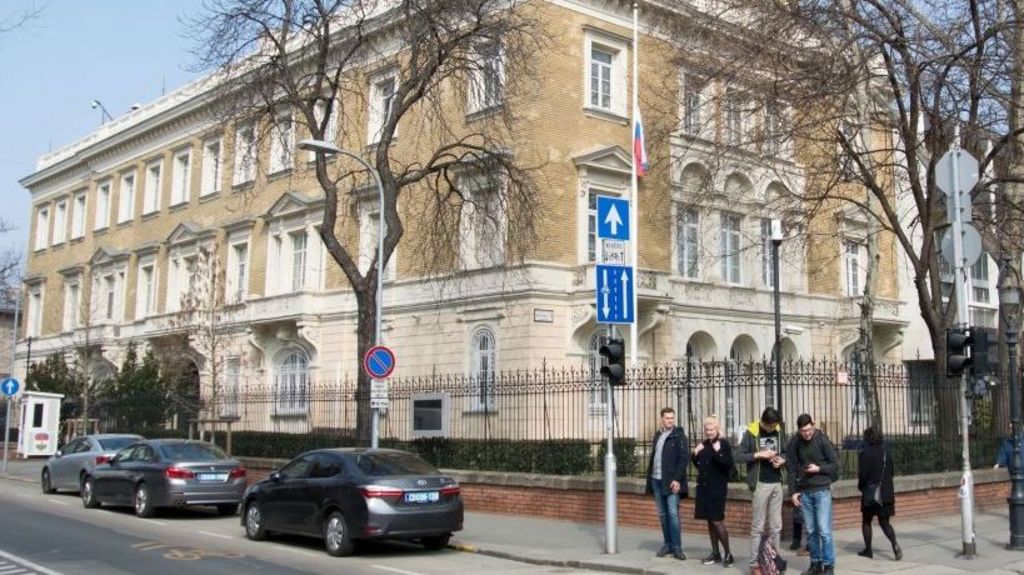
    LONDON – In a calibrated act of reciprocal retaliation against Moscow’s recent expulsion of a British diplomat and the subsequent public smear campaign against the UK, the United Kingdom announced the expulsion of a Russian diplomat on Wednesday. The UK’s Foreign, Commonwealth and Development Office confirmed it summoned Russia’s ambassador to London to its headquarters to formally deliver notice of the “reciprocal action”, a move that comes as bilateral tensions between Russia and Western nations continue to escalate sharply.

  • Men accused of being approached by Russian contact to attack Starmer-linked assets in London

    Men accused of being approached by Russian contact to attack Starmer-linked assets in London

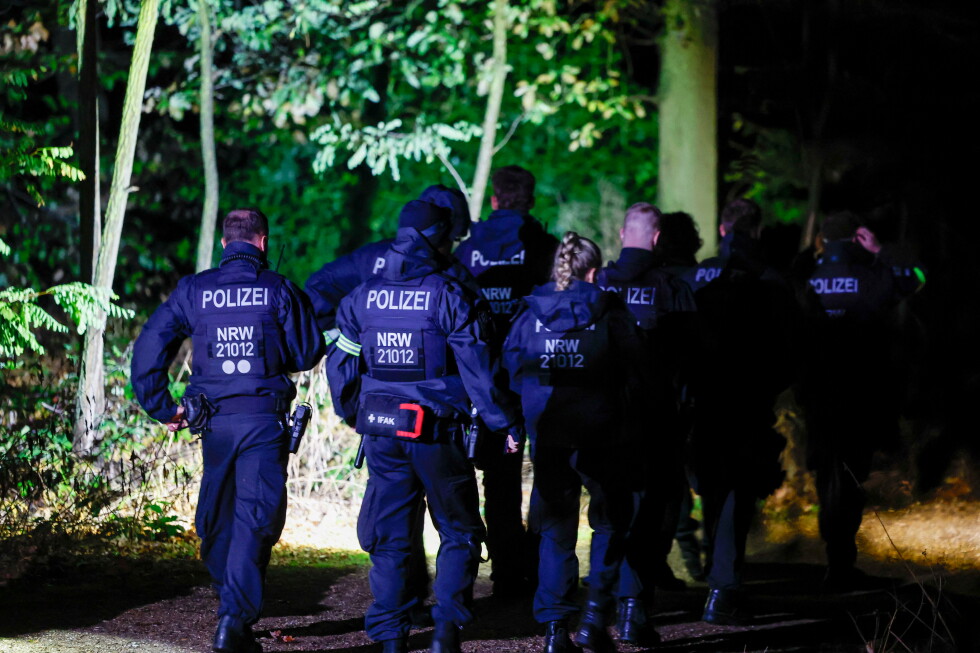
    LONDON – As a high-stakes legal case got underway in a British court this week, prosecutors laid out detailed allegations that three foreign nationals were paid by an anonymous online contact to carry out a series of coordinated arson attacks targeting properties connected to United Kingdom Prime Minister Keir Starmer last year.

    Opening the trial on Wednesday, lead prosecutor Duncan Atkinson outlined the timeline of the alleged plot, which unfolded across north London over five days in May. The three defendants are identified as 22-year-old Ukrainian national Roman Lavrynovych, 35-year-old Ukrainian national Petro Pochynok, and 27-year-old Romanian citizen Stanislav Carpiuc. All three have formally denied the charges of conspiracy to commit arson brought against them.

    According to Atkinson’s account to the jury, the string of attacks began in the early hours of May 8, when a Toyota vehicle – previously owned by Starmer – was deliberately set on fire in the Kentish Town neighborhood. Three days later, on May 11, a blaze was ignited at a residential property on Ellington Road, a building managed by a firm where Starmer previously held a position as a director and shareholder. The final attack followed 24 hours later at a second home on Countess Road: a property still owned by Starmer, currently occupied by the prime minister’s sister-in-law.

    Atkinson emphasized that the sequence of targeted blazes was far from a random coincidence. “Three fires in the same area within five days would be pretty unusual. However, three fires all involving property linked to the same person were beyond a coincidence,” he told the court. All three fires were started using matching incendiary materials and set in the dead of night, when the occupants of the targeted properties would certainly be asleep, a detail Atkinson said proves the attackers intended to put lives at risk.

    Both occupied homes had residents who escaped harm after waking to detect smoke and flames, though the encounters were traumatic. On May 11, a top-floor resident of the divided Ellington Road property woke to the smell of smoke around 3 a.m. After opening his front door to find thick smoke filling the communal hallway, he was forced to retreat to the building’s roof to wait for emergency responders, struggling to breathe through the ordeal. The following morning, around 1 a.m. on May 12, Starmer’s sister-in-law heard loud popping bangs before seeing thick smoke pour through her front door and fill the home’s staircase. She also experienced respiratory distress, and her 9-year-old daughter was left severely frightened by the incident, Atkinson confirmed.

    Prosecutors confirm Lavrynovych is identified as the primary offender who set all three fires, while the other two defendants are charged as co-conspirators. Beyond the conspiracy count, Lavrynovych faces two additional charges of damaging property by fire, with intent to endanger life or reckless disregard for potential loss of life. Atkinson told the court that the plot was coordinated through the encrypted messaging platform Telegram, where Lavrynovych was promised payment for the attacks by an anonymous contact operating under the username “El Money,” described as a Russian-speaking contact. Court documents do not include details on the total amount of payment offered, and no fatalities or serious injuries were reported in connection with the blazes.

    Investigators have recovered more than 320 messages exchanged between Lavrynovych and “El Money” dating back to September 2024, but Atkinson instructed the jury that they do not need to determine the ultimate motivation for the alleged attacks, nor do they need to rule on the identity of the anonymous contact who organized the plot. It also does not matter whether the defendants themselves knew the targeted properties were connected to Starmer, Atkinson argued, as that question has no bearing on the conspiracy charges before the court.

  • Defying protocol, Trump relays details of private conversation with King Charles III

    Defying protocol, Trump relays details of private conversation with King Charles III

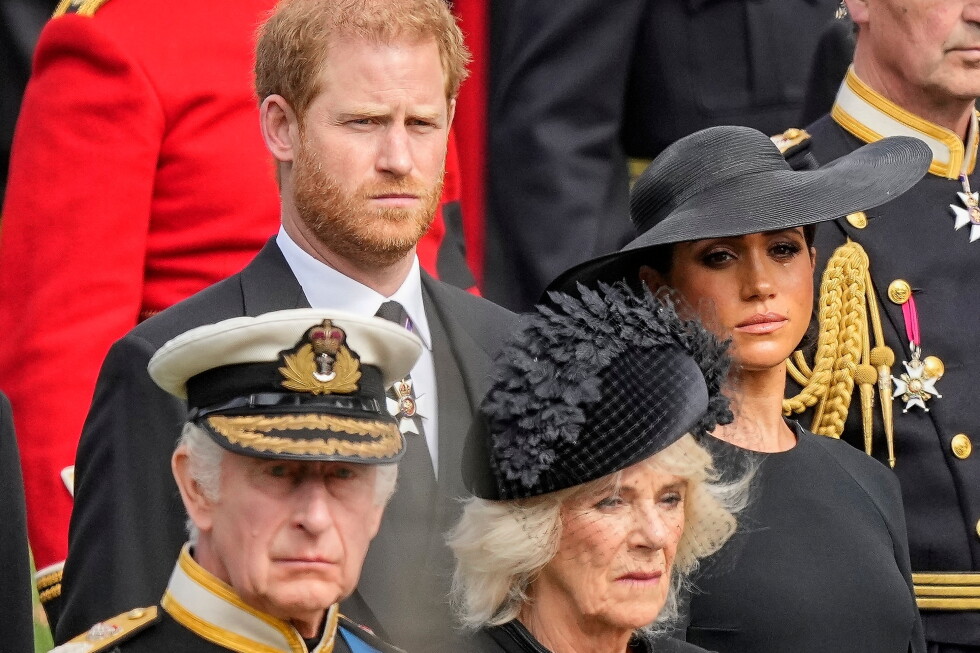
    LONDON – When King Charles III and Queen Camilla kicked off their high-stakes 2025 state visit to the United States, British officials were bracing for missteps. The trip came as U.S. President Donald Trump openly aired frustration with UK Prime Minister Keir Starmer over the prime minister’s refusal to back American military actions in the ongoing Iran conflict. London’s core hope was that Charles’ warm personal rapport with Trump — a known admirer of the British monarchy — could smooth frayed bilateral ties and repair the growing diplomatic rift between the two allies.

    No one expected a major controversy, but few discounted the risk presented by Trump’s well-documented habit of ditching established diplomatic protocol. That risk became reality on the first night of the visit, during a formal state dinner held in the king and queen’s honor. Speaking to the assembled audience, Trump made an unusual disclosure: during a private closed-door meeting with King Charles earlier that day, he claimed the British monarch had explicitly agreed with his stance that Iran must never be permitted to develop a nuclear weapon.

    “We’re doing a little Middle East work right now … and we’re doing very well,” Trump told guests. “We have militarily defeated that particular opponent, and we’re never going to let that opponent ever — Charles agrees with me, even more than I do — we’re never going to let that opponent have a nuclear weapon.”

    While the core of Trump’s claim aligns with the long-held public position of both the British government and a majority of the British public, the off-the-cuff comment immediately sparked mild consternation among constitutional experts and political commentators across the United Kingdom. Longstanding unwritten constitutional convention holds that private conversations with the reigning monarch are never disclosed publicly. This norm exists for two key reasons: the British sovereign is required to remain strictly neutral and above partisan political debate, and crucially, the monarch has no right to enter public discourse to correct misquotations or clarify misattributed statements.

    Craig Prescott, a leading scholar of constitutional law and royal studies at Royal Holloway, University of London, explained the significance of the breach. “Generally, as a matter of protocol, I think I would expect discussions between heads of state to be sort of behind the scenes, in those closed meetings, for those to be sort of kept private,” he noted. “And, you know, this was something that the U.K. government wanted to avoid.”

    Buckingham Palace moved quickly to defuse tension, releasing a muted statement designed to contextualize Trump’s remarks without explicitly confirming or denying the president’s account. “The King is naturally mindful of his government’s long-standing and well-known position on the prevention of nuclear proliferation,” the palace said.

    Crucially, observers across the board have stressed that the incident is far from a major diplomatic crisis. The stance Trump attributed to Charles matches the official UK policy on Iranian nuclear proliferation exactly, eliminating most risk of lasting damage. Multiple analysts have echoed Prescott’s observation that the breach of protocol could have been far more severe. For weeks ahead of the visit, officials had worried that Trump might make more inflammatory comments, or share sensitive private exchanges via social media that would put the king in an truly untenable position.

    In fact, the first political segment of the state visit has been largely marked by success. Before the state dinner, King Charles delivered a widely praised address to a joint session of the U.S. Congress, where he celebrated the centuries-long special relationship between the United States and the United Kingdom while openly acknowledging ongoing differences on issues ranging from NATO burden-sharing to support for Ukraine and global climate action. The speech drew multiple standing ovations from lawmakers, and even critics have noted it won broad positive reception in Washington.

    Now, the royal visit is shifting to lower-stakes territory as Charles and Camilla travel from Washington D.C. to New York City, where the official itinerary will center on celebrating the city’s creative industries, youth employment initiatives, and cultural exchange rather than high-stakes geopolitics. If Trump’s disclosure of the private conversation is the only controversy to emerge from the visit’s opening political phase, Prescott argues, the trip should still be considered a major win for both King Charles and the British government.

    “If this is the only controversy arising out of this phase of the state visit, I think overall this has been an enormous success for the king and the British government, because the king was able to make some quite pointed remarks in Congress and it hasn’t really yielded any sort of negative reaction from the president,” Prescott said. “In a sense, you get the feeling that the king rather charmed Washington with his speech to Congress and, you know, his very witty speech at the state banquet.”

  • Russia scales back Moscow Victory Day parade, blaming threat from Ukraine

    Russia scales back Moscow Victory Day parade, blaming threat from Ukraine

    For decades, Russia’s May 9 Victory Day parade on Red Square has stood as one of the most prominent showcases of national pride and military power, marking the Soviet Union’s 1945 defeat of Nazi Germany in World War II. This year, however, the iconic event will look drastically different, after the Kremlin formally confirmed it will pare back major elements of the celebration in response to what it calls a rising terrorist threat from Ukraine.

    Dmitry Peskov, spokesperson for Russian President Vladimir Putin, told reporters on Wednesday that security officials have enacted sweeping precautionary measures to reduce potential risks amid what the Kremlin frames as expanded hostile activity from the Kyiv government. “The Kyiv regime, which is ceding ground daily on the frontlines, has now shifted to full-scale terrorist operations,” Peskov said. He emphasized that despite the cuts, the parade will proceed as scheduled on Red Square, with all steps taken to keep attendees and participants safe.

    The Russian Ministry of Defense clarified the scope of changes in an official statement released Tuesday evening. While representatives from all branches of the Russian armed forces will still take part, and a ceremonial aerial flyover will be held, traditional elements that have been staples of the parade for years will be absent this year. Notably, cadets from the country’s elite Suvorov military schools, Nakhimov naval schools and other military cadet corps will not march, and no heavy military vehicles or armor will roll across Red Square’s cobblestones. National television will instead broadcast footage of Russian service members carrying out their duties in what Moscow officially calls the “special military operation zone” — its formal term for the full-scale invasion of Ukraine launched in early 2022.

    This is not the first time Russia has adjusted its traditional Victory Day format in recent years, but it marks the first time since the 2022 invasion that no armored column will be featured in the central Moscow parade. Putin, who revived the Soviet-era tradition of marching heavy military hardware through Red Square in 2008, has used the annual event to demonstrate Russia’s growing military strength to both domestic audiences and the international community. In 2024, which marked the 80th anniversary of the 1945 victory, Moscow hosted more than 20 global leaders for an elaborate, high-profile celebration that featured a full procession of modern military equipment, including frontline tanks and combat drones.

    Rumors of a scaled-back 2025 parade first circulated on Russian social media earlier this month, when pro-Kremlin military bloggers publicly raised concerns about the risk of long-range Ukrainian air attacks on the large public gathering. “If you have a parade in full swing and then a missile threat is announced, that would be a massive public relations blow even if no strike actually lands,” prominent pro-war blogger Ilya Tumanov told Russian media outlets. Other pro-Kremlin commentators also noted that none of the usual large-scale parade rehearsals, which require widespread road closures across central Moscow, had taken place in the lead-up to the event, matching the formal announcement of cuts.

    In line with stepped-up security measures, a telecommunications source told BBC Russian that enhanced restrictions on mobile connectivity will be enforced across Moscow on May 5, 7 and 9. This follows widespread mobile internet outages in central Moscow back in March, which Russian authorities tied to unspecified security priorities.

    The decision to scale back the parade comes against a backdrop of a clear increase in Ukrainian strikes targeting Russian territory deep behind the front lines, more than three years into Moscow’s full-scale invasion. In recent weeks, Moscow — widely considered Russia’s most heavily defended city — has already faced multiple Ukrainian drone incursions, with Russian military officials consistently stating that most of the drones are intercepted and shot down before they can hit targets.

    Ukraine has significantly ramped up attacks on critical energy infrastructure across Russia in recent weeks, stretching thousands of kilometers from the border. On Wednesday, plumes of smoke were reported near Perm, a major Ural Mountains city roughly 1,500 kilometers from Ukrainian territory. Ukrainian officials confirmed the site was an oil pumping station hit by a drone, while local Russian authorities only described it as an industrial facility incident. That strike came just one day after Russia’s major oil refinery in the Black Sea port of Tuapse was hit for the third time in April. Earlier strikes on the Tuapse refinery triggered a large oil spill into the Black Sea, with local residents reporting “black rain” laced with oily residue that coated residential areas across the city.

    Kyiv has repeatedly stated that all of its strikes deep inside Russia target legitimate military or war-related infrastructure, arguing that these facilities directly enable Moscow to sustain its invasion. Ukraine has not yet issued an official public response to the Kremlin’s latest terrorism accusations, but a senior Ukrainian official last week explicitly ruled out any attack on the Moscow Victory Day parade. Mykhailo Podoliak, an advisor to Ukrainian President Volodymyr Zelenskyy’s office, noted that the event would draw large crowds of ordinary civilian onlookers, and stressed that “nobody is attacking civilians and civilian infrastructure.”

    For most Russians, the victory over Nazi Germany — referred to domestically as the Great Patriotic War — remains one of the most unifying historical events in the country’s modern history. Many international and domestic analysts broadly agree that Putin has centered this victory as a core national narrative to bind Russian society together, particularly amid the ongoing conflict in Ukraine and heightened tensions with the West.

  • King Charles III’s charity celebrates 50 years of helping young people find work with a gala in NYC

    King Charles III’s charity celebrates 50 years of helping young people find work with a gala in NYC

    As King Charles III and Queen Camilla arrive in the United States for their first state visit since Charles ascended to the British throne, one of the monarchy’s most enduring charitable initiatives is stepping into the global spotlight: The King’s Trust, formerly known as The Prince’s Trust, is celebrating 50 years of lifting young disadvantaged entrepreneurs and job seekers out of economic uncertainty, with plans to deepen its work across the U.S. and more than 20 other countries.

    The organization’s origin story traces back to 1976, when a young Prince Charles poured his entire £7,600 Royal Navy severance pay into launching the charity amid widespread economic turmoil across the United Kingdom. Half a century later, the trust reports it has supported more than 1.3 million young people across the UK, turning early seeds of opportunity into household names from actor Idris Elba to fashion designer Ozwald Boateng. But for Scottish entrepreneur Mike Welch, now a Florida-based business leader who built a multimillion-dollar fortune as an online tire retailer, the charity’s impact is a deeply personal turning point that changed the entire trajectory of his life.

    Welch, a working-class dyslexic teen, left school at 15 after struggling with college entrance exams and landed a job installing tires. When that position fell through, he found himself waiting in line at a Liverpool job center, staring at two options: an opening for a funeral director role, which he calls a “great career” but a “pretty grim” path, and an advertisement for a Prince’s Trust charity event offering small business grants to young aspiring entrepreneurs. He chose the grant opportunity, and less than a day later, he was pitching his unpolished idea: selling affordable tires to niche customers like his friends who owned customized modified cars. What the plan lacked in structure, it made up for in enthusiasm — and the trust backed him. He walked away with a £500 (worth roughly $677 today) grant and access to a mentor who offered office space for his new venture. That small startup eventually sold to tire giant Michelin for £50 million ($68 million). “It wasn’t a well thought out plan, really,” Welch recalled. “But they backed me. And they backed my enthusiasm. And they gave me a chance.” If he had chosen the funeral director listing instead, he says he would have built his career in death care instead of e-commerce.

    Today, the organization bears a new name: it rebranded from The Prince’s Trust to The King’s Trust after Charles became monarch in 2023. It has long outgrown its UK origins, expanding its footprint primarily across countries that were once part of the British Commonwealth, with a growing focus on the U.S. market. Its core programs are built around one core belief: young people from marginalized communities do not just need funding — they need opportunity. Offerings include Get Hired, which supports young people without college degrees to land their first full-time job; Development Awards, small grants to cover work essentials like laptops, professional clothing or training; and the Enterprise Challenge, an afterschool program that tasks students with building small businesses to solve pressing local problems.

    That model has already delivered tangible results in the U.S. At Chicago’s Collins Academy High School, located in the majority-Black, economically disinvested neighborhood of North Lawndale, students launched C2C: Crops2Customers, a small business that grows and sells fresh produce to local retailers that lack access to affordable healthy groceries. The team won the King’s Trust USA Enterprise Challenge, and for principal LaKenya Sharpe, the win was about far more than the prize. “A lot of times our babies, especially in this community, feel like no one’s watching, no one is looking, no one is paying attention,” Sharpe explained. “This shows that they can achieve anything. Their belief now is ‘Oh, other people are watching. Other people are seeing this.’ And they ask ‘How far can this go?’ My answer is, ‘It can go as far as you guys take it. Don’t let anything limit you.’”

    To mark its 50th anniversary, the trust will host a high-profile gala in New York on Wednesday, designed to highlight the longstanding philanthropic partnership between the UK and the U.S. The event comes at a moment of unusual political tension between the two allies: British Prime Minister Keir Starmer’s recent refusal to back U.S. military action against Iran has sparked anger from U.S. President Donald Trump. But charity observers note that Charles’ choice to center the trust during the state visit offers a quiet reminder of the shared priorities that bind the two nations beyond political rifts.

    “The harsh reality today is that the need for the work of people like the trust is growing at a rate far faster than we can grow,” said Jeremy Green, trustee of the King’s Trust Group Company and chair of King’s Trust USA. JP Tribe, a senior law lecturer at the University of Liverpool who specializes in royal patronage, explained that Charles’ decision to build his own charity, rather than just lend his name to an existing organization, speaks to his longstanding commitment to youth employment. “Hopefully the gala is a kind of event which shows that both countries have and can continue to engage in very positive public benefit activity that helps the most disadvantaged in our society,” Tribe said.

    King’s Trust USA has set an ambitious target: reach 1,000 young people across the country in 2024, working with local partners including education nonprofit City Year, workforce development organization Per Scholas, and Maryland public school districts to pilot its core programs. Victoria Gore, CEO of King’s Trust USA, notes that the organization’s focus on local impact aligns with what young participants already prioritize: solving problems in their own backyards. “Keeping employment in communities and keeping people in communities is actually the key to everyone’s success,” Gore said.

    For Welch, who now runs the Anglo Atlantic advisory and investment firm, the blueprint for successful U.S. expansion is already proven. The model that worked for a teen in Liverpool works just as well for a student in Chicago or an aspiring entrepreneur in Orlando, he says — all it takes is partnership with local organizations that can connect the trust to the young people who need support most. “It doesn’t require giant investments to make an impact,” Welch emphasized, pointing to his own small £500 grant that grew into a multimillion-dollar business.

    Looking ahead, the trust plans to launch a fundraising campaign in 2026 to build a permanent endowment for its UK operations, capping off a year of global celebrations for its 50-year legacy of opening doors for young people. The Associated Press coverage of philanthropy and nonprofits for this story received support through a collaboration with The Conversation US, funded by Lilly Endowment Inc., with the AP retaining sole editorial control over the content.

  • UK prime minister condemns attack after 2 stabbed in a Jewish neighborhood of London

    UK prime minister condemns attack after 2 stabbed in a Jewish neighborhood of London

    LONDON – A Wednesday morning stabbing incident in Golders Green, a northwest London neighborhood with one of the largest Jewish communities in the United Kingdom, has left two people injured and sparked a cross-unit counterterrorism investigation into what officials have formally classified as an antisemitic attack. A 45-year-old suspect is currently in custody, facing suspicion of attempted murder following the violent assault.

    According to local Jewish security organization Shomrim, witnesses observed the suspect moving along Golders Green Road armed with a large blade, actively targeting Jewish civilians going about their daily routines. Members of Shomrim, a community patrol group that provides supplementary security for Jewish neighborhoods across the U.K., managed to detain the suspect before law enforcement arrived. Metropolitan Police officers subsequently took the suspect into custody, deploying a stun gun to subdue him during the arrest. Officials confirmed the suspect also attempted to stab responding officers, though no law enforcement personnel were harmed in the confrontation.

    The two victims, a man in his 30s and a second man in his 70s, were transported to local hospitals for treatment. As of the latest update, both are reported to be in stable condition, with no immediate threat to their lives.

    Counterterrorism detectives have taken lead on the investigation to determine whether the stabbings are connected to a recent string of arson attacks targeting synagogues and other Jewish community sites across London. While investigators are probing potential extremist links, the incident has not yet been formally designated as an act of terrorism. Detectives are still working to establish the suspect’s full background, nationality and potential motives, with Detective Chief Superintendent Luke Williams noting that “investigators are considering all possible motives” tied to the attack.

    The stabbing comes on the heels of multiple arson incidents over recent weeks that have all targeted Jewish infrastructure within a few miles of Golders Green. Those attacks damaged a Jewish charity’s ambulance fleet parked in the neighborhood and hit a synagogue located a short distance away. No injuries were reported in any of the arson attacks, and law enforcement has already arrested and charged multiple suspects ranging in age from teenagers to people in their 40s. Counterterror officials are currently examining whether the arson attacks were carried out by proxies linked to Iran, a line of inquiry that has now expanded to include the Wednesday stabbing.

    Local residents expressed shock and unease following the latest attack, which comes amid a sustained rise in antisemitic aggression across the country. “It happens in Israel, but happening on our own doorstep, of course it’s shocking,” said Golders Green resident Moishe Grunfeld, who spoke of his concern for his children and grandchildren who live in the area. Golders Green has long been a central hub for British Jewry: the neighborhood is home to dozens of synagogues, multiple Jewish day schools, and a wide array of kosher businesses, alongside sizable Asian and Middle Eastern communities. The broader U.K. Jewish community numbers roughly 300,000 people, a small share of the country’s total population but one with deep, centuries-long roots in British society.

    Top political leaders across the U.K. united to condemn the attack. Prime Minister Keir Starmer emphasized the inseparable link between attacks on British Jews and attacks on the nation itself, stating that “attacks on our Jewish community are attacks on Britain.” London Mayor Sadiq Khan echoed that condemnation, noting that “London’s Jewish community have been the target of a series of shocking antisemitic attacks.” He added, “There must be absolutely no place for antisemitism in society.”

    The incident is the latest in a dramatic nationwide surge in antisemitic hostility recorded since the October 7, 2023, Hamas attack on Israel and the subsequent outbreak of the Gaza war. Data from the Community Security Trust, the leading organization tracking antisemitic incidents in the U.K., shows recorded attacks jumped from 1,662 in 2022 to 3,700 in 2025. Britain’s Chief Rabbi has warned that British Jews are now facing an organized campaign of violence and intimidation. The Golders Green stabbing also comes just months after a fatal antisemitic attack in Manchester in October 2025, when an attacker drove a vehicle into a crowd gathered outside a synagogue on the Jewish holy day of Yom Kippur, stabbing one person to death. A second person at the scene died after being inadvertently shot by responding police.

  • Irish government announces further fuel supports after protests

    Irish government announces further fuel supports after protests

    Weeks after widespread public demonstrations against skyrocketing fuel prices brought major Irish infrastructure to a standstill, the Irish government has formally announced a new €220 million (£191 million) targeted relief package designed to ease cost pressures on commercial transport operators, farmers, agricultural contractors and fishers. The government has emphasized that policy work on the support framework began long before protests kicked off early in April, when demonstrators blocked key motorways across the country and paralyzed Dublin’s main commercial thoroughfare.

    This new package marks the latest round of government intervention to address volatile fuel costs, following earlier cuts to excise duty on both petrol and diesel rolled out in preceding months. Details of the two new targeted schemes were laid out by cabinet ministers on Wednesday at Dublin’s Government Buildings.

    The first initiative, the €120 million Road Transporters Supports Scheme, is tailored for road hauliers, bus companies and coach operators. The program will be backdated to March, covering the period when average national diesel prices surged past the €1.90 per litre benchmark – a threshold the government identifies as the point where fuel costs become unsustainable for commercial transport operators. Payments under the scheme are structured on a graduated sliding scale tied to the number of vehicles an operator holds on their license: operators with five or fewer vehicles will receive €1,350 per vehicle, those with 6 to 20 vehicles get €790 per vehicle, and businesses with more than 21 vehicles will receive €300 per vehicle. Applications for the scheme will open in May 2026.

    The second initiative, the €100 million Fuel Support Scheme, targets farmers, agricultural contractors and commercial fishers, who rely heavily on green diesel – a marked fuel priced lower for agricultural use that has seen significant cost hikes in recent months. This program is also backdated to March and will run through the end of July, providing support equal to roughly 20 euro cents per litre of green diesel (€200 per 1,000 litres), based on verified fuel usage from 2025.

    Alongside the two sector-specific support schemes, the government is launching a public communications campaign to share guidance for households and small businesses looking to manage rising energy and fuel costs. Counting this latest announcement and all prior excise cuts, the Irish government has now allocated a total of €755 million (£654 million) to fuel-related relief measures in recent months. It has also paused scheduled annual increases to the national carbon tax to avoid further pushing up fuel costs for consumers and businesses.

    Speaking at the announcement, Irish Transport Minister Darragh O’Brien framed the new package as targeted and time-limited, noting that while the government retains flexibility to introduce additional support if needed, it must maintain sustainable management of public finances. Agriculture Minister Martin Heydon added that the package reflects the government’s commitment to responding in real time to the cost challenges facing key sectors of the Irish economy.

  • Read the complete transcript of King Charles III’s speech to Congress

    Read the complete transcript of King Charles III’s speech to Congress

    WASHINGTON — In a landmark address to a joint meeting of the U.S. Congress, King Charles III has delivered a sweeping, history-rooted speech celebrating the centuries-long interconnected destiny of Britain and the United States, while calling for renewed collective action to confront modern global crises against a backdrop of widespread international uncertainty.

    Opening his remarks, the King extended sincere gratitude to congressional members and the American public for the opportunity to speak during his first visit to the U.S. as monarch and head of the Commonwealth, marking the 250th anniversary of the U.S. Declaration of Independence. He began with a lighthearted nod to the shared cultural ties between the two nations, quoting Oscar Wilde’s famous quip: “We have really everything in common with America nowadays except, of course, language.”

    King Charles acknowledged the precarious global moment the address was delivered in, noting ongoing conflicts stretching from Europe to the Middle East that have created ripple effects felt in communities on both sides of the Atlantic. He also directly referenced the recent violent incident near the Capitol that targeted U.S. national leadership and sought to sow division, stating with unwavering conviction that such acts of aggression will never undermine democratic resolve. “Whatever our differences, whatever disagreements we may have, we stand united in our commitment to uphold democracy, to protect all our people from harm, and to salute the courage of those who daily risk their lives in the service of our countries,” he affirmed.

    The monarch traced the deep historical roots of the bilateral relationship, noting that the modern connection between the two nations stretches back more than four centuries, and he is the 19th British sovereign to follow U.S. affairs closely. He paid tribute to Congress as a “citadel of democracy” founded to advance universal rights and freedoms, and recalled his late mother Queen Elizabeth II’s 1991 address to the same chamber, drawing a throughline of diplomatic friendship between the two nations. He even added a touch of gentle humor referencing the ancient British parliamentary tradition of holding a member of parliament hostage at Buckingham Palace during the State Opening of Parliament, prompting a light response from assembled lawmakers.

    Reflecting on the foundational dispute of American independence, King Charles framed the conflict as a testament to the shared democratic roots that bind the two countries today. The core principle of “no taxation without representation,” he noted, grew from democratic values inherited from British legal and political tradition, turning an early disagreement into the foundation of a resilient partnership. Citing former U.S. President Donald Trump’s 2019 remarks during a state visit to the UK, he echoed that the kinship between the U.S. and UK is “priceless and eternal. It is irreplaceable and unbreakable.”

    He further traced shared ideological origins back to the 1215 signing of Magna Carta, noting that the foundational document’s principles of checks and balances on executive power have been cited in more than 160 U.S. Supreme Court cases since 1789. He pointed to the shared memorial stone at Runnymede, where an acre of the historic Magna Carta site was gifted to the U.S. by the British people in memory of President John F. Kennedy, as a lasting symbol of shared commitment to liberty.

    Against the current era of global turbulence, King Charles called for a revitalization of the transatlantic alliance, echoing Henry Kissinger’s framing of an Atlantic partnership built on twin pillars of Europe and America, a partnership he says is more critical today than at any point in history. Recalling his grandfather King George VI’s 1939 visit to the U.S. on the cusp of World War II, he noted that while the geopolitical context has shifted dramatically, the shared values that united the two nations then remain just as vital today.

    Addressing modern security challenges, King Charles announced the UK’s commitment to the largest sustained increase in defense spending since the Cold War, a transformation he said is necessary to address evolving global threats. He also marked the upcoming 25th anniversary of the 9/11 terrorist attacks, noting that he and Queen Camilla would pay their respects to victims and their families during their stop in New York, reaffirming that Britain stood with the U.S. then and continues to stand with the nation today. He recalled the unified global response after the attacks, when NATO invoked Article V for the first time in its history, as a testament to the centuries-long history of shared sacrifice between the two nations.

    The King reaffirmed unwavering support for Ukraine and its people, calling for continued collective resolve to secure a just and lasting peace. He outlined deep integrated defense cooperation between the U.S. and UK, from joint production of F-35 fighter jets to the groundbreaking AUKUS submarine partnership with Australia, noting these projects are built not on sentiment alone but on a shared commitment to long-term regional and global security.

    Beyond security, King Charles highlighted the deep economic and technological ties that bind the two economies, noting $430 billion in annual bilateral trade and $1.7 trillion in mutual investment that supports millions of jobs on both sides of the Atlantic. He outlined new partnerships in cutting-edge fields including nuclear fusion, quantum computing, artificial intelligence, and pharmaceutical discovery, partnerships he said hold the promise of saving millions of lives around the globe.

    He also drew attention to shared environmental responsibility, noting that the ancient Appalachian and Scottish mountain ranges were once a single continuous landmass, a natural reminder of the shared global fate of the two nations in confronting climate change and biodiversity collapse. He emphasized that the collapse of natural systems threatens both global prosperity and national security, a risk the world cannot afford to ignore.

    Closing his historic address, King Charles framed the U.S.-UK relationship as one of the most consequential alliances in human history, forged from early division into a partnership that has shaped global order for decades. He called on both nations to reject inward-looking nationalism and reaffirm their shared commitment to defending democratic values alongside global partners. Echoing Abraham Lincoln’s Gettysburg Address, he noted that the world will remember actions more than words, and called for a rededication of the two nations to serving their people and all the people of the world. He closed with a simple, heartfelt toast to the enduring friendship between the two nations: “God bless the United States and God bless the United Kingdom.”

  • Another Russian oil facility burns after Zelenskyy touts Ukraine’s drone reach

    Another Russian oil facility burns after Zelenskyy touts Ukraine’s drone reach

    In a significant escalation of Kyiv’s cross-border long-range strike campaign, Ukraine has confirmed it carried out a drone attack on a critical oil facility deep in the Ural Mountains of Russia, more than 1,500 kilometers from Ukrainian territory, marking one of the farthest-reaching strikes in the more than four-year-old full-scale invasion. The target, located in Russia’s Perm region, was an oil pumping station operated by Transneft, Russia’s state-owned pipeline monopoly, which serves as a key hub for the country’s oil transportation network. Ukraine’s security service, the SBU, confirmed it orchestrated the strike as part of Kyiv’s systematic effort to disrupt Russia’s energy infrastructure and cut off revenue that funds its invasion.

    Multiple Russian sources have acknowledged the incident, though local authorities have offered limited details. Perm Governor Dmitry Makhonin only confirmed that an unspecified industrial site was hit by a drone, triggering a large blaze. This strike follows closely on the heels of a third attack on Russia’s Tuapse oil refinery and Black Sea terminal in less than two weeks, which forced mass civilian evacuations and prompted Russian President Vladimir Putin to warn of potential severe environmental damage. By Wednesday, Russian officials stated the Tuapse fire had been contained.

    Ukrainian President Volodymyr Zelenskyy publicly acknowledged the expanding scope of Kyiv’s long-range strike operations in a Telegram post Wednesday, alongside unverified footage showing a massive column of black smoke rising over a rural area near an urban settlement. Though he did not explicitly name the Perm facility, Zelenskyy made clear Ukraine is entering a new phase of targeting Russian war capacity. “We will continue to increase these ranges,” he stated, noting the 1,500-kilometer straight-line distance of the Perm strike and framing the attacks as a tactic to cut off the Kremlin’s access to critical oil revenue that sustains its war effort. Zelenskyy later praised the SBU for the precision of the operation, echoing claims from the security service that most oil storage tanks at the Perm hub were engulfed in flames. To date, none of Ukraine’s claims about the strike’s scale or damage have been independently verified by third-party outlets.

    The Washington-based Institute for the Study of War (ISW) released an analysis this week noting that Kyiv’s escalating strikes on Russian energy infrastructure are specifically designed to block unexpected financial gains Moscow has secured from a U.S. sanctions waiver, at a time when global energy supplies remain constrained by geopolitical conflict. The think tank added that Ukraine is effectively exploiting a key structural vulnerability of Russia: its vast territory stretches thousands of kilometers, creating an enormous attack surface that Russia’s overstretched air defense systems cannot fully cover. “Ukrainian forces will likely continue to exploit the large attack surface of Russia’s deep rear and overstretched Russian air defenses to launch more frequent and larger strikes against Russian oil infrastructure and military assets, supported by increased Ukrainian domestic drone production,” the ISW’s analysis read.

    This strike comes amid a landmark shift in Ukraine’s defense production capacity. After relying heavily on Western military aid for the first years of the war, Kyiv has now ramped up domestic drone manufacturing to the point that it is reporting a surplus of some weapons systems, and is poised to share drone technology and expertise with partner nations around the world. In a Telegram post Tuesday, Zelenskyy confirmed that Ukraine is now producing a surplus of up to 50% for some types of weapons, and that military cooperation projects are already active with partners across the Middle East, Gulf states, Europe, and the Caucasus. These partnerships cover joint production and supply of drones, missiles, related software, and defense technology, Zelenskyy said, adding that Kyiv has also submitted a formal proposal to the U.S. for expanded joint cooperation on drones, multi-domain defense systems, and other weaponry.

    On the same day as the Perm strike, the Russian Defense Ministry claimed its air defenses intercepted 98 Ukrainian drones overnight across multiple Russian regions and Crimea, the Ukrainian peninsula Moscow illegally annexed in 2014. Meanwhile, Russia continued its own campaign of near-nightly long-range strikes on Ukrainian civilian infrastructure, killing and wounding civilians across multiple regions. In Ukraine’s northeastern Kharkiv region, regional prosecutors confirmed eight people were wounded in an overnight attack. In neighboring Sumy region, officials reported a 60-year-old woman died from carbon monoxide poisoning caused by a Russian strike. In the southern Odesa region, Russian forces hit the port city of Izmail, damaging critical infrastructure and a district hospital. Ukraine’s air force reported it intercepted 154 of the 171 drones Russia launched in the overnight wave of attacks.