标签: Europe

欧洲

  • Ex-TV showgirl’s pardon at centre of widening Italian scandal

    Ex-TV showgirl’s pardon at centre of widening Italian scandal

    A presidential pardon granted to a former associate of late Italian Prime Minister Silvio Berlusconi has erupted into a major political controversy, forcing Italy’s head of state to call for an immediate explanation from the country’s justice department. Nicole Minetti, a former television personality who was convicted over her role in the infamous “bunga bunga” sex parties scandal more than a decade ago, received the clemency from President Sergio Mattarella in February. The pardon, however, has now come under intense scrutiny after an investigative report by Italian outlet Il Fatto Quotidiano exposed potential fraud in the application, throwing the entire process into question and dragging Italy’s highest political office into the unfolding drama.

    Minetti’s conviction dates back to 2014, when she was found guilty of both facilitating prostitution for the private parties held at Berlusconi’s Milan-area villa and embezzling hundreds of thousands of euros in public funds. She was handed a total sentence of three years and 11 months in prison, which was suspended during her appeal process. Last year, she submitted a formal request for a presidential pardon, arguing that she and her partner needed to care for an adopted child with severe health issues, a claim the newspaper’s investigation has now called into question.

    According to Il Fatto Quotidiano’s reporting, Minetti submitted false information to support her humanitarian appeal for clemency. The outlet claims she misrepresented the child’s background, stating he was abandoned at birth when court records confirm his biological parents are still alive, though they live in extreme poverty. The report also notes that while Minetti claimed the child had received preliminary medical evaluations in Italy before traveling to the U.S. for treatment, no official records of these consultations have been found, and irregularities have also been uncovered in the Uruguayan adoption process.

    By Tuesday, the controversy had advanced to a formal criminal investigation: Milan prosecutors confirmed they had contacted Interpol as part of their probe into allegations of false declarations tied to the pardon. In Italy, presidential pardons are granted based on formal advice and vetting from the justice ministry and prosecuting authorities, meaning President Mattarella relies entirely on the recommendations of government bodies when approving clemency requests. This institutional structure has now put ruling government officials directly in the political crosshairs.

    The timing of the scandal could hardly be worse for Prime Minister Giorgia Meloni’s right-wing government. Meloni’s administration is already reeling from a major defeat in a recent constitutional referendum on judicial reform, a loss that has cut into the government’s public support and left it scrambling to rebuild momentum. Already facing widespread criticism over the referendum result, the emerging pardon scandal has given new ammunition to opposition parties, who are now demanding the resignation of Justice Minister Carlo Nordio, the top official who signed off on the recommendation for Minetti’s pardon.

    Opposition lawmakers have argued that Nordio’s ministry failed in its duty to vet the pardon application, and that the subsequent scandal has damaged the reputation of the Italian presidency. “The justice minister must step down before he causes further harm to the country’s institutions,” opposition leaders have publicly stated. While Minetti has forcefully denied all allegations of wrongdoing, calling the newspaper’s claims “unfounded and seriously damaging to my personal and family reputation” in a statement issued through her lawyer to Italy’s ANSA news agency, the political pressure on the government continues to mount.

    The justice ministry’s deputy leader, Francesco Paolo Sisto, has defended the government’s initial handling of the case, pushing back against claims of ministerial negligence. Sisto explained that the decision to launch a new investigation came only after new, unreported evidence of potential misconduct by Minetti emerged. He confirmed that the re-investigation will specifically examine whether the newly uncovered irregularities fundamentally invalidate the original case that was made to support granting the pardon.

    Minetti’s connection to Berlusconi stretches back more than 15 years. A qualified dental hygienist as well as a former showgirl, she first treated Berlusconi in 2009 after he was assaulted at a public rally in Milan. The following year, the then-prime minister tapped her to run as a regional councilor in Lombardy for his ruling People of Freedom party. She later became a central figure in the “Ruby Gate” scandal that brought down Berlusconi’s government: in 2010, Berlusconi sent Minetti to a Milan police station to collect 17-year-old Moroccan dancer Karima El Mahroug, also known as Ruby, who had been arrested on theft charges. Berlusconi falsely claimed the teen was the niece of the Egyptian president to secure her release, sparking a years-long legal battle that ultimately ended with a guilty verdict that was later overturned on appeal.

  • France murder victim identified after 20 years and suspect arrested

    France murder victim identified after 20 years and suspect arrested

    More than two decades after her mutilated body was found hidden in a rural French village, an unidentified murder victim has finally been named, and a suspect has been taken into custody — marking a historic milestone for Interpol’s global cold case initiative.

    The victim, now confirmed as 34-year-old Algerian-born Hakima Boukerouis, was the fifth unidentified woman to be identified through Operation Identify Me, an international effort launched in 2023 by the global law enforcement agency Interpol to name hundreds of unclaimed female bodies found across six European countries. Until this breakthrough, investigators had only referred to Boukerouis by the chilling nickname “the woman with the Richmond dental crown”, after a distinct, high-cost dental procedure she had undergone shortly before her death that authorities previously suspected was performed in Germany.

    Boukerouis’ remains were first discovered in January 2005, tied, wrapped in black garbage bags, and concealed inside a covered water butt in the small northeastern French village of Saint-Quirin. For nearly 20 years, no matches to missing person reports could be found, leaving the case stuck in the growing backlog of cross-border cold cases. That changed when French law enforcement used familial DNA searching to connect Boukerouis to her relatives, unlocking the long-awaited identification.

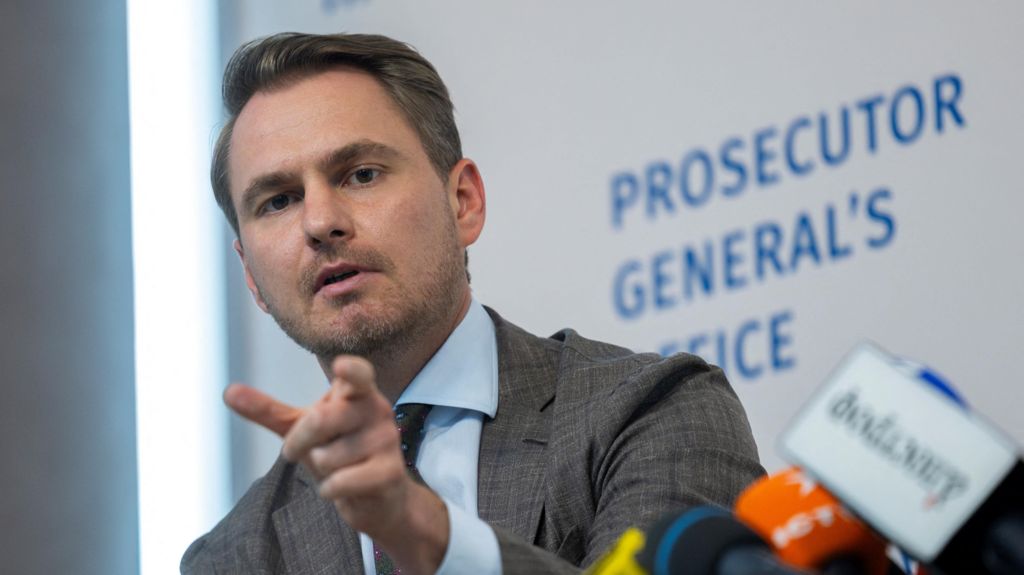
    The arrest of a suspect in Boukerouis’ murder is the first made since Operation Identify Me launched, a win that Interpol leaders say highlights the value of persistent, cross-border collaboration on unsolved cases. “This identification underscores how important it is to keep investigating unresolved cold cases,” Interpol Secretary General Valdecy Urquiza said in an official statement released Tuesday. “As part of the Identify Me campaign, the efforts of the French authorities have helped identify a murder victim whose case had remained open for many years.”

    Due to ongoing investigations and active judicial proceedings, neither French police nor Interpol have released the identity of the arrested suspect, and only limited details about the case have been made public.

    Operation Identify Me was created to address a growing challenge for European law enforcement: rising global migration and transnational human trafficking have left an increasing number of people reported missing outside their home countries, making it far harder to match unidentified bodies to missing person reports. The campaign pulls 47 unsolved cases of women found dead under suspicious or violent circumstances in France, Belgium, the Netherlands, Germany, Italy and Spain into a single public, cross-border effort. For the first time, Interpol has issued public black notices — its official requests for information on unidentified deceased persons — for these cases, shared critical records including fingerprints with law enforcement agencies worldwide, and reignited public and investigative attention to these long-forgotten cases.

    Before Boukerouis’ identification, four other women have been named through the initiative: 31-year-old British citizen Rita Roberts, murdered in Belgium in 1992 and identified after her family spotted a photo of her tattoo in a BBC report; 33-year-old Paraguayan national Ainoha Izaga Ibieta Lima, found dead in a Spanish poultry shed in 2018; 31-year-old Russian national Liudmila Zavada, found on a Spanish roadside in 2005 and identified in September 2024; and 35-year-old German citizen Eva Maria Pommer, found on a Dutch beach in 2004 and identified the following month.

    With five identifications complete, investigators still working through the campaign are pushing to name the remaining 42 women. Most of the remaining unidentified victims are confirmed murder victims, most believed to have been between 15 and 30 years old at the time of their death, with some cases dating back decades.

  • Ukraine accuses Israel of importing grain ‘stolen’ by Russia as Zelenskyy warns of sanctions

    Ukraine accuses Israel of importing grain ‘stolen’ by Russia as Zelenskyy warns of sanctions

    A sharp public diplomatic dispute has erupted between Kyiv and Jerusalem this week after Ukraine accused Israel of allowing the entry of Russian-harvested grain stolen from occupied Ukrainian territories, triggering conflicting official statements and formal protests.

    Ukrainian President Volodymyr Zelenskyy made the allegation public on Tuesday via the social platform X, confirming that at least one cargo vessel carrying the illicitly traded grain had already reached an Israeli port and was preparing to offload its cargo. Zelenskyy emphasized that under international law and standard domestic legal frameworks, trafficking in stolen property carries clear legal consequences, noting that Ukrainian intelligence services have already begun compiling targeted sanctions packages against the companies and individuals facilitating these illegal shipments. The Ukrainian leader added that Kyiv will coordinate closely with its European Union allies to push for the inclusion of these involved parties in existing bloc-wide sanctions regimes against Russian-connected entities.

    Ukraine’s Foreign Ministry expanded on the accusation, stating that Kyiv had pre-notified Israeli officials about the suspect vessels, and that more than two cargo ships carrying grain stolen from occupied Ukrainian lands have already entered Israeli territory. Ministry spokesman Heorhii Tykhyi confirmed that Israeli ambassador Michael Brodsky was formally summoned to receive an official protest note from Kyiv, over what Ukrainian officials describe as a persistent flow of these illegal shipments into the Israeli market.

    According to the Ukrainian foreign ministry, Ukrainian investigators have already confirmed the fraudulent origin of the grain, and are well aware of the tactics Russia uses to cover up the theft—including covert ship-to-ship transfers of cargo in the Black Sea to mask the product’s original source. Despite repeated formal requests from Kyiv for Israeli authorities to detain the suspect vessels and their cargo, the illicit shipments continue to reach Israeli ports and enter domestic commercial circulation, the ministry said. Crucially, Ukrainian officials stressed the issue is not an isolated incident, but a systemic pattern of trade that poses a clear risk to bilateral relations between the two countries if it is not resolved immediately.

    Israeli officials have pushed back against Ukraine’s claims, offering a conflicting account of the situation. Israeli Foreign Minister Gideon Saar told reporters in Jerusalem that the Israeli Tax Authority has launched an investigation into a vessel reportedly bound for Haifa port, but dismissed Zelenskyy’s public statement as unproductive “Twitter diplomacy.” Saar said that Ukraine had failed to provide sufficient supporting evidence for its claims and had not submitted a formal request for legal assistance from Israeli authorities.

    Public tracking data from marine tracking portal MarineTraffic.com complicates the conflicting accounts, showing that the vessel in question has already been anchored in the port of Haifa for several days—contradicting Israel’s claim that the ship has not yet entered the port or submitted required entry documentation.

  • Third Ukrainian strike hits Russian oil refinery and prompts evacuations

    Third Ukrainian strike hits Russian oil refinery and prompts evacuations

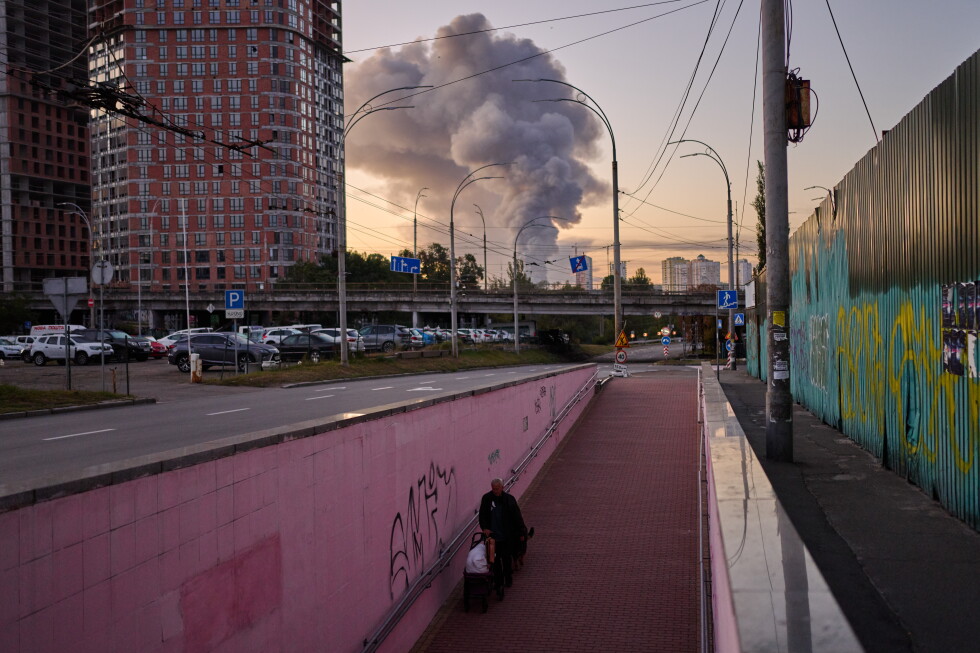
    In a continued escalation of cross-border attacks on Russian energy infrastructure, a key oil refinery on Russia’s Black Sea coast has been targeted for the third time in April 2026 by Ukrainian drones, triggering a massive inferno that forced the evacuation of adjacent residential areas, regional Russian officials confirmed Tuesday.

    Located in the southern Russian city of Tuapse, the refinery has faced repeated Ukrainian strikes over the past two weeks. Previous attacks already left severe environmental damage in their wake: a large volume of crude oil spilled into the Black Sea, and local residents reported so-called “black rain” falling across the city, leaving sticky oily residue on homes, streets and public spaces.

    Ukraine’s military has publicly taken responsibility for the latest strike, framing attacks on Russian energy facilities as a legitimate strategy to cut off funding for Moscow’s full-scale invasion of Ukraine that began in February 2022.

    In an update posted to his Telegram channel Tuesday, Krasnodar regional governor Veniamin Kondratyev announced that more than 160 firefighters had been deployed to contain the large-scale blaze. The governor noted that first responders were operating in “extremely difficult conditions” and praised their work as “true heroism”, adding that protecting the lives and health of Tuapse residents and visitors remained the government’s top priority. No fatalities or injuries have been reported from the attack or subsequent fire as of Tuesday’s updates.

    Local municipal district head Sergei Boyko ordered residents of streets within the immediate vicinity of the refinery to evacuate the area, while emergency authorities set up a temporary evacuation center at a nearby public school to accommodate displaced residents. The regional crisis center issued public health warnings, alerting residents that harmful combustion byproducts were being released into the atmosphere from the ongoing fire. Local residents were advised to wear protective face masks, keep all windows closed, limit time spent outdoors, and rinse exposed mucous membranes including the nose, eyes and throat after being outside.

    Anastasia Troyanova, a local correspondent for Russian independent environmental outlet Kedr, reported from the scene that a massive plume of thick black smoke hung over Tuapse, with a strong acrid smell of burning fuel permeating the entire area. Satellite imagery captured earlier in April already highlighted the extensive damage caused by the two prior strikes on the refinery.

    Following the attack, Russian President Vladimir Putin ordered the country’s Minister of Emergency Situations to travel immediately to Tuapse to oversee on-site firefighting operations and post-blaze cleanup efforts. Dmitry Peskov, Putin’s press secretary, accused Kyiv of intentionally targeting energy infrastructure used for export operations, claiming the strikes amount to an attempt to destabilize global energy markets.

    For its part, Ukraine’s military reiterated in an official statement that the strike on the Tuapse refinery was part of coordinated, ongoing efforts to “reduce the military-economic potential of the Russian aggressor”. Over the past several months, Ukrainian forces have stepped up long-range drone strikes on critical energy facilities deep within Russian territory, a campaign that Kyiv defends as a legitimate military tactic, since the revenue generated by these oil and gas facilities directly funds Russia’s ongoing war effort.

    In a tit-for-tat development that underscores the continuing escalation of reciprocal long-range attacks, a Russian drone strike on Ukraine’s capital Kyiv injured one civilian on the same day as the Tuapse attack, according to Kyiv Mayor Vitaliy Klitschko. Ukrainian officials reported multiple small blazes across the city, including one that broke out at a local cemetery.

  • Swarm of 10,000 bees settles on bike outside Louvre in Paris

    Swarm of 10,000 bees settles on bike outside Louvre in Paris

    In a surprising urban wildlife encounter that unfolded steps from one of Paris’s most iconic cultural landmarks, a massive swarm of roughly 10,000 wild bees made an unexpected home beneath the saddle of a parked bicycle, prompting a coordinated safe removal by local authorities and a veteran urban beekeeper.

    The unusual incident took place on a Saturday afternoon, just minutes after the bicycle’s owner locked their retro “grandfather’s old bike” to metal railings outside the Palais Royal-Musée du Louvre metro station, a busy transit hub that sits directly across from the world-famous Louvre art museum. Within half an hour of the bike being parked, the entire swarm had settled into the tight space under the saddle, a spot that drew the attention of passing commuters and tourists almost immediately.

    After receiving reports of the large insect cluster, Paris transport authorities made the call to temporarily close the affected metro entrance as a safety precaution, while reaching out to a local beekeeper to handle the relocation. Volkan Tanaci, an experienced urban beekeeper who actually cycled to the scene himself, arrived quickly to assess and resolve the unusual situation.

    Speaking to local French outlet France Info, Tanaci noted that the swarm’s choice of location was highly out of the ordinary. “It was certainly in an unusual place, right next to the entrance to a metro,” he said. On closer inspection, Tanaci confirmed the dense cluster of bees matched the structure of a migrating swarm, noting that “it was a real cluster of bees, and probably there was a queen bee right in the middle” — the key reason the entire group had settled in that specific spot, as bee swarms travel and cluster around their queen during relocation to new nesting grounds.

    The bicycle’s owner documented every step of the unexpected incident, sharing photos and updates on their Instagram account @ma_pauvre_lucette, where they noted the bees’ rapid arrival just half an hour after the bike was parked, and confirmed that the beekeeper successfully removed the entire swarm without incident. No injuries to commuters or damage to the bicycle were reported following the removal, and the metro entrance was reopened to passengers shortly after the operation concluded.

    The encounter comes as urban beekeeping has grown in popularity across major European cities in recent years, as communities work to support declining bee populations critical to global pollination and ecosystem health. Encounters like this, while rare, highlight how wild bee populations are increasingly adapting to urban environments as they search for new nesting locations.

  • Ukraine accuses Israel of receiving shipments of grain ‘stolen’ by Russia

    Ukraine accuses Israel of receiving shipments of grain ‘stolen’ by Russia

    A sharp diplomatic dispute has exploded between Kyiv and Jerusalem after Ukrainian officials accused Israel of allowing shipments of grain stolen by Russia from occupied Ukrainian territories to enter its ports, triggering warnings of damaged bilateral ties and drawing in the European Union over its ties to Moscow’s war effort.

    The confrontation began with an initial investigative report from Israeli daily Haaretz, which claimed that four cargo ships carrying grain harvested in Russian-occupied Ukrainian regions had already been unloaded at Israeli ports in 2025. The outlet added that a fifth vessel carrying suspected stolen grain had anchored in Haifa Bay by Sunday morning, waiting for clearance to enter the port.

    By Monday night, the clash moved to public social media, when Ukrainian Foreign Minister Andrii Sybiha announced on X that his ministry had summoned Israel’s ambassador to Kyiv to protest what he called Israel’s failure to act on previous Ukrainian complaints about a prior stolen grain delivery to Haifa. “Now that another such vessel has arrived in Haifa, we once again warn Israel against accepting the stolen grain and harming our relations,” Sybiha wrote.

    Israeli Foreign Minister Gideon Saar pushed back immediately, rejecting Ukraine’s public, social media-focused approach to the sensitive diplomatic issue. Saar stressed that diplomacy between friendly nations does not occur on public platforms, and emphasized that Israel is a rule-of-law state with independent law enforcement bodies that will review the claims properly. “If you have any evidence of theft, submit it through the appropriate channels,” Saar noted, adding that Kyiv had failed to share formal evidence or file a legal assistance request to back up its allegations. He also clarified that the vessel currently anchored off Haifa has not yet entered port or submitted cargo documentation, meaning Ukrainian claims that the cargo papers were forged cannot yet be verified.

    The following morning, Ukrainian President Volodymyr Zelenskyy waded into the dispute, doubling down on Kyiv’s accusations. Zelenskyy argued that the trade of stolen Ukrainian grain “is not – and cannot be – legitimate business,” adding that the practice even violates Israeli domestic law. He noted that Ukrainian authorities had already taken all required diplomatic steps to block these shipments, yet another vessel had still reached Israeli waters. Zelenskyy warned that continued inaction from Israeli authorities would undermine bilateral relations, and confirmed that Ukraine is working alongside European partners to prepare a targeted sanctions package targeting any individuals and entities involved in transporting and profiting from the stolen grain.

    Ukraine’s foreign ministry further detailed its claims, stating that a Russian-flagged bulk carrier named the Abinsk was unloaded at an Israeli port in mid-April, and was allowed to depart despite Kyiv’s formal request to Israeli officials to detain the ship and its cargo. The ministry added that Israeli officials also ignored a request to take action against a second vessel, the Panormitis, as it approached Haifa.

    Kremlin spokesperson Dmitry Peskov declined to comment on the dispute when approached by reporters, and Russia has consistently denied previous accusations that it steals grain from occupied Ukrainian territories.

    The European Union has already waded into the row, with foreign affairs spokesperson Anouar El Anouni confirming that the bloc has taken note of the reports of a shadow Russian fleet vessel carrying stolen Ukrainian grain being permitted to unload in Haifa. “We condemn all actions that help fund Russia’s illegal war effort and circumvent EU sanctions, and remain ready to target such actions by listing individuals and entities in third countries if necessary,” El Anouni told the BBC. The EU formally documented in 2024 that it had confirmed evidence of Russia illegally seizing large volumes of grain and other agricultural products from occupied Ukrainian territories, then rebranding the goods as Russian products for export to global markets.

  • Czech court hands 7-year prison term to man over attempted synagogue arson attack

    Czech court hands 7-year prison term to man over attempted synagogue arson attack

    PRAGUE – In a landmark ruling on Tuesday, a regional court in Brno, the Czech Republic’s second-largest urban center, has handed a 20-year-old man a combined seven-year prison sentence for his central role in a foiled terror attack and attempted murder targeting a local Jewish synagogue.

    Court documents confirm the defendant, who was just 17 when the plot was carried out in January 2024, planned the arson attack alongside a second underage accomplice. The pair constructed a homemade incendiary device with the explicit goal of setting fire to Brno’s active synagogue and murdering an individual present at the site. The intended victim escaped the attack unharmed, and the incendiary device failed to cause significant structural damage to the place of worship, thwarting the attackers’ deadly plans.

    In addition to the seven-year term for the attempted attack and murder, the court added a consecutive two-year prison sentence for separate charges of promoting terrorism. That offense was committed after the defendant turned 18, making him eligible for prosecution as an adult on that count.

    Legal authorities confirmed that the defendant’s accomplice, who remains under the minimum age required for public criminal trial in the Czech Republic, has already had their closed-door hearing completed. No details of the accomplice’s case can be released to the public due to Czech juvenile privacy regulations.

    The plot is part of a broader interconnected radicalization network uncovered by Czech law enforcement last year. The defendant and his accomplice are two of five teenagers arrested in a cross-border operation targeting a network that officials say was radicalized online by the transnational militant group Islamic State.

    Investigations into the group revealed that all five members spread virulent hate speech across multiple social media platforms, targeting Jewish communities, the LGBTQ+ population, and other ethnic and social minorities across Central Europe. Coordinated raids carried out by police in both the Czech Republic and neighboring Austria uncovered a cache of weapons, including edged weapons such as knives, machetes, and axes, alongside several gas pistols.

    Officials added that the group participated in private online forums dedicated to recruiting new fighters to join Islamic State militant operations in Syria. All members shared an open obsession with extreme violence and echoed the group’s violent ideology targeting marginalized groups.

    The investigation was a cross-border collaborative effort, with Czech law enforcement coordinating closely with law enforcement counterparts in Austria, the United Kingdom, and Slovakia, as well as Europol, the European Union’s dedicated cross-border law enforcement agency, to dismantle the network and prevent further planned attacks.

  • Manhunt for suspected gunman aged 89 as five wounded in Athens

    Manhunt for suspected gunman aged 89 as five wounded in Athens

    A wide-scale manhunt is ongoing across Athens for an 89-year-old gunman after a two-site shooting spree on Tuesday left five people wounded, Greek law enforcement and local media have confirmed. The violent incident began at a social security agency located in the Athens neighborhood of Petralona, where the suspect first opened fire, striking an employee in the leg.

    After the initial attack, the shooter traveled a short distance to a nearby courthouse in the Ampelokipi district, where he injured four additional people before fleeing the premises. Law enforcement officials confirmed that the suspect abandoned his shotgun at the courthouse after the attack, leaving the weapon behind as he escaped.

    All five casualties – one man and four women – have been confirmed to have non-life-threatening injuries, according to public broadcaster ERT. Stratis Dounias, head of Athens’ judiciary employees’ union, clarified that the four people hurt at the courthouse were all female court staff working at the small claims division, and all suffered only minor wounds.

    At present, heavily armed police units have deployed to both attack sites to secure the areas and support the ongoing investigation, though authorities have not yet identified a clear motive for the coordinated attacks. ERT’s reporting notes that the gunman concealed his shotgun under his coat when he entered both buildings to carry out the attacks. As of the latest updates, the suspect remains at large, and investigative teams are working to trace his whereabouts and unpack the context of the incident.

    Notably, gun violence remains a rare occurrence in Greece, where the country’s strict regulatory framework allows limited firearm ownership only under heavy oversight and rigorous checks.

  • ‘Verstappen future not affected by ally’s departure’

    ‘Verstappen future not affected by ally’s departure’

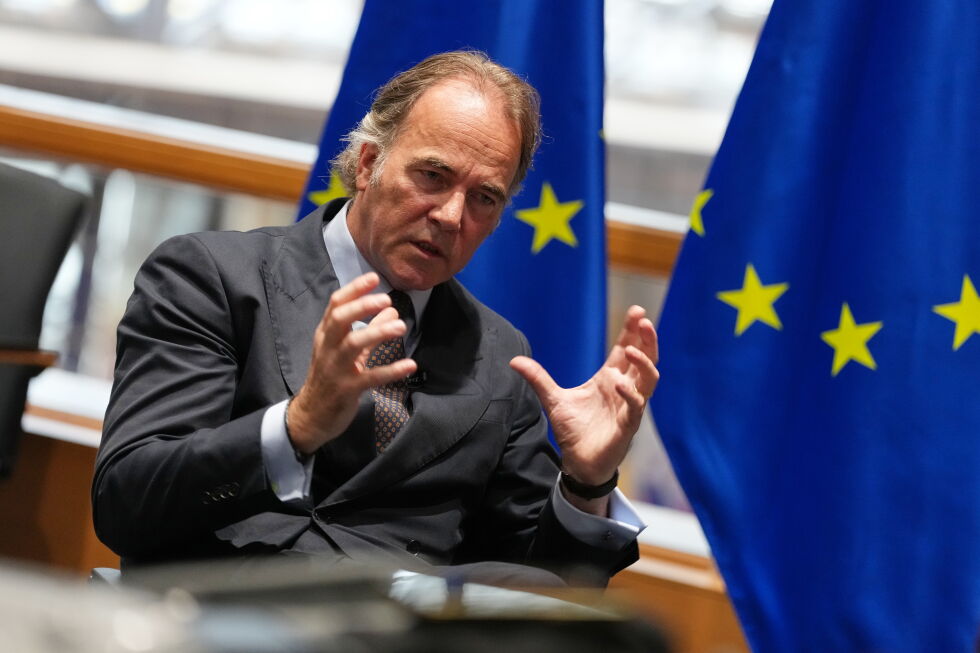
    Ahead of this weekend’s eagerly anticipated Miami Grand Prix, Red Bull Racing team principal Laurent Mekies has moved to calm speculation that the upcoming departure of long-time race engineer Gianpiero Lambiase will impact star driver Max Verstappen’s decision on his future in Formula 1.

    Lambiase has been a core part of Verstappen’s racing team ever since the Dutch driver made his debut with Red Bull at the 2016 Spanish Grand Prix, but he is set to leave the outfit to take up the role of chief racing officer at rivals McLaren no later than 2028. When asked if this departure would play any role in Verstappen’s ongoing deliberation about whether to remain in F1 – a conversation amplified by the three-time champion’s public dissatisfaction with this season’s new power unit regulations – Mekies rejected the connection entirely.

    “Obviously, we speak with Max every day. And Max knows motorsport upside down,” Mekies told reporters. “He’s living and breathing this team. He knows most of these guys. He understands very well the dynamics that can happen. The team has been extremely successful and you can’t promote everyone. And some people make some decisions.”

    Verstappen’s frustration centers on the 2025 hybrid power unit regulations, which split power output almost evenly between the internal combustion engine and electrical components, a change that has altered the core driving experience for pilots. Drivers have complained that the new rules force them to focus on artificial energy management during races and qualifying rather than pushing flat-out, and created dangerous gaps in closing speeds between cars harvesting and deploying electrical energy.

    To address these immediate concerns, F1 has introduced targeted rule changes specifically for this weekend’s Miami event. Mekies noted that while these adjustments are not a full fix for the sport’s power unit issues, they mark a positive step forward. “It’s going in the right directions. We don’t think it’s changing any pecking order. Nobody pretends it’s going to fix everything, but it’s a good step, and we will certainly support more steps in the future so that the drivers can be flat-out out there,” he said.

    Mekies also echoed the view of McLaren team principal Andrea Stella that long-term hardware adjustments to the power unit are required to fully resolve the problems. Stella has called for a shift in the power split to give a larger share to the internal combustion engine, and insider sources confirm F1 governing body officials are already in active talks to adjust the regulations for the 2026 season. The leading proposal on the table would increase the internal combustion engine’s fuel flow rate to create a 60:40 split in favor of the combustion engine, a change that would preserve the existing electrical boost and overtaking systems that remain a key part of F1’s modern identity.

    Stella explained: “There should be a consideration for some hardware changes, more for the longer term, such that we can place the operating point of the power unit somewhere where less compromises are required from a chassis point of view or from a driving point of view. We think this is possible, and we think that all stakeholders should approach this conversation with the willingness to contribute.”

    Beyond power unit rule talks, the weekend in Miami arrives at a pivotal point for Red Bull, who have endured a rocky start to the 2025 campaign. After missing out on the 2024 drivers’ title to McLaren’s Lando Norris by just two points, Verstappen sits ninth in the championship after three races, with only a single sixth-place finish to his name so far this year.

    Following a forced break in the calendar after the cancellation of the Bahrain and Saudi Arabian Grands Prix, Red Bull will roll out a major aerodynamic and mechanical car upgrade for Miami, which Verstappen tested at Silverstone last week. Mekies said the upgrade will resolve a significant portion of the team’s early-season performance issues, though he stopped short of claiming it has fixed all their problems. “One thing is sure, we haven’t solved everything,” he said. “But there is no doubt that progress has been made into giving something more consistent to our drivers. How does that make you fit in the classifications? It’s impossible to know. But in terms of us alone on the track, in terms of giving a more consistent product to our drivers, I’m confident we have made some progress. Do we know if we cracked everything? No, we know we didn’t crack everything yet.”

    Mekies also shed light on the scale of Red Bull’s performance gap to front-running team Mercedes, confirming that around one-third of the team’s one-second per lap deficit comes from their new in-house power unit, with the remaining gap rooted in chassis performance. “Unfortunately, the first few races confirmed that we have a lot of work to do,” he said. “It’s 360. But certainly on the PU side as well, we can see that competition has a clear advantage. So we see them clearly ahead of us. It doesn’t remove anything to the amazing job that the guys have done. But it’s just confirmed that we have been evaluating ever since we put the car on the ground in Barcelona and in Bahrain. So fantastic starting point, unbelievable starting point. But it’s a competitive business. We are quite a few 10ths of a (second per) lap behind them in terms of performance. Even more so in terms of chassis performance, to be clear. And so we know we have a lot of work to do ahead of us.”

    McLaren, by contrast, have enjoyed a strong start to the 2025 season as defending champions, with Oscar Piastri taking second place at the most recent round in Japan. Stella confirmed that the Woking-based squad is also rolling out its own major aerodynamic upgrade package for the North American rounds, including Miami, but downplayed suggestions this would shake up the existing competitive order. “I would like to stress that this is what I would expect of most of our competitors so not necessarily is going to be a shift in the pecking order,” he said. “It will be effectively just a check who has been able to add more performance within the same timeframe, and we also have some performance to recover if we look at Mercedes and to some extent Ferrari as well.”

    The Miami Grand Prix weekend runs from 1 to 3 May, with the main race getting underway at 21:00 BST on Sunday. UK fans can follow live commentary on BBC Radio 5 Live and BBC Radio 5 Sports Extra, with live text updates available via the BBC Sport website and app.

  • Belarus frees journalist Andrzej Poczobut in prisoner swap

    Belarus frees journalist Andrzej Poczobut in prisoner swap

    In a landmark breakthrough that signals a potential thaw in icy relations between Belarus and the West, prominent journalist Andrzej Poczobut has walked free from a Belarusian prison as part of a cross-border prisoner swap mediated by the United States, officials from both Belarus and Poland confirmed Tuesday.

    The exchange, which involved a total of 10 detainees being released across multiple countries, marks the latest in a string of diplomatic breakthroughs that have unfolded during Donald Trump’s second presidential term, as Belarus’ long-ruling authoritarian leader Alexander Lukashenko pursues improved ties with Western capitals after years of international isolation.

    Poczobut, a veteran correspondent for Poland’s leading independent newspaper Gazeta Wyborcza and a high-profile community leader among Belarus’ large Polish ethnic minority, had been serving an eight-year prison sentence following a 2021 conviction that was widely decried across Europe as a politically motivated prosecution. His detention drew sharp condemnation from European governments and human rights organizations, and in recognition of his advocacy for press freedom, he was later awarded the European Union’s highest honor for human rights defenders, the Sakharov Prize.

    Details released by diplomatic officials confirm the structured terms of the exchange: Belarus released five detainees, three of whom traveled to Poland, in exchange for three individuals that Poland transferred back to Belarus, with the remaining four freed prisoners involving other participating partner states. John Coale, Trump’s special envoy for Belarus, confirmed the breakdown of releases in a post on X, noting that three Polish citizens and two Moldovan citizens were set free as part of the agreement. “We thank Poland, Moldova, and Romania for their invaluable support in this effort, as well as President Lukashenko’s willingness to pursue constructive engagement with the United States,” Coale wrote.

    This prisoner swap builds on a broader diplomatic deal reached earlier this year between Minsk and Washington. In March, Lukashenko ordered the release of more than 250 political prisoners from Belarusian detention facilities, a concession that led to the rollback of some crippling U.S. sanctions imposed on the regime in previous years.

    Belarus, a close military and political ally of Russia, has been cut off from much of the international community for decades. Lukashenko has held authoritarian control over the country of 9.5 million people for more than 30 years, and successive rounds of Western sanctions have been levied against his government over systematic human rights abuses, the violent crackdown on opposition protests following disputed elections, and Minsk’s decision to allow Russia to use Belarusian territory as a staging ground for Moscow’s full-scale 2022 invasion of Ukraine.