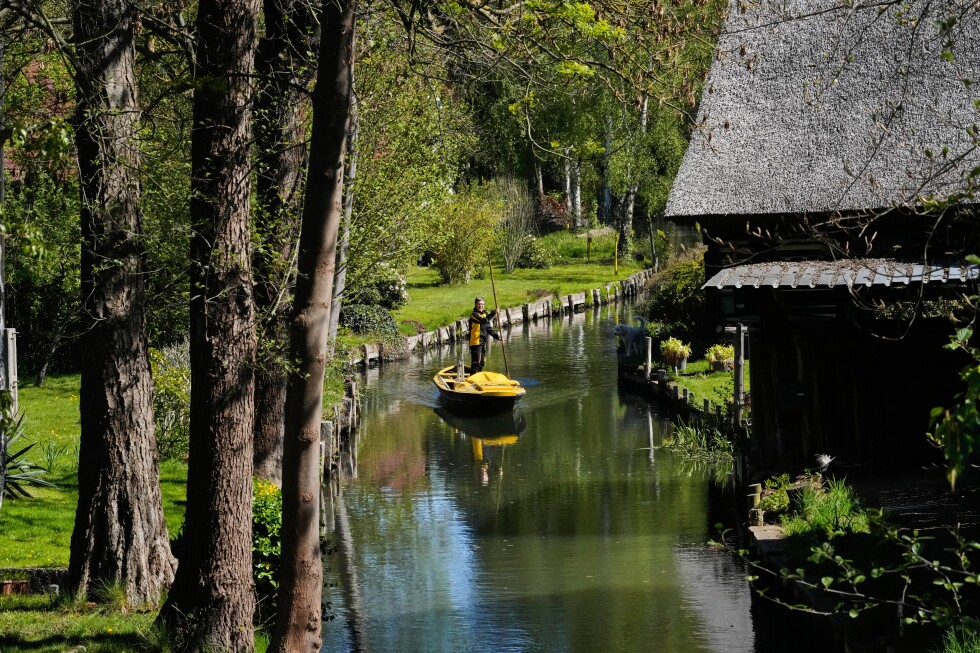
Tucked 100 kilometers southeast of Berlin, the historic riverside village of Lehde sits within the winding waterways of the Spreewald Forest, a protected UNESCO biosphere reserve where the Spree River splits into hundreds of narrow, shallow canals cutting through lush wetlands and old-growth forest. For 129 consecutive years, this tiny German village has held a singular distinction across the whole country: it is the only community in Germany that receives all its mail delivery by boat, a seasonal tradition that returns every spring as ice thaws and waterways become navigable once more.
This year, that long-awaited seasonal kickoff fell on a Wednesday in early April, when 55-year-old veteran postal worker Andrea Bunar stepped back onto her bright yellow 9-meter barge after a months-long winter break. For 14 years, Bunar has carried out this unique delivery route, switching between overland car trips in the frozen winter months and waterborne deliveries from April through October. On her first day back on the water, she stood at the stern of her vessel, guiding the shallow-draft barge through narrow channels with a single long oar that handles rowing, steering, and navigation all at once.
“The start of the season is always special for me,” Bunar shared as she set off, clad in her official postal uniform. “After the long winter break, I enjoy being in the nature and back on the water.” Winter overland delivery is far from ideal in Lehde: rural roads are often slick with ice and snow, forcing much longer travel times than the water route. From spring through mid-autumn, Bunar makes deliveries six days a week, dropping letters and packages into mailboxes that residents have mounted directly along the riverbanks. She also offers on-route postal services, selling stamps to locals along the remote waterway and collecting outgoing mail to bring back to the main postal hub.
The tradition of boat-borne mail delivery in Lehde dates back to the late 19th century. Before the service launched, villagers only collected their mail once a week, after Sunday church services. As rural-to-urban migration boomed across Germany, demand for more frequent long-distance communication surged, prompting the national postal service to establish regular delivery routes. For Lehde, a village crisscrossed by more waterways than paved roads, a boat delivery route was the only practical solution – turning the community into a tiny, Teutonic counterpart to Venice, built on interconnected canals.
Today, Bunar covers an 8-kilometer route every week, completing the full circuit in roughly two hours. On average, she delivers around 600 letters and 80 packages each week, a mix that has shifted noticeably in recent years: handwritten and personal letters have declined, while online shopping has led to a sharp jump in package volume. Bunar jokes that her small barge has started to feel like a miniature container ship, having delivered everything from full-sized refrigerators and lawnmowers to electric scooters. On her 2024 opening day, alongside the usual stack of bills and registered correspondence, she delivered a large industrial saw to one local resident.
For Bunar, this unconventional postal route is far more than just a job – it is a lifelong dream. “This is and has been my dream job all along,” she said with a smile, steering her barge past tree-lined canal banks. “Being on the water is just so relaxing – it slows down life.” The Spreewald biosphere, which protects hundreds of kilometers of waterways and a vast array of native plant and animal species, provides a quiet, scenic backdrop for her daily work, a pace of life that stands in stark contrast to the bustle of Berlin just an hour’s drive away.