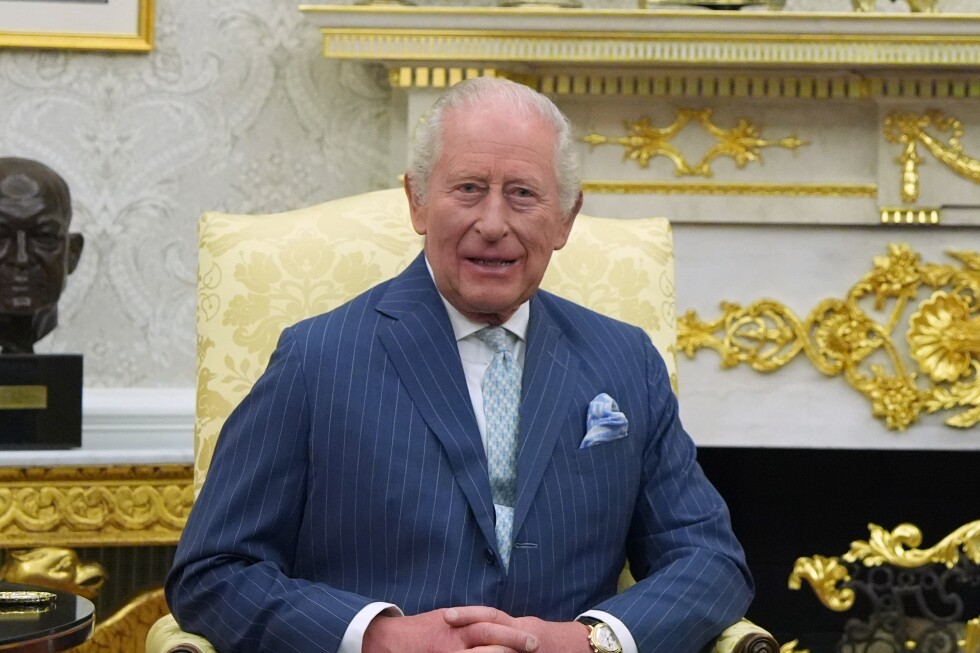
As King Charles III and Queen Camilla arrive in the United States for their first state visit since Charles ascended to the British throne, one of the monarchy’s most enduring charitable initiatives is stepping into the global spotlight: The King’s Trust, formerly known as The Prince’s Trust, is celebrating 50 years of lifting young disadvantaged entrepreneurs and job seekers out of economic uncertainty, with plans to deepen its work across the U.S. and more than 20 other countries.
The organization’s origin story traces back to 1976, when a young Prince Charles poured his entire £7,600 Royal Navy severance pay into launching the charity amid widespread economic turmoil across the United Kingdom. Half a century later, the trust reports it has supported more than 1.3 million young people across the UK, turning early seeds of opportunity into household names from actor Idris Elba to fashion designer Ozwald Boateng. But for Scottish entrepreneur Mike Welch, now a Florida-based business leader who built a multimillion-dollar fortune as an online tire retailer, the charity’s impact is a deeply personal turning point that changed the entire trajectory of his life.
Welch, a working-class dyslexic teen, left school at 15 after struggling with college entrance exams and landed a job installing tires. When that position fell through, he found himself waiting in line at a Liverpool job center, staring at two options: an opening for a funeral director role, which he calls a “great career” but a “pretty grim” path, and an advertisement for a Prince’s Trust charity event offering small business grants to young aspiring entrepreneurs. He chose the grant opportunity, and less than a day later, he was pitching his unpolished idea: selling affordable tires to niche customers like his friends who owned customized modified cars. What the plan lacked in structure, it made up for in enthusiasm — and the trust backed him. He walked away with a £500 (worth roughly $677 today) grant and access to a mentor who offered office space for his new venture. That small startup eventually sold to tire giant Michelin for £50 million ($68 million). “It wasn’t a well thought out plan, really,” Welch recalled. “But they backed me. And they backed my enthusiasm. And they gave me a chance.” If he had chosen the funeral director listing instead, he says he would have built his career in death care instead of e-commerce.
Today, the organization bears a new name: it rebranded from The Prince’s Trust to The King’s Trust after Charles became monarch in 2023. It has long outgrown its UK origins, expanding its footprint primarily across countries that were once part of the British Commonwealth, with a growing focus on the U.S. market. Its core programs are built around one core belief: young people from marginalized communities do not just need funding — they need opportunity. Offerings include Get Hired, which supports young people without college degrees to land their first full-time job; Development Awards, small grants to cover work essentials like laptops, professional clothing or training; and the Enterprise Challenge, an afterschool program that tasks students with building small businesses to solve pressing local problems.
That model has already delivered tangible results in the U.S. At Chicago’s Collins Academy High School, located in the majority-Black, economically disinvested neighborhood of North Lawndale, students launched C2C: Crops2Customers, a small business that grows and sells fresh produce to local retailers that lack access to affordable healthy groceries. The team won the King’s Trust USA Enterprise Challenge, and for principal LaKenya Sharpe, the win was about far more than the prize. “A lot of times our babies, especially in this community, feel like no one’s watching, no one is looking, no one is paying attention,” Sharpe explained. “This shows that they can achieve anything. Their belief now is ‘Oh, other people are watching. Other people are seeing this.’ And they ask ‘How far can this go?’ My answer is, ‘It can go as far as you guys take it. Don’t let anything limit you.’”
To mark its 50th anniversary, the trust will host a high-profile gala in New York on Wednesday, designed to highlight the longstanding philanthropic partnership between the UK and the U.S. The event comes at a moment of unusual political tension between the two allies: British Prime Minister Keir Starmer’s recent refusal to back U.S. military action against Iran has sparked anger from U.S. President Donald Trump. But charity observers note that Charles’ choice to center the trust during the state visit offers a quiet reminder of the shared priorities that bind the two nations beyond political rifts.
“The harsh reality today is that the need for the work of people like the trust is growing at a rate far faster than we can grow,” said Jeremy Green, trustee of the King’s Trust Group Company and chair of King’s Trust USA. JP Tribe, a senior law lecturer at the University of Liverpool who specializes in royal patronage, explained that Charles’ decision to build his own charity, rather than just lend his name to an existing organization, speaks to his longstanding commitment to youth employment. “Hopefully the gala is a kind of event which shows that both countries have and can continue to engage in very positive public benefit activity that helps the most disadvantaged in our society,” Tribe said.
King’s Trust USA has set an ambitious target: reach 1,000 young people across the country in 2024, working with local partners including education nonprofit City Year, workforce development organization Per Scholas, and Maryland public school districts to pilot its core programs. Victoria Gore, CEO of King’s Trust USA, notes that the organization’s focus on local impact aligns with what young participants already prioritize: solving problems in their own backyards. “Keeping employment in communities and keeping people in communities is actually the key to everyone’s success,” Gore said.
For Welch, who now runs the Anglo Atlantic advisory and investment firm, the blueprint for successful U.S. expansion is already proven. The model that worked for a teen in Liverpool works just as well for a student in Chicago or an aspiring entrepreneur in Orlando, he says — all it takes is partnership with local organizations that can connect the trust to the young people who need support most. “It doesn’t require giant investments to make an impact,” Welch emphasized, pointing to his own small £500 grant that grew into a multimillion-dollar business.
Looking ahead, the trust plans to launch a fundraising campaign in 2026 to build a permanent endowment for its UK operations, capping off a year of global celebrations for its 50-year legacy of opening doors for young people. The Associated Press coverage of philanthropy and nonprofits for this story received support through a collaboration with The Conversation US, funded by Lilly Endowment Inc., with the AP retaining sole editorial control over the content.