标签: Europe

欧洲

  • Ukraine expands oil strikes on Russia as Putin proposes brief ceasefire

    Ukraine expands oil strikes on Russia as Putin proposes brief ceasefire

    In a significant escalation of cross-border strikes amid the ongoing four-year full-scale invasion of Ukraine, Ukrainian drones have targeted a major Lukoil oil pumping and refining complex near Perm, a city in central Russia more than 1,500 kilometers from the active front line, triggering a massive smoke plume that was captured in dramatic social media footage.

    Ukraine’s Security Service (SBU) confirmed it carried out the attack on the facility, one of Russia’s largest oil refining hubs. Visuals shared across online platforms showed towering columns of black smoke and visible flames billowing from the site, and an initial chemical emergency alert was issued for multiple districts of Perm. Local city officials later walked back the alert, framing it as a routine safety test, a move aligned with a broader pattern of Russian authorities downplaying the impact of Ukrainian strikes on domestic infrastructure.

    This Perm strike is the second attack on critical Russian energy infrastructure in the same region within a single week. Earlier this week, the SBU announced it had disabled a key strategic hub for Russia’s national oil pipeline network, also located in Perm. Further north along the Black Sea coast, multiple strikes on oil facilities in Tuapse earlier this month caused extensive oil contamination, with local residents sharing images on Telegram of oil slicks spreading across coastal waters, black petroleum puddles on local roads, and wild animals coated in sticky oil residue.

    The increasing frequency of deep-penetration drone attacks on Russian territory has become an unavoidable source of concern for the Kremlin, even as official statements continue to minimize their strategic impact. This mounting security threat has already forced tangible policy changes: on Wednesday, the Kremlin announced it would scale back its annual May 9 Victory Day military parade, the iconic holiday marking the defeat of Nazi Germany in World War II, explicitly citing “terrorist threats” originating from Ukraine.

    Later that same day, Russian President Vladimir Putin held a 90-minute phone call with former U.S. President Donald Trump, during which Putin put forward a proposal for a one-day ceasefire to coincide with the Victory Day holiday. Yuri Ushakov, Putin’s senior diplomatic advisor, confirmed that Trump had expressed active support for the initiative, noting that the holiday represents a shared victory over Nazi Germany between the two countries.

    Ukrainian President Volodymyr Zelensky responded cautiously to the offer, saying Kyiv would seek additional clarification from U.S. officials on the details of the proposal. “We will clarify what exactly this is about — a few hours of security for a parade in Moscow, or something more,” Zelensky said, adding that Ukraine remains committed to its original proposal for a long-term ceasefire and a lasting, sovereign peace.

    This proposed temporary truce follows a long pattern of limited, short-lived ceasefires that have been implemented since the full-scale invasion began in 2022. Most of these prior truces have been tied to major holidays, restricted solely to energy infrastructure, or limited to the Black Sea grain initiative. Ukraine has repeatedly pushed for a comprehensive permanent peace agreement, while Russia has refused to enter into such talks unless Kyiv agrees to cede control of occupied sovereign Ukrainian territories to Moscow.

    During the call, Ushakov said Trump asked Putin to share his assessment of frontline conditions in Ukraine. Putin claimed to the former U.S. president that Russian forces maintain the strategic initiative and are continuing to push back Ukrainian positions. This characterization directly contradicts independent assessments from military analysts and recent on-the-ground developments.

    Over the past several months, Ukrainian forces have retaken portions of occupied Russian territory, capitalizing on technological advances in long-range strike capabilities and slowed Russian recruitment efforts that have stretched Moscow’s frontline forces thin. The U.S.-based Institute for the Study of War (ISW) noted in a recent analysis that Kyiv’s military operations are inflicting mounting casualties and operational costs on Russian troops. The ISW added that the Kremlin is likely overstating its progress to frame the conflict as nearing a Russian victory, in an effort to mitigate growing international and domestic pressure over the mounting costs of the war.

    The background of this latest strike is rooted in Russia’s ongoing regular aerial bombardment of Ukrainian civilian areas. Just on Wednesday night, a new Russian airstrike on Ukrainian population centers killed at least three civilians and injured 79 more, including one child, continuing a pattern of attacks that has killed thousands of Ukrainian civilians and displaced millions more since the full-scale invasion began.

  • New ‘bluster’ from Trump? Germany faces new threat about reduced US military presence in Europe

    New ‘bluster’ from Trump? Germany faces new threat about reduced US military presence in Europe

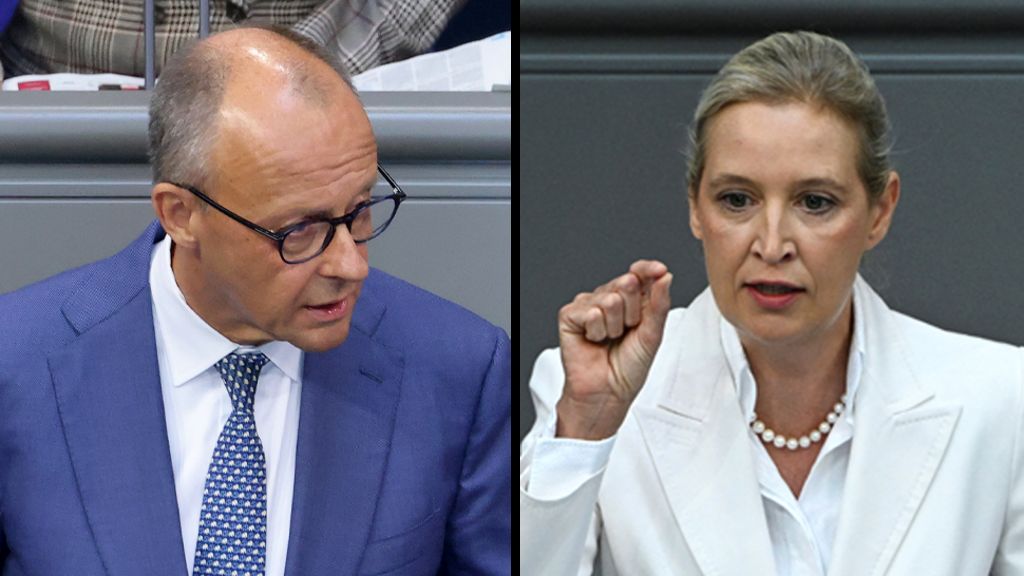
    Fresh transatlantic friction has emerged after former President Donald Trump reignited longstanding threats to cut the United States military footprint in Germany, NATO’s leading European hub and the EU’s biggest economy. The renewed warning comes on the heels of critical remarks from German Chancellor Friedrich Merz, who claimed the U.S. was being publicly humiliated by Tehran amid its slow-rolling diplomatic negotiations tied to the ongoing U.S.-Israel conflict with Iran.

    Talk of reducing American troop levels in Germany is far from new. For years, Trump has openly pondered pulling back U.S. military assets from the country, and in recent months he has repeatedly lashed out at NATO for declining to back the U.S. in its two-month military campaign against Iran. Ever since Trump took office, NATO allies have braced for potential troop withdrawals, with repeated warnings that European nations would ultimately have to take full ownership of their own security, including defense support for Ukraine.

    Currently, between 80,000 and 100,000 U.S. military personnel are stationed across Europe, a number that fluctuates with ongoing operations, training exercises and rotational deployments. NATO allies widely expect that the additional U.S. troops deployed to the continent after Russia’s 2022 full-scale invasion of Ukraine would be the first to depart if drawbacks move forward. Germany hosts some of the U.S. military’s most critical European infrastructure: this includes the dual headquarters for U.S. European Command and U.S. Africa Command, Ramstein Air Base, the Landstuhl Regional Medical Center that treats wounded service members from conflicts across the Middle East and South Asia, as well as deployed American nuclear missiles.

    Ed Arnold, a European security specialist at London’s Royal United Services Institute (RUSI), a leading defense think tank, argues that a full or large-scale withdrawal is highly unlikely, pointing out that the U.S. derives enormous strategic benefit from its German bases, which enable critical logistics and support for combat operations across the Middle East. Arnold labeled Trump’s latest threat as nothing more than political bluster, noting a long-standing gap between civilian political rhetoric and U.S. military priorities. “The issue with some of these threats is that they are not quite as galling as they were a couple of years ago,” he explained, pointing to growing European familiarity with Trump’s patterned rhetorical outbursts.

    Neither NATO nor the German federal government issued immediate official responses to Trump’s social media post. During a visit to a military training site in Munster, northern Germany on Thursday, Merz did not directly reference Trump’s comments, but obliquely pushed back by referencing longstanding transatlantic cooperation. “We work shoulder to shoulder for mutual benefit and in deep trans-Atlantic solidarity,” Merz said, adding that his government has made significant progress over the past year to bolster Germany’s own national security.

    Arnold notes that European allies are far more concerned about more immediate shifts in U.S. defense policy: the redeployment of American Patriot missile systems and stockpiled ammunition from Germany to the Middle East, as well as official notifications to Eastern NATO allies including Estonia that U.S. weapons orders will be delayed amid Washington’s new priority of supporting operations against Iran. A senior Western official, speaking to the Associated Press on condition of anonymity to discuss sensitive diplomatic matters, said there is no record of any active discussions between the U.S., Germany or other NATO allies about imminent troop reductions in Germany. The official added that Europe, and Germany in particular, have already stepped up to take greater responsibility for continental security following the release of Berlin’s new national military strategy.

    This is not the first time unexpected U.S. defense announcements have roiled transatlantic security planning. Last October, Washington confirmed it would cut between 1,500 and 3,000 troops from NATO deployments along the alliance’s border with Ukraine. The last-minute announcement unsettled Romanian officials, who host a key NATO air base on the country’s eastern flank. A full review of U.S. military posture across Europe and other global regions was launched by the Trump administration early last year, with findings originally scheduled for public release in late 2025 that have yet to be published. The U.S. has, however, given allies a formal commitment to provide advance notice of any posture changes to avoid creating dangerous security gaps at a time when Russia grows increasingly confrontational.

    Many senior European leaders hold the assessment that Russian President Vladimir Putin could launch an offensive attack on another European nation by the end of the decade, particularly if Russia secures a victory in its ongoing war in Ukraine. The outbreak of the U.S.-Iran conflict has only heightened speculation that U.S. troop withdrawals from Europe could move forward, with a flurry of closed-door meetings held between Trump administration officials, NATO Secretary-General Mark Rutte and European leaders since hostilities began on February 28. Over the past year, European NATO members and Canada have already begun adjusting to a new strategic reality, where they will bear primary responsibility for Europe’s conventional defense, with the U.S. shifting its NATO contribution to primarily nuclear deterrence and a smaller forward-deployed troop presence.

    Beyond the current uncertainty over troop levels, European allies have largely grown accustomed to Trump’s frequent public outbursts. In recent months, they have weathered insults labeling them as cowards and seen Trump brand NATO a “paper tiger.” Repeated threats of full withdrawal over issues like alliance defense spending targets have left allies desensitized to social media announcements hinting at potential action. The most lasting damage to NATO cohesion, many officials agree, has come from Trump’s ongoing public fixation on annexing Greenland, a semiautonomous territory of NATO member Denmark, which has included trips to the island by Trump’s family members and senior administration officials. In September, an announced freeze on some security assistance funding for European states bordering Russia also sowed widespread confusion, after Baltic defense leaders confirmed they had received no official advance notification of the policy shift.

  • Zelenskyy says he’s seeking details of Putin’s May 9 ceasefire proposal

    Zelenskyy says he’s seeking details of Putin’s May 9 ceasefire proposal

    Diplomatic developments have intersected with continuing frontline violence in Ukraine this week, after Russian President Vladimir Putin floated a short-term ceasefire proposal to former U.S. President Donald Trump during a Wednesday phone call, drawing a cautious request for details from Ukrainian President Volodymyr Zelenskyy.

    According to the Kremlin, Putin suggested the ceasefire would align with Russia’s May 9 Victory Day, the national holiday marking the Soviet Union’s defeat of Nazi Germany in World War II. While senior Putin aide Yuri Ushakov confirmed the ceasefire was discussed during the call, Kremlin spokesperson Dmitry Peskov clarified Thursday that no final agreement or concrete terms have been finalized, with all final decisions remaining with Putin.

    In a public Telegram post Thursday, Zelenskyy announced that Ukrainian diplomatic representatives had been ordered to reach out to Trump’s team to pin down the specifics of the proposal. The Ukrainian leader cast doubt on the plan’s purpose, suggesting it could merely be a temporary security measure for a Moscow parade rather than a meaningful step toward de-escalation, and reiterated Ukraine’s preference for a far longer ceasefire to reduce civilian harm.

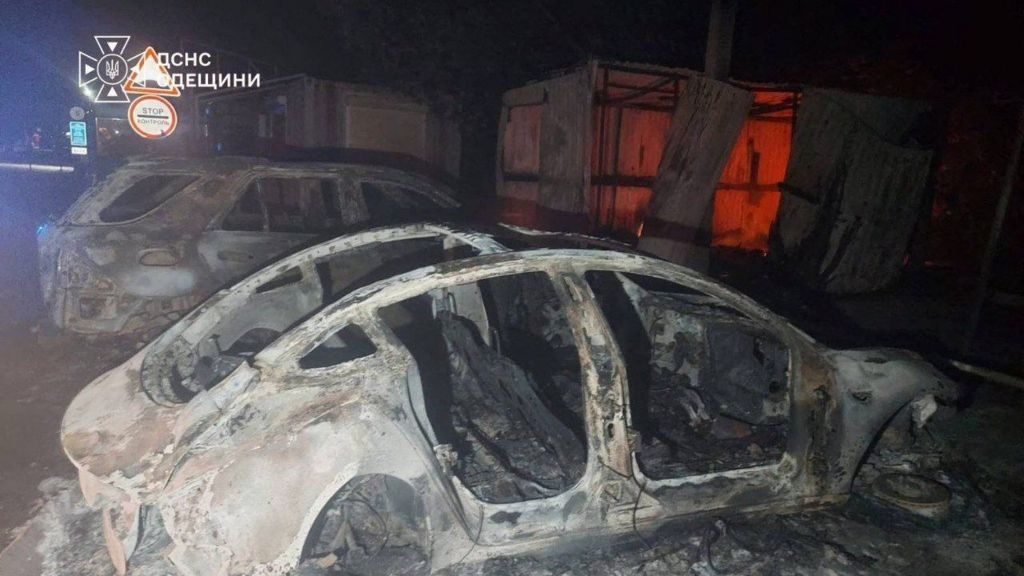
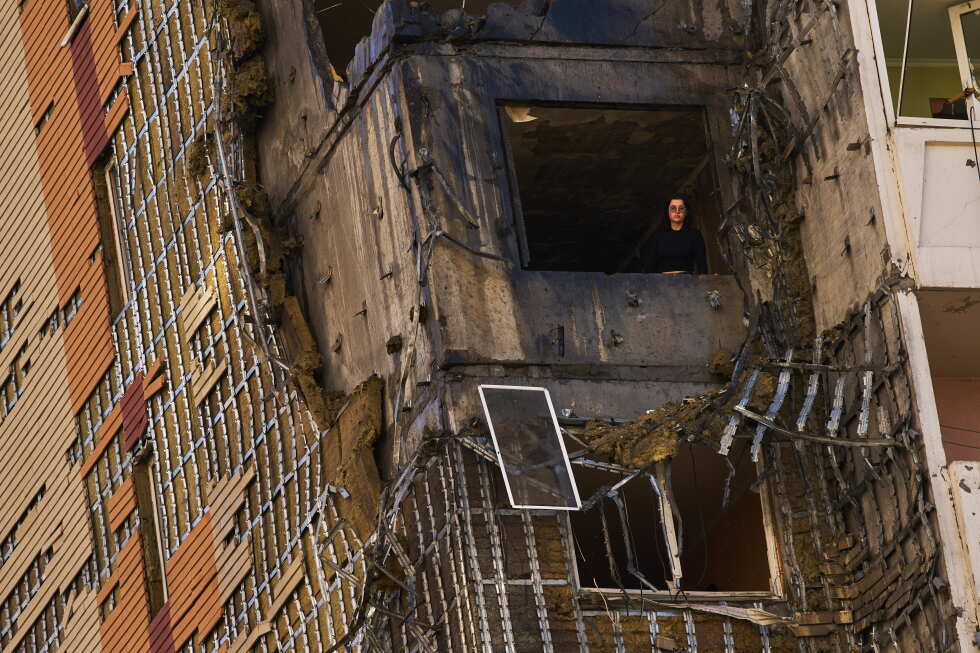
    Parallel to these diplomatic negotiations, active hostilities have continued unabated across the region. Overnight Russian airstrikes targeted two major Ukrainian cities: in the central city of Dnipro, a drone strike killed one civilian and injured five others, damaging a local shop, residential apartment blocks and parked vehicles, Dnipropetrovsk regional governor Oleksandr Hanzha confirmed. In the southern Black Sea port of Odesa, waves of Russian drone strikes left 20 people wounded. Though Ukrainian air defense forces intercepted a large share of the incoming drones, falling debris and direct hits damaged civilian sites including residential buildings, a hotel, a kindergarten and an administrative building, sparking multiple fires that emergency crews have since contained.

    For a second consecutive day, Ukraine has carried out retaliatory drone strikes on industrial infrastructure deep inside Russian territory. A senior Ukrainian security official confirmed Thursday that the country’s Security Service (SBU) targeted the Lukoil-Permnefteorgsintez oil refinery in Perm, a region in the Ural Mountains more than 1,500 kilometers from the Ukrainian border, disrupting operations at the facility. Russian regional governor Dmitry Makhonin acknowledged an industrial site was hit but downplayed damage and reported no casualties. Farther west, in the Krasnodar region, authorities said a two-day fire at the Tuapse Black Sea oil refinery—ignited by a Ukrainian drone strike—has been extinguished, though crude oil products spilled onto local city streets during the blaze.

    Ukraine’s Navy also announced a separate overnight strike in the Kerch Strait, which connects the Black Sea and Sea of Azov adjacent to the 2018 Crimean Bridge linking illegally annexed Crimea to mainland Russia. The service said sea drones damaged two Russian vessels: a patrol boat named *Sobol* and a smaller craft named *Grachonok*.

    In a separate diplomatic win for Kyiv, a vessel accused of carrying grain stolen by Russia from occupied Ukrainian territories departed Israel’s Haifa Port early Thursday without unloading its cargo, after a week of escalating tension between the two countries. The ship had been anchored off Haifa for several days, but Israel’s largest grain import firm refused to accept the shipment over its disputed origin, the Israel Grain Importers Association confirmed, forcing the Russian supplier to seek an alternative port to unload.

    Zelenskyy had threatened to impose sanctions on Israel earlier this week if the vessel offloaded the stolen grain, and Israeli Foreign Minister Gideon Saar noted the country’s tax authority had launched a formal investigation into the shipment. Ukrainian Foreign Minister Andrii Sybiha hailed the outcome, saying it proved the effectiveness of Kyiv’s legal and diplomatic efforts to block the trade of stolen Ukrainian agricultural goods.

  • Inflation hits 3% in Europe as Iran war spreads oil price shock

    Inflation hits 3% in Europe as Iran war spreads oil price shock

    FRANKFURT, Germany — The ongoing conflict between Iran and coalition forces has sent global oil markets into turmoil, creating a toxic economic mix for the 21-nation eurozone that pushes the bloc closer to stagflation, new official data shows.

    On Thursday, the European Union’s statistical body Eurostat released figures showing annual inflation across the euro currency area climbed to 3.0% in April, up from 2.6% recorded in March. The sharp uptick was almost entirely driven by a 10.9% month-over-month jump in energy prices, triggered by massive supply disruptions stemming from the Iran war. Since the outbreak of hostilities on February 28, international benchmark crude prices have surged from around $73 per barrel to above $120 a barrel, as Iran’s blockade of the Strait of Hormuz cut off a critical global oil chokepoint. Approximately 20% of the world’s total oil trade passes through the waterway, connecting Persian Gulf producing nations to global markets. The price shock has already hit consumers directly, with higher costs showing up immediately at gasoline pumps and in jet fuel prices for air travel.

    Alongside the unwelcome inflation surge, the eurozone also delivered underwhelming growth figures for the first quarter of 2025. The bloc recorded only a marginal 0.1% increase in output compared to the final quarter of 2024, a result that fell far short of analyst expectations.

    This dual pressure of stagnant growth and above-target inflation has put the European Central Bank (ECB) in an extremely difficult policy position. The ECB has a long-standing inflation target of 2%, and conventional economic policy calls for raising benchmark interest rates to cool overheating prices. However, hiking borrowing costs would further dampen already weak economic growth, creating a risk of a full-blown recession.

    Policymakers widely expect the ECB to leave its key benchmark interest rate unchanged at its Thursday meeting, a position that aligns with other major global central banks that have also hit a policy pause amid the uncertainty. The U.S. Federal Reserve and the Bank of Japan both held interest rates steady at their respective monetary policy meetings earlier this week, and the Bank of England is also projected to keep rates unchanged as it assesses the ongoing fallout from the Iran war. The ECB has kept its main policy rate fixed at 2% since June 2025.

    The dilemma for central bankers hinges on whether the current inflation surge will prove temporary. If price pressures are transitory, moving to hike rates now would unnecessarily harm growth, as interest rate changes take months to filter through to the broader economy. But if policymakers wait too long, higher energy costs could push up prices for food, manufactured goods and prompt demands for higher wages, embedding persistent inflation into the economy. Once inflation becomes entrenched, central banks are forced to implement even more aggressive, economically painful rate hikes to bring prices back under control.

    Right now, major central banks around the world remain stuck in a holding pattern, cautiously monitoring the inflation shock as it works its way through the global economy, with no room to either cut or raise rates in the current uncertain environment.

  • Israel intercepts Gaza flotilla near Crete and detains 175 activists

    Israel intercepts Gaza flotilla near Crete and detains 175 activists

    A months-long standoff over Israel’s naval blockade of Gaza has escalated into a new international dispute, after Israeli security forces intercepted at least 22 vessels from the pro-Palestinian Global Sumud Flotilla (GSF) carrying humanitarian intent to the blockaded enclave in international waters off Greece’s Crete. Organizers of the aid mission have decried the operation as outright piracy, while Israeli officials frame the action as a legitimate response to what they call a provocative publicity stunt.

    The 58-vessel flotilla launched two weeks prior from ports across Spain, France, and Italy, with the explicit goal of breaking the years-long Israeli naval blockade that has restricted movement and goods access in and out of Gaza since the outbreak of the current conflict. GSF organizers confirmed that the interceptions took place roughly 965 kilometers (600 miles) from Gaza’s shores, far outside of Israel’s recognized territorial boundaries. In a formal statement released Thursday at 04:30 GMT, the group accused Israeli naval commandos of storming the intercepted vessels in open violation of international maritime law.

    An earlier GSF statement detailed aggressive tactics during the operation: Israeli forces jammed all onboard communications, including dedicated emergency distress channels, before forcibly detaining all civilians on the seized ships. “This is piracy. This is the unlawful seizure of human beings on the open sea near Crete, an assertion that Israel can operate with total impunity, far beyond its own borders, with no consequences,” the GSF said in its official remarks. As of the latest update, GSF tracking data shows the 36 remaining flotilla vessels are holding position off Crete’s southwestern coast, having avoided interception so far.

    Israeli officials have pushed back against the organizers’ claims, asserting that all actions taken comply with international law. The Israeli foreign ministry confirmed that roughly 175 activists from more than 20 intercepted boats have been taken into custody and are being transported to Israeli territory. The ministry dismissed the entire flotilla mission as nothing more than a calculated provocation, claiming no actual humanitarian aid was being carried aboard the vessels. In a pre-interception statement Wednesday, Israeli officials went further, alleging that the militant group Hamas is the driving force behind the flotilla, working in tandem with professional protest provocateurs. The goal of the action, the ministry claimed, is to sabotage the second phase of U.S. President Donald Trump’s proposed Gaza peace plan and shift public attention away from Hamas’s ongoing refusal to disarm.

    Israeli media reports add that naval forces issued multiple warnings for the flotilla vessels to change course and retreat before moving in to seize the ships that refused to comply. The Israeli foreign ministry also released its own video footage of the aftermath, which it says shows detained activists moving peacefully onto Israeli naval vessels for transport. This is not the first time Israel has intercepted a GSF mission bound for Gaza: in October of last year, the Israeli military stopped an earlier flotilla before it could reach the enclave, arresting and later deporting more than 470 onboard activists, including high-profile Swedish climate campaigner Greta Thunberg.

    The interception has already sparked new debate over the legality of Israeli military operations far beyond its own territorial waters, as well as renewed international scrutiny of the years-long blockade of Gaza that has severely limited the entry of food, medicine, and other essential supplies into the enclave.

  • UK vows to tackle antisemitism ‘emergency’ as police probe double stabbing attack

    UK vows to tackle antisemitism ‘emergency’ as police probe double stabbing attack

    LONDON – In the wake of a fatal terror stabbing last year and a double stabbing that left two Jewish men seriously injured this week, the British government formally declared antisemitism a national emergency on Thursday, committing £25 million ($34 million) to boost security at Jewish community sites across the country.

    The latest violent incident unfolded Wednesday in Golders Green, a northwest London neighborhood widely recognized as one of the hubs of British Jewish life, home to dozens of synagogues, Jewish schools, and kosher businesses alongside diverse Asian and Middle Eastern communities. Two men, aged 34 and 76, were stabbed in the attack; both remain in stable condition as of Thursday.

    Counterterrorism police took a 45-year-old suspect into custody on suspicion of attempted murder, and have officially classified the stabbing as a terrorist act. Law enforcement officials confirmed the suspect, who has not been publicly identified, has a documented history of severe violence and mental health conditions. Detectives executed a search warrant at a property in southeast London Thursday, following reports the suspect was involved in a local altercation in the area hours before the Golders Green attack. Investigators are still working to confirm a definitive motive, and are assessing unverified claims of responsibility and potential links to Iranian-backed proxies.

    The stabbing is also being examined for possible connections to a recent string of arson attacks targeting synagogues and other Jewish sites across London, which began after the outbreak of the Iran war on February 28. No injuries have been reported in the arson incidents, and multiple suspects ranging from teenagers to people in their 40s have been arrested and charged in connection with the attacks. A little-known group calling itself Harakat Ashab al-Yamin al-Islamia (Islamic Movement of the Companions of the Right) has claimed responsibility for the arsons online, and also claimed the Golders Green stabbing. Israeli officials describe the group as a newly formed militant organization with ties to an Iranian proxy, which has also carried out synagogue attacks in Belgium and the Netherlands. Home Secretary Shabana Mahmood noted Thursday that authorities are still working to determine whether the group’s claim is legitimate or an opportunistic false claim of responsibility.

    For the British Jewish community, which numbers roughly 300,000 people – less than 0.5% of the UK’s total population – this recent violence marks the latest escalation in a surge of antisemitic activity that began nearly two years ago. Data from the Community Security Trust (CST), a charity that monitors antisemitism and protects Jewish communities, shows reported antisemitic incidents jumped from 1,662 in 2022 to 3,700 in 2025, a surge that followed the October 7, 2023, Hamas attack on southern Israel and the subsequent Gaza war. The violence reached a deadly peak in October 2025, when an attacker drove a vehicle into a crowd gathered outside a Manchester synagogue on Yom Kippur, fatally stabbing one person; a second person died during the response after being inadvertently shot by police.

    The sharp rise in antisemitic hostility has ignited fierce political debate over the role of widespread pro-Palestinian protests held across the UK since the Gaza war began. While the vast majority of these demonstrations have remained peaceful, many Jewish community members and political leaders argue that some rhetoric and chants used at the protests – most notably the slogan “From the river to the sea, Palestine will be free” – cross the line from criticism of Israeli policy to open incitement of antisemitic hatred. A small number of protesters have been arrested for openly expressing support for Hamas, which is classified as a banned terrorist organization in the UK.

    Jonathan Hall, the UK’s former independent reviewer of terrorism legislation, has publicly called for a temporary ban on large pro-Palestinian marches, arguing that the demonstrations have created an environment that “incubates” antisemitic violence. Kemi Badenoch, leader of the opposition Conservative Party, has backed the call for a ban, claiming the protests are routinely used as cover for violence and intimidation targeting Jewish communities.

    Speaking Thursday, Mahmood emphasized that the government is treating the current antisemitism crisis as a top national security priority. “I am treating antisemitism as an emergency – it is the top pressing issue in relation to security that I face,” she said. The new £25 million security funding will be used to expand visible police patrols and upgrade physical protection at synagogues, Jewish schools, and Jewish community centers across the UK. In addition to the new security investment, the government announced Thursday it will introduce new legislation to allow prosecution of individuals and groups that operate on behalf of state-sponsored terrorist organizations, a move widely seen as targeted at Iranian-linked groups operating in the UK.

  • Wood’s penalty gives Nottingham Forest a 1-0 win over Aston Villa in Europa League semifinal 1st leg

    Wood’s penalty gives Nottingham Forest a 1-0 win over Aston Villa in Europa League semifinal 1st leg

    In an all-English UEFA Europa League semifinal first leg clash on Thursday, a 71st-minute penalty from striker Chris Wood earned Nottingham Forest a narrow 1-0 win over Aston Villa at the City Ground, putting the historic English club one step closer to ending a 46-year wait for a continental competition final.

    The encounter pitted two sides with storied past European success against each other, both eager to recapture the glory that defined their legacy decades ago. Wood’s decisive spot kick left Aston Villa goalkeeper Emiliano Martínez with no chance to make a save, after referee ruled defender Lucas Digne handled the ball inside the box. Speaking to broadcaster TNT Sports after the full-time whistle, the New Zealand international struck a balanced tone about Forest’s position heading into the return leg. “It’s nice to have the advantage but going to Villa Park will be a tough game,” Wood said. “But we’ve done the job here at home and now hopefully we’ll build into next week.”

    The result stretches Forest’s current unbeaten run across all competitions to nine matches, an impressive run of form for a side balancing multiple high-stakes battles this season. Nuno Espírito Santo’s side (corrected from the original text’s attribution to Vítor Pereira, who does not manage Nottingham Forest) currently sit five points above the Premier League relegation zone, locked in a tense fight to avoid dropping to the English second division even as they chase European silverware. A unique quirk of UEFA’s competition rules creates a rare possible scenario: if Forest win the Europa League title but are relegated from the Premier League, they would still earn a spot in next season’s UEFA Champions League, the continent’s top club competition.

    For Forest, this run to the Europa League semifinal marks a full-circle moment for the club. It is their first appearance in a continental semifinal since 1984’s UEFA Cup, and their return to European competition after a 30-year absence, capping a remarkable rise after years spent outside the top flight. The club cemented its place in European history in the late 1970s and early 1980s, when it shocked the continent to win back-to-back European Cups – the predecessor to today’s Champions League – in 1979 and 1980. Aston Villa, the opposition, has its own European title pedigree: the club claimed the European Cup crown just two years after Forest’s second win, in 1982.

    Aston Villa, currently fifth in the Premier League, remains on track to qualify for next season’s Champions League through domestic league standing. Managed by Unai Emery – the most successful manager in Europa League history with four titles to his name (three with Sevilla and one with Villarreal), Villa will enter the return leg at their home ground Villa Park next Thursday with plenty of time to turn the tie around. Before that second leg, Forest faces a critical Premier League away test against Chelsea on Monday, as they continue to juggle domestic survival and European ambition.

    In the other Europa League semifinal played Thursday, Portuguese side Braga secured a dramatic 2-1 home win over Germany’s Freiburg, with substitute Mario Dorgeles scoring the winning goal deep into second-half stoppage time. The match held its own late drama: before Dorgeles’ winner, Freiburg goalkeeper Noah Atubolu kept the scores level with a diving save to his right to deny Rodrigo Zalazar’s penalty. Braga is targeting its first European final appearance since falling 1-0 to domestic rival Porto in the 2011 Europa League title match. The second leg of that tie will also be held next Thursday, with the Europa League final scheduled for May 20 in Istanbul, Turkey.

    Across in the UEFA Conference League, the third-tier European club competition, three more first leg semifinal matches kicked off Thursday. Ismaïla Sarr gave Crystal Palace a dream start just 60 seconds into their tie against Ukraine’s Shakhtar Donetsk, scoring the opening goal on the way to a 3-1 first leg win for the English side. Daichi Kamada and Jorgen Strand Larsen added further goals for Palace after Oleh Ocheretko had drawn Shakhtar level early on. Due to the ongoing Russian invasion of Ukraine, the match was hosted at a neutral venue in Krakow, Poland, with the return leg set for next Thursday at Palace’s home Selhurst Park in London.

    In the day’s other Conference League semifinal, Spain’s Rayo Vallecano claimed a 1-0 home win over France’s Strasbourg to take their first leg advantage. The Conference League final is scheduled for May 27 in Leipzig, Germany.

  • Activists say Israel has intercepted their Gaza aid flotilla near Crete, detaining crews

    Activists say Israel has intercepted their Gaza aid flotilla near Crete, detaining crews

    In an operation that has reignited global debate over Israel’s 18-year blockade of the Gaza Strip, Israeli security forces intercepted dozens of activist vessels from the Global Sumud Flotilla, a humanitarian mission aiming to deliver aid to the blockaded Palestinian enclave, overnight between Wednesday and Thursday. The interception took place roughly 1,000 kilometers (over 600 miles) from Gaza, in international waters near the southern Greek island of Crete, with all crew members on the stopped vessels detained.

    The Global Sumud Flotilla first launched earlier this month from Barcelona, Spain. Organizers originally announced that more than 70 vessels and 1,000 participants from dozens of countries would join the mission, with additional ships joining the convoy as it traveled east across the Mediterranean Sea. By mid-morning Thursday, ship tracking data published on the activist group’s website confirmed that 22 vessels had been intercepted, while 36 other craft remained en route. Israel’s Foreign Ministry announced in a post on the social platform X that it would transfer the roughly 175 detained activists from more than 20 intercepted boats to Israeli territory.

    This interception comes less than 12 months after Israeli authorities foiled a previous attempt by the same activist coalition to reach Gaza. In an official statement responding to the operation, the group called Israel’s action a dangerous and unprecedented escalation, labeling the detainment of civilian activists hundreds of kilometers off Gaza’s coast as an abduction carried out in full view of the international community.

    The background to this confrontation stretches back to 2007, when Israel and Egypt imposed a graduated blockade on Gaza after Hamas seized control of the territory from rival Palestinian factions. Israeli officials justify the blockade as a critical security measure to prevent Hamas from smuggling weapons into the enclave, but human rights critics argue that the restriction amounts to collective punishment of Gaza’s 2 million civilian residents.

    International pushback against the interception was swift. Turkey’s Ministry of Foreign Affairs condemned the seizure of the flotilla as an act of piracy in an official statement Thursday, noting that Israel had violated core humanitarian principles and international law by targeting a mission focused on drawing global attention to the humanitarian catastrophe facing Gaza’s civilian population. The ministry added that Turkish Foreign Minister Hakan Fidan had held a phone call about the raid with his Spanish counterpart, Jose Manuel Albares Bueno, to coordinate diplomatic responses.

    Local activists in Greece have also called out Athens for its lack of response to the interception, noting that the operation unfolded within the maritime search and rescue responsibility zone assigned to Greece, yet the Greek coast guard took no action. Demonstrators planned a protest rally for Thursday afternoon outside the Greek Ministry of Foreign Affairs in central Athens to voice their anger.

    The interception comes amid a fragile six-month ceasefire that has paused the most intense phase of the Israel-Hamas war that began in October 2023. The conflict erupted when Hamas-led militants launched a cross-border incursion into southern Israel that killed roughly 1,200 people, most of them civilians. Retaliatory Israeli military operations in Gaza have killed more than 72,300 Palestinians since the war began, according to Gaza’s Hamas-run Health Ministry, whose casualty tracking is widely regarded as reliable by United Nations agencies and independent analysts. Even with the ceasefire in place, the ministry reports that more than 790 Palestinians have been killed by Israeli attacks across the enclave.

    Even after months of paused active fighting, most of Gaza remains in ruins, with 2 million residents facing acute shortages of food, clean water, and essential medicine. Only a limited volume of humanitarian aid is allowed to enter Gaza through a single border crossing controlled by Israeli authorities. Flotilla organizers emphasized that their mission aims to refocus global public attention on the ongoing humanitarian crisis in Gaza, particularly as international media and diplomatic focus has recently shifted to escalating tensions between Israel and Iran.

    The 2024 interception mirrors a similar confrontation last year, when the Global Sumud Flotilla attempted to breach the blockade. Last year’s mission included high-profile participants such as Swedish climate activist Greta Thunberg, and all participating vessels were ultimately intercepted, seized, or turned away even after one craft crossed the 12-nautical-mile boundary marking Gaza’s territorial waters. After the 2023 operation, detained activists claimed that Israeli authorities physically abused them during detention, claims that Israeli officials have repeatedly denied. All participants were eventually arrested, detained, and deported after last year’s attempt.

  • Royal recruits boost volunteers as the Netherlands builds up its military reservists

    Royal recruits boost volunteers as the Netherlands builds up its military reservists

    Deep in a forested training ground in eastern Netherlands, a company of Dutch reserve infantrymen slip silently between tree trunks, their faces streaked with camouflage paint and Colt C7 rifles held ready. Sweeping their surroundings for simulated hostile threats, the weekend exercise is far more than routine training: it is part of a sweeping national push to expand the Netherlands’ armed forces, one that mirrors a continent-wide military build-up reshaping European defense policy amid growing geopolitical tension.

    The Dutch government and military leadership have set an ambitious target to grow active and reserve personnel from 80,000 today to 120,000 by 2035, a plan that has earned cross-party political backing across the political spectrum. The expansion of reserve forces is a core pillar of this strategy, and the initiative has gotten an unexpected boost from the country’s royal household: Queen Máxima and her eldest daughter, Princess Amalia, the heir to the Dutch throne, have enlisted as volunteer reservists. Images of Máxima training at a shooting range have circulated globally, creating what Dutch defense officials have dubbed the “Amalia effect,” a surge in public interest that has left recruiters grappling with a welcome but unprecedented challenge.

    Dutch Defense State Secretary Derk Boswijk confirmed the phenomenon in an interview with the Associated Press. “It’s really a thing, yes. It’s very inspiring to see how members of our royal family inspired people to join our armed forces,” he said. Currently, the Netherlands counts roughly 9,000 active reservists, with a target of at least 20,000 by 2030. Today, “We have more applications than we can handle,” Boswijk noted, adding that the military is now working overtime to address bottlenecks: limited training capacity, insufficient housing for new recruits, and backlogs in issuing essential gear from uniforms to firearms. Even so, Boswijk calls it a “luxury problem” for a force that long struggled with low public engagement.

    The Dutch recruitment push is not an isolated effort. Across Europe, nations are expanding and modernizing their militaries in response to two defining shifts in global security: the ongoing grinding war in Ukraine launched by Russia, and growing uncertainty over the long-term commitment of the United States to the NATO alliance, the foundation of European collective defense since the end of World War II. European Union and NATO officials have warned that Russian President Vladimir Putin could be prepared to launch an attack on another European nation within three to five years if he secures victory in Ukraine, prompting NATO to update its defense plans to require allies to prepare for large-scale conventional conflict, with a focus on agile, rapidly deployable forces.

    Many European nations are adjusting their recruitment models to meet new force requirements. Germany is considering a proposal to improve pay, training, and service flexibility for short-term recruits, avoiding a full revival of conscription suspended in 2011 but leaving the door open to limited compulsory service if voluntary enlistment falls short. France, like the Netherlands, is leaning into voluntary expansion: a new program launching in September will recruit 3,000 18 to 25-year-olds for 10-month uniformed service across metropolitan and overseas France, with a target of 50,000 new volunteers annually by 2035.

    In northern and eastern Europe, where the threat of Russian aggression is felt most acutely, many nations have retained or reintroduced conscription. Finland requires all male citizens to complete military service while allowing voluntary service for women. Sweden reinstated gender-neutral partial military service in 2017, holding a lottery to fill remaining slots if voluntary enlistment is insufficient. Denmark uses a similar system, and Latvia revived its draft in 2023 in direct response to Russia’s full-scale invasion of Ukraine.

    The Netherlands has never formally abolished conscription, but call-ups have been suspended since 1997, and the government has no plans to revive the policy. Instead, defense officials are working to make military service attractive to a far broader cross-section of Dutch society, recognizing that modern threats extend far beyond traditional battlefields into cyberspace and digital infrastructure. “We need all kind of skills, to keep our society, our country, our allies safe,” Boswijk said. “So, yes, we need also people wearing hoodies, having blue hair, who can game perfectly.”

    For many new Dutch recruits, shifting global insecurity and lessons from national history are key motivations. Lisette den Heijer, a prospective reservist, recalled the lessons she learned in primary school about the 1940 Nazi invasion of the Netherlands, which saw the country conquered in just five days. “I don’t want history to repeat itself,” she said at a recent information session for new volunteers. A private first class in the 10th Infantry Battalion, who spoke anonymously due to his civilian work in the defense sector, noted a clear shift in training priorities over the last half-decade. “So where we were just focused on peaceful operations in 2018, we’re now more focusing on protecting vital infrastructure,” he said, pointing to his recent deployment as part of the massive security operation for the 2024 NATO summit in The Hague.

    A female corporal in the reserve battalion, who also spoke on condition of anonymity, echoed that observation. “When I first joined, there was almost no risk or almost no threat … and now it’s changing so we are more aware of it,” she said. That shift has pushed a change in mindset toward “more what we call ‘green things,’ infantry things,” she added, “We are here to defend our country and to make sure to keep the threat down.”

    Under current Dutch rules, reserve personnel commit just 300 hours of service annually, mostly through regular weekend training exercises. Traditionally, reservists are tasked with securing domestic critical infrastructure, supporting national emergency responses such as flood control sandbag operations, and are not deployed to overseas combat missions. On the recent weekend exercise in the eastern Netherlands, the reserve unit’s mission wrapped up successfully after the team rooted out a hidden simulated enemy combatant from a camouflaged foxhole. Exchanging high-fives after the exercise, the reservists broke down their camp and prepared to return to their civilian lives, ready to answer the call if their country needs them.

  • The AP Interview: Ukraine bets on battlefield AI as the race for weapons autonomy intensifies

    The AP Interview: Ukraine bets on battlefield AI as the race for weapons autonomy intensifies

    As Ukraine defends itself against a larger, better-resourced invading force, the accelerated integration of artificial intelligence into military operations has become an existential priority for the nation, according to a senior Ukrainian defense AI leader. Even as full battlefield-wide AI integration remains a multi-year goal, the technology is already delivering tangible advantages to Kyiv’s frontline forces.