标签: Europe

欧洲

  • The Bank of England is expected to keep interest rates on hold as it weighs the impact of Iran war

    The Bank of England is expected to keep interest rates on hold as it weighs the impact of Iran war

    LONDON – As geopolitical turbulence from the Iran war ripples through global energy markets, the Bank of England’s Monetary Policy Committee is widely projected to hold its benchmark interest rate steady at 3.75% when it announces its latest policy decision on Thursday. Policymakers are treading carefully amid ongoing uncertainty over the conflict’s long-term economic fallout, particularly after Tehran effectively shut down the Strait of Hormuz – a critical global oil chokepoint through which roughly 20% of the world’s crude oil supplies flow during periods of peace.

    Before the outbreak of hostilities between the U.S.-Israel coalition and Iran on Feb. 28, financial markets had been pricing in a potential interest rate cut, with analysts forecasting that U.K. inflation would ease back to the central bank’s 2% target by spring. That outlook has been completely upended by the conflict, which has sent global energy prices surging and forced policymakers across major economies to rewrite their economic projections.

    While the majority of the nine-member policy panel is expected to back a rate hold, insiders and economists suggest one or two members could push for a 25-basis-point hike as a preemptive strike against mounting inflationary pressure. Economists also note the committee is likely to signal that future rate increases remain on the table if the Middle East conflict – currently held in check by a fragile ceasefire – fuels further upward pressure on U.K. consumer prices.

    Sandra Horsfield, a senior economist at global investment firm Investec, emphasized that the economic fallout from the conflict remains acute, with no clear path forward for geopolitical stability in the region. “The repercussions of the conflict are still keenly felt and uncertainty about how the situation could evolve also remains high,” Horsfield noted.

    Beyond the immediate rate decision, all eyes will be on the central bank’s quarterly economic forecast, released alongside the policy announcement, and the subsequent press conference led by Bank of England Governor Andrew Bailey. These projections will be the first published since the war began, and economists broadly expect the bank to upgrade its inflation forecasts while downgrading estimates for GDP growth.

    New official data released last week already underscored the inflation threat the conflict has brought to the U.K. Annual consumer price inflation rose to a three-month high of 3.3% in March, up from 3% in February, driven largely by a sharp spike in gasoline and diesel prices stemming from global energy supply disruptions. Economists warn inflation could climb even higher in coming months, potentially hitting 4% as elevated energy costs flow through to household utility bills and broader consumer prices.

    Unlike the energy price shock that followed Russia’s 2022 invasion of Ukraine – which pushed U.K. inflation to a four-decade peak above 11% – most analysts do not expect a return to those extreme levels this time around. Oil and gas prices have not seen the same dramatic spike, and interest rates are already far higher than they were two years ago, which acts as a brake on broad price growth.

    Even so, Bank of England policymakers are closely monitoring for secondary inflationary effects, such as wage increases as workers adjust to higher prices, which could lock in elevated inflation long after the immediate energy shock fades. They are also waiting to see what measures Britain’s Labour government will roll out to buffer households and businesses from rising costs.

    Treasury Chief Rachel Reeves has already acknowledged that the conflict has derailed the government’s progress on easing the cost of living for U.K. households. “This is not our war, but it is pushing up bills for families and businesses,” Reeves said, confirming that the Middle East crisis has thrown U.K. economic policymaking off its pre-war trajectory.

  • US ‘studying’ whether to reduce troops in Germany, Trump says

    US ‘studying’ whether to reduce troops in Germany, Trump says

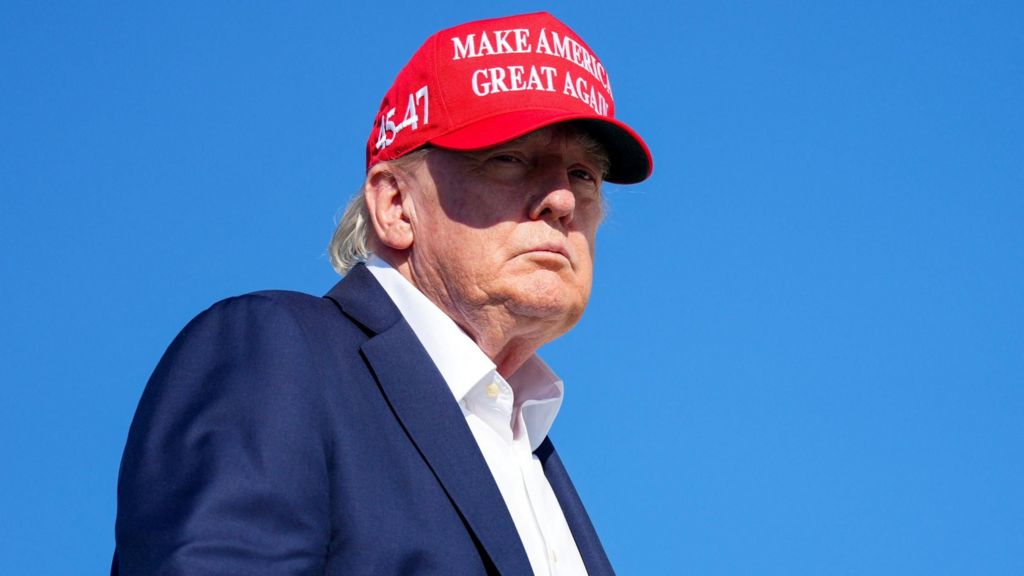
    A brewing diplomatic spat between US President Donald Trump and German Chancellor Friedrich Merz has taken a sharp new turn, with Trump announcing he is actively evaluating a major drawdown of the thousands of American military personnel permanently stationed across Germany. The development comes just days after Merz publicly lambasted Trump’s handling of ongoing tensions surrounding the Iran war, claiming the United States had suffered a public humiliation at the hands of Iranian negotiators.

    In a public post shared to his Truth Social platform, Trump confirmed that his administration is “studying and reviewing the possible reduction of Troops in Germany, with a determination to be made over the next short period of time.” As of last December, the US maintains a substantial military footprint in Germany, with more than 36,000 active-duty service members deployed to bases distributed across the European nation. The BBC has formally contacted the White House to request additional comment on the potential drawdown, and no further details have been released as of press time.

    Merz first made his critical remarks during an address to university students in the German city of Marsberg this Monday. During the talk, he argued that “the Americans clearly have no strategy” for managing negotiations with Iran. He went on to frame recent diplomatic talks as a demonstration of Iranian negotiating skill, noting “the Iranians are obviously very skilled at negotiating, or rather, very skillful at not negotiating, letting the Americans travel to Islamabad and then leave again without any result.” Merz finished his criticism by claiming the entire United States had been “humiliated” by the Iranian leadership.

    The day following Merz’s remarks, Trump took to Truth Social to push back hard against the German chancellor. In his post, Trump claimed Merz believed it was acceptable for Iran to develop a nuclear weapon and argued the chancellor “doesn’t know what he’s talking about.” He went on to lash out at Germany’s broader standing, writing “No wonder Germany is doing so poorly, both Economically, and otherwise!”

    When asked to respond to Trump’s social media attack during a Wednesday press conference, Merz sought to downplay tensions, telling reporters that “the personal relationship between the American president and myself remains just as good as before.” As of Thursday, the German chancellor has not issued any public comment on Trump’s new announcement that he is considering troop reductions.

    This latest exchange comes amid a months-long pattern of aggressive rhetoric from Trump toward US alliances, particularly the North Atlantic Treaty Organization. Over the past two months, the US president has repeatedly threatened to withdraw the United States from the 32-member transatlantic alliance, dismissing NATO as a “paper tiger” and claiming the partnership is a “one-way street” that benefits European nations at American expense.

    Earlier in April, a leaked internal Pentagon email laid out potential punitive measures the US could take against allies that refused to back its military and diplomatic campaign in Iran. One of the most controversial proposals outlined in the document suggested the US could push to suspend Spain from NATO over its public opposition to the Iran campaign. In response to the leak, a NATO spokesperson told the BBC that the alliance’s founding charter “does not foresee any provision for suspension of Nato membership, or expulsion”, making any such suspension legally impossible under the bloc’s current rules.

  • Trump says that he’s is weighing reducing American troop presence in Germany after Iran fued

    Trump says that he’s is weighing reducing American troop presence in Germany after Iran fued

    A sharp public rift between U.S. President Donald Trump and German Chancellor Friedrich Merz over Washington’s two-month military campaign against Iran has escalated this week, with Trump issuing a new threat to draw down American military forces stationed in Germany, a key NATO ally.

    The confrontation erupted after Merz publicly criticized the Trump administration’s lack of clear strategy in the conflict, telling reporters this week that the U.S. had been “humiliated” by Iranian leadership. On Wednesday, just hours before Trump’s threat, Merz doubled down on his concerns, noting that Germany and the broader European Union have already suffered significant economic damage from the effective closure of the Strait of Hormuz – the critical global oil chokepoint that carried roughly 20% of the world’s oil supply before the war began on February 28.

    “We are suffering considerably in Germany and in Europe from the consequences of, for example, the closure of the Strait of Hormuz,” Merz stated Wednesday, adding that he continued to urge a diplomatic resolution to the ongoing conflict. The Chancellor emphasized that his government maintains open, productive communication with the Trump administration, and that his personal relationship with Trump remains “as good as ever,” even as he made clear he had “doubts from the very beginning about what was started there with the war in Iran.”

    This is not the first time Trump has pushed to reduce the U.S. military footprint in Germany. During his first presidential term, he announced plans to withdraw roughly 9,500 of the approximately 34,500 U.S. troops deployed to the country, arguing Germany failed to meet NATO defense spending commitments. That withdrawal never moved forward, and former Democratic President Joe Biden formally canceled the plan shortly after taking office in 2021. Today, Germany hosts some of the most critical U.S. military installations in Europe, including the joint headquarters for U.S. European Command and U.S. Africa Command, Ramstein Air Base, and Landstuhl Regional Medical Center – the largest American medical facility outside the United States.

    Trump has not held back on his frustration with Merz’s public criticism. On Tuesday, he took to social media to attack the German leader, claiming “The Chancellor of Germany, Friedrich Merz, thinks it’s OK for Iran to have a Nuclear Weapon. He doesn’t know what he’s talking about!” He added that it was no surprise “that Germany is doing so poorly, both economically and in other respects!”

    Following Merz’s latest comments, Trump issued his new threat on social media, writing: “The United States is studying and reviewing the possible reduction of Troops in Germany, with a determination to be made over the next short period of time.”

    Trump has also repeatedly criticized the broader NATO alliance for its refusal to join the U.S. and Israel in their war against Iran. The current tensions between the U.S. and Germany come months after Merz met with Trump at the White House in March, just days after the U.S.-Israel bombing campaign of Iran began. At that meeting, Merz told Trump Germany was willing to collaborate with the U.S. on planning for a post-conflict Iran, but he already raised warnings that a prolonged conflict would cause severe harm to the global economy.

    Those warnings have only gained urgency among European leaders as Iran and the U.S. have failed to reach an agreement to reopen the Strait of Hormuz. Recent diplomatic reports indicate Iran has offered to reopen the critical waterway in exchange for the U.S. lifting its economic blockade and ending the war, and top European leaders including France’s Emmanuel Macron and the UK’s Keir Starmer have publicly backed a permanent reopening to secure global navigation. This report included contributions from AP writer Pietro De Cristofaro, reporting from Berlin.

  • Hungary’s next PM says frozen EU funds will be paid out soon

    Hungary’s next PM says frozen EU funds will be paid out soon

    Weeks after ending 16 years of nationalist rule under Viktor Orbán in a landslide election victory, Hungary’s incoming Prime Minister Péter Magyar has already begun urgent high-stakes diplomacy in Brussels to unlock billions of euros in frozen European Union funds, even before his formal swearing-in next month.

    Magyar, whose newly formed Tisza party secured a two-thirds parliamentary supermajority in the April 12 election, held his first in-person talks with European Commission President Ursula von der Leyen during his debut visit to the EU capital. He described the negotiations as “extremely constructive and successful,” leaving confident that long-blocked EU resources will flow to Hungary in the near term.

    For years, more than €32.8 billion in combined EU recovery, cohesion, and defense funding has been frozen over the Orbán government’s documented democratic backsliding, systemic corruption, and repeated clashes with EU rule of law standards. On top of the frozen allocations, Hungary has been forced to pay €1 million in daily fines for violating EU migration policies, a penalty Magyar has vowed to end.

    The most pressing deadline facing the incoming government is the expiration of the €10.4 billion EU Covid-19 recovery fund at the end of August. If Budapest fails to meet a pre-set series of anti-corruption and judicial reform milestones by that date, Hungary will lose access to the allocation permanently. Beyond the recovery funds, an additional €6.3 billion in cohesion funds remains blocked over rule-of-law concerns, while another €16.1 billion in low-interest EU defense loans is available once reforms are implemented.

    Magyar moved quickly to reassure both Brussels and Hungarian voters that unlocking the funds will not require concessions harmful to national interests. He emphasized that the unblocked billions will provide a much-needed boost to Hungary’s stagnant economy, which has recorded near-flat growth for three consecutive years. Márton Hajdu, a senior Tisza party official, outlined the straightforward conditions Brussels has required: independent judiciary free from government interference and robust measures to eliminate public sector corruption. While Magyar is pushing for a rapid agreement scheduled to be signed during his return to Brussels on May 25, analysts note the incoming government faces a steep challenge to deliver on the required reforms in such a compressed timeline.

    Von der Leyen struck a collaborative tone after the meeting, saying the European Commission stood ready to support Magyar’s government as it works to realign Hungarian policy with shared European values. Magyar also held talks with European Council President António Costa, and reaffirmed Hungary’s unwavering place in the European Union in a post-meeting social media statement.

    Not yet sworn in until May 9, Magyar has already moved at a breakneck pace to reset Hungary’s relationship with the EU: just two days after his election win, he placed a personal call to von der Leyen to press for progress on fund release. Beyond economic and EU policy, the new government is also moving to repair strained ties with Ukraine. Orbán’s long-held veto on a €90 billion EU loan package for Ukraine was lifted last week at an informal summit the outgoing prime minister declined to attend, and Magyar has extended an offer to meet Ukrainian President Volodymyr Zelenskyy in early June in the Hungarian-majority Ukrainian town of Berehove.

    Political analysts note Magyar enters his term with rare advantages for advancing his reform agenda: his party’s parliamentary supermajority gives Tisza the power to amend the Hungarian constitution unilaterally, and the EU has already signaled significant goodwill toward the new government after years of friction with Orbán’s administration. What remains to be seen is whether Magyar can meet Brussels’ tight reform requirements to unlock the vital funds before the critical August deadline.

  • US infant formula supply is ‘safe,’ FDA says after looking for potential contaminants

    US infant formula supply is ‘safe,’ FDA says after looking for potential contaminants

    U.S. federal health officials announced Wednesday that a landmark safety analysis of commercial infant formula sold across the country has found mostly reassuringly low concentrations of heavy metals, pesticides, and other potentially harmful contaminants. The comprehensive testing was carried out as part of the U.S. Food and Drug Administration’s Operation Stork Speed, an initiative the agency describes as the most expansive and rigorous assessment of U.S. infant formula safety ever conducted. Both FDA leaders and independent public health experts have concluded that the current domestic infant formula supply remains safe for consumer use.

    “There is no reason for American parents to avoid any available infant formula on the market right now,” stated Dr. Steven Abrams, a pediatrics professor at the University of Texas at Austin who served as an independent reviewer for the FDA’s findings.

    Between 2023 and 2025, FDA scientists collected and tested more than 300 samples of commercially produced infant formula for a full panel of potential contaminants, including four common heavy metals: lead, arsenic, cadmium, and mercury. The testing also extended to pesticide residues, phthalates (industrial chemicals commonly used in plastic packaging and manufacturing), and per- and polyfluoroalkyl substances (PFAS), the persistent man-made compounds widely nicknamed “forever chemicals” for their ability to remain in the environment and human body for decades.

    Per the FDA’s final report, all tested contaminants registered either undetectable levels or concentrations far lower than established safety thresholds. Any heavy metals that were detected fell well below the strict exposure limits set by the U.S. Environmental Protection Agency for drinking water. Ninety-nine percent of tested samples showed no trace of pesticide residues at all, and 25 out of the 30 specific PFAS compounds included in the testing panel were not detected in any samples.

    Most independent experts who reviewed the data have backed the FDA’s conclusion that the current supply is safe, noting that trace amounts of some heavy metals can enter the food supply naturally through environmental contamination, rather than as a result of manufacturing flaws. But not all specialists share the full reassuring conclusion: synthetic compounds like phthalates and PFAS do not occur naturally, so even trace detections raise red flags for some clinicians and researchers.

    “These are completely human-made chemicals,” explained Dr. Sheela Sathyanarayana, a pediatrics professor at UW Medicine and researcher with the Seattle Children’s Research Institute. “The fact that we can detect any of these compounds in infant formula at all is a cause for concern.” Sathyanarayana added that the findings underscore a critical need for expanded ongoing monitoring of contaminants not just in infant formula, but across the entire U.S. food supply.

    Operation Stork Speed was launched by the Trump administration in March 2025, marking the first comprehensive update to U.S. infant formula safety and quality standards in decades. The initiative builds on earlier FDA work that examined heavy metal contamination in a range of infant foods, a public health priority because high early-life exposure to these toxins is linked to long-term impairments in children’s brain development, learning capacity, and behavioral development, Abrams explained.

    Currently, unlike regulatory frameworks in the European Union, Canada, and Australia, the U.S. does not have legally enforceable maximum exposure limits for heavy metals in infant formula. For years, consumer advocacy organizations have pushed the FDA to implement these strict, science-based limits. In 2024, independent consumer organization Consumer Reports published its own analysis of 41 U.S. infant formulas, claiming that many products contained troublingly high levels of heavy metals and other contaminants. However, that study set its own safety threshold for concern far lower than the existing standards used by the European Union, and the high-profile report sparked widespread public anxiety that led many parents to avoid necessary commercial formula use unnecessarily, Abrams noted.

    Abrams himself has called on the FDA to continue regular safety monitoring of infant formula and maintain transparent public reporting of test results. Abbott, one of the largest domestic infant formula manufacturers in the U.S., has also urged the FDA to formalize scientific, enforceable standards for contaminants in the sector.

    “Producing infant formula at scale domestically is a matter of national security for the United States,” Abbott spokesman John Koval said in a prepared email statement. “These latest results confirm that our current domestic supply is safe for American families.”

    This reporting was produced by The Associated Press Health and Science Department, which receives grant support from the Howard Hughes Medical Institute’s Department of Science Education and the Robert Wood Johnson Foundation. The AP maintains full editorial control over all of its independent content.

  • Stranded whale ferried out of German waters in barge

    Stranded whale ferried out of German waters in barge

    After more than five weeks of being stuck in the shallow coastal waters of Germany’s Baltic Sea coast, a young humpback whale nicknamed both “Timmy” and “Hope” has finally begun its journey to the deeper, open waters of the North Sea, carried in a custom water-filled barge towed through international waters. The unprecedented rescue operation has captured the attention of the entire German public, splitting marine experts and conservation groups over the wisdom and potential outcome of the risky mission.

    The whale’s ordeal began in early March, when it likely became tangled in fishing netting before stranding on Timmendorfer Beach in Lübeck Bay on March 23. After initial efforts to dig a channel to coax the animal out to open water failed, the whale slowly moved east along the German coast, eventually settling in a shallow, low-salinity area off the coast of Poel Island, where it remained for 29 days. Over that period, the stranded whale became a national cause célèbre in Germany, with regular updates on its condition dominating local and national news cycles.

    Multiple early attempts to lure the humpback away from the coast ended in failure, leaving rescuers to pursue a controversial, privately funded plan: coax the whale into a specially adapted water-filled barge, then transport it hundreds of kilometers around the Danish coast to the North Sea. The operation is funded by two German entrepreneurs, Karin Walter-Mommert and Walter Gunz, who have poured their resources into giving the whale a second chance. On Tuesday, the team achieved a major milestone when the whale voluntarily swam into the prepared barge, a moment that brought rescue workers to tears.

    “I can’t even say how happy I am,” Walter-Mommert told reporters after the successful boarding, while Gunz added that he had never prayed as intensely as he had during the weeks of the rescue effort. Till Backhaus, environment minister for Germany’s northern Mecklenburg-Vorpommern state, who has become the public face of the mission, hailed the operation as a landmark example of collective action. “If everything goes well, it will be in the North Sea in two days,” he told reporters, adding that early monitoring suggested the whale was in stable condition, and even reportedly sang overnight after being secured in the barge. After the barge and its tow vessel Fortuna B exited German territorial waters, it traveled through the Baltic Sea into Danish waters, on a route that will take it around the northern tip of Jutland and through the Skagerrak Strait to its final destination.

    Felix Bohnsack, the mission’s technical and rescue director, praised every partner involved in the operation, from state environmental agencies to the German lifeguard association DLRG, but cautioned that the hardest part of the journey is still ahead. “We are not yet out of the woods,” he warned Wednesday, reflecting on the 24 hours since the whale entered the barge. “The moment Hope swam into the barge was inconceivable; we had tears in our eyes; these are images I will never forget.”

    The operation has faced widespread skepticism from mainstream marine experts and conservation organizations, however. An expert panel from the International Whaling Commission has already distanced itself from the plan, noting that while the effort was well intentioned, the whale appears severely compromised and is unlikely to survive even after being moved to deeper water. The Whale and Dolphin Conservation (WDC) group has echoed that assessment, warning that the whale has already sustained permanent skin damage from the low-salinity waters of the German Baltic coast. For the rescue to be successful, WDC officials note, the whale’s skin must fully heal and it must quickly learn to hunt for food independently in its new habitat. The German Oceanographic Museum has added that the weakened animal faces a constant risk of drowning during the transport due to its compromised condition.

    A small number of experts have offered a more cautious optimistic take. Marine biologist Fabian Ritter told German press agency DPA that the whale has demonstrated a clear “will to live,” though he cautioned that this type of long-distance barge rescue is completely unprecedented, so no one can accurately predict what long-term effects the process will have on the animal. As the barge continues its northbound journey toward the North Sea, the entire nation of Germany remains closely watching for updates on the whale’s fate.

  • Shot fired after child picks up discarded gun

    Shot fired after child picks up discarded gun

    On a Tuesday afternoon in Dublin’s Ballymun neighborhood, a near-tragedy unfolded just steps away from the local Ballymun Garda Station, highlighting the growing danger of unresolved gang violence plaguing the community. What began as a routine police response to a reported firearm incident turned into a scare that has left local residents and public officials demanding greater safety measures.

    According to official statements from An Garda Síochána, Ireland’s national police service, uniformed unarmed officers responded to emergency calls around 15:00 local time. During their response, officers launched a foot pursuit of two male suspects: one teenage boy and one man in his 20s, with one suspect traveling on an e-scooter. As the chase unfolded near the residential area of Sillogue Gardens, one suspect discarded a loaded firearm in a dense bush before both suspects were taken into custody.

    Shortly after the arrests were completed, an 11-year-old child exploring the area stumbled across the hidden weapon. When the child picked up the gun, the loaded weapon discharged a round. Miraculously, no bystanders or the child were injured in the shooting, but the incident has sent shockwaves through the tight-knit community.

    Local councillor Conor Reddy, representing the People Before Profit party, confirmed that the incident is tied to an ongoing, bitter drugs feud that has sparked an escalating cycle of violence across Ballymun in recent months. He warned that repeated firearm incidents in residential areas are normalizing violent behavior for young people growing up in the neighborhood, a trend he called deeply alarming.

    This event is not an isolated occurrence. Just three days prior, on Sunday, Gardaí from the Drug Unit conducting a routine foot patrol discovered a second loaded handgun hidden in a bush near Coultry Park’s public playground. That weapon was found with a round already in the firing chamber, and it has been sent for ballistic and forensic testing. As of the latest updates, no arrests have been made in that case, though investigators confirm they are following a clear line of inquiry.

    Following Tuesday’s shooting, Gardaí confirmed that the 20s-aged suspect remains in police custody, while the teenage suspect has been released pending a full report to Ireland’s Director of Public Prosecutions. Law enforcement officials also noted they are providing support services to the family of the 11-year-old child who found the weapon, to help them process the incident.

    Local public officials have united to call for urgent action to address the growing safety crisis. Independent councillor Gavin Pepper has submitted an emergency motion to Dublin City Council, demanding that new closed-circuit CCTV cameras be installed in all local public parks and that full-time park rangers be assigned to conduct regular patrols to deter illegal activity. Fianna Fáil councillor Keith Connolly added that the gun involved in Tuesday’s discharge has not yet been recovered by police, with early reports indicating two young people on bicycles removed the weapon from the scene after it fired. Connolly is calling for high-visibility policing in Ballymun matched to the resource levels already deployed in central Dublin, arguing that residents of suburban neighborhoods deserve the same level of protection as those in the city core.

    Cllr Reddy emphasized that the most disturbing detail of the incident is the young age of people both involved in the feud and affected by it. “For an 11-year-old child to stumble across a loaded gun in their neighborhood is every parent’s worst nightmare,” he said, echoing the concerns of residents across Ballymun who now fear for their children’s safety as the drugs feud continues to escalate.

  • France investigates reappearance of website linked to Pelicot crimes

    France investigates reappearance of website linked to Pelicot crimes

    France’s justice system has launched a formal probe into the unexpected resurgence of a controversial platform tied to one of the country’s most high-profile violent sexual crime cases, renewing urgent calls for stronger regulation of unmoderated anonymous online spaces. The original platform, Coco.gg, first gained infamy during the 2024 trial of Dominique Pelicot, a man convicted of drugging his wife Gisèle Pelicot for more than 10 years, raping her repeatedly, and recruiting more than 50 random strangers via the platform’s chatrooms to join in the attacks. Forty-nine additional men were also convicted of rape, attempted rape, or sexual assault against Gisèle Pelicot in the December 2024 ruling, all of whom had connected with Pelicot on the platform.

    Long before the Pelicot case brought national attention to the platform, French law enforcement had linked Coco.gg to a litany of other serious crimes, including widespread child sexual abuse, drug trafficking, and even murder. The site operated with no content moderation whatsoever and required no user registration, allowing anonymous users to access open chatrooms with zero vetting. By the time authorities took the original platform offline in 2024, it had been cited in more than 23,000 official criminal activity reports, according to the Paris prosecutor’s office. The platform’s founder, Isaac Steidl, was arrested and charged with multiple offenses including possession and distribution of child pornography in January 2025, and he has formally denied all charges against him.

    But in early April 2025, internet users spotted at least two new platforms with nearly identical design layouts and similar names to the original Coco site operating publicly online. One of the new platforms, Cocoland.cc, released a public statement denying any connection to the original Coco.gg and its founder. As of April 29, Cocoland.cc had been taken offline, but a second Cocoland-branded site remained accessible to users that morning.

    Investigators have now opened an official investigation into the new sites on charges of “disseminating violent, pornographic, or offensive messages accessible to minors”, the Paris prosecutor’s office confirmed to the BBC. Steidl’s legal representative, attorney Julien Zanatta, told Agence France-Presse that his client has “nothing to do” with the newly emerged platforms.

    Local French news outlet BFM TV conducted an on-the-record test of the accessible new platform, finding that journalists could create a pseudonymous profile and access chatrooms in seconds, with no registration requirements or identity verification checks. When a reporter posed as a 13-year-old girl, they were immediately contacted by multiple platform users who continued to send lewd photos and explicit sexual messages even after being told the account holder was underage.

    Sarah El Haïry, France’s High Commissioner for Childhood, condemned the resurgence of the platform, calling it a “collective failure” in the fight against child sexual abuse, one of the most severe forms of violence against minors. “Websites like this exploit every legal and regulatory loophole, they actively seek out prey, and that prey is children,” El Haïry said in a public statement. She added that predators routinely target and approach children via these unmoderated platforms, holding both the site creators and hosting services accountable for enabling the harm. El Haïry also confirmed she has filed separate official complaints against two additional unregulated open chatroom platforms that pose similar risks to minors.

  • Zaragoza goalkeeper Andrada handed 12-match suspension for throwing punch in 2nd-tier game in Spain

    Zaragoza goalkeeper Andrada handed 12-match suspension for throwing punch in 2nd-tier game in Spain

    Two separate high-profile disciplinary incidents in Spanish men’s football have resulted in significant match bans for two professional players, drawing fresh attention to on-pitch conduct rules in the country’s second and top-tier competitions.

    The first incident unfolded in a recent Segunda División fixture between Zaragoza and Huesca, ending in drastic action against Zaragoza’s Argentine starting goalkeeper Esteban Andrada. With just minutes remaining on the clock, Huesca defender Jorge Pulido approached Andrada, prompting the goalkeeper to shove Pulido hard to the turf. Match officials issued Andrada a second yellow card for the aggressive shove, which resulted in an automatic red card and ejection from the game. Rather than leaving the pitch, Andrada pursued Pulido and landed a forceful punch to the defender’s face with his right hand, knocking Pulido to the ground immediately.

    The unprovoked attack sparked a full-scale brawl involving players and coaching staff from both clubs, bringing play to an extended halt. In the chaos of the melee, Huesca backup goalkeeper Dani Jiménez retaliated by punching Andrada, and he was also sent off. Following a disciplinary review, Spanish football authorities handed Andrada a 12-match suspension for the violent punch, plus an additional one-match ban linked to the red card he received prior to the attack. Jiménez received a four-match suspension for his role in the post-punch confrontation. Andrada has since issued a public apology for his outburst, and both clubs have the right to appeal the disciplinary rulings.

    In a separate incident in La Liga, first-division side Rayo Vallecano winger Isi Palazón received a seven-match suspension for unsportsmanlike conduct toward match officials. The suspension stems from an incident during a hotly contested 3-3 draw against Real Sociedad on Sunday. Palazón had already been substituted off the pitch and was on the Rayo bench when a controversial VAR decision altered the course of the game. Reviewing an earlier sequence of play, video officials overturned a correctly disallowed Rayo goal and instead awarded a penalty kick to Real Sociedad. The call enraged Palazón, who launched a harsh, aggressive tirade of complaints against the referee from the bench, resulting in an immediate red card and ejection.

    Disciplinary officials upheld the ejection and ruled Palazón’s conduct unacceptable, issuing the seven-match ban that will rule him out of most of Rayo’s coming fixtures. Both cases highlight the Spanish Football Federation’s ongoing crackdown on violent play and misconduct targeting match officials in domestic professional football.

  • In a remote German village, mail is delivered by boat during warmer months

    In a remote German village, mail is delivered by boat during warmer months

    Tucked 100 kilometers southeast of Berlin, the historic riverside village of Lehde sits within the winding waterways of the Spreewald Forest, a protected UNESCO biosphere reserve where the Spree River splits into hundreds of narrow, shallow canals cutting through lush wetlands and old-growth forest. For 129 consecutive years, this tiny German village has held a singular distinction across the whole country: it is the only community in Germany that receives all its mail delivery by boat, a seasonal tradition that returns every spring as ice thaws and waterways become navigable once more.

    This year, that long-awaited seasonal kickoff fell on a Wednesday in early April, when 55-year-old veteran postal worker Andrea Bunar stepped back onto her bright yellow 9-meter barge after a months-long winter break. For 14 years, Bunar has carried out this unique delivery route, switching between overland car trips in the frozen winter months and waterborne deliveries from April through October. On her first day back on the water, she stood at the stern of her vessel, guiding the shallow-draft barge through narrow channels with a single long oar that handles rowing, steering, and navigation all at once.

    “The start of the season is always special for me,” Bunar shared as she set off, clad in her official postal uniform. “After the long winter break, I enjoy being in the nature and back on the water.” Winter overland delivery is far from ideal in Lehde: rural roads are often slick with ice and snow, forcing much longer travel times than the water route. From spring through mid-autumn, Bunar makes deliveries six days a week, dropping letters and packages into mailboxes that residents have mounted directly along the riverbanks. She also offers on-route postal services, selling stamps to locals along the remote waterway and collecting outgoing mail to bring back to the main postal hub.

    The tradition of boat-borne mail delivery in Lehde dates back to the late 19th century. Before the service launched, villagers only collected their mail once a week, after Sunday church services. As rural-to-urban migration boomed across Germany, demand for more frequent long-distance communication surged, prompting the national postal service to establish regular delivery routes. For Lehde, a village crisscrossed by more waterways than paved roads, a boat delivery route was the only practical solution – turning the community into a tiny, Teutonic counterpart to Venice, built on interconnected canals.

    Today, Bunar covers an 8-kilometer route every week, completing the full circuit in roughly two hours. On average, she delivers around 600 letters and 80 packages each week, a mix that has shifted noticeably in recent years: handwritten and personal letters have declined, while online shopping has led to a sharp jump in package volume. Bunar jokes that her small barge has started to feel like a miniature container ship, having delivered everything from full-sized refrigerators and lawnmowers to electric scooters. On her 2024 opening day, alongside the usual stack of bills and registered correspondence, she delivered a large industrial saw to one local resident.

    For Bunar, this unconventional postal route is far more than just a job – it is a lifelong dream. “This is and has been my dream job all along,” she said with a smile, steering her barge past tree-lined canal banks. “Being on the water is just so relaxing – it slows down life.” The Spreewald biosphere, which protects hundreds of kilometers of waterways and a vast array of native plant and animal species, provides a quiet, scenic backdrop for her daily work, a pace of life that stands in stark contrast to the bustle of Berlin just an hour’s drive away.