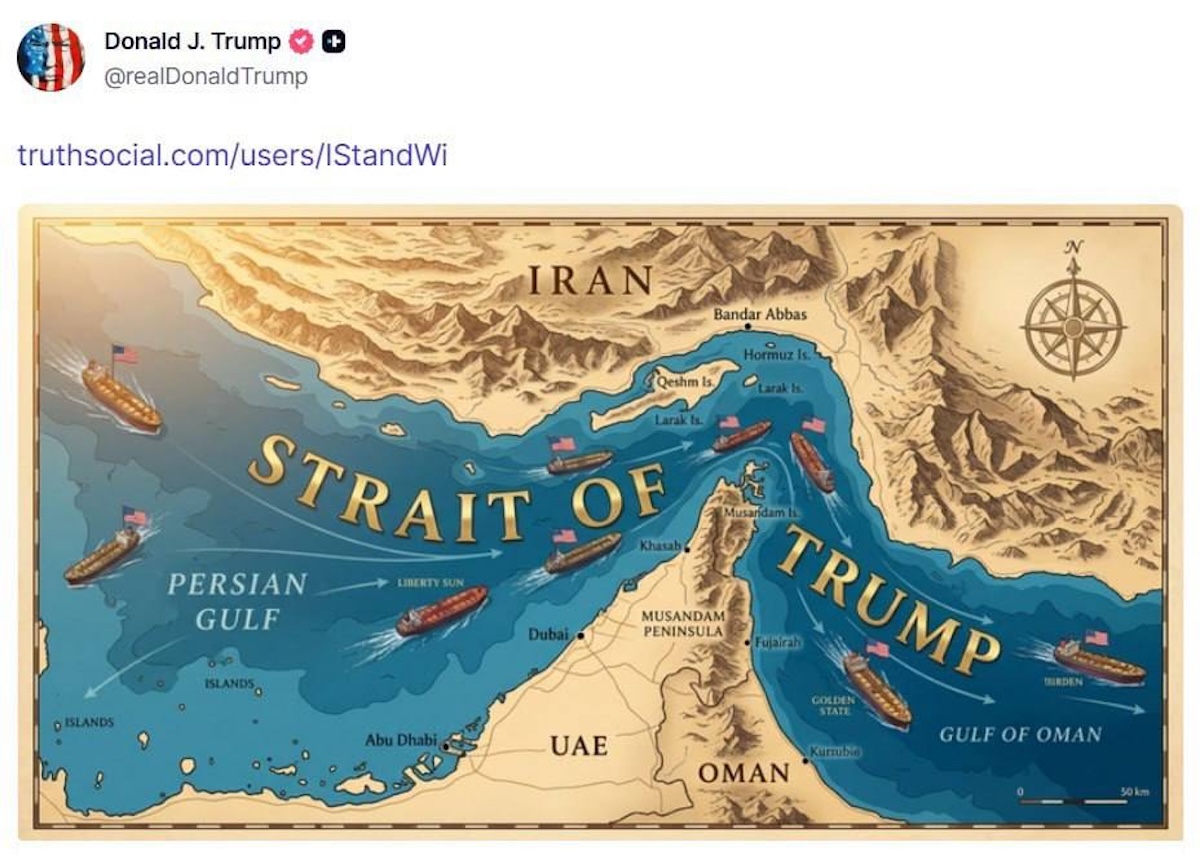
A sudden diplomatic backlash from key Gulf allies has forced the Trump administration to backtrack on a high-stakes military plan to reopen the blockaded Strait of Hormuz, throwing Washington’s Iran war strategy into disarray just as new peace talks emerge. The abrupt reversal of what President Donald Trump dubbed “Project Freedom” came after both Saudi Arabia and Kuwait halted U.S. military access to their sovereign airspace and strategically critical military bases, multiple U.S. and regional sources confirm.
标签: Asia
亚洲
-

Israeli soldier pictured desecrating Virgin Mary statue in Lebanon
A new controversy has emerged over conduct by Israeli troops in southern Lebanon, after a widely circulated video showing an Israeli soldier desecrating a statue of the Virgin Mary in the Christian village of Debel has prompted a formal military inquiry. Though the photograph of the incident was first shared publicly on Wednesday, Israeli military investigators confirm the act took place several weeks ago in the village, which sits just five kilometers from the Israeli border and six kilometers northwest of the Lebanese Christian town of Ain Ebel.
In an official statement following the viral spread of the footage, the Israeli military noted that it has already identified the soldier responsible, and confirmed disciplinary action will be issued once the investigation concludes. The service emphasized that it views the incident with severe seriousness, stressing that the soldier’s actions stand in complete opposition to the ethical standards and values the military requires of all its personnel. “The incident will be investigated, and command measures against the soldier will be taken in accordance with the findings,” the military’s statement read. It also added that the Israeli military upholds respect for freedom of religion and worship, along with holy sites and religious symbols belonging to all faiths and communities, and maintains that it has no intent to damage civilian infrastructure, including religious structures or sacred symbols.
This latest incident is not an isolated event in Debel: just one month prior, another Israeli soldier used a jackhammer to destroy a statue of Jesus on a cross in the same village. Images of that earlier act of vandalism sparked immediate widespread outrage across social media, even drawing condemnation from prominent conservative allies of former U.S. President Donald Trump. Former Republican Congresswoman Marjorie Taylor Greene posted a sarcastic remark on the social platform X in response to the images, writing, “’Our greatest ally’ that takes billions of our tax dollars and weapons every year.” Fellow former Republican Congressman Matt Gaetz called the vandalism “horrific.” In response to that earlier incident, the Israeli military announced it had discharged the soldier who destroyed the statue, along with a second soldier who filmed the act, and sentenced both to 30 days of military prison. More recently, additional footage from Debel has documented Israeli military excavators destroying civilian solar panels, an act that is also currently under military review.
The Debel incidents are part of a growing string of attacks on Christian religious sites across southern Lebanon, according to religious organizations. Last week, a French Catholic charity L’Oeuvre d’Orient issued a formal condemnation of Israeli forces after they demolished a convent run by the Salvatorian Sisters, a Greek Catholic order, in the Lebanese village of Yaroun. In its statement, the organization said, “L’Oeuvre d’Orient strongly condemns this deliberate act of destruction against a place of worship, as well as the systematic demolition of homes in southern Lebanon aimed at preventing the return of civilian populations.” The charity added that the convent demolition fits into a broader pattern of targeting Christian heritage, noting that multiple Christian sanctuaries, including Melkite churches in Yaroun and Derdghaya—both officially protected as part of Lebanon’s national heritage—were destroyed during 2024 hostilities.
Attacks against Christian communities and individuals have also intensified in occupied Palestinian territories, according to recent reports. Last week in occupied East Jerusalem, a 48-year-old nun was physically assaulted by an Israeli civilian near the Cenacle on Mount Zion, requiring medical care for facial injuries sustained in the attack. Religious authorities have also faced repeated restrictions on worship: Israeli police recently blocked Cardinal Pierbattista Pizzaballa, the Latin Patriarch of Jerusalem, and other clergy from holding the traditional Palm Sunday Mass at the Church of the Holy Sepulchre, only partially reversing the access ban after widespread international pressure.
A 2025 report from the Rossing Center for Education and Dialogue has documented a dramatic spike in anti-Christian incidents across the region, describing a “continued and expanding pattern of intimidation and aggression.” The center recorded 155 separate incidents in 2025 alone: the total includes 61 physical assaults, 52 attacks on church-owned property, 28 cases of religious harassment, and 14 instances of vandalism against religious signage. Researchers warn that the documented count represents only the “tip of the iceberg,” with many more incidents going unreported.
These developments come even as Israel maintains ongoing military activity in Lebanon despite an April 17 ceasefire agreement that was meant to end over six weeks of open conflict. Since large-scale hostilities began on March 2, more than 2,600 people have been killed in the fighting, and over 8,000 more have been wounded.
-

Daniel Dae Kim explores booming South Korean pop, film, cosmetics and food influences for CNN series
In a surprising twist that blends personal curiosity and professional storytelling, veteran entertainer Daniel Dae Kim recently tried an unconventional K-beauty treatment few celebrities would volunteer for: microinjections of salmon sperm DNA into his face, administered at a Seoul clinic. The procedure, intended to lower facial inflammation and boost skin elasticity, left Kim with a faint sunburn-like flush, but he brushed off the minor side effect and declared himself camera-ready within minutes.
That on-camera experiment is just one small segment of Kim’s ambitious new project, the CNN original series *K-Everything: The Global Rise of Korean Culture*, a passion project he calls a “love letter” to South Korea’s most beloved cultural exports, spanning beauty, food, music and film. The series is set to premiere Saturday on CNN International, with additional streaming availability on CNN and HBO Max.
For Kim, the series is far more than a typical travel documentary. Born in South Korea before moving to the U.S. at the age of one, the multi-hyphenate actor, director and producer has long held deep ties to the country, and the show frames its exploration of South Korea’s transformation through a deeply personal lens. In just three generations, the nation climbed from a war-ravaged developing nation to one of the world’s most dynamic, modern cultural powerhouses, and *K-Everything* traces that extraordinary shift through the lens of its most popular global exports.
Viewers can expect Kim to guide them across the full breadth of modern Korean culture. At the energetic annual kimchi festival in Pyeongchang, he unpacks how fermented Korean cuisine is upending long-held norms in fine dining scenes across the globe. In separate episodes, he sits down for one-on-one conversations with some of South Korea’s biggest entertainment figures, including A-list actor Lee Byung-hun, “Gangnam Style” pioneer Psy, BigBang member Taeyang, and the songwriters behind the Oscar-winning hit “Golden”. The K-beauty episode takes Kim even further: after chatting with beauty influencer LeoJ and model Irene Kim about shifting global beauty standards, he tests a range of viral K-beauty products from serums to sheet masks, even takes a tour of a facility that harvests snail slime for skincare formulations.
The personal journey extends to Kim’s own family, too. During filming, he accompanied his parents around Seoul, which has transformed so dramatically in recent decades that every landmark they remembered from their youth has disappeared. For his parents, navigating the hyper-modern capital felt almost like exploring a foreign country, leaving Kim as their trusted guide—a role that mirrors his work on the series.
Kim is joining a booming trend of A-list celebrities taking on travel and culture hosting roles, with high-profile names from Stanley Tucci and Eugene Levy to Chris Hemsworth and Will Smith launching their own documentary series in recent years. Kim cites iconic late chef and travel host Anthony Bourdain as a major inspiration; Bourdain pioneered the modern format of the celebrity travel host, leaning into personal perspective rather than rigid scripted narration.
“I wouldn’t say that this show is as irreverent as Anthony Bourdain’s show was, but I loved it because I felt like he was showing me his take on each country and he was a trusted guide,” Kim explained. “If I can be that for some people then that’s the spirit that I’d like to bring into this show.”
CNN executives say Kim’s unique background makes him the perfect person for this project. Amy Entelis, executive vice president for talent, CNN Originals and creative development, noted that Kim brings an unmatched combination of passion, firsthand knowledge, and ability to connect with global audiences that can’t be replicated by an outside host.
“From the first time I met him, it was clear he was incredibly well equipped to tackle this — deeply passionate about the subject and highly knowledgeable. He was also very focused on making sure the way we look at Korean culture translates to a broad global audience, really putting a spotlight on it,” Entelis said.
While this marks Kim’s first time hosting a full television series, he says the role felt natural, not outside his comfort zone. As an artist who has been shaped by his Korean heritage throughout his life and career, introducing the culture he loves to a global audience felt like a calling, not work.
Beyond entertainment, Kim also hopes the series will serve a larger social purpose: bridging cultural divides and pushing back against the sharp rise in anti-Asian racism that surged globally during the COVID-19 pandemic. “If we can start to understand one another a little bit better through culture, then I think it is one step toward bringing together a global community. And I think the world could use a little more understanding in general,” he said.
For new viewers unfamiliar with South Korea, Kim says the series offers a accessible, human introduction that no textbook or classroom lecture can match. By bringing together people from every corner of Korean society—from different cities, socioeconomic backgrounds, and creative fields—the series broadens understanding of just how diverse and dynamic modern Korean culture is, beyond the viral trends that dominate global social media.
-

Novelist JM Coetzee declines to attend Jerusalem writers festival over ‘genocidal campaign in Gaza’
One of the world’s most decorated literary figures has sparked international debate after confirming he will skip a major Israeli literary festival, citing profound moral objection to what he terms Israel’s “genocidal campaign” in the Gaza Strip.
John Maxwell Coetzee, the 2003 Nobel Prize in Literature winner and two-time Booker Prize recipient, outlined his decision in a private November letter to Julia Fermentto-Tzaisler, artistic director of the Jerusalem International Writers Festival, a copy of which was obtained by The Guardian. In the correspondence, the South African-born writer made an unusual public break from his long-held position as a self-identified supporter of Israel, explaining that the current actions of the Israeli state and widespread public backing for the campaign make his attendance impossible.
“For the past two years the state of Israel has been conducting a genocidal campaign in Gaza that has been vastly disproportionate to the murderous provocation of 7 October 2023,” Coetzee wrote in the letter. He added that the military campaign waged by the Israel Defense Forces has retained the enthusiastic backing of the vast majority of Israeli citizens. “For this reason it is not possible for any considerable sector of Israeli society, including its intellectual and arts community, to claim that it should not share in the blame for the atrocities in Gaza,” he emphasized.
This is not Coetzee’s first connection to high-profile cultural events in Jerusalem: in 1987, he traveled to the city to accept the prestigious Jerusalem Prize for the Freedom of the Individual in Society. During that appearance, he delivered a widely noted speech calling for an urgent end to apartheid in his native South Africa. Today, multiple human rights organizations categorize the Israeli occupation of Palestinian territories as a system of apartheid, a framing Coetzee appears to align with in his current stance.
“Long-time supporters of Israel have turned away in revulsion at the actions of the Israeli military,” Coetzee wrote. “It will take many years for Israel to clear its name, assuming that it wishes to do so, and to re-establish itself in the international community.”
Coetzee’s high-profile boycott comes amid a shifting military landscape in the region, according to recent Israeli reporting. Last week, Israel’s Army Radio revealed that Israeli forces have expanded their territorial control across Gaza to nearly 60 percent of the enclave, even amid a formally declared ceasefire. Senior military officials told the broadcaster that the Israeli military is pushing aggressively to resume full-scale hostilities, arguing that the current moment presents an optimal opportunity to dismantle Hamas. Operational plans for renewed offensive attacks have already been finalized, the report added, with a final go-ahead waiting only for approval from Israel’s top political leadership. Military leaders have also pulled back troop presence from southern Lebanon to reposition key brigades in Gaza and the occupied West Bank, indicating a looming shift in military focus.
The current nominal ceasefire was brokered by the United States earlier this year, with the stated goal of halting Israeli offensive operations and opening corridors for life-saving humanitarian aid to enter the blockaded Gaza Strip. But the ceasefire has been repeatedly violated by Israeli forces, according to the Palestinian Ministry of Health, which records that at least 832 Palestinians have been killed in near-daily Israeli shelling since the truce took effect.
Restrictions on the entry of food, medicine, and essential infrastructure equipment have only worsened catastrophic conditions for Gaza’s population of roughly two million displaced people, fueling widespread hunger, the rapid spread of preventable disease, and a humanitarian catastrophe that has drawn global condemnation. Since the resumption of large-scale Israeli hostilities in October 2023, more than 72,000 Palestinians have been killed in Gaza, per local health authorities, with thousands more still missing and trapped under the rubble of destroyed residential and civilian infrastructure.
Coetzee’s decision is one of the highest-profile cultural boycotts of Israeli institutions since the current conflict escalated, joining a growing wave of artists, academics, and writers who have canceled appearances in Israel to protest military policy in Gaza.
-

UK border official and former Hong Kong cop convicted of assisting Chinese spy agency in Britain
LONDON – In a landmark espionage case that has escalated diplomatic tensions between London and Beijing, a UK jury has found two dual Chinese-British nationals guilty of conducting coordinated spying operations on behalf of Chinese authorities targeting Hong Kong pro-democracy dissidents based in Britain. The convictions mark one of the highest-profile transnational repression cases prosecuted under the UK’s landmark National Security Act.
The defendants, 40-year-old Peter Wai and 65-year-old Bill Yuen, carried out what prosecutors described as “shadow policing” across the UK, targeting exiled activists and political figures who relocated to Britain after Beijing imposed a sweeping national security law on Hong Kong in 2020. Wai, a serving UK Border Force officer and a special constable with the City of London Police who also operated a private security firm, abused his official access to law enforcement databases to gather intelligence on dissidents. Yuen, a former Hong Kong Police superintendent who worked as an office manager at the Hong Kong Economic and Trade Office (HKETO) – Hong Kong’s official representative body in London – exceeded his official remit to coordinate the surveillance network, prosecutors confirmed.
Following a weeks-long trial at London’s Central Criminal Court, the jury returned guilty verdicts on Thursday on charges of violating the National Security Act by providing assistance to a foreign intelligence service. Wai received an additional conviction for misconduct in public office over his misuse of police computer systems to pull information on targets while off duty. Prosecutors documented that Wai received payment for his work from an HKETO bank account, and the pair exchanged phone messages referring to Hong Kong dissidents as “cockroaches.” Their targets included prominent exiled Hong Kong pro-democracy figure Nathan Law, as well as senior UK politicians: Yuen explicitly instructed Wai to prioritize monitoring members of UK Parliament and government employees, providing Wai with the name of Conservative lawmaker Iain Duncan Smith, co-chair of the Inter-Parliamentary Alliance on China, in 2023.
The conspiracy was uncovered by British counterterrorism police in May 2024, when officers monitoring the network disrupted an attempted break-in at the West Yorkshire home of Monica Kwong, a Hong Kong national living in northern England. Kwong had been accused of 16 million pounds ($21.8 million) fraud by her former employer, Beijing-based Australian businesswoman Tina Zou, who was present at the scene during the attempted break-in. Kwong has maintained the fraud accusation is a fabricated setup. Nine people were arrested during the disruption, including Zou, Wai, and two retired Hong Kong police officers. Yuen, who was in regular communication with the group, was taken into custody shortly after in London.
A third defendant, Matthew Trickett, a UK immigration enforcement officer also arrested at Kwong’s home, died by suicide in custody before the conclusion of the trial. Zou was never charged in connection with the espionage conspiracy, and the jury was unable to reach guilty verdicts on charges linked to the break-in at Kwong’s residence. Prosecutors further confirmed that Hong Kong authorities had offered bounties of up to nearly 100,000 pounds ($136,000) for information leading to the capture of exiled pro-democracy supporters, a context that frames the surveillance operations carried out by Wai and Yuen.
Shortly after the jury delivered its guilty verdicts, the UK Foreign Office summoned Chinese Ambassador Zheng Zeguang to formally protest the actions. Senior UK officials emphasized that the convictions send an unambiguous message to foreign governments seeking to conduct unlawful operations on British territory. “These convictions send a clear message that transnational repression, foreign interference, unauthorized surveillance, and attempts to operate outside the law will not be tolerated on British soil,” said Bethan David, head of counterterrorism at the Crown Prosecution Service. “This conduct was deliberate, coordinated and carried out with full knowledge of who it would benefit.”
Security Minister Dan Jarvis echoed the condemnation in a formal statement, noting: “The activities carried out by these men, on behalf of China, are an infringement of our sovereignty and will never be tolerated. We will continue to hold China to account and challenge them directly for actions which put the safety of people in our country at risk.”
Hong Kong’s government issued a response distancing itself from the case, saying it was not involved in the activities and strongly rejected “unfounded allegations” against the administration or its London trade office.
-

Iran’s long history of standing firm against foreign aggressors
Since the escalation of tensions between the United States and Iran, former U.S. President Donald Trump has issued a series of unprecedented threats that extend far beyond targeting Tehran’s military infrastructure. His rhetoric has directly targeted Iran as a whole, calling into question the very survival of the nation and its 3,000-year-old civilization.
Most recently, Trump warned that if Iran launched any attack on U.S. vessels deployed to reopen the Strait of Hormuz, Iran would be “blown off the face of the earth.” This is not an isolated outburst: he has previously threatened to return Iran to the “Stone Age” and issued a chilling warning that “a whole civilization will die tonight, never to be brought back again.” These extraordinarily aggressive remarks expose not just a commitment to extreme bellicosity, but a profound misunderstanding of the deep-rooted resilience of Iranian culture, civilization and the enduring fortitude of the Iranian people, according to analysis from leading regional scholars.
Iran’s long history is defined by repeated tests from internal unrest and foreign intervention, yet the country has never been fully colonized or permanently subjugated by outside powers. At every turning point marked by crisis, the Iranian people have mobilized to defend their sovereign identity and cultural heritage. This pattern stretches back to the earliest interactions between Persia and Western powers, rooted in a centuries-old framing of Persia as the West’s ultimate “other” – a supposed despotic Oriental threat to an enlightened Western order, a narrative that has persisted since the Greco-Persian Wars of 499 BCE.
This popular Western narrative overlooks key historical context: as early as 538 BCE, the Persian Empire allowed exiled Jews to return from Babylon to Jerusalem to rebuild their temple, and governed the world’s first large-scale multicultural empire with a policy of tolerance for diverse communities and faiths. While Greek city-state victories over Achaemenid Persian forces at Marathon in 490 BCE and Salamis in 480 BCE are widely celebrated as turning points for Western civilization, these defeats were little more than a minor setback for the Persian Empire. Persia remained a decisive power in Greek politics for centuries: Persian funding helped Sparta secure victory over Athens in the Peloponnesian War (431–404 BCE), and Persia regularly served as the most influential mediator in disputes between Greek city-states.
After the fall of the Achaemenid dynasty, the successive Parthian and Sasanian Persian empires emerged as primary rivals to Roman power. In 260 CE, Sasanian Emperor Shapur I defeated Roman forces and captured Roman Emperor Valerian, an unprecedented humiliation for the empire. A century later, Shapur II’s army repelled an invasion led by Roman Emperor Julian, killing Julian in battle. Mainstream triumphal Western narratives routinely erase these chapters of history, in which Persian forces repeatedly outmatched and defeated the most powerful Western empire of the ancient world.
Even when foreign powers won military control over Persian territory, Persian civilization outlasted its conquerors. When Alexander the Great completed his military conquest of Persia in the 4th century BCE, he ultimately embraced Persian cultural traditions, which remained the dominant cultural force in the region long after Greek influence faded. The arrival of Islam in the region did not erase Persian civilization either: Islamic rulers preserved the Persian language and core cultural traditions, including 3,000-year-old celebrations such as Nowruz, the Persian New Year, and pre-Islamic Zoroastrian concepts of resistance to tyranny were adapted into Shiite Islam’s core ideological framework.
The devastating Mongol invasions between 1219 and 1258 left widespread destruction across Iran, but the core foundations of Persian civilization survived, and Persian power reemerged to flourish, most notably under the Safavid dynasty that ruled from 1501 to 1736. During the Qajar dynasty (1789–1925), Persia was caught in the middle of Anglo-Russian great power competition during the “Great Game” era, but never surrendered its sovereignty to foreign control. Even during World War II, when British forces occupied Iran’s oil-rich southern regions and Soviet forces occupied the north, both occupying powers ultimately pledged to respect Iran’s sovereignty and withdrew their troops at the end of the conflict.
This history of foreign interference rejuvenated Iranian nationalist sentiment in the 20th century, sparking a broad movement to free Iran from great power competition and take full control of the country’s natural resources, particularly its oil reserves. British interests had controlled Iran’s oil sector through the Anglo-Iranian Oil Company (AIOC) since the early 1800s. In 1951, nationalist reformer Mohammad Mossadegh was elected prime minister, and immediately moved to nationalize the AIOC, triggering a major diplomatic and economic dispute with the United Kingdom. Mossadegh also sought to curb the power of the monarchy and advance democratic reforms, bringing him into conflict with the young, pro-Western monarch Mohammad Reza Pahlavi, who was forced into exile in 1953. Just days later, a covert joint operation led by the U.S. Central Intelligence Agency, with support from Britain’s MI6, overthrew Mossadegh and restored the shah to power. Fifty years later, then-U.S. President Barack Obama formally acknowledged the CIA’s direct role in the 1953 coup.
After the coup, the U.S. positioned the shah as a key pillar of American hegemony in the Middle East, and in exchange, U.S. oil firms secured a 40% stake in Iran’s oil industry. Despite his dependence on U.S. support, the shah gradually transformed the relationship into one of interdependence, and Iran emerged as a pivotal player in both the Organization of the Petroleum Exporting Countries (OPEC) and regional Middle Eastern politics. After the 1973–1974 global oil crisis, U.S. Secretary of State Henry Kissinger openly warned that the U.S. would respond with military force if oil supply cuts “strangled” the American economy – a clear veiled threat against the shah’s government.
The 1978–1979 Iranian Revolution ultimately toppled the shah, bringing his main political and religious opponent, Ayatollah Ruhollah Khomeini, to power. Khomeini established the Islamic Republic of Iran, which adopted an explicit anti-U.S. and anti-Israel posture, and rooted his rule in the longstanding historical pride Iranians hold in governing their own sovereign destiny. Khomeini and his successor, Ayatollah Ali Khamenei, have entrenched Shia political Islamism as the core ideological foundation of the Iranian state, while blending this ideology with the deep-rooted Iranian sense of civilizational, cultural and national identity – a unifying force particularly amid repeated external aggression.
As the celebrated 10th and 11th century Persian poet Abul-Qasim Ferdowsi wrote centuries ago: “Iran is my land, and the whole world is under my feet. The people of this land are the possessors of virtue, art and bravery. They have no fear of roaring lions.”
As the ongoing standoff between the U.S. and Iran continues, Iran’s current government has signaled it is prepared for a long-term confrontation with the latest foreign military threat. The analysis from scholars makes clear, however, that no military solution exists to resolve the current conflict. The only sustainable path forward is diplomatic negotiation conducted within a framework of mutual respect and trust. Without diplomatic progress, the entire Middle East region and global economy will remain vulnerable to an avoidable energy and economic crisis that could have been resolved through dialogue rather than conflict. Ultimately, the future of Iran’s governing system is a matter to be decided exclusively by the Iranian people.
This article is republished from The Conversation under a Creative Commons license, written by Amin Saikal, emeritus professor of Middle Eastern studies at Australian National University, The University of Western Australia, and Victoria University, and Amitav Acharya, distinguished professor of international relations at American University School of International Service.
-

US reinstates deportation proceedings against Palestinian green-card holder student
A high-stokes clash between the second Trump administration and campus pro-Palestinian dissent has reignited after the US Board of Immigration Appeals reinstated deportation proceedings against Mohsen Mahdawi, a Palestinian US green card holder and prominent organizer of last year’s anti-war protests at Columbia University, his legal team confirmed this week.
Mahdawi, 34, a master’s student at Columbia’s School of International and Public Affairs, first encountered immigration enforcement in mid-April 2024, when US Immigration and Customs Enforcement (ICE) agents detained him during a scheduled citizenship interview in Vermont. The detention came directly after he took part in campus demonstrations opposing Israel’s military campaign in Gaza. He was released from custody two weeks later, but the threat of deportation hung over him as the active proceedings remained unresolved.
In February 2025, a federal immigration judge had blocked the Trump administration’s push to deport Mahdawi. The ruling centered on a critical procedural flaw: the government attempted to enter a removal order memo from Secretary of State Marco Rubio as evidence using only an unauthenticated photocopy. Judge Nina Froes, who issued that ruling, noted that while the document was relevant to the case, it could not be admitted without proper verification, a standard legal requirement. Just one month after issuing the ruling that halted Mahdawi’s deportation, the Trump administration removed Judge Froes from her position.
Mahdawi, who was born in a Palestinian refugee camp in the occupied West Bank and relocated to the United States a decade ago, holds permanent US residency (green card) status. In 2023, he co-founded Columbia University’s Palestinian Student Union alongside Mahmoud Khalil, another leading pro-Palestinian student organizer who has also been targeted by the US government. In a shift from frontline protest organizing in 2024, The Intercept reports Mahdawi stepped back from leading demonstrations to pursue cross-community dialogue, reaching out to build connections with Jewish and Israeli students and faculty on campus.
As part of that outreach effort, Mahdawi invited Shai Davidai, a pro-Israel Columbia assistant professor who has faced repeated accusations of harassing pro-Palestinian student activists, to a public coffee meeting. According to multiple accounts, Davidai left the discussion abruptly before it concluded. Less than two months after the meeting, Davidai published a video of Mahdawi on the social platform X, formerly Twitter, where he accused Mahdawi and other protest leaders of antisemitism and supporting Hamas.
The reinstatement of Mahdawi’s deportation proceedings is not an isolated case. Last month, the Trump administration dismissed six immigration judges, including both Froes and the judge who blocked the deportation of Rumeysa Ozturk, a Turkish pro-Palestinian student at Tufts University who was targeted after co-writing an op-ed critical of Israel’s war in Gaza.
In a prepared statement released by his legal team Wednesday, Mahdawi pushed back against the government’s actions, arguing that the current administration has deliberately used immigration policy as a tool to suppress dissent. “The government continues to weaponize the immigration system to silence dissent,” Mahdawi said in the statement.
-

China announces suspended death sentences for former defence ministers
In a landmark ruling that underscores China’s sweeping anti-corruption campaign targeting high-ranking military officials, two former national defense ministers have received suspended death sentences for conviction on corruption charges, according to Chinese state media reports.
A military tribunal handed down the sentence on Thursday: both Wei Fenghe and Li Shangfu, who held the defense minister portfolio in succession, were sentenced to death with a two-year reprieve. As outlined by China’s official news agency Xinhua, this sentence structure mandates that the capital punishment will automatically be converted to life imprisonment after the two-year probation period, with no eligibility for future sentence reduction or parole for either man.
Court documents confirmed that both former top military officials were found guilty of accepting bribes. In addition to the prison sentence, the ruling ordered the full confiscation of all personal assets belonging to the two men.
Li Shangfu, the most recent of the two to hold the defense minister post, served in the role from March 2023 to October 2023, before stepping down as part of a broader reshuffle that removed several senior military leaders from their positions. This latest verdict comes in the wake of a series of high-profile ousters of top military figures, all part of a wide-ranging anti-corruption crackdown that has reshuffled senior ranks of China’s armed forces in recent months.
The case marks one of the most high-profile anti-corruption actions against former top national security officials in recent Chinese history, sending a clear signal of the ruling Communist Party’s commitment to rooting out graft within the military establishment.
-

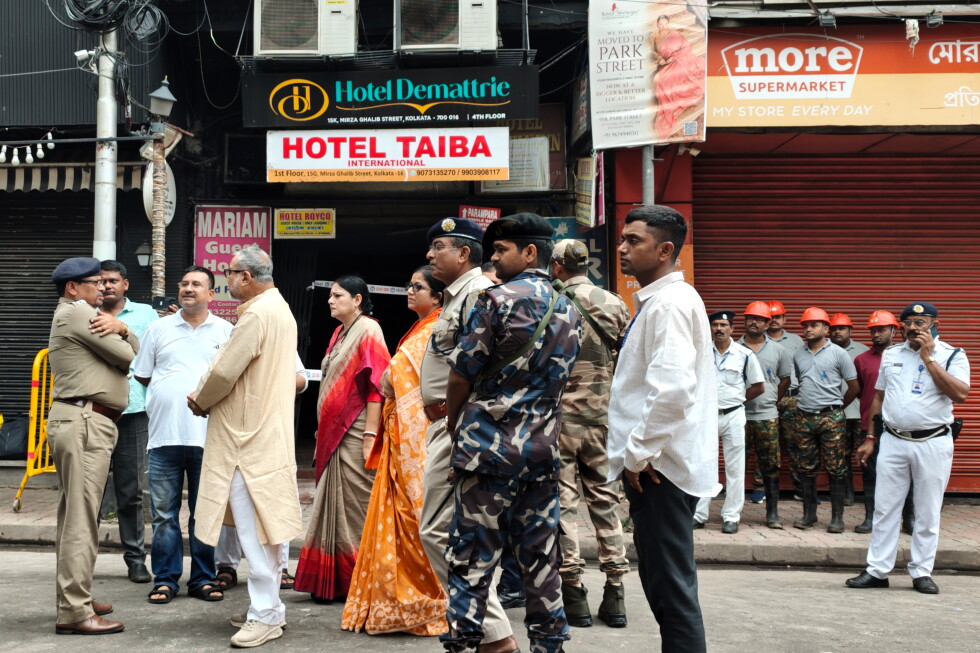
Top BJP leader’s aide shot dead in violence after Indian state election
Fresh violence has rattled the eastern Indian state of West Bengal just days after the Bharatiya Janata Party (BJP), led by Prime Minister Narendra Modi, secured a historic, first-ever election victory ending 15 years of Trinamool Congress (TMC) rule, with the fatal shooting of a top BJP leader’s aide amplifying already soaring political tensions.
Chandranath Rath, personal assistant to Suvendu Adhikari — the former TMC leader turned BJP heavyweight widely tipped to become West Bengal’s next chief minister — was gunned down Wednesday night while traveling home by car. Law enforcement agencies have launched a full homicide investigation, though no arrests have been announced as of the latest updates. West Bengal Police Chief Siddh Nath Gupta confirmed that investigators have recovered the getaway vehicle used by the attackers, as well as live ammunition and spent bullet casings from the crime scene. The vehicle’s license plate was found to be falsified, complicating initial tracking efforts. Eyewitness accounts have pointed to a shooter operating from a motorcycle, but police have not yet confirmed details of the attacker count or any potential suspects.
Rath’s killing is the third confirmed fatality recorded in the state since election results were officially announced on Monday, marking an escalation of unrest that has followed the historic poll outcome. Even before the shooting, police had already taken more than 400 people into custody in connection with widespread reports of post-poll violence and voter intimidation across the state.
Political violence in the wake of state elections is not a new phenomenon in West Bengal, where violent clashes between workers of rival political parties have become a recurring pattern. This cycle of violence is rooted in the state’s long-entrenched “party society” system, a concept first coined by political scientist Dwaipayan Bhattacharyya to describe how political affiliation became embedded in every aspect of daily life and livelihood during decades of Communist rule. Zaad Mahmood, a political science professor at Kolkata’s Presidency University, explained to the BBC that in recent decades, political identity has replaced caste and religion as the primary axis of conflict in many rural areas. For local residents, survival is often tied directly to loyalty to the ruling party, meaning a shift in political power feels like an existential threat to many. While the total number of fatalities in this election cycle is lower than in previous polls, Mahmood noted that violence extends far beyond reported deaths, creating a pervasive climate of fear that persists before, during and after voting.
Tensions have been building in West Bengal for weeks, with the election held against the backdrop of a controversial voter roll update that left millions of eligible voters removed from electoral registers. Outgoing TMC chief Mamata Banerjee, who was defeated by Adhikari in her own long-held stronghold constituency of Bhabanipur, has alleged the exercise deliberately targeted non-BJP voters to clear a path for the BJP’s landslide win, which delivered the party 207 of the state assembly’s 294 seats. Both the BJP and India’s national Election Commission have repeatedly denied these allegations.
Both major political parties have condemned Rath’s murder and traded blame over the ongoing wave of post-poll violence. Adhikari called the killing “heartwrenching” and labeled it a premeditated “cold-blooded murder.” The TMC issued a formal statement rejecting political violence as incompatible with democratic governance, demanding an immediate, court-monitored investigation to hold the perpetrators accountable. Both parties claim their workers have been targeted: the BJP says two of its members have been killed, while the TMC puts its death toll at three. Police have only confirmed Rath’s BJP affiliation, with no verification of other victims’ party ties.
BJP leaders have seized on the violence to criticize the outgoing TMC government, arguing that law and order collapsed during Banerjee’s 15-year tenure. Sukanta Majumdar, a junior federal minister from the BJP, told reporters that once the new BJP government is sworn in this Saturday, the party will work to restore public safety, though he acknowledged stabilizing the state will take time. Adhikari is still widely expected to be named chief minister when the new administration takes office this weekend, though the BJP has not officially confirmed his appointment.In addition to fatal clashes, widespread reports of arson, vandalism and intimidation have emerged from districts across the state, including Kolkata, Murshidabad, Birbhum and Howrah. The TMC has alleged that BJP workers have targeted TMC party offices, vandalizing properties and setting some ablaze — claims the BJP has repeatedly denied. The TMC also accused BJP supporters of using a bulldozer to demolish meat shops in a popular Kolkata market, an incident that takes on heightened political weight given that food choice was a core campaign issue in the election. The TMC framed the incident as part of a deliberate pattern of intimidation that sets a dangerous precedent for law and order under a BJP government. State BJP chief Samik Bhattacharya rejected the claims, saying the party does not endorse any form of violence, and a senior police officer noted that a victory rally was held in the market but no “untoward incident” occurred.
The national Election Commission has already directed state police and district administrations to step up law and order monitoring across West Bengal, with orders to take immediate action against any acts of violence or vandalism. Rath’s assassination has amplified fears among observers and residents alike that post-poll unrest will grow in scale in the coming days, as the state transitions to its first ever BJP-led government.
-

Iran reviewing US proposal as Trump pressures Tehran for agreement on deal to end war
Nearly two months after the United States and Israel launched military strikes against Iran, a fragile ceasefire has held for more than a month, but intense diplomatic wrangling and lingering military tensions are keeping the global community on edge. As U.S. President Donald Trump issued a stark ultimatum that new, intensified bombing would resume unless Tehran agrees to a deal that reopens the strategically critical Strait of Hormuz, Iran confirmed it is reviewing Washington’s latest proposal, injecting cautious optimism into markets even as a fresh military confrontation took place just hours before.
The conflict, which began on February 28, has upended global energy markets and disrupted critical supply chains: Iran effectively closed the Strait of Hormuz, the chokepoint through which roughly 20% of the world’s traded oil flows, while the U.S. imposed a full naval blockade on Iranian ports. This standoff sent fuel prices soaring, roiled the global economy, and imposed heavy costs on international businesses: major shipping giant Hapag-Lloyd estimates the closure is costing the firm approximately $60 million per week, driven by spiking fuel and insurance premiums. By Thursday, Brent crude prices stabilized around $100 per barrel as traders bet on a diplomatic breakthrough, lifting sentiment across international markets.
Hours before markets reacted to the prospect of a deal, the U.S. military struck an Iranian oil tanker attempting to breach the American blockade in the Gulf of Oman, damaging the vessel’s rudder, according to U.S. Central Command. The clash follows the Trump administration’s messy, contradictory messaging on its Iran strategy in recent days, with shifting narratives that have left both allies and markets uncertain about Washington’s end goals.
Pakistan, which hosted in-person talks between U.S. and Iranian delegations last month that ultimately failed to produce an agreement, has emerged as a key mediator in the negotiations. On Thursday, Pakistani Foreign Ministry spokesperson Tahir Andrabi told reporters that Islamabad expects a peaceful settlement “sooner rather than later,” adding that a durable agreement would benefit not just the region, but global peace and security. He declined to share specific timelines or details of ongoing diplomatic backchannels, however, noting that Pakistan would keep sensitive negotiations confidential. “We remain positive, we remain optimistic, and we hope the settlement will be soon rather than later,” Andrabi said.
In a series of social media posts, Trump laid out his stark terms for ending the conflict. “The two-month war could soon end and oil and natural gas shipments disrupted by the conflict could restart,” he wrote, adding that the entire process hinges on Iran accepting an agreement that he did not publicly detail. “If they don’t agree, the bombing starts… and it will be, sadly, at a much higher level and intensity than it was before.”
According to Axios reporting, the White House believes it is close to finalizing a one-page memorandum of understanding with Tehran that would end the conflict. Key reported provisions include a moratorium on Iranian uranium enrichment, the lifting of U.S. economic sanctions on Iran, the release of billions of dollars in frozen Iranian assets, and the mandatory reopening of the Strait of Hormuz to international commercial shipping. The White House has not officially confirmed the details of the proposed agreement. For its part, Iran pushed back on earlier reporting of the draft deal: Iranian Foreign Ministry spokesman Esmaeil Baghaei told state television that Tehran “strongly rejected” the terms outlined by Axios, but confirmed that it is still reviewing the newest U.S. proposal delivered through diplomatic channels.
Just this week, Trump called off a short-lived U.S. military operation dubbed Project Freedom, which aimed to forcibly open a protected corridor for commercial shipping through the strait. The operation lasted less than 48 hours: only two U.S.-flagged commercial vessels traversed the U.S.-guarded route, and the U.S. military sank six small Iranian boats it said threatened civilian shipping during the operation. Hundreds of commercial ships remain stranded in the Persian Gulf, unable to exit to open waters without passing through the closed strait.
Major global powers have begun positioning themselves to respond to the ongoing crisis. On Wednesday, French President Emmanuel Macron announced that a French aircraft carrier strike group is moving toward the Red Sea to prepare for a potential joint Franco-British mission to restore maritime security in the Strait of Hormuz once conditions allow. China, which maintains close economic and political ties with Iran and holds unique influence in Tehran, has also stepped into the diplomatic fray. Ahead of a scheduled high-profile summit between Trump and Chinese President Xi Jinping in Beijing on May 14-15, Iranian Foreign Minister Abbas Araghchi traveled to Beijing to meet with Chinese Foreign Minister Wang Yi. During the talks, Wang called for an immediate comprehensive ceasefire, noting that China is “deeply distressed” by the ongoing conflict. The Trump administration has publicly pressured Beijing to use its influence to push Iran to agree to reopen the strait and roll back its nuclear program, a core U.S. demand in the negotiations. Araghchi confirmed to Iranian state media that the talks covered all key sticking points, including the Strait of Hormuz, Iran’s nuclear program, and ongoing U.S. sanctions.