标签: Asia

亚洲

  • Alarmed ASEAN leaders discuss crisis plan to mitigate backlash from Middle East war

    Alarmed ASEAN leaders discuss crisis plan to mitigate backlash from Middle East war

    Association of Southeast Asian Nations (ASEAN) leaders gathered Friday for their annual summit in Cebu, the central island province of the Philippines, facing mounting urgency to shield the bloc’s 600+ million people and interconnected economies from cascading spillover risks stemming from the ongoing conflict between the U.S.-Israel coalition and Iran. From the opening of the gathering, the shadow of the Middle East hostilities dominated the agenda, with top officials openly voicing deep alarm over the conflict that one senior minister says should never have been initiated.

    Ahead of the summit, Philippine President Ferdinand Marcos Jr. made the unusual decision to scrap the traditional ceremonial fanfare and lavish pageantry that typically mark the annual gathering, a choice aligned with growing global economic headwinds that have squeezed budgets and raised cost-of-living pressures across the region. The shift in tone reflects the gravity of the challenges that leaders have gathered to address.

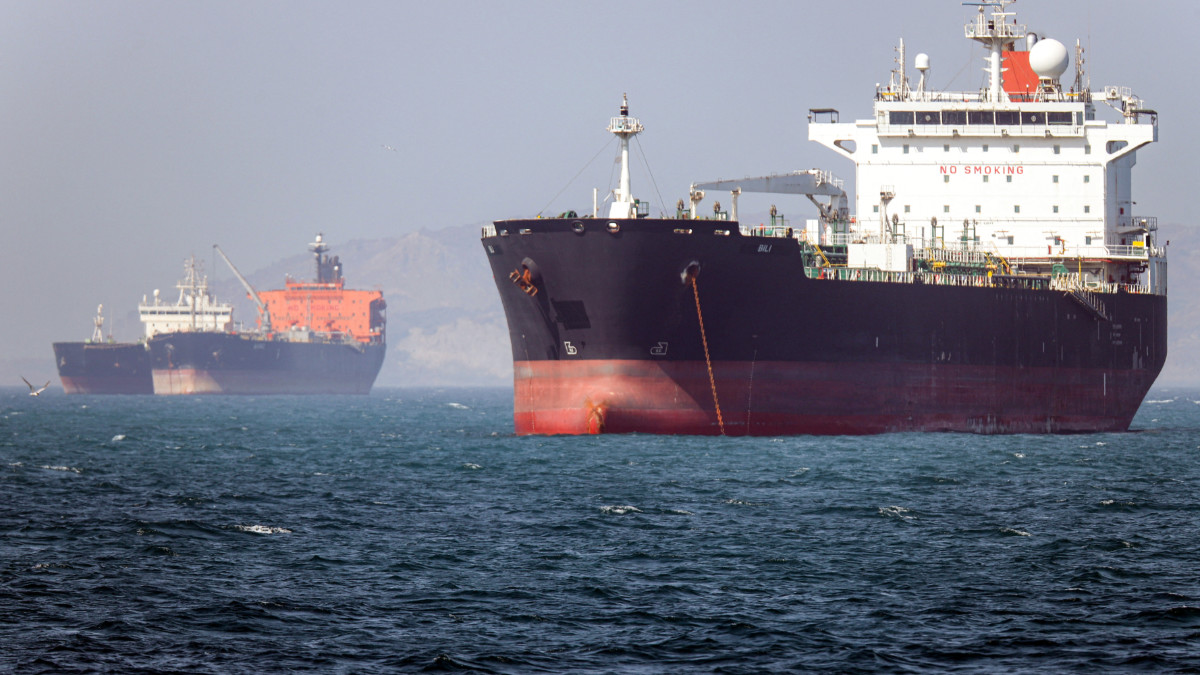
    Unlike past summits that balance multiple regional priorities, this year’s meeting is anchored by urgent contingency planning tailored to the bloc’s unique vulnerabilities. ASEAN’s fast-growing economies rely heavily on imported oil and natural gas from the Middle East, with nearly all seaborne energy shipments passing through the Strait of Hormuz, the strategic chokepoint where sporadic hostilities have continued even after a ceasefire took hold a month ago. Existing related coverage has already documented regional market volatility: Asian stocks have dropped while global oil prices climbed following recent attacks that threatened to collapse the ceasefire, just one example of the immediate economic spillover the bloc is working to mitigate.

    One of the most pressing humanitarian dilemmas facing ASEAN leaders is mapping out protocols for large-scale evacuation of ASEAN citizens from the Middle East, where more than one million Southeast Asian nationals reside and work. Already, multiple Southeast Asian citizens have been killed in military strikes launched by the U.S. and Israel starting February 28, and widespread escalation of hostilities would put the entire community at severe risk.

    A draft joint declaration obtained by the Associated Press outlines a coordinated regional response framework, calling on all 11 ASEAN member states to share real-time information and strengthen collaborative ties with global multilateral organizations to protect the safety and well-being of ASEAN nationals in conflict-affected zones. The contingency plan also lays out a suite of long-term and immediate energy security measures, including potential ratification this year of a cross-regional emergency fuel-sharing agreement, development of an integrated regional power grid, diversification of crude oil import sources, expanded adoption of electric vehicles, and exploratory research into emerging energy technologies including civilian nuclear power.

    While most senior ASEAN delegates stuck to the bloc’s characteristic cautious, restrained rhetoric in public remarks, Thailand’s Foreign Minister Sihasak Phuangketkeow broke ranks to issue a blunt call for action, demanding that the current ceasefire be extended indefinitely and that unimpeded safe passage for commercial shipping through the Strait of Hormuz be guaranteed. “This war should not have occurred in the first place,” Sihasak told the AP in an interview, noting that all ASEAN member states share deep alarm over the conflict. “We don’t know what the objectives are right? The peace talks seem to be moving but we want the war to end.”

    Even with the Iran conflict dominating the summit’s urgent priorities, leaders still scheduled time to address long-simmering regional flashpoints that have destabilized Southeast Asia for years. These include the ongoing territorial disputes in the South China Sea involving China, the five-year-long civil conflict in Myanmar, and the recent cross-border armed clash between Thailand and Cambodia.

    In a forthcoming separate statement on maritime issues set to be released after the summit concludes, leaders have pledged to work toward finalizing negotiations for an effective and substantive Code of Conduct (CoC) for the South China Sea. Negotiations for the proposed non-aggression agreement between ASEAN and China have dragged on for more than a decade, and tensions have escalated sharply in recent years, particularly between Chinese and Philippine maritime forces in contested waters.

    The slow progress on the CoC has fueled longstanding criticism that ASEAN functions as little more than an ineffective “talk shop,” where leaders gather annually for photo opportunities and symbolic displays of unity despite deep internal divisions over core geopolitical issues. Four ASEAN member states — Brunei, Malaysia, Vietnam, and the Philippines — are directly involved in the decades-long territorial standoffs in the South China Sea, alongside China. The bloc’s other members include Cambodia, East Timor, Indonesia, Laos, Myanmar, Singapore, and Thailand.

  • CIA says Iran has 70 percent of pre-war missiles, can ride out blockade for months: Report

    CIA says Iran has 70 percent of pre-war missiles, can ride out blockade for months: Report

    A confidential CIA assessment delivered to the Trump administration this week has directly contradicted senior U.S. officials’ public claims about Iran’s weakened military standing and economic vulnerability to a U.S. naval blockade, according to a Thursday report from The Washington Post.

    On the economic front, the CIA estimates that Iran can withstand the ongoing U.S. naval blockade for an extended 90 to 120 days (three to four months) before it faces severe, widespread economic hardship. This projection is far longer than timelines offered by other independent analysts: Middle East Eye analysts have suggested Iran only has weeks of remaining oil storage capacity, while energy analytics firm Kpler estimated 25 to 30 days of storage before depletion in comments to The New York Times Wednesday. The Trump administration has pushed even more aggressive claims, with former President Trump telling Fox News last week that Iran’s oil infrastructure would collapse within three days due to overflowing storage.

    The intelligence assessment also challenges the administration’s claims about Iran’s devastated missile and drone capabilities, coming after weeks of joint U.S. and Israeli bombardment targeting Iranian military sites. The CIA confirmed that Tehran still retains significant ballistic missile capabilities, contradicting Trump’s Wednesday statement from the Oval Office that 80 to 82 percent of Iran’s pre-strike missile and drone infrastructure had been destroyed. Citing an unnamed U.S. official, The Washington Post reports Iran still holds 75 percent of its pre-conflict inventory of mobile missile launchers and roughly 70 percent of its original missile stockpiles, and has successfully resumed operations at underground missile storage facilities previously targeted in strikes.

    This disconnect between classified intelligence and public messaging has been ongoing for weeks: Trump and his top advisors have repeatedly insisted that U.S. and Israeli strikes have left Iran’s military crippled, even as Iran has demonstrated it retains full command and control over its forces and the ability to launch offensive attacks at will. U.S. Secretary of War Pete Hegseth claimed in early April that Operation Epic Fury, the joint U.S.-Israeli strike campaign, had decimated Iran’s military and left it combat-ineffective for years. Yet just this week, Iran launched over a dozen missiles and drones at targets in the United Arab Emirates in retaliation for a U.S. warship’s attempt to traverse the Strait of Hormuz. Iran also claimed it struck a U.S. warship in the attack, a claim the White House has denied.

    The current standoff centers on the Strait of Hormuz, a strategically critical waterway where both the U.S. and Iran have imposed blockades to assert control. While Iran has been unable to move its own oil tankers out of the Gulf of Oman and past Hormuz, it has also blocked oil exports from neighboring Gulf states. Notably, Iran has alternative trade routes to mitigate the impact of the Hormuz blockade: it maintains access to the Caspian Sea for trade with regional nations including Russia, Kazakhstan, Turkmenistan and Azerbaijan, and shares overland borders with seven neighboring countries. For critical staple goods, Iran is already 80 percent self-sufficient, further reducing its vulnerability to the naval embargo.

  • US congressman says pro-Israel groups behind 95 percent of funding against him

    US congressman says pro-Israel groups behind 95 percent of funding against him

    In a bombshell interview aired Wednesday on *The Tucker Carlson Show*, sitting Kentucky Republican Congressman Thomas Massie has made explosive claims that no less than 95 percent of campaign funding for his main primary challenger comes from national pro-Israel lobbying groups and out-of-state billionaires. The race, set to wrap up later this month, has emerged as one of the most heavily targeted Republican primaries in modern U.S. political history, according to Massie. First elected to Congress in 2012, Massie has carved out a unique niche on the American right as a vocal critic of endless foreign wars, unrestricted foreign aid, and a self-described skeptic of uncritical U.S. policy toward Israel. He has also drawn national attention for his uncompromising push to unseal all court documents related to the Jeffrey Epstein case, a stance that has put him at odds with establishment figures across both major parties. For years, Massie has also been a frequent target of former President Donald Trump and his Make America Great Again movement, which has thrown its full weight behind his opponent this cycle. Massie’s challenger, Ed Gallrein, is a former Navy Seal with low name recognition even among Kentucky voters, but his campaign has been flooded with outside cash from a coalition of pro-Israel advocacy groups led by the American Israel Public Affairs Committee (AIPAC). Speaking to Carlson, Massie named additional backers including the Republican Jewish Coalition and Christians United for Israel, alongside three high-profile billionaires that have become major players in U.S. electoral politics: Miriam Adelson, Paul Singer, and John Paulson. None of these major donors are residents of Kentucky, Massie emphasized. “Their position is more war, more strife, more bombs, more foreign aid, and those are exactly the policies I have been voting against throughout my time in Congress,” Massie told Carlson. “That is the real reason this race has become competitive, and why I could lose. A foreign lobby has poured unprecedented funding into this race, on a scale they have never done in any Republican primary before.” To put the spending disparity in perspective: Massie’s own campaign has raised roughly $5 million total for this cycle, while pro-Gallrein forces have spent more than $10 million alone on negative attack ads targeting the incumbent. Among the attack content is an AI-generated deepfake video that falsely depicts Massie entering a hotel with members of “The Squad,” the high-profile group of progressive Democratic congresswomen. When Carlson asked why national pro-Israel groups and billionaires would care so deeply about the outcome of a small-state Republican House primary, Massie framed himself as a rare dissenting voice inside Congress on foreign policy matters. “If I lose on May 19, I’ll be out of Congress come January 3 next year,” Massie explained. “Nobody will follow my social media, I won’t be invited into the sensitive compartmented information facilities, the SCIFs, to read the classified interpretations of laws the executive branch uses to spy on American people. The one whistleblower, for all intents and purposes, inside Congress will be gone.” As public awareness of AIPAC’s election spending has grown in recent years, and American voters have increasingly grown weary of the U.S.’s unconditional diplomatic and military support for Israel, the lobbying group has adapted by obscuring its financial ties to preferred candidates, Massie claimed. According to his analysis, the groups are funneling direct cash from their donors to Gallrein’s campaign through an intermediary vendor named Democracy Engine, a platform that allows any donor to contribute to any candidate from any party without publicly linking the original donors to the spending. Carlson pushed back on the common narrative that criticism of pro-Israel lobbying amounts to anti-Israel or antisemitic rhetoric, noting that Massie’s position is simply rooted in opposition to U.S. foreign aid spending of any kind for foreign nations. “You didn’t even attack Israel. You’re not even hostile to Israel. That’s nothing to do with that at all,” Carlson said. “You just don’t think the U.S. government should be sending money for other countries, right?” Massie responded by confirming that stance, adding that it aligns with the views of his Kentucky constituents. This is not the first time AIPAC has poured massive sums of money into o sitting members of Congress it views as out of step with its policy goals. The group successfully defeated multiple progressive Democratic incumbents in recent cycles, including Missouri’s Cory Bush and New York’s Jamaal Bowman. This report originates from Middle East Eye, a media outlet focused on independent coverage of the Middle East, North Africa and global affairs. Late last year, the organization Democracy for the Arab World Now—founded by the late Washington Post and Middle East Eye journalist Jamal Khashoggi, who was murdered in 2018—launched the “Faces of AIPAC” project, which published the identities and profiles of the key leaders who run the influential lobbying group.

  • 3 Australian women back from Syria face slavery and terrorism charges over alleged IS links

    3 Australian women back from Syria face slavery and terrorism charges over alleged IS links

    On a Thursday late last week, four Australian women and nine children touched down in Melbourne on two Qatar Airways flights originating from Doha, capping years of detention in the squalid, desert-side Roj Camp in northern Syria. What made their homecoming extraordinary was the fact it came despite explicit warnings from the Australian federal government that any citizens linked to the Islamic State (IS) group returning from the former IS caliphate would face immediate prosecution. By the following day, three of those four women had been arrested and slapped with serious slavery, terrorism and crimes against humanity charges that carry decades of potential prison time.

    The most severe allegations center on 53-year-old Kawsar Abbas and her 31-year-old daughter Zeinab Ahmed, who appeared in a Melbourne Magistrates Court on Friday following their arrival. According to official statements released by Australian police, the entire Abbas family migrated from Australia to Syria in 2014, when IS declared its self-styled caliphate centered on the northern Syrian city of Raqqa. Investigators allege the family purchased a young Yazidi woman as a slave for $10,000 USD, and held the captive in their family home while they resided in IS-controlled territory. Kawsar Abbas is accused of being an active accomplice in the purchase and unlawful detention of the enslaved woman.

    As a result of the allegations, Abbas faces four separate counts of crimes against humanity under Australian federal law, while Ahmed faces two counts of slavery offenses. Each individual charge carries a maximum penalty of 25 years behind bars, meaning both women could face life sentences if convicted. Their legal representation confirmed the pair will submit formal bail applications at a scheduled hearing on the following Monday.

    The third woman charged, a 32-year-old who was taken into custody at Sydney Airport after the group’s arrival, faces a separate set of terrorism-related charges. Police allege she traveled to Syria to join her partner, who was an active IS fighter. Under Australian law in place between 2014 and 2017, travel to Raqqa – the former IS stronghold – without a valid official reason was a criminal offense. She is charged with being a member of a designated terrorist organization and knowingly entering and remaining in territory controlled by the group. Each of those charges carries a 10-year maximum prison sentence, and she is scheduled to appear in a Sydney court for a bail hearing later the same day.

    The three women had been held in Kurdish custody since 2019, when IS’s territorial rule collapsed across northern Syria and Iraq, and had remained detained at Roj Camp ever since. The Australian government has repeatedly condemned citizens who traveled to Syria to support IS, and it refused to provide any official assistance to facilitate the group’s repatriation. Still, this arrival marks only the latest in a series of returns of Australian citizens held in Syrian detention camps: the federal government has organized two formal repatriation operations in recent years, and other citizens have made their own way back to Australia without state support.

    Currently, 21 more Australian citizens – 11 women and 10 children – remain detained in Roj Camp, located in northeast Syria just kilometers from the Iraqi border. Advocacy groups supporting the detainees have confirmed they are working to secure the repatriation of this remaining group within the next several weeks. Among those still held is one woman who is currently blocked from returning to Australia under a temporary exclusion order, a legal tool introduced in 2019 legislation designed to bar high-risk former IS affiliates from re-entering the country. The order allows the government to bar eligible citizens from returning for up to two years, and this marks one of the first times the power has been used since it was enacted. Temporary exclusion orders cannot be applied to children under the age of 14, and Australian officials have ruled out separating children from their mothers to enforce the orders, leaving the government with little option but to allow the entire family unit to remain detained if the mother is barred.

  • North Korea will deploy new artillery guns targeting Seoul and commission its 1st destroyer

    North Korea will deploy new artillery guns targeting Seoul and commission its 1st destroyer

    Tensions on the Korean Peninsula have escalated sharply in recent days, after North Korea announced plans to roll out advanced long-range artillery systems capable of striking the Seoul capital region and commission its first purpose-built naval destroyer by mid-year — moves that come on the heels of a sweeping constitutional change that abandons decades of official commitment to Korean unification.

    The developments mark the most visible escalation of Pyongyang’s hard-line stance under leader Kim Jong Un, who has spent years steadily moving away from the goal of a single Korean state and redefining South Korea as the country’s primary permanent enemy.

    North Korea’s state-run Korean Central News Agency (KCNA) detailed Kim’s two-day inspection tour of military facilities this week. On Wednesday, Kim visited a munitions factory to oversee production of new 155-mm self-propelled gun-howitzers, which are set to be deployed to artillery units stationed along the southern border with South Korea before the end of 2024. According to KCNA, Kim confirmed these large-caliber rifled weapons have a maximum striking range exceeding 60 kilometers, or roughly 37 miles. The North Korean leader framed the enhanced capability as a transformative advantage for his military’s ground operations, noting that “such a rapid extension of striking range and remarkable improvement of striking capability will provide a great change and advantage in the land operations of our army.” Kim added that a suite of other tactical and operational missile systems, along with advanced multiple rocket launchers, are also scheduled for deployment along the inter-Korean border in coming months.

    While North Korea’s ballistic missile program has dominated global headlines and drawn repeated United Nations sanctions, its large conventional artillery force positioned near the border has long been considered one of the most immediate threats to South Korea. The Seoul capital region, home to more than 10 million South Korean citizens, sits just 40 to 50 kilometers from the inter-Korean border — putting the entire area well within range of the newly announced artillery systems.

    On Thursday, a day after the factory inspection, Kim traveled to North Korea’s west coast to review sea trials of the country’s first newly built navy destroyer, the Choe Hyon. Kim praised the completion of all pre-commissioning tests, and ordered military officials to formally transfer the warship to the North Korean navy by mid-June, as originally planned.

    Notably, Kim’s teenage daughter accompanied him during the destroyer inspection, marking another high-profile public appearance together that fuels ongoing speculation about her position as Kim’s intended successor. Last month, South Korea’s National Intelligence Service publicly assessed that she could be formally recognized as the next heir to North Korea’s ruling family. The Choe Hyon, first unveiled to great fanfare in 2023, is North Korea’s largest and most technologically advanced surface warship to date. Pyongyang began construction on a second destroyer of the same class shortly after, but that vessel suffered significant damage during a botched launching ceremony. Kim has publicly called for the construction of two additional destroyers of the class to modernize the North Korean navy.

    Kim’s series of military inspections came just days after South Korea confirmed that North Korea’s recently amended constitution has removed all official language referencing peaceful unification with the South, and redefined Pyongyang’s national territory as only the northern half of the Korean Peninsula. The constitutional change codifies a dramatic shift in North Korea’s long-standing policy, breaking with the position held by Kim’s predecessors, who prioritized the goal of eventual unification under northern rule. Since the start of 2024, Kim has repeatedly declared South Korea a hostile state, and ordered the constitutional rewrite to eliminate all official concepts of shared Korean statehood.

    The hardening of North Korea’s position represents a major setback for South Korea’s liberal government, which has prioritized reengaging in dialogue with Pyongyang and taken proactive steps to reduce cross-border tensions — including ending the controversial propaganda loudspeaker broadcasts that South Korea historically operated along the inter-Korean border.

    The current escalation comes after a years-long stagnation in diplomatic efforts: North Korea has refused all formal dialogue with both South Korea and the United States since 2019, when high-profile nuclear diplomacy between Kim Jong Un and then-U.S. President Donald Trump collapsed. Since the breakdown of talks, Pyongyang has focused heavily on expanding its nuclear and conventional military arsenals, steadily increasing the threat it poses to regional security.

  • Exclusive: ICC prosecutor Karim Khan details ‘dangerous’ attempt by states to remove him

    Exclusive: ICC prosecutor Karim Khan details ‘dangerous’ attempt by states to remove him

    In an explosive exclusive interview with Middle East Eye, Karim Khan, the Chief Prosecutor of the International Criminal Court, has lifted the veil on what he calls a dangerous, politically motivated smear campaign to force him out of office. The unprecedented campaign, he alleges, is rooted in backlash over his office’s groundbreaking push for arrest warrants targeting Israeli Prime Minister Benjamin Netanyahu and former Israeli Defense Minister Yoav Gallant over alleged war crimes in Gaza, and it has twisted unfounded sexual misconduct allegations to sideline him.

    Khan’s investigation into Gaza war crimes led his office to request arrest warrants for the two Israeli leaders in May 2024, with the court officially issuing the warrants that November. Almost immediately, the pressure campaign escalated: Khan, his two deputy prosecutors, and multiple ICC judges have since been hit with United States sanctions, and prominent Western politicians have delivered direct threats to force the court to back down. Khan confirmed to MEE that U.S. Senator Lindsey Graham threatened consequences against him if he moved forward with the warrants, while then-U.K. Foreign Secretary David Cameron warned that the U.K. would withdraw from the court and cut off funding if the prosecutions proceeded. In a 2024 April phone call, Cameron told Khan he had “lost the plot” for advancing the warrants, and made clear that Western powers would create major political and financial difficulties for the ICC if he refused to back down.

    The internal campaign against Khan has centered on unsubstantiated sexual misconduct claims filed against him in 2024. The ICC’s Assembly of State Parties Bureau commissioned the United Nations Office of Internal Oversight Services to investigate the allegations, and a panel of independent ICC judges appointed to review the OIOS probe unanimously concluded in March 2025 that there was no evidence of misconduct or breach of duty by Khan. Despite this clear ruling, a bloc of mostly Western and European states on the 21-member ASP Bureau voted to ignore the judges’ finding, reopen the investigation, and keep Khan suspended from his post – a move Khan says violates core legal and procedural norms.

    Khan has repeatedly and strenuously denied all allegations against him, noting that he has always maintained professional and appropriate relationships with all ICC staff. What makes the ongoing process even more unfair, he argues, is the blatant bias and breach of confidentiality that has marked it from the start. Unlike previous ICC officials investigated for misconduct, who were granted full anonymity during proceedings, ASP Bureau President Paivi Kaukoranta, a Finnish diplomat, confirmed Khan’s name and the details of the allegations to the press in October 2024, a move he calls a clear breach of the body’s confidentiality obligations. He also accused one of the ASP’s two vice presidents of holding an off-process meeting with his accuser, a step that violates all standards of due process.

    Khan filed a motion to disqualify three biased Bureau members from participating in the decision on his future. While one member voluntarily recused themselves, the Bureau rejected his request to remove the other two, whose identities he has not publicly disclosed. Former U.N. OIOS Assistant Secretary-General Ben Swanson, who oversaw the original investigation before leaving his post in February 2025, has submitted new evidence backing Khan: Swanson confirmed that neither the final investigation report nor any underlying material meets the required standard of proof to support a finding of misconduct. Khan points out that the proof standard applied was set by the ASP Bureau itself, and has been used for all ICC staff and elected officials throughout the court’s history.

    The ICC prosecutor has been on indefinite leave for nearly a year while the investigation dragged on, and he chose to remain silent throughout the process to respect procedural confidentiality. Now that the U.N. investigation is complete, he has broken his silence to warn that the ongoing campaign has pushed the court into uncharted, dangerous territory. If political appointees and diplomats can subvert a clear, independent investigation to remove an elected ICC official based on unfounded claims, Khan argues, this will set a catastrophic precedent that allows any future elected leader at the court to be ousted for political reasons.

    “This is a template for getting rid of any elected official, now or in the future, on spurious or flimsy or fabricated or unfounded grounds,” Khan told MEE. He added that the bureau’s process “seems to be moving from legality to political considerations.” If the Bureau ultimately rules against him and the full ASP votes to remove him from office, Khan says he will immediately appeal the decision to the International Labour Organisation Appeals Tribunal to challenge the fairness of the process.

    Internal divisions have already emerged within the Bureau: the vote to reopen the investigation was the first non-consensus decision in the body’s recent history, with a number of member states arguing the case should be closed and the judges’ ruling honored. The states that voted to disregard the panel of judges include Belgium, Bolivia, Brazil, Chile, Cyprus, Ecuador, Finland, Italy, Japan, Latvia, New Zealand, Poland, Slovenia, South Korea, and Switzerland.

    Khan also revealed new details of the broader intimidation campaign against him: he has received intelligence that he is under close surveillance by both Russian and Israeli intelligence agencies, a claim he has passed to Dutch authorities. Last year, MEE reporting revealed that a Mossad surveillance team was operating in The Hague near ICC headquarters, raising fears for Khan’s safety, and that a parallel media campaign had been launched to destroy his reputation and split the ICC prosecutor’s office. Khan acknowledges that the campaign has already done significant harm to his reputation, but says he is confident its underlying goal – to derail the Gaza war crimes investigation – will not succeed.

    Against the backdrop of growing Western pressure on the ICC, particularly since the return of U.S. President Donald Trump to office in January 2025, Khan says the court is facing the most concerted attack on international judicial institutions in modern history. He was the first ICC official targeted with U.S. sanctions shortly after Trump took office, with his deputy prosecutors sanctioned later in 2025. This pattern of targeting ICC prosecutors is not new: during Trump’s first term, Khan’s predecessor Fatou Bensouda was also sanctioned over an investigation into U.S. war crimes in Afghanistan, before being delisted during the Biden administration. The ultimate goal of the pressure campaign, Khan says, is to force the ICC to abandon any investigation into crimes committed in Palestinian territories.

    Despite growing skepticism about the future of a rules-based international order, and longstanding criticism that the ICC has disproportionately focused on African cases while holding Western powers unaccountable, Khan argues that the court and multilateral judicial institutions remain irreplaceable. “There is a concerted attempt in some quarters to erode confidence in these structures, in these institutions, because they may, from one vantage point, be viewed as an impediment to power,” he said. “And that’s exactly why we need them.”

    Khan rejects the idea that these flaws mean the global community should abandon the pursuit of equal international justice. Instead, he says, they should inspire greater effort to build a fairer system. Humanity is a work in progress in law, just as it is in science, technology and every other field, he notes, and the future of international justice depends on the commitment of ordinary people around the world. “Do they want their children to live in a world governed by brute power or a world regulated by law?” Khan asked. “Justice is too important to leave to the lawyers. It’s too important to leave to the prosecutor of the ICC, or even to the judges of the ICC. Everybody should say they’ve got a stake in justice, whether they’re affected or they’re not.”

  • One year after India-Pakistan conflict, ceasefire holds – but little else does

    One year after India-Pakistan conflict, ceasefire holds – but little else does

    Twelve months have passed since a four-day military confrontation between India and Pakistan pushed South Asia to the brink of a catastrophic, full-scale escalation, and the nuclear-armed neighbors now find themselves stuck in a brittle, deeply unsettled status quo. What began as a deadly militant attack targeting tourists in Indian-administered Kashmir rapidly spiraled into open conflict: India launched cross-border military strikes, and Pakistan responded with coordinated retaliatory action. Though the entire crisis unfolded in just 90 hours, it cemented years of growing political and diplomatic estrangement, eliminating nearly all space for even incremental steps toward normalization.

    Today, formal diplomatic engagement between the two nations is all but nonexistent. The shared border remains fully shuttered, cross-border trade has been indefinitely suspended, long-stalled cultural and sporting ties (including cricket exchanges) remain severed, and the decades-old Indus Waters Treaty, once a pillar of bilateral cooperation, is held in abeyance. “Relations remain in deep freeze,” explained Husain Haqqani, a former Pakistani diplomat now serving as a senior fellow at the Anwar Gargash Diplomatic Academy and the Hudson Institute, in an interview with the BBC. “Neither side sees domestic or international incentive to reach out to the other. While we have seen strained ties in past peacetime eras, this ranks among the longest stretches of completely frozen relations we have ever seen.”

    The aftershocks of the brief 2025 conflict have rippled far beyond the Line of Control (LoC), the de facto border that divides the two nations, reshaping external perceptions of regional power dynamics. “Before May 2025, most outside analysts, and much of the Indian public, believed India held an overwhelming strategic advantage over Pakistan,” noted Daniel Markey, a senior expert at the Johns Hopkins School of Advanced International Studies. “Pakistan’s ability to effectively withstand India’s initial offensive shifted that narrative to its strategic benefit, even though it remains unclear how a prolonged conflict would have ended.”

    Most notably, the conflict helped Pakistan regain a geopolitical relevance it had not held in decades, a shift further accelerated by its unexpected emergence as a key intermediary in the Iran war, a development that caught many global observers off guard. “Pakistan has purposefully rebuilt its geopolitical standing,” explained Christopher Clary, a security affairs scholar at the University at Albany. “Pakistani leaders are now conducting regular shuttle diplomacy across the Middle East. The key open question is whether this new prominence is permanent, or merely a temporary product of idiosyncratic policy preferences from the U.S. president.”

    Pakistan’s diplomatic revival has unfolded against a backdrop of broader global geopolitical upheaval, with U.S. policy playing a central role in shaping the post-conflict landscape. Then-U.S. President Donald Trump repeatedly claimed credit for brokering the 2025 ceasefire and offered to mediate the long-running Kashmir dispute, a core territorial claim held by both nations. The offer deeply irritated Indian officials, who have long rejected third-party mediation over Kashmir, and exacerbated existing trade tensions between Washington and Delhi.

    Clary noted that Trump’s well-documented personal affinity for Pakistan’s army chief, now Field Marshal Asim Munir, has significantly reshaped post-conflict bilateral dynamics across South Asia. “The U.S. president’s policy impulses are not always easily explained by traditional grand strategic frameworks,” Clary explained. “His desire to be publicly recognized as a global peacemaker directly shaped how he engaged with the May 2025 conflict.”

    Michael Kugelman, a senior South Asia expert at the Atlantic Council think tank, added that Trump frames Pakistan’s performance during the 2025 conflict as a modern “David-versus-Goliath story” against larger India, a narrative that at least partially explains his public admiration for Munir. At the same time, Pakistan strategically leveraged the ongoing Iran crisis and rising Gulf tensions to position itself as a critical go-between for Washington, Tehran, and key Arab capitals.

    Even so, leading analysts warn against overstating the long-term strategic gains Pakistan has secured. Much of Islamabad’s new global prominence remains contingent on Trump’s highly personalized style of diplomacy and the temporary strategic priority of the Iran crisis, meaning it could fade rapidly as global issues shift. “This is a high-stakes gamble for Munir,” Markey noted. “The constantly shifting landscape of Middle Eastern politics is inherently dangerous, and aligning closely with the Trump administration almost always brings unanticipated consequences.”

    For India, the 2025 conflict upended long-held diplomatic assumptions. For years, Delhi operated under the belief that its deepening strategic partnership with Washington had permanently shifted the regional balance of power in its favor. But Trump’s public embrace of Pakistan, repeated mediation offers, and escalating trade frictions with India introduced a new layer of unpredictability to the bilateral U.S.-India relationship.

    “The credibility the U.S. built since the 1999 Kargil conflict as a reliable crisis interlocutor has declined considerably,” said Ajay Bisaria, India’s former high commissioner to Pakistan. Clary added that the post-conflict erosion of U.S.-India ties accelerated a broader strategic recalibration that was already underway in Delhi. “Since May 2025, reinforced by the subsequent U.S.-India mini-trade war, India has rebalanced its global diplomatic and economic portfolio to reduce its dependence on the U.S.,” he explained. This shift has included growing closer to the European Union, accelerating diplomatic rapprochement with China, and pushing back against U.S. pressure to sever defense and economic ties with Russia. Even so, Clary noted that India’s broader long-term trajectory of global rise remains intact: “As a major power, temporary regional disequilibrium does not threaten India’s continued growth and influence.”

    While the diplomatic consequences of the 2025 conflict remain contested, military analysts on both sides agree on clearer takeaways. Experts frame the 90-hour confrontation as South Asia’s first fully networked, drone-centric, high-technology military clash. “We saw a fundamentally technologically different battlefield,” Bisaria explained. “No manned aircraft from either side crossed the international border.” In the year since the conflict, both nations have sharply increased defense spending, accelerated military modernization programs, and deepened defense cooperation with external partners.

    Even so, Clary cautions against claims that the conflict fundamentally rewrote the regional balance of power. “It triggered important organizational, doctrinal, and technological shifts in both militaries,” he said. “But I do not believe either side has substantially altered its core assessment of the relative balance of power between the two neighbors.”

    What has shifted, however, is the threshold for future escalation. Bisaria describes the current post-conflict environment as “a new normal defined by deliberate strategic ambiguity.” “That ambiguity sends a clear message: any act of terrorism above a certain threshold will be treated as an act of war,” he said. (Delhi blames the 2025 tourist attack that triggered the conflict on Pakistan-based militant groups, a claim Islamabad has repeatedly denied.)

    In the wake of the conflict, New Delhi has signaled that future retaliation could extend beyond militant groups to target the Pakistani military establishment directly. “Terrorists and their state backers will be held to the same standard,” Bisaria said, echoing the official position of the Indian government. The ongoing suspension of the Indus Waters Treaty stands as a permanent marker of this harder Indian posture, with Bisaria adding, “Blood and water cannot coexist. There is no path for the treaty to return to force in the current environment.”

    From Islamabad’s perspective, the conflict reinforced confidence in its longstanding escalation strategy. Haqqani argues that the brief duration of the 2025 confrontation worked to Pakistan’s strategic benefit. “Pakistan’s strategy has long been to rapidly climb the escalation ladder, so that the threat of nuclear conflict forces international community intervention,” he explained. This belief is now widespread across Pakistan’s strategic community.

    Umer Farooq, an Islamabad-based defense analyst and former correspondent for Jane’s Defence Weekly, says Pakistani leaders are increasingly confident that Washington and key Gulf states will intervene rapidly to de-escalate any future crisis. “In Pakistan, there is a widespread belief that the U.S. has forced both sides to the negotiating table in past crises, and it can do so again,” he told the BBC. At the same time, Farooq noted that Pakistan’s military and political elite are acutely aware of the country’s deep internal fragilities. “Our economy is in chaos, our society is deeply divided, and we are confronting two active insurgencies,” he said. “There is a broad consensus among the political and military elite that Pakistan cannot afford another open conflict with India.”

    This tension – between growing confidence in Pakistan’s deterrence strategy and crippling domestic economic vulnerability – explains the carefully calibrated public messaging emerging from Rawalpindi in recent months. Without naming India directly, Pakistan’s corps commanders recently emphasized the need for “restraint and avoidance of escalation,” noting that regional stability depends on “collective restraint, responsibility, and respect for national sovereignty.” Farooq frames this statement as a continuation of longstanding military policy that favors quiet dialogue over open confrontation.

    Even with relations at a standstill, few analysts believe the two nations can sustain a complete diplomatic freeze indefinitely. “The two countries have a long history of productive backchannel dialogues,” Markey noted. “These talks have often proven effective at mitigating hostility and laying the groundwork for formal diplomatic engagement.”
    Bisaria also sees a narrow path to de-escalation if the region avoids another large-scale militant attack. He argues that Pakistan may eventually recognize the strategic benefit of stabilizing, if not fully normalizing, its front with India. For now, Kugelman argues, “the best achievable outcome is that the situation does not deteriorate further.”

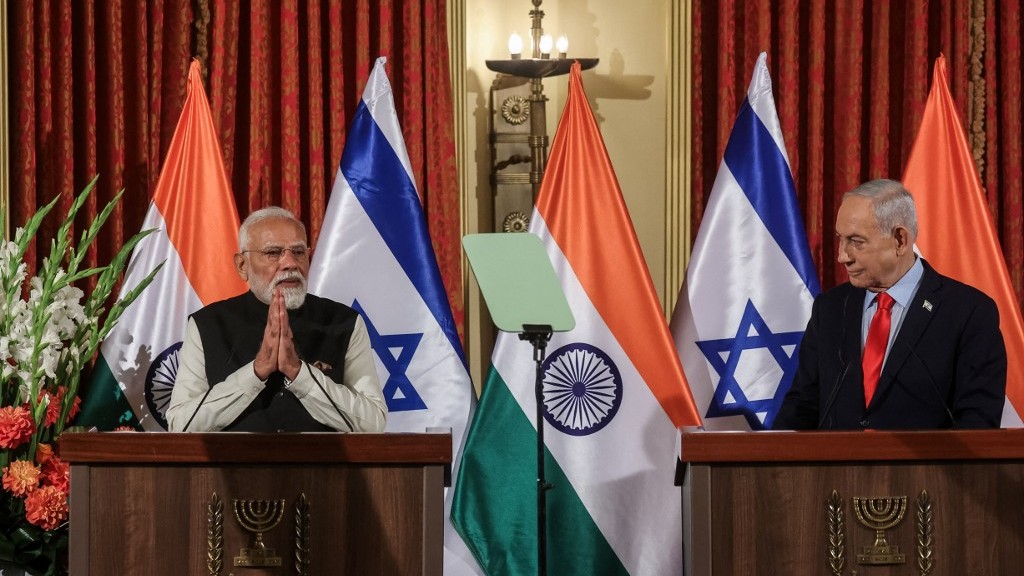
    Ultimately, the future of bilateral relations may depend less on broader global geopolitics and more on the strategic calculations of the two leaders holding the most power in each capital: Indian Prime Minister Narendra Modi and Field Marshal Asim Munir. “Munir and Modi wield extraordinary influence over policy in their respective countries,” Clary said. “If either leader chooses to pursue renewed diplomatic engagement, they have the power to make it happen. For the moment, however, neither side has signaled a willingness to take that step.”

  • ‘Shutdown’: Moody’s expects Dubai hotel occupancy to plummet to 10 percent

    ‘Shutdown’: Moody’s expects Dubai hotel occupancy to plummet to 10 percent

    The ongoing US-Israeli military campaign against Iran has triggered an unprecedented existential crisis for Dubai’s world-famous hospitality and tourism industry, with top financial analysts forecasting a catastrophic collapse in hotel occupancy for the second quarter of this year, The Wall Street Journal reported Wednesday.

    According to projections from New York-based credit rating and financial analysis firm Moody’s, Dubai’s overall hotel occupancy is on track to drop to just 10% by the end of the second quarter on June 30, down from a pre-conflict level of 80% recorded before the outbreak of hostilities on February 28. Moody’s called the collapse an “effective shutdown of large parts of the hospitality sector”, a core economic engine for the emirate that draws millions of international tourists and business travelers annually.

    Official data from Dubai Airports released Monday underscores the severity of the downturn. Total passenger traffic for the first three months of 2026 fell by at least 2.5 million compared to the same period in 2025, with March alone seeing a 66% year-on-year drop. Fearing regional instability, international travelers have overwhelmingly canceled trips to the Gulf, cutting off the steady flow of visitors Dubai’s hospitality ecosystem relies on. The collapse in demand has already triggered widespread temporary and permanent hotel closures, mass layoffs for sector workers, and a rapid erosion of business confidence across the emirate.

    In a bid to reverse the crisis, the United Arab Emirates announced Saturday that it would lift all air travel restrictions imposed after Iran launched retaliatory strikes against Gulf nations hosting or cooperating with U.S. military forces. However, the policy shift has yet to reverse the steep decline in visitor numbers or shore up investor confidence.

    Middle East Eye interviews with hospitality workers and business leaders across the UAE earlier this week paint a grim picture of collapsing sentiment. Tatiana, a Russian entrepreneur who runs a business logistics firm supporting new enterprises setting up operations in the Gulf, described a sudden, dramatic shift in outlook among both existing and prospective businesses.

    “Within the first two weeks, people decided it’s no longer worth living or doing business here,” she said. “They weren’t panicking, necessarily, but they just saw no upside to staying. Businesses began liquidating assets almost overnight.” Tatiana added that her own family is now relocating to Europe, joining a growing exodus of foreign investors and professionals from Dubai.

    To attract what little demand remains, top luxury hotel brands across Dubai have slashed room rates far below typical seasonal levels, a striking shift for one of the world’s most expensive urban destinations for luxury travel. The newly opened Atlantis The Royal, which markets itself as “the most ultra-luxury experiential resort in the world”, is offering a standard sea-view suite with a private balcony, plus breakfast for two, for just $800 per night this upcoming weekend. Beachfront property Mandarin Oriental Jumeira lists a standard room for $448 per night including parking and breakfast, while Four Seasons Resort Jumeirah lists the same type of room for $359 per night. Downtown Dubai’s Four Seasons International Finance Centre offers rooms for as low as $243 per night. All of these rates are substantially lower than pricing for the same properties and same seasonal window in previous years, as properties compete for a drastically smaller pool of potential guests.

  • Thousands of North Koreans fought for Russia. A memorial hints at the death toll

    Thousands of North Koreans fought for Russia. A memorial hints at the death toll

    A groundbreaking investigation by the British Broadcasting Corporation (BBC), drawing on satellite imagery and official photographs of a newly unveiled memorial in Pyongyang, has produced a detailed estimate of North Korean troop fatalities during combat alongside Russian forces in Ukraine’s Kursk region. This marks the first verifiable, data-backed calculation of North Korean casualties from the deployment, as Pyongyang has never publicly disclosed official death toll figures.

    The context of the deployment stretches back to August 2024, when Ukrainian forces launched an unexpected cross-border incursion into Russia’s Kursk Oblast. According to South Korean intelligence assessments, roughly 11,000 North Korean military personnel were dispatched to Russia to assist in recapturing the occupied areas of western Kursk – a deployment arranged through a mutual agreement where Pyongyang received critical supplies, funding, and technical support from Moscow in exchange. North Korean leader Kim Jong Un has previously acknowledged the sacrifice of troops killed in the conflict, but full details of casualties have remained closely held by the reclusive North Korean regime.

    In October 2025, Kim Jong Un ordered the construction of a purpose-built museum and memorial in Pyongyang’s Hwasong District to honor North Korean troops killed in the Russia-Ukraine war. Satellite imagery analysis from U.S. geospatial firm Planet Labs shows that construction work began on the heavily forested site that same month. By December 2025, a basic structural frame of the 52-square-kilometer complex was visible from orbit. Exterior construction was mostly complete by March 2026, with final landscaping and auxiliary infrastructure finished in April 2026.

    The complex, officially named the Memorial Museum of Combat Feats at Overseas Military Operations, was publicly unveiled on April 26, 2026. North Korean state news agency KCNA describes the site as a tribute to the “unrivalled bravery” of North Korean soldiers deployed to “liberate the Kursk region”. The memorial includes two 30-meter-long name-engraved walls, a main museum building, and an on-site cemetery and columbarium complex.

    BBC analysts carried out a granular count of name inscriptions on the memorial walls using official images released by KCNA. Each wall is split into 14 distinct sections marked by grey stone dividers, with nine of these sections filled with soldier names. Within each section, there are approximately 16 columns of names. Close-up photos of the east wall confirm that eight names are inscribed per column. This formatting adds up to roughly 1,152 names per wall, for a total of 2,304 fallen soldiers commemorated across both walls – a figure rounded to an estimated 2,300 fatalities.

    Songhak Chung, a senior researcher at the Korea Institute for Security Strategy, has corroborated the BBC’s calculation. “The memorial walls are packed with the names of deceased soldiers written in extremely small characters. Considering the surface area and text density, the number of people recorded there is likely to reach several thousand,” Chung explained. While higher-resolution imagery would be required to confirm an exact count, the BBC’s estimate aligns closely with earlier assessments from South Korea’s National Intelligence Service (NIS). In September 2025, the NIS reported roughly 2,000 North Korean troops killed and 2,700 wounded; by February 2026, the agency updated its assessment to note that roughly 6,000 of the 11,000 deployed North Korean personnel had been killed or wounded, though it did not release a full breakdown. Neither North Korea nor Russia has ever confirmed any official casualty figures for the deployment.

    The memorial complex follows a structured tiered commemoration system, according to analysis from Korean research firm SI Analytics. Troops recognized for “extraordinary valour” are granted individual outdoor graves and headstones, while the remains of other fallen service members are stored in urns within the on-site columbarium. Kim Jin-mu, a former senior research fellow at the government-funded Korea Institute for Defense Analyses, notes that individuals buried in the outdoor cemetery are likely recovered remains, senior officers, or recipients of special posthumous recognition for acts of self-sacrifice. Satellite imagery from early April 2026 captured by SI Analytics counts 140 graves on the west side of the cemetery plot and 138 on the opposite side, with a three-story grey structure at the center of the plot identified as the columbarium.

    Chung’s analysis of the columbarium finds that its interior walls are lined with grid-patterned storage niches for cremated remains. Even after accounting for office and exhibition space, Chung estimates the indoor repository alone can hold at least 1,000 sets of remains.

    South Korea’s Ministry of Unification has noted that it cannot definitively confirm that all troops killed in action are included on the memorial walls. However, most independent experts believe it is highly likely that all North Korean troops killed in the Kursk operation have had their names inscribed. Kim Jin-mu explains that omitting names would risk backlash from grieving families and undermine the core purpose of the memorial, which is meant to honor state sacrifice and sustain public support for the regime’s policies.

    Alongside the memorial, North Korean state media has confirmed that a new housing complex was built in the same district for surviving veterans and bereaved families, with residents beginning to move in as early as March 2026. Cho Han-bum, a senior research fellow at the state-run Korea Institute for National Unification, argues that the decision to build a dedicated, large-scale memorial for the fallen troops is a deliberate effort to legitimize the deployment in the face of unexpectedly high casualties. “For North Korea, Russia is the only country it can co-operate militarily with in its current state of isolation,” Cho noted. He added that the memorial also sends a clear signal that Pyongyang intends to continue deepening military cooperation with Moscow “regardless of how the war unfolds.”

  • Anti-war protests rock Japan as PM pushes for stronger defence

    Anti-war protests rock Japan as PM pushes for stronger defence

    Beneath pouring rain on a busy Tokyo street corner, a growing crowd of demonstrators huddled together, their protest placards and national peace flags soaked through by the downpour. Across one large sign, two bold Japanese kanji characters stood out clearly against the waterlogged background: “No War”.

    This simple, resolute slogan encapsulates a rapidly growing movement that has gripped Japan, as the nation sees its largest mass anti-war demonstrations in more than 70 years. The unrest comes in response to sweeping policy changes introduced by Prime Minister Sanae Takaichi, who has moved Japan sharply away from its decades-long post-WWII pacifist stance since taking office in October 2025. Under her administration, long-standing restrictions on lethal arms exports have been lifted, and the country’s military is being positioned to take on a much more active role in global security affairs.

    The Japanese government justifies these shifts by pointing to escalating regional tensions, framing the changes as a necessary response to an increasingly unstable security landscape. But for a large share of the Japanese public, the moves have sparked deep alarm, fueling fears that the country is on a path to becoming a full war-capable nation — and drawing thousands of citizens out into the rain to make their opposition heard.

    Mass public protest is an unusual occurrence in Japan, where cultural norms prioritize social harmony and avoid public disruption. When large numbers of people take to the streets, it almost always signals a profound, widespread unease with the direction of national policy. At the core of the current debate is nothing less than Japan’s core national identity, forged in the aftermath of the destruction of World War II.

    When Japan enacted its post-war constitution in 1947, it included the landmark Article 9, a constitutional clause that prohibits the country from maintaining standing armed forces and formally renounces war as a tool of sovereign policy. Over the decades, the clause has been reinterpreted to allow for a limited self-defense force, but its core pacifist principle has remained a cornerstone of Japanese governance for nearly 80 years.

    Takaichi argues that this post-war framework no longer matches modern geopolitical reality. Geographically, Japan is situated in one of the world’s most tense regions, facing an increasingly assertive China, an unpredictable nuclear-armed North Korea, and ongoing territorial tensions with Russia. Additionally, the United States — Japan’s closest security ally — has long pushed Tokyo to take on a larger security role in the Indo-Pacific.

    Takaichi is not the first Japanese conservative leader to push for revisions to the post-war security order. For decades, leaders from the ruling Liberal Democratic Party have campaigned to amend the 1947 constitution. Former Prime Minister Shinzo Abe was one of the most prominent advocates for revising Article 9 to formalize the legal status of Japan’s self-defense forces, and in 2015, his administration pushed through a controversial set of security bills that expanded the military’s scope to allow limited collective self-defense, enabling Japan to support allied nations that come under attack.

    But it was the April 21 decision to lift the decades-long ban on lethal arms exports that crossed a red line for many Japanese citizens, striking a raw national nerve and catalyzing the current wave of protests. After the passing of the rain, when sunlight broke through the clouds over Tokyo, the crowd of demonstrators outside the prime minister’s office only grew larger, their chants for peace growing louder with every new arrival.

    This movement is not limited to older generations who hold direct memories of war. A large share of protesters are people in their 20s and 30s, who will bear the long-term consequences of any shift in national security policy. “I’m angry that these changes could be made without properly listening to us, the public,” said Akari Maezono, a 30-something protester who carried brightly painted paper lanterns emblazoned with peace slogans. Nearby, an older demonstrator held a bright red banner, declaring, “The Japanese constitution, Article 9 in particular, must be protected at all costs. It kept Japan from being drawn into past conflicts like the US-Iran war. Without it, we surely would have entered the war by now.”

    Japan’s 1947 constitution was drafted just two years after the end of World War II, which ended with the United States dropping atomic bombs on Hiroshima and Nagasaki that killed an estimated 200,000 Japanese civilians by the end of 1945. For supporters, Article 9’s pacifist principle represented a critical moral break from Japan’s pre-war and wartime militarism, a commitment to never again repeat the devastation of aggressive conflict.

    Even from its earliest days, however, Article 9 was controversial. Critics have long argued that the clause was effectively imposed by the United States during the post-war occupation, rather than arising from domestic Japanese consensus. During the Cold War, security analysts also raised concerns that the clause left Japan vulnerable to Soviet expansion in Asia.

    But for millions of Japanese, especially survivors of the atomic bombings and their families, any move away from pacifism sparks deep-seated fear. Earlier this year, Hiroshima atomic bomb survivors (known locally as hibakusha) addressed the United Nations at the 2026 Nuclear Non-Proliferation Treaty review conference, calling for global nuclear abolition and a world free from war. “Nuclear weapons were used because we went to war,” said Jiro Hamasumi, a hibakusha who spoke at the event. “No more war, no more hibakusha,” he added.

    The wave of protests has spread far beyond Tokyo, with large rallies now organized in other major Japanese cities including Osaka, Kyoto, and Fukuoka. Attendance at demonstrations has grown week over week, with social media platforms like X playing a critical role in helping younger organizers spread information and bring new participants into the movement.

    Despite the large turnout for anti-war protests, public opinion across Japan remains deeply divided on the future of the country’s pacifist framework. Recent public opinion polls have produced conflicting results: some show growing support for a stronger Japanese military to address modern regional threats, while others record clear majority opposition to eroding Article 9.

    Proponents of constitutional and security change argue that Japan’s security environment has fundamentally shifted since 1947, and the old framework is no longer fit for purpose. They argue that Article 9 places unjustifiable limits on Japan’s sovereignty, and that the country must be able to deter potential aggression, support allied partners, and respond proactively to regional crises. For supporters, expanding the military’s role is not a rejection of pacifism, but a necessary adaptation to keep Japan safe in an increasingly volatile world.

    Opponents, however, warn that incremental policy changes are slowly hollowing out Article 9’s core pacifist commitment. They argue that loosening restrictions on arms exports and expanding the military’s overseas role will inevitably draw Japan into foreign conflicts that do not serve its national interest. For many opponents, Article 9 is far more than a legal regulation — it is a core moral commitment, forged from the ashes of World War II, that has kept Japan at peace for generations.

    The deep national divide is visible even in small, everyday interactions. During a recent protest in Tokyo, a convenience store cashier near the demonstration route summed up the split with a mixture of impatience and conviction: “They’re always here,” he said of the protesters, before adding, “It’s time for a new Japan.”

    That is exactly the choice now facing the Japanese people: whether to hold fast to the pacifist national identity shaped by the trauma of the past, or to remake the country’s security framework to adapt to an increasingly unstable global future. In a nation where political change has historically come gradually and cautiously, the question now is not just what path Japan will choose, but how quickly the country will make that fateful decision.