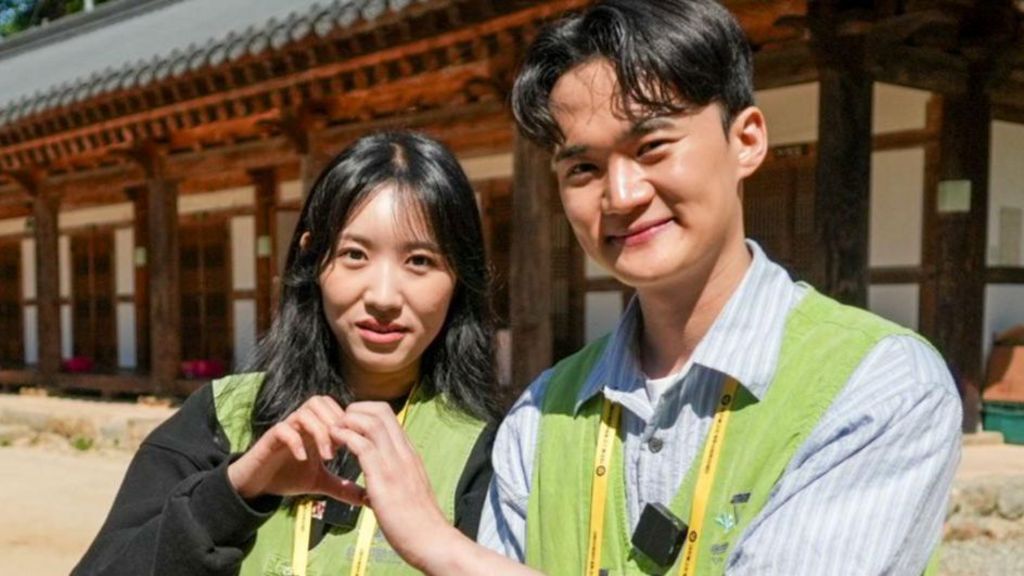
Tucked into the misty, forested slopes of South Korea’s Palgongsan Mountain, an 8th-century Buddhist temple has stepped into an unexpected modern role: leading the fight against the country’s decades-long plummeting birth rate. For 30 hours, 24 carefully selected young singles traded crowded city offices and empty social calendars for back-to-back icebreakers, awkward talent shows, and quiet woodland walks, all on a mission to find a partner—with the ultimate goal of boosting the nation’s falling fertility.
This is no scripted reality dating series. It is a grassroots matchmaking retreat organized by leaders at Donghwasa Temple, who frame their work as a continuation of the temple’s centuries-long history of stepping up during national crisis. “When our country faced external threats, Buddhist communities were always the first to act,” explains Yoo Cheol-ju, the retreat’s host, referencing the temple’s role as a base for monk militias that repelled Japanese invasions in the 16th century. “Today, the crisis is low birth rates, and we could not stand by and do nothing.”
South Korea’s fertility crisis has deepened steadily alongside the country’s economic growth. By 2023, the national total fertility rate—the average number of children a woman will have over her lifetime—dropped to a record low 0.72, far below the 2.1 replacement rate needed to sustain a stable population. Multiple factors have driven this decline: skyrocketing urban housing costs, insufficient public childcare support, a growing number of women prioritizing independent careers, and a profound shift in social norms that has left many young people with fewer opportunities to meet potential partners.
Studies confirm that young South Koreans are dating far less than previous generations. While some choose singlehood by choice, millions struggle to connect in a culture where casual small talk with strangers remains rare, dating apps have never gained widespread traction, and traditional social circles through school and work leave little room to meet new people. The South Korean government has spent more than $250 billion on pro-natal policies since 2006, offering expanded parental leave, cash bonuses for new parents, and subsidized housing for newlywed couples. Local governments and community groups have expanded these efforts with grassroots matchmaking events, and Donghwasa Temple’s retreat has emerged as one of the most unusual examples.
The 24 participants who gathered at the temple beat incredibly competitive odds to attend: more than 1,600 people applied, and just 24 were selected based on application questionnaires and introductory selfie videos that screened for genuine commitment to finding a partner and starting a family. The retreat was open to people of all faiths, and every attendee shared a common experience: repeated difficulty meeting suitable partners.
Kim Ah-kyung, a 28-year-old who goes by her Buddhist name Sunhyeji, relocated from the Seoul region to a southeastern province for an office job after graduating. “My routine is just work and home,” she explained. “I tried picking up hobbies, but all the activities I found were one-on-one. Everyone at my office is decades older than me. I have literally no chance to meet new men.”
For 30-year-old Kwon Seung-oh, who goes by the name Enyo, online dating felt uncomfortable and untrustworthy, and 10 blind dates arranged by friends all ended as shallow, unfulfilling encounters. Working at a large dairy factory outside Daegu where 97% of his colleagues are men left him with no organic opportunities to meet women. Like Sunhyeji, he turned to the temple retreat as a last, hopeful option.
The event kicked off with small, thoughtful gestures that set a warm tone: male participants rushed to greet arriving women and offered to carry their luggage to their rooms. The first day opened with an introduction round, where Enyo won over the crowd by handing out homemade French pastries he baked himself. Participants moved through a carefully structured schedule of one-on-one walks in the temple’s wooded grounds, group lunch dates, a much-anticipated (and slightly awkward) talent show, and speed dating rounds held over freshly brewed green tea that most participants were too nervous to drink.
The talent show brought unexpected charm and chaos: a 32-year-old civil servant named Minho recreated the choreography for 2PM’s hit K-pop track *My House*, Sunhyeji grooved to a recent chart-topping pop single, Enyo belted a heartfelt ballad, a 28-year-old designer named Ruby wowed the crowd with a halting but endearing Spanish introduction, and one attendee played a flute solo from the animated film *KPop Demon Hunters*. By the end of the non-stop activities, most participants were exhausted, but the event pressed on to the final matching round.
By the close of the 30-hour retreat, eight couples had formed—including two matches between event staff and participants—meaning 16 of the 24 attendees left with a potential romantic partner. While some left disappointed: Enyo was not selected by any participants, and Sunhyeji missed out on a match with Minho, who ultimately paired with Ruby, most walked away with meaningful gains even without a romantic connection.
Sunhyeji, who stayed up until 3 a.m. gossiping with other female attendees, said she left with a close circle of new friends and a plan to meet for brunch in the coming weeks. “This felt like a fun sleepover, like being a teenager again,” she said. “I felt free to be spontaneous and bold, something I never get to be at work.” Enyo, while disappointed not to find a match, said he would jump at the chance to attend another retreat if organizers invited him back. Even the single attendees who left without a romantic match have continued to meet regularly, for casual meals and drinks that they never would have had without the retreat.
After years of continued decline, South Korea’s birth rate has begun to edge upward slowly: the national average fertility rate is projected to hit 1.0 in 2026, up from 0.72 in 2023 and 0.8 in 2025. Officials attribute this small shift to pandemic-related delays to weddings and births, as well as a large demographic cohort of children of baby boomers reaching childbearing age. But community organizers like the monks of Donghwasa Temple point to a subtle shift in attitudes: a March 2026 survey found unmarried South Koreans are nearly 10% more favorable to marriage and parenthood than they were just two years ago, a shift many attendees linked to seeing more friends share wedding and baby announcements on social media. For the monks leading this unusual retreat, the mission is as much about shifting cultural attitudes as it is about matching couples—one awkward talent show and woodland walk at a time.