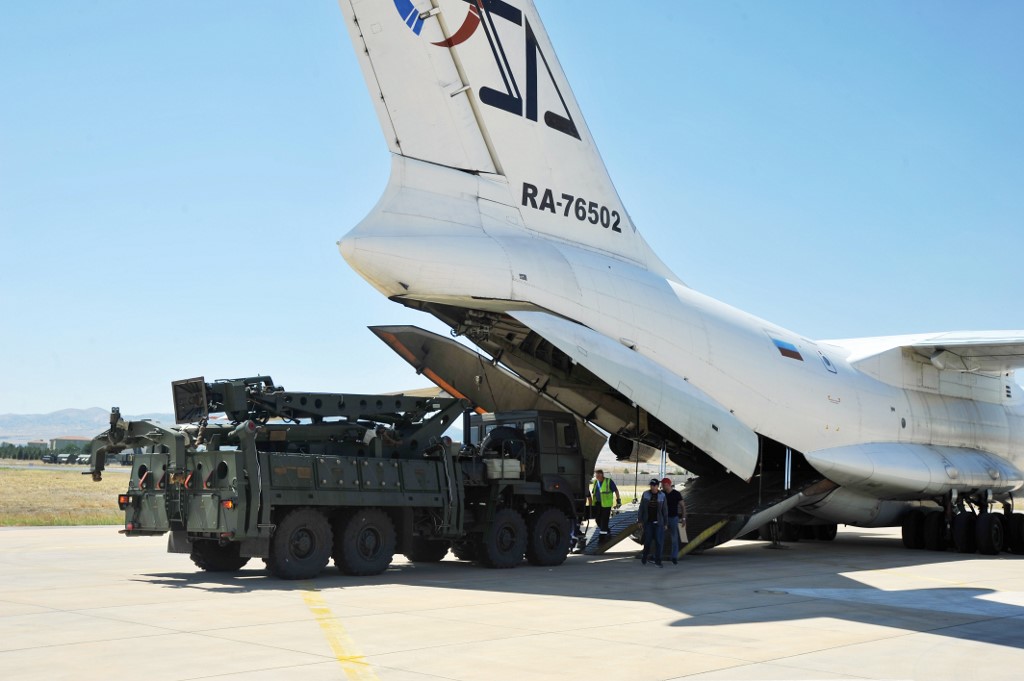
For nearly six years, Turkey’s 2019 acquisition of Russian-made S-400 air defense systems has been a persistent thorn in bilateral relations between Ankara and Washington, derailing Turkey’s participation in the U.S.-led F-35 fifth-generation fighter jet program and triggering sweeping U.S. sanctions on Turkey’s defense industrial base. To this day, six F-35 jets earmarked for Turkey remain locked in U.S. storage, blocked from transfer by 2020 U.S. legislation that mandates Turkey fully relinquish its S-400 systems before any F-35 handover can proceed. Now, as Ankara and Washington work to reset ties following the 2025 return of Donald Trump to the U.S. presidency, resolving the S-400 impasse and clearing Turkey’s path back to the F-35 program has emerged as one of the most urgent priorities on the bilateral agenda. Multiple sources familiar with ongoing negotiations have told Middle East Eye that the most promising proposal currently on the table is a third-party resale of Turkey’s S-400 systems to the United Arab Emirates – a plan that has received a preliminary green light from Moscow. The Kremlin confirmed last Friday that it is engaged in consultations with Turkey over the potential third-party sale, with presidential spokesperson Dmitry Peskov noting that the issue remains highly sensitive and talks will continue in the coming weeks. “Moscow’s response to Turkey’s idea of selling the systems to a third country was: why not?” one anonymous Russian source close to the negotiations shared. “There are still technical and political details that need to be ironed out, and a final decision will ultimately come from President Vladimir Putin.” A core Russian commitment, the source added, is that any final deal would strictly honor the terms of the original 2019 contract between Moscow and Ankara, with Russia set to review all proposed terms before giving final approval. The path to this proposal began 18 months ago, when U.S. and Turkish officials first began exploring potential solutions to the S-400 deadlock. An early plan that would have disabled the systems by removing key components and storing them under joint U.S.-Turkish supervision was ultimately discarded, as it would only have secured a temporary waiver of U.S. sanctions rather than the full permanent lifting Ankara seeks. That rejection opened the door to negotiations over reselling the complete systems to the UAE, talks that have now been ongoing for months, according to Russian and Turkish sources. Turkish officials note that the UAE already has experience operating Russian air defense technology – most notably the Pantsir air defense system – and has actively pursued weapons procurement diversification from multiple global suppliers to bolster its national defense capabilities. Still, the deal faces underlying geopolitical headwinds: one European investor based in the region pointed out that the UAE has ongoing tensions with Russia over Moscow’s military and political support for Iran, which has launched drone and ballistic missile attacks targeting the UAE in recent years. Unlike direct arms sales from Russia to third parties, this proposed Turkey-UAE transaction would not be subject to existing U.S. sanctions, removing a major barrier to completion. Contrary to earlier unconfirmed reports, Moscow has rejected an option to take back the S-400 systems directly from Turkey, making the third-party resale the only viable path forward currently on the table. A planned public announcement by the Turkish government last Friday confirming that talks with a third country were underway was abruptly canceled at the last minute, though sources have not provided details on what prompted the cancellation. Experts and insiders are still parsing Russia’s strategic incentives for backing the deal, with Ankara-based sources speculating that Moscow is likely to seek key concessions from Turkey in exchange for its approval. One key outstanding issue is the renewal of Turkey’s critical natural gas supply deal with Russia, which is currently still under negotiation. All parties stress that no final agreement has been reached, and talks on both the S-400 deal and linked political and energy issues remain ongoing.