标签: Asia

亚洲

  • ‘Insider trading’: Oil and stocks jolt on news of US-Iran deal as some cry ‘manipulation’

    ‘Insider trading’: Oil and stocks jolt on news of US-Iran deal as some cry ‘manipulation’

    Global financial markets were roiled this week after an unconfirmed report claimed the United States and Iran were nearing a preliminary peace agreement, triggering a sharp single-day drop in crude oil prices and a broad rally in equities — while also igniting widespread accusations of coordinated insider trading and market manipulation across social media platforms.

    On Wednesday, news outlet Axios published a report stating the two adversarial nations were close to finalizing a one-page memorandum of understanding that would end ongoing hostilities and establish a framework for future, more in-depth negotiations over Iran’s nuclear program. The report emerged amid the ongoing US-Israeli military campaign against Iran, with a fragile ceasefire currently in place along most frontlines.

    Within minutes of the report going public, international benchmark Brent crude plummeted from $108 per barrel to $97, before partially recovering to settle roughly 7% lower on the day at approximately $102 per barrel. The sudden sell-off was rooted in widespread market expectations that a finalized peace deal would reopen the Strait of Hormuz, a critical global energy chokepoint that has been subject to competing blockades enforced by both Iran and the US despite the current truce. The reopening would unlock millions of barrels of Iranian crude exports onto global markets, pushing overall supply higher and pulling prices down.

    Data compiled by market monitoring outlet Unusual Whales, which tracks trading activity that matches the pattern of potential insider trading, revealed that just 70 minutes before Axios published its report, market participants placed nearly $920 million in bearish short bets on crude oil. If those positions were held through the price drop, Unusual Whales estimates the holders of these short positions walked away with an estimated $125 million in profit in just a few hours.

    The revelation of the extremely well-timed bet sparked fierce debate among traders, financial analysts and public figures on the social platform X, with many openly accusing well-connected insiders of manipulating markets through coordinated leaks of false or unconfirmed news. “Every major announcement in this war has been front-run by someone who knew it was coming. What kind of war is this? This is more like a trading desk with an army,” one X user wrote. Former Republican U.S. Congresswoman Marjorie Taylor Greene echoed the outrage, writing, “When is everyone going to start realizing that the manic on again off again war/peace rhetoric is really just insider trading? And sprinkle in some murder. Only a select few in the top tax bracket are benefiting from this, and the majority of you ain’t in it.”

    Alongside the oil sell-off, the unconfirmed peace report triggered a broad rally across U.S. stock indexes: the technology-heavy Nasdaq Composite climbed 1.5%, while the S&P 500 gained more than 1% on the day. But traders remained deeply divided over whether the market move was based on legitimate progress or manufactured for private gain. Many observers noted that this pattern of leaked de-escalation reports followed by inconsistent official statements has repeated multiple times in recent weeks. “These fake timed peace deal reports by Axios with the selling and buying that accompanies them, followed by the president then doing the inverse and Iran saying it’s a lie has been happening for weeks now,” one X user wrote. “I’ve never seen such in your face insider trading. Market is a casino.”

    Some critics have also pointed out a consistent pattern that links these peace deal leaks to movements in U.S. Treasury bond markets. Luke Gromen, founder of global macroeconomic research firm FFTT, LLC, pointed out on X that unconfirmed reports of a US-Iran peace deal almost always emerge shortly after 10-year U.S. Treasury yields break above the 4.4% threshold on the upside. “Actually, if I think about it, I don’t find it curious at all,” Gromen added.

    Higher bond yields push up borrowing costs for the U.S. government and filter through to higher interest rates for consumer products like mortgages and auto loans. Yields have spiked repeatedly since the outbreak of hostilities between the US-allied coalition and Iran, driven by investor fears that supply-disrupted high oil prices would reignite stubborn inflation across the global economy. A peace deal that pushes oil prices lower would also ease inflation pressure, pulling bond yields back down and lifting stock valuations — creating a clear profit opportunity for well-positioned insiders.

    Critics also note that Axios has a history of publishing reports aligned with the Trump administration’s diplomatic timeline. The outlet previously reported that Washington and Tehran were nearing a nuclear deal shortly before the US and Israel launched a military strike on Iran on February 28. On April 5, Axios reported that the two sides were pushing for a 45-day ceasefire, and just two days later, Iran and the US agreed to a two-week truce that was subsequently extended.

  • Ben‑Gvir ‘dreams’ of nooses in TikTok video glorifying death penalty for Palestinians

    Ben‑Gvir ‘dreams’ of nooses in TikTok video glorifying death penalty for Palestinians

    Israeli far-right National Security Minister Itamar Ben-Gvir has ignited fierce international condemnation after sharing a provocative TikTok video that leverages a popular viral trend to glorify the recent Knesset approval of capital punishment for Palestinian prisoners.

    The clip, posted on May 4, adapts the viral “I know I should sleep, but the voices in my head go…” audio trend to feature a montage of AI-generated images of everyday objects shaped into gallows and execution nooses. In the caption of the post, written in Hebrew, Ben-Gvir wrote: “I dream of the death penalty for terrorists. What do you dream of?” The caption was paired with relevant hashtags and the trend’s official audio track.

    This public glorification of execution is far from an isolated incident for the ultranationalist minister. Ben-Gvir has spent years aggressively campaigning to expand the death penalty to Palestinian detainees, a policy that secured final approval from Israel’s parliament, the Knesset, in a 62-48 vote across second and third readings on March 30. Just days before the TikTok post, Ben-Gvir faced widespread criticism for celebrating his 50th birthday with a multi-tiered birthday cake topped with a golden noose, emblazoned with the message “Congratulations Minister Ben-Gvir, sometimes dreams come true.” A smaller cake from his wife Ayala bore the same slogan, with photos from the event showing Ben-Gvir smiling alongside the controversial dessert.

    Within hours of the TikTok going live, it drew intense backlash across global social media platforms, with users across X, Instagram and other platforms decrying the minister’s rhetoric as dangerous and dehumanizing. Many commentators labeled the video “sickening,” “morally rotten” and “sadistic,” warning it exposes the eliminationist core of the current Israeli government’s ideology toward Palestinians.

    One post on X argued that the minister’s fixation on executing Palestinian detainees lays bare the “genocidal mindset of the Israeli occupation,” adding that Ben-Gvir is not a fringe outlier, but a representative of the current ruling majority — a reality that, the commenter noted, is already proven by the ongoing catastrophic humanitarian crisis in Gaza. Another Instagram user called the clip “unashamed evil,” while commentators have questioned the minister’s psychological state, with one comment bluntly labeling him a psychopath, and another comparing his ideology to Nazism.

    Other critics framed the video against the backdrop of ongoing Israeli military operations in Gaza and attempts by humanitarian aid flotillas to break Israel’s blockade of the enclave. One commentator flipped Ben-Gvir’s framing, arguing that the only criminals in the current context are not the starving Palestinian people, but the activists who bring food and aid to starving Gaza children, as labeled by Israeli officials.

    Many social media users even raised the prospect of future international accountability for Ben-Gvir, with one comment noting: “When eventually Ben-Gvir is caught up on his war crimes and tried, don’t nobody tell me he shouldn’t get the noose.”

    Ahmad Tibi, an Arab member of the Knesset, also condemned the sequence of events, saying both Ben-Gvir and his wife “need a psychiatrist immediately.” Tibi pointed out that ordinary people celebrate birthdays with wishes for peace and prosperity, but Ben-Gvir’s circle instead “sanctify hatred and death.”

    Human rights organizations have already labeled the newly passed death penalty law discriminatory and racist, warning that Ben-Gvir’s “dream” of widespread executions would formalize state-sanctioned killing of Palestinian prisoners, most of whom are already held in Israeli detention facilities under documented conditions of torture, inadequate medical care and severe food deprivation. According to Addameer, a Palestinian prisoners’ rights advocacy group, more than 9,600 Palestinians are currently held in Israeli custody as of 2024.

  • Mamdani slams Israeli real estate event in NYC as ‘effort to displace Palestinians’

    Mamdani slams Israeli real estate event in NYC as ‘effort to displace Palestinians’

    A controversial real estate event promoting properties in Israel’s illegal West Bank settlements has sparked fierce debate in New York City, drawing condemnation from Mayor Zohran Mamdani and mass demonstrations from pro-Palestinian activists this week. The expo, hosted Tuesday at Manhattan’s Park East Synagogue, marked the second such event held at the venue since November, showcasing homes in the Israeli settlements of Kfar Eldad and Karnei Shomron alongside guidance for buyers on tax and mortgage arrangements.

    Under international law, Israel’s 1967 occupation of the West Bank is deemed illegal by the United Nations, and all Israeli settlements constructed on occupied Palestinian territory are classified as unlawful. The Fourth Geneva Convention explicitly prohibits occupying powers from transferring their own civilian populations into occupied territory, a core legal principle that underpins global opposition to Israeli settlement expansion.

    Speaking to reporters Wednesday, one day after the event, Mamdani made clear his firm opposition to the expo. “When we have a real estate expo that is promoting the sale of land, which includes the sale of land in occupied West Bank in settlements that are a violation of international law, that is something that I firmly disagree with,” the mayor said. He added that the event ran counter to the views of most New Yorkers, noting that settlement expansion is a core driver of the ongoing displacement of Palestinian people from their ancestral land.

    Hundreds of demonstrators organized by the Palestinian advocacy group Pal-Awda gathered near the synagogue Tuesday to protest the event. A heavy deployment of NYPD officers and barricades corralled the crowd a full block away from the venue, and Pal-Awda issued a scathing statement Wednesday accusing police of widespread excessive force. The organization claims law enforcement violently kettled and barricaded peaceful pro-Palestinian protesters while allowing pro-Zionist counter-protesters to operate freely, adding that officers used pepper spray on demonstrators and physically assaulted attendees through aggressive grabbing and shoving.

    Video footage provided to independent outlet Middle East Eye by Pal-Awda captured a tense late-night standoff, with officers shouting orders for protesters to pull back from the barricades as the crowd pushed against the barriers. In his remarks Wednesday, Mamdani struck a careful balance, affirming that the city upholds the fundamental right to peaceful protest while also guaranteeing that all New Yorkers can access houses of worship safely. The mayor declined to criticize police conduct, saying officers “ensured [both rights] yesterday.”

    The incident comes amid long-simmering tension over the Mamdani administration’s approach to policing pro-Palestinian activism. Before his inauguration in January, the mayor confirmed he would retain outgoing Police Commissioner Jessica Tisch, a move that drew condemnation from more than 100 grassroots organizations across the country in December. Critics argue Tisch has overseen a harsh crackdown on pro-Palestinian demonstrators, and note she hails from one of New York’s wealthiest and most politically influential families. In their December statement, the advocacy groups said retaining Tisch aligns the Mamdani administration with the NYPD’s long history of racialized policing, surveillance and political repression, representing a retreat from the justice and liberation values the mayor campaigned on.

    Pal-Awda has also leveled a separate legal criticism against the expo, saying organizers required entry to be cleared through a stringent vetting process that uses religious and political screening criteria. The group argues these requirements violate the U.S. Fair Housing Act and federal anti-discrimination laws, particularly for the event’s Manhattan-based real estate offerings that were only open to a pre-approved select group. Pal-Awda condemned what it called “shameful that Zionist agencies continue to hide their illegal activities in houses of worship.”

    The controversy is not the first effort by Palestinian advocates to challenge the marketing of occupied West Bank land to New York residents. Back in March 2024, Palestinian lawyers and advocates submitted an official demand letter to New York’s attorney general, calling for a formal audit and investigation into these sales. A demand letter typically serves as the final step before legal action is filed, and Pal-Awda confirmed this week that no official response has been received from the attorney general’s office.

    In his Wednesday remarks, Mamdani also sought to draw a clear line between political criticism of Israeli government policy and religious bigotry, reaffirming that “there is no tolerance for antisemitism” in New York City. “Critique of the policies of a government are very much separate from bigotry towards the people of a specific religious faith,” he said.

  • European fishing firms reflag ships to tap Indian Ocean tuna quotas, report finds

    European fishing firms reflag ships to tap Indian Ocean tuna quotas, report finds

    For decades, the European fishing industry has held unmatched dominance in Indian Ocean tropical tuna harvesting, centered around a fleet of large purse seiners—massive vessels with the capacity to hold up to 1.8 million kilograms of tuna in a single trip. Dozens of these ships patrol the Indian Ocean’s waters, catching skipjack, yellowfin and bigeye tuna that eventually end up as canned products on grocery store shelves across the globe. But when Jess Rattle, head of investigations at the London-based environmental non-profit Blue Marine Foundation, spotted numerous purse seiners operating under the flags of Mauritius, Tanzania and Oman, she began questioning the true ownership of these vessels.

    “Our core goal was to unpack who actually holds ownership of these vessels,” Rattle explained. “Were they the property of the coastal states whose fishing quotas they were using, or did the true ownership trace back to European Union entities?”

    A groundbreaking joint investigation released Thursday by Blue Marine Foundation and global corporate investigations firm Kroll, shared exclusively with The Associated Press ahead of publication, now lays bare the full scale of European access to Indian Ocean tuna stocks. The probe finds that European companies currently take one-third of all tropical tuna caught in the region—a revelation that comes as yellowfin and bigeye tuna populations remain strained, still working to recover from historic overfishing.

    Rattle’s investigation confirms that European firms access these extra quotas by reflagging their vessels to five coastal Indian Ocean nations: the Seychelles, Mauritius, Kenya, Tanzania and Oman. This common, though not illegal, practice has allowed the European-controlled fleet to expand to more than 50 purse seiners and support vessels, and maintain high catch levels even as the EU made public commitments to reduce overall tuna harvesting to support stock recovery.

    The findings arrive on the eve of the annual gathering of the Indian Ocean Tuna Commission (IOTC) in the Maldives, a summit that brings together the EU and 20 member nations with commercial stakes in the region’s tuna industry. While reflagging is widespread across the global fishing sector, it creates significant barriers for regulators and independent observers seeking to accurately measure European firms’ impact on vulnerable tuna stocks. True parent company ownership is often hidden behind complex layers of shell companies and opaque foreign registry systems, which Rattle and Kroll’s team spent months untangling to map the full extent of hidden European control.

    While European firms have operated under the Seychelles’ flag for decades, Rattle notes that growing reflagging to Oman and Kenya is a new, unreported trend. In response to the investigation’s findings, Europeche Tuna Group, the trade body representing the European tuna industry, framed its cross-border partnerships as a net positive for regional economies. “Our industry’s relationships with coastal African and Indian Ocean nations are built on decades of long-term investment and deep local collaboration,” said group spokesperson Anne-France Mattlet. She added that European operators contribute to local economies through tax and fishing license payments, investment in local infrastructure, and offloading catches at regional ports and canneries. Mattlet also confirmed the investigation’s count of more than 50 European-linked purse seine and support vessels operating in the Indian Ocean, including those flying non-EU flags.

    A spokesperson for the European Commission, Maciej Berestecki, noted that reflagging is a private commercial decision made independent of EU public authorities, and that the bloc does not advocate for or represent the interests of vessels registered to non-EU countries. “The EU has worked, and continues to work, to the fullest extent to promote and enforce binding catch limits that support sustainable tuna management,” Berestecki said in a statement.

    European dominance in the Indian Ocean tuna trade is not new: Spanish and French tuna companies first introduced large purse seine technology to the region in the 1980s, allowing the fleet to rapidly scale annual catches and establish a dominant market position. But this outsized influence has repeatedly brought the EU into conflict with coastal nations seeking greater control over fishing activities in their adjacent waters. Five years ago, as yellowfin populations plummeted, the Maldives publicly accused the EU of refusing to table meaningful proposals to cut catch quotas during a heated IOTC meeting. In 2023, the bloc opposed an Indonesian proposal for targeted restrictions on purse seine fishing that passed with support from 15 other IOTC member states.

    In recent years, the IOTC has implemented new binding management rules designed to rebuild vulnerable yellowfin and bigeye tuna populations, which have started to show early signs of recovery. As part of these measures, the EU agreed to cut yellowfin tuna catches for EU-flagged vessels by 21%. Glen Holmes, a senior officer with the Pew Charitable Trusts, says these mandatory cuts are likely pushing European firms to turn to reflagging to tap into other nations’ quotas and maintain their historic catch volumes. Holmes, alongside partners from Pew, Global Fishing Watch and other conservation groups, is pushing for stricter ownership transparency requirements for all fishing fleets operating in the Indian Ocean.

    Foreign reflagging has long been a point of contention for transparency advocates, who argue the practice enables weak oversight of vessel activities. The phenomenon mirrors trends seen in the “shadow fleet” of sanctioned oil tankers, which frequently change names and flags to hide true ownership and evade international sanctions. Certain coastal states have become known as “flags of convenience,” offering low registration fees and lax enforcement of international fishing and trade rules, in many cases due to limited resources to patrol and regulate distant fleets.

    A January 2024 investigation by environmental group Oceana already documented widespread reflagging of European-owned fishing vessels to non-EU nations, including some the EU itself has accused of ignoring illegal fishing activity. Oceana is calling on EU member states to mandate collection and public publication of full beneficial ownership data for all European-controlled fishing vessels, regardless of the flag they fly. Vanya Vulperhorst, Oceana’s Europe director for illegal fishing campaigns, says this change would help the EU enforce its own existing laws, which bar European individuals and companies from profiting from illegal fishing activity. It would also reveal the true size of the European fishing footprint: “What our investigation found last year is that the actual size of the European fleet, when you add all the non-EU flagged vessels controlled by European firms, doubles the official count,” Vulperhorst said.

    This reporting was supported by funding from the Walton Family Foundation, with The Associated Press holding sole editorial responsibility for all content.

  • From cricket’s capital to Olympic ambitions, India’s next play on the world sports stage

    From cricket’s capital to Olympic ambitions, India’s next play on the world sports stage

    As one of the world’s most populous nations with a fast-expanding economy and unrivaled global influence in cricket, India is now laying the groundwork to extend its global footprint across the broader international sports landscape. Having already secured hosting rights for the 2030 Commonwealth Games in the western city of Ahmedabad, the country has set its sights on an even bigger prize: securing the right to host the 2036 Summer Olympic Games.

    This push for international sporting leadership aligns with Prime Minister Narendra Modi’s broader national vision of building a fully developed India by 2047, a plan centered on upgrading public living standards, expanding transport infrastructure, advancing education, and establishing the country as a global hub for technology and innovation. These national development efforts form the core foundation of India’s growing sporting ambitions.

    In an interview with The Associated Press, Union Minister of Youth Affairs and Sports Dr. Mansukh Mandaviya framed India’s current moment as one of newfound confidence. “India today reflects a confident and aspirational mindset, ready to lead and shape the future of global sport,” he said. “Our growing capability to host major international sporting events is a testament to how far we have progressed. At the same time, our athletes continue to make the nation proud across sports disciplines, signaling the steady rise of India as a formidable sporting force.”

    On Thursday, Mandaviya was set to lead a national sports conclave in the capital New Delhi, where stakeholders will review India’s preparation for upcoming major events, including the 2026 Asian Games, 2026 Commonwealth Games, and the 2028 Los Angeles Olympics. The gathering will also address compliance requirements under the National Sports Governance Act, a 2025 law enacted to improve transparency across national sports federations and set clear standards for international event hosting and athlete participation.

    Already in 2026, India has hosted three high-profile cricket events: the men’s ICC Twenty20 World Cup, the second edition of the Women’s Premier League, and the ongoing season of the Indian Premier League — one of the wealthiest and most widely followed franchise sports leagues on the planet. Beyond cricket, New Delhi is playing host to the BWF World Badminton Championships, the eastern city of Bhubaneshwar is scheduled to welcome a World Athletics Continental Tour competition, and Ahmedabad will host the Asian Weightlifting Championships later this year. Indian authorities are also exploring options to bring Formula One racing back to the country for the first time since the last Indian Grand Prix was held in 2013, and national sports officials successfully campaigned for cricket’s reintroduction to the Olympic program for the 2028 Los Angeles Games.

    For India, the 2030 Commonwealth Games in Ahmedabad will serve as a critical benchmark to demonstrate how far the country has come since its last major multi-sport event hosting experience. New Delhi previously hosted the 2010 Commonwealth Games, an event overshadowed by widespread logistical delays, unfinished facilities, and high-profile corruption scandals. Indian officials are confident the 2030 iteration will leave those past missteps far behind. The centerpiece of the 2030 Games will be the Sardar Patel Sports Enclave, a purpose-built complex that already houses the world’s largest cricket venue, the Narendra Modi Stadium, which can be reconfigured to host a range of Olympic and Commonwealth sports.

    But India’s sporting transformation extends far beyond new infrastructure. Over the past decade, policymakers have made sustained investments to build a robust, inclusive domestic sports ecosystem that nurtures talent from the grassroots to the elite level. Today, more than 15 professional leagues across different sports operate across the country, creating pathways for young athletes to pursue competitive careers. The Sports Authority of India has also launched a network of specialized national centers of excellence, providing elite athletes with access to world-class training facilities and evidence-based, scientific coaching programs designed to produce Olympic and world championship medalists.

    These investments are already delivering measurable results on the global stage. At the 2023 Asian Games, India recorded its best performance in history, finishing with a total of 107 medals. The country claimed its first Thomas Cup badminton world title in 2022, won its first-ever men’s squash World Cup crown, earned 29 medals (including seven gold) at the 2024 Paris Paralympics, and captured 20 medals at the 2025 World Boxing Cup finals. Individual standout Neeraj Chopra, the Olympic and world champion javelin thrower, has become a national icon and inspiration for young athletes across the country.

    Sports advocates note that these high-profile success stories also play a key role in shifting cultural attitudes toward fitness and recreational participation across India’s vast population. “While the infrastructure is put in place, we are also working on our messaging,” said Hari Ranjan Rao, Sports Secretary for the Government of India. The national Khelo India (Play India) initiative, launched in 2018, has expanded rapidly to include youth competitions, university-level events, winter sports, para sports, beach and water sports, and even dedicated competitions for tribal athletes. “The aim is to draw out the masses into an active lifestyle,” Rao said, “As well as into participation.”

    With growing grassroots participation and a pipeline of elite talent emerging, Indian officials are optimistic about the country’s sporting future. “As we prepare to host the 2030 Commonwealth Games and advance our bid for the 2036 Olympic Games, India stands ready to take center stage,” Mandaviya said. “We are determined to emerge as a global sporting powerhouse, both in producing champions and in hosting world class events.”

  • Legal complaint filed by Palestine activists against Met Police chief over synagogue remarks

    Legal complaint filed by Palestine activists against Met Police chief over synagogue remarks

    A coalition of major UK pro-Palestine advocacy groups has launched a formal complaint against Mark Rowley, Commissioner of London’s Metropolitan Police, over allegations he made false, stigmatizing claims that protest organizers intentionally route demonstrations near synagogues to stoke antisemitic tension. The legal action marks one of the most significant public challenges to UK policing’s handling of the ongoing pro-Palestine protest movement, which has drawn hundreds of thousands of participants to central London since the outbreak of the Israel-Gaza conflict in October 2023.

    Rowley made his controversial claims in two separate high-profile interviews with The Times and ITV News in recent weeks, stating that pro-Palestine protest organizers repeatedly planned to march near Jewish places of worship, framing this alleged intent as inherently antisemitic. “The fact that features as the organisers’ intent, I think that sends a message … that feels like antisemitism,” Rowley told The Times. Speaking to ITV, he added: “They set out with an intent to march near synagogues etc and every single time that we put conditions on to prevent that.”

    Lawyers from Hodge Jones & Allen submitted the official complaint on Wednesday to the Mayor’s Office for Policing and Crime (MOPAC), the body that oversees London’s police force, on behalf of the Palestine Coalition — an umbrella grouping that includes the Palestine Solidarity Campaign, the Palestinian Forum of Britain, the Stop the War Coalition, Friends of Al-Aqsa, the Muslim Association of Britain and the Campaign for Nuclear Disarmament.

    The complaint argues that Rowley’s matching claims across two interviews prove his remarks were no accidental misstatement, but a deliberate effort to discredit and stigmatize the long-running protest movement organized by the coalition. The document clarifies that the mass marches held since October 2023 have been organized to protest Israeli violations of international law in Gaza and the West Bank, as well as the British government’s ongoing political and military complicity in these actions.

    The complaint explicitly rejects Rowley’s factual claims, noting that while some pre-approved march routes have passed near major London landmarks that fall in the general vicinity of synagogues and other houses of worship, organizers have never intentionally targeted or routed protests near these sites specifically. All protest routes, the coalition emphasizes, have been formally agreed upon by Metropolitan Police officials in advance of every demonstration. On occasions where police requested route adjustments to move marches further from synagogues or public transit stations used by worshippers, the coalition says it willingly complied, even while rejecting the unsubstantiated claim that the protests posed any inherent threat to Jewish communities.

    “At no point during any negotiations has it been suggested that Metropolitan police officers believed that the objective of the march itself was to ensure that they went past a synagogue,” the complaint reads.

    Rowley’s remarks, the coalition argues, directly violate the 2020 Police Conduct Regulations, which require top police leaders to act with honesty and integrity, uphold fairness and impartiality, avoid abuse of authority, and maintain public confidence in the police service. “The Commissioner’s comments were in breach of those standards,” the complaint alleges. Beyond factual inaccuracy, the document accuses Rowley of abusive use of his power, and argues that his framing of pro-Palestine protests as antisemitic constitutes racial discrimination against protest participants.

    The complaint also highlights what it frames as unequal treatment of demonstrations by the Metropolitan Police, pointing out that the coalition’s upcoming 16 May Nakba Day march has faced severe route restrictions, while police have allowed space for a far-right demonstration led by controversial figure Tommy Robinson to proceed in central London. The coalition is demanding an immediate retraction of Rowley’s claims and a formal public apology to the movement.

    This complaint comes amid escalating political pressure to restrict or ban pro-Palestine protests across the UK, amplified by a recent stabbing attack in the heavily Jewish northwest London neighborhood of Golders Green. On Wednesday, a 45-year-old Somali-born British man was arrested in connection with the stabbings of two Jewish men, as well as an earlier fatal stabbing of a Muslim man in south London. Prime Minister Keir Starmer has publicly linked the attack to pro-Palestine marches, using the incident to call for tighter restrictions on protests, including potential full bans. In a BBC Today interview over the weekend, Starmer said offensive protest language should be actively policed and suggested there was a credible case for banning future demonstrations entirely.

    Last week, the same coalition groups already pushed back against coordinated efforts by politicians and mainstream media outlets to smear the protest movement and advance calls for bans. The legal complaint against Rowley marks a major escalation of that pushback, challenging the top UK police official’s claims at the heart of the growing campaign to restrict pro-Palestine speech and assembly.

  • Why is Japan rethinking its anti-war stance?

    Why is Japan rethinking its anti-war stance?

    Seventy-eight years after the end of World War II, one of the most defining pillars of Japan’s post-war national identity is facing the most significant challenge to its existence in modern history. The country’s long-standing pacifist constitution, drafted in the aftermath of the global conflict to embed anti-war principles into Japanese politics and society, is now at the center of a fierce national debate, as Prime Minister Fumio Kishida pushes forward an aggressive agenda to revise its iconic Article 9.

    Article 9, the clause that has shaped Japan’s security posture for nearly eight decades, formally renounces war as a sovereign right of the nation and bans the maintenance of offensive military capabilities for use in international conflict. For generations, this constitutional provision has served as both a domestic commitment to peace and a global signal of Japan’s rejection of the imperialist expansion that defined the early 20th century.

    But shifting regional security dynamics, including rising military assertiveness from China in the Indo-Pacific, persistent nuclear and ballistic missile threats from North Korea, and evolving security alliances with the United States, have pushed the ruling Liberal Democratic Party (LDP) to frame constitutional revision as a necessary step to adapt Japan to 21st century security realities. Proponents of the change argue that updating the constitution will allow Japan to play a more active role in collective security efforts with its allies, modernize its self-defense capabilities to deter regional aggression, and clarify the legal status of the country’s already expanding military forces.

    Despite these arguments from ruling party officials, the push for revision has sparked deep controversy across Japan and drawn sharp criticism from regional neighbors that suffered under Japanese imperial occupation during World War II. Domestic opposition groups argue that revising the pacifist constitution would break the long-standing national commitment to peace, drag Japan into potential foreign conflicts, and undermine the social consensus that has kept the country focused on diplomatic and economic development over military expansion. Critics across East Asia warn that the shift away from post-war pacifism could destabilize regional security and reignite historical tensions over Japanese militarism.

    As the debate continues to unfold, the future of Japan’s anti-war stance remains one of the most consequential political issues facing the country, with implications that stretch far beyond its borders and reshape the security architecture of the entire Indo-Pacific region.

  • ‘Integrity costs something’: Eurovision winners want Israel out of the contest

    ‘Integrity costs something’: Eurovision winners want Israel out of the contest

    For decades, the Eurovision Song Contest’s governing body has insisted that the annual cultural event is strictly apolitical, aiming to unite European artists and audiences through music rather than global conflict. Yet scratch beneath the surface of the glitzy performances and catchy melodies, and politics has been a persistent, defining presence, shaping the event’s history again and again through high-profile controversies rooted in global tensions. One of the most dramatic examples dates back to 1974, when Portugal’s entry *E depois do adeus* was broadcast across the country just as the Carnation Revolution — the uprising that toppled Portugal’s authoritarian dictatorship and cleared the way for independence for its African colonies — was getting underway, turning the song into an accidental revolutionary signal. More recent decades have brought repeated disputes: in 2009, Azerbaijani authorities interrogated 43 citizens who cast votes for neighboring rival Armenia’s entry, while Ukraine and Russia traded barbs for years over Russia’s invasion of Ukrainian territory before Moscow was expelled from the competition entirely in 2022. Today, however, no controversy looms larger than the fierce debate over Israel’s eligibility to compete in the 2026 contest, hosted this year in Vienna, which erupted after the start of Israel’s military campaign in Gaza in October 2023 that has sparked widespread accusations of genocide.

    Emmelie de Forest, the Danish singer who won Eurovision in 2013 with her hit *Only Teardrops*, is among the most prominent past winners speaking out against Israel’s inclusion. In an interview with Middle East Eye, de Forest framed her opposition as rooted first and foremost in the devastating humanitarian crisis unfolding in Gaza, where tens of thousands of civilian lives have been lost. “It’s also about what it means when cultural institutions try to completely separate themselves from political reality. I don’t think music exists outside the world around us,” she explained. De Forest is one of more than 1,000 global artists who have signed the *No Music For Genocide* petition, which calls for a widespread boycott of the 2026 contest. The list of signatories includes other high-profile names: 1994 Irish Eurovision winner Charlie McGettigan, as well as global music stars Peter Gabriel, Bjork, Massive Attack, Macklemore, Brian Eno and Mogwai, among others.

    While Ireland’s national broadcaster RTE has heeded calls to withdraw from the competition, de Forest’s home country of Denmark remains a participant — a decision she called disappointing, but not unexpected. The singer acknowledged that speaking out has cost her personally: she has cut ties with some friends and put her professional income at risk, but argues that standing by one’s principles requires sacrifice. “sometimes integrity costs something,” she said. “What I find most difficult is the idea that Eurovision can somehow be separated entirely from political reality. I simply don’t believe that is possible anymore. Keeping Israel in the competition is also a political decision.”

    The European Broadcasting Union (EBU), which oversees the Eurovision Song Contest, rejected widespread pressure to bar Israel from competing when it ruled in December 2024 that the country would remain eligible for the 2026 event. In response to that decision, Nemo — the non-binary Swiss artist who won the 2024 contest — announced they would return their winner’s trophy, arguing that Israel’s inclusion directly contradicts the core values Eurovision claims to uphold: unity, inclusion and dignity for all people.

    McGettigan, the 1994 Irish winner, quickly announced he would follow Nemo’s lead — until he realized he had never received a physical trophy to return. “So let’s say I returned a virtual trophy!” he joked to Middle East Eye. For McGettigan, the campaign to withdraw from Eurovision has been deeply personal: an avid lifelong fan of the contest, he joined pro-Palestinian campaigners in lobbying RTE to pull out of 2026, and his advocacy helped convince the broadcaster to vote to withdraw. “I’m a not a member of any organisation…it’s just me personally, and thankfully, the management at RTE decided after a vote that they weren’t going to take part and that’s admirable, I think,” he said.

    McGettigan said he could no longer stay silent after seeing relentless footage of the humanitarian catastrophe in Gaza, where official counts put the Palestinian death toll at more than 72,000, with thousands more still missing and presumed dead under rubble, and the vast majority of the enclave’s infrastructure reduced to ruin. Even after a US-brokered ceasefire took effect in mid-January 2025, hundreds more Palestinians have been killed, just one week before Israel was formally confirmed as a 2026 contestant. McGettigan added that his awareness of the link between Eurovision and Israeli policy dates back to 2018, when Israel won the contest just days after Israeli forces killed 62 Palestinian civilians, including six children, during the peaceful Great March of Return protests in Gaza. “Now if that had happened in our country, and if 62 people had been murdered like that, we certainly wouldn’t be celebrating winning Eurovision,” he noted.

    Like de Forest, McGettigan rejects the long-held claim that Eurovision should remain strictly apolitical, pointing to the centuries-long tradition of musicians using their platforms to advance social change and call out injustice. “When you look back at people like Pete Seeger from the 1960s, Woody Guthrie, Bob Dylan, Joan Baez, all these artists have used their music to promote peace, to draw attention to injustice,” he said. “There are two strains of thought there, some countries just see this as entertainment, and they don’t see entertainment as having any place for politics – but I do.”

    So far, Spain is the only member of Eurovision’s “Big Five” (the group of largest funding countries that automatically qualify for the final, including the UK, France, Germany and Italy) to announce its withdrawal. After Spain confirmed its exit, Middle East Eye requested comment from the UK’s Department for Culture, Media and Sport, which declined to comment and deferred to the BBC, the UK’s national Eurovision broadcaster. The BBC also declined to comment, and requests for comment from the representing artists for the UK, France and Germany had not been answered by the time of publication.

    As the 70th Eurovision Song Contest prepares to kick off in Vienna next Tuesday, protests are already planned to mobilize outside the competition venue. Austrian police confirmed at a recent press conference that they expect roughly 3,000 demonstrators, with both pro-Palestinian and pro-Israel groups planning gatherings, and anticipate attempts to blockade sites and disrupt the event. To maintain security, drones will be banned within a 1.5-kilometer radius of all contest-related sites, and the US FBI has established a dedicated cyber security task force that Austrian authorities can contact around the clock to address potential threats. Adding extra symbolic weight to the protests, the 15 May, the eve of the Eurovision grand final, also marks Nakba Day — the annual commemoration of the 1948 displacement and massacre of hundreds of thousands of Palestinians that accompanied the founding of the State of Israel.

    For her part, de Forest emphasized that her criticism is directed at the EBU and its institutional decision to allow Israel to compete, not at individual participating artists or ordinary Eurovision fans. She says she would not feel comfortable attending the 2026 event, but still values the sense of cross-cultural connection and community that the contest has long fostered for fans around the world. Still, she argues that audiences cannot ignore the ongoing crisis in Gaza: “At the same time, I think people should continue speaking openly, asking difficult questions and refusing to simply move on as if nothing is happening. Fans have more influence than they sometimes realise, especially collectively.”

  • Under rubble and rain, Gaza women try to save rare books in centuries-old library

    Under rubble and rain, Gaza women try to save rare books in centuries-old library

    Against the backdrop of relentless conflict and widespread destruction across Gaza, a small, determined group of Palestinian women volunteers is waging a quiet, urgent battle to save one of Gaza’s most significant cultural treasures from total loss. Their mission centers on the centuries-old library of the Great Omari Mosque, a historic institution reduced to rubble by repeated Israeli bombardment amid the ongoing Gaza genocide.

    Raneem Mousa, a 35-year-old master’s graduate in Arabic language, is one of the volunteer leads on this improvised rescue effort. As she carefully dislodges a water-damaged volume from a war-shattered shelf, she uses a simple hand brush to sweep away decades of dust mixed with rubble and shrapnel before passing the text to a teammate for a gentle wipe down. The recovered book is then carried to the group’s self-designated “safest corner” — a tiny, makeshift holding space tucked away in the damaged mosque, where all salvageable texts are stored.

    When Mousa first arrived at the site after the most recent strikes, the scene was one of total devastation. “The library was filled with shrapnel, rubble, and dung from stray animals taking shelter,” she recalled in an interview with Middle East Eye. “Hundreds of shattered books and torn papers were scattered on the ground, covered in stones.”

    The volunteers, all affiliated with Gaza City’s Eyes on Heritage Institute, have framed their work as a “first-aid mission” to stabilize and preserve whatever can be saved from the library’s irreplaceable collection. Working without any specialized conservation tools, professional cleaning supplies, or formal institutional support, the group has relied on the most basic of materials: dry cloths, simple household brushes, and open air to dry waterlogged volumes damaged by seasonal rain.

    The Great Omari Mosque itself carries profound historical weight: as Gaza’s largest and oldest place of worship, it sits on a site that has hosted sacred structures for millennia, evolving from a Philistine temple to a Roman place of worship, then a Byzantine church, before being converted to a mosque in the 13th century. Its library, ranked the third-largest in all Palestine, once held roughly 20,000 volumes, including 187 rare manuscripts, some of which dated back more than 500 years. Over the course of the ongoing conflict, Israeli forces have bombed the mosque at least three times, leaving the structure in ruins and the library’s collection decimated.

    Despite the crippling challenges of ongoing siege, mass displacement, and a total lack of resources, Mousa and her teammates refuse to abandon their work. For them, this effort is about far more than saving old books: it is a defense of Palestinian identity and historical claims to their land. “This library has an educational and historical value that underscores the Palestinian historical right to their home,” Mousa explained.

    Time is not on their side. Months of exposure to Gaza’s humid, wet winter conditions have accelerated decay, with fungi growing on paper pages and the ink slowly eroding away. “Every time a page crumbles in my hand, I feel a pang of guilt, as if a witness to history is dying,” Mousa said.

    Every step of the rescue work is an exercise in improvisation and sacrifice. Coordinated via a simple WhatsApp group chat, volunteers must arrange trips to the mosque amid conditions that have made travel across Gaza nearly impossible: most of the territory’s population is displaced, nearly all vehicles have been destroyed, and fuel is so scarce that even short journeys cost more than most Gazans can afford. Mousa herself lost her home in Jabalia, northern Gaza, to an Israeli strike, and now lives in a makeshift tent in Deir al-Balah — a displacement that leaves her constantly worried about being able to afford the trip to continue her work.

    The group also lacks safe storage for the books they recover. All volunteers live in overcrowded temporary shelters, so there is no space to move salvaged volumes off-site. The small corner they have set aside in the damaged mosque remains under constant threat from the elements. “We often have to clean them again because the building is still in ruins and offers no real protection,” Mousa noted. “We are racing against the weather; the winter rain and wet wind are just as much an enemy as the bombs were.”

    Mousa says the group’s long-term hope is to secure international funding for proper storage shelves, professional conservation materials, and the equipment needed to digitize the entire surviving collection, preserving these texts digitally even if the physical copies are lost. “People in Gaza have always taken pride in education and culture,” she said. “If we, the educated generation, do not protect these books, who will preserve them for those who come after us?”

    Haneen al-Amasi, 33, director of the all-women Eyes on Heritage Institute, founded the organization in 2009 with a core mission: to rescue, restore, and digitize rare books, manuscripts, and historical documents across Gaza, to safeguard Palestinian cultural heritage for future generations. It was not until a brief ceasefire in March 2025 that al-Amasi was able to visit the Great Omari Mosque library for the first time since the current conflict began — and she said she was unprepared for the scale of the destruction. “Entire archives of books, manuscripts and historical documents were burned or shattered in Israeli attacks,” she told Middle East Eye. “Many others were damaged, eaten by rodents, or taken by displaced people to be used as fuel amid severe gas shortages in Gaza.”

    Many of the lost and damaged texts are irreplaceable: original documents recording centuries of Palestinian life, including scholarly works on jurisprudence, geography, and social customs, with many capturing unique details of life in the Palestinian territories before the 1948 Nakba.

    Al-Amasi argues that the deliberate targeting of libraries and cultural institutions is part of a broader Israeli campaign to erase Palestinian collective memory by destroying the physical evidence of their history and connection to the land. This is not the first time the institute has lost its work to Israeli strikes: during the 2014 Gaza offensive, the group’s original office in eastern Gaza City was bombed, killing five volunteer women who had fled their homes in Shujaiya and taken shelter in the building, and destroying hundreds of books and manuscripts that the team had already archived.

    After that attack, the devastated but determined team rebuilt their operations in a new location, and over the following years managed to recover and digitize hundreds more rare manuscripts, some dating back to the medieval period. In September 2025, that second office was also destroyed in an Israeli air strike. “Once again, we lost our library,” al-Amasi said simply.

    Even after repeated loss, the group has refused to end their work. “We feel it is our duty to keep striving to preserve and revive Palestinian cultural heritage in Gaza,” al-Amasi said. She has reached out to multiple international humanitarian and cultural organizations to request support, but says most global actors prioritize immediate needs like food and medical care in Gaza, ignoring the crisis facing Palestinian cultural heritage. “I believe cultural heritage is just as important,” she emphasized. “Future generations in Palestine will ask what we did to preserve our history.”

    Back at the Great Omari Mosque, the volunteers continue their slow, painstaking work, even as violence and crisis unfold around them. Al-Amasi recalls a time before the current war, when Gaza’s schoolchildren took part in regular reading competitions at the mosque library, an event that drew eager crowds of young learners. Today, Gaza’s children spend their days queuing for food aid and clean water, growing up surrounded by constant trauma from war. “By saving these books, we are trying to ensure that when the war ends, our children have something to read other than news of death,” al-Amasi said.

  • Satellite imagery suggests far more US assets in Middle East hit by Iran than reported

    Satellite imagery suggests far more US assets in Middle East hit by Iran than reported

    Fresh analysis of declassified satellite imagery has uncovered that the true scale of damage inflicted by Iranian strikes on United States military infrastructure across the Middle East has been dramatically understated in earlier public disclosures and media reporting, according to a sweeping new investigation.

    The Washington Post’s inquiry, which cross-referenced high-resolution satellite data with on-the-ground intelligence, has concluded that Iranian aerial attacks have damaged or completely destroyed at least 228 distinct structures and pieces of military equipment at US-operated sites throughout the region since the outbreak of the current conflict in late February. The targeted assets include critical military infrastructure: aircraft hangars, troop barracks, fuel storage depots, fixed-wing aircraft, and high-value radar, communications, and air defense systems that underpin US military operations in the Gulf.

    The outlet’s findings confirm that the total scope of destruction far exceeds the casualty and damage figures that the US government has previously acknowledged publicly. To date, Iranian attacks have claimed the lives of seven US service members: six based in Kuwait and one in Saudi Arabia, while more than 400 additional troops have sustained a range of injuries from the strikes, according to the investigation.

    The wave of Iranian strikes across regional targets was launched in response to the joint US-Israeli assault on Iran, which has killed more than 3,500 Iranian people, per data compiled by Hrana, a US-based Iranian human rights organization. The majority of Iranian counterattacks have focused on US military assets positioned across Gulf Cooperation Council states.

    On Tuesday, the United Arab Emirates confirmed that Iran had launched a second consecutive day of strikes on its territory, unleashing a heavy barrage of drone and missile attacks. Abu Dhabi officials added that one of the strikes ignited a large fire at an oil refinery in Fujairah, leaving three Indian nationals wounded.

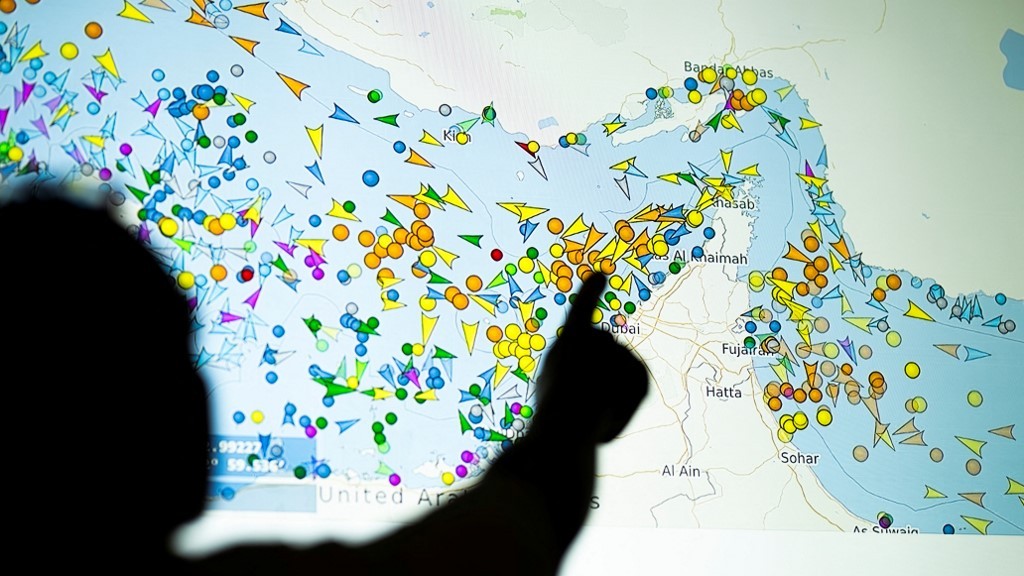
    The escalation comes amid chaotic shifts in US military strategy around the Strait of Hormuz, the world’s most critical energy chokepoint. Iran closed the strategic waterway in response to the US-Israeli assault, triggering a global energy crisis. An estimated 20% of the world’s daily crude oil shipments and a fifth of global liquefied natural gas supplies pass through the strait, which sits between Iran and Oman. The International Energy Agency has confirmed that the closure has caused the largest single loss of global energy supply in history, cutting more than 10 million barrels of daily oil output from global markets and reducing worldwide LNG supplies by one-fifth.

    Just one day after the Pentagon launched a new escorted shipping operation through the strait dubbed “Project Freedom” – a mission supported by more than 100 aircraft and roughly 15,000 US military personnel, according to US Central Command – former President Donald Trump announced Tuesday that he was halting the operation in an unexpected move to pursue a negotiated agreement with Iran to de-escalate the conflict.