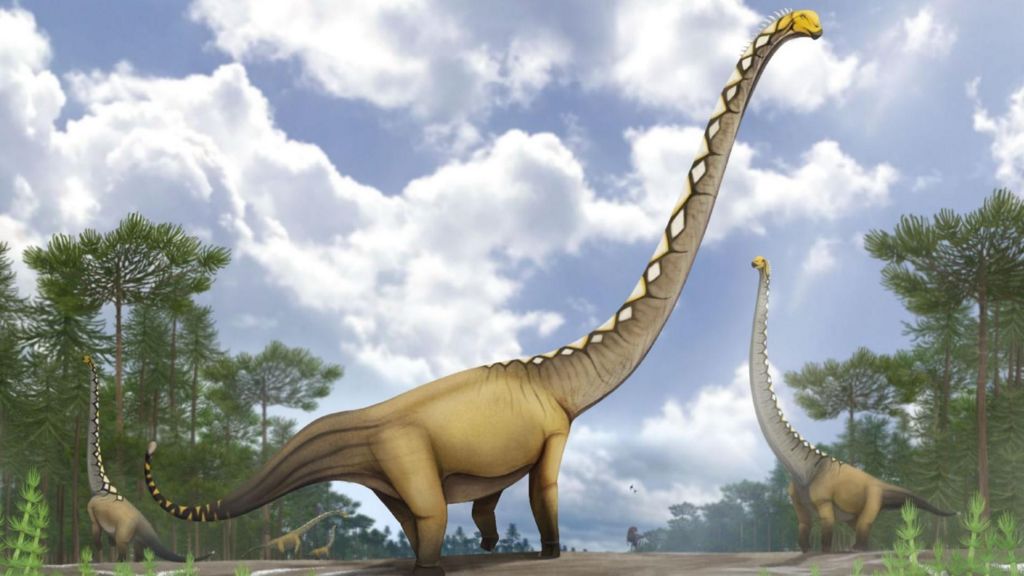
A groundbreaking paleontological discovery from northeastern Thailand has reshaped scientific understanding of sauropod dinosaur distribution across Asia, with researchers confirming the identification of an entirely new species that roamed the planet 150 million years ago. The new herbivorous species, named *Uragasaurus kalasinensis*, is a member of the Mamenchisauridae family — a group of massive sauropods defined by their extraordinarily elongated necks — and was uncovered from fossil deposits in Kalasin Province’s Phu Noi site.
The story of the discovery stretches back to 2008, when a local resident stumbled upon unusual fossil fragments that looked like serpent scales, leading to the formal identification of the Phu Noi dig site. For more than 15 years, research teams from Mahasarakham University have systematically excavated the site, which has proven to be a rich Late Jurassic fossil bed where over 90 percent of recovered remains belong to various dinosaur species. While exploring the site, the team uncovered a range of fossilized teeth and bones, but it was a single well-preserved dorsal vertebra — a bone from the middle to upper back — that held the key to the new species identification, bearing distinct, never-before-documented anatomical features.
Detailed CT scanning of the fossil confirmed its placement within Mamenchisauridae, a sauropod group whose members typically evolved extremely long necks to access vegetation across a wide range of heights, allowing them to exploit multiple food sources without repositioning their massive bodies. Prior to this find, nearly all confirmed Mamenchisauridae fossils had been discovered in China, making this the first confirmed instance of the family in Thailand. Scans also revealed unique structural traits, including a Y-shaped arrangement of supporting bone layers called laminae and a one-of-a-kind air cavity system that has not been observed in any other known dinosaur species.
Dr. Apirat Nilphanaphan, lead researcher on the project from Mahasarakham University, shared his reaction to the discovery with BBC Thai, explaining that he was so excited when he confirmed the find that he accidentally broke his keyboard, describing the moment as a mix of overwhelming exhilaration and long-awaited relief. The team’s research was published in the peer-reviewed scientific journal Nature earlier this week. This discovery marks the second new species of large long-necked herbivorous dinosaur identified in Thailand in 2026, following the announcement of *Nagatitan* in May. That species, which tipped the scales at an estimated 27 tonnes — equal to the weight of nine adult Asian elephants — and stretched 27 meters long, is currently the largest dinosaur ever discovered in Southeast Asia.
Paleontologists note that the back-to-back discoveries at Thai dig sites highlight the region’s understudied role in Jurassic dinosaur evolution, suggesting that Southeast Asia hosted far more diverse sauropod populations during the Late Jurassic than previously assumed.