标签: Asia

亚洲

  • UAE made failed attempt to get Saudi Arabia, Qatar to jointly attack Iran: Report

    UAE made failed attempt to get Saudi Arabia, Qatar to jointly attack Iran: Report

    Regional divisions across the Persian Gulf have been laid bare by a newly revealed failed diplomatic push, after Bloomberg reported Friday that the United Arab Emirates was unable to convince Saudi Arabia and Qatar to launch a coordinated joint military response to Iranian retaliatory attacks earlier this year.

    The failed outreach came in the immediate aftermath of a joint strike against Iranian targets by the United States and Israel on February 28. In response to that attack, Tehran launched a massive barrage of thousands of missiles and drones against Gulf states that had aligned with the U.S. and Israel. The UAE, which normalized diplomatic relations with Israel in 2021 under the U.S.-brokered Abraham Accords, bore the overwhelming weight of Tehran’s retaliation, with close to 3,000 projectiles hitting targets across the country.

    Shortly after the attack, UAE President Mohamed bin Zayed Al Nahyan held a series of urgent phone consultations with top Gulf leaders, including Saudi Arabia’s de facto ruler Crown Prince Mohammed bin Salman. To the UAE’s disappointment, both the Saudi crown prince and other regional leaders rejected the call for a unified military offensive against Iran. Instead of uniting competing Gulf powers against a shared adversary, the unfolding conflict has amplified long-simmering tensions between Riyadh and Abu Dhabi, the report found.

    To date, both Saudi Arabia and the UAE have launched retaliatory strikes against Iran, but have acted entirely independently. Analysts have characterized Saudi Arabia’s military response as deliberately restrained; shortly after its strikes, the kingdom shifted its focus to supporting regional mediation efforts led by its close ally Pakistan.

    The UAE has taken a far more escalatory approach, however, targeting critical Iranian energy infrastructure. The Wall Street Journal reported that the UAE carried out an airstrike on Iran’s Lavan Island, a major Gulf oil and gas processing hub, in early April. The attack came at the exact moment the U.S. was publicly announcing a ceasefire in the conflict, and is reported to have sparked a massive blaze that knocked most of the facility’s operational capacity offline for months, representing a major escalation of hostilities.

    Geographic and economic realities have driven the UAE’s harder line. Unlike Saudi Arabia, which can route oil exports through its East-West pipeline to the Red Sea to avoid Gulf closures, the UAE’s energy trade and economic standing are far more vulnerable to Iranian actions. The ongoing conflict has also severely damaged the country’s core identity as a safe global tourism and financial hub.

    Abu Dhabi has aggressively lobbied both publicly and privately to convince the U.S. to continue its military campaign against Iran, and even put forward a failed United Nations resolution that would have authorized the use of military force to respond to Iran’s new control over the strategic Strait of Hormuz. Its frustration with regional allies has grown increasingly public: senior UAE presidential adviser Anwar Gargash openly criticized the Gulf Cooperation Council for what he called a “weak” collective response to Iran’s attacks. That discontent reached a breaking point in May, when the UAE announced its withdrawal from the OPEC oil cartel.

    Amid its growing estrangement from traditional Gulf partners, the UAE has doubled down on its deepening security and diplomatic alignment with Israel. U.S. Ambassador to Israel Mike Huckabee confirmed earlier this month during a public event in Tel Aviv that Israel has deployed Iron Dome air defense batteries, along with specialized military personnel to operate the systems, to the UAE to help defend against Iranian missile and drone attacks. “Israel just sent them — [the UAE] — Iron Dome batteries and personnel to help them operate them. How come? Because there’s an extraordinary relationship between the UAE and Israel based on the Abraham Accords,” Huckabee said.

    Even with this deepening security cooperation, the UAE has remained cautious about publicly acknowledging the full extent of its ties with Israel. This tension was on full display this week, when Israeli Prime Minister Benjamin Netanyahu’s office announced he had made an unpublicized visit to the UAE during the ongoing conflict, only for Abu Dhabi to issue an immediate denial that any such visit ever occurred.

    It should be noted that Israel’s ongoing military campaign in Gaza has been formally labeled a genocide by the United Nations, leading genocide scholars, leading international human rights experts, and multiple heads of state across the globe — including Saudi Crown Prince Mohammed bin Salman and Egyptian President Abdel Fattah el-Sisi.

  • China’s top diplomat says Xi-Trump meeting fruitful

    China’s top diplomat says Xi-Trump meeting fruitful

    BEIJING – A high-stakes meeting between the heads of state of China and the United States held in Beijing delivered substantive progress and productive results following in-depth, constructive discussions between the two leaders, China’s top diplomat Wang Yi confirmed during a press briefing Friday.

    Wang’s briefing came shortly after U.S. President Donald Trump wrapped up his three-day state visit to China, which ran from May 13 to 15, with the meeting with Chinese President Xi Jinping as the visit’s centerpiece. According to Wang, the summit featured a full slate of engagement: formal negotiating sessions, an official welcome banquet, an informal private discussion, and a guided visit. Across all these activities, the two leaders spent a total of nearly nine hours in direct interaction, characterized by a foundation of mutual respect, a shared dedication to maintaining global peace, and an open willingness to expand collaborative work between the two nations.

    The most consequential political agreement to emerge from the talks, Wang noted, is a shared consensus between President Xi and President Trump to work toward building a constructive, strategically stable bilateral relationship. This framework sets a clear direction for future interactions between the world’s two largest economies.

    Beyond overarching strategic direction, the two sides also articulated a shared commitment to deepen people-to-people and institutional exchanges across a wide range of priority sectors. These areas include diplomatic coordination, military-to-military communication, economic and trade cooperation, public health collaboration, agricultural trade and development, tourism expansion, cultural and educational people-to-people ties, and joint law enforcement efforts. Wang emphasized that the outcomes of this meeting have injected fresh, strong momentum into all future bilateral engagement between China and the United States, opening new pathways for cooperation on shared global and regional challenges.

  • Energy crisis set to worsen as Trump weighs renewed Iran assault

    Energy crisis set to worsen as Trump weighs renewed Iran assault

    The ongoing conflict between the United States and Iran, initiated under former president Donald Trump, is pushing the global energy system toward a potentially catastrophic worsening of an already severe crisis, according to new reporting from *The Wall Street Journal*, which warns the world is rapidly exhausting its emergency oil reserve buffer.

    When hostilities first erupted and Iran moved to block the Strait of Hormuz — a critical chokepoint that carries roughly a fifth of global daily oil trade — crude prices spiked sharply. This initial market shock was softened temporarily by existing crude surpluses held by major consuming nations, which allowed additional volumes to be released onto global markets to offset the blocked shipments.

    But that temporary relief is now running out. *The Journal* reports that global emergency and commercial oil inventories are being drawn down at a pace never seen before, with total stocks dropping by almost 250 million barrels in just the first two months of the conflict.

    This unprecedented drawdown has prompted senior oil industry leaders and energy analysts to warn that the current period of relative calm in global energy markets is about to be upended by a sharp correction. If the Strait of Hormuz remains closed to commercial shipping, acute fuel shortages and dramatic price spikes could hit global markets within a matter of weeks, the outlet noted.

    Citing analysis from global risk consulting firm Eurasia Group, the report projects that if current depletion rates hold, U.S. diesel reserves will fall below the 100 million barrel threshold by the end of this month — a level not seen in more than two decades.

    Ellen Wald, a senior fellow focused on global energy policy at the Atlantic Council’s Global Energy Center, told *The Journal* that while higher oil prices will naturally trigger some reduction in consumer and industrial demand, that demand response will not be nearly large enough to offset the massive supply shortfall created by the blocked strait. As a result, prices will continue to climb rapidly.

    “You can only decrease consumption so much, and when inventories run out, they are going to run out,” Wald explained. “At some point the market is going to collide and prices are going to shoot up.”

    The risk of a worse outcome is growing by the day, as new reporting indicates the Trump administration is preparing to escalate military hostilities against Iran. If new attacks are launched, Iran could respond with targeted strikes on regional oil production and export infrastructure, which would only deepen the global supply crunch.

    Independent outlet Zeteo reported Thursday that preparations for a new, imminent phase of military operations in the Iran conflict have accelerated in recent days, as the U.S. president has become increasingly frustrated with the lack of progress in ongoing peace negotiations. Citing anonymous sources familiar with administration planning, Zeteo reported that the U.S. military campaign will ramp up shortly after Trump concludes his upcoming visit to China, with options on the table including a large-scale new bombing campaign targeting Iranian assets.

    U.S. forces carried out widespread bombing of Iranian military targets and civilian infrastructure in the opening weeks of the conflict, but Iran has refused to reverse its decision to close the Strait of Hormuz to commercial traffic. With peace talks stalled and the threat of renewed fighting hanging over markets, Brent crude futures climbed sharply on Friday, pushing prices above $108 per barrel.

    Domestically, average retail gasoline prices across the United States remained above $4.50 per gallon on Friday. Petroleum industry analyst Patrick De Haan projected Thursday that if the Strait of Hormuz is not reopened in the near term, average U.S. gas prices could soon surge past the $5 per gallon mark, piling additional financial pressure on American households.

  • What’s behind the latest fighting in Mali?

    What’s behind the latest fighting in Mali?

    More than a month after a joint surprise offensive by Tuareg separatist fighters and an al-Qaeda-linked militant coalition threw Mali into renewed large-scale conflict, fighting continues to rage across the vast West African Sahel nation, marking the most severe threat to the ruling military junta since it seized power in 2020.

    The coordinated assault, launched in late April by the Azawad Liberation Front (FLA, a Tuareg separatist grouping) and Jama’at Nusrat al-Islam wal-Muslimin (JNIM, the Sahel’s most powerful al-Qaeda-affiliated militant organization), has already yielded sweeping gains for the alliance. Rebel fighters have seized multiple population centers and military outposts, enforced a blockade of the capital Bamako, and assassinated Malian Defense Minister Sadio Camara in a suicide bombing targeting his residence in the key garrison town of Kati, just outside the capital.

    Rooted in decades of unresolved tension and a regional power vacuum created by the departure of Western and UN peacekeeping forces, the current crisis stretches back decades. A former French colony that gained independence in 1960, Mali has struggled to exert full control over its remote northern territories, which span more than 1,000 kilometers north of Bamako across the Sahara. Tuareg nationalist groups have demanded autonomy or independence from successive Malian governments since independence, launching repeated uprisings that culminated in a 2012 separatist rebellion that ignited the country’s ongoing interlocking civil conflict. That conflict has shifted and flared for 14 years, shaped by foreign intervention, military takeovers, and shifting regional alliances.

    Since August 2020, Mali has been ruled by a military junta led by Assimi Goita, a special forces officer who first led a coup against elected civilian president Ibrahim Boubacar Keita, then seized full power in a second 2021 coup after ousting the transitional civilian leadership he had installed. Under Goita’s authoritarian rule, Mali cut ties with long-time Western partners, expelled French counter-terrorism troops in 2022, and forced the decade-long UN peacekeeping mission to withdraw in 2023. In place of Western partners, Goita has deepened political and military ties to Moscow, which deployed first Wagner Group paramilitaries from 2021, then reorganized those forces into the state-run Africa Corps after Wagner’s collapse following Yevgeny Prigozhin’s 2023 mutiny and death. An estimated 2,000 Africa Corps mercenaries are currently deployed across Mali to support the junta’s counter-insurgency operations, though the force has been repeatedly accused of widespread human rights abuses against civilians alongside junta forces.

    The April 2025 offensive has already broken the status quo across the country. Within days of the initial attacks, FLA fighters captured Kidal, the strategic northern hub that is the heart of Tuareg separatist activity, forcing Africa Corps mercenaries to withdraw from the town on April 26. The Malian junta has responded with intense aerial bombardment of the occupied town, while JNIM advanced on the capital, releasing video footage on May 6 showing its fighters burning food trucks bound for blockaded Bamako. Three days after Camara’s assassination, Goita appointed himself interim defense minister and publicly claimed the security situation remained “under control,” but attacks have persisted. On May 6, JNIM fighters stormed Kenieroba Central Prison, a major maximum-security facility just outside Bamako that held more than 2,500 inmates, many of them detained insurgents and political prisoners.

    Human cost of the conflict continues to mount. Hundreds of people are estimated to have been killed across the country in the fighting, while junta forces have been accused of widespread forced disappearances of civilians accused of collaborating with rebel groups.

    To understand the unprecedented alliance between the FLA and JNIM, it is necessary to examine the distinct origins and goals of the two groups. JNIM, a Salafist jihadist organization formally affiliated with al-Qaeda, was formed in 2017 through the merger of four separate militant groups active across the Sahel. Designated a terrorist organization by the UN Security Council and governments worldwide including Mali and the United States, JNIM claims it seeks to expel Western influence from the region and impose strict Sharia law. With an estimated fighting force of 6,000 members drawn from multiple ethnic groups across the Sahel, JNIM is currently the strongest militant organization in the region, controlling swathes of territory in eastern Mali, northern Niger, and northern Burkina Faso, and has launched high-profile attacks as far south as coastal West African states including Benin, Togo, and Côte d’Ivoire. Since 2023, the group has enforced a partial blockade of the historic trading hub of Timbuktu, and launched a nationwide fuel blockade in November 2025 that has paralyzed economic activity across much of Mali.

    In contrast, the FLA is a Tuareg nationalist separatist group formed in 2024 through a merger of the long-standing Tuareg independence movement MNLA and smaller regional factions. The group seeks full independence for the northern Malian territory it calls Azawad, where Tuareg people make up the majority population and represent roughly 10 percent of Mali’s total national population. Led by veteran Tuareg commander Alghabass Ag Intalla, the FLA’s emergence followed the 2024 formal cancellation of decades of stalled peace negotiations between the junta and Tuareg separatist coalitions. The 2013 and 2015 Algiers peace accords, which were supposed to grant Tuareg regions broad autonomy, were never implemented by successive Malian governments, leading the FLA to abandon negotiations and renew armed struggle.

    While the two groups have sharply contrasting long-term goals—with the FLA focused on nationalist separatism and JNIM seeking a transnational Islamist state—regional analysts describe their current alliance as a pragmatic, temporary partnership united by a single shared enemy: the Goita junta. “This is a marriage of necessity from Azawad’s [FLA’s] perspective, and an operational arrangement from al-Qaeda’s [JNIM’s] perspective,” explained Jibrin Issa, a Sahel-based political analyst. “The aim is to distract the Malian army in the north while jihadist groups push southwards to encircle the capital and open multiple pressure fronts simultaneously.” Malian journalist Hamdi Jowara, based in Paris, echoed that analysis, noting that the coordination between the two groups takes the form of divided operational responsibilities rather than formal organizational integration, a dynamic that echoes a 2012 period of collaboration between the FLA’s predecessor MNLA and JNIM’s predecessor Ansar Dine that collapsed into violent infighting after Ansar Dine attempted to impose strict Sharia law on captured northern territories.

    The conflict has also drawn in multiple regional and global powers, reflecting the Sahel’s growing status as a site of great power competition. Russia’s Africa Corps, which has played a central role in the junta’s counter-insurgency efforts, has already suffered high-profile setbacks including the withdrawal from Kidal, with Algeria—long a key regional mediator with close ties to both Moscow and Mali—reportedly brokering the deal for the mercenary force’s exit from parts of the north. Beyond Russia, Turkey has expanded its influence in Mali in recent years, supplying drones to the junta and providing personal security for Goita through the Turkish private military firm Sadat. Ukraine, which has sought to counter Russia’s influence in the region, acknowledged in July 2024 that it had provided military support to Tuareg fighters battling Africa Corps, prompting the junta to sever full diplomatic relations with Kyiv that August; it remains unclear whether Ukrainian support for the rebels is ongoing.

    Regionally, the offensive comes as Mali leads the new Alliance of Sahel States (AES), a bloc formed by the three junta-ruled Sahel states of Mali, Burkina Faso, and Niger after they withdrew from the long-standing regional bloc ECOWAS in 2024. The AES inaugurated a 5,000-strong joint counter-terrorism force in December 2025, and has already condemned the FLA-JNIM offensive as a “monstrous plot backed by the enemies of the liberation of the Sahel.”

    Despite the junta’s promises of a sweeping crackdown to “neutralize” the rebel coalition, the FLA has openly announced plans for further territorial expansion. FLA spokesperson Mohamed Elmaouloud Ramadane confirmed to the BBC in late April that the group’s next targets are the major eastern Malian city of Gao, followed by the historic city of Timbuktu. “Timbuktu will be easy to take over once we fully control Gao and Kidal,” Ramadane said, signaling that the conflict is set to intensify in the coming weeks as rebels push to expand their control across northern Mali and JNIM continues to pressure the isolated capital.

  • From misfit to rap sensation: A ‘Reble’ storms into Indian hip-hop

    From misfit to rap sensation: A ‘Reble’ storms into Indian hip-hop

    At just 24 years old, Reble — born Daiaphi Lamare — has carved out an unprecedented space as one of the most distinct and captivating new voices in India’s rapidly evolving hip-hop scene. Hailing from the mist-shrouded hills of Meghalaya, a northeastern Indian state wedged between Bangladesh, China, and Myanmar, her art draws deeply from the cultural complexity of a region long sidelined as a cultural outsider within mainland India, and infuses that perspective into a sound wholly her own.

    Reble’s journey to mainstream recognition began far from the glitz of Mumbai’s entertainment industry. Growing up feeling like an outsider through years of boarding school, she recalled a childhood spent on the social margins: “Young Reble was always by herself. No friends. Sitting in one corner. Everybody was like, who’s that weird girl?” This early alienation shaped her stubborn, unapologetic artistic identity. She briefly pursued an engineering degree in Bengaluru’s tech hub, but always knew a conventional nine-to-five career would never fit. “I don’t like anybody telling me what to do,” she told the BBC, a mantra that has defined her career from its earliest days.

    Her stage name is more than a performance alias — it is a deliberate, personal rebellion. Rap became the perfect outlet for the tangled emotions of a lifelong misfit, she explains, turning her sense of disconnect into raw, intentional art. Unlike many of India’s high-energy, bombastic hip-hop artists, Reble’s style is defined by deliberate emotional restraint: she weaves verses thematically centered on distance, reinvention, and survival across three languages — English, Khasi, and her native Jaintia, the indigenous tongue that she calls her “emotional anchor.” This duality of being simultaneously local and global, rooted yet detached, sits at the core of her creative identity. A quirky irony defines her process: despite being lauded for her sharp lyricism, she openly admits she dislikes writing, leaving most of her verses as scattered, unfinished scribbles that take shape in performance.

    For years, Reble built her following within Shillong’s tight-knit local music community, a city far better known for its iconic rock bands, church choirs, and folk guitar traditions than hip-hop. Her breakout arrived unexpectedly through the soundtrack of the Bollywood action film *Dhurandhar*, where her cool, clipped verses cut through the movie’s chaotic, high-energy production to win over millions of new fans across the country. Her newly released single *Praying Mantis*, a dark, hypnotic track, has once again sparked widespread discussion, with fans dissecting every line across social media.

    Her rapid rise has not come without backlash. After her Bollywood breakthrough, some long-time fans accused her of “selling out” for pursuing mainstream commercial work. Others in her deeply religious home state, where Christian church culture dominates public life, have attacked her work as anti-Christian or even satanic over lyrical references to demons. Reble dismisses the outrage with characteristic cool: “When you get commercial success, people think you sold your soul.” For her, working on film projects is not compromise, but experimentation — and she remains selective about the work she takes on.

    Reble’s success is more than an individual success story: it reflects a sweeping shift underway in Indian popular culture, where regional artists from once-fringe regions are gaining national and global traction, breaking the long-held monopoly of big mainland cities over cultural relevance. Growing up in Shillong’s rich music ecosystem, where church choirs blend with teenage metal bands and blues bars, she absorbed both local tradition and global hip-hop influences. Early on, she connected deeply with Eminem’s work, particularly his ability to turn alienation into art — a theme that echoes through her own tracks. Yet her work remains unapologetically rooted in her identity: on *Opening Act*, she raps “I’m a Jaintia making moves/ I’m a tribal,” a proud declaration of heritage shaped by the village and the resilient women who raised her.

    Like many Indigenous northeastern Indians who have lived outside the region, Reble has faced systemic racism and concedes that artists from her part of India have never had the same opportunities as their mainland counterparts. But she frames her journey through pride, not resentment: “Coming out from a region like that, I feel very proud.” Back home, even when audiences do not always fully grasp every layer of her hip-hop sound, the reception has been deeply emotional. “They’re happy that someone is doing something. Like — that’s our girl,” she says.

    For those watching from the outside, Reble’s rise can feel sudden, but she frames it as the simple result of deliberate consistency. “The biggest lesson so far is that consistency is key,” she says. “More than talent, I believe in the discipline of getting better over time. If you’re not good at something, you need to get better. Be realistic enough to know how bad you are.” That grounded, unromantic approach to struggle is what makes her story stand out: even as she turns lifelong alienation and marginalization into art, she refuses to sensationalize hardship, letting the quiet power of her work speak for itself. As Indian culture continues to decentralize, with the most exciting creative energy emerging from once-overlooked regions, Reble got there first — and she’s only just getting started.

  • ‘There is little which is Jewish about Israel’: Haim Bresheeth on antisemitism and Gaza

    ‘There is little which is Jewish about Israel’: Haim Bresheeth on antisemitism and Gaza

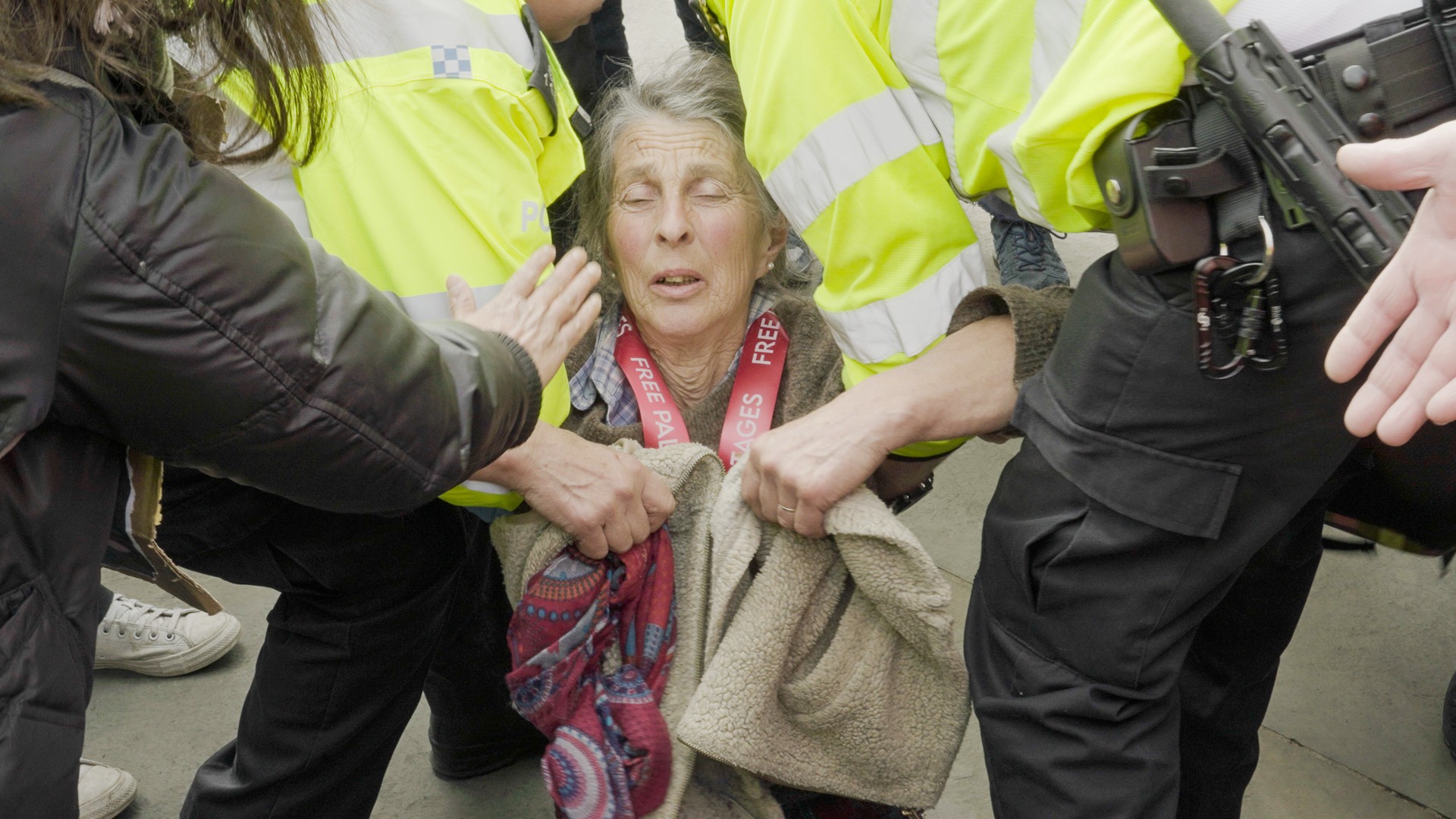
    On Saturday, thousands of demonstrators are set to gather in central London for two competing marches carrying starkly clashing ideological messages, as tensions over the Israel-Gaza conflict continue to roil British public life. The first, organized to mark the 76th anniversary of the Nakba — the 1948 displacement and ethnic cleansing of Palestinians that accompanied the founding of Israel — also demands an end to more than two and a half years of Israeli military action in Gaza that organizers describe as genocide. Leading the march will be 80-year-old Haim Bresheeth-Zabner, a British-Israeli author, filmmaker, and child of Holocaust survivors who has spent decades as a prominent pro-Palestine activist.

    Near the pro-Palestine rally, far-right figure Tommy Robinson will lead his “Unite the Kingdom” march, a gathering defined by its pro-Israel and anti-Muslim rhetoric. Public safety observers have warned of a heightened risk of violent clashes between the two opposing groups, adding a layer of urgency to policing plans across the capital.

    For Bresheeth, participation in this weekend’s march is a continuation of years of consistent advocacy. He is among a large, visible contingent of Jewish activists who have joined every major pro-Palestine protest in London since the escalation of conflict in Gaza, a presence that has been openly embraced by other demonstrators. “I have never felt more welcome,” Bresheeth told Middle East Eye in an interview. “Ask any Jews who took part in the marches, we are never more accepted, or more part of British public life than at those demonstrations, at which there is no violence whatsoever.”

    A former Israeli soldier who served in three wars before renouncing Zionism in the 1970s, Bresheeth brings unique personal context to his criticism of the Israeli state and Western policy toward the conflict. Born and raised in Israel, he is co-founder of the Jewish Network for Palestine, author of multiple acclaimed books including *Introduction to the Holocaust* (1997) and *An Army Like No Other: How the Israel Defence Forces Made a Nation* (2020), and director of the 1989 BBC documentary *State of Danger* covering the first Palestinian Intifada. Seventeen members of his mother’s family were murdered in the Holocaust, and his father survived imprisonment in Auschwitz, giving Bresheeth direct, intimate knowledge of the impact of systemic antisemitism.

    Against a backdrop of rising hate crime across the UK — where both antisemitic and Islamophobic attacks have spiked since the Gaza conflict escalated — Bresheeth has emerged as a vocal critic of the way discourse around antisemitism has been reshaped in Western politics. He argues that the International Holocaust Remembrance Alliance (IHRA) definition of antisemitism, adopted by the UK and most Western governments, incorrectly conflates legitimate criticism of the Israeli state with hatred of Jewish people, marking a dangerous break from earlier, clearer definitions.

    Bresheeth contextualizes modern antisemitism by contrasting it with the systemic, state-sanctioned persecution his family experienced in 1930s and 1940s Europe. “Antisemitism meant Jews were banned from any part of society, including sitting on a park bench or in a first-class train carriage,” he explained. “If you killed a Jew, you didn’t actually do anything wrong, because their life was not protected by the law. In a sense, it was allowed to kill them. This is the situation now of course in Israel towards Palestinians.”

    He accuses British political and media elites of weaponizing historic Jewish trauma for political gain, pointing to the response to the April stabbing of two Jewish men in London’s predominantly Jewish Golders Green neighborhood. The attack, in which a 45-year-old suspect with a history of psychiatric illness was charged with attempted murder (and also the stabbing of a Somali man earlier that day), was immediately designated a terrorist incident, prompting Prime Minister Keir Starmer to convene an emergency COBRA meeting and a high-profile government summit on antisemitism.

    Two years ago, Bresheeth predicted that unwavering support for Israel from mainstream British Jewish leadership groups and the country’s political elite would fuel a rise in antisemitism across the UK. He notes that most people critical of Israeli actions in Gaza distinguish the Israeli state from Jewish people globally. “The history and tradition of Judaism is obviously the best proof that there is little which is Jewish about Israel, and nothing in Judaism is supporting the genocide,” he said. But he warns that less informed members of the public, swayed by mainstream Jewish organizations’ denial of atrocities in Gaza, are more likely to connect the state’s actions to Jewish communities as a whole, driving anti-Jewish sentiment.

    Bresheeth also highlights a profound double standard in how attacks on different communities are covered and addressed by British institutions. He points to a stabbing at an anti-war protest outside Downing Street in April, where an Iranian protester was injured by pro-monarchist counter-protesters. Unlike the Golders Green attack, the stabbing received almost no mainstream media coverage, and Bresheeth claims police failed to intervene even after protesters warned of threats before the incident. “A member of the public had to stop him [the knifeman] because the police had not moved to stop him,” he said.

    A Metropolitan Police spokesperson told Middle East Eye that the force is aware of the impact of global conflict on London communities and takes all threats of violence seriously. But Bresheeth says the contrast in responses exposes a systemic bias that prioritizes the safety and concerns of pro-Israel groups over those of pro-Palestine and Muslim communities.

    Bresheeth has been a consistent presence at all but one of the major pro-Palestine marches held in London over the past two years, and he forcefully rejects claims that the demonstrations are inherently antisemitic or intentionally disruptive. He refutes Metropolitan Police Commissioner Mark Rowley’s unsubstantiated claim that march organizers intentionally route protests past synagogues to intimidate Jewish Londoners. “We never came near a synagogue, we never attacked anyone, everyone is peaceful… This is a very ugly and disgusting lie in order to stop our marches against the genocide,” he said.

    The veteran activist has himself been targeted in the UK government’s crackdown on pro-Gaza protests. In November 2024, he was arrested near the Israeli embassy after giving a speech quoting an Israeli former general who said Israel could not win its war against regional armed groups. Police detained him on suspicion of supporting a proscribed organization, a charge that was ultimately dropped with no further action. Bresheeth, who lives with cancer and heart disease, alleges police held him outside a police station for three hours without access to his medication, a violation of his medical needs that he says put his life at risk. A Met spokesperson says officers followed protocol, arranged for medication to be retrieved from his home, and provided access to healthcare after he was taken into custody. Bresheeth, who was questioned by counter-terrorism officers for more than two hours, calls the incident an example of the disproportionate targeting of peaceful pro-Palestine activists.

    He points to broader systemic inequities in policing of the conflict: more than 3,200 people have been arrested across the UK for protesting Gaza and supporting the proscribed activist group Palestine Action, while hundreds of young British Jewish men who have traveled to Israel to fight in Gaza face no official action from British authorities, despite widespread documentation of war crimes committed by Israeli forces. “What kind of democracy are we living in?” he asked.

    Bresheeth’s journey to anti-Zionist activism began during his own military service, which began with the 1967 Six-Day War, when he served as a 21-year-old communications officer. “I believed in the claim we were a moral army,” he recalled. He served again in the 1973 Yom Kippur War, an experience that confirmed his disillusionment: “I went there like an idiot and realised the minute I arrived it was a mistake. That war made me an anti-Zionist. I realised that Zionism cannot exist without war, cannot exist without chaos.”

    That disillusionment deepened as he witnessed firsthand the conduct of Israeli forces during his service. He recounts an incident during the 1967 war where he overheard a battalion commander report holding 200 Syrian prisoners of war, only for the brigade command to refuse to respond, implying the commander should kill the captives. While Middle East Eye cannot independently verify the incident, multiple documented cases of Israeli forces executing captured Arab troops during this period are part of the historical record. “It became clear to me that we are not a moral army, we are not keeping to international law,” Bresheeth said. “Each of those wars had numerous examples of immorality, illegality, the level of brutality is legend.”

    That brutality, he says, has reached an unprecedented peak in Gaza over the past two years. He points to a recent New York Times investigation confirming widespread sexual abuse of Palestinian detainees by Israeli forces, including reports that commanders allowed Palestinian prisoners to be raped by military dogs. “When an army is using torture daily, they are not even POWs – they are doctors, university professors – [who] are being raped by dogs under army commanders. I don’t remember in any other genocide reading about this,” he said.

    Bresheeth argues that the denial of the Gaza genocide by the British political and media establishment represents a growing crisis across the Western world, one that signals a broader erosion of commitment to international law and objective truth. “If you want to avoid reality you can hold your hand very close to your eyes and say there is no sun,” he said, referencing the British government’s refusal to label Israeli actions in Gaza as genocide. “We are in an upside down world, it’s an inversion of reality; our elite – the media – is supporting the breaking of international law, refusing to admit this genocide is taking place. This marks a new kind of political crisis in Britain and across the West,” he warns, “What we see are signs of social collapse, losing connection with reality, which is the same as what is happening in Israel – blaming the whole world as antisemitic.”

    As London prepares for Saturday’s demonstrations, Bresheeth remains committed to his advocacy, standing in solidarity with Palestinians alongside thousands of other Britons united in their call for an end to the violence.

  • Russia lures Yemenis with cash incentives to fight against Ukraine

    Russia lures Yemenis with cash incentives to fight against Ukraine

    For nearly a decade, Yemen has been torn apart by a brutal civil war that has gutted its economy, pushed millions to the brink of famine, and left even experienced frontline fighters struggling to feed their families. Now, a new report from independent news outlet Middle East Eye reveals that Russia has turned this widespread economic despair into a recruiting ground, drawing battle-hardened Yemeni fighters to join its invasion of Ukraine with offers of life-changing cash, steady high salaries, and a path to Russian citizenship.

    Multiple on-the-ground sources confirmed to MEE that the recruitment campaign targets young men with prior combat experience across Yemen’s most active battlefields – from the contested cities of Taiz and Marib to the frontlines along the Saudi border – regardless of whether they previously fought for Houthi forces, the internationally recognized Yemeni government, or militias backed by the United Arab Emirates. The financial terms on offer far outstrip any income available to fighters in Yemen, turning service in Russia’s war in Ukraine into a risky but seemingly viable escape from cycles of crippling poverty.

    Ahmed Nabil, a young fighter who previously served with Yemeni Republican Guard forces on the country’s western coast, was one of dozens of recruits who made the journey over the past year. Fawzi, a fellow Republican Guard soldier who fought alongside Nabil, told MEE that even though Nabil already earned roughly $260 a month – on par with the salary of an experienced professional accountant in Yemen – the promise of far higher pay in Russia was too tempting to pass up.

    “In the middle of 2025, around 10 soldiers, including Nabil, decided to travel to Russia. It seems they were in contact with someone who was already in Russia, but we weren’t aware,” Fawzi recalled. “We tried to advise them, telling them that the fighting there is dangerous, but they confirmed they had enough experience to join any front line in the world.”

    Early reports after Russia’s 2022 full-scale invasion of Ukraine claimed that many Yemeni recruits were deceived into traveling to Russia, after being promised well-paying civilian jobs only to be forced into military service. But Fawzi emphasized that every one of his former comrades who made the trip understood full well they would be deployed to the Ukrainian front lines.

    The scope of the financial incentives makes clear why fighters are willing to take the risk: Brokers have promised recruits an upfront payment of $15,000, a monthly salary of $5,000, and eventual Russian citizenship – sums that are virtually unheard of in Yemen’s collapsed economy. Even Fawzi, who knew the risks, admitted he considered the offer at first.

    “When I was told about these offers, I myself thought about joining the battles in [Ukraine],” he said. “But when I saw that almost none of my colleagues had returned, I dismissed it, realising that those financial rewards would be paid with my blood.”

    Despite growing reports of Yemeni recruits being killed or going missing in Ukraine, Fawzi added that new groups of fighters continue to depart Yemen every day, confident that their years of combat experience in their home country’s civil war will help them survive the conflict.

    Over the past year, a number of Yemeni fighters deployed to Ukraine have taken to social media to share firsthand accounts of what awaits new recruits, and many have issued urgent warnings to others considering making the journey. Multiple posts have confirmed that recruits who arrive at the front lines are barred from leaving before they complete their mandatory one-year contracts with the Russian military. Many fighters have described conditions on the front that are far harsher and more deadly than anything they encountered during years of fighting in Yemen.

    Dozens of the social media accounts MEE monitored for this report have stopped posting updates for months, leading to widespread speculation that the users have been killed in combat. A small number of surviving fighters have released public video appeals begging the Yemeni government to intervene and help them return home. To date, the Yemeni government has not taken any public action to assist these recruits. There are also no official counts of how many Yemenis are currently fighting in Ukraine, as nearly all travel through unregulated private brokers rather than formal government or military channels.

    The human cost of this recruitment network is already devastating for Yemeni families. Umm Tawheed, a mother whose son was killed in Ukraine after traveling to Russia without her knowledge, told MEE she is still grieving not just his death, but the fact that she cannot even bring his body home for burial.

    “My son was fighting on the border with Saudi Arabia, but five months ago I was shocked to discover he had travelled to fight in [Ukraine],” she said. “I was not happy to hear that, and I asked his wife to tell him to return, but I was told it was impossible.”

    After weeks of begging relatives and neighbors for help to arrange her son’s return, Umm Tawheed received the devastating news she had feared.

    “I heard Tawheed’s wife crying and shouting. At that point I knew Tawheed had been killed,” she recalled. “I don’t remember what happened next, but it seems I fainted for a while before I woke up to find the whole family surrounding me, everyone except Tawheed, who was gone forever.”

    Tawheed, a father of three, had originally joined Yemeni forces on the Saudi border solely to earn enough money to support his wife, children, and mother. Now, his mother’s only remaining wish – to see his body one last time before burying him – remains unfulfilled.

    “My last hope was to see his dead body, but that was also impossible,” she said. Unable to continue speaking through her grief, she offered a warning to other Yemeni families: “Do not allow your husbands and sons to join battles, whether in Yemen or in [Ukraine], because the pain of this loss is unforgettable.”

    While many families fiercely oppose their loved ones joining the war in Ukraine, for the fighters themselves, the decision to travel to Russia is almost always a desperate response to Yemen’s ongoing economic collapse. Mahmoud Al-Sabri, 37, a veteran of multiple Yemeni front lines, told his family in late 2025 that he was taking a civilian restaurant job in Djibouti, a small Horn of Africa nation neighboring Yemen. While he did travel to Djibouti, his family later discovered he had continued onward to Russia.

    “No one is happy to see their son fight in [Ukraine],” Mustafa Al-Sabri, Mahmoud’s father, told MEE. “That is not our war, and I’m not sure what made my son join it.”

    Mustafa said he believes his son may have been manipulated by recruiters, rather than acting solely out of a desire for higher pay. “He told me he was travelling to work in Djibouti, and then we were shocked to discover he was in Russia. I can’t talk to him now, but I hope he returns soon so we can know the truth,” he said. The family last heard from Mahmoud in early April, when he sent a message saying he was stationed in a forest alongside other foreign recruits. “We don’t know if he is alive, dead, or detained, but I hope we hear his voice soon,” Mustafa added.

    Mohammed Ali, a veteran Yemeni journalist and security observer, told MEE that while most current recruits know they will be deployed to fight in Ukraine, earlier waves of recruitment did rely on widespread deception. “The brokers tell the victims they will be doing civilian work, such as working in restaurants or on farms. But when they arrive in Russia, they find themselves in military camps and have no choice but to sign one-year military contracts,” Ali explained. He noted that this deceptive tactic was most common for recruitment groups sent to Russia in 2023 and early 2024, while most recruits who have traveled more recently are fully aware they will be sent to the front lines.

    At its core, Ali emphasized, the trend of Yemeni fighters joining Russia’s war is driven by the country’s catastrophic economic conditions. “The poor economic situation and the irregular payment of salaries within the Yemeni army and other military groups have played a major role in forcing Yemeni fighters to travel to Russia in search of a better income,” he said.

    This is not the first time Russian recruiters have targeted vulnerable young men in the Middle East. Last year, MEE reported that young Jordanian men were promised safe, high-paying civilian jobs in Russia, only to be coerced into fighting in Ukraine through threats, deception, and fraudulent contracts.

    Russian officials have previously denied forcing foreigners to fight in Ukraine. In March, Russian Foreign Minister Sergey Lavrov acknowledged that foreigners serve in Russian forces in Ukraine, but claimed the Russian government does not recruit people to fight against their will. “Volunteers get there in full compliance with Russian legislation,” he said.

    MEE reached out to the foreign ministries of Yemen, Russia, and Ukraine to request comment for this report, but did not receive a response before publication.

  • India and UAE sign defence and energy deals during Modi’s state visit

    India and UAE sign defence and energy deals during Modi’s state visit

    During Indian Prime Minister Narendra Modi’s official state visit to the United Arab Emirates on Friday, New Delhi and Abu Dhabi signed a suite of new bilateral agreements focused on defence cooperation and petroleum security, India’s Ministry of External Affairs (MEA) confirmed via a post on the social platform X. The new agreements are framed as an expansion of the two nations’ longstanding Comprehensive Strategic Partnership, according to official comments shared by MEA spokesperson Randhir Jaiswal.

    The visit yielded seven key bilateral outcomes, covering energy, defence and economic development. These include a new collaborative partnership between India’s state-run Strategic Petroleum Reserves Limited (ISPRL) and the Abu Dhabi National Oil Company (ADNOC), the formal establishment of a bilateral Strategic Defence Partnership, and a $5 billion development investment pledge from the UAE to India.

    Indian media reports document that in direct talks with UAE President Mohamed bin Zayed Al Nahyan, Modi issued a forceful condemnation of recent cross-border strikes targeting the UAE, which were carried out by Iran in retaliation for ongoing US-Israeli military operations against Iran. “India stands shoulder-to-shoulder with the UAE in every situation, and it will continue to do so,” Modi stated during the meeting.

    The high-stakes diplomatic meeting unfolds against a backdrop of severe energy instability for India, which is currently grappling with supply disruptions sparked by the escalated US-Israeli conflict with Iran. The South Asian nation relies on foreign imports to meet roughly 90% of its total crude oil demand, and recent disruptions to shipping traffic through the Strait of Hormuz—a critical global energy chokepoint that handles a large share of India’s oil imports—have cut the country’s commercial oil inventories by 15%, according to analysis from the Times of India.

    Last week, Modi publicly called for nationwide austerity measures to curb energy consumption, urging Indian citizens to adopt work-from-home arrangements, cut back on unnecessary international travel, and postpone gold purchases to reduce foreign energy outlay. But the prime minister’s appeal has drawn sharp pushback from Indian opposition parties and independent critics, who accuse Modi of prioritizing energy-intensive campaign events—including large-scale election rallies and roadshows for his ruling Bharatiya Janata Party (BJP)—while ignoring the country’s deepening economic and energy crisis.

    Since March 2025, widespread public protests have erupted across India over soaring liquified petroleum gas (LPG) prices and persistent supply shortages. Demonstrators highlight that the energy crunch has already triggered widespread job losses, small business closures, and sharp spikes in the price of essential daily goods, putting severe strain on low- and middle-income households.

    Modi’s UAE visit came just one day after New Delhi hosted a BRICS diplomatic gathering that included Iranian Foreign Minister Abbas Araghchi and other senior global envoys. Iranian state media reports that during the BRICS meeting, Araghchi publicly accused the UAE of direct involvement in US-Israeli military strikes against Iran, noting that Abu Dhabi failed to issue even a formal condemnation of the attacks when they first began. Araghchi’s comments followed emerging independent reports of undisclosed Emirati military strikes on Iranian targets, which have fueled claims of growing military coordination between the UAE, the United States and Israel.

    Friday’s bilateral agreements between India and the UAE reinforce a web of existing security and economic ties that also connect New Delhi to Tel Aviv. Since 2023, India has been a core member of the I2U2 Group, a quadrilateral strategic partnership that also includes Israel, the UAE and the United States. Throughout Israel’s military campaign in Gaza, which has been widely labeled as genocidal by international observers, India has steadily deepened its military and economic cooperation with Israel.

    This report was originally produced by Middle East Eye, an independent media outlet specializing in original, in-depth coverage of the Middle East, North Africa and surrounding regions.

  • Israeli-born Dutch politician calls for violence worse than Gaza against Palestinians

    Israeli-born Dutch politician calls for violence worse than Gaza against Palestinians

    A controversial Israeli-born right-wing Dutch politician has ignited a national firestorm after calling for European borders to be shut to Palestinian refugees through the use of lethal, excessive force, drawing formal accusations of incitement to violence and widespread condemnation across the Dutch political spectrum.

    Gidi Markuszower, who split from Geert Wilders’ far-right Party for Freedom (PVV) earlier this year to launch his own nationalist party, The Dutch Alliance, made the inflammatory remarks during a recorded video interview with independent Dutch media platform Left Laser.

    During the discussion about the entry of Palestinian asylum seekers to the Netherlands, Markuszower repeatedly insisted that force must be used to block their arrival. “We need to stop them with force, even more force than they are fleeing from,” he said. “The Netherlands and all of Europe must turn them away at the border with force.” When pressed by the interviewer to clarify whether this meant using greater violence than the Israeli military currently employs in Gaza, Markuszower affirmed, “If necessary, with force.”

    When asked directly if that would mean border security forces shooting unarmed Palestinians attempting to cross into the country, Markuszower did not back down. “With force, yes,” he replied. Pressed further on whether Royal Netherlands Marechaussee border guards should use service rifles to shoot people seeking entry, the lawmaker doubled down: “They do not have a valid visa, so they have no right to enter. If they persist in trying to cross, you have to defend yourself. Use maximum force.”

    Markuszower went even further in his anti-Palestinian rhetoric, claiming that roughly 90% of Palestinians vote for Hamas and are inherently committed to a “culture of destruction.” He added that Palestinians should remain in “Arabia” or “wither away” in the Gaza Strip, echoing far-right tropes that have drawn widespread rebuke from human rights groups.

    The Rights Forum, a leading Dutch human rights organization, has announced it will file a formal criminal complaint against Markuszower for incitement to violence against asylum seekers. The group labeled the lawmaker’s comments “morally reprehensible,” arguing that in a democratic constitutional state, such dangerous rhetoric demands review by the Public Prosecution Service and adjudication by the courts.

    The controversy comes amid ongoing debate over asylum policy in the Netherlands. Data shows that just under 6,000 people applied for asylum in the country during the first quarter of 2026, with roughly 1,100 applicants listed as holding “unknown nationality” – a classification that includes Palestinian refugees, as the Netherlands does not formally recognize Palestinian statehood.

    This is not the first time Markuszower has been mired in controversy over extremist rhetoric and security concerns. Born in Tel Aviv, he previously served as a spokesperson for the Dutch branch of Israel’s ruling Likud Party. In 2024, Wilders’ far-right incoming government planned to appoint Markuszower as deputy prime minister and migration minister, but withdrew the nomination following undisclosed security concerns flagged by Dutch intelligence services. This marks a decades-long pattern: in 2010, Markuszower dropped out of a parliamentary race after intelligence linked him to an unnamed foreign security service, widely reported by local media to be Israel’s Mossad. Despite that scrutiny, he won election to the Dutch Senate in 2015 and to the House of Representatives two years later. He has also been detained by police on weapons possession charges, though he was never ultimately prosecuted. In 2023, he drew outrage for claiming “the African jungle” was coming to the Netherlands “en masse.”

    This latest set of remarks has drawn sharp condemnation from across mainstream Dutch political parties this week. Jesse Klaver, leader of the center-left GroenLinks-PvdA alliance, called the comments “deeply abhorrent language, an absolute low point” for Dutch politics. Jan Paternotte, a senior lawmaker with the social liberal Democrats 66 party, echoed the criticism, saying: “What complete idiocy. Stop this dangerous contest of outbidding the radical right.”

    The report was originally published by Middle East Eye, an independent media outlet covering the Middle East and North Africa region.

  • Drake calls out DJ Khaled’s silence on Palestine in new track

    Drake calls out DJ Khaled’s silence on Palestine in new track

    In a surprising drop of three new studio albums released last Friday, global hip-hop superstar Drake has reignited public debate over celebrity silence on the crisis in Gaza, with a pointed lyrical diss targeting Palestinian-American hitmaker DJ Khaled for his failure to speak up in support of the Palestinian people.

    The scathing verse appears on *Make Them Pay*, a track pulled from Drake’s surprise-released album *Iceman*, one of three full-length projects the Canadian rapper dropped unannounced to shock fans worldwide. The lines in question directly name DJ Khaled – whose full legal name is Khaled Mohammed Khaled – and call out his public silence amid Israel’s ongoing military campaign in Gaza. Drake raps: “And, Khaled, you know what I mean / The beef was fully live, you went halal and got on your deen / And your people are still waitin’ for a free Palestine / But apparently everything isn’t black and white and red and green.”

    This is not the first time DJ Khaled has faced public backlash for his refusal to address the Gaza crisis. Since 2023, the renowned producer and artist, who regularly highlights his Palestinian heritage in public interviews and musical content, has been widely criticized by fans, activist groups and high-profile public figures for staying silent on Israel’s military operations in the besieged enclave. Last year, American comedian Dave Chappelle famously called out DJ Khaled’s inaction during a stand-up set, saying, “DJ Khaled, let me tell you something. For a Palestinian, this man is awfully quiet right now, and as a Palestinian, how could you be that quiet right now?” To date, DJ Khaled has not issued any public response to the repeated criticism, nor has he made any public statement addressing the crisis in Gaza. Middle East Eye attempted to reach DJ Khaled’s team for comment ahead of this report, but received no response by the time of publication.

    Supporters of Drake’s stance have quickly pointed to the Canadian rapper’s long-standing early support for Palestinian calls for peace. Political commentator Hasanabi noted on social media platform X that even amid broader criticism of Drake, he was among the first high-profile major recording artists to sign the *Artists4Ceasefire* open letter calling for an immediate end to hostilities in Gaza, just 23 days after the October 7 attacks in 2023.

    Drake’s latest batch of surprise releases is scattered with repeated references to Middle Eastern culture and Islamic practice, beyond the diss verse targeting DJ Khaled. On the track *Whisper My Name*, he raps “My YGs are fastin’ and prayin’ / You lucky it’s Ramadan”, while *Make Them Cry* includes a shoutout to “the Bulgari in Turkey”. One of the three albums dropped Friday is even titled *Habibti*, an Arabic term that translates to “my love”.

    Online discourse around the verse has remained divided: while many have praised Drake for holding a prominent Palestinian celebrity accountable for public inaction, others have pushed back, arguing that Drake himself has not maintained consistent, outspoken advocacy for Palestine despite his criticism of DJ Khaled.