标签: Asia

亚洲

  • Freight train and bus crash kills at least eight in Bangkok

    Freight train and bus crash kills at least eight in Bangkok

    A devastating collision between a freight train and a public passenger bus has left at least eight people dead and dozens more injured in the heart of Thailand’s capital Bangkok, according to local emergency and law enforcement officials. The Saturday afternoon crash, which occurred near the busy Makkasan train station in the city’s central district, sparked an intense fire that quickly consumed the entire public bus, authorities confirmed.

    The impact of the crash also damaged and pushed several other nearby vehicles that were waiting near the railway crossing, amplifying the scope of the emergency response. Within minutes of the incident being reported, multiple teams of firefighters, police officers and rescue personnel were dispatched to the scene to contain the danger and extract trapped victims from the twisted wreckage of the bus and train.

    By late Saturday, fire crews had successfully brought the blaze under full control, but emergency work remains ongoing. Recovery teams are now cooling down charred wreckage, venting dangerous accumulated gas from the site and conducting systematic searches to account for all people involved in the collision.

    Initial findings from Thai transport officials point to a traffic-related trigger for the tragedy. Deputy Transport Minister Siripong Angkasakulkiat explained that preliminary reports indicate heavy city traffic forced the bus to stop directly on the railway tracks, which in turn prevented the automatic crossing barriers from lowering into position to block oncoming trains. The freight train, which was pulling stacked shipping containers, did not have enough distance to brake and avoid the collision, Siripong added.

    Authorities have stressed that the full, official cause of the crash is still the subject of an active investigation, with more details expected to be released once all evidence has been collected and analyzed.

  • Trump’s description of Taiwan as a ‘good negotiating chip’ with China raises anxieties

    Trump’s description of Taiwan as a ‘good negotiating chip’ with China raises anxieties

    In the immediate aftermath of U.S. President Donald Trump’s high-stakes 2025 diplomatic visit to Beijing, newly public comments from the commander-in-chief have sent waves of anxiety through Taiwan, the self-governing democracy that China claims as an integral part of its territory. Speaking in an interview with Fox News host Bret Baier that aired immediately after Trump’s return from Beijing, the president framed long-planned U.S. arms sales to Taiwan as a bargaining leverage tool for Washington’s negotiations with Beijing.

    When asked whether he would approve a long-delayed $14 billion arms package for the island, Trump made the decision explicitly contingent on Chinese concessions. “I’m holding that in abeyance and it depends on China. It’s a very good negotiating chip for us, frankly. It’s a lot of weapons,” he told Baier.

    This framing of Taiwan as a bargaining tool has triggered deep alarm on the island. For decades, U.S. policy has operated under the Taiwan Relations Act, a domestic law that legally requires Washington to provide Taiwan with the defensive capabilities necessary to protect itself from external aggression, and the U.S. has formally committed to viewing any threat to the island as a matter of grave national concern. Unlike many countries that maintain formal diplomatic ties with Beijing, the U.S. does not officially recognize Taiwan as a sovereign state, but it has remained the island’s closest international partner and largest arms supplier for decades.

    William Yang, Northeast Asia senior analyst at the International Crisis Group, notes that Trump’s choice to tie arms sales progress to unrelated negotiations with Beijing plays directly into what Taipei has long viewed as a worst-case outcome: Taiwan being sidelined from talks while its fate is decided by outside powers. “Taiwan, instead of being at the negotiating table, is on the menu,” Yang explained.

    Trump has not publicly outlined specific concessions he is seeking from Beijing in exchange for blocking the arms deal, but public records show the president has repeatedly pressed China to increase purchases of American manufactured and agricultural goods, and to cooperate more aggressively on international pressure campaigns against Iran’s nuclear program. This is not the first time a Trump administration decision on Taiwan arms sales has sparked friction: in December 2024, Trump and Congress approved a separate $11 billion arms package for Taipei, a move that triggered fierce pushback from Beijing, which responded by staging large-scale live-fire military drills in waters surrounding the island.

    During his summit with Chinese leader Xi Jinping in Beijing, Xi delivered one of his strongest public warnings on the Taiwan issue to date, framing the question of Taiwan as the most sensitive core issue in U.S.-China relations. Xi explicitly warned Trump that mishandling the dispute could lead to “clashes and even conflicts” between the two global powers. The summit, which wrapped up last week, is set to be followed by a high-profile visit from Russian President Vladimir Putin to Beijing next week, a trip that has underscored deepening strategic alignment between Moscow and Beijing.

    In Taipei, government officials moved quickly over the weekend to de-escalate tensions emerging from Trump’s comments, issuing a statement emphasizing that “the consistent U.S. policy and position toward Taiwan remain unchanged.” “The Republic of China is a sovereign, independent, democratic country; this is self-evident, and Beijing’s claims are therefore without merit,” said Presidential Office Spokesperson Karen Kuo. She added that the island remains grateful for bipartisan U.S. support, and stressed that U.S. arms sales to Taiwan are required by longstanding U.S. law.

    The arms sales comments are not the only statement from Trump that has stoked unease across Taiwan. In the same Fox News interview, Trump repeated a longstanding call for Taiwan’s world-leading microchip industry to relocate a majority of its advanced manufacturing operations to the United States. Taiwan currently produces more than 90% of the world’s most cutting-edge semiconductors, components critical to everything from consumer smartphones and artificial intelligence systems to advanced military hardware.

    “I’d like to see everybody making chips over in Taiwan come into America,” Trump told Baier, describing such a mass relocation as “the greatest thing you can do for the United States.” The president also repeated a years-old accusation that Taiwan “stole” its microchip manufacturing industry from the United States decades ago. This pressure is not new: Taiwan’s industry leader TSMC has already committed $165 billion to build a massive advanced semiconductor manufacturing campus in Arizona, and the Taiwanese government pledged a total of $250 billion in U.S.-based semiconductor investment as part of a broad bilateral trade agreement with Washington earlier this year.

    Beyond trade and arms sales, many analysts have also flagged that Trump appears to have adopted key parts of Beijing’s own narrative surrounding Taiwan’s current government. During the summit with Xi, Trump did not alter formal U.S. policy wording on Taiwan, a outcome that many regional observers had feared would see major shifts in Washington’s longstanding position. However, his public comments aligned closely with Beijing’s framing of current Taiwanese President Lai Ching-te, who Beijing has labeled a “diehard Taiwan independence separatist” that threatens to drag the region into war.

    Historically, while top U.S. officials do not hold formal public meetings with Taiwanese leaders, the U.S. has signaled quiet support for the island’s government through gestures such as allowing transit stops for Taiwanese leaders on U.S. soil during international trips. Lai, who is set to mark his second year in office in May, has yet to be permitted a transit stop on the U.S. mainland, a shift many analysts interpret as a rollback of U.S. support for the Taiwanese government under the Trump administration.

    In his Fox News interview, Trump echoed Beijing’s framing, stating that he does not support a change to the cross-strait status quo, but added, “But they have somebody there now that wants to go independent. They’re going independent because they want to get into a war and they figure they have the United States behind them.” He added that he has no interest in fighting a war with China over Taiwan thousands of miles from U.S. soil.

    Wen-Ti Sung, a fellow with the Atlantic Council’s Indo-Pacific Security Program, argues that Trump’s inflammatory comments are consistent with his long history of transactional, deal-focused rhetoric on global security issues. “What matters more is the substance, which Taiwan is holding its collective breath for,” Sung noted. For now, Taipei and regional observers remain on edge waiting to see whether Trump’s comments signal a substantive shift in longstanding U.S. policy toward the island, or just another example of the president’s unconventional negotiating style.

  • A cargo train hits a public bus at a Bangkok rail crossing, killing at least 8

    A cargo train hits a public bus at a Bangkok rail crossing, killing at least 8

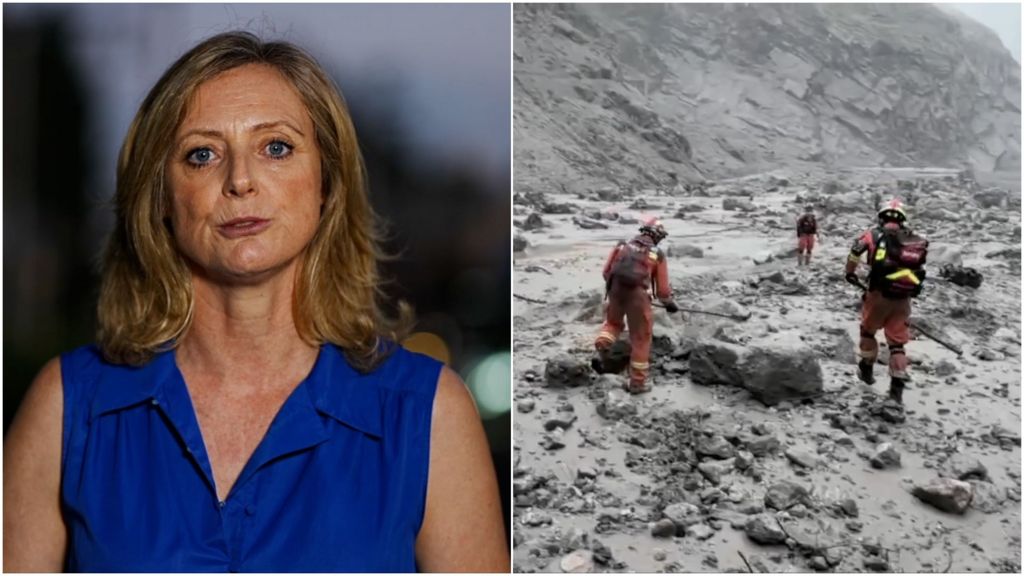
    A devastating collision between a cargo train and a public passenger bus left at least eight people dead and more than 20 others injured in the heart of Thailand’s capital Bangkok on Saturday, according to emergency response officials.

    The accident unfolded in the late afternoon hours in close proximity to an airport rail link station, a high-traffic transportation hub in Bangkok’s central district, local Thai media outlets reported. Erawan Medical Center, the city’s lead emergency services coordination body, confirmed the casualty count in an official update shortly after the crash.

    Graphic user-generated footage of the incident, widely circulated across social media platforms, captures the sequence of the collision. The video shows a queue of vehicles waiting at a level railway crossing when an incoming cargo train slammed into the front end of an orange public bus. The sheer force of the impact dragged multiple adjacent stopped vehicles along the railway tracks before the bus was completely engulfed in large flames. Several motorcyclists waiting at the crossing were thrown from their bikes onto the adjacent roadway by the collision’s force, according to the footage.

    Subsequent videos posted to social media show a team of emergency rescue personnel entering the burned-out husk of the bus after firefighters brought the blaze under control, as first responders worked to clear the scene and account for all casualties.

  • Putin to visit Chinese leader Xi Jinping days after Trump’s trip to Beijing

    Putin to visit Chinese leader Xi Jinping days after Trump’s trip to Beijing

    The Kremlin made a key announcement Saturday confirming that Russian President Vladimir Putin will travel to Beijing next week for a two-day official visit, where he will hold high-level talks with Chinese President Xi Jinping. The meeting comes less than 24 hours after U.S. President Donald Trump concluded his own state visit to China, where he discussed trade and the ongoing conflict between the U.S.-Israel coalition and Iran with Xi.

    Per the Kremlin’s official statement, Putin’s trip, scheduled for May 19 and 20, is timed to mark the 25th anniversary of the 2001 Sino-Russian Treaty of Friendship. During the bilateral talks, the two leaders are set to cover the full scope of the two countries’ bilateral relationship, pressing global and regional security challenges, and deepening cross-border economic cooperation.

    Sino-Russian ties have grown substantially closer over the past several years, a shift accelerated after Russia launched its full-scale invasion of Ukraine in early 2022. Western sanctions imposed over the war left Moscow largely isolated across much of the global stage, forcing the country to become far more economically dependent on Beijing for bilateral trade. When Putin last traveled to China for an official visit in September 2025, Xi greeted him as an “old friend”, while Putin referred to Xi as his “dear friend” in return. Following this upcoming May visit, Putin is also scheduled to return to China this coming November to attend the Asia-Pacific Economic Cooperation (APEC) summit scheduled to be held in Shenzhen.

    Beyond the diplomatic developments between Russia, China and the U.S., the active conflict between Russia and Ukraine continued over the weekend, with new violence and prisoner exchanges unfolding across both sides of the front line. Over the course of Saturday, Ukraine confirmed that it had repatriated the remains of 525 fallen Ukrainian soldiers in a separate exchange with Moscow, following a larger prisoner of war swap held one day earlier. Ukraine’s Coordination Headquarters for the Treatment of Prisoners of War announced that Russia transferred the remains, which Russian officials believe belonged to deceased Ukrainian service members. Forensic experts in Ukraine will now conduct full identification processes to name each fallen soldier and return their remains to their families.

    Friday’s exchange saw the two sides swap 205 captured service members each, a move Ukrainian President Volodymyr Zelenskyy framed as the first phase of a larger planned exchange that will see 1,000 prisoners of war returned to each side. Zelenskyy noted that many of the recently released Ukrainian fighters had been in Russian custody since 2022, after participating in some of the war’s bloodiest battles.

    Simultaneously, Russia carried out a large-scale overnight drone attack targeting Ukraine’s southern Odesa region this past Saturday, local Ukrainian authorities confirmed. Regional governor Oleh Kiper reported that the strike hit a five-story apartment building and a smaller single-story residential structure, leaving two people injured, and also caused significant damage to Odesa’s critical port infrastructure. Ukraine’s Air Force released figures noting that Russia launched a total of 294 drones in the overnight assault, with 269 of those successfully shot down by Ukrainian air defenses.

    For its part, Russia’s Ministry of Defense claimed its own air defenses shot down 138 Ukrainian drones overnight across 14 different Russian regions, including the area surrounding the Russian capital Moscow. Russian officials added that drones were also intercepted and destroyed over Crimea, the Ukrainian peninsula illegally annexed by Russia in 2014, as well as over the Black Sea and Azov Sea.

    The Associated Press continues to provide full ongoing coverage of the Russia-Ukraine war, accessible at https://apnews.com/hub/russia-ukraine.

  • Veteran star Son Heung-min will lead South Korea’s World Cup campaign

    Veteran star Son Heung-min will lead South Korea’s World Cup campaign

    South Korea’s 2026 FIFA World Cup campaign will be fronted by veteran talisman Son Heung-min, head coach Hong Myung-bo confirmed Saturday when he announced his final 26-man squad for the expanded 48-team tournament, co-hosted by the United States, Mexico and Canada.

    For 31-year-old Son, this World Cup marks a historic fourth appearance at football’s biggest global stage. The forward ended his decade-long stay in England’s Premier League with Tottenham Hotspur last summer, making the move to Major League Soccer side Los Angeles FC, a change of scenery that has kept him in peak form to lead the Taeguk Warriors once again.

    South Korea’s qualification for 2026 extends an unprecedented run for the East Asian nation: this will be its 11th consecutive World Cup appearance, an unbroken streak dating all the way back to the 1986 tournament in Mexico. Alongside Son, star names including Paris Saint-Germain playmaker Lee Kang-in and Bayern Munich elite defender Kim Min-jae all earned spots in Hong’s final selection. In a show of confidence in his impact, the coach also included Feyenoord influential midfielder Hwang In-beom, despite the star currently managing a nagging ankle injury.

    Speaking to reporters in Seoul, Hong laid out the team’s clear competitive ambitions for the tournament. “Our primary goal is to reach the round of 32,” Hong said. “We do not know what will happen after that. We could go even further than we could have imagined. Our World Cup goal is not the round of 32; our primary goal is the round of 32.”

    South Korea has a history of punching above its weight at recent World Cups. Four years ago in Qatar, the side advanced to the knockout round after a stunning final group stage win over Portugal, before bowing out to five-time tournament champion Brazil. Hong brings unique World Cup pedigree to the role: he captained the iconic 2002 South Korean side that made a historic semi-final run on home soil, and also led the national team at the 2014 World Cup in Brazil, where the side picked up just one point from three group matches.

    All three of South Korea’s Group A matches will be held in Mexican cities, with the side kicking off its campaign on June 11 against the Czech Republic. Seven days later, it will face host nation Mexico, before wrapping up group play against South Africa on June 24. The team heads into the tournament with inconsistent recent form, however, suffering a 4-0 thrashing by Ivory Coast in March followed by a narrow 1-0 loss to Austria. To sharpen up ahead of the opener, South Korea will travel to Salt Lake City on Monday to begin final preparations, with warm-up friendlies scheduled against Trinidad and Tobago and El Salvador before the tournament gets underway.

    The full 26-man South Korea squad is as follows:
    Goalkeepers: Jo Hyeon-woo, Kim Seung-gyu, Song Bum-keun
    Defenders: Kim Min-jae, Cho Yu-min, Lee Han-beom, Kim Tae-hyeon, Park Jin-seob, Lee Gi-hyuk, Lee Tae-seok, Seol Young-woo, Jens Castrop, Kim Moon-hwan
    Midfielders: Yang Hyun-jun, Paik Seung-ho, Hwang In-beom, Kim Jin-gyu, Bae Jun-ho, Eom Ji-sung, Hwang Hee-chan, Lee Dong-gyeong, Lee Jae-sung, Lee Kang-in
    Forwards: Oh Hyeon-gyu, Son Heung-min, Cho Gue-sung

  • ‘My China Album’ interviewees anticipate new stories

    ‘My China Album’ interviewees anticipate new stories

    Against the backdrop of a landmark US presidential state visit to China, long-time advocates of people-to-people exchange between the two nations are sharing their hopeful outlooks on bilateral ties, their perspectives featured in a newly released collaborative book project between two leading Chinese publishing and media institutions.

    The collection, titled *My China Album*, published by Tsinghua University Press in partnership with China Daily, compiles firsthand stories from individuals who have dedicated years to building mutual understanding and cross-cultural friendship between the United States and China. As former US President Donald Trump concluded his official state visit to Beijing on a Friday, these contributors collectively expressed measured optimism about the future of the world’s most consequential bilateral relationship.

    Charles Foster, vice-chairman of the George H. W. Bush Foundation for US-China Relations, framed the visit as an unequivocally positive milestone for bilateral engagement. Echoing the long-held belief of the late former US president George H.W. Bush that China has been and will remain the United States’ most important bilateral partnership, Foster noted that while public messaging from Washington has often been inconsistent in recent years, direct, high-level dialogue between the two countries’ top leaders delivers far more value than empty rhetorical posturing.

    Foster emphasized that the visit signals a clear willingness from the US side to build a more productive, mature dynamic with China, one that opens space for ongoing honest, solution-focused dialogue on the core issues that matter to both nations. He also pointed to the unusually large, cross-sector delegation accompanying Trump, which included senior administration officials and leaders from major American corporations, as a particularly meaningful detail. After experiencing China firsthand, Foster said, these delegates will return to the US with a far deeper understanding of the sweeping transformation that has reshaped China since Richard Nixon’s groundbreaking 1972 visit. Echoing the old adage that a first-hand impression is worth more than thousands of secondhand accounts, he added that on-the-ground experiences create lasting mutual understanding that lays the groundwork for more durable, stable US-China relations.

    For Benjamin Renton, a research associate at Brown University’s School of Public Health, the Beijing summit could not have come at a more critical moment, and it has left him more hopeful than ever for the future of bilateral ties. “For those of us who care deeply about the US-China relationship, seeing the two leaders sit down together for substantive talks is incredibly encouraging,” Renton said. “It sends a strong positive signal for people-to-people exchange between our two societies.” He added that he hopes the summit will keep bilateral engagement moving in a constructive direction, noting that ordinary Chinese and American people share far more common ground than often is highlighted: both value hard work, prioritize family, and aspire to build better lives for future generations. It was encouraging, he said, that the summit’s leadership-level discussions acknowledged these shared priorities. Renton also called for the summit to translate into concrete expanded support for student exchange and study abroad opportunities, pointing out that current participation rates remain low, and increasing opportunities for young Americans to study and live in China would have a transformative impact on bilateral understanding.

    Kayla Raden, a high school biology educator from New Jersey and a self-described Chinese language enthusiast, said she feels optimistic that the two countries are working together to find collaborative solutions to shared global challenges. “It is absolutely essential that our two nations reach common ground and build frameworks to sustain positive relations long-term,” Raden said. “Our futures are deeply intertwined: our shared economic prosperity depends on cooperation between us.” Raden, who said she feels a personal connection to China every time she studies the Chinese language, argued that expanding cultural and linguistic exchange would go a long way toward defusing unnecessary tensions between the two countries. “If more Americans learned Chinese, many of the misunderstandings that currently feel insurmountable would become far easier to resolve,” she said. “Language and cultural exchange build the strong foundation of mutual understanding that strong bilateral relations need.”

    Jeffrey Greene, chairman of the Sino-American Aviation Heritage Foundation, said he was pleased to see the leadership summit go forward, noting that the meetings between the two heads of state were marked by clear sincerity and mutual interest in dialogue — two qualities that are indispensable for productive relations. As the world’s two largest economies, Greene noted, cooperation between the US and China is non-negotiable for global prosperity and stability, and the Beijing summit marked a welcome, positive step forward in that direction.

    Ren Ming, a professor at multiple California-based art institutions and a pioneering figure in US-China arts exchange, said he followed the summit closely and was encouraged by the clear, genuine willingness on both sides to deepen engagement. Ren echoed the widespread call for expanded people-to-people exchange, noting that these grassroots connections make a lasting contribution to global peace, the advancement of human civilization, and the building of a more harmonious shared future.

    Emmy Award-winning documentary producer Bill Einreinhofer added that people-to-people diplomacy is more critical today than it has ever been. “It is important that the two countries have more to talk about than just their differences,” Einreinhofer said. “We also need to intentionally explore the many things we share in common. That kind of connection often happens away from the spotlight of sensational media coverage — it happens one person at a time, through direct personal engagement.”

    The *My China Album* project, first launched in 2019 by the Chinese embassy and consulates across the United States in collaboration with China Daily, is now in its seventh year of operation. The initiative centers on documenting the personal journeys of Americans who have lived, worked, and built connections in China, with a core focus on highlighting the power of grassroots ties to bridge cultural and political divides.

  • China-US summit boosts focus on California-China trade ties

    China-US summit boosts focus on California-China trade ties

    In the lead-up to the high-profile 2026 China-US summit, business leaders, trade policymakers, and industry stakeholders from China and California gathered in Los Angeles for the 2026 China-Californian Business Forum on May 12, where they united in calling for expanded bilateral economic collaboration amid growing global economic uncertainty. The forum, held one day before the US president’s state visit to China, centered on unlocking new opportunities through free trade zones, targeted industrial partnerships, and streamlined investment facilitation — all measures participants framed as critical to stabilizing global supply chains and strengthening two-way trade ties between the world’s two largest economies.

    During a panel session focused on trade and investment opportunities in free trade ports and zones, Gene Seroka, executive director of the Port of Los Angeles, underscored the urgent need for sustained commercial engagement between China and the United States, even amid ongoing global headwinds ranging from geopolitical tensions to shifting tariff policies. “These are the two largest economies in the world, making sure that we continue to trade and build up business to new heights is my hope for this week’s dialog,” Seroka told reporters on site. “We have a lot of work to do around policy and tariffs.”

    As the busiest container port complex in the United States, the Port of Los Angeles and its neighbor the Port of Long Beach have long served as the primary gateway for US trade with Asia. Seroka highlighted that the ports’ existing Foreign Trade Zone (FTZ) infrastructure and bonded warehouse facilities already help thousands of importers and exporters mitigate tariff-related cost pressures. Currently, the Port of Los Angeles manages roughly 5,400 acres of FTZ-designated land, with dozens of operational units and subzones strategically located near major transportation and industrial hubs surrounding Los Angeles International Airport. “In a very small way, the ports can assist in bringing down some of those tariff costs for importers,” Seroka explained. He added that demand for these specialized facilities has surged in recent years as companies reconfigure their supply chains to adapt to changing trade conditions, noting that “right now, these facilities are very highly subscribed.”

    Seroka also tied the need for stable bilateral relations to broader global challenges, including ongoing geopolitical conflict in the Middle East and soaring global fuel prices. “While there are many geopolitical issues happening around the world today, including the war in Iran, it is our goal that the two presidents, the two leaders of the world’s two largest economies, can make some progress,” he said.

    For California’s business community, the upcoming high-level summit between Beijing and Washington sends a much-needed positive signal to industries across the state that rely heavily on cross-border trade and investment. Stephen Cheung, president and CEO of the Los Angeles County Economic Development Corporation and World Trade Center LA, emphasized that Los Angeles — one of America’s most vital international trade hubs — reaps substantial economic benefits from deep cooperation with China. “We’re so dependent on international trade and foreign direct investment, we see this opportunity between the US and Chinese government getting together as a positive step,” Cheung said.

    Cheung shared key data illustrating the deep economic ties between the region and China: Chinese-invested enterprises currently operate 756 business locations across California, supporting more than 23,500 local jobs and generating an estimated $4 billion to $5 billion in annual worker wages. These investments, he noted, are concentrated in sectors that form the backbone of California’s long-term economic growth, including advanced manufacturing, clean energy technology, logistics, trade, and technological innovation.

    Chinese trade officials and investment representatives at the forum highlighted a wealth of untapped collaboration opportunities created by China’s ongoing market opening reforms, the expansion of national pilot free trade zones, and the development of the Hainan Free Trade Port. Zhao Feng, vice-governor of China’s Hainan province, outlined deepening industrial collaboration between Hainan and US partners across high-growth sectors including the digital economy, healthcare, information technology, and high-end consumer goods. Over recent years, Zhao said, multiple leading US enterprises have set up local operations in Hainan, driving growth in digital services, data processing, and cross-sector technological innovation. In the healthcare space, cross-border medical projects have strengthened research and clinical cooperation between Chinese and American institutions, while leading US consumer brands have expanded access to the vast Chinese consumer market through the annual China International Consumer Products Expo. “These projects reflect the growing industrial synergy between Hainan and the United States and underscore the broad potential for mutually beneficial cooperation between the two sides,” Zhao said.

    Li Zhiping, deputy director-general of Hainan’s Department of Commerce, added that the Hainan Free Trade Port is intentionally positioned as a high-standard platform for international openness and cooperation at a time of global economic uncertainty. “Hainan is using institutional opening-up to offset uncertainties in the international landscape,” Li said, noting that the province has implemented consistent policy reforms to protect the legal rights and interests of American and all foreign investors operating within its borders.

    Representatives from Shanghai, another of China’s core economic hubs, also outlined ongoing reforms to improve market access and the business environment for overseas investors, pushing back against common misperceptions about operating in China. Wu Yiyuan, chief representative of the San Francisco Office of Shanghai Foreign Investment Development Board, noted that many California business leaders still hold outdated views of China’s market access rules. “One common misconception is that market access to China is still highly restricted,” Wu said. She explained that China’s modern negative list system allows foreign investment in all sectors except those explicitly restricted, and the scope of restricted sectors has shrunk consistently in recent years. Wu added that Shanghai’s latest round of opening-up measures is focused specifically on sectors that align with California’s core industrial strengths: healthcare, finance, artificial intelligence, telecommunications, and advanced manufacturing. She also pointed to recent upgrades to cross-border data governance frameworks and streamlined administrative processes that have made doing business in Shanghai far more efficient for foreign firms. “Once companies gain a clearer picture of the market and better local support, many of the initial concerns become much more manageable,” Wu said.

    Small and medium-sized enterprise (SME) representatives also emphasized the critical role that trade facilitation programs like FTZs play in supporting cross-border trade for smaller businesses. David Harlow, president and CEO of ITC Diligence International, explained that FTZ programs give California-based manufacturers significant operational flexibility when importing components from China for final production, while also supporting export-oriented business models. “The FTZ program offers a tremendous amount of flexibility,” Harlow said, adding that these structures allow businesses to minimize disruptive delays to manufacturing, assembly, and global distribution processes. Harlow shared the example of a California client that imports the vast majority of its production components from China, completes final manufacturing in Southern California, and exports finished goods to markets around the world. “Ninety-five percent of our consumers do not exist in the US, but exist around the world,” Harlow noted. “For US businesses to be able to compete globally, utilizing programs like the FTZ become essential.”

  • ‘Farcical proceeding’: Mahmoud Khalil’s lawyers want deportation case terminated

    ‘Farcical proceeding’: Mahmoud Khalil’s lawyers want deportation case terminated

    Legal representatives for Mahmoud Khalil, a prominent Palestinian rights activist and former Columbia University student, announced Friday they have submitted an emergency motion to the U.S. Board of Immigration Appeals (BIA) requesting the full reopening and immediate termination of his deportation case, building on newly uncovered evidence of widespread procedural irregularities that they argue denied their client due process under U.S. law.

    The motion was formally lodged with the BIA on Thursday, coming roughly one month after the agency issued a final removal order that brought Khalil one step closer to forced expulsion from the United States, where he resides with his U.S. citizen wife and child.

    A core pillar of the legal team’s argument centers on a longstanding structural flaw in the U.S. immigration adjudication system: unlike independent federal judiciary bodies, the BIA and all U.S. immigration courts fall under the oversight of the Department of Justice (DOJ), an agency within the executive branch of government — putting them under the direct control of the sitting presidential administration, in this case the second Trump administration. While immigration courts are nominally required to rule in line with federal law rather than policy priorities, recent reporting has exposed how this structural arrangement can enable political interference in individual cases.

    Last week, The New York Times published an investigation revealing that the BIA’s final removal order against Khalil was marked by multiple extraordinary irregularities that diverge sharply from standard immigration case practice. Internal government documents reviewed by the outlet showed Khalil’s case file was flagged for high-priority processing despite the fact that post-detention immigration appeals routinely take years to resolve. By contrast, the BIA issued its ruling in just nine days. Additionally, three separate BIA judges recused themselves from reviewing the case, a highly unusual move that the outlet noted may stem from prior conflicts related to earlier involvement in Khalil’s proceedings.

    The new motion filed by Khalil’s legal team includes sworn testimony from a former U.S. immigration judge who corroborates the assessment that the procedural shortcuts and multiple recusals are inconsistent with standard adjudication.

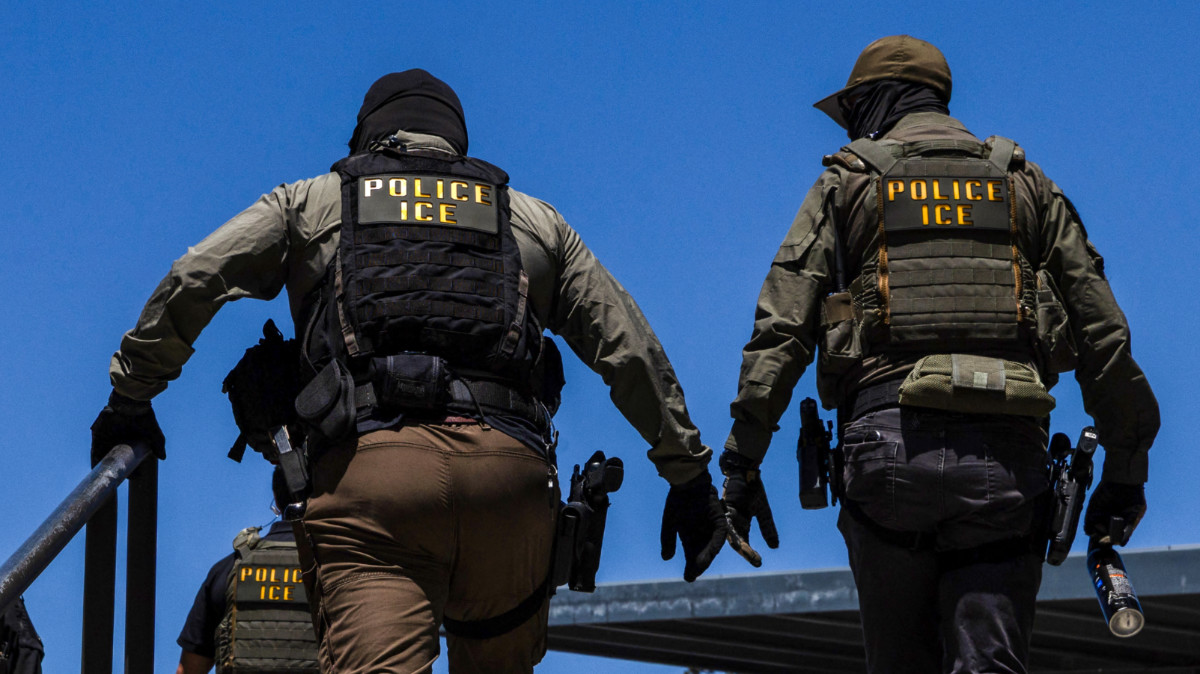
    Khalil was first taken into custody by U.S. Immigration and Customs Enforcement (ICE) agents during an arrest outside his New York City home in March 2025. Three months after his arrest, he was released from detention, but his legal battle has remained ongoing. At the time of his arrest, U.S. Secretary of State Marco Rubio revoked Khalil’s permanent resident green card, claiming the activist posed a threat to U.S. foreign policy interests. The Trump administration later added a second claim, alleging Khalil falsified his employment history on his green card application — an accusation Khalil has repeatedly and vehemently denied.

    Khalil’s legal team has long maintained that the push to deport him is outright retaliation for his protected pro-Palestinian speech, a charge the administration has not directly addressed. In a public statement released Friday, Johnny Sinodis, an attorney with Van Der Hout LLP representing Khalil, said the recent revelations of DOJ misconduct confirm what the legal team has argued since Khalil’s arrest: the administration manipulated the entire process to reach a preordained political outcome, weaponizing a broken immigration system riddled with unfair procedural abnormalities.

    Sinodis called on the BIA to throw out the entire government case against Khalil, and demanded increased transparency around the handling of the case. “Transparency also dictates that the government produce any records regarding the handling and adjudication of Mahmoud’s case,” he said. “The apparent interference with the Immigration Judge’s decision making is not only unconstitutional but also violates the government’s own rules and procedures.”

    For the time being, Khalil remains protected from arrest and deportation: he has a separate active federal lawsuit alleging constitutional rights violations related to his arrest and removal proceedings, and a court order bars ICE from deporting him until that separate civil case reaches a conclusion.

  • UAE building pipeline to double oil exports that can bypass Hormuz

    UAE building pipeline to double oil exports that can bypass Hormuz

    Against the backdrop of escalating regional tensions following the US-Israeli military campaign against Iran, the United Arab Emirates has unveiled plans to speed up expansion of its oil pipeline network, a strategic move that will double the volume of crude the nation can export without passing through the contested Strait of Hormuz. The project is on track to be fully operational by 2027, state-owned Abu Dhabi National Oil Company (Adnoc) confirmed in an official statement released Friday.

    Abu Dhabi Crown Prince Sheikh Khaled bin Mohamed bin Zayed Al Nahyan announced the acceleration of the construction during a recent high-level committee meeting, with Adnoc noting that preliminary work on the new pipeline segment had already broken ground. The pipeline will connect the UAE’s inland oil infrastructure to the port of Fujairah, which sits on the UAE’s eastern coast along the Gulf of Oman, eliminating the need for tankers to navigate the Strait of Hormuz, the world’s most critical chokepoint for global oil trade.

    Currently, the UAE’s existing Habshan-Fujairah pipeline boasts a daily throughput capacity of 1.8 million barrels. With the expansion, the country’s total bypass capacity will double, allowing it to restore nearly all of its pre-conflict export volume without relying on Hormuz. Before the outbreak of the current war, the UAE was moving roughly 3.4 million barrels of crude per day to global markets. After Iran took control of the strait and implemented a new regional passage authorization system, UAE exports dropped by approximately 60 percent, according to regional energy data.

    Once the expanded network is complete, the UAE will be able to ship almost all of its pre-war output via the alternative pipeline route. Longer-term, the Gulf nation has set an even more ambitious target: reaching a total export capacity of nearly 5 million barrels per day by 2027, aligning with massive infrastructure investments it has made to ramp up domestic production capacity over recent years.

    The strategic pivot away from Hormuz comes amid a series of disruptive regional developments tied to the ongoing conflict. In the opening weeks of the war, Iran blocked oil exports from other Gulf states while continuing its own shipments, before a U.S. naval blockade imposed last month effectively halted all Iranian crude exports. The move also follows a landmark decision by the UAE just this month to withdraw from the Saudi Arabia-led OPEC cartel, a split rooted in years of disagreements over production policy. For years, Riyadh pushed for aggressive production cuts to prop up global oil prices, while the UAE pushed for looser output limits to capitalize on its expanded production capacity. The UAE’s exit from OPEC gives it full policy flexibility to pursue its 2027 capacity goals, Abu Dhabi officials have said.

    Despite the strategic gains of the project, security risks remain a persistent challenge. The UAE’s close geographic proximity to Iran leaves its critical energy infrastructure vulnerable to attack. Earlier in the conflict, an Iranian drone strike targeted a major gas processing facility located near Habshan, the starting point of the Fujairah pipeline. The port of Fujairah itself has also been hit in previous attacks, forcing a temporary suspension of all cargo operations at the facility.

    The UAE is not alone in moving to diversify its oil export routes away from the Strait of Hormuz. Regional rival and neighbor Saudi Arabia already operates the East-West Pipeline, which enables the kingdom to export up to 5 million barrels of crude per day through the Red Sea port of Yanbu, bypassing Hormuz entirely.

    This independent coverage of Middle East energy and security developments is provided by Middle East Eye, a publication specializing in on-the-ground reporting and analysis of the Middle East and North Africa region.

  • Crackdown on cross-border drug crimes intensified

    Crackdown on cross-border drug crimes intensified

    China has significantly strengthened its law enforcement campaign against cross-border illegal trafficking of drug-manufacturing substances and other sensitive chemicals, China’s Ministry of Public Security announced in an official statement released Friday. Since the start of 2025, authorities have resolved 29 criminal cases linked to this illegal trade and taken 157 suspects into custody.

    Along with the arrests and case closures, law enforcement seizures have been substantial: authorities have confiscated 720 kilograms of illegal drugs, 1.3 metric tons of new psychoactive substances, 0.9 kilogram of stimulants, and 27.7 tons of uncontrolled precursor chemicals — materials that can be repurposed to produce illicit controlled drugs.

    The China National Narcotics Control Commission (CNNCC) has repeatedly issued public warnings to domestic enterprises and individuals, urging them to exercise extreme caution when exporting drug-making substances, new psychoactive substances, and related chemical products to overseas markets, and to remain alert to potential legal risks under foreign jurisdictions.

    In a formal notice issued November 10 last year, the CNNCC’s office mandated that all chemical exporters verify that their overseas buyers complete all required import procedures in compliance with local laws and regulations. This requirement applies specifically to unlisted precursor chemicals and production equipment, which have widespread legitimate industrial uses but can also be diverted to manufacture illegal controlled substances.

    The notice outlined a series of new regulatory requirements for domestic stakeholders. All companies engaged in the production, sale, transportation, import, and export of these sensitive chemicals and related equipment are required to strengthen internal compliance systems, maintain complete and accurate transaction records, and conduct strict background and identity verification for all overseas purchasers.

    Domestic operators have also been warned to watch for illegal recruitment tactics, which often disguise criminal requests as high-value commercial orders or legitimate sample testing requests. Postal services, courier companies, logistics providers, and international freight forwarders have been called on to strengthen screening protocols and assist authorities in intercepting illegal shipments.

    New tighter rules for online information dissemination have also been introduced. Private individuals are completely banned from posting any sales information for non-pharmaceutical precursor chemicals on public online platforms, while all entities and individuals are prohibited from publishing any public online advertisements for pharmaceutical precursor chemicals. Any party that posts sales information for unlisted drug-making chemicals or related production equipment on websites, social media platforms, or e-commerce marketplaces is required to complete mandatory real-name registration and comply fully with all domestic and international legal requirements.

    This is not the first regulatory warning on the issue: the CNNCC issued similar public notices in November 2023 and May 2024, both of which highlighted the serious legal risks associated with exporting drug-making precursors and new psychoactive substances to overseas markets. Despite these repeated warnings, the Ministry of Public Security noted that some domestic offenders have continued to traffic both controlled and uncontrolled precursors, new psychoactive substances, and other sensitive chemicals abroad, gradually building transnational illegal supply chains that create major global drug-related security risks.

    To counter this growing threat, Chinese public security authorities have launched multiple rounds of targeted special law enforcement operations. These operations focus on breaking up major criminal networks, investigating non-compliant enterprises, and holding illegal actors accountable. Officials noted that the campaign has three core goals: eliminating cross-border drug risks, cleaning up non-compliant activity in the domestic online business environment, and protecting the legitimate, healthy development of China’s overall chemical industry.

    One of the major cases resolved during the recent crackdown was a large-scale cross-border drug manufacturing and trafficking ring led by a suspect surnamed Tang, which was uncovered by police in December 2025. In this operation alone, authorities arrested 21 suspects, seized nearly 32 kilograms of illegal drugs, 1 ton of new psychoactive substances, and 15.4 tons of raw drug-making materials. Law enforcement also dismantled one illegal drug production facility and one unauthorized precursor chemical production site, froze approximately 6.92 million yuan ($1 million) in illicit funds linked to the ring, and imposed administrative penalties on three domestic chemical companies that failed to comply with regulatory requirements.

    Investigations into Tang’s operation revealed that he set up two dedicated websites to advertise sensitive chemicals directly to overseas buyers. After receiving orders, he contracted with chemical manufacturers in multiple domestic regions to develop and supply the controlled chemicals, then smuggled the products overseas via complicit international freight forwarding companies, and accepted payment via untraceable virtual currencies to avoid detection. In January 2026, Tang and a second key ringleader, surnamed Chen, were formally arrested on charges of smuggling, trafficking, transporting, and manufacturing illegal drugs.

    In closing, the Ministry of Public Security emphasized that all Chinese enterprises and individuals must strictly comply with domestic and international laws and regulations when conducting cross-border business. It reiterated the importance of proactively guarding against overseas legal risks, to protect both the legitimate rights and interests of Chinese companies and citizens, and global public safety by curbing the transnational drug trade.