Upon Donald Trump’s return to the White House, a core campaign pledge resonated deeply with a war-weary American electorate: he would end the era of open-ended “forever wars” that had drained the nation’s blood, treasure and political capital after the traumatic decades-long interventions in Iraq and Afghanistan. For a fleeting window in mid-June, that promise appeared to be within reach, when Washington and Tehran signed a memorandum of understanding (MoU) that appeared to open a path away from the catastrophic military confrontation that had loomed over the Middle East for months. Global markets stabilized, regional tensions cooled, and cautious optimism spread that the two long-time adversaries had stepped back from the brink of full-scale conflict.
That hopeful outlook faded far faster than many observers expected, a collapse that was as predictable as it was swift. US military strikes against Iranian targets have resumed, and Iran has responded in kind against American positions and its regional allies across the Persian Gulf. Most alarmingly, Iran’s Houthi proxy movement in Yemen has publicly threatened to shut down the Bab-el-Mandeb Strait, a critical Red Sea chokepoint that has emerged as a key alternative transit route for Gulf oil exports, particularly those originating in Saudi Arabia.
Even as it ramps up military pressure, Washington continues to call for a return to the negotiating table. But this back-and-forth of escalation and diplomacy is not just the failure of a single peace push—it exposes a deeper, more enduring reality: the US-Iran confrontation has evolved into a modern “grey zone conflict”, where diplomacy acts as a tool to manage perpetual low-to-medium intensity war, rather than a mechanism to end it.
When American voters and policymakers discuss forever wars, the large-scale invasions and open-ended occupations of Iraq and Afghanistan immediately come to mind. Those conflicts followed a familiar 20th-century script: full-scale troop deployments, prolonged territorial occupation, and costly attempts at national reconstruction that stretched across decades, leaving hundreds of thousands dead and trillions of dollars wasted. The staggering human, economic and political costs of those campaigns eventually made them unsustainable, fueling the widespread public demand for an end to forever wars that helped bring Trump back to office.
The current confrontation with Iran follows a fundamentally different playbook. There is no serious discussion of a full-scale ground invasion or long-term territorial occupation, and no mainstream US policymaker is pushing for direct regime change in Tehran. Instead, this new form of conflict is fought through a persistent cycle of alternating low-intensity attacks and diplomatic outreach: air strikes on key targets, covert cyber operations, sweeping economic sanctions, maritime standoffs, intelligence gathering, and proxy warfare waged through allied armed groups across the region. Each round of military escalation is followed by calls for diplomacy, which then collapses into renewed confrontation, with every episode framed as an isolated crisis rather than a chapter in a far longer strategic standoff.
Viewed as a sequence of disconnected events, these back-and-forths can seem chaotic. But when examined collectively, they represent just the latest phase of a strategic rivalry that dates back to the 1979 Iranian Revolution, a conflict that has gradually evolved over four and a half decades from sanctions and covert proxy activity to increasingly direct military confrontation. The rapid unraveling of the June MoU is often blamed on simple diplomatic missteps or deep-rooted mutual mistrust, but those factors do not fully explain how quickly the agreement collapsed.
In reality, the core provisions of the MoU themselves became flashpoints for new dispute almost immediately after it was signed. The original agreement rested on unmet expectations that regional hostilities would subside, but Israel has continued its large-scale military operations in Lebanon, creating new tensions. Washington initially signaled it would ease economic pressure on Tehran, including relaxing restrictions on Iranian oil exports and moving to unfreeze billions in frozen Iranian assets held abroad. But instead of rolling back sanctions, the US has since expanded punitive economic measures, a move that Tehran views as a clear breach of both the letter and spirit of the June agreement. From Washington’s perspective, however, the new sanctions are a justified response to what it labels continued destabilizing Iranian activity across the region.
The dispute over maritime security in the Strait of Hormuz illustrates how even carefully negotiated agreement terms can quickly devolve into renewed confrontation. Article 5 of the MoU committed Iran to guarantee safe passage for commercial shipping through the strategic waterway, and commercial traffic did initially increase in the weeks after the deal was signed. But tensions flared when Oman, working in coordination with the International Maritime Organization and backed by US logistical and political support, established a temporary alternative shipping corridor closer to the Omani coast.
Tehran immediately condemned the new corridor as a violation of the agreed framework, arguing it undermined Iran’s recognized authority to manage safe passage through the strait. Washington rejected this criticism, maintaining that additional security measures were necessary to protect international commercial shipping from attack. Competing interpretations of the agreement quickly turned into another flashpoint for escalation, eroding what little trust the MoU had built.
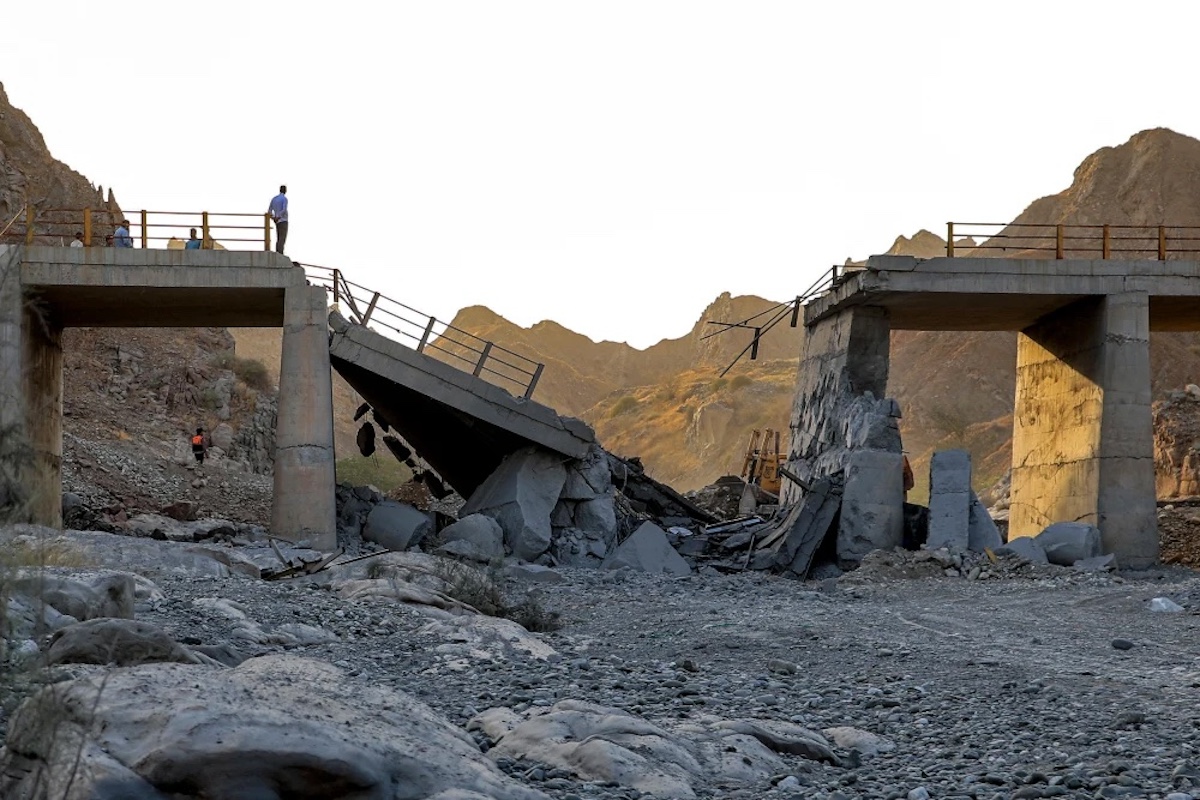
Beyond diplomatic disagreements, the character of the conflict itself is shifting in dangerous new directions. What began as limited strikes against exclusively military infrastructure has increasingly expanded to target civilian-critical facilities, including key energy infrastructure and desalination plants that supply fresh water to millions of people across the Gulf. Critical transport infrastructure, including major bridges, has also been struck. This shift has sparked fierce debate among military analysts, who question whether operational objectives are expanding beyond limited coercive signaling—using small-scale military force to pressure Iran into policy changes—to broader, more ambitious military aims. It has also raised serious legal questions about whether some attacks violate international humanitarian law, and could even be classified as war crimes in certain circumstances.
While this expansion of US air strikes does not mean an imminent full-scale ground invasion of Iran is on the horizon, it does reflect a steadily widening conflict whose humanitarian and economic costs increasingly fall on civilian populations on both sides of the Gulf.
The root of the perpetual standoff lies in a simple, unresolvable incompatibility of core strategic goals between the main parties to the conflict. The US remains committed to constraining Iran’s nuclear program and its expanding regional military and political influence, while Tehran views those exact same capabilities as non-negotiable pillars of its national security and deterrence posture. For its part, Israel views any strengthening of Iran’s strategic position as an existential security threat that it cannot accept. These competing goals cannot be reconciled, no matter how skilled the negotiating parties are. The June MoU succeeded in temporarily reducing tensions, but it did nothing to address the fundamental structural divides that drive the decades-long conflict.
This reality reshapes how we should understand the current crisis. Most public debate centers on whether the latest escalation will spiral into a full-scale regional war, a risk that cannot be entirely ruled out. But a far more likely, and far less discussed, scenario is already unfolding: the US and Iran are settling into a prolonged cycle of calibrated, low-intensity confrontation that will persist for far longer than most current forecasts anticipate.
Ironically, the president who ran on a pledge to end America’s forever wars may now go down in history as the leader who oversaw the emergence of a new, more insidious form of forever war. This new type of conflict has no clear formal declaration, no definitive end point, and alternates between quiet lulls that remove it from global headlines and sudden bursts of violence that reignite fears of full-scale war. The greatest long-term danger is not a repeat of the Iraq or Afghanistan invasions; it is the gradual normalization of an enduring conflict that reemerges again and again in new forms, because the fundamental political conditions required for a lasting peace have never been addressed.
This new permanent standoff represents a new normal for a US foreign policy establishment that still retains deep-seated militarist instincts, maintains a massive global military infrastructure and footprint, and prioritizes maintaining US global primacy at a time when global power is shifting toward a more multipolar international order.