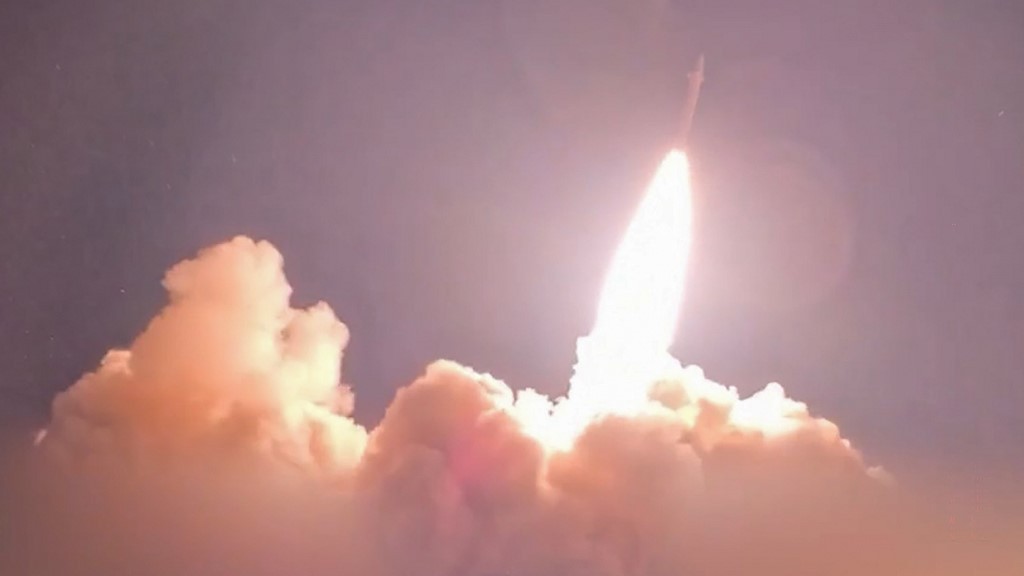
A brutal cycle of cross-border violence in the Middle East has entered its second week of continuous escalation, after the United States carried out its 10th straight night of aerial bombardment against targets inside Iran, expanding a joint military campaign launched alongside Israel that collapsed a month-long ceasefire agreement earlier in July.
According to US Central Command, the most recent round of offensive operations ran for approximately five hours, wrapping up at 9 p.m. Eastern Time on Monday. American military targets in the latest strikes included Iranian command and control hubs, missile and drone launch facilities, coastal naval infrastructure and national air defense networks. This renewed assault builds on the joint Israel-US campaign that first launched with coordinated attacks on Iran on February 28, before a ceasefire was reached in mid-June.
On June 17, Washington and Tehran signed a memorandum of understanding that pledged an “immediate and permanent end” to all cross-border military operations. The terms of the deal also required the US to lift a crippling naval blockade of Iranian ports and established a 60-day negotiating window to resolve longstanding regional disputes. A core requirement of the agreement mandated Israel halt all cross-border attacks into Lebanon, a provision Washington ultimately failed to enforce even as US negotiators pushed to reinterpret clauses governing access and navigation through the Strait of Hormuz.
The fragile truce officially collapsed on July 8, when former President Donald Trump declared the June agreement void, ordered the resumption of unilateral US strikes against Iran and reimposed the full naval blockade that had been lifted weeks earlier. In response to the resumption of US hostilities, Tehran reclosed the strategic Strait of Hormuz, a chokepoint through which roughly 20% of the world’s daily oil shipments pass, and renewed missile and drone strikes against US military bases deployed across the Middle East.
Overnight, Iranian military officials announced a series of retaliatory strikes targeting US-aligned military installations across Bahrain, Kuwait and Jordan. The Islamic Revolutionary Guard Corps (IRGC), Iran’s elite paramilitary force, confirmed it destroyed a US air defense system and radar array located in Bahrain’s Muharraq district. A follow-up statement carried by Iran’s state-run IRIB broadcaster added that a coordinated missile and drone assault also disabled a Patriot air defense system stationed in Al-Riffa, Bahrain.
Separately, Iran’s army told the semi-official Fars News Agency that drone strikes hit Bahrain’s Sheikh Isa military base, a critical logistics and operations hub for the US Navy’s Fifth Fleet. Iranian military officials confirmed retaliatory operations will continue until the US halts its cross-border attacks and withdraws hostile forces from the region. “Security in the region has been disrupted following the mischief of US terrorist forces, and the Armed Forces of the Islamic Republic are attempting to restore security and calm to the region in their battle against the US,” an official army statement read.
In Kuwait, the IRGC confirmed strikes targeted US radar, telecommunications, satellite communications and missile defense infrastructure at both Ahmed Al-Jaber Air Base and Ali Al Salem Air Base. Iranian state news agency Tasnim reported additional damage to key infrastructure at Kuwait’s Camp Arifjan, a helicopter operations zone at Camp Al-Adiri, and troop housing facilities at Ahmed Al-Jaber.
In Jordan, the IRGC reported it destroyed a missile defense radar and an F-15 fighter jet housed in a reinforced shelter at a US military base there. Iranian officials noted the strike was intended to eliminate US radar coverage ahead of expanded retaliatory missile and drone operations across the region. A senior Iranian military source told Fars that the Strait of Hormuz will remain closed to commercial shipping for as long as US attacks on Iranian territory continue.
“The Strait of Hormuz is in full control of the Iranian armed forces,” the source said. “Any decision to reopen or continue restrictions on this passageway will be made solely based on security considerations and national interests, and this situation will not change as long as US threats and hostile actions continue.”
The IRGC also confirmed that two commercial tankers that attempted to transit an unapproved southern route near Oman’s territorial waters suffered heavy damage from explosions that sparked large onboard fires. Local rescue teams have already launched operations to evacuate the vessels’ crews. “It is obvious that as long as America’s evils continue in the region, the Strait of Hormuz will be closed, and not even a drop of oil, gas, or a package of chemical fertiliser will be exported from the region,” the IRGC added in a statement.
The escalating conflict has drawn growing domestic political pushback in the US, where Senate Minority Leader Chuck Schumer has called for an immediate end to hostilities and pledged Democratic lawmakers will force a new congressional vote to cut off authorization for military operations. “Every second Trump prolongs his war in Iran is another second our service members remain in danger,” Schumer wrote on social media platform X. “Senate Democrats will force Senate Republicans to take another vote to end this war and bring our troops home. Enough is enough. End this war.”
Despite widespread disruption to global energy shipping, international oil prices dipped slightly on Monday following reports of new diplomatic mediation efforts led by neutral regional states. Global benchmark Brent crude fell 0.4% to settle at $88.87 per barrel, while US West Texas Intermediate crude for September delivery traded at $82.47 per barrel at market close.