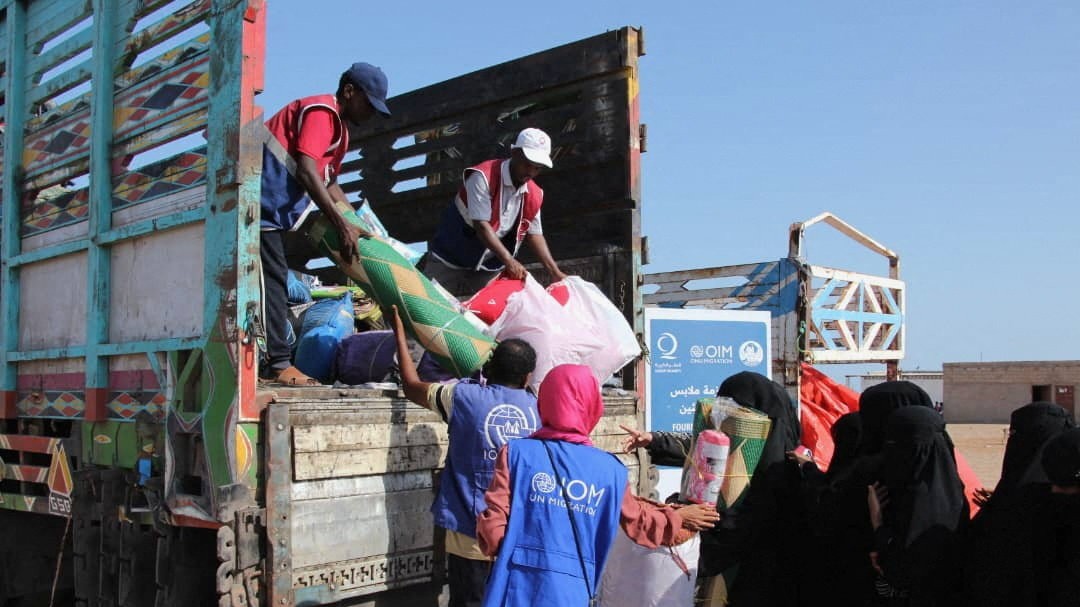
The ongoing conflict in Yemen has reshaped migration patterns across the Horn of Africa and the Arabian Peninsula, creating interconnected stories of displacement, welcome, and unexpected cross-community solidarity that stretch across national borders. For nearly a decade, Yemen’s neighboring Djibouti has stood out as a rare accessible safe haven for Yemenis fleeing violence and economic collapse, offering a stark contrast to wealthy Gulf nations that remain largely closed off to most Yemeni refugees due to prohibitive visa costs and strict entry requirements.
标签: Asia
亚洲
-
How US blindly ceded its rare earth dominance to China
From the smartphone in your pocket to the car you drive, and from cutting-edge military aircraft to transoceanic communications cables, 17 chemically similar metals collectively labeled rare earth elements power nearly every corner of modern life. Coined in 1794, the term “rare earths” is actually a misnomer: for example, cerium, one of the most widely used members of the group, is just as abundant in the Earth’s crust as copper. What makes these metals rare and strategically critical is not their presence in the ground, but the extraordinary difficulty of separating them from raw ore and refining them into usable materials. This processing challenge has turned control of rare earth supply chains into a major source of geopolitical power, and today, that power is concentrated largely in China.
As a former war game adjudicator for the U.S. Navy, I have seen firsthand how hidden structural constraints can derail even the most carefully crafted strategic plans. Rare earth processing is one such underrecognized constraint that shapes the entire U.S.-China geopolitical relationship. Even critical U.S. military assets, from F-35 fighter jets to Virginia-class submarines, depend on rare earths processed in China. In 2025, China demonstrated the weight of this influence when it implemented sweeping new rare earth export controls, before agreeing to suspend the majority of these measures until November 10, 2026. This temporary suspension itself has become a powerful bargaining chip: the ability to extend the pause or allow restrictions to snap back into effect gives Beijing substantial diplomatic leverage, fitting Theodore Roosevelt’s famous description of geopolitical strategy as “speaking softly and carrying a big stick.”
### How China claimed global rare earth dominance
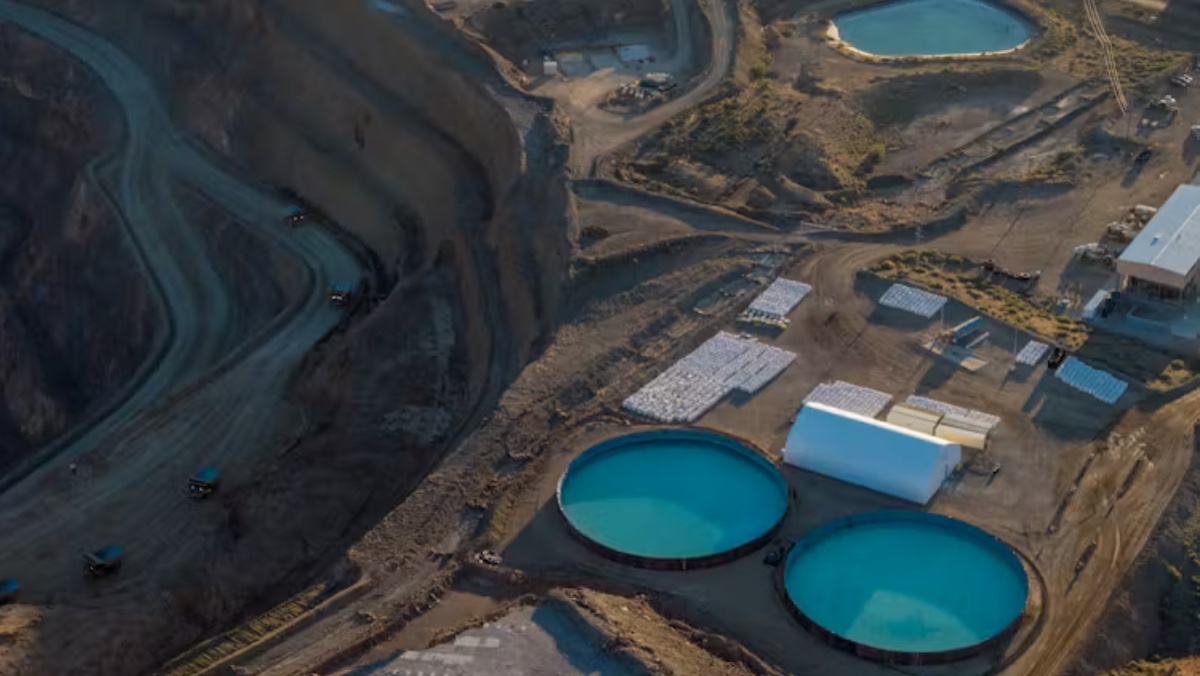
It was not inevitable that China would come to control the global rare earth market. As recently as the late 1980s, the U.S. led global production out of California’s Mountain Pass mine. But repeated incidents of radioactive wastewater leaking from the mine’s facilities into the Mojave Desert created regulatory and public pressure that made sustained domestic production difficult. When China expanded its own rare earth mining operations and began selling processed materials at lower prices, shifting suppliers became an economically straightforward choice for international buyers. Mountain Pass’s separation plant shut down in 1998, and mining operations ceased entirely in 2002.
While MP Materials restarted mining at Mountain Pass in 2017, amid growing U.S. concerns over rare earth supply security, the U.S. still imported more than two-thirds of its rare earth elements as of 2025. Current data underscores the scale of China’s dominance: in 2024, China mined 60% of the rare earth elements used in global magnet production, and handled 91% of all global rare earth separation and refining. For decades, international buyers accepted this arrangement: Chinese processed rare earths cost less than building domestic capacity, and buyers avoided the environmental costs and public backlash that come with refining. But in exchange for lower short-term costs, they ceded critical strategic leverage to Beijing – a dynamic that was less concerning when China was still seen as a rising, largely cooperative economic power.
### Why the U.S. domestic supply chain rebuild is moving slowly
The U.S. Government Accountability Office estimated back in 2010 that rebuilding a full end-to-end domestic rare earth supply chain, from mining to separation to finished magnet manufacturing, could take up to 15 years, and progress has been even slower than projected for three core reasons.
First, China has built its industry over decades with a workforce of thousands of specialized, experienced engineers, while the U.S. retains a tiny fraction of that expertise. All modern cutting-edge industrial rare earth processing technology was developed in China, and Beijing banned exports of this separation technology in December 2023, cutting off a key path for U.S. capacity building. Second, while the U.S. holds substantial domestic rare earth deposits, permitting and developing new mining projects remains a slow, fraught process. Third, despite billions in federal investment, supply chain rebuilding faces persistent headwinds from Chinese export restrictions.
To date, the U.S. government has committed more than $7 billion since April 2025 to rebuilding domestic rare earth production capacity. In 2025, the Pentagon purchased $400 million in preferred stock from MP Materials, giving the U.S. government a 15% ownership stake in the company. MP Materials currently projects that its new commercial magnet plant will not begin equipment testing until 2028. In 2026, the U.S. Commerce Department signed a letter of intent to provide rare earth magnet maker USA Rare Earth with $277 million in direct funding and a $1.3 billion loan to develop new facilities in Texas and Oklahoma. Even with this support, however, Chinese trade barriers continue to slow progress.
### The November 10, 2026 expiration deadline
In October 2025, China’s Ministry of Commerce announced six broad export control measures for rare earths. One of the most far-reaching, Announcement No. 61, requires even third-country factories in Germany or Japan to obtain a Chinese export license to ship products that contain 0.1% or more Chinese-origin rare earths, or that were manufactured using Chinese rare earth processing technology.
Shortly after the announcement, then-President Donald Trump met with Chinese leader Xi Jinping, and Beijing agreed to suspend the six main export control measures until November 10, 2026. In exchange, Washington paused its controversial “affiliates rule,” which imposes restrictions on companies majority-owned by blacklisted Chinese firms, for a one-year period. Both sets of restrictions will automatically snap back into effect on November 10 unless both governments agree to extend the temporary truce.
It is important to note that not all Chinese export restrictions were suspended. Licensing requirements for exports of seven heavier rare earth elements, implemented in April 2025, remain in full force. The impact of these controls on U.S. industry was already visible in 2025, when automaker Ford was forced to idle its Chicago assembly plant for a full week due to a shortage of rare earth magnets critical for vehicle speakers and electric motors. Ford CEO Jim Farley later described the company’s rare earth supply as “day to day,” noting the firm had no alternative domestic source, and production only resumed after Beijing granted a special export approval.
In June 2026, Beijing expanded restrictions further by adding 10 U.S. companies to its export control list, banning both Chinese and foreign firms from selling any dual-use (civilian and military) goods to the targeted firms. Notably, two of the blacklisted companies are MP Materials and USA Rare Earth – the two federally backed U.S. firms that have made the farthest progress in building a full domestic mine-to-magnet supply chain. Beijing framed the move as a reciprocal response to a similar blacklisting action by the U.S. Pentagon, but a clear strategic logic is at play: targeting the two leading U.S. rare earth developers slows America’s efforts to reduce dependence on Chinese processing.
If the truce is extended on November 10, the temporary pause on the six main export controls will remain in place, but the heavy rare earth licensing requirements and the June 2026 blacklisting of U.S. rare earth firms will stay in effect. This truce allows both sides to maintain a facade of cooperation, but it does not resolve the underlying strategic competition.
### Three possible paths forward for the U.S.
The U.S. currently faces three clear strategic options for managing its rare earth dependency, each with distinct tradeoffs:
First, the U.S. could choose to leave the majority of rare earth processing in Chinese hands. This is the fastest and lowest-cost option in the short term, but it leaves the U.S. permanently exposed to sudden supply disruptions and ongoing Chinese geopolitical leverage across a wide range of diplomatic and military issues.
Second, the U.S. could accelerate efforts to rebuild a full end-to-end domestic rare earth supply chain. This would eliminate most U.S. dependence on Chinese processing and the associated geopolitical leverage, but it will take more time to complete, require billions more in upfront investment, and force the U.S. to confront the environmental challenges of rare earth refining, which produces acidic and sometimes radioactive processing residues.
Third, the U.S. could build a collaborative allied supply chain with partner nations such as Australia and Japan, both of which have already begun developing their own rare earth processing capacity. This approach would reduce the risk of unilateral Chinese supply cuts, and Japan has already seen limited success with this model. However, it remains vulnerable to China’s existing rules that restrict the use of Chinese rare earth technology in third countries.
The outcome of the upcoming meeting between President Xi Jinping and President Trump on September 24, 2026, will likely shape whether the temporary export control pause is extended past November 10. But regardless of the short-term outcome, the broader strategic competition over rare earth supply chain dominance – and the geopolitical leverage that comes with it – will continue for the foreseeable future.
This article is based on analysis by Charles Edward Gehrke, Sloan Fellow at the Massachusetts Institute of Technology.
-
Saddam Hussein used James Bond director to tell Iraq story
Long before Saddam Hussein’s brutal 24-year reign over Iraq came to a brutal end with the 2003 U.S.-led invasion, the Iraqi dictator had already established an unusual hold on the country’s cultural output: he operated as a state-backed film producer, crafting on-screen narratives to cement his cult of personality and legitimize his authoritarian rule.
Within months of seizing the Iraqi presidency in 1979, production wrapped on Saddam’s first propaganda project: *The Long Days*, a biographical drama that cast his cousin in the lead role to glorify his participation in a 1959 failed assassination attempt against then-Prime Minister Abdul-Karim Qasim. The film framed Saddam as a fearless nationalist hero, even including a dramatic scene where a young Saddam cuts a bullet out of his own leg using a fire-sterilized razor blade. But this heroic depiction was later exposed as a fabrication: in his 2000 biography of Saddam, journalist Said Aburish—who once served as a consultant to Iraq’s Ministry of Information—dismissed the sequence as a massive exaggeration, citing Saddam’s own personal physician who confirmed the dictator only suffered a superficial wound from the attempt. Aburish also revealed that Saddam personally leveraged his connections through the journalist to hire British director Terence Young, famous for helming early James Bond classics *Dr. No* and *From Russia with Love*, to edit the propaganda production.
Saddam’s second major state-funded film arrived in 1983: *Clash of Loyalties*, a lavish big-budget historical epic centered on the 1920 Iraqi revolt against British colonial rule. The project was explicitly designed to tie Saddam’s ruling Ba’ath Party to the legacy of anti-colonial resistance, boosting his domestic credibility. The high budget attracted well-known British actor Oliver Reed, who took the role of a British intelligence officer. But Reed’s unruly behavior nearly got him deported mid-production: during an outing at a Baghdad restaurant, he sparked a public brawl after urinating into a wine bottle and ordering a waiter to deliver it to another table “with my compliments.” Co-producer Lateif Jorephani famously dubbed Saddam’s ambitious state film project “Bollywood on Tigris,” with plans to build a full state-run film industry that would produce at least six large-scale patriotic blockbusters targeted at international audiences.
This tight control extended far beyond feature films to all forms of domestic media. Before the 2003 invasion that toppled his regime, Iraq’s entire media ecosystem consisted of just five state-controlled newspapers, four radio stations, and three television channels—all of which operated as mouthpieces for Saddam’s government. Many Iraqis who grew up under this system carry vivid, uncomfortable memories of state-mandated propaganda woven into everyday entertainment. Malik, an interpreter who accompanied author Matthew Alford on a recent trip to Iraq, recalled being forced to sit through graphic *Lest We Forget* propaganda segments about the 1980-1988 Iran-Iraq War to watch the following half-hour of children’s cartoons, including *Tom and Jerry*.
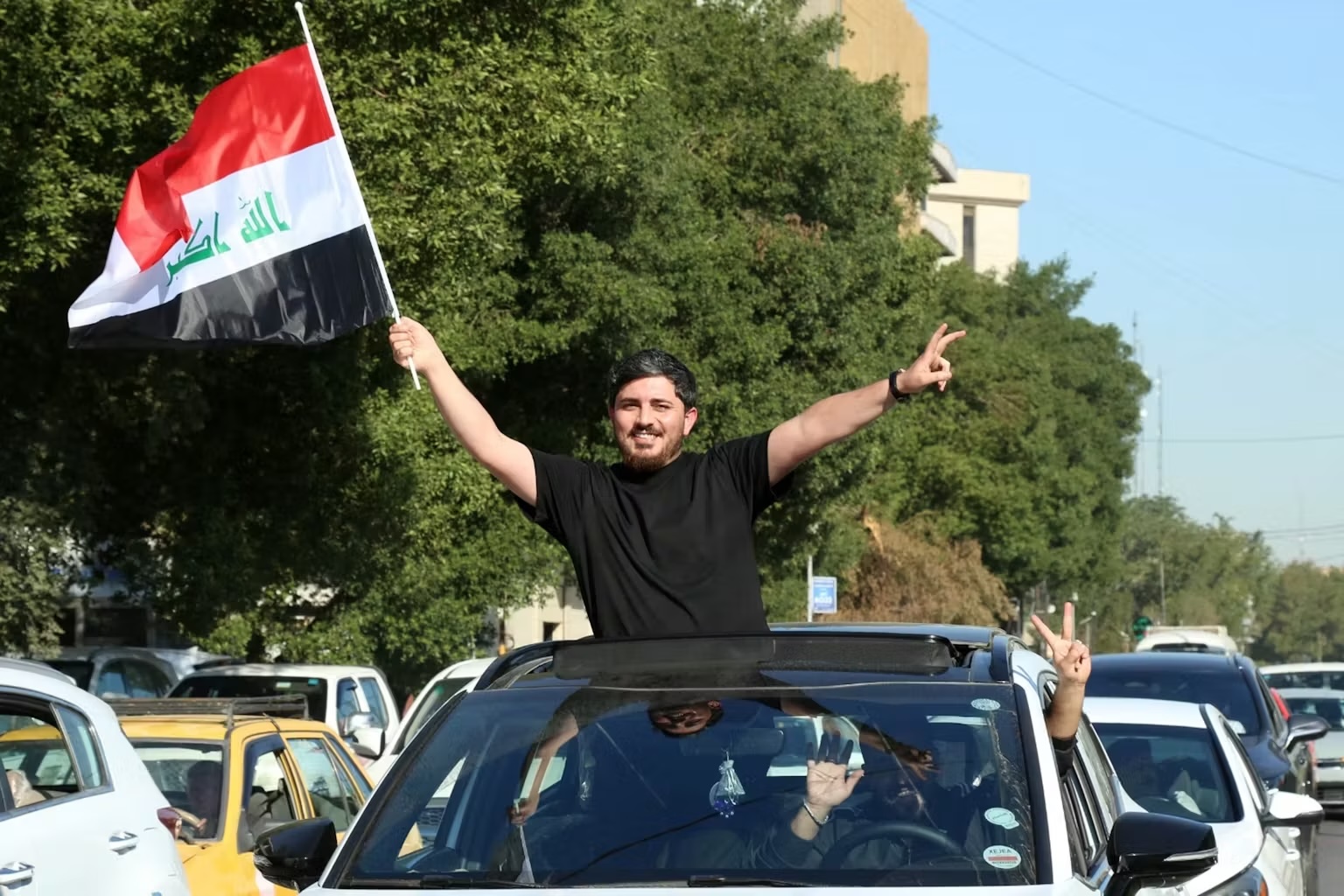
The fall of Saddam’s regime triggered a seismic shift in Iraq’s media landscape. Within 12 months of the dictator’s ousting, roughly 80 new radio stations, 20 private television channels, and more than 200 independent newspapers and magazines launched across the country. While fewer than half of these early outlets survived their first year of operation, the old state media monopoly never returned. Today, Iraq boasts more than 100 television channels broadcasting in four languages: Arabic, Kurdish, Turkmen, and Syriac. Control of media has dispersed across the country’s fragmented centers of power: major political parties, influential religious institutions including Shia holy shrines, and numerous armed factions all operate their own independent media outlets.
During a visit to the annual Arbaeen pilgrimage in Karbala in August—an event that draws more than 20 million Shia Muslim worshippers annually, making it the world’s largest regular peaceful gathering—Alford gained behind-the-scenes access to the substantial media operations run by major Shia religious institutions. At the Al-Abbas Holy Shrine’s media department, reporters were shown an expansive, free digital archive containing feature films, documentaries, talk shows, and religious programming, including an Iraqi adaptation of the classic university quiz show format centered on Quranic studies. The shrine distributes this content for free online and via live broadcast, with more than 80 domestic and international television channels using its official Arbaeen pilgrimage coverage every year.
This post-2003 era of abundant media choice stands in stark contrast to the limited, state-controlled options of the Saddam era. But greater quantity of media outlets has not translated to greater press freedom or more accurate, independent reporting. As of 2024, Iraq ranks 162nd out of 180 countries on the global Press Freedom Index, placing it between Sudan and Turkey.
The most profound shift has been the dispersal of media power across competing factions, mirroring the broader fragmentation of political and military power in modern Iraq. Today, 10 Iran-aligned armed factions control an estimated 50,000 fighters across the country, and the central Iraqi government in Baghdad has struggled to bring these groups under formal state control—tensions that have escalated into open military action in recent months, with U.S. and Saudi forces striking faction targets inside Iraqi borders. Many of these armed groups now operate their own media outlets: for example, Al-Ahad TV is controlled by Asa’ib Ahl al-Haq, one of the largest Iran-aligned armed factions.
Where Saddam once held an iron-clad monopoly over every narrative and image coming out of Iraq—even if he could not control the unruly behavior of British star Oliver Reed—his authoritarian system of state propaganda is gone for good. In its place, Iraq now hosts a crowded ecosystem of competing voices, from political parties and religious institutions to armed factions and independent journalists fighting for space. Yet even with this unprecedented media abundance, true press freedom remains out of reach for the country. This article is republished from The Conversation under a Creative Commons license, written by Matthew Alford, a lecturer in the Department of Politics, Languages and International Studies at the University of Bath.
-
Why India’s Election Commission is in the eye of a storm – again
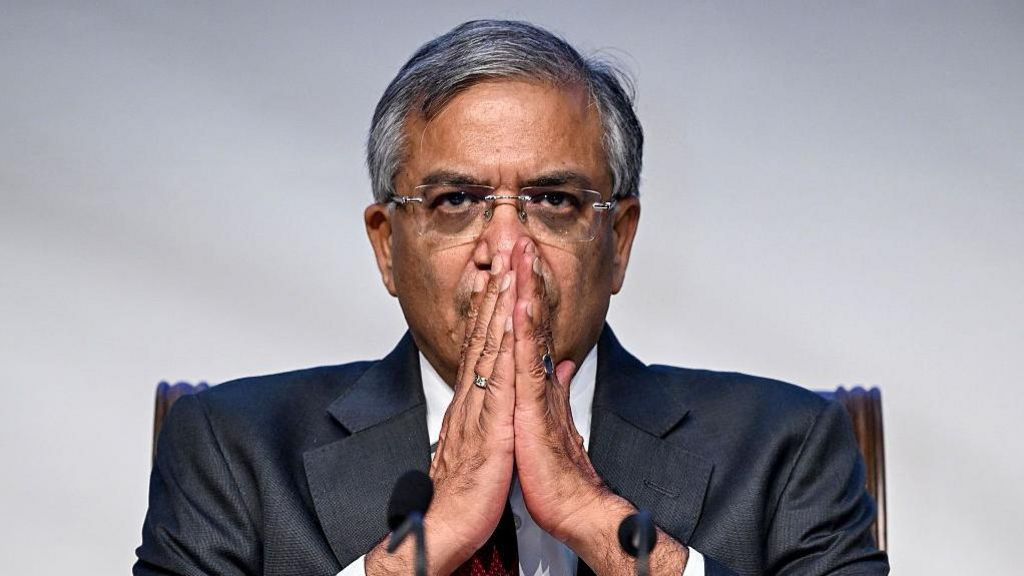
India’s top electoral oversight body, the Election Commission of India (ECI), is grappling with its most severe credibility crisis in recent years, after an explosive newspaper report exposed deep internal rifts over the management of a nationwide voter roll overhaul, prompting opposition parties to demand the immediate resignation of Chief Election Commissioner Gyanesh Kumar.
As the institutional anchor of the world’s largest democracy, the three-member ECI is led by Kumar, with senior commissioners Sukhbir Singh Sandhu and Vivek Joshi rounding out the panel. The current controversy erupted following an investigation published by *The Indian Express*, which documented that over the past 10 months, Sandhu and Joshi have repeatedly challenged Kumar over critical decisions related to voter database integrity, new voter enrollment protocols, and the overall security of national electoral rolls. According to the report, the two senior commissioners were sidelined from at least 14 key decisions, with changes made to electoral procedures without their knowledge or formal approval. On one occasion, the pair even submitted a formal complaint letter to the Government of India’s chief secretary, the country’s top civil service post, the report added.
The internal revelations have sent shockwaves through India’s political landscape, particularly as the controversy overlaps with the ECI’s ongoing Special Intensive Revision (SIR), a highly contentious nationwide update of the national voter database. ECI officials frame the SIR as a long-overdue clean-up: the last comprehensive national revision of voter rolls was completed nearly 25 years ago, and the project aims to remove ineligible entries linked to deceased voters, residents who have relocated abroad, and individuals duplicated across multiple regional rolls. To date, the revision has removed roughly 130 million names from national rolls, but the process has been mired in controversy from its launch. Opposition parties have long accused Kumar and the ECI of manipulating the SIR to intentionally remove voters aligned with opposition parties and favor Prime Minister Narendra Modi’s ruling Bharatiya Janata Party (BJP) in upcoming and recent elections. Both the BJP and ECI have repeatedly denied these allegations.
What makes the latest revelations uniquely damaging, political analysts note, is that the criticisms of Kumar’s leadership come not from opposition parties, but from within the ECI itself. Millions of eligible voters across the country have already filed official complaints reporting that their names were incorrectly removed from voter rolls during the SIR process, with many arguing that the new documentation requirements for re-enrollment are unnecessarily burdensome for low-income and marginalized communities who lack formal identity paperwork.
Former Chief Election Commissioner SY Quraishi, a vocal public critic of the SIR since its launch, told press agency PTI that he had long questioned why Sandhu and Joshi had not publicly pushed back on the controversial project. “Now I realised that very silently and quietly they were protesting, they were writing notes. That is a good thing, they have gone up in my esteem,” Quraishi said.
Opposition leaders have seized on the internal leaks to ramp up pressure on Kumar and the ECI, with senior figures going far beyond calls for resignation to demand criminal action over the alleged voter list manipulation. Senior Congress Party leader and Member of Parliament Rahul Gandhi, who has repeatedly accused the ECI of systematically “stealing votes” from opposition blocs, labeled the alleged manipulation an act of treason against India’s constitution in a post on X Wednesday. “Vote chori [theft] is a crime against the Indian people and a direct attack on our constitution. The BJP, RSS [Rashtriya Swayamsevak Sangh] and EC who organised it have committed an act of treason. Justice will be served,” Gandhi wrote, alongside a 15-second video warning ECI officials that “your time will come. You cannot get away.”
Mamata Banerjee, chief of the regional Trinamool Congress party and former Chief Minister of West Bengal, went a step further, calling for Kumar’s arrest and demanding that fresh elections be held in the state using the pre-SIR voter roll. Banerjee’s party lost control of West Bengal to the BJP in recent state elections, during which more than 2.7 million voters were removed from the state’s rolls during the SIR process. Banerjee and her supporters argue the removals directly cost the party dozens of assembly seats and the overall election.
Within hours of the *Indian Express* report’s publication, the ECI released an official statement pushing back against the criticism and defending its internal decision-making processes. “Differing views and observations are a normal part of deliberation in any institution. They are a part of the decision-making process before a final decision is taken,” the statement read. “Not only the three Commissioners, but every officer of the Commission is fully authorised to give his suggestions to the Commission for improving the electoral system.”
The ECI also argued that the newspaper report presented a distorted, partial picture of its internal processes, noting that highlighting isolated internal notes from a 10-month period while ignoring the large body of unanimous collective decisions on electoral reforms gives an inaccurate view of the commission’s work. “In recent months, the commission has introduced around 40 new initiatives and undertaken many electoral reforms including the conduct of electoral roll revision (including SIR) across the country. All these decisions are an outcome of the unanimous decisions of the full commission in the past one year,” the statement added.
The BJP has also defended Kumar, dismissing the opposition’s criticism as a coordinated “smear campaign” rooted in political frustration. Party spokesperson Sambit Patra told reporters that ever since the Modi government took office in 2014, opposition parties have steadily lost electoral ground, and are now attacking independent national institutions to compensate for their inability to win free and fair contests. Patra also framed internal dissent within the ECI as a sign of a healthy, vibrant democracy, rather than a systemic failure.
Despite these defenses, political tensions are expected to escalate in the coming weeks. Banerjee has already confirmed that opposition parties will hold continuous public protests until Kumar steps down from his post. The Gen Z-led Cockroach Janta Party, a grassroots activist group that recently forced the resignation of India’s federal education minister over controversial policies, has also announced it will join the protests against what it calls the “hijacking of India’s democracy.”
Political analysts note that the ECI’s official response is unlikely to resolve growing concerns over the commission’s impartiality, pointing out that the statement fails to address many of the specific allegations raised in the *Indian Express* investigation. “CEC Kumar needs to clear the air if we are to view the Commission as an impartial body,” many analysts have argued, marking the beginning of a prolonged fight over the credibility of India’s electoral system ahead of future national and state polls.
-

Teen rocker Nene Royal becomes first Thai to win America’s Got Talent
A 16-year-old heavy metal artist from Thailand has cemented her name in the history books of one of the world’s most-watched talent competitions, taking home the top prize on *America’s Got Talent* as the first Thai champion in the show’s 21-season run. Nene Royal, whose legal name is Rattikarn Amloy, secured her $1 million (approximately £755,000) victory after a standout final performance Tuesday at the competition’s California venue, where she delivered a gritty, crowd-pleasing cover of The White Stripes’ iconic rock track *Seven Nation Army*.
Her electrifying heavy metal set outshone nine other competing final acts, ranging from sleight-of-hand magicians and trained canine performance troupes to cutting-edge robot dance crews. Nene’s journey to the winner’s circle began long before her California debut: growing up in the popular beach tourism hub of Phuket, she picked up her first guitar at age 7, and for years honed her craft busking for crowds at Phuket’s busy Naka Weekend Market while nurturing a lifelong dream of becoming a professional touring musician.
From the earliest rounds of the competition, Nene captured global attention and earned a spot as an undisputed fan favorite. Her audition performance, a powerful cover of The Cranberries’ *Zombie* that left the show’s judging panel stunned, quickly went viral online, racking up more than 20 million views across social media platforms. Ahead of the season’s final results reveal Wednesday night, Nene shared the stage with legendary American rock band Linkin Park to perform the group’s 2024 track *The Emptiness Machine*, a career milestone that solidified her status as a rising rock talent.
When host Terry Crews announced her name as the season 21 champion, an overwhelmed Nene collapsed to the stage in tears, unable to immediately process her historic win. “I’m very happy and emotional right now,” she told the crowd after collecting herself, extending gratitude to the millions of fans who supported her throughout the competition.
Half a world away, Nene’s massive base of Thai fans followed the results show fervently, even though the live NBC broadcast was not available to local viewers. Many turned to a unofficial YouTube livestream to watch the event unfold, only to be thrown into panic when the stream cut out abruptly mid-announcement. Relief and celebration erupted across Thai social media moments later, when word of Nene’s victory spread through online communities.
“History made!” one Thai user posted on Facebook, while another added, “Let the world write it down that this Thai kid is incredibly talented.”
The Thai government has joined in the widespread celebration, releasing an official statement Thursday praising Nene for representing her home country with unshakable confidence on the global stage. “What makes this win special is that Nene carried her Thai identity with confidence onto one of the world’s biggest stages,” the country’s public relations department said. “She showed that talent, hard work, and determination can come from anywhere, including a young girl from Phuket with a guitar and a big dream,” the statement added, calling Nene an inspiration to young people everywhere who dare to pursue big dreams.
In Nene’s Phuket hometown, local community leaders, businesses and her school have also been celebrating her achievement. Local tour guide Piyarat Na Songkhla, who has watched Nene perform since she was a child, told the BBC: “She’s so adorable. I feel so elated and happy for her. It’s unbelievable that she has gone this far. So proud of her.”
The Naka Weekend Market, where Nene spent years busking for locals and tourists, shared a heartfelt tribute to its former performer on its official Facebook page. “Everyone at Naka Market is so proud to see you shine on one of the biggest stages in the world,” the post read. “Your talent, heart, and courage have inspired so many people, and this victory is a beautiful reminder of what can happen when someone truly gives everything to their dream.”
Kajonkiet International School, Nene’s Phuket-based secondary school, also shared a public message of congratulations alongside a video of students and staff packing the school common room to watch the final performance, screaming Nene’s name and cheering as her victory was announced. “We are so proud of you,” the school’s post read.
-
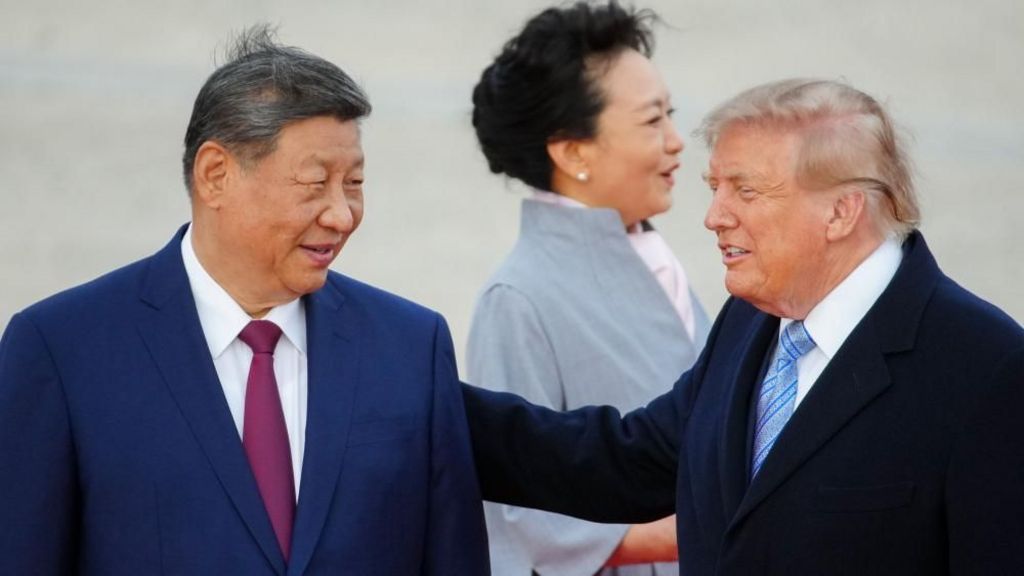
Trump offers warm welcome as China’s Xi arrives for US visit
In an extraordinary display of diplomatic priority not seen in more than six decades, US President Donald Trump personally welcomed Chinese President Xi Jinping to Washington Wednesday, kicking off a three-day landmark summit packed with discussions on critical global and bilateral issues. The warm reception, complete with a 30-meter red carpet, a full military honor guard, and a flyover of two B-1 supersonic bombers, marked the first time a sitting US president has greeted a foreign leader at Maryland’s Joint Base Andrews since President John F. Kennedy welcomed British Prime Minister Harold Macmillan in 1962.
Xi Jinping touched down at the base at 17:39 local time aboard an Air China jetliner, accompanied by his wife Peng Liyuan and a high-level delegation that includes Politburo Standing Committee member Cai Qi, widely regarded as Xi’s closest advisor, Vice Premier He Lifeng, Foreign Minister Wang Yi, and other senior diplomatic and trade officials. After the plane came to a stop, honor guard troops lined both sides of the red carpet, and two official limousines pulled up to the aircraft steps. President Trump and First Lady Melania Trump stepped forward to greet the Chinese delegation, shaking hands with Xi and Peng before the two couples walked the red carpet together, posed for official photographs, and departed for Washington in separate motorcades.
Even before the formal summit talks began, a key preliminary agreement was announced: US Treasury Secretary Scott Bessent confirmed that Washington and Beijing have agreed to extend their ongoing bilateral trade truce until January, pushing back the original November 10 expiration date. The current truce framework saw the US reduce tariff rates on a range of Chinese imports in exchange for China loosening export restrictions on critical rare earth minerals, materials essential to US manufacturing and high-tech supply chains. Bessent noted that he and He Lifeng held preliminary talks focused on laying the groundwork for a potential more comprehensive long-term trade deal down the line.
In a written statement released by China’s state news agency Xinhua ahead of the summit, Xi emphasized the shared potential of the world’s two largest economies. “Both China and the United States are great nations, and their people are great people,” Xi wrote. “The two countries should be partners rather than rivals.” He added that China’s goal of national rejuvenation and the Trump administration’s “Make America Great Again” agenda are fully compatible, saying “they can coexist, reinforce each other, and benefit the whole world,” and expressed confidence the summit would deliver tangible, positive outcomes.
First Lady Melania Trump, who has taken a hands-on role in planning the summit’s itinerary, told Fox News that President Trump made the decision to greet Xi personally at the base because of the strong rapport the two leaders share. The three-day schedule includes closed-door leadership talks, a lavish state dinner Thursday evening that will be attended by top US artificial intelligence industry leaders, and a cultural visit to the Smithsonian National Museum of Asian Art, where Melania Trump will host Peng Liyuan to highlight cultural ties between the two nations. The summit will conclude Friday with a visit to the US National Archives, where the two couples will view historical documents marking key milestones in US-China relations.
Unlike Trump’s May 2026 visit to Beijing, which included a delegation of top US tech executives from firms including Apple, Tesla, and Nvidia, it remains unclear whether Xi brought any Chinese business leaders along for the Washington trip. Analysts note that bringing Chinese business figures would likely draw renewed scrutiny of Chinese industrial practices, state subsidies, and overcapacity in key manufacturing sectors – issues that have long been points of contention in bilateral relations.
The summit comes as the two global powers are locked in a race for dominance in artificial intelligence, a sector that sits high on the meeting agenda. Trump has publicly dismissed industry warnings about unregulated AI development as a “hoax,” and both sides are expected to lay out their priorities for AI governance and competition during the talks. Other key issues on the agenda include the ongoing Iran conflict, cross-Strait relations around Taiwan, and US arms sales to the self-governing island that Beijing claims as its own territory.
David Firestein, a China expert at the Bush China Foundation, outlined the core priorities each side brings to the table: Trump is pushing for further progress on trade, including lower Chinese tariffs on US goods, increased Chinese rare earth exports to the US, and higher purchases of American agricultural products. Firestein noted that Beijing has so far failed to follow through on earlier commitments to expand these imports and exports, a sticking point in negotiations. For China, Firestein said Xi will push for Trump to delay or block a congressionally approved $14 billion arms sale to Taiwan, and to deepen bilateral trade integration.
Notably, Firestein observed that while the core issues dividing the two nations have not changed, the bilateral relationship is currently more stable and less volatile than it was in 2025. This shift comes as public opinion in the US has grown more favorable toward engagement with China: a recent Chicago Council on Global Affairs poll found that just 41% of Americans now view China’s territorial ambitions as a direct threat to the US, down from 52% in 2022. A 57% majority of Americans – including 57% of non-MAGA Republicans and most Democrats across the ideological spectrum – now support continued cooperation and engagement with Beijing. The only notable divide comes among Trump’s core loyalist base, where 63% favor limiting bilateral relations, creating a split between the president’s diplomatic outreach and the views of his most committed supporters.
-
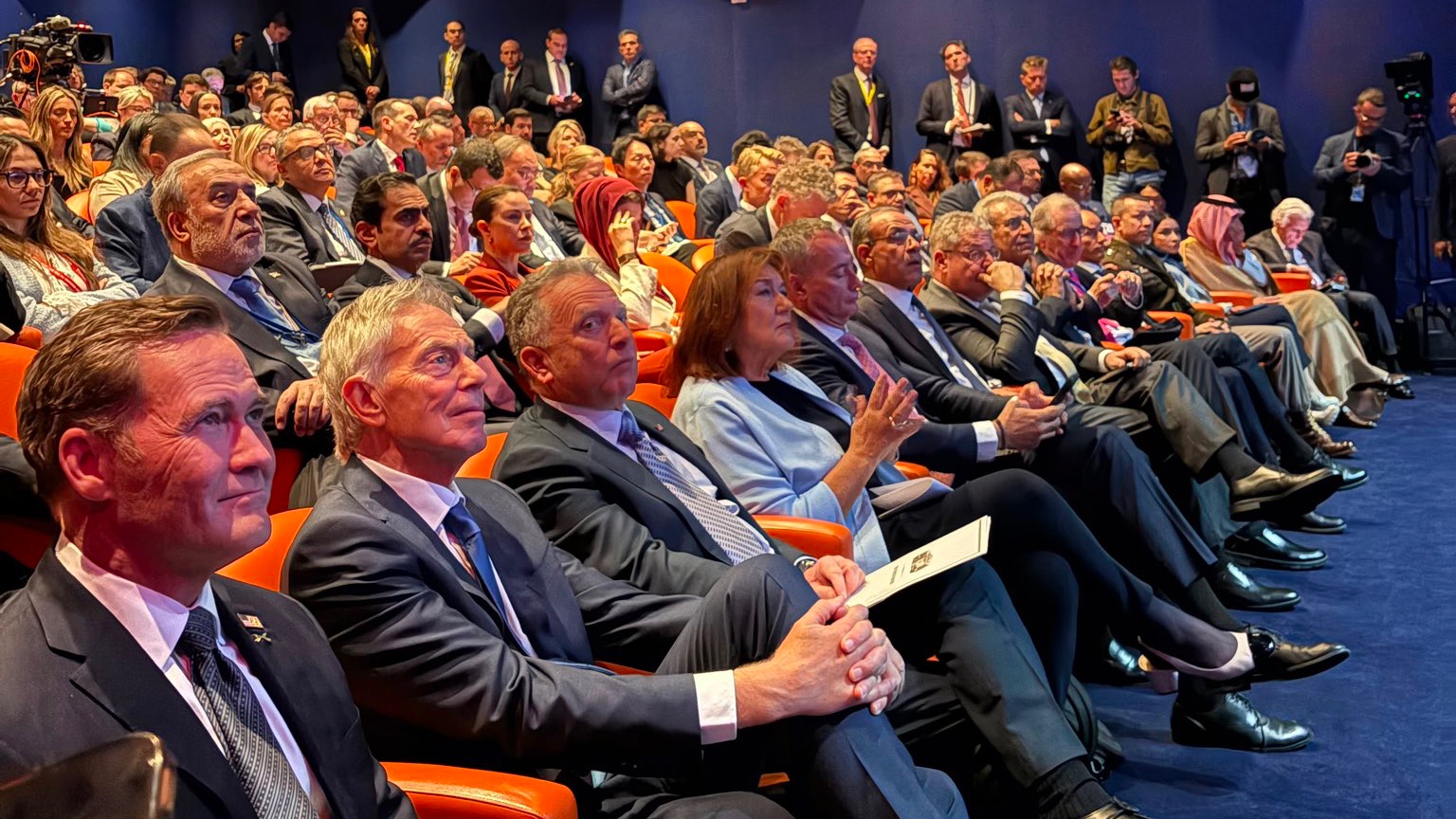
Jared Kushner admits ‘delays’, as scant $2.45bn starter plan for Gaza unveiled
On the sidelines of the United Nations General Assembly in New York City Wednesday, Jared Kushner — U.S. former President Donald Trump’s son-in-law, an unofficial senior advisor to the administration and close personal associate of Israeli Prime Minister Benjamin Netanyahu — led the public launch of a $2.45 billion preliminary infrastructure recovery plan for the war-ravaged Gaza Strip. The initiative is led by the so-called Board of Peace, a body chaired by Trump that counts Kushner among its executive board members.
According to reporting from Reuters, the framework outlined Wednesday comprises 66 individual projects targeted at rehabilitating Gaza’s decimated economic infrastructure, though few concrete details about the plan’s implementation or funding commitments were released publicly. Kushner acknowledged during the event that the body has faced repeated setbacks since its formation 11 months ago, framing the delays as a preparatory period ahead of future action. “Different delays on different things, for whatever reason,” he told reporters. “We’re just refining, sharpening the axe, getting ready for when we get to the time to cut the tree… hopefully, that will be very, very soon.”
The launch comes in the wake of a deeply unstable ceasefire brokered by the Trump administration that took effect in October 2025. Despite the truce, local Gaza media documentation confirms Israeli forces have carried out near-weekly air strikes across the enclave that have killed civilian residents with each attack. As of Wednesday, Gaza’s Palestinian Ministry of Health reported that 1,402 people have been killed in Israeli attacks since the ceasefire went into effect, pushing the total confirmed death toll in Gaza since the start of the conflict in October 2023 to just under 74,000.
Board of Peace representative Nickolay Mladenov, the body’s lead official for Gaza, framed the initial $2.45 billion plan as a path toward long-term stability for both communities. “We want to give people a new chance, and we want to make sure that both the Palestinians in Gaza and Israeli communities living across the border have a chance to put behind them this fear of violence that has driven their lives for so many years,” he said at the unveiling. However, the board’s own projections show that full reconstruction of Gaza, a territory roughly half the size of New York City that has endured nearly three years of sustained heavy Israeli bombardment, will require more than $71 billion in total investment over the next decade to rebuild destroyed power grids, water systems and other critical basic infrastructure.
The initiative has already faced sharp condemnation from international aid organizations, who warn the Board of Peace is failing Gazan civilians and enabling ongoing Israeli human rights and humanitarian law violations. Last month, Association of International Development Agencies executive director Athena Rayburn told the UN Security Council that the body is allowing Israel to obstruct critical humanitarian aid access to the blockaded enclave.
Rayburn detailed widespread restrictions that have left Gaza’s population cut off from essential supplies: Israel has categorized basic items including scissors, crutches, wheelchairs and prosthetic limbs as “dual-use” goods barred from entry, blocked specialized medical personnel from entering the territory, and imposed such strict limits on engine oil that the commodity now costs 45 times its standard market price. Even basic foodstuffs including watermelon and onions have been rejected for entry under an unpublished Israeli humanitarian policy, she added.
“What is unclear is why the mandate handed by this council to the Board of Peace is being used to violate the most fundamental rights of the Palestinians in Gaza and the most basic rules of humanitarian law,” Rayburn said. “This cannot be the new status quo.”
In addition to facing humanitarian criticism, the Board of Peace has recently shifted its position on Israeli withdrawal from occupied Gaza, toughening its requirements following a meeting between senior board officials and Netanyahu six weeks ago. The body abandoned its original phased withdrawal framework, instead linking any Israeli pullback beyond the Yellow Line — the demarcation established by the October 2025 ceasefire that divides Gaza into Israeli- and Palestinian-controlled zones — to the full disarmament of Hamas, including the surrender of all light and heavy weapons and the dismantling of underground tunnel networks.
“Contrary to inaccurate reports, we note that the withdrawal of the IDF beyond the Yellow Line will take place only once decommissioning is complete, as Hamas committed to the mediators. This applies to light weapons, heavy weapons and the tunnels alike,” the board said in a statement. Since the ceasefire, Israel has expanded its territorial control in Gaza, now holding more than 60 percent of the enclave, and Netanyahu has publicly stated his goal to expand Israeli control to roughly 70 percent of the territory.
-
UN General Assembly 2026: Arab and Muslim leaders denounce militarism engulfing region
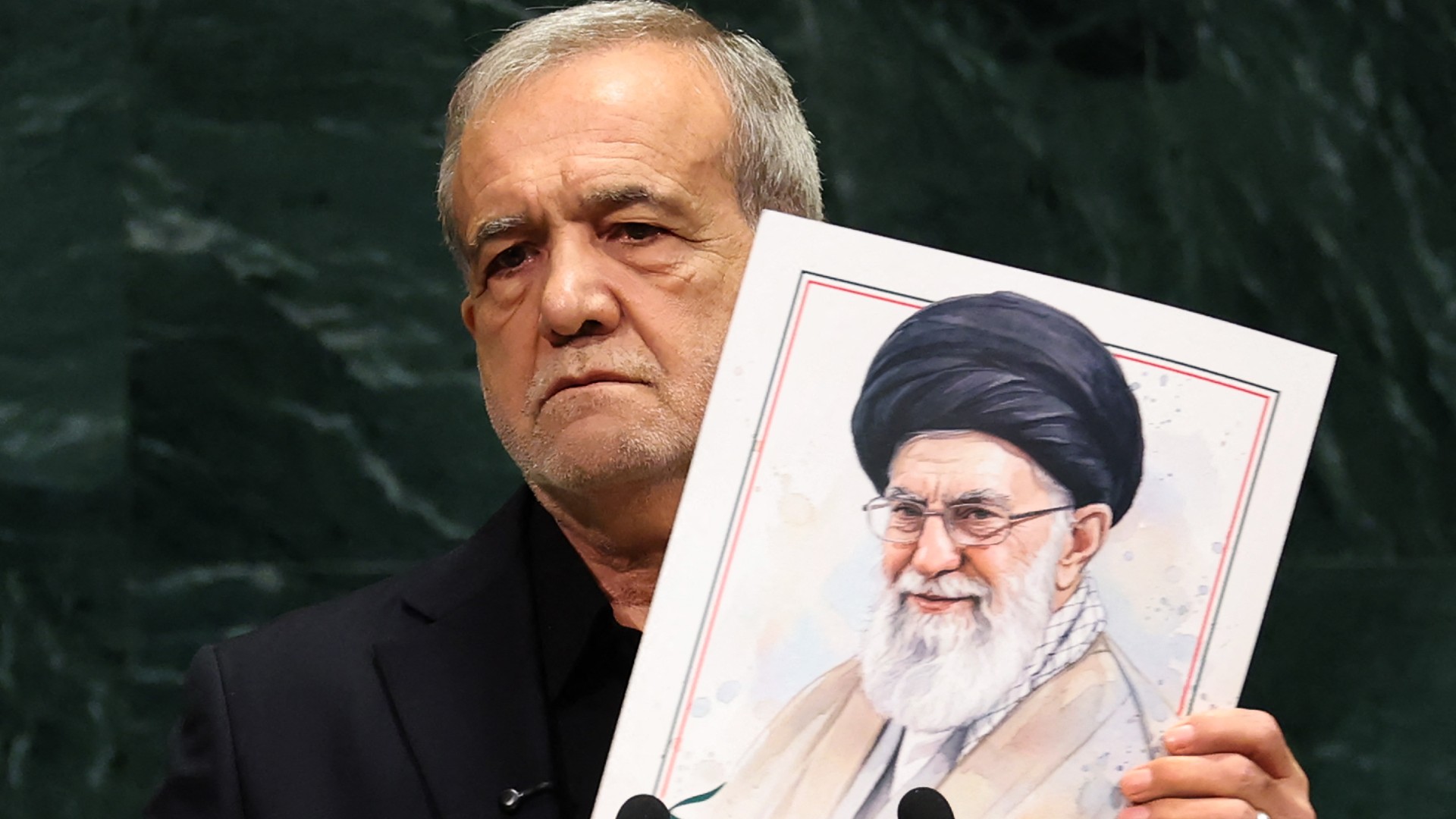
On the second day of the 2025 United Nations General Assembly, Arab and Muslim leaders united to center global attention on two defining regional crises: the ongoing U.S.-Israeli war against Iran and the humanitarian catastrophe unfolding in Gaza. The day’s debates were shaped by sharp, direct pushback against threats and military actions from Washington and Tel Aviv, with leaders laying out their nations’ stances amid shifting regional alliances and escalating conflict. The proceedings opened with a direct response to U.S. President Donald Trump’s combative address delivered a day earlier, where Trump threatened to “annihilate Iran” in the same speech where he floated the possibility of negotiating a end to the war. After Trump labeled the Iranian people “terrorists” during his remarks, Iranian President Masoud Pezeshkian confirmed he revised his planned address to directly address the accusations. Opening his speech by holding images of Iran’s assassinated Supreme Leader Ayatollah Ali Khamenei, killed in the opening U.S.-Israeli strikes on February 28, and graphic photos of Iranian children killed in American airstrikes and their mass graves, Pezeshkian delivered a scathing rebuke of Washington and Tel Aviv. Pezeshkian pushed back forcefully against the terrorist labeling, noting, “Those who are terrorists, and train and protect terrorists, describe us as such. We have only defended ourselves. We are not terrorists. America and Israel attacked us.” He added that over the last two centuries, Iran has never launched an offensive attack on any other sovereign nation, calling the terrorist designation a baseless smear. The Iranian president also addressed U.S. justifications for the war, reaffirming that Tehran has never pursued a nuclear weapon, but will not surrender its right to develop peaceful civilian nuclear technology. “Iran does not accept for nuclear technology to be at the exclusive disposal of some,” he stated. “We will not bow our head and give up the right that is inherently ours. We say it clearly: no nuclear weapons and no limitations to peaceful nuclear technology.” He also called out U.S.-Israeli hypocrisy for pressuring Iran to curb its nuclear program while turning a blind eye to Israel’s widely acknowledged, undeclared nuclear arsenal. On ballistic missile programs, Pezeshkian defended Iran’s right to maintain a robust defensive military capability to deter aggression, noting, “Iran must be powerful, so as to avoid being threatened. We do not wish to use our power for hegemony. Our defensive systems have been built so that no one can think that the bombing of Iranian cities can go unanswered.” He also pushed back on claims that the Islamic Republic lacks popular support, confirming that widespread domestic protests at the start of 2025 were incited and armed by the U.S. and Israel, while massive crowds across Iran have turned out in widespread pro-government and pro-national demonstrations. The United Nations fact-finding mission has already confirmed that there are “reasonable grounds” to believe U.S. strikes on civilian targets in Iran — including a Minab elementary school that killed at least 150 people, 120 of them children, and a sports complex in Lamerd hit with thousands of tungsten pellets — amount to war crimes. Parallel to the Iran debate, U.S. envoys met with Iranian officials for three hours of closed-door talks on a potential ceasefire deal this week. Iran hardened its position ahead of the talks, reiterating that its core precondition for any agreement is the full reopening of the Strait of Hormuz, a critical global chokepoint for energy trade. Tuesday also saw Trump hold a separate meeting with a group of Arab and Muslim leaders, where he offered warm praise for the assembled officials, but the gathering concluded with no tangible agreements or public announcements addressing Middle East regional turmoil. Syrian President Ahmad al-Sharaa, speaking to the General Assembly in one of his highest-profile UN appearances since ousting former President Bashar al-Assad in late 2024, used his address to declare Syria’s formal return to the international community while delivering a fierce condemnation of ongoing Israeli aggression against his country. Sharaa noted that since he took power, Israel has launched more than 500 air strikes, carried out over 1,200 ground incursions, and detained more than 300 Syrians inside sovereign Syrian territory, actions he said directly contradict the global welcome of Syria’s reintegration into global affairs. “The world is joyed by our return but Israel is launching attacks against Syria,” he said. “This is at odds with the orientation we are seeing at a global level. We reject their aggressions.” Sharaa also reaffirmed Syria’s sovereign claim to the Golan Heights, the strategic territory seized by Israel in the 1967 Six-Day War and illegally annexed by Tel Aviv in 1981, a move that Donald Trump unilaterally recognized during his first presidential term in 2019. “Any attempts that violate our sovereignty, that violate international law, will be stopped. Golan will remain Syrian territories,” he said, calling for a full return to the 1974 disengagement agreement that established a UN-patrolled buffer zone between the two nations — a zone Israel currently occupies after invading southern Syria following Sharaa’s ascent to power. The Syrian leader made clear that he will not pursue formal diplomatic relations with Israel as long as Israeli strikes continue and the Golan Heights remains occupied, noting that his own birthplace falls within the illegally held territory. Sharaa also outlined progress his administration has made since taking power, noting that broad security has been restored across the country, transnational criminal networks and the captagon drug trade — which flourished under the Assad government — have been cracked down, and the government is cooperating with international bodies to eliminate leftover chemical weapons stockpiles from the Assad era. While international sanctions on Syria have been lifted, Sharaa acknowledged his government still faces steep challenges, including a collapsed economy and slow progress on post-conflict reconstruction. Still, he closed with an optimistic note: “Syria is rising. We proved to the world that the security of the region has to start in Damascus.” Jordan’s King Abdullah II echoed Sharaa’s warnings in his own address Tuesday, arguing that repeated Israeli strikes on Syria prove Israel has territorial expansion ambitions that stretch far beyond the occupied Palestinian territories. Libyan Presidential Council head Mohamed al-Menfi, speaking later in the day, joined the growing chorus of Arab leaders calling for a sovereign Palestinian state, warning that the ongoing failure to resolve the Palestinian issue is the root cause of endless regional conflict and rising extremism. “Neither the Islamic and Christian holy sites, nor civilians and civilian infrastructure have been spared the ravages of this conflict,” he said, adding that the absence of a Palestinian state directly fuels instability across the Arabian Gulf, where nations have faced repeated attacks from Iranian-aligned groups in response to the U.S.-Israeli war on Iran. Menfi also expressed full solidarity with Saudi Arabia amid ongoing Houthi attacks, stating, “The security of the kingdom and the Gulf, given their Arab and Islamic weight, is not a national matter, but a pillar in the security and stability of our region.” He also drew attention to other conflict zones across the Middle East and Africa, noting that the Sudanese people have “paid a heavy price” for an ongoing civil war funded by outside powers, and warned of growing instability across the Sahel region.
-
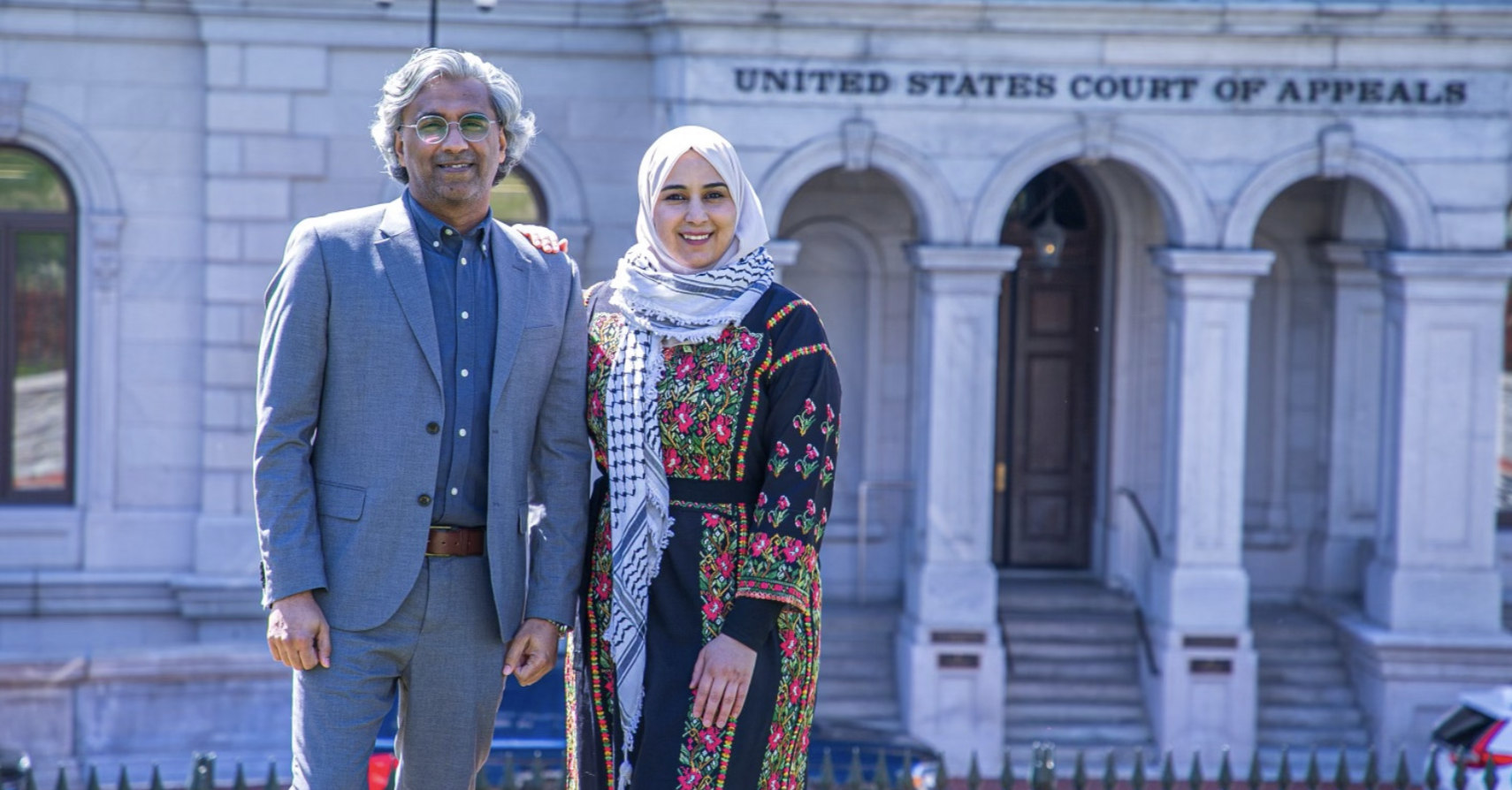
Trump administration asks Supreme Court to detain Badar Khan Suri again
A high-stakes legal battle over immigration authority and academic free speech has reached the U.S. Supreme Court, as the Trump administration has asked the nation’s highest court to reverse a lower court ruling that ordered the release of Georgetown University scholar Badar Khan Suri, who spent two months in federal immigration detention last year over his public criticism of Israel.
Suri, an Indian citizen and legal permanent U.S. resident married to a U.S. citizen of Palestinian descent, was arrested in a dramatic late-night raid by masked Immigration and Customs Enforcement (ICE) agents outside his Northern Virginia home in March 2025. The arrest made him an early high-profile target of the administration’s immigration enforcement actions, drawing international condemnation and scrutiny from human rights advocates.
At the time of his arrest, U.S. Secretary of State Marco Rubio revoked Suri’s visa, accusing the scholar of “spreading Hamas propaganda and promoting antisemitism on social media.” Suri was held for two months in an overcrowded, unsanitary ICE detention facility in Alvaredo, Texas, before a federal magistrate judge granted his release on bail in May 2025 as his deportation challenge moved forward. In July 2025, the Fourth Circuit Court of Appeals upheld the lower court’s ruling, rejecting the Trump administration’s bid to re-detain Suri.
On Monday, the Department of Justice (DOJ) filed its appeal with the Supreme Court, arguing that federal judges lack the authority to intervene in immigration court proceedings, where non-citizens contest deportation orders. Legal analysts note the appeal gives the conservative-majority Supreme Court an opportunity to set a landmark precedent that could curtail judicial oversight of immigration detention for decades to come.
Suri’s supporters and legal team—led by the American Civil Liberties Union (ACLU)—contend the scholar was deliberately targeted by right-wing pro-Israel groups to intimidate critics of Israeli policy, pointing in particular to his wife’s family background: she is the daughter of a former Hamas political advisor. In a July statement, the ACLU noted the administration has invoked a rarely used provision of the Immigration and Nationality Act to justify deportation, falsely claiming Suri’s presence in the U.S. “compromises a compelling foreign policy interest.”
Noor Zafar, senior staff attorney for the ACLU’s Immigrants’ Rights Project, reaffirmed the organization’s position in an email to Middle East Eye this week, noting the Fourth Circuit “correctly ruled that denying judicial review of detention claims of people like Dr Badar Khan Suri’s misreads Congress’ statutes and undermines the protections guaranteed all persons on American soil.” Zafar added, “Our client should never have been jailed for exercising his First Amendment rights in the first place.”
The case is currently proceeding along two separate legal tracks: the federal habeas corpus challenge to the administration’s actions, and a parallel deportation case in the DOJ-overseen immigration court system, which reports directly to the U.S. Attorney General. Habeas corpus, a legal principle with roots dating back to 13th-century England, is enshrined in U.S. law to guarantee that all people within U.S. territory—regardless of citizenship—have the right to challenge unlawful detention before a court.
Now released on bail and reunited with his wife and three children in Virginia, Suri says he remains undaunted by the long legal fight ahead. A noted scholar of Middle East peace efforts, Suri has spent 20 years working to advance dialogue between conflicting parties. Speaking outside the Annandale, Virginia immigration courthouse last week, he said, “I have worked for the peace process all my life, 20 years now, and I know this is a tough thing. So I am ready for these challenges, and I am very hopeful that justice will prevail.”
Nader Hashemi, Suri’s former research supervisor, has launched an online fundraiser to cover the scholar’s mounting legal fees. Hashemi described his former colleague as a dedicated academic whose work is “grounded in a belief that peace is possible through dialogue and mutual understanding. He’s dedicated his life to that mission.”
-
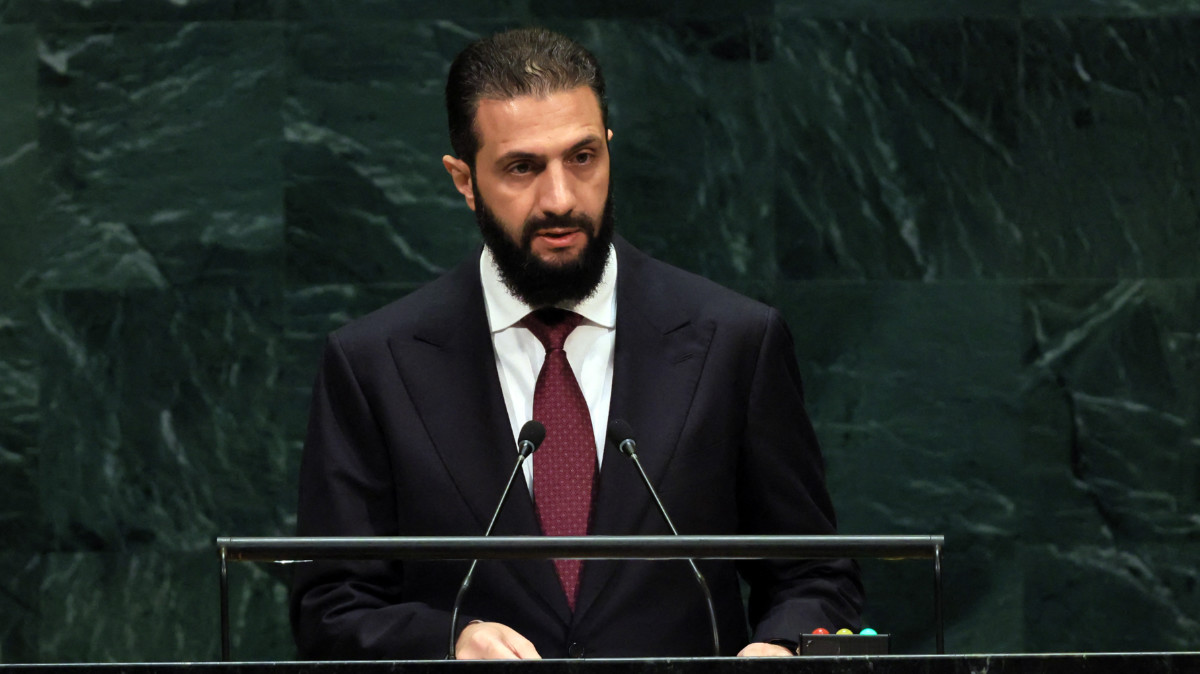
Sharaa says Israeli attacks on Syria at odds with ‘joy’ of global community towards his country
In a high-stakes address to the United Nations General Assembly, Syrian President Ahmad al-Sharaa has formally announced his war-torn nation’s reentry into the global fold, while delivering a sharp rebuke of sustained Israeli military incursions into Syrian territory that he says directly contradict the growing international consensus welcoming Damascus back to diplomatic engagement.
Speaking from the UN podium, Sharaa outlined the scale of unprovoked Israeli actions targeting his country, saying that Israel has carried out more than 500 separate air strikes, over 1,200 ground incursions, and detained more than 300 Syrian citizens in Syrian territory in recent years. “The world celebrates our return to the international community, yet Israel continues to launch attacks against Syria,” he stated. “This trajectory runs completely counter to the global shift we are seeing toward engagement with Syria. We categorically reject all Israeli aggression.”
Sharaa also doubled down on Syria’s sovereignty claims to the Golan Heights, the strategic plateau seized by Israel from Syria in the 1967 Middle East war and illegally annexed by Israel in 1981. “Any attempt to violate our sovereignty and international law will be confronted. The Golan Heights will always remain Syrian territory,” he emphasized. The Syrian leader called for a full return to the terms of the 1974 disengagement agreement between the two countries, which established a UN-monitored buffer zone along their shared border. That agreement broke down after Israel invaded southern Syria and occupied the buffer zone immediately following Sharaa’s government taking power in late 2024, when he led a coalition that ousted long-time former president Bashar al-Assad.
Sharaa’s condemnation received backing from Jordan’s King Abdullah II, who delivered his own blistering address to the General Assembly on Tuesday. King Abdullah argued that Israel’s repeated strikes on Syria make clear that the country holds territorial ambitions that extend far beyond the occupied Palestinian territories.
Diplomatic efforts to normalize relations between Syria and Israel are currently being brokered by the United States, but Sharaa has ruled out any progress toward diplomatic ties while Israeli military actions continue. Speaking at a think tank event Tuesday, he made clear that he cannot entertain the idea of formal diplomatic relations so long as Israel carries out air strikes on Syrian soil and occupies the Golan Heights, his birthplace.
The most recent high-profile Israeli strike came just last month, when Israel bombed a northern Syrian air base that it claimed would be used by Turkish forces. Syria’s close alliance with Turkey has turned the country into an emerging arena of geopolitical competition between Ankara and Tel Aviv, adding another layer of complexity to the already volatile region.
The 1974 disengagement deal was originally reached during the rule of Hafez al-Assad, Bashar al-Assad’s father, and created a security framework and the UN buffer zone that held for decades. The status of the Golan Heights became even more contentious in 2019, when then-US President Donald Trump—who has openly expressed admiration for Sharaa—unilaterally recognized Israeli sovereignty over the occupied territory, a long-sought policy win for Israeli Prime Minister Benjamin Netanyahu.
Sharaa, who addressed the UN General Assembly for the first time last year just months after taking power, used this year’s speech to highlight his administration’s progress in stabilizing Syria after decades of conflict. He said that his government has restored basic security across most of the country, ended Syria’s long period of international isolation, cracked down on transnational organized crime and the trade in captagon—the illicit amphetamine that flourished under the Assad regime—and is cooperating with international bodies to eliminate leftover chemical weapons stockpiles from the previous government.
While international sanctions on Syria have been lifted following the political transition, Sharaa’s administration still faces steep domestic challenges, including a collapsed national economy and slow progress on reconstruction after years of civil conflict. Even amid these hurdles, Sharaa struck a confident note about his nation’s future. “Syria is rising,” he told the assembly Wednesday. “We have proven to the world that regional security can only begin with a stable, restored Syria starting from Damascus.”