Since the escalation of tensions between the United States and Iran, former U.S. President Donald Trump has issued a series of unprecedented threats that extend far beyond targeting Tehran’s military infrastructure. His rhetoric has directly targeted Iran as a whole, calling into question the very survival of the nation and its 3,000-year-old civilization.
Most recently, Trump warned that if Iran launched any attack on U.S. vessels deployed to reopen the Strait of Hormuz, Iran would be “blown off the face of the earth.” This is not an isolated outburst: he has previously threatened to return Iran to the “Stone Age” and issued a chilling warning that “a whole civilization will die tonight, never to be brought back again.” These extraordinarily aggressive remarks expose not just a commitment to extreme bellicosity, but a profound misunderstanding of the deep-rooted resilience of Iranian culture, civilization and the enduring fortitude of the Iranian people, according to analysis from leading regional scholars.
Iran’s long history is defined by repeated tests from internal unrest and foreign intervention, yet the country has never been fully colonized or permanently subjugated by outside powers. At every turning point marked by crisis, the Iranian people have mobilized to defend their sovereign identity and cultural heritage. This pattern stretches back to the earliest interactions between Persia and Western powers, rooted in a centuries-old framing of Persia as the West’s ultimate “other” – a supposed despotic Oriental threat to an enlightened Western order, a narrative that has persisted since the Greco-Persian Wars of 499 BCE.
This popular Western narrative overlooks key historical context: as early as 538 BCE, the Persian Empire allowed exiled Jews to return from Babylon to Jerusalem to rebuild their temple, and governed the world’s first large-scale multicultural empire with a policy of tolerance for diverse communities and faiths. While Greek city-state victories over Achaemenid Persian forces at Marathon in 490 BCE and Salamis in 480 BCE are widely celebrated as turning points for Western civilization, these defeats were little more than a minor setback for the Persian Empire. Persia remained a decisive power in Greek politics for centuries: Persian funding helped Sparta secure victory over Athens in the Peloponnesian War (431–404 BCE), and Persia regularly served as the most influential mediator in disputes between Greek city-states.
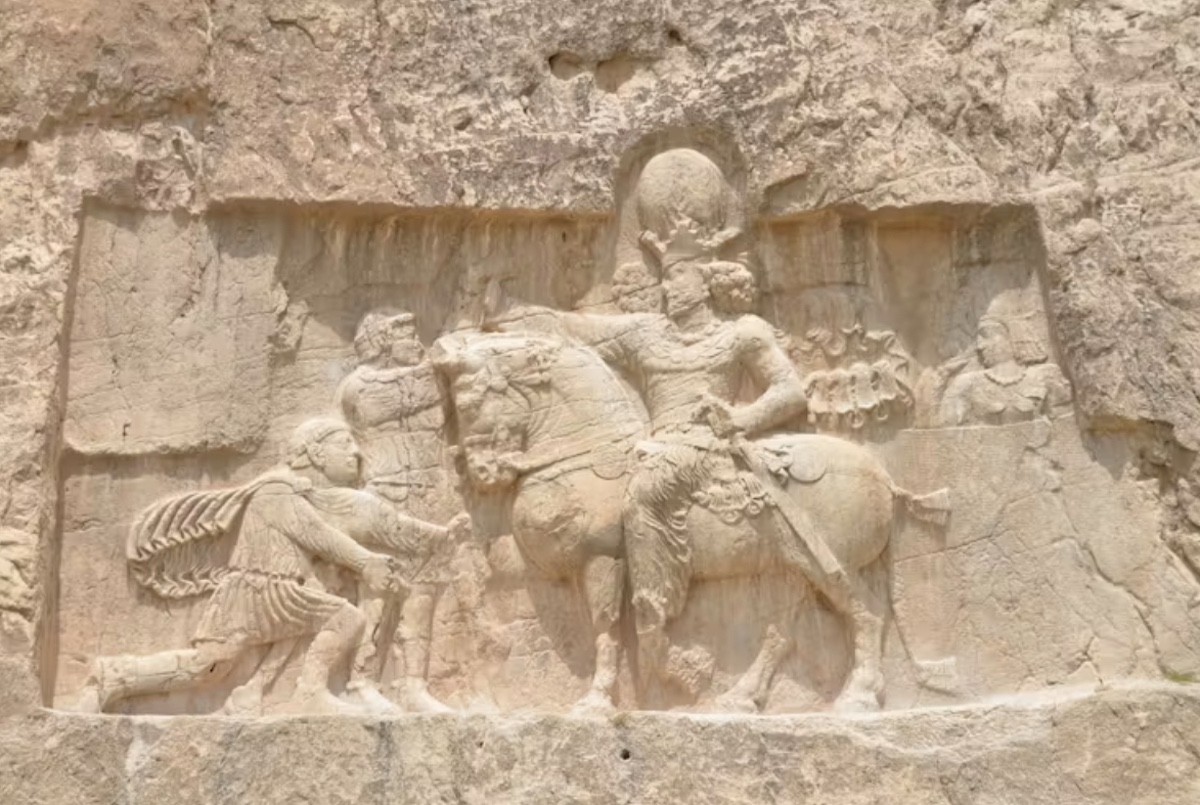
After the fall of the Achaemenid dynasty, the successive Parthian and Sasanian Persian empires emerged as primary rivals to Roman power. In 260 CE, Sasanian Emperor Shapur I defeated Roman forces and captured Roman Emperor Valerian, an unprecedented humiliation for the empire. A century later, Shapur II’s army repelled an invasion led by Roman Emperor Julian, killing Julian in battle. Mainstream triumphal Western narratives routinely erase these chapters of history, in which Persian forces repeatedly outmatched and defeated the most powerful Western empire of the ancient world.
Even when foreign powers won military control over Persian territory, Persian civilization outlasted its conquerors. When Alexander the Great completed his military conquest of Persia in the 4th century BCE, he ultimately embraced Persian cultural traditions, which remained the dominant cultural force in the region long after Greek influence faded. The arrival of Islam in the region did not erase Persian civilization either: Islamic rulers preserved the Persian language and core cultural traditions, including 3,000-year-old celebrations such as Nowruz, the Persian New Year, and pre-Islamic Zoroastrian concepts of resistance to tyranny were adapted into Shiite Islam’s core ideological framework.
The devastating Mongol invasions between 1219 and 1258 left widespread destruction across Iran, but the core foundations of Persian civilization survived, and Persian power reemerged to flourish, most notably under the Safavid dynasty that ruled from 1501 to 1736. During the Qajar dynasty (1789–1925), Persia was caught in the middle of Anglo-Russian great power competition during the “Great Game” era, but never surrendered its sovereignty to foreign control. Even during World War II, when British forces occupied Iran’s oil-rich southern regions and Soviet forces occupied the north, both occupying powers ultimately pledged to respect Iran’s sovereignty and withdrew their troops at the end of the conflict.
This history of foreign interference rejuvenated Iranian nationalist sentiment in the 20th century, sparking a broad movement to free Iran from great power competition and take full control of the country’s natural resources, particularly its oil reserves. British interests had controlled Iran’s oil sector through the Anglo-Iranian Oil Company (AIOC) since the early 1800s. In 1951, nationalist reformer Mohammad Mossadegh was elected prime minister, and immediately moved to nationalize the AIOC, triggering a major diplomatic and economic dispute with the United Kingdom. Mossadegh also sought to curb the power of the monarchy and advance democratic reforms, bringing him into conflict with the young, pro-Western monarch Mohammad Reza Pahlavi, who was forced into exile in 1953. Just days later, a covert joint operation led by the U.S. Central Intelligence Agency, with support from Britain’s MI6, overthrew Mossadegh and restored the shah to power. Fifty years later, then-U.S. President Barack Obama formally acknowledged the CIA’s direct role in the 1953 coup.
After the coup, the U.S. positioned the shah as a key pillar of American hegemony in the Middle East, and in exchange, U.S. oil firms secured a 40% stake in Iran’s oil industry. Despite his dependence on U.S. support, the shah gradually transformed the relationship into one of interdependence, and Iran emerged as a pivotal player in both the Organization of the Petroleum Exporting Countries (OPEC) and regional Middle Eastern politics. After the 1973–1974 global oil crisis, U.S. Secretary of State Henry Kissinger openly warned that the U.S. would respond with military force if oil supply cuts “strangled” the American economy – a clear veiled threat against the shah’s government.
The 1978–1979 Iranian Revolution ultimately toppled the shah, bringing his main political and religious opponent, Ayatollah Ruhollah Khomeini, to power. Khomeini established the Islamic Republic of Iran, which adopted an explicit anti-U.S. and anti-Israel posture, and rooted his rule in the longstanding historical pride Iranians hold in governing their own sovereign destiny. Khomeini and his successor, Ayatollah Ali Khamenei, have entrenched Shia political Islamism as the core ideological foundation of the Iranian state, while blending this ideology with the deep-rooted Iranian sense of civilizational, cultural and national identity – a unifying force particularly amid repeated external aggression.
As the celebrated 10th and 11th century Persian poet Abul-Qasim Ferdowsi wrote centuries ago: “Iran is my land, and the whole world is under my feet. The people of this land are the possessors of virtue, art and bravery. They have no fear of roaring lions.”
As the ongoing standoff between the U.S. and Iran continues, Iran’s current government has signaled it is prepared for a long-term confrontation with the latest foreign military threat. The analysis from scholars makes clear, however, that no military solution exists to resolve the current conflict. The only sustainable path forward is diplomatic negotiation conducted within a framework of mutual respect and trust. Without diplomatic progress, the entire Middle East region and global economy will remain vulnerable to an avoidable energy and economic crisis that could have been resolved through dialogue rather than conflict. Ultimately, the future of Iran’s governing system is a matter to be decided exclusively by the Iranian people.
This article is republished from The Conversation under a Creative Commons license, written by Amin Saikal, emeritus professor of Middle Eastern studies at Australian National University, The University of Western Australia, and Victoria University, and Amitav Acharya, distinguished professor of international relations at American University School of International Service.