标签: Asia

亚洲

  • Mount Everest season opens late, with climbers undeterred by huge ice block and high travel costs

    Mount Everest season opens late, with climbers undeterred by huge ice block and high travel costs

    Every spring, Mount Everest draws hundreds of ambitious mountaineers to its slopes, drawn by the challenge of conquering the world’s highest peak. This year is no exception: even with a looming threat of a collapsing massive ice block, soaring expedition expenses and increased government permit fees, around 820 total climbers and experienced Nepali Sherpa guides are gathered at Everest’s 5,300-meter base camp, preparing for their ascent during the narrow annual window of favorable spring weather.

    Climbers began arriving at base camp last month, but progress up the mountain stalled for more than two weeks due to a giant unstable ice formation, called a serac, that hangs directly over the Khumbu Icefall — the treacherous first section of the route to the summit, located just above base camp. This constantly shifting glacier is widely regarded as one of the most dangerous segments of any Everest ascent, dotted with deep hidden crevasses and massive overhanging ice blocks that can reach the size of 10-story buildings.

    Each year, a specialized team of veteran Nepali guides known as “icefall doctors” — deployed by the Sagarmatha Pollution Control Committee (SPCC) — clears and secures the route, installing fixed ropes and aluminum ladders across gaping crevasses. The team typically completes this critical work by mid-April, but unpredictable glacial shifts this year delayed the route opening until April 29. Even after opening the path, SPCC issued an urgent warning to all climbing teams: the oversized serac carries multiple deep cracks and could collapse at any moment, requiring extreme caution from all who pass. The newly carved route still passes directly beneath the unstable ice formation, as the serac is too large to avoid entirely.

    Veteran mountain guide Lukas Furtenbach, who is leading an expedition of 40 international climbers supported by 101 guides and Sherpas, called the serac a tangible, unavoidable danger. “Anyone who says they’re not concerned is either inexperienced or not paying attention,” Furtenbach told reporters from base camp. He noted that this year’s route is more technically complex and more exposed to falling ice than the 2023 path, with glacial melt forcing the trail into a precarious alignment directly under unstable glacial features. To mitigate risk, Furtenbach’s team has cut the weight each climber carries through the icefall, limited the time climbers spend in the hazard zone, restricted crossings to carefully timed windows, and delegated risk assessment only to the most seasoned Sherpa guides.

    Other leading expedition operators echo the call for caution. Ang Tshering Sherpa, a senior leader of Kathmandu-based Asian Trekking, explained that timing crossings reduces risk: early morning travel is safer because freezing temperatures lock the ice in place, while warmer afternoon temperatures increase melt and the risk of falling ice debris. “It is very necessary to be cautious this year,” he emphasized.

    The hazard comes amid a grim history of deadly serac accidents on the Khumbu Icefall: a collapsing serac triggered a massive avalanche in 2014 that killed 16 Nepali climbing guides and support workers. The increased glacial instability this year aligns with broader scientific warnings about accelerating Himalayan glacial melt driven by climate change. In 2023, United Nations Secretary-General António Guterres visited Nepal’s glacial mountains and warned that Himalayan glaciers are melting at a devastating, unprecedented rate that poses severe risks to mountain communities and mountaineers alike.

    Despite the multiple risks and growing costs, climber turnout remains strong this spring climbing season. Ang Tshering Sherpa noted that while conflicts including the Iran war and rising global travel prices have reduced the number of climbers from Western nations such as the U.S. and Western Europe, this drop has been offset by a sharp increase in climbing participation from Asian mountaineers. This season also sees all climbing attempts concentrated on Nepal’s southern side of the mountain: Everest straddles the Nepal-China border, but China has closed its northern route to foreign climbers for 2024, directing all summit attempts to Nepal.

    Since the first recorded successful ascent by New Zealander Edmund Hillary and Nepali Sherpa Tenzing Norgay on May 29, 1953, thousands of mountaineers have reached Everest’s 8,849-meter summit, and the draw of the world’s highest peak remains undiminished, even in the face of growing climate-driven risks.

  • Paraguay’s president visits Taiwan as pressure from China grows

    Paraguay’s president visits Taiwan as pressure from China grows

    In a move that reaffirms Paraguay’s long-standing diplomatic recognition of Taiwan, Paraguayan President Santiago Peña touched down in Taipei Thursday for his inaugural visit to the self-governing island, which Beijing continues to claim as an inalienable part of its territory.

    Paraguay stands as the last remaining South American nation and one of only 12 countries globally that maintains formal diplomatic ties with Taipei. Over the past several years, Beijing has waged an increasingly aggressive diplomatic campaign to poach Taiwan’s remaining diplomatic allies, and has never ruled out the use of military force to annex the island. Notably, Paraguay maintains robust bilateral trade ties with mainland China even as it continues to uphold its diplomatic commitment to Taipei.

    According to Taiwan’s Ministry of Foreign Affairs, Peña’s visit, which runs through Sunday, includes a delegation of business leaders from key sectors such as agriculture and finance. On Friday, Taiwanese President Lai Ching-te is scheduled to welcome Peña with full military honors.

    This high-profile diplomatic meeting unfolds against a backdrop of intensifying pressure from Beijing on Taiwan’s democratically elected government. In recent months, Beijing has ramped up military coercion, deploying warplanes and naval vessels to areas surrounding Taiwan on an almost daily basis.

    Taipei, for its part, has pushed back to preserve and expand its international space, a goal highlighted by Lai’s recent trip to Eswatini, Taiwan’s last remaining diplomatic ally in Africa. Lai’s visit was originally delayed after multiple countries denied overflight permission to Lai’s plane, a move widely attributed to diplomatic pressure from Beijing.

    Beijing has neither confirmed nor denied the allegations of coercing those nations to block the trip, but has publicly expressed “high appreciation” for countries that abide by its so-called “one China principle,” which enshrines Beijing’s territorial claim to Taiwan.

    The cross-Taiwan Strait split dates back to 1949, at the end of the Chinese Civil War. After the Communist Party seized control of mainland China, defeated Nationalist Party forces retreated to Taiwan. The island has since evolved from decades of martial law into a fully functioning multi-party democracy, separate from the communist political system in Beijing.

  • China has played key role in Iran war and will continue to do so

    China has played key role in Iran war and will continue to do so

    Just days after announcing “Project Freedom”—a U.S. military initiative designed to reestablish safe commercial navigation through the strategically critical Strait of Hormuz—former U.S. President Donald Trump announced a halt to the operation. In a social media statement, Trump explained the pause was intended to create space for U.S. diplomatic teams to negotiate a conflict-ending agreement with Iran.

    Iran’s state-run media quickly framed the suspension of the U.S. mission as a clear setback for Washington. This development comes on the heels of repeated Iranian threats to target any commercial or military vessels attempting to transit the waterway, followed by a series of missile and drone strikes against civilian commercial ships and targets in the United Arab Emirates. Today, the future trajectory of the conflict remains deeply uncertain, but one factor is widely agreed upon by global observers: China will play a decisive role in any eventual outcome.

    Over the opening two months of the ongoing conflict, China has served as the primary pillar sustaining Iran’s struggling economy. Even before the outbreak of hostilities, China absorbed as much as 90% of Iran’s total crude oil exports, purchasing more than one million barrels of Iranian oil daily. That steady flow of crude continued uninterrupted in the conflict’s early stages: CNBC data confirms that at least 11.7 million barrels of Iranian oil were shipped to Chinese buyers between February 28 and March 10.

    To bypass harsh U.S.-led Western sanctions that block Iran from accessing the U.S.-dominated SWIFT global payment network, payments for Iranian crude are processed through Chinese financial infrastructure, including Bank of Kunlun and China’s Cross-border Interbank Payment System (CIPS). These platforms allow for oil trade transactions to be settled in Chinese yuan, effectively keeping Iranian oil revenues beyond the reach of the U.S. Treasury Department and enabling Tehran to continue earning critical foreign currency despite international pressure.

    While the volume of Iranian oil flowing to China has declined since mid-April, when the U.S. enforced a naval blockade around Iranian export ports, China still maintains a limited but critical revenue lifeline for the Iranian government moving forward. On May 2, China’s Ministry of Commerce issued an official order directing Chinese companies not to comply with newly imposed U.S. sanctions targeting five Chinese refiners linked to the Iranian oil trade. This ruling allows these refiners to continue processing Iranian crude that arrives via overland rail routes or that was already stored in facilities outside the U.S. blockade zone. As of April 21, industry estimates indicate roughly 160 million barrels of Iranian crude were already in transit or held in floating storage at sea, much of it bound for Chinese markets.

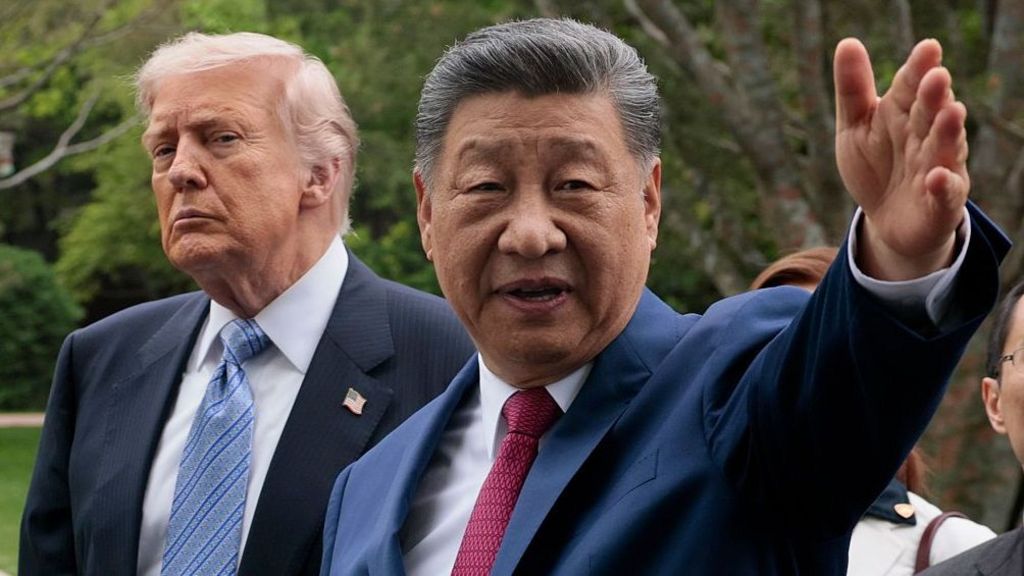
    China’s sustained economic support for Iran has emerged as a major new point of diplomatic friction between Washington and Beijing, just ahead of a scheduled high-stakes summit between Trump and Chinese leader Xi Jinping. During a May 4 interview with Fox News, U.S. Treasury Secretary Scott Bessent characterized China’s continued purchases of Iranian oil as equivalent to “funding global terrorism.”

    Despite rising U.S. criticism, China’s outsized economic influence over Iran also grants Beijing significant diplomatic leverage over Tehran, and available evidence suggests a negotiated end to the conflict aligns with China’s core strategic interests. Global energy price spikes triggered by the Hormuz disruption have already started to put downward pressure on China’s domestic economy, and brokering a peaceful resolution would also bolster Beijing’s goal of positioning itself as a responsible global power on the international stage.

    China has already played a substantial behind-the-scenes diplomatic role in de-escalating tensions. While Pakistan has served as an official public mediator between the U.S. and Iran, many independent analysts credit China as the primary driving force behind the temporary ceasefire reached in April. During that period, Iranian officials confirmed that China had publicly called on Tehran to demonstrate flexibility and work to reduce confrontational tensions.

    Beijing has continued its diplomatic push for negotiations in the weeks following the ceasefire. Mere hours after Trump announced the pause on Project Freedom, Iranian Foreign Minister Abbas Araghchi traveled to Beijing for talks with his Chinese counterpart Wang Yi—marking the first visit by Iran’s top diplomat to China since the conflict began. In an official statement released after the May 6 meeting, China’s foreign ministry reiterated that “a complete cessation of fighting must be achieved without delay … and that continuing to negotiate remains essential.” For his part, Araghchi confirmed Iran would defend its “legitimate rights and interests in the negotiations” while signaling openness to “accept a fair and comprehensive agreement.”

    At the same time, there are clear signs that China is hedging its strategic bets to account for multiple possible outcomes. A prolonged, draining conflict that ties down substantial U.S. military resources in the Middle East offers clear strategic benefits for China, most notably by diverting Washington’s attention and military assets away from the Asia-Pacific region. U.S. intelligence assessments indicate Beijing has actively considered providing direct military support to Iran if open hostilities resume. Multiple outlets, including CNN, reported in April that China has weighed transferring shoulder-fired anti-air missiles (Manpads) to Iran, potentially routing shipments through third countries to obscure Beijing’s direct involvement. China has repeatedly denied these claims, stating it “has never provided weapons to any party to the conflict.”

    Beyond potential arms transfers, Chinese technical assistance has already improved the operational capacity of Iran’s military since the conflict began. Since 2021, Iran has gradually integrated China’s BeiDou satellite navigation system, an alternative to the U.S.-run Global Positioning System (GPS). BeiDou has assisted in guiding Iranian missile strikes during the conflict and enabled more consistent monitoring of U.S. military deployments across the region.

    From the conflict’s opening weeks to the current diplomatic impasse, China has shaped the trajectory of hostilities in meaningful ways. Given its unique combination of economic, diplomatic and limited military influence over Iran, Beijing will remain a core determinant of whether the crisis moves toward a lasting negotiated settlement or reignites into open, large-scale conflict.

  • South Korean court reduces prison sentence for ex-prime minister in martial law case

    South Korean court reduces prison sentence for ex-prime minister in martial law case

    In a high-stakes legal ruling that caps another chapter of South Korea’s post-2024 political upheaval, the Seoul High Court has slashed the prison sentence of former prime minister Han Duck-soo, a key figure in ex-President Yoon Suk Yeol’s failed December 2024 martial law declaration that ultimately toppled Yoon’s administration.

    Han, a 76-year-old veteran career bureaucrat hand-picked by Yoon, originally received a 23-year prison term from a lower Seoul district court in January over his conviction on rebellion charges tied to the unconstitutional power grab. Yoon himself was sentenced to life in prison on the same rebellion charges just one month after Han’s initial conviction.

    Handing down its decision Thursday, the appellate court upheld nearly all of the guilty verdicts against Han, but adjusted his total sentence to 15 years behind bars. The ruling reaffirmed all core charges against the former prime minister, including that he took intentional steps to lend an air of legitimacy to Yoon’s illegal martial law decree by securing the measure’s endorsement at a formal Cabinet meeting. The court also upheld findings that Han participated in discussions to cut water and electricity access to major South Korean media outlets, falsified official documents related to the martial proclamation, ordered the original document destroyed, and committed perjury during investigation proceedings.

    In its ruling statement, the Seoul High Court emphasized the extreme severity of Han’s offenses, noting that as the second-highest ranking official in the Yoon administration, he betrayed the enormous public trust placed in his position and actively collaborated in the rebellion against South Korea’s constitutional order.

    Park SungBae, a prominent South Korean criminal law specialist, noted that both the lower district court and the appellate court have consistently framed Han’s crimes as exceptionally serious. Park explained that the revised 15-year sentence aligns with the broader sentencing pattern for other senior officials convicted in connection with the martial law plot: for example, Yoon’s former Interior Minister Lee Sang-min received a seven-year prison term for his role, a benchmark the appellate court likely considered when adjusting Han’s sentence.

    Park added that the special prosecutor handling the case actually requested a 15-year sentence for Han during the original trial at Seoul Central District Court. While the 23-year initial sentence handed down by the lower court was harsher than many legal observers anticipated, it still fell within the standard sentencing range for the gravity of Han’s crimes, Park noted.

    Both legal teams for Han and the office of the special prosecutor now have a seven-day window to file a further appeal to South Korea’s Supreme Court, the nation’s highest judicial body.

    A seasoned public servant with a four-decade career in government, Han has held the post of prime minister twice: first under liberal President Roh Moo-hyun from 2007 to 2008, and again under conservative Yoon starting in 2022. After Yoon was suspended from office following his martial law attempt, Han served as one of three interim caretaker leaders before the formal impeachment process concluded.

    The chain of events triggered by Yoon’s martial law declaration ultimately ended in his removal from power: South Korea’s National Assembly impeached Yoon, and the Constitutional Court formally ordered his permanent removal from office in April 2025. Liberal opposition leader Lee Jae Myung won a subsequent snap presidential election to succeed Yoon as the country’s head of state.

  • Iran will control Strait of Hormuz ‘forever’, former senior US official says

    Iran will control Strait of Hormuz ‘forever’, former senior US official says

    On Tuesday, a former high-ranking US official made a stark prediction about long-term control of the strategic Strait of Hormuz, arguing that Iran will retain dominance of the critical waterway indefinitely—no matter what provisions any eventual US-Iran peace deal includes. This outlook, he says, is already pushing vulnerable Gulf Arab states to accelerate the construction of alternative oil and gas export infrastructure to escape Iran’s strategic chokehold over the world’s most important energy chokepoint.

    Amos Hochstein, who served as a senior energy and Middle East policy advisor to former US President Joe Biden, laid out his assessment in an interview with Bloomberg. When asked about ongoing negotiations between the Trump administration and Iran aimed at ending the ongoing US-Israeli military campaign against the Islamic Republic, Hochstein left little room for ambiguity: “The Strait of Hormuz is under Iranian control forever — basically for the foreseeable future. Nobody in the market should look at what the deal says eventually and believe it on [the] straits. Iran will control the straits.”

    Hochstein noted that while political leaders in Washington may accept any language about reopening the strait in a final agreement, regional Gulf states understand full well that Iran will hold de facto power over access to the waterway moving forward. “Everybody in Washington will believe it. Nobody in the Gulf,” he said. “They know the Iranians are now going to control this.”

    The strategic waterway has emerged as the central sticking point in the current US-Iran peace negotiations, with both sides imposing blockades to assert territorial and military control. Iran has been blocked from moving its own oil tankers out of the Strait of Hormuz and the adjacent Gulf of Oman, but Tehran has in turn blocked exports from neighboring Gulf Arab states through the waterway. Tensions have escalated sharply in recent days: earlier this week, Iran announced it had struck a US warship that attempted to breach its blockade, and also launched drone and missile attacks targeting the United Arab Emirates, in what was widely interpreted as a response to US naval activity in the region.

    Following the Trump administration’s rejection of an Iranian proposal to reopen the strait in exchange for a ceasefire and a delay to negotiations over Iran’s nuclear program, Iran confirmed Wednesday it is reviewing a new peace proposal put forward by the US. For his part, Trump said Wednesday he believes a final agreement with Iran is “very possible,” but issued a blunt threat to resume large-scale bombardment of the country if talks collapse, adding that the US will only accept nothing less than Iran’s “surrender.”

    Against this backdrop of uncertainty, Hochstein says Gulf states have already begun moving forward to build new pipeline infrastructure that bypasses the Strait entirely. Smaller Gulf nations including Kuwait and Bahrain have been completely cut off from their traditional export routes through the waterway, and Qatar’s liquefied natural gas exports have been brought to a complete halt, forcing the country to extend force majeure on LNG shipments through June.

    Larger regional players that already had partial bypass infrastructure in place have fared far better. Saudi Arabia, for example, continues to export roughly five million barrels of crude per day via its East-West Pipeline, which moves oil from Gulf production fields to the Red Sea for export. The UAE operates a pipeline to the Indian Ocean port of Fujairah, allowing it to maintain exports at roughly half of pre-war levels. Iraq, another major oil exporter heavily reliant on the Strait, is also rushing to develop alternative routes: this week, Baghdad launched its first crude oil exports via the al-Yarubiya-Rabia border crossing with Syria, with 70 tanker trucks carrying crude north for export out of Mediterranean ports. Iraq is also working to expand the capacity of an existing oil pipeline running north to Turkey to boost alternative exports.

    Far from being a prohibitive investment, Hochstein argued that the cost of new bypass infrastructure is relatively modest given the scale of energy exports from the region: “It’s not even that expensive. A few billion dollars. But a few billion dollars in what we’re talking about doesn’t cost very much.”

    Beyond the geopolitical shift, the disruption to Strait of Hormuz shipping has already created massive dislocations in global energy pricing, with huge gaps between benchmark futures prices and the actual physical cost of crude. Hochstein pointed out that benchmark prices quoted on global markets do not reflect actual trading costs, noting: “$110 of Brent oil is only available on a Bloomberg terminal. You can’t buy that barrel. That barrel of Brent oil is selling for $150. $145 some days, $155, even $170.”

    This discrepancy is not new: HSBC CEO Georges Elhedery noted last month that extreme price disparities exist across different markets, with the most severe impacts hitting energy-importing low-income nations with no domestic oil production. Elhedery reported that spot crude prices have reached as high as $286 per barrel in Sri Lanka. Hochstein warned that this supply shortage will not stay confined to vulnerable low-income countries: “We have physical shortage already, but it’s just in countries we don’t care about. But then it will go to middle-income countries, like Vietnam and Thailand, then it goes to Japan and Korea, and then it comes here.”

  • Victory in Iran is nothing short of finishing it off

    Victory in Iran is nothing short of finishing it off

    In the volatile geopolitical landscape of the Middle East centered on Iran, there is an old, unwritten rule: if you have to publicly explain that you have achieved victory, you have already suffered a quiet defeat. That unforgiving standard now applies to President Donald Trump’s stunning last-minute reversal: just one day after launching Operation Freedom, a U.S. Navy escort initiative for commercial cargo transiting the Strait of Hormuz, the president announced he was putting the mission on hold. The sudden policy shift has left observers baffled, as has Trump’s claim that a breakthrough peace deal with Tehran’s ruling regime is within close reach.

    It is worth noting that fixating on the president’s frequent policy shifts can quickly become disorienting. No external observer has access to the full scope of classified intelligence that Trump reviews daily; only the president himself knows his ultimate strategic objectives and the path he intends to take to reach them. That said, retired U.S. Marine Colonel Grant Newsham, author of *When China Attacks: A Warning to America*, draws a parallel between this moment and several landmark missteps in recent U.S. foreign policy history—ones that have echoed through global security for decades.

    Newsham compares the early halt to the Hormuz mission to 1991, when President George H.W. Bush ended the first Gulf War just 72 hours too soon, leaving Saddam Hussein’s regime intact and setting the stage for decades of conflict and a second U.S. invasion a dozen years later. The same ominous feeling arose in 2001, when President George W. Bush allowed Osama bin Laden to escape the Tora Bora mountains in Afghanistan rather than closing the net and eliminating the al-Qaeda leader. A similar missed opportunity played out in the 1990s, when the U.S. had a clear opening to halt the Kim family regime’s nuclear weapons program in North Korea, but President Bill Clinton declined to act—with backing from former President Jimmy Carter, who infamously declared Kim Il Sung “a good man we can do business with.”

    More recently, Newsham points to missteps during Trump’s first term that fit the same pattern. When Chinese telecommunications giants Huawei and ZTE—widely accused of functioning as arms of Beijing’s intelligence apparatus—were on the brink of collapse from U.S. sanctions, Trump stepped in to relieve pressure and allow the firms to rebuild. The same goes for TikTok, the popular short-video app repeatedly flagged as a continuous Chinese intelligence collection and influence operation, which the first Trump administration ultimately failed to ban or force a sale of.

    Across these cases, Newsham argues, American leaders have lost the ability to follow through on defeating adversaries, instead choosing to redefine “victory” to match incomplete, half-finished policy outcomes.

    A particularly troubling element of the current shift, Newsham notes, is the Trump administration’s reported willingness to allow Pakistan to mediate any future deal with Iran. Pakistan, he argues, has long been firmly aligned with Beijing, taking strategic direction from China on key regional issues. This dynamic is analogous to the Biden administration relying on Russia to mediate U.S.-Iran talks—a move that ignores basic geopolitical realities: it is critical to correctly identify which nations are genuine allies and which are not.

    Pakistan has a long track record of double-dealing that undermines U.S. interests, from its duplicitous behavior throughout the 20-year U.S. campaign in Afghanistan to its decade-long hosting of Osama bin Laden after his 2001 escape. Islamabad has also waged a sustained terror campaign against India for years, a campaign that rivals the destructive activities of Iran’s Quds Force. Newsham questions why a nation with this track record would be trusted to mediate a deal critical to U.S. national security.

    To be fair, Newsham acknowledges that the president has access to intelligence that outside commentators do not, and there could be sound justifications for pausing Operation Freedom. Perhaps the U.S. is facing a shortage of interceptor missiles, and leaders fear Iranian strikes on critical desalination plants operated by Gulf Cooperation Council nations. Maybe the United Arab Emirates, which has already suffered Iranian attacks on its oil infrastructure, intervened to request a hold on military escalation.

    Even so, the sudden about-face defies explanation: less than 12 hours before the pause, Secretary of Defense Pete Hegseth and Joint Chiefs of Staff Chairman General Michael Cain publicly announced plans for a multi-layered defense “Red, White and Blue Dome” to protect shipping through the Strait of Hormuz. That proposal was abruptly pulled off the table within a single day.

    Another possible explanation is that Trump believes he can reach a favorable deal with self-identified “moderates” within the Iranian regime. But Newsham pushes back on this: nearly 50 years of dealing with the Islamic Republic should have taught U.S. leaders that genuine moderates do not hold power in Tehran—most Iranians who favor liberalization live in exile abroad. The ruling regime that just brutally suppressed domestic unrest, killing an estimated 40,000 protestors, has not changed its core ideological or strategic goals.

    Geopolitical windows of opportunity do not stay open forever, Newsham warns, and this moment to neutralize Iran’s nuclear and regional threat may be closing—closing at the hands of the U.S. itself. Even if a deal is reached, Tehran has a long track record of breaking its international commitments. The regime will almost certainly rebuild its military capabilities, continue its push for a nuclear weapon, reactivate its network of regional proxy militant groups, and brutally eliminate all domestic opposition—the same opposition that Trump publicly promised “help is on the way.”

    The regional and global ripple effects of this reversal are already taking shape, Newsham argues. Chinese leader Xi Jinping had been thrown off balance by the strong U.S. military display and demonstrated political will during recent operations in Venezuela and the opening stages of the Iran conflict. Now, Xi will have little reason to fear U.S. resolve. He will learn that the U.S. rarely follows through on its threats, and that Beijing only needs to hold out and outwait American political will.

    For U.S. allies across the Middle East and Indo-Pacific that counted on Washington to see the mission through and confront aggressive regional powers, this reversal will sow deep uncertainty and mistrust. In the end, Newsham concludes, it will not take long for the outcome of this policy shift to become clear. If the Trump administration finds itself having to convince the world that it won in Iran, that old unwritten rule still holds: the explanation itself is proof of defeat.

  • Southeast Asian leaders will reaffirm core values in veiled Mideast war rebuke

    Southeast Asian leaders will reaffirm core values in veiled Mideast war rebuke

    As Southeast Asian heads of state prepare to gather for their annual regional summit in Cebu, the Philippines on Friday, a leaked draft declaration obtained by the Associated Press shows the bloc is set to adopt a sweeping contingency plan that prioritizes international law, national sovereignty, and unobstructed navigation – a move widely interpreted as a quiet pushback against the escalating Middle East conflict that has sent ripple effects across the globe.

    The 11-nation bloc, which admitted East Timor as its 11th full member in October 2024, will formally approve the plan during the gathering hosted by Philippine President Ferdinand Marcos Jr., this year’s ASEAN chair. Marcos has already scrapped the lavish ceremonial traditions that typically accompany the summit, a choice made to acknowledge the harsh global economic headwinds hitting regional communities.

    Beyond upholding core international principles, the plan outlines concrete crisis mitigation measures to address energy shortages and other cross-border disruptions triggered by the ongoing Middle East war. The summit’s core agenda centers on three critical priorities: shoring up regional energy security, stabilizing food supply chains, and protecting the more than 1 million Southeast Asian workers and seafarers currently based in the conflict zone. Already, two Filipino workers and an uncounted number of other Southeast Asian nationals have been killed in the fighting, forcing thousands of migrant workers to evacuate back to their home countries with government assistance.

    Southeast Asia, a dynamic 680 million-person region with robust economic growth, already grapples with a host of persistent security flash points: decades-old territorial disputes in the South China Sea, a five-year devastating civil war in Myanmar, and a recent deadly border clash between Thailand and Cambodia. Even so, regional leaders have singled out the Middle East conflict as an urgent outsized threat, due to its far-reaching global economic fallout and direct risk to regional citizens.

    The Asian Development Bank sounded an early alarm in March, roughly one month after hostilities broke out in the Middle East, warning that prolonged disruption to regional energy supplies could curb economic growth and drive up inflation across Asia and the Pacific. The bloc relies heavily on Middle Eastern oil and gas exports to power its industrial and consumer economies, leaving it extremely vulnerable to supply chain disruptions and shipping lane blockages.

    The draft declaration reaffirms ASEAN’s commitment to upholding foundational rules-based order, stating: “We emphasized the importance of upholding international law and ensuring that regional cooperation remains anchored in dialogue, trust and respect for sovereignty.” It goes on to commit the bloc to maintaining “open, transparent and predictable markets as well as secure and open sea lanes, and ensure freedom of navigation, the safe, unimpeded and continuous transit passage of vessels and aircraft in straits used for international navigation.”

    All these measures are framed as a way to “preserve the unimpeded flow of essential goods, including food, energy and key inputs, in accordance with international law, particularly the 1982 United Nations Convention on the Law of the Sea,” the draft reads. ASEAN leaders will formally affirm their shared commitment to strengthening regional resilience through coordinated action.

    Key actionable steps in the contingency plan include the potential ratification this year of a regional agreement enabling coordinated emergency fuel sharing, advancing development of an integrated regional power grid, diversifying crude oil import sources across the bloc, accelerating adoption of electric vehicles, and exploring new energy technologies including civilian nuclear power. The bloc is also drafting a dedicated ASEAN crisis communication and coordination protocol to ensure a cohesive, rapid, and unified regional response to future global and regional shocks.

  • ‘Insider trading’: Oil and stocks jolt on news of US-Iran deal as some cry ‘manipulation’

    ‘Insider trading’: Oil and stocks jolt on news of US-Iran deal as some cry ‘manipulation’

    Global financial markets were roiled this week after an unconfirmed report claimed the United States and Iran were nearing a preliminary peace agreement, triggering a sharp single-day drop in crude oil prices and a broad rally in equities — while also igniting widespread accusations of coordinated insider trading and market manipulation across social media platforms.

    On Wednesday, news outlet Axios published a report stating the two adversarial nations were close to finalizing a one-page memorandum of understanding that would end ongoing hostilities and establish a framework for future, more in-depth negotiations over Iran’s nuclear program. The report emerged amid the ongoing US-Israeli military campaign against Iran, with a fragile ceasefire currently in place along most frontlines.

    Within minutes of the report going public, international benchmark Brent crude plummeted from $108 per barrel to $97, before partially recovering to settle roughly 7% lower on the day at approximately $102 per barrel. The sudden sell-off was rooted in widespread market expectations that a finalized peace deal would reopen the Strait of Hormuz, a critical global energy chokepoint that has been subject to competing blockades enforced by both Iran and the US despite the current truce. The reopening would unlock millions of barrels of Iranian crude exports onto global markets, pushing overall supply higher and pulling prices down.

    Data compiled by market monitoring outlet Unusual Whales, which tracks trading activity that matches the pattern of potential insider trading, revealed that just 70 minutes before Axios published its report, market participants placed nearly $920 million in bearish short bets on crude oil. If those positions were held through the price drop, Unusual Whales estimates the holders of these short positions walked away with an estimated $125 million in profit in just a few hours.

    The revelation of the extremely well-timed bet sparked fierce debate among traders, financial analysts and public figures on the social platform X, with many openly accusing well-connected insiders of manipulating markets through coordinated leaks of false or unconfirmed news. “Every major announcement in this war has been front-run by someone who knew it was coming. What kind of war is this? This is more like a trading desk with an army,” one X user wrote. Former Republican U.S. Congresswoman Marjorie Taylor Greene echoed the outrage, writing, “When is everyone going to start realizing that the manic on again off again war/peace rhetoric is really just insider trading? And sprinkle in some murder. Only a select few in the top tax bracket are benefiting from this, and the majority of you ain’t in it.”

    Alongside the oil sell-off, the unconfirmed peace report triggered a broad rally across U.S. stock indexes: the technology-heavy Nasdaq Composite climbed 1.5%, while the S&P 500 gained more than 1% on the day. But traders remained deeply divided over whether the market move was based on legitimate progress or manufactured for private gain. Many observers noted that this pattern of leaked de-escalation reports followed by inconsistent official statements has repeated multiple times in recent weeks. “These fake timed peace deal reports by Axios with the selling and buying that accompanies them, followed by the president then doing the inverse and Iran saying it’s a lie has been happening for weeks now,” one X user wrote. “I’ve never seen such in your face insider trading. Market is a casino.”

    Some critics have also pointed out a consistent pattern that links these peace deal leaks to movements in U.S. Treasury bond markets. Luke Gromen, founder of global macroeconomic research firm FFTT, LLC, pointed out on X that unconfirmed reports of a US-Iran peace deal almost always emerge shortly after 10-year U.S. Treasury yields break above the 4.4% threshold on the upside. “Actually, if I think about it, I don’t find it curious at all,” Gromen added.

    Higher bond yields push up borrowing costs for the U.S. government and filter through to higher interest rates for consumer products like mortgages and auto loans. Yields have spiked repeatedly since the outbreak of hostilities between the US-allied coalition and Iran, driven by investor fears that supply-disrupted high oil prices would reignite stubborn inflation across the global economy. A peace deal that pushes oil prices lower would also ease inflation pressure, pulling bond yields back down and lifting stock valuations — creating a clear profit opportunity for well-positioned insiders.

    Critics also note that Axios has a history of publishing reports aligned with the Trump administration’s diplomatic timeline. The outlet previously reported that Washington and Tehran were nearing a nuclear deal shortly before the US and Israel launched a military strike on Iran on February 28. On April 5, Axios reported that the two sides were pushing for a 45-day ceasefire, and just two days later, Iran and the US agreed to a two-week truce that was subsequently extended.

  • Ben‑Gvir ‘dreams’ of nooses in TikTok video glorifying death penalty for Palestinians

    Ben‑Gvir ‘dreams’ of nooses in TikTok video glorifying death penalty for Palestinians

    Israeli far-right National Security Minister Itamar Ben-Gvir has ignited fierce international condemnation after sharing a provocative TikTok video that leverages a popular viral trend to glorify the recent Knesset approval of capital punishment for Palestinian prisoners.

    The clip, posted on May 4, adapts the viral “I know I should sleep, but the voices in my head go…” audio trend to feature a montage of AI-generated images of everyday objects shaped into gallows and execution nooses. In the caption of the post, written in Hebrew, Ben-Gvir wrote: “I dream of the death penalty for terrorists. What do you dream of?” The caption was paired with relevant hashtags and the trend’s official audio track.

    This public glorification of execution is far from an isolated incident for the ultranationalist minister. Ben-Gvir has spent years aggressively campaigning to expand the death penalty to Palestinian detainees, a policy that secured final approval from Israel’s parliament, the Knesset, in a 62-48 vote across second and third readings on March 30. Just days before the TikTok post, Ben-Gvir faced widespread criticism for celebrating his 50th birthday with a multi-tiered birthday cake topped with a golden noose, emblazoned with the message “Congratulations Minister Ben-Gvir, sometimes dreams come true.” A smaller cake from his wife Ayala bore the same slogan, with photos from the event showing Ben-Gvir smiling alongside the controversial dessert.

    Within hours of the TikTok going live, it drew intense backlash across global social media platforms, with users across X, Instagram and other platforms decrying the minister’s rhetoric as dangerous and dehumanizing. Many commentators labeled the video “sickening,” “morally rotten” and “sadistic,” warning it exposes the eliminationist core of the current Israeli government’s ideology toward Palestinians.

    One post on X argued that the minister’s fixation on executing Palestinian detainees lays bare the “genocidal mindset of the Israeli occupation,” adding that Ben-Gvir is not a fringe outlier, but a representative of the current ruling majority — a reality that, the commenter noted, is already proven by the ongoing catastrophic humanitarian crisis in Gaza. Another Instagram user called the clip “unashamed evil,” while commentators have questioned the minister’s psychological state, with one comment bluntly labeling him a psychopath, and another comparing his ideology to Nazism.

    Other critics framed the video against the backdrop of ongoing Israeli military operations in Gaza and attempts by humanitarian aid flotillas to break Israel’s blockade of the enclave. One commentator flipped Ben-Gvir’s framing, arguing that the only criminals in the current context are not the starving Palestinian people, but the activists who bring food and aid to starving Gaza children, as labeled by Israeli officials.

    Many social media users even raised the prospect of future international accountability for Ben-Gvir, with one comment noting: “When eventually Ben-Gvir is caught up on his war crimes and tried, don’t nobody tell me he shouldn’t get the noose.”

    Ahmad Tibi, an Arab member of the Knesset, also condemned the sequence of events, saying both Ben-Gvir and his wife “need a psychiatrist immediately.” Tibi pointed out that ordinary people celebrate birthdays with wishes for peace and prosperity, but Ben-Gvir’s circle instead “sanctify hatred and death.”

    Human rights organizations have already labeled the newly passed death penalty law discriminatory and racist, warning that Ben-Gvir’s “dream” of widespread executions would formalize state-sanctioned killing of Palestinian prisoners, most of whom are already held in Israeli detention facilities under documented conditions of torture, inadequate medical care and severe food deprivation. According to Addameer, a Palestinian prisoners’ rights advocacy group, more than 9,600 Palestinians are currently held in Israeli custody as of 2024.

  • Mamdani slams Israeli real estate event in NYC as ‘effort to displace Palestinians’

    Mamdani slams Israeli real estate event in NYC as ‘effort to displace Palestinians’

    A controversial real estate event promoting properties in Israel’s illegal West Bank settlements has sparked fierce debate in New York City, drawing condemnation from Mayor Zohran Mamdani and mass demonstrations from pro-Palestinian activists this week. The expo, hosted Tuesday at Manhattan’s Park East Synagogue, marked the second such event held at the venue since November, showcasing homes in the Israeli settlements of Kfar Eldad and Karnei Shomron alongside guidance for buyers on tax and mortgage arrangements.

    Under international law, Israel’s 1967 occupation of the West Bank is deemed illegal by the United Nations, and all Israeli settlements constructed on occupied Palestinian territory are classified as unlawful. The Fourth Geneva Convention explicitly prohibits occupying powers from transferring their own civilian populations into occupied territory, a core legal principle that underpins global opposition to Israeli settlement expansion.

    Speaking to reporters Wednesday, one day after the event, Mamdani made clear his firm opposition to the expo. “When we have a real estate expo that is promoting the sale of land, which includes the sale of land in occupied West Bank in settlements that are a violation of international law, that is something that I firmly disagree with,” the mayor said. He added that the event ran counter to the views of most New Yorkers, noting that settlement expansion is a core driver of the ongoing displacement of Palestinian people from their ancestral land.

    Hundreds of demonstrators organized by the Palestinian advocacy group Pal-Awda gathered near the synagogue Tuesday to protest the event. A heavy deployment of NYPD officers and barricades corralled the crowd a full block away from the venue, and Pal-Awda issued a scathing statement Wednesday accusing police of widespread excessive force. The organization claims law enforcement violently kettled and barricaded peaceful pro-Palestinian protesters while allowing pro-Zionist counter-protesters to operate freely, adding that officers used pepper spray on demonstrators and physically assaulted attendees through aggressive grabbing and shoving.

    Video footage provided to independent outlet Middle East Eye by Pal-Awda captured a tense late-night standoff, with officers shouting orders for protesters to pull back from the barricades as the crowd pushed against the barriers. In his remarks Wednesday, Mamdani struck a careful balance, affirming that the city upholds the fundamental right to peaceful protest while also guaranteeing that all New Yorkers can access houses of worship safely. The mayor declined to criticize police conduct, saying officers “ensured [both rights] yesterday.”

    The incident comes amid long-simmering tension over the Mamdani administration’s approach to policing pro-Palestinian activism. Before his inauguration in January, the mayor confirmed he would retain outgoing Police Commissioner Jessica Tisch, a move that drew condemnation from more than 100 grassroots organizations across the country in December. Critics argue Tisch has overseen a harsh crackdown on pro-Palestinian demonstrators, and note she hails from one of New York’s wealthiest and most politically influential families. In their December statement, the advocacy groups said retaining Tisch aligns the Mamdani administration with the NYPD’s long history of racialized policing, surveillance and political repression, representing a retreat from the justice and liberation values the mayor campaigned on.

    Pal-Awda has also leveled a separate legal criticism against the expo, saying organizers required entry to be cleared through a stringent vetting process that uses religious and political screening criteria. The group argues these requirements violate the U.S. Fair Housing Act and federal anti-discrimination laws, particularly for the event’s Manhattan-based real estate offerings that were only open to a pre-approved select group. Pal-Awda condemned what it called “shameful that Zionist agencies continue to hide their illegal activities in houses of worship.”

    The controversy is not the first effort by Palestinian advocates to challenge the marketing of occupied West Bank land to New York residents. Back in March 2024, Palestinian lawyers and advocates submitted an official demand letter to New York’s attorney general, calling for a formal audit and investigation into these sales. A demand letter typically serves as the final step before legal action is filed, and Pal-Awda confirmed this week that no official response has been received from the attorney general’s office.

    In his Wednesday remarks, Mamdani also sought to draw a clear line between political criticism of Israeli government policy and religious bigotry, reaffirming that “there is no tolerance for antisemitism” in New York City. “Critique of the policies of a government are very much separate from bigotry towards the people of a specific religious faith,” he said.