标签: Asia

亚洲

  • Crowds cheer China’s new snooker star on return from championship win

    Crowds cheer China’s new snooker star on return from championship win

    When 22-year-old newly crowned world snooker champion Wu Yize stepped through the doors of Xi’an’s TNT Billiards Club on Wednesday, he was greeted not with a quiet casual welcome, but with the kind of deafening chants and roaring cheers usually reserved for A-list rock stars. The soft-spoken young athlete waved shyly to the crowd, his demeanor betraying the awkwardness of a rising star still adjusting to the sudden flood of national fame that followed his historic win earlier this week. Yet his understated modesty did nothing to dim the fierce enthusiasm of hundreds of fans who traveled from across the country just to catch a glimpse of the athlete who just made snooker history.

    Wu’s victory at the World Snooker Championship marks a landmark moment for China: he is the second Chinese player in as many years to take home the sport’s most prestigious title, and the second-youngest competitor in history to claim the crown. What has turned his win into a national obsession, however, is far more than just back-to-back global titles. Wu’s journey to the top is a classic underdog fairytale: at just 16 years old, he dropped out of school and moved alone to Sheffield, England, the global heart of professional snooker, to chase his dream of turning pro. As a teen living abroad, he shared a windowless apartment with his father, sleeping in the same bed to cut costs while he honed his craft. Now, after claiming the world title, he says he plans to use his prize money to buy a proper home for his parents in England, so they can continue supporting his career.

    Hailing from Gansu, a less economically developed inland province in northwest China known mostly for its vast deserts, Wu’s rags-to-riches story has resonated deeply with fans across the country. Dozens of supporters traveled for hours via high-speed rail from Gansu to Xi’an just to attend Wednesday’s celebration. Li Hao, one fan who made the multi-hour trip, called Wu’s journey “a reminder that no matter where you come from, you can reach the top if you work for it.” Another fan brought a years-old photo of Wu to get autographed, saying he’d always known the young player would go on to greatness.

    During the homecoming event, Wu put on a demonstration of his iconic skill for the gathered crowd, drawing gasps of awe from onlookers as he pulled off signature trick shots. He even played a short match against Liu Yifei, a local amateur player who won a qualifying play-off to earn the chance to compete against the champion. Liu said Wu’s historic win has inspired her to push harder to improve her own snooker skills, and that she expects to see many more young Chinese players follow in his footsteps in coming years.

    Wu told the BBC that he was overwhelmed by the warmth of his homecoming, saying, “It’s great to feel the warmth of my homeland.”

    Wu’s victory comes at a time of explosive growth for snooker across China. Industry estimates show roughly 60 million people play billiards annually in the country, spread across more than 300,000 dedicated halls. Today, Chinese competitors make up 25% of all players on the global professional snooker circuit, a share that is expected to grow as more young people take up the sport. One of the youngest fans in attendance at Wednesday’s event, an eight-year-old boy, told reporters he already practices regularly, and that his big goal is to one day win the world championship just like Wu.

    Experts point to multiple factors driving snooker’s rising popularity in China. One key draw is that the sport remains relatively affordable to play, making it accessible to players even in less developed regions like western China, where average incomes lag behind the wealthy coastal southeast. For many young people from working-class and rural backgrounds, Wu’s success has turned snooker into a tangible path to achievement, opening a new dream for generations of aspiring athletes.

  • Netflix will air Week 1 matchup between 49ers and Rams in Australia, AP source says

    Netflix will air Week 1 matchup between 49ers and Rams in Australia, AP source says

    In a groundbreaking move that expands the NFL’s global footprint and streaming partnerships, streaming giant Netflix will carry the highly anticipated Week 1 NFC West rivalry matchup between the San Francisco 49ers and Los Angeles Rams live from Melbourne, Australia, an anonymous source familiar with the league’s planning confirmed to The Associated Press on Thursday. The source requested anonymity because the full 2025 NFL regular-season schedule has not yet been finalized for public release.

    The historic cross-Pacific clash is scheduled to kick off in primetime for U.S. viewers at 8:35 p.m. Eastern Time and 5:35 p.m. Pacific Time on September 10. Due to time zone differences—Melbourne sits 14 hours ahead of New York and 17 hours ahead of the two teams’ home markets on the U.S. West Coast—the game will start at 10:35 a.m. local time on September 11 for Australian sports fans.

    This game marks a major milestone for the NFL’s international expansion efforts: it is one of nine regular-season international matchups the league will stage during the 2025 campaign, and the first NFL regular-season game ever to be held in Australia. The Rams, led by reigning AP NFL Most Valuable Player Matthew Stafford, will serve as the designated home team for the contest. Last season, the two NFC West foes split their regular-season head-to-head series, with 49ers starting quarterback Brock Purdy leading his team to one win over Stafford and the Rams.

    The NFL’s 2025 season will officially get underway one day earlier, on September 9, with the annual kickoff game featuring the Seattle Seahawks, who will host the contest as they begin their defense of their Super Bowl title. The league has not yet announced the Seahawks’ opponent for the opening matchup. League insiders note a Super Bowl LX rematch is a strong possibility for the kickoff slot, as the New England Patriots are currently scheduled to travel to Seattle for the 2025 season. This follows the league’s 2024 scheduling pattern, which placed the Super Bowl LIX rematch between the Philadelphia Eagles and Kansas City Chiefs in Week 2.

    This season’s early September 10 Week 1 kickoff is only the second time the NFL has opened its regular season on a Wednesday. The only prior instance came in 2012, when the New York Giants hosted the Dallas Cowboys to avoid a scheduling conflict with President Barack Obama’s keynote address on the final night of that year’s Democratic National Convention.

    As of Thursday, league officials were still putting the final touches on the full 2025 schedule, with an official public announcement expected as early as next week. Insiders add the league aims to complete the schedule before the weekend, as major broadcast network upfronts—annual events where networks sell advertising inventory for the upcoming fall season—are set to begin on Monday. Traditionally, linear broadcast partners reveal their top showcase games to advertisers during these upfront events.
    Netflix, which has held exclusive rights to NFL Christmas Day games for the past two seasons, is also in consideration to carry additional matchups on key holiday dates this coming season, including the day before Thanksgiving and Christmas Eve. The streaming service is already confirmed to air another two Christmas Day games in 2025, extending its expanding relationship with the league.

  • War gains, long-term pain: Wall Street’s core business at risk due to Iran war

    War gains, long-term pain: Wall Street’s core business at risk due to Iran war

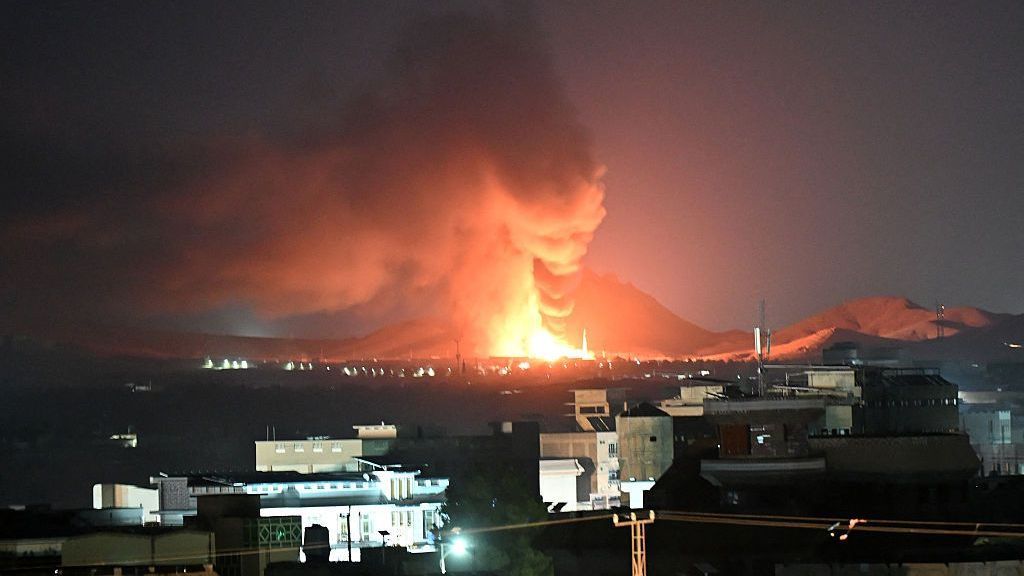
    In the wake of the US and Israeli military campaign against Iran, initial market reactions have painted a misleading picture of Wall Street’s fortunes, according to senior market analysts interviewed by Middle East Eye. While immediate short-term windfalls from spiking oil prices and amplified market volatility have lifted headline earnings, these gains are masking a growing slowdown in dealmaking that threatens the foundation of the finance industry’s core operations.

    Within days of the conflict’s launch, global oil prices surged dramatically, with Brent crude jumping 8.6% to roughly $72 per barrel in the first trading session after hostilities broke out. This spike lifted share values for major energy giants including ExxonMobil and Chevron, while heightened market turbulence drove a sharp uptick in trading revenues across major investment banks. Defense sector equities also rallied early on, with leading contractors Northrop Grumman, RTX Corporation and Lockheed Martin all posting immediate gains on expectations of expanded military spending. Goldman Sachs even reported a 48% jump in investment banking fees to $2.84 billion, with the bank acknowledging the conflict had given trading revenues a measurable boost.

    But these early, visible gains hide deeper underlying vulnerabilities, experts warn. While first-quarter 2025 earnings appear strong on paper, the vast majority of that performance traces back to transactions that were finalized before the first strikes on Iran on February 28. The full negative impact of the conflict on global deal flow is only just beginning to emerge.

    “Wall Street has done meaningfully less well out of the Iran war than might meet the eye,” explained Ilya Spivak, head of global macro at tastylive, a U.S.-based financial media and trading platform. Today, Wall Street executives are sounding the alarm that the conflict is complicating cross-border and domestic transactions, delaying planned initial public offerings (IPOs), and putting the entire pipeline of mergers, acquisitions (M&A) and new stock listings at risk.

    The early upward momentum across conflict-linked sectors also proved far from sustainable. While defense stocks jumped initially, many individual firms have struggled to hold gains in subsequent weeks, leaving the broader aerospace and defense sector largely flat for the year to date. Energy equities have followed a similar trajectory, giving up all their post-conflict gains after peaking in early March. Spivak added that recent broad market rebounds are “more driven by opportunistic attempts to ‘buy the dip’ in Magnificent 7 (Mag7) stocks rather than reflecting actual war-related upside for companies.” The Mag7—Alphabet, Amazon, Apple, Meta, Microsoft, Nvidia and Tesla—are seven large-cap tech names that have driven the vast majority of U.S. market growth in recent years.

    The core challenge, Spivak explained, is that trading revenue cannot fully offset a slowdown in traditional dealmaking. Trading operations require far heavier infrastructure investment and deliver significantly thinner profit margins than the advisory and underwriting work that forms the core of investment banking profitability. “Increased volatility can help offset a slowdown in dealmaking, but its thinner margins—of 25 to 45 percent, compared with those for investment banking of 45 to 65 percent—mean that you need about $1.50 in trading revenue to make up $1 of dealmaking revenue,” Spivak said.

    That gap is already showing up in hard data. As of early March, the number of announced U.S. mergers had fallen roughly 23% year-over-year to 1,795, a drop that reflects both pre-existing market weakness and new uncertainty fueled by the conflict. Goldman Sachs CEO David Solomon has openly acknowledged that IPO activity slowed sharply in March, with seven of the 10 largest U.S. listings from the first quarter trading below their offer price within a month of launch.

    “The disruption runs deeper than Wall Street’s earnings headlines suggest,” said Javed Hassan, a former investment banker who previously worked in London and Hong Kong for Swiss Re’s investment banking division. Hassan noted that major global banks with large trade finance portfolios—including Citigroup, HSBC and Standard Chartered—have already flagged rising counterparty risks in commodity-linked transactions. “The difficulty is not just energy prices, it is that no one can write a contract with confidence when the baseline keeps shifting,” Hassan said. “That uncertainty is the supply chain dimension Wall Street’s earnings headlines are not yet capturing.”

    Geopolitical conflict disrupting global financial markets is not a new phenomenon. Previous major conflicts, from the 2003 Iraq War to Russia’s 2022 full-scale invasion of Ukraine, all triggered equity market pullbacks, widening credit spreads and sharp slowdowns in IPO activity. But Mir Mohammad Ali Khan, founder and former chairman of KMS Investment Bank at 110 Wall Street, argues the Iran conflict is unique due to its direct and lasting impact on global energy flows through the Strait of Hormuz.

    “Previous conflicts, including the wars in Afghanistan and Iraq, did not have the long-term direct impact on US financial markets,” Khan told Middle East Eye. “Letting this conflict drag on is not in Wall Street’s interest.”

    Industry executives now agree that the second quarter of 2025 will be the first full test of the conflict’s impact, as it will be the first period entirely exposed to war-related disruptions. “Looking ahead, planning, engagement and pipelines remain healthy, but of course, developments in the Middle East could have an impact on deal execution and timing,” JPMorgan CFO Jeremy Barnum said. Citigroup CFO Gonzalo Luchetti echoed that warning, noting a prolonged conflict could introduce “risk of deferrals” for planned deals later in the year.

    Those warnings are grounded in the scale of the energy disruption. Before the conflict began, roughly a quarter of all global seaborne oil and 20% of global liquefied natural gas traded through the Strait of Hormuz—a key shipping lane that has been effectively closed since early March. The Federal Reserve Bank of Dallas has already labeled the conflict the largest geopolitical oil supply shock on record, estimating that removing nearly one-fifth of global oil supply could cut global GDP growth by 2.9 percentage points in a single quarter.

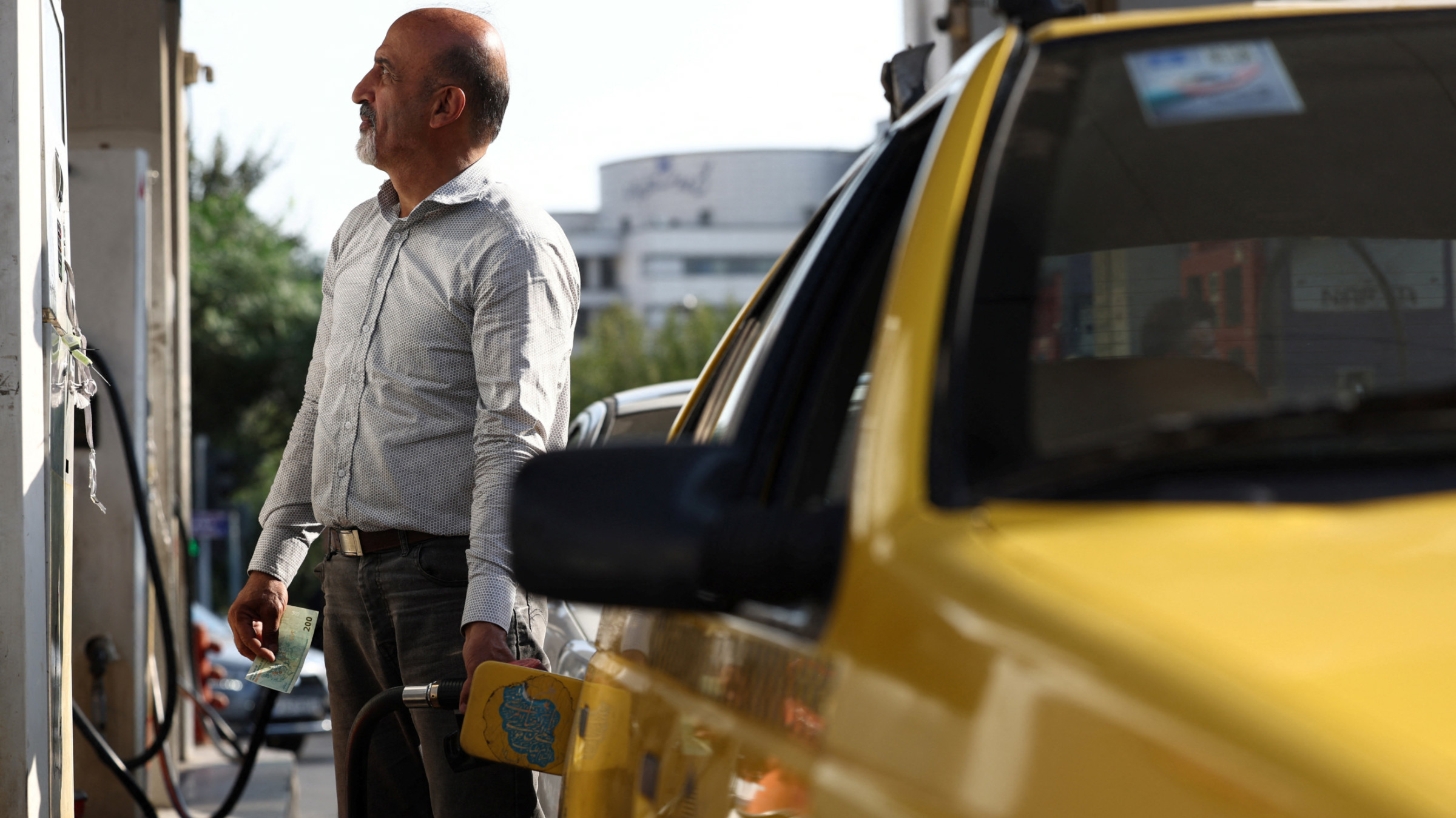
    More than two months into the conflict, the economic fallout is already showing up in broader U.S. economic data. Energy costs rose 10.9% in March alone, pushing average U.S. gasoline prices above $4 per gallon and lifting overall inflation to 3.3%—far above the Federal Reserve’s 2% target. “This is a one-quarter blip where the effects of it really weren’t being felt, but I don’t really see how this is sustainable,” said William D. Cohan, a former senior Wall Street M&A investment banker with experience at Lazard Frères & Co, Merrill Lynch and JPMorganChase. When corporate profitability falls, he explained, it directly reduces companies’ willingness to pursue new deals or take on borrowed capital. “People like to say Wall Street is not Main Street, [but] Wall Street is highly correlated to Main Street,” Cohan added.

    Rising energy and consumer costs have already rippled through to broader borrowing conditions. U.S. Treasury yields and 30-year mortgage rates have climbed steadily, pushing up borrowing costs across the economy and eliminating room for the Federal Reserve to cut interest rates as markets previously expected.

    “The single most important factor determining the trajectory of stock prices is the central bank’s monetary policy,” said Alex Krainer, a Europe-based market analyst, commodities expert and former hedge fund manager. “Stock markets are going higher not because the economy is growing… but because the Federal Reserve is flooding the financial system with liquidity.” If the conflict continues to fuel persistent inflation, Krainer warned, the dollar’s purchasing power will erode, meaning the nominal market gains investors see on paper will not translate into actual, inflation-adjusted wealth.

    The International Monetary Fund has already downgraded its 2025 global growth forecasts and warned that a prolonged conflict could push the global economy to the brink of recession. For Wall Street, which relies on steady economic growth and cheap borrowing costs to support deal activity, that outcome poses an existential threat to its core revenue model. “Look, Wall Street is a confidence game,” said Cohan. “It’s a hard thing to bet against, but at some point investors, corporations, CEOs are going to have enough of this, and they are going to pull back.”

    Despite the clear short-term risks to profitability, not all analysts agree that Wall Street has an incentive to push for a rapid ceasefire. “Wall Street’s interest is in the war continuing, not stopping. I don’t think they will exert meaningful pressure on the administration for a ceasefire – probably quite the contrary,” Krainer said. Drawing on his conversations with financial and policy industry contacts, Krainer argued that control over Iran’s vast natural resources, rather than regional security, is the core strategic driver for many leading financial players.

    “Wall Street’s objective is primarily to take down the regime in Tehran,” he said. “Iran is the fifth richest nation in the world in terms of natural resources, estimated at $30 trillion. If they were able to install their own puppet in Tehran, all that wealth could become their collateral.” For Wall Street, Krainer argues, the long-term potential strategic prize far outweighs any short-term hits to industry balance sheets from the current conflict-induced deal slowdown.

  • Spain’s leader Sanchez awards UN’s Francesca Albanese Order of Civil Merit

    Spain’s leader Sanchez awards UN’s Francesca Albanese Order of Civil Merit

    In a bold act of diplomatic defiance that underscores deep European divides over the Gaza conflict and international accountability, Spanish Prime Minister Pedro Sanchez bestowed one of his country’s highest civilian honors on Thursday upon Francesca Albanese, the United Nations Special Rapporteur for Occupied Palestine who has been targeted with unprecedented U.S. sanctions for her work documenting human rights abuses and potential genocide in Gaza.

    In an official statement announcing the award of the Order of Civil Merit, Sanchez emphasized that holding public office carries an inherent moral duty to confront injustice rather than ignore it. “It is an honour to award the Order of Civil Merit to a voice that upholds the conscience of the world: Francesca Albanese, United Nations Special Rapporteur in the Occupied Palestinian Territory,” he wrote.

    The ceremony and honor came just 24 hours after Sanchez took another high-profile stand against U.S. punitive measures targeting international justice bodies: he formally called on the European Commission to trigger the EU’s long-dormant Blocking Statute, a legal tool designed to protect European individuals and institutions from extraterritorial sanctions imposed by non-EU powers. Speaking a day ahead of the award, Sanchez rejected any tolerance for what he framed as a targeted campaign of intimidation. “The EU cannot stand idly by in the face of this persecution,” he said, adding that Brussels must defend the independence of both the International Criminal Court (ICC) and the United Nations, as well as their critical work “to end the genocide in Gaza.” “Sanctioning those who defend international justice puts the entire human rights system at risk,” he added.

    Albanese, the first and so far only UN special rapporteur to face U.S. sanctions over her official mandate, was targeted by the administration of former U.S. President Donald Trump last year. The restrictions, which include a visa ban that bars her from entering the United States and a freeze on any assets she holds in U.S. jurisdictions, were imposed over her documentation of human rights violations in the occupied Palestinian territories and her longstanding cooperation with the ICC’s investigations into potential atrocity crimes.

    The ICC, based in The Hague, Netherlands, is the world’s only permanent international court with a mandate to prosecute individuals for war crimes, crimes against humanity, and genocide. Relations between the U.S. and the court have collapsed entirely since ICC Prosecutor Karim Khan sought arrest warrants for Israeli Prime Minister Benjamin Netanyahu and former Israeli Defense Minister Yoav Gallant earlier this year, accusing the pair of overseeing systematic war crimes and atrocities in Gaza that began in October 2023. In addition to Albanese, the Trump administration has now imposed sanctions on 11 senior ICC officials, covering not only the court’s work on Gaza but also its long-running investigation into potential war crimes in Afghanistan connected to U.S. and Taliban forces.

    Albanese was specifically sanctioned in July 2024 for her ongoing investigation into allegations of genocide in Gaza and her work with the ICC as part of her UN-mandated role. In addition to the travel and asset restrictions, the sanctions have cut her off from core global financial infrastructure, preventing her from completing routine daily transactions, she told Middle East Eye earlier this year. In February 2025, Albanese and her family filed a legal challenge against the Trump administration over the punitive measures, arguing they violate U.S. law and fundamental due process rights.

    Since the outbreak of the current Israel-Gaza conflict in October 2023, Albanese has released four major official reports as special rapporteur, all of which have concluded that Israel’s military campaign in Gaza meets the legal definition of genocide. She has also repeatedly condemned what she frames as global economic and political powers that have enabled and supported Israel’s operation, providing diplomatic cover and military supplies despite mounting evidence of atrocity crimes. Her most recent report called on the ICC to expand its arrest warrant list to include three senior Israeli cabinet ministers, whom she accuses of overseeing systematic torture of Palestinian civilians that amounts to acts of genocide.

    Sanchez has emerged as the most outspoken critic among European Union leaders of what he frames as repeated violations of international law by Israel and the United States, not only in Gaza but across broader Middle East policy including tensions with Iran. He made history earlier this year as the first EU head of government to publicly label Israel’s military campaign in Gaza as genocide, a stance that has put him at sharp odds with Washington and several Western European allies.

  • Israeli army disables rocket-tracking system over Iran intelligence fears

    Israeli army disables rocket-tracking system over Iran intelligence fears

    Amid ongoing low-intensity hostilities along Israel’s northern border and growing national anxiety over Iranian intelligence infiltration, a controversial decision by the Israeli Home Front Command to cut access to a critical missile impact alert system has sparked fierce backlash from local leaders and security officials across northern Israeli communities, Israeli outlet Ynet reported Thursday.

    The disabled infrastructure, which once shared real-time data on potential missile strike impact zones with local first responders and municipal leadership, was taken offline by military authorities over explicit concerns that Iranian intelligence operatives could exploit the platform to harvest precise location data. Military officials argue that this information would allow Iran and its regional proxy militia Hezbollah to refine the accuracy and destructive power of future attacks against Israeli targets.

    Strict military censorship rules have governed all reporting of missile impact locations across Israel since the outbreak of open conflict between Israel and Iran in June 2025. International and domestic Israeli media outlets are already banned from disclosing the exact coordinates of strikes, particularly those targeting strategic and military infrastructure, and the military’s latest move extends this information control to frontline local response teams.

    For years, the restricted system served as a core operational tool for local authorities, enabling them to rapidly deploy emergency rescue and response teams directly to sites hit by rocket and missile fire. But today, the shutdown has left northern response teams operating without critical situational awareness, according to local leaders.

    Assaf Langleben, head of the Upper Galilee Regional Council, warned that the decision has created a state of “operational blindness” across the entire northern frontier. “It is absurd that Hezbollah knows where it is firing, so at least we should also know and be able to deal with the incidents and the responses we are required to provide,” Langleben said in an interview with Ynet.

    Avichai Stern, mayor of the key northern border city Kiryat Shmona, echoed this criticism, emphasizing that the alert system had a proven track record of saving lives amid repeated cross-border fire. “Leaving us without [the system] means abandoning even more lives in an area where most residents already lack protection,” Stern said, adding that “now we are also not being given the ability to go out, rescue and save them during fire.”

    Frontline civil security personnel in the region have described chaotic, dangerous working conditions in the wake of the shutdown. A civil security officer based in Kiryat Shmona told Ynet that in recent alarm events, response teams have “operated like blind mice.” The official added, “When I don’t have this tool, I don’t know where to run. We are ahead of another round, Hezbollah will again target our homes, and our residents will pay the price.”

    Another civil security officer from a local northern council criticized military leadership for choosing a blanket shutdown over targeted security reforms, saying “No one talks to us, explains, or thinks they owe us answers. They simply cut us off. In the army, instead of dealing with how to handle and prevent leaks, they chose the easiest solution and shut everyone out. They irresponsibly chose to punish us.”

    In an official statement to Ynet, an Israel Defense Forces spokesperson defended the order, noting that the platform “contains sensitive information, and during the war cases were identified that required adjustments to procedures and a reduction of access permissions in order to prevent harm to information security.”

    Military concerns over Iranian infiltration come against a backdrop of a sharp rise in domestic espionage cases linked to Tehran. Israeli outlet Ma’ariv has reported that more than 40 indictments have been filed against roughly 60 Israeli civilians on espionage charges since October 2023. Iranian intelligence is known to recruit Israeli operatives through large financial incentives, in exchange for documenting strategic locations and facilitating attacks inside Israeli territory.

    Just this week, Israeli leading outlet Haaretz exposed a major intelligence breach revealing that Iranian operatives have obtained secret sensitive data on researchers at the Institute for National Security Studies (INSS), Israel’s premier independent security think tank with formal ties to the Israeli military and Tel Aviv University. Over a six-year period, Iran collected personal identifiable information on dozens of INSS researchers — many of whom are retired senior Israeli security and military officials — alongside detailed records of closed-door meetings between INSS personnel and Israeli military leadership.

  • Venice Biennale targeted by strike action and protests over Israel’s involvement

    Venice Biennale targeted by strike action and protests over Israel’s involvement

    One of the world’s most prestigious international arts events, the 2026 Venice Biennale, has become the center of a growing global protest movement demanding the exclusion of Israel’s national pavilion, with a 24-hour cross-sector cultural strike scheduled for Friday during the festival’s pre-opening events. This planned industrial action marks the first organized strike in the 130-plus year history of the iconic exhibition, growing out of mounting demonstrations that launched on the festival’s opening press week over both Israel and Russia’s inclusion in this year’s event.

    The unrest began on Wednesday, when the Art Not Genocide Alliance (ANGA), the coalition leading the protest movement, held a mass direct action outside Israel’s temporary exhibition space at the Venice Biennale’s Arsenale complex. Hundreds of demonstrators, including participating artists, Biennale workers, and activist supporters, assembled with placards reading “No artwashing genocide” and “No genocide pavilion” to hear addresses from cultural figures taking part in this year’s event. Protesters argue that Israel has no place at a global arts gathering after it killed dozens of Palestinian artists and destroyed hundreds of cultural and artistic sites during its ongoing military campaign in Gaza, which the coalition describes as a state-led genocide.

    In a public statement released during the demonstration, ANGA reaffirmed the group’s core position: “We are here to express our refusal to tolerate genocidal destruction in the name of freedom.”

    The Wednesday protest came after Biennale leadership refused to respond to a March 17 open letter from ANGA demanding the immediate expulsion of Israel’s national pavilion. The letter, which called for Israel’s full exclusion from the event, was signed by 236 participating artists, curators, and Biennale workers, including internationally renowned cultural figures Alfredo Jaar, Brian Eno, Lubaina Himid, Yto Barrada, and Cauleen Smith.

    “No artist or cultural worker should be asked to share a platform with this genocidal state,” the letter read. “As long as Israel exists by means of genocide, ethnic cleansing and apartheid, it must not be represented at the Venice Biennale.” The letter also highlighted that Israeli military operations have deliberately targeted cultural infrastructure, a core value the Biennale claims to uphold.

    ANGA has repeatedly clarified that its opposition targets state representation, not individual Israeli artists. “A national pavilion at the Venice Biennale is an official cultural representation of that state,” the group explained in comments earlier this year. ANGA added that it opposes the use of dissenting Israeli artists who oppose the Gaza campaign as “cultural cover for state violence,” noting that the current setup forces all participating Israeli artists into an impossible position, requiring them to legitimize the state’s actions regardless of their personal political beliefs.

    This year’s controversy is not an isolated incident. The 2024 art Biennale saw ANGA launch a similar campaign against Israel’s participation, collecting more than 24,000 signatures on an open letter demanding exclusion. That campaign ultimately ended when the selected Israeli artist, Ruth Patir, voluntarily closed the pavilion in protest of Israel’s military actions. In response to Patir’s move, the Israeli government added a mandatory clause to the 2026 pavilion contract requiring the selected artist to keep the space open for the full run of the event.

    For 2026, Israel is not exhibiting in its permanent Giardini pavilion, which it has operated since 1952. The Israeli culture ministry claimed the permanent space needed structural renovations, so the Biennale granted Israel permission to host its exhibition in a temporary space at the Arsenale rather than requiring it to rent private venue space. ANGA has condemned this accommodation as “an explicit institutional endorsement of Israel at a moment of escalating violence” in Gaza and the occupied West Bank.

    Friday’s 24-hour cultural strike, a first in Biennale history, is being coordinated by ANGA alongside a coalition of local and international grassroots cultural groups including Biennalocene, Sale Docks, Mi Riconosci, and Vogliamo Tutt’altro. Three major Italian trade unions — Associazione Difesa Lavoratori (ADL Cobas), Unione Sindacale di Base (USB), and Confederazione Unitaria di Base (CUB) — have also joined the call for action. This is not the first time Italian labor groups have taken action against Israel: Italian dockworkers have previously staged industrial action refusing to load military cargo bound for Israel.

    “This is the first ever organised strike to occur within the Biennale,” ANGA said. “It will be a crucial moment, bringing together different organisations and sending a clear message during the pre-opening days of the Biennale.”

    Israel’s inclusion is not the only point of contention at this year’s festival. The Biennale has also drawn widespread criticism for allowing Russia to return to the exhibition for the first time since Moscow’s full-scale invasion of Ukraine in 2022. While the Italian culture ministry has publicly supported Israel’s participation, it has publicly opposed Russia’s inclusion. Russia’s 2026 entry is co-led by Anastasia Karneeva, daughter of a former Russian intelligence officer, and Ekaterina Vinokurova, daughter of Russian Foreign Minister Sergey Lavrov.

    Biennale chairman Pietrangelo Buttafuoco, a right-wing Sicilian journalist who converted to Islam in 2015, defended the festival’s decision to include both countries during a Wednesday press conference. “This whole world born of the French revolution, the Enlightenment and secularism has flipped into its exact opposite: a laboratory of intolerance, and demands for censorship, closure and exclusion,” Buttafuoco said. “The Biennale is not a court; it is a garden of peace. We cannot shut it down, we cannot boycott as an automatic response. We must discuss. We may disagree, and we do so forcefully.”

    The Venice Biennale alternates annually between art and architecture editions, and opens to the general public on Saturday after a week of private pre-opening events, with protests expected to draw thousands of additional demonstrators to Venice this week.

  • Gulf states derailed Trump’s ‘Project Freedom’ by cutting US access to airspace and bases

    Gulf states derailed Trump’s ‘Project Freedom’ by cutting US access to airspace and bases

    A sudden diplomatic backlash from key Gulf allies has forced the Trump administration to backtrack on a high-stakes military plan to reopen the blockaded Strait of Hormuz, throwing Washington’s Iran war strategy into disarray just as new peace talks emerge. The abrupt reversal of what President Donald Trump dubbed “Project Freedom” came after both Saudi Arabia and Kuwait halted U.S. military access to their sovereign airspace and strategically critical military bases, multiple U.S. and regional sources confirm.

  • Israeli soldier pictured desecrating Virgin Mary statue in Lebanon

    Israeli soldier pictured desecrating Virgin Mary statue in Lebanon

    A new controversy has emerged over conduct by Israeli troops in southern Lebanon, after a widely circulated video showing an Israeli soldier desecrating a statue of the Virgin Mary in the Christian village of Debel has prompted a formal military inquiry. Though the photograph of the incident was first shared publicly on Wednesday, Israeli military investigators confirm the act took place several weeks ago in the village, which sits just five kilometers from the Israeli border and six kilometers northwest of the Lebanese Christian town of Ain Ebel.

    In an official statement following the viral spread of the footage, the Israeli military noted that it has already identified the soldier responsible, and confirmed disciplinary action will be issued once the investigation concludes. The service emphasized that it views the incident with severe seriousness, stressing that the soldier’s actions stand in complete opposition to the ethical standards and values the military requires of all its personnel. “The incident will be investigated, and command measures against the soldier will be taken in accordance with the findings,” the military’s statement read. It also added that the Israeli military upholds respect for freedom of religion and worship, along with holy sites and religious symbols belonging to all faiths and communities, and maintains that it has no intent to damage civilian infrastructure, including religious structures or sacred symbols.

    This latest incident is not an isolated event in Debel: just one month prior, another Israeli soldier used a jackhammer to destroy a statue of Jesus on a cross in the same village. Images of that earlier act of vandalism sparked immediate widespread outrage across social media, even drawing condemnation from prominent conservative allies of former U.S. President Donald Trump. Former Republican Congresswoman Marjorie Taylor Greene posted a sarcastic remark on the social platform X in response to the images, writing, “’Our greatest ally’ that takes billions of our tax dollars and weapons every year.” Fellow former Republican Congressman Matt Gaetz called the vandalism “horrific.” In response to that earlier incident, the Israeli military announced it had discharged the soldier who destroyed the statue, along with a second soldier who filmed the act, and sentenced both to 30 days of military prison. More recently, additional footage from Debel has documented Israeli military excavators destroying civilian solar panels, an act that is also currently under military review.

    The Debel incidents are part of a growing string of attacks on Christian religious sites across southern Lebanon, according to religious organizations. Last week, a French Catholic charity L’Oeuvre d’Orient issued a formal condemnation of Israeli forces after they demolished a convent run by the Salvatorian Sisters, a Greek Catholic order, in the Lebanese village of Yaroun. In its statement, the organization said, “L’Oeuvre d’Orient strongly condemns this deliberate act of destruction against a place of worship, as well as the systematic demolition of homes in southern Lebanon aimed at preventing the return of civilian populations.” The charity added that the convent demolition fits into a broader pattern of targeting Christian heritage, noting that multiple Christian sanctuaries, including Melkite churches in Yaroun and Derdghaya—both officially protected as part of Lebanon’s national heritage—were destroyed during 2024 hostilities.

    Attacks against Christian communities and individuals have also intensified in occupied Palestinian territories, according to recent reports. Last week in occupied East Jerusalem, a 48-year-old nun was physically assaulted by an Israeli civilian near the Cenacle on Mount Zion, requiring medical care for facial injuries sustained in the attack. Religious authorities have also faced repeated restrictions on worship: Israeli police recently blocked Cardinal Pierbattista Pizzaballa, the Latin Patriarch of Jerusalem, and other clergy from holding the traditional Palm Sunday Mass at the Church of the Holy Sepulchre, only partially reversing the access ban after widespread international pressure.

    A 2025 report from the Rossing Center for Education and Dialogue has documented a dramatic spike in anti-Christian incidents across the region, describing a “continued and expanding pattern of intimidation and aggression.” The center recorded 155 separate incidents in 2025 alone: the total includes 61 physical assaults, 52 attacks on church-owned property, 28 cases of religious harassment, and 14 instances of vandalism against religious signage. Researchers warn that the documented count represents only the “tip of the iceberg,” with many more incidents going unreported.

    These developments come even as Israel maintains ongoing military activity in Lebanon despite an April 17 ceasefire agreement that was meant to end over six weeks of open conflict. Since large-scale hostilities began on March 2, more than 2,600 people have been killed in the fighting, and over 8,000 more have been wounded.

  • Daniel Dae Kim explores booming South Korean pop, film, cosmetics and food influences for CNN series

    Daniel Dae Kim explores booming South Korean pop, film, cosmetics and food influences for CNN series

    In a surprising twist that blends personal curiosity and professional storytelling, veteran entertainer Daniel Dae Kim recently tried an unconventional K-beauty treatment few celebrities would volunteer for: microinjections of salmon sperm DNA into his face, administered at a Seoul clinic. The procedure, intended to lower facial inflammation and boost skin elasticity, left Kim with a faint sunburn-like flush, but he brushed off the minor side effect and declared himself camera-ready within minutes.

    That on-camera experiment is just one small segment of Kim’s ambitious new project, the CNN original series *K-Everything: The Global Rise of Korean Culture*, a passion project he calls a “love letter” to South Korea’s most beloved cultural exports, spanning beauty, food, music and film. The series is set to premiere Saturday on CNN International, with additional streaming availability on CNN and HBO Max.

    For Kim, the series is far more than a typical travel documentary. Born in South Korea before moving to the U.S. at the age of one, the multi-hyphenate actor, director and producer has long held deep ties to the country, and the show frames its exploration of South Korea’s transformation through a deeply personal lens. In just three generations, the nation climbed from a war-ravaged developing nation to one of the world’s most dynamic, modern cultural powerhouses, and *K-Everything* traces that extraordinary shift through the lens of its most popular global exports.

    Viewers can expect Kim to guide them across the full breadth of modern Korean culture. At the energetic annual kimchi festival in Pyeongchang, he unpacks how fermented Korean cuisine is upending long-held norms in fine dining scenes across the globe. In separate episodes, he sits down for one-on-one conversations with some of South Korea’s biggest entertainment figures, including A-list actor Lee Byung-hun, “Gangnam Style” pioneer Psy, BigBang member Taeyang, and the songwriters behind the Oscar-winning hit “Golden”. The K-beauty episode takes Kim even further: after chatting with beauty influencer LeoJ and model Irene Kim about shifting global beauty standards, he tests a range of viral K-beauty products from serums to sheet masks, even takes a tour of a facility that harvests snail slime for skincare formulations.

    The personal journey extends to Kim’s own family, too. During filming, he accompanied his parents around Seoul, which has transformed so dramatically in recent decades that every landmark they remembered from their youth has disappeared. For his parents, navigating the hyper-modern capital felt almost like exploring a foreign country, leaving Kim as their trusted guide—a role that mirrors his work on the series.

    Kim is joining a booming trend of A-list celebrities taking on travel and culture hosting roles, with high-profile names from Stanley Tucci and Eugene Levy to Chris Hemsworth and Will Smith launching their own documentary series in recent years. Kim cites iconic late chef and travel host Anthony Bourdain as a major inspiration; Bourdain pioneered the modern format of the celebrity travel host, leaning into personal perspective rather than rigid scripted narration.

    “I wouldn’t say that this show is as irreverent as Anthony Bourdain’s show was, but I loved it because I felt like he was showing me his take on each country and he was a trusted guide,” Kim explained. “If I can be that for some people then that’s the spirit that I’d like to bring into this show.”

    CNN executives say Kim’s unique background makes him the perfect person for this project. Amy Entelis, executive vice president for talent, CNN Originals and creative development, noted that Kim brings an unmatched combination of passion, firsthand knowledge, and ability to connect with global audiences that can’t be replicated by an outside host.

    “From the first time I met him, it was clear he was incredibly well equipped to tackle this — deeply passionate about the subject and highly knowledgeable. He was also very focused on making sure the way we look at Korean culture translates to a broad global audience, really putting a spotlight on it,” Entelis said.

    While this marks Kim’s first time hosting a full television series, he says the role felt natural, not outside his comfort zone. As an artist who has been shaped by his Korean heritage throughout his life and career, introducing the culture he loves to a global audience felt like a calling, not work.

    Beyond entertainment, Kim also hopes the series will serve a larger social purpose: bridging cultural divides and pushing back against the sharp rise in anti-Asian racism that surged globally during the COVID-19 pandemic. “If we can start to understand one another a little bit better through culture, then I think it is one step toward bringing together a global community. And I think the world could use a little more understanding in general,” he said.

    For new viewers unfamiliar with South Korea, Kim says the series offers a accessible, human introduction that no textbook or classroom lecture can match. By bringing together people from every corner of Korean society—from different cities, socioeconomic backgrounds, and creative fields—the series broadens understanding of just how diverse and dynamic modern Korean culture is, beyond the viral trends that dominate global social media.

  • Novelist JM Coetzee declines to attend Jerusalem writers festival over ‘genocidal campaign in Gaza’

    Novelist JM Coetzee declines to attend Jerusalem writers festival over ‘genocidal campaign in Gaza’

    One of the world’s most decorated literary figures has sparked international debate after confirming he will skip a major Israeli literary festival, citing profound moral objection to what he terms Israel’s “genocidal campaign” in the Gaza Strip.

    John Maxwell Coetzee, the 2003 Nobel Prize in Literature winner and two-time Booker Prize recipient, outlined his decision in a private November letter to Julia Fermentto-Tzaisler, artistic director of the Jerusalem International Writers Festival, a copy of which was obtained by The Guardian. In the correspondence, the South African-born writer made an unusual public break from his long-held position as a self-identified supporter of Israel, explaining that the current actions of the Israeli state and widespread public backing for the campaign make his attendance impossible.

    “For the past two years the state of Israel has been conducting a genocidal campaign in Gaza that has been vastly disproportionate to the murderous provocation of 7 October 2023,” Coetzee wrote in the letter. He added that the military campaign waged by the Israel Defense Forces has retained the enthusiastic backing of the vast majority of Israeli citizens. “For this reason it is not possible for any considerable sector of Israeli society, including its intellectual and arts community, to claim that it should not share in the blame for the atrocities in Gaza,” he emphasized.

    This is not Coetzee’s first connection to high-profile cultural events in Jerusalem: in 1987, he traveled to the city to accept the prestigious Jerusalem Prize for the Freedom of the Individual in Society. During that appearance, he delivered a widely noted speech calling for an urgent end to apartheid in his native South Africa. Today, multiple human rights organizations categorize the Israeli occupation of Palestinian territories as a system of apartheid, a framing Coetzee appears to align with in his current stance.

    “Long-time supporters of Israel have turned away in revulsion at the actions of the Israeli military,” Coetzee wrote. “It will take many years for Israel to clear its name, assuming that it wishes to do so, and to re-establish itself in the international community.”

    Coetzee’s high-profile boycott comes amid a shifting military landscape in the region, according to recent Israeli reporting. Last week, Israel’s Army Radio revealed that Israeli forces have expanded their territorial control across Gaza to nearly 60 percent of the enclave, even amid a formally declared ceasefire. Senior military officials told the broadcaster that the Israeli military is pushing aggressively to resume full-scale hostilities, arguing that the current moment presents an optimal opportunity to dismantle Hamas. Operational plans for renewed offensive attacks have already been finalized, the report added, with a final go-ahead waiting only for approval from Israel’s top political leadership. Military leaders have also pulled back troop presence from southern Lebanon to reposition key brigades in Gaza and the occupied West Bank, indicating a looming shift in military focus.

    The current nominal ceasefire was brokered by the United States earlier this year, with the stated goal of halting Israeli offensive operations and opening corridors for life-saving humanitarian aid to enter the blockaded Gaza Strip. But the ceasefire has been repeatedly violated by Israeli forces, according to the Palestinian Ministry of Health, which records that at least 832 Palestinians have been killed in near-daily Israeli shelling since the truce took effect.

    Restrictions on the entry of food, medicine, and essential infrastructure equipment have only worsened catastrophic conditions for Gaza’s population of roughly two million displaced people, fueling widespread hunger, the rapid spread of preventable disease, and a humanitarian catastrophe that has drawn global condemnation. Since the resumption of large-scale Israeli hostilities in October 2023, more than 72,000 Palestinians have been killed in Gaza, per local health authorities, with thousands more still missing and trapped under the rubble of destroyed residential and civilian infrastructure.

    Coetzee’s decision is one of the highest-profile cultural boycotts of Israeli institutions since the current conflict escalated, joining a growing wave of artists, academics, and writers who have canceled appearances in Israel to protest military policy in Gaza.