标签: Asia

亚洲

  • Exclusive: The Ethiopian army base covertly supporting Sudan’s RSF

    Exclusive: The Ethiopian army base covertly supporting Sudan’s RSF

    Exclusive analysis of declassified satellite imagery published by the Yale School of Public Health’s Humanitarian Research Lab (HRL) and obtained first by Middle East Eye has uncovered damning evidence that Ethiopia is covertly backing Sudan’s Rapid Support Forces (RSF) from a formal Ethiopian National Defence Force (ENDF) base in the country’s western Benishangul-Gumuz region, opening a new window into the complex geopolitical maneuvering prolonging Sudan’s devastating 2023-present civil war.

    The findings, which mark the first concrete visual confirmation of long-circulated accusations of Ethiopian involvement, track five months of consistent, large-scale military logistics activity at the ENDF base on the outskirts of Asosa, the capital of Benishangul-Gumuz. The activity aligns directly with the RSF’s intense cross-border offensive against Sudanese Armed Forces (SAF) positions in Sudan’s adjacent Blue Nile state, which has raged from December 2025 through March 2026.

    Over the monitoring period, HRL researchers documented repeated arrivals of commercial car transporters at the Asosa base carrying unmarked technical vehicles that are not part of the ENDF’s standard fleet. By February 2026, more than 200 of these vehicles were counted on site. Imagery shows unarmed vehicles were retrofitted on base with custom gun mounts designed for heavy .50-caliber machine guns, and up to 15 tents capable of housing 150 RSF fighters were erected to accommodate personnel. Multiple commercial shipping containers arrived, and fuel tanks on site allowed for mass refueling of vehicles before they deployed toward the Sudanese border.

    Crucially, the technical vehicles tracked through the Asosa base match the color, size, and armament of vehicles later documented in open-source footage of RSF combat operations around Kurmuk, a strategic Sudanese border town just 100 kilometers from the Asosa base. Kurmuk fell to the RSF and its allied Sudan People’s Liberation Movement–North (SPLM-N) fighters in late March 2026 after weeks of fierce clashes. HRL’s analysis of 14 other ENDF bases across the region found no comparable logistics buildup, confirming the Asosa site is a unique outlier dedicated to supporting the RSF.

    “This report is the first visual evidence that those allegations are true. In fact, it is even worse than first feared. Not only are the Ethiopians assisting the RSF, they are doing it from an actual Ethiopian army base,” said Nathaniel Raymond, HRL’s executive director, in an interview with MEE.

    Multiple independent sources, including active and former ENDF officers, Sudanese military and intelligence analysts, a European diplomat, and a former senior Ethiopian foreign ministry advisor, confirmed to MEE that the RSF has operated a secret staging hub in Benishangul-Gumuz for months, though its exact location at a formal ENDF base had not been confirmed until now. Those sources also draw a direct line between Ethiopia’s involvement and the United Arab Emirates (UAE), which has faced mounting international evidence of backing the RSF despite consistent public denials.

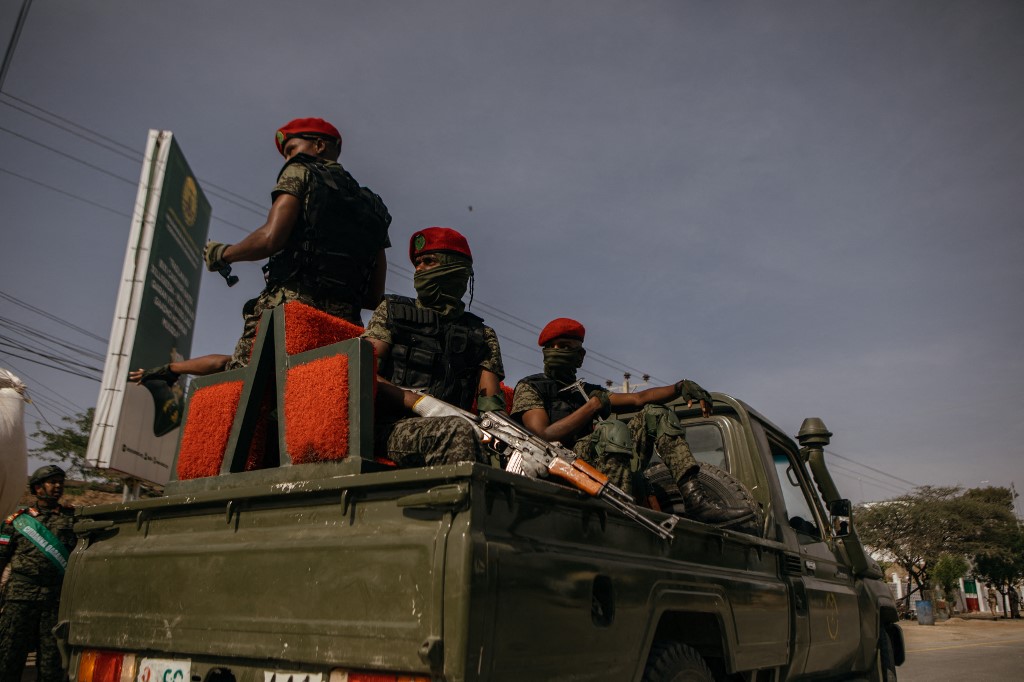
    Open-source video evidence from late 2025 further links the Asosa operation to a UAE-controlled supply network centered on the port of Berbera in Somaliland, where the UAE maintains a permanent military base. The car transporters seen carrying vehicles to Asosa match the dimensions and color of carriers filmed moving technical vehicles from Berbera into Ethiopia, and flight tracking data confirms multiple UAE-linked IL-76 cargo planes flew from Abu Dhabi to Ethiopian airports within 300 kilometers of Asosa between December 2025 and March 2026. Additional satellite imagery of Asosa airport identified a UAE-operated C-130 cargo plane and a MI-17 helicopter on site during the buildup period.

    The UAE’s deepening reliance on Ethiopia for RSF supply lines comes amid a shifting geopolitical landscape in the Horn of Africa. In January 2026, the Somali federal government canceled all cooperation agreements with the UAE over its support for breakaway regions Somaliland and Puntland, disrupting the UAE’s established regional network of military bases that it developed with Israel and the United States to control Red Sea and Gulf of Aden shipping lanes. Israel’s formal recognition of Somaliland sovereignty in December 2025, and subsequent talks to open an Israeli base at Berbera, further escalated tensions between Mogadishu and Abu Dhabi, leaving Ethiopia as the UAE’s most critical remaining partner for RSF operations.

    Analysts point to two core motivations for Ethiopia’s decision to back the RSF, rooted in both geopolitics and domestic security. For nearly a decade, Ethiopia’s government has been locked in strategic competition with Egypt and Eritrea, both of which back the SAF. Domestically, tensions between Ethiopian Prime Minister Abiy Ahmed’s government and SAF leader Abdel Fattah al-Burhan, Sudan’s de facto leader, date back to the 2020-2022 Tigray war, when Burhan provided military support to the Tigray People’s Liberation Front (TPLF), which remains in intermittent conflict with Addis Ababa. A 2025 high-level Ethiopian delegation to Khartoum failed to convince Burhan to cut ties with the TPLF, cementing Addis Ababa’s decision to align with the RSF.

    Getachew Reda, a senior Abiy advisor who joined that 2025 delegation, publicly stated earlier this year that Ethiopia could not remain a “passive bystander” in Sudan’s war, noting the country must defend its own strategic interests in the region. Sudan’s government first openly accused Ethiopia of intervening in the war in March 2026, after the RSF launched its major Blue Nile offensive that included fighters crossing into Sudan from Ethiopian territory.

    Sudan’s civil war, which broke out between the SAF and RSF in April 2023, has already spawned the world’s worst humanitarian crisis: hundreds of thousands of people have been killed, and more than 11 million have been displaced from their homes. A United Nations fact-finding mission recently concluded that the RSF committed genocide during its capture of el-Fasher, the capital of North Darfur, with survivors reporting mass executions, sexual violence, and systematic abuse of fleeing civilians.

    Multiple parties named in the report including the RSF, the office of Prime Minister Abiy Ahmed, and the Ethiopian foreign ministry have not responded to requests for comment from MEE. A former senior advisor to UAE President Mohammed bin Zayed Al Nahyan has previously pushed back against accusations of UAE support, noting that other regional states including Uganda, Ethiopia, and Chad all maintain ties to the RSF, while the SAF receives widespread military backing from Turkey and Egypt.

    HRL’s final report concludes that the Asosa base functions as a critical dedicated logistics node for RSF operations in Blue Nile state, providing resupply, refueling, accommodation, and vehicle maintenance for RSF personnel between December 2025 and the end of March 2026. “It is well situated to provide these services for RSF forces operating inside Blue Nile,” the report notes, “and the five months of consistent activity confirms this is not an isolated incident, but a sustained support operation.”

  • Shanghai hosts forum on AI and human intelligence in education

    Shanghai hosts forum on AI and human intelligence in education

    On Tuesday, Shanghai became the focal point for global education and technology innovation as it hosted the 11th Science Education Forum organized by the Academic Divisions of the Chinese Academy of Sciences, bringing together hundreds of stakeholders to examine how artificial intelligence and human intelligence can work in tandem to reshape modern K-12 and higher education.

    Held at Shanghai Jiao Tong University, this year’s forum centered its core discussions on two pressing priorities for modern education: the ongoing transformation of science-focused classrooms and the advancement of adaptive, personalized learning for primary and secondary school students. More than 400 attendees, including school principals, K-12 frontline educators, educational research scholars, and university-based experts from across China, participated in targeted workshops and dialogues exploring the shifting landscape of 21st century education.

    Speaking at the opening ceremony, representatives from key international bodies including the United Nations Development Programme and the United Nations Educational, Scientific and Cultural Organization joined leadership from the Chinese Academy of Sciences to set the agenda for the event. Forum participants uniformly emphasized that robust, forward-thinking science education forms the foundational backbone of nurturing the next generation of innovative talent. They highlighted that the thoughtful deep integration of artificial intelligence tools with human-led instruction is injecting critical new momentum into science education systems to meet the demands of the modern era.

    On the same day the main forum concluded, Shanghai Jiao Tong University convened a parallel high-level summit at Shanghai Grand Zero Bay focused on AI-driven empowerment for the integrated development of education, scientific research, and talent cultivation. This complementary event drew university presidents and senior representatives from more than 40 top higher education institutions across the globe. Through a series of keynote addresses and closed-door in-depth dialogues, attendees exchanged insights on three core challenges: reshaping educational frameworks to keep pace with AI advancement, leveraging new technologies to accelerate scientific progress, and adapting talent development pipelines to meet evolving workforce needs in the AI age.

    To cap off the day’s announcements, organizers officially launched the annual “SJTU AI Week” initiative, a recurring event scheduled to take place every April. The program is designed to build actionable connections between the academic education sector, cutting-edge technology research, and industrial practice, creating a sustained cross-disciplinary platform that fosters collaborative exchange and innovative problem-solving at the intersection of AI and education.

  • Shanghai Jiao Tong University celebrates 130th anniversary with a vision for global excellence

    Shanghai Jiao Tong University celebrates 130th anniversary with a vision for global excellence

    One of China’s most prestigious higher education institutions, Shanghai Jiao Tong University (SJTU), commemorated its 130th founding anniversary Wednesday with a grand formal ceremony hosted at its sprawling Minhang campus. The milestone gathering drew a diverse lineup of high-profile attendees, including senior officials from China’s Ministry of Education and the Shanghai municipal government, as well as institutional leaders and distinguished scholars from more than 130 universities across the globe. Also in attendance were representatives from the university’s key strategic collaborative partners, descendants of early pioneers who shaped SJTU’s century-long development, retired and incumbent university leadership, and elected delegates from the school’s teaching faculty and current student body.

    In his keynote address to the assembled guests, Xiong Sihao, member of the Party Leadership Group of the Ministry of Education and vice-minister of education, laid out clear expectations for the university’s next chapter. He urged SJTU to leverage its century of accumulated expertise to deliver new, transformative contributions to China’s national push to build global leadership in education, scientific research, and talent development.

    Speaking on behalf of the university, SJTU president Ding Kuiling outlined the institution’s bold strategic vision as it enters its 131st year of operation. Ding stressed that to reach its long-term goals, the university must prioritize cultivating a world-class hub for exceptional talent through deliberate, long-term strategic planning, generate groundbreaking original research and lead global academic progress through proactive, forward-thinking initiative, and build an open, interconnected academic ecosystem rooted in a global outlook.

    A day ahead of the main anniversary ceremony, the university unveiled a new statue of Qian Xuesen, widely known as the founding father of China’s space program and a 1934 graduate of SJTU, on its Minhang campus. Inscribed on the statue’s stone pedestal is a message Qian left to his alma mater: “In the 21st century, (the faculty shall) strive to build SJTU into a world-class university.”

    Reaffirming the university’s long-term roadmap during Wednesday’s celebration, Ding announced SJTU’s official timeline for global academic leadership: the institution aims to secure a place among the world’s leading top-tier universities by 2035, and rise to join the very top ranks of global higher education by 2050, fulfilling the vision set out by its famous alumnus decades ago.

  • Shanghai Disney Resort is a top cultural tourism destination, report says

    Shanghai Disney Resort is a top cultural tourism destination, report says

    A new study published Wednesday by the China Center for International Economic Exchanges has formally recognized Shanghai Disney Resort as one of China’s premier cultural tourism destinations, highlighting its decade-long success in weaving global Disney intellectual property with deeply rooted Chinese cultural traditions to attract millions of domestic and international travelers.

    Since welcoming its first guests more than a decade ago, the resort has broken visitor milestones by leaning into its unique positioning slogan: “Authentically Disney, Distinctly Chinese.” This innovative, cross-cultural approach has not only driven consistent growth in tourist footfall but also yielded a string of globally celebrated original attractions and concepts that set it apart from Disney parks across the world.

    Per the report’s official data, the Shanghai resort has welcomed more than 100 million cumulative guests since its opening, a landmark figure that underscores its widespread popularity and commercial and cultural success. Standout creations born from this localized strategy include LinaBell, the pink fox Disney character that sparked a global fan frenzy following her debut at the Shanghai resort, as well as the world’s first ever Zootopia-themed land, a cutting-edge attraction that draws fans of the franchise from every corner of the globe.

    Unlike traditional international theme park entries that rely on importing pre-existing, unaltered content to Chinese markets, Shanghai Disney Resort has prioritized cultural integration. Examples of this approach stretch beyond new attractions: the resort regularly hosts seasonal events that celebrate traditional Chinese festivals such as Lunar New Year, Mid-Autumn Festival, and Dragon Boat Festival, and has even collaborated with local performing arts groups to create cross-cultural experiences, such as the popular photo opportunity showing Disney character LinaBell performing alongside a young Shanghai opera actress. This blend of global entertainment and local cultural resonance has turned the resort into more than a tourist attraction — it has become a model for how international cultural brands can adapt and thrive in China’s dynamic consumer market.

  • World welcomes US-Iran ceasefire

    World welcomes US-Iran ceasefire

    A dramatic last-minute diplomatic breakthrough averted an all-out escalation of conflict between the United States and Iran on Wednesday, just one hour before a sweeping US deadline for military action was set to expire. Global leaders and markets reacted swiftly with relief to the announcement of a two-week ceasefire, which also includes Iran’s commitment to temporarily reopen the strategically critical Strait of Hormuz, a key chokepoint for global oil supplies.

    The ceasefire brings an end to more than five weeks of intense cross-border attacks launched by the US and Israel that began on February 28. Under the terms of the deal, Iran has agreed to enter into formal peace negotiations with Washington starting this Friday, with Islamabad set to host the talks aimed at reaching a permanent end to hostilities.

    The agreement was brokered by Pakistan, which maintains longstanding diplomatic ties with both sides. US President Donald Trump confirmed the deal in a post to his Truth Social platform, released shortly after his call with Pakistani leadership. “Subject to the Islamic Republic of Iran agreeing to the complete, immediate, and safe opening of the Strait of Hormuz, I agree to suspend the bombing and attack of Iran for a period of two weeks,” Trump wrote.

    Iranian Foreign Minister Abbas Araghchi followed up with an official statement on behalf of the country’s Supreme National Security Council, confirming that the Strait would remain open to all commercial shipping for the full 14-day period. The waterway, which carries roughly 20 percent of the world’s daily oil supply, was closed by Iran in late February as retaliation for the opening of hostilities. “If attacks against Iran are halted, our powerful armed forces will cease their defensive operations,” Araghchi said. The statement accompanied a 10-point negotiation framework from Tehran that lays out core demands, including continued Iranian sovereignty over the Strait of Hormuz, international recognition of its civilian nuclear enrichment program, full lifting of all US primary and secondary sanctions, the full withdrawal of US military forces from the Middle East region, and a $2 million transit fee for all commercial vessels passing through the waterway, with a share of revenue allocated to Oman.

    Pakistani Prime Minister Shehbaz Sharif confirmed Wednesday that the ceasefire applies to all active fronts, including ongoing fighting between Israel and Hezbollah in Lebanon, and that all major parties had agreed to the terms. A White House official also confirmed that Israel has accepted the ceasefire agreement. However, Israeli Prime Minister Benjamin Netanyahu contradicted that claim hours later, stating that his country’s military campaign against Hezbollah in Lebanon would continue uninterrupted, a direct mismatch with the mediator’s official account of the deal.

    Trump added that negotiators are already making solid progress toward a permanent long-term agreement, noting that Iran’s 10-point framework “is a workable basis for negotiation.”

    Global financial markets surged on the news of the ceasefire, as investors priced in an end to the month-long disruption of global energy supplies. Crude oil prices plummeted in early trading, with West Texas Intermediate crude falling nearly 20 percent and Brent crude dropping as much as 16 percent. Global equity markets also posted sharp gains: major Asian indexes rose between 2 and 3 percent, while Dubai’s benchmark stock index jumped 8.5 percent, its largest single-day intraday gain since December 2014, per Bloomberg data.

    International leaders broadly welcomed the breakthrough as a critical step away from catastrophic regional war. European Union High Representative for Foreign Affairs Kaja Kallas described the ceasefire as a “step back from the brink” that creates a “much-needed” window for diplomatic progress. United Nations Secretary-General also issued a statement hailing the two-week truce as an opportunity to build a lasting peace.

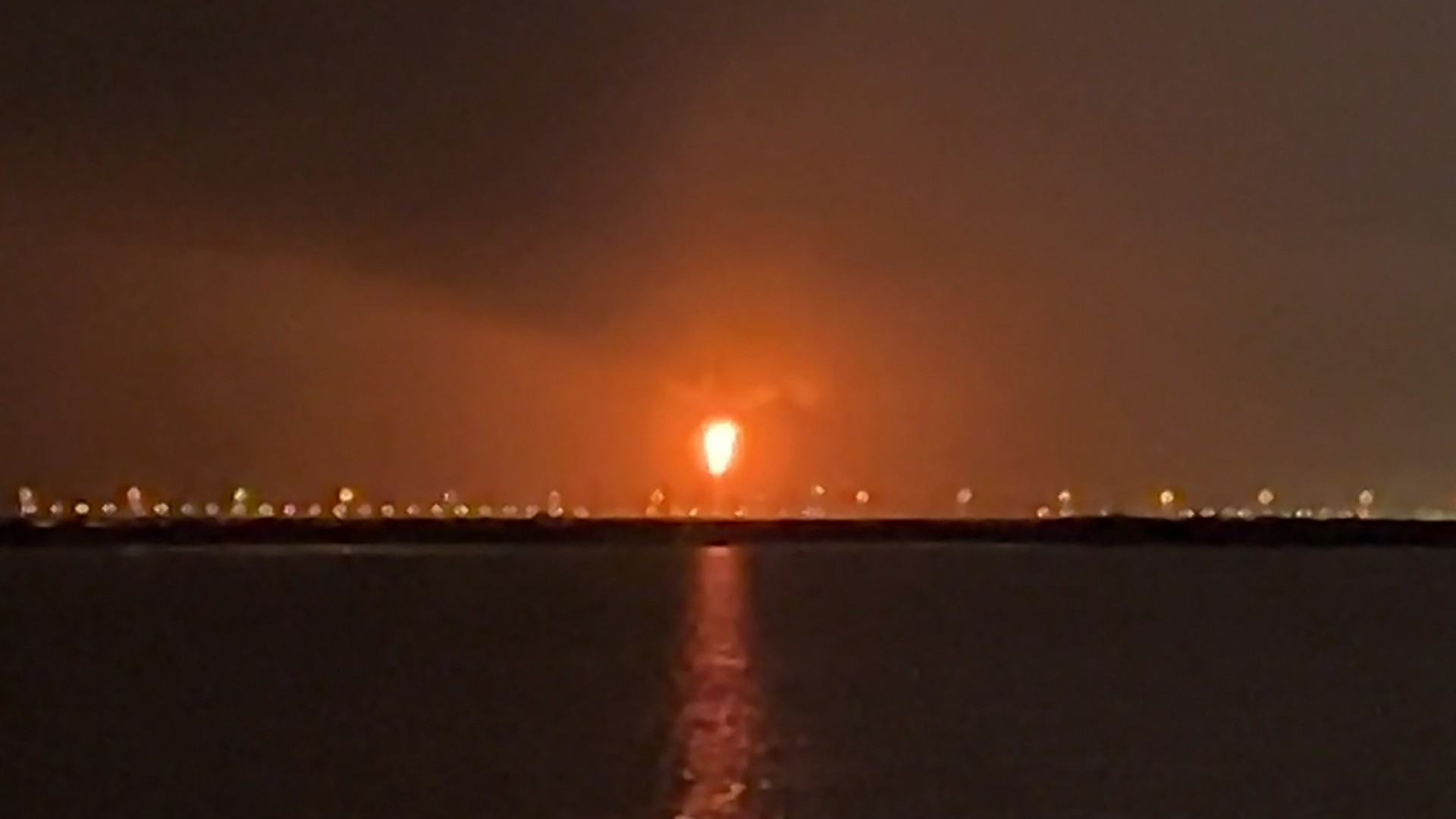
    Despite the widespread relief, lingering tensions underscore just how fragile the current diplomatic breakthrough remains. Early Wednesday, even as the ceasefire was being formally announced, active missile alerts remained in place across the United Arab Emirates, Israel, Saudi Arabia, Bahrain and Kuwait. Officials in Abu Dhabi confirmed that a gas processing facility caught fire following an incoming Iranian missile strike, launched before the truce took full effect. Fighting between Israeli forces and Hezbollah in Lebanon also continued through Wednesday morning.

    Most critically, core disagreements that sparked the conflict in the first place remain unresolved. The US and Israel launched the campaign to address what they call unacceptable risks from Iran’s nuclear program, its ballistic missile development, and its support for regional armed proxies. There has been no public indication that the two sides have bridged these gaps ahead of Friday’s talks, and the future remains unclear once the 14-day ceasefire period expires.

    The crisis began when Trump set a hard deadline for Iran to reopen the Strait of Hormuz, threatening the total destruction of all Iranian power plants and critical infrastructure if the deadline was not met. The deadline passed at 8 pm Washington time on Tuesday, with the ceasefire agreed just one hour before it expired. In the lead-up to the deadline, Iranian authorities reported that 14 million Iranians, including President Masoud Pezeshkian, had volunteered to defend the country, with civilians forming human chains around key national infrastructure including bridges and power plants.

  • UK ban on Ye sparks criticism as Starmer stays silent over US threats to destroy Iran

    UK ban on Ye sparks criticism as Starmer stays silent over US threats to destroy Iran

    The United Kingdom Home Office’s Tuesday rejection of a visa application from American rapper Ye, formerly known as Kanye West, over his history of antisemitic comments has ignited fierce public and political debate across Britain, with critics accusing Prime Minister Keir Starmer’s government of prioritizing a high-profile cultural ban over addressing alarming threats of mass violence tied to the Middle East.

    Ye had originally been booked as a headline act for London’s summer 2026 Wireless Festival, a booking that already faced widespread condemnation from British politicians and Jewish community groups who pushed organizers to drop the rapper over his long record of antisemitic rhetoric. The festival’s director initially defended the invitation against this pressure, but the Home Office’s visa ruling has now scrapped Ye’s planned appearance entirely, with Festival Republic, the event’s parent organizer, confirming the July performance slot would not be filled following the entry ban.

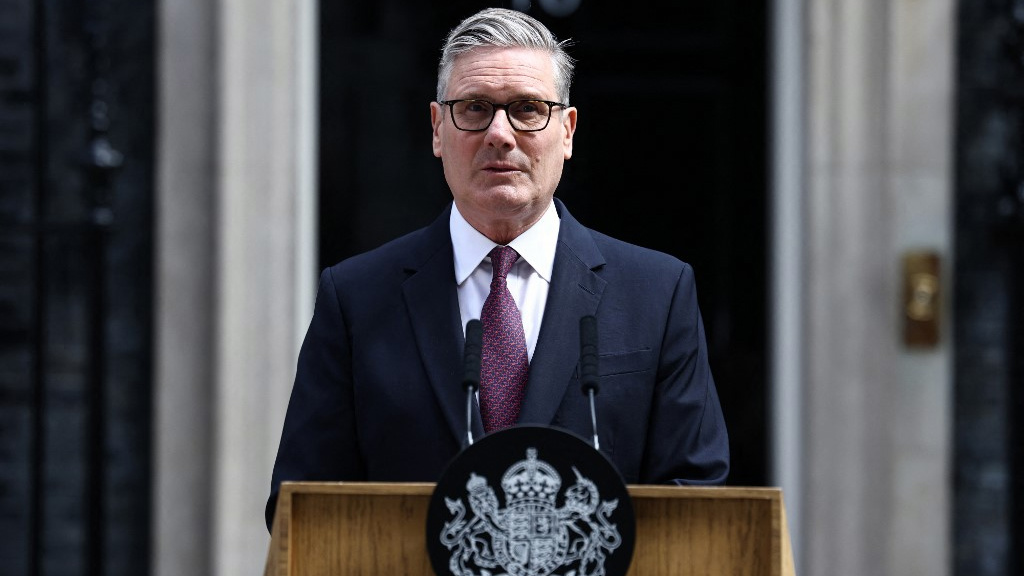
    In its official announcement of the visa refusal, the Home Office stated that Ye’s presence in the UK would not be conducive to the public good. Starmer backed the ban in a post on X, writing, “Kanye West should never have been invited to headline Wireless. This government stands firmly with the Jewish community, and we will not stop in our fight to confront and defeat the poison of antisemitism.”

    However, the prime minister’s quick, public embrace of the ban has drawn sharp pushback from across the UK political and media landscape, with critics pointing to Starmer’s complete public silence on a recent threat from U.S. President Donald Trump that warned “a whole civilization will die” unless Iran allows unimpeded shipping through the Strait of Hormuz, amid escalating U.S.-Israeli military action against Iran. Critics argue the stark contrast between the government’s immediate action on Ye’s visa and its failure to address what many are calling a genocidal nuclear threat exposes a damaging double standard in British foreign policy.

    “On the verge of a genocidal, nuclear war that our supposed ‘ally’ has said he’s ready to unleash. Would it be too much to ask for the Prime Minister to have something to say about it? Or do? Suspend US bases now,” Green Party deputy leader Zack Polanski wrote on X on April 7, the day after Trump’s comment.

    Prominent British historian William Dalrymple amplified that criticism on April 8, writing, “The total silence from Keir Starmer and his cabinet in the face of Trump’s genocidal threat to Iran, even as they took immediate concrete action to ban Ye, reveals deep and profoundly troubling double standards. As we saw repeatedly with Gaza, the mass slaughter of Muslims really doesn’t bother our government; now even the threat of complete civilisational erasure is not worth a passing comment.”

    Journalist Barry Malone echoed that take, noting “He’s tweeting about Kanye West” but has “nothing to say about Trump threatening to commit a genocide.” Left-wing Labour MP Zarah Sultana put the criticism even more sharply, writing, “Glad Keir Starmer’s Labour government is prioritising stopping musicians from performing. Wouldn’t want them distracted from their complicity in Israel’s genocide of the Palestinian people and an illegal war on Iran.”

    Some social media users have also raised concerns beyond the double standard accusation, arguing that while most reject Ye’s antisemitic comments, the government’s decision to block entry over controversial speech sets a dangerous precedent for overstepping into cultural event planning. Others, however, have supported the ban as a necessary stand against hate speech.

    Ye, who has long said his public erratic behavior is tied to his bipolar disorder, has a well-documented history of inflammatory antisemitic statements. In 2022, he posted on X that he would go “death con 3 On Jewish people,” and in 2025, he was barred from entering Australia after releasing a song titled “Heil Hitler” and selling swastika-branded merchandise through his personal website.

    Earlier this year, Ye issued a public apology for his past actions in a full-page advertisement in the Wall Street Journal, writing, “I regret and am deeply mortified by my actions in that state, and am committed to accountability, treatment and meaningful change.” Following the UK’s visa ban, Ye released another statement Tuesday saying he would “be grateful for the opportunity to meet with” Britain’s Jewish community, adding, “I know words aren’t enough – I’ll have to show change through my actions. If you’re open, I’m here.”

    Middle East Eye has reached out to 10 Downing Street for additional comment on the criticism of Starmer’s silence on Trump’s threat, and as of publication, no further statement has been released.

  • Pony.ai launches robotaxi service in Singapore

    Pony.ai launches robotaxi service in Singapore

    Chinese autonomous driving technology firm Pony.ai has entered a new phase of its global growth strategy, launching its first commercial robotaxi passenger service in Singapore in partnership with local transportation giant ComfortDelGro. The service officially went live on Tuesday, April 8 2026, bringing autonomous mobility options to residents and visitors in the Punggol district of northern Singapore.

    According to Pony.ai, the launch represents a major milestone in the company’s ongoing push to expand its footprint in international autonomous mobility markets. The current service covers a 12-kilometer route that connects two major residential communities in Punggol: Punggol Northshore and Waterway Sunrise, providing convenient last-mile and inter-neighborhood travel options for local users.

    This collaboration is the fruit of a strategic partnership signed between the two companies back in September 2025. ComfortDelGro, Singapore’s largest land transport operator, brings deep local market knowledge, regulatory connections and operational experience to the joint project, while Pony.ai contributes its industry-leading autonomous driving algorithm technology and fleet management capabilities.

    “Partnering with ComfortDelGro to launch passenger services marks a solid step forward for our Robotaxi fleet in Singapore,” stated James Peng, founder and chief executive officer of Pony.ai, in a statement following the launch.

    The Singapore launch aligns with Pony.ai’s aggressive 2026 global deployment plan, which the company outlined during its 2025 full-year financial performance review. The Guangzhou-headquartered firm announced it aims to roll out a fleet of more than 3,000 robotaxis across over 20 cities worldwide by the end of 2026, with nearly half of those cities located outside of China. Currently, the company is working closely with local industry partners and government regulatory agencies across its target international markets to facilitate a smooth transition from small-scale pilot testing to full commercial public operation.

    Industry observers note that the successful commercial launch in Singapore positions Pony.ai as one of the first Chinese autonomous driving firms to gain a foothold in the Southeast Asian mobility market, setting a benchmark for future cross-market expansion of Chinese smart mobility technology.

  • What is in the 10-point plan to end US-Israeli war on Iran?

    What is in the 10-point plan to end US-Israeli war on Iran?

    Just hours after US President Donald Trump issued a stark threat to erase Iranian civilization, a startling diplomatic reversal has upended tensions in the Middle East: Trump has announced his acceptance of a two-week ceasefire with Iran, built on the framework of a 10-point peace proposal put forward by the Islamic Republic. The US leader has characterized the Iranian plan as a “workable basis” for future negotiations, with key terms including a proposed fee for commercial vessels transiting the Strait of Hormuz and the full lifting of all international and US sanctions imposed on Iran.

    Notably, discrepancies have emerged between the Persian-language version of the plan released for Iranian audiences and the English-language version distributed to global media, with several high-demand provisions absent from the international iteration. Even as the final outcome of upcoming weeks of negotiations remains deeply uncertain, the tentative agreement already marks a dramatic turnaround for the United States, which joined Israel in a large-scale military offensive against Iran in late February, framed at the time by official rhetoric focused on overthrowing the existing Islamic Republic government.

    The proposal has already sparked furious backlash in Israel, where political leaders have decried the terms as an unprecedented national failure. Opposition leader Yair Lapid has labeled the deal the worst “political disaster in all of [Israel’s] history”, with particular outrage directed at the clause calling for an immediate ceasefire in Lebanon and an end to all Israeli military strikes on the country.

    Eskandar Sadeghi-Boroujerdi, an Iran historian and lecturer at the University of St Andrews, told Middle East Eye that an initial review of the 10-point framework places it far beyond the scope of the 2015 Joint Comprehensive Plan of Action (JCPOA) — the nuclear deal that Trump unilaterally withdrew from in 2018 — “in almost every dimension”. Unlike the JCPOA, which was strictly limited to nuclear restrictions in exchange for partial, reversible sanctions relief, Sadeghi-Boroujerdi argues this new proposal is far more ambitious: “It is not a nuclear deal. It is a comprehensive restructuring of the regional order in Iran’s favour.”

    As global powers react to the news with a mix of cautious relief and deep skepticism, a breakdown of the plan’s core provisions reveals just how far-reaching its implications would be if fully implemented.

    For the Trump administration and the global economy, the most urgent priority has been reopening the Strait of Hormuz, the chokepoint through which roughly 20% of the world’s global oil supplies pass. The waterway was effectively closed shortly after the US-Israel military campaign began, triggering massive disruption to energy markets and inflicting widespread damage on the global economy. The de facto closure spurred intense diplomatic pressure on all sides and even preliminary military planning to force the strait open, making its reopening a non-negotiable starting point for any talks.

    Trump’s conditional ceasefire agreement calls for the strait to be reopened immediately, but the full 10-point plan goes a step further. Under the proposal, Iran would charge a $2 million transit fee for every vessel passing through the waterway, with proceeds split between Iran and neighboring Oman. All funds collected would be allocated to the reconstruction of Iranian infrastructure, much of which has been destroyed by US and Israeli strikes since the offensive began in February. Iran would also take full responsibility for establishing and enforcing rules for safe passage through the strait. If approved, this arrangement would cement the strait as a critical strategic lever for Iran, dramatically strengthening its regional influence over global energy supplies.

    A core demand at the heart of Iran’s proposal is the full lifting of all primary and secondary sanctions imposed on the country. This marks a stark reversal of the policy Trump implemented after his 2018 withdrawal from the JCPOA: at the time, Trump scrapped the nuclear accord, calling it a bad deal, and implemented a harsh “maximum pressure” campaign of sweeping sanctions that crippled Iran’s economy, pushed millions of Iranian citizens into poverty, and inadvertently empowered hardline factions through a booming black market for restricted goods.

    US sanctions have been in place in one form or another since 1987, ahead of the end of the Iran-Iraq War. A full removal would therefore represent the most significant shift in US-Iran relations in nearly four decades.

    Another non-negotiable pillar for Iran is a binding international guarantee that neither the country nor its regional allied groups will face future military attacks. Iranian leaders have long cited Trump’s well-documented unpredictability as a reason to distrust his public commitments, so a permanent security guarantee is central to any long-term peace deal. While the plan does not explicitly name Israel in the text, analysts widely agree the guarantee is intended to cover Israeli strikes as well — a provision that is almost certain to continue fueling Israeli opposition to the plan.

    The proposal also calls for the full withdrawal of all US military forces from “the region” — a vague wording that has sparked debate over its actual scope. The US has maintained a widespread military presence across the Middle East for decades, with many regional allied governments relying on US forces as a core guarantee of their own national security. The version of the plan released to Iranian media references forces deployed specifically to the region near Iran since February’s offensive, but a full withdrawal of all US forces from the entire Middle East would represent an unprecedented change to the regional order that many allied states would oppose heavily. Even after recent Iranian strikes on US assets in the Persian Gulf that have sparked renewed debate over the wisdom of maintaining a forward US presence, a full exit remains a highly contentious outcome.

    A further provision calling for an end to all military attacks on Iran’s regional allied groups, broadly referred to as the Axis of Resistance, has added to Israeli anger. The grouping includes Hamas, the Gaza-based political and armed movement, and Hezbollah, the Lebanese political and military organization. Israeli Prime Minister Benjamin Netanyahu has already publicly rejected the ceasefire call, confirming he has no intention of halting Israel’s ongoing offensive in Lebanon, and Israeli leaders have repeatedly ruled out ending targeted strikes on Hamas.

    Two key provisions included in the Persian-language version of the plan are noticeably absent from the English-language version released to international media: the right of Iran to continue domestic nuclear enrichment, and a demand for war reparations from the United States. According to US-based Iranian human rights group HRANA, the US-Israel offensive has killed more than 3,500 Iranians to date, 1,616 of whom are civilians including at least 244 children. Reparations for the widespread destruction and loss of life would be an extremely popular demand among the Iranian public, but the omission from the English text leaves the status of both provisions unclear ahead of negotiations.

    Sadeghi-Boroujerdi argues that the gaps between the two versions are not accidental, but a calculated strategic move by both sides to appeal to their domestic audiences while opening space for compromise in upcoming talks scheduled to be held in Islamabad. “The Persian version is considerably more ambitious and detailed. This likely reflects both sides signalling to their respective domestic audiences and staking out maximalist opening positions,” he explained. “The gap between the two versions is itself an indication of how much remains to be bridged in [negotiations] in Islamabad.”

  • Beijing targets 4.5-5 percent annual GDP growth through 2030

    Beijing targets 4.5-5 percent annual GDP growth through 2030

    Beijing has laid out an ambitious yet pragmatic economic roadmap for the second half of the 2020s, announcing an average annual GDP growth target of 4.5 to 5 percent for the 2026 to 2030 period as part of its newly released 15th Five-Year Plan. Unveiled to the public on Wednesday, the blueprint projects that this growth trajectory will expand the Chinese capital’s overall economic output by more than 1 trillion yuan, equivalent to approximately $147 billion, over the five-year window.

    The target builds on a strong track record of steady expansion from the previous planning cycle. Over the past five years, Beijing recorded an average annual GDP growth rate of 5.2 percent, pushing the city’s total annual GDP to 5.2 trillion yuan by the end of 2025.

    Officials from the Beijing Commission of Development and Reform noted that the new growth range was formulated after a careful balancing of long-term development needs and practical economic feasibility. The target is aligned with Beijing’s overarching 2035 vision to roughly double the city’s 2020 economic output, while intentionally building flexibility into growth projections to accommodate ongoing structural economic adjustment, deepening reform efforts, and a continued shift toward higher-quality, sustainable growth rather than sheer expansion.

    Of the 13 sector-focused chapters in the plan, the first five are dedicated to reinforcing Beijing’s core role as China’s national capital, with particular focus placed on strengthening its standing as a leading international exchange hub and a national center for scientific and technological innovation.

    On the front of international openness, the plan sets a clear target to raise Beijing’s share of the country’s total cross-border passenger flows from 3.08 percent in 2025 to roughly 3.8 percent by 2030. City planners aim to achieve this by upgrading targeted service improvements designed to position Beijing as the preferred entry point for international travelers visiting China.

    For scientific and technological advancement, Beijing plans to ramp up research and development investment to more than 6 percent of its total annual GDP. Leveraging its existing innovation ecosystem— which currently hosts 145 national key laboratories, accounting for 28 percent of all such facilities across China, alongside a dense network of top-tier research institutions and industry-leading technology companies— the city is positioned to generate a wave of new original scientific and technological breakthroughs in the coming years.

    Beyond economic and innovation goals, the plan identifies expanded social support for elderly and child care as a top policy priority for the 2026-2030 period. As of 2024, Beijing was home to more than 687,000 residents aged 80 or older. To meet growing demand for elder care services, the city aims to build a fully accessible, inclusive care network that will see regional elderly care service centers cover 80 percent of all urban subdistricts and rural townships by the end of the planning period.

    The comprehensive five-year blueprint also includes detailed targets and policy roadmaps for childcare provision, K-12 and higher education, public healthcare improvements, coordinated regional development across the Beijing-Tianjin-Hebei corridor, urban renewal projects, and public safety infrastructure upgrades.

  • Doctoral defence in Tibetan Buddhism

    Doctoral defence in Tibetan Buddhism

    For practitioners of the Geluk school of Tibetan Buddhism, earning the tradition’s highest academic degree is no simple feat. It demands decades of dedicated, rigorous study of Buddhist scriptures, philosophy, and core doctrines, laying a deep foundational knowledge that candidates must draw on for their final, make-or-break evaluation.

    That final public test, known as the Geshe Lharampa defence, takes place at one of Tibetan Buddhism’s most sacred sites: Jokhang Temple in Lhasa, Xizang Autonomous Region. Unlike typical academic defences in secular higher education, this centuries-old ritual centres on structured, dynamic debate. Candidates must respond to probing, often challenging questions from senior monks and fellow scholar-practitioners, defending their interpretations of Buddhist teachings with sharp logical reasoning, quick critical thinking, and deep mastery of the tradition.

    This public event is far more than a degree requirement. It is a living showcase of the long-standing academic and spiritual traditions of Tibetan Buddhism, bringing together generations of practitioners to uphold centuries of knowledge transmission within the faith. Visible to onlookers, the passionate exchanges between debaters highlight the intellectual rigor that defines the path to earning the tradition’s highest honor, preserving a cultural and spiritual practice that has endured for hundreds of years.