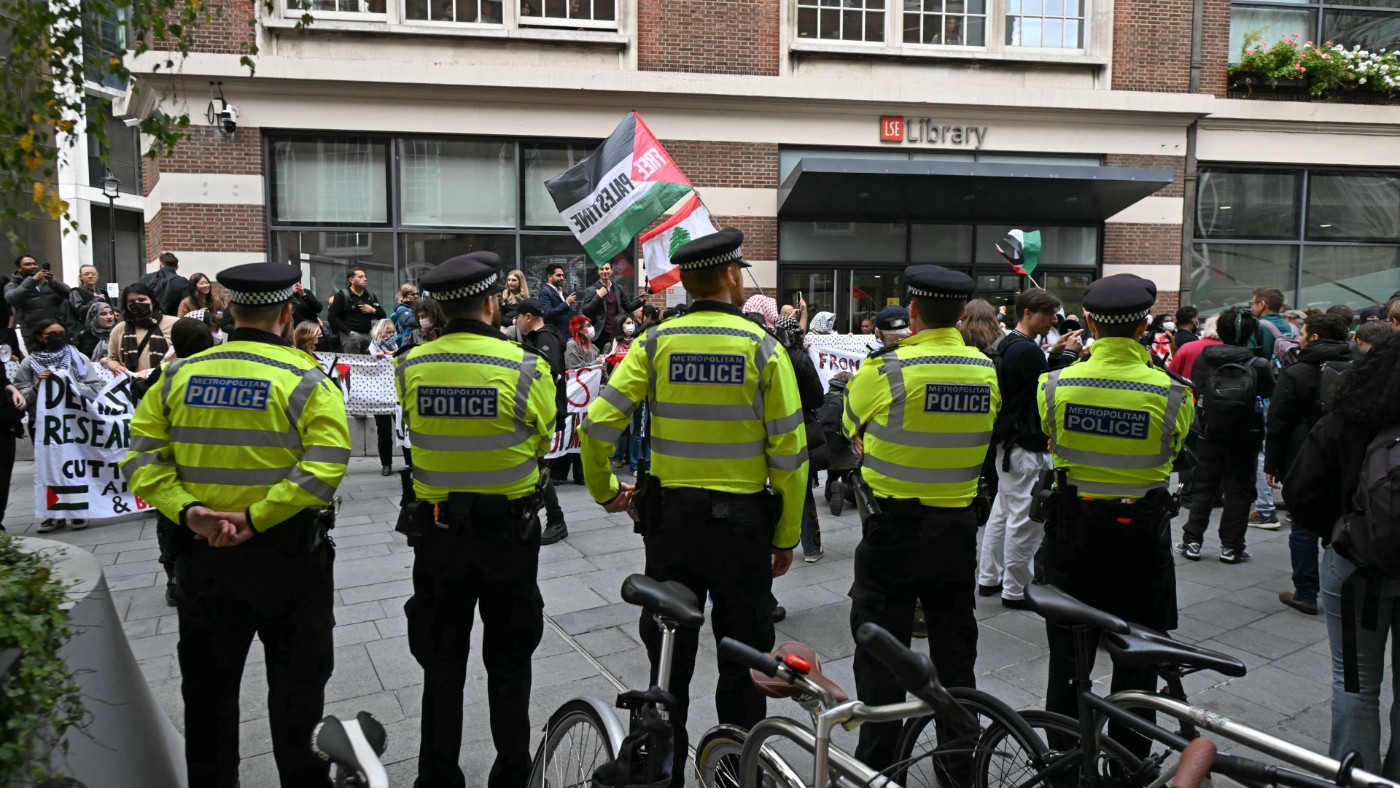
Ahead of Saturday’s 78th anniversary commemoration of the Nakba in central London, a coalition of prominent British Palestinian and Arab public figures has issued an open letter to Prime Minister Keir Starmer pushing for equal safety protections for their communities, pushing back against widespread false claims that their peaceful marches are hubs of hatred.
The scheduled Nakba 78 march for Palestinian justice is set to take place the same day as a far-right “Unite the Kingdom” rally organized by controversial far-right figure Tommy Robinson, a scheduling overlap that has stoked heightened security fears across Palestinian and Arab communities in the capital. London’s Metropolitan Police Service has already announced it has deployed over 4,000 officers to the events, confirming it is preparing for potential violent confrontations.
In their letter, signed by doctors, activists, academics, lawyers and other London-based community leaders from Palestinian and broader Arab backgrounds, the group stresses that pro-Palestine demonstrations are not spaces of extremism, but gatherings rooted in shared humanity and demands for justice. The signatories note that Jewish activists regularly join their marches in full safety, and no pro-Palestine processions have ever targeted Jewish houses of worship — directly contradicting repeated false accusations from senior officials and media figures.
Metropolitan Police Commissioner Mark Rowley claimed earlier this month that many pro-Palestine marches intentionally route near synagogues, a statement solidarity leaders have called deliberately dishonest and dangerous. “Our marches for Palestine are about showing solidarity with the Palestinian people in their struggle against apartheid and genocide, and to protest against British government complicity in Israel’s crimes against them,” explained Ryvka Barnard, deputy director of the Palestine Solidarity Campaign. “Our upcoming march on 16 May will be no different.”
The core grievance laid out in the letter is the stark inequality in how the British government and law enforcement address security fears for different communities. Signatories say that while other communities have received explicit public reassurance and visible security commitments from the government, Palestinian and Arab concerns about potential violence from the overlapping far-right rally have been met with silence and neglect. “It is painful to feel that our fears are treated as secondary, or worse, that our peaceful commemoration is viewed only as a policing problem,” the letter reads.
For British Palestinians, the 78th anniversary of the Nakba is not an abstract historical event: it is an ongoing, intergenerational trauma. The Nakba — meaning “catastrophe” in Arabic — refers to the 1948 forced expulsion of 750,000 Palestinians from their ancestral lands by Zionist militias to clear space for the creation of the state of Israel. This year’s march will include elderly 1948 Nakba survivors marching alongside their great-grandchildren, a visible reminder of the displacement that continues to shape Palestinian life today. As the former colonial power in Palestine, the British government played a foundational role in enabling the Nakba through the 1917 Balfour Declaration, colonial-era repression of Palestinian self-determination, and state support for the early Zionist movement.
The group’s formal demands to Starmer include parity of safety protection for Palestinian and Arab demonstrators, proactive measures to prevent far-right violence, and official recognition of the intergenerational trauma of the Nakba for British Palestinian communities.
The current Labour government led by Starmer has imposed a harsh crackdown on Palestinian solidarity activism since taking office in summer 2024. The direct action group Palestine Action has been officially banned, with its members prosecuted under terrorism legislation. Protesters speaking out against Israel’s military campaign in Gaza, which has killed more than 73,000 Palestinians to date, have repeatedly been labeled antisemites by politicians and mainstream media outlets — a claim that holds no evidential weight, given the consistent participation of large numbers of Jewish anti-war activists in pro-Palestine marches.